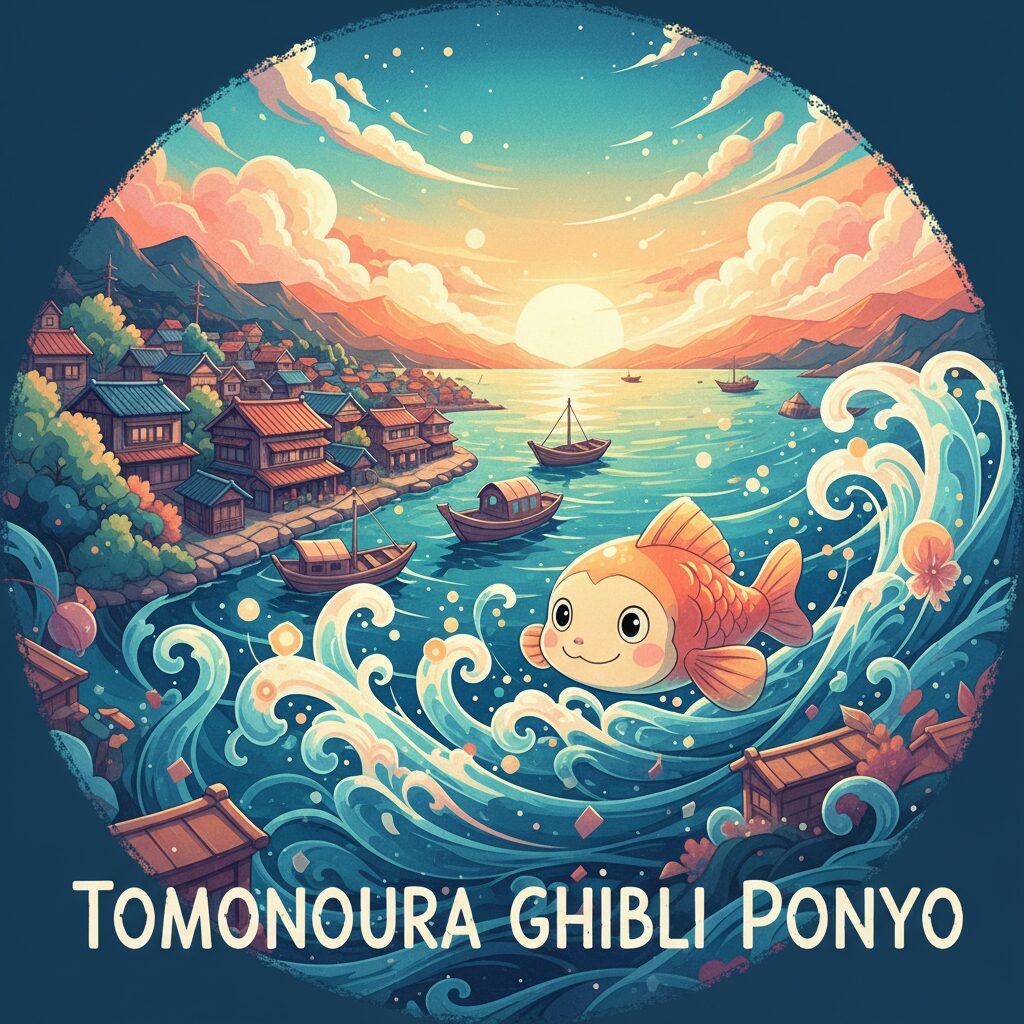
There are places in the world that feel like a memory you haven’t made yet, a dream half-recalled upon waking. Tomonoura, a small, crescent-shaped port town nestled in the embrace of the Seto Inland Sea in Hiroshima Prefecture, is one such place. It’s a town where the rhythm of life is dictated not by the relentless ticking of a clock, but by the gentle ebb and flow of the tides. For anime pilgrims and lovers of Japanese cinema, Tomonoura holds a special magic. This is the very town that captured the heart and imagination of the legendary Hayao Miyazaki, becoming the soulful inspiration for his vibrant and whimsical masterpiece, Ponyo on the Cliff by the Sea. To walk its narrow, winding streets is to step directly into the tangible world that breathed life into the film’s enchanting visuals. Yet, the story of Tomonoura runs much deeper than its cinematic fame. It is a living museum, a perfectly preserved Edo-period port where history whispers from the weathered wooden facades of merchant homes and the stones of its iconic lighthouse have watched over the sea for centuries. It’s a place to lose yourself, not in the hustle of a tourist checklist, but in the profound quiet of a world that has gracefully resisted the rush of modernity. Here, the real journey isn’t just finding the spots that look like the anime; it’s about feeling the same serene, inspiring atmosphere that captivated one of the world’s greatest storytellers.
The serene ambience of Tomonoura invites travelers to delve deeper into its story, much like Miyazaki’s pilgrimage reveals the intimate interplay between history and the enchanting world of anime.
The Echo of Tides and Time
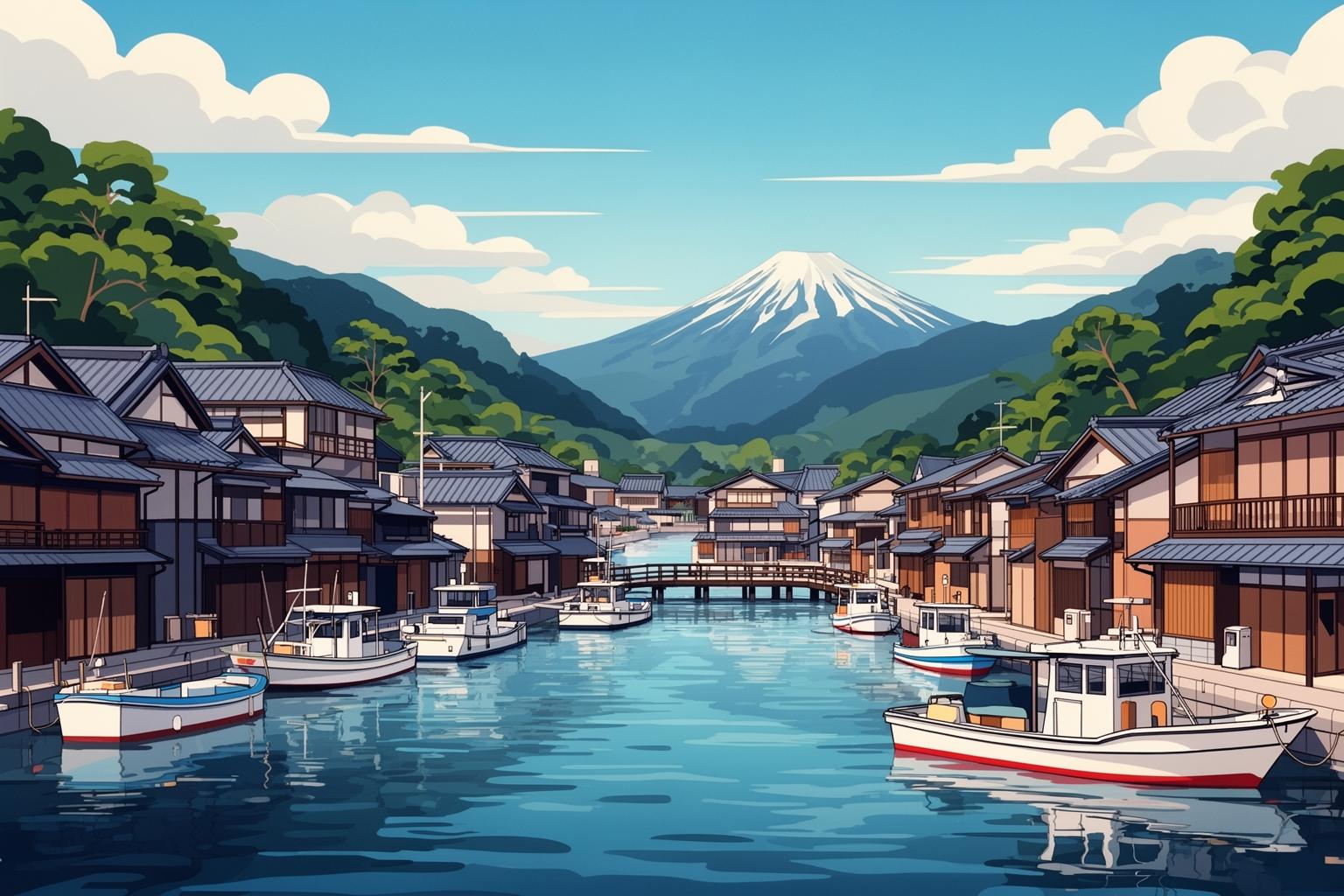
To truly grasp Tomonoura, you must first listen to the sea. For centuries, this was a shiomachi no minato, a port where sailors awaited the changing tides. Navigating the notoriously tricky currents of the Seto Inland Sea, sailors would anchor in this sheltered harbor, waiting patiently for the tides to shift in their favor. This calm, patient relationship with the sea shaped not only the town’s character but also its very architecture. The whole town seems designed for this pause—a quiet interlude in a long journey. As you wander, you’ll notice the stone-paved boat landings, called gangi, descending into the water like ancient amphitheater seats, their surfaces worn smooth by centuries of use. These steps, allowing boats to dock regardless of tide level, silently testify to the town’s ingenuity and deep maritime connection.
The townscape itself stands as a masterpiece of preservation. Walking through its winding alleys feels like being on the set of a period film, except everything here is authentic. The air is thick with the scent of saltwater and aged timber. Look up at the namako-kabe, the distinctive black-and-white crisscross patterns on the walls of old storehouses, designed to resist fire. Many of the old merchant houses and shipping businesses still retain their original wooden latticework and grand facades, hinting at the prosperity that once flowed through this port. Unlike many historic districts in Japan that can feel overly curated, Tomonoura feels truly lived-in. You’ll see locals tending their plants, laundry fluttering in the sea breeze, and fishermen mending nets by the harbor. This isn’t a town preserved in amber; it’s a community quietly living on amidst the currents of its profound history.
Chasing the Spirit of Ponyo
Though the history is captivating, for many, the true allure of Tomonoura lies in its connection to Studio Ghibli. Hayao Miyazaki and his team spent two months living and working here, immersing themselves in the town’s unique atmosphere while developing Ponyo. They didn’t merely observe; they lived within the space, allowing its sights, sounds, and spirit to permeate their creative process. The outcome is a film that does more than replicate Tomonoura’s landmarks—it captures its very essence.
Seeking Ponyo’s world here becomes a delightful game of recognition. You won’t find a sign that declares, “Sosuke’s house was modeled on this,” because the film is a blend, a dreamscape woven from the town’s reality. Yet, the elements are everywhere. The tightly clustered houses with burnt-orange tile roofs clinging to the green hillside are unmistakably the inspiration for the film’s coastal village. The gentle curve of the harbor, dotted with small, bobbing fishing boats Miyazaki sketched endlessly, forms the movie’s central stage. Notice the small details: the narrow stone stairways winding between houses, the moss-covered sea walls, the color of the water shifting from deep blue to turquoise. It’s all present. The most moving aspect of this pilgrimage is realizing Miyazaki captured a feeling rather than a mere photograph. He conveyed the town’s gentle, protective embrace, the sense of a community living in harmony with the sea—the very heart of Ponyo’s story.
Iconic Vistas and Where to Find Them
While aimless wandering is the best way to discover Tomonoura, several specific viewpoints offer breathtaking scenes you shouldn’t miss. These spots provide a framework for your journey, grounding it in moments of profound beauty and historical significance.
The View from Taichoro Pavilion
A short, steep walk from the harbor leads to Fukuzen-ji Temple. Within the temple complex stands the Taichoro reception hall, famed for offering what has been called the most beautiful view in all of Japan. This is not mere tourist exaggeration; the acclaim dates back to 1711, when a Korean envoy was so moved by the sight that he declared it the finest scenery east of Korea. From the pavilion’s wide-open tatami room, the view is perfectly framed by wooden pillars, creating a living painting. Before you spreads the serene harbor, with the picturesque Benten-jima and Sensui-jima islands floating nearby. The deliberate framing encourages you to slow down and fully absorb the landscape. It’s a meditative moment, connecting you not only to the natural beauty but also to centuries of travelers who stood in this very spot, equally captivated.
The Joyato Lighthouse: The Town’s Heart
Dominating the harbor and standing as the town’s unmistakable symbol is the Joyato lighthouse. Constructed during the Edo period, this elegant stone lantern is the largest of its kind still standing in Japan. Its purpose was simple yet vital: to safely guide ships into the harbor’s embrace. Today, its light is no longer required, but its presence remains more powerful than ever. It stands as a steadfast guardian, the centerpiece around which the port’s life revolves. In the evening, as the sky fades to shades of lavender and rose, the lighthouse becomes a silhouette against the dimming light, while the warm glow from its lamp offers a comforting, nostalgic beacon. It’s the perfect place for quiet reflection—sit on the seawall and watch the last fishing boats of the day return home.
The Sensory Journey of Tomonoura
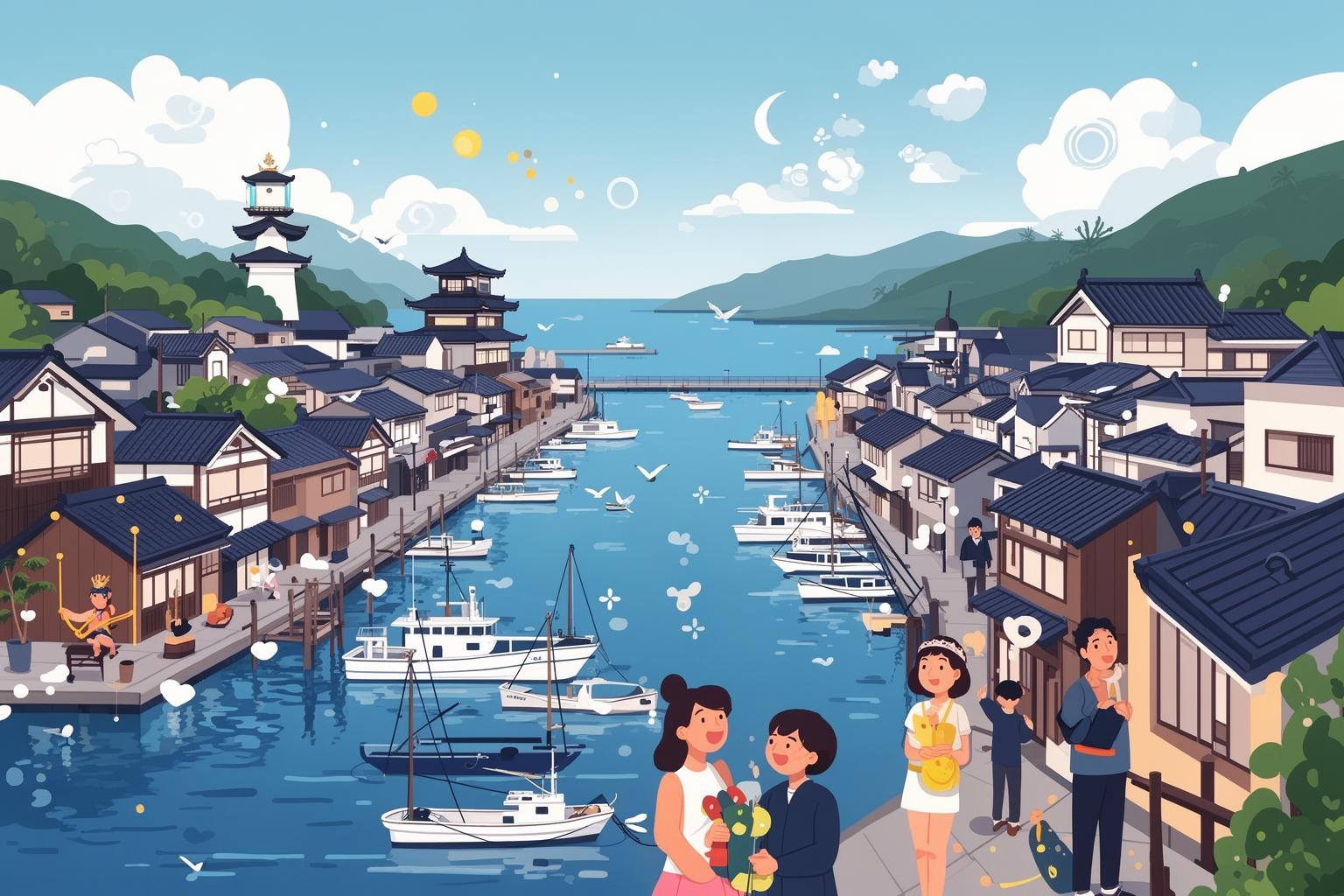
To genuinely connect with Tomonoura, you need to engage all your senses. The town offers a symphony of subtle experiences that build up to leave an unforgettable impression. It is a place that invites slow, mindful exploration, encouraging you to notice the small details that weave together its rich tapestry.
The soundscape of Tomonoura is deeply tranquil. The prevailing sound is the gentle, rhythmic lapping of waves against the stone gangi, a steady, soothing percussion that underpins everything. This is occasionally interrupted by the sharp, solitary cry of black kites soaring overhead and the distant, low hum of the ferry traveling to Sensui-jima Island. As you wander through the backstreets, away from the harbor, the sounds become more personal: the soft murmur of voices from an open doorway, the clinking of porcelain in a small café, the rustling of leaves in a secluded temple garden. It’s a world apart from the city’s noise, a place where you can finally hear your own thoughts.
Visually, the town is a feast of textures and hues. The deep, weathered brown of old wooden houses contrasts strikingly with the bright white of plastered walls. The sea is a canvas of shifting shades, from the murky green near the docks to the dazzling sapphire further out. The vivid colors of fishing flags and buoys add vibrant splashes of primary colors against the town’s muted, earthy tones. One of the greatest visual delights is getting lost in the labyrinth of alleyways. Each turn reveals a new scene: a meticulously tended bonsai tree, a row of ceramic pots brimming with flowers, a beautifully carved wooden panel on a door you might otherwise overlook. It’s a photographer’s dream—not for grand, sweeping vistas, but for intimate, detail-rich character.
And then there are the flavors. Tomonoura, being a fishing port, is a haven for seafood enthusiasts. The local specialty is tai, or sea bream, which can be savored in many forms—from delicate sashimi to tai-meshi, a savory dish where a whole fish is steamed with rice, infusing it with rich flavor. Numerous small, family-run restaurants line the waterfront, their menus shaped by the day’s catch. For a truly unique taste of local heritage, try Homeishu, a medicinal liqueur brewed here for over 350 years. It’s a complex mix of 16 different herbs steeped in sweet rice wine, a potent and warming elixir believed to promote longevity. Sampling it is like tasting a part of the town’s history.
Practical Navigation for the Modern Pilgrim
Despite its timeless atmosphere, Tomonoura is surprisingly easy to reach. The journey itself enhances the experience, representing a gradual shift from the fast pace of modern Japan to the leisurely rhythm of the port.
Getting There and Getting Around
Fukuyama City serves as the gateway to Tomonoura. From major cities such as Tokyo, Kyoto, or Hiroshima, you can take the Tokaido-Sanyo Shinkansen (bullet train) to Fukuyama Station. Upon arrival, the final part of the trip is a relaxing 30-minute bus ride. The bus stop is conveniently located just outside the station’s south exit, with frequent buses heading to Tomonoura (鞆の浦). The route takes you from Fukuyama’s urban environment into the countryside, with glimpses of the sea signaling your approach. Once in Tomonoura, walking is the best way to get around. The town is compact and wonderfully pedestrian-friendly. In fact, many of its most charming streets are too narrow for cars. Be sure to wear comfortable shoes as you’ll be navigating cobblestones, stone steps, and gentle inclines.
A Day Trip or an Overnight Stay?
You can certainly see the highlights of Tomonoura on a day trip from nearby cities like Hiroshima or Okayama. It’s possible to comfortably explore the main harbor, visit the Taichoro Pavilion, and soak in the atmosphere within a few hours. However, to truly experience the town’s magic, an overnight stay is highly recommended. Tomonoura takes on a different character in the early morning and late evening when day-trippers have left. Witnessing the harbor bathed in the soft, golden light of dawn or wandering the empty, lantern-lit streets at night reveals a more intimate side of the town. Staying in a traditional ryokan (Japanese inn) allows you to enjoy a multi-course seafood dinner and awaken to the sound of the sea, fully immersing yourself in the town’s tranquil pace.
Beyond the Main Streets: Finding Your Own Nook
While the harbor is the town’s heart, some of Tomonoura’s greatest delights are found just beyond the main routes. Don’t hesitate to explore without a map. Every narrow lane invites discovery.
For a change of scenery, take the five-minute ferry to Sensui-jima Island. This mostly undeveloped island, regarded as a powerful spiritual site, offers several walking trails. The hike to the observation deck provides breathtaking panoramic views of Tomonoura, showcasing the town’s perfect harmony with its natural surroundings. It’s a fantastic way to gain perspective and enjoy the raw beauty of the Seto Inland Sea National Park.
Back in town, look for the smaller temples and shrines nestled on the hillsides. These quiet, contemplative spots are often completely deserted, offering peaceful retreats. You might also come across small, independent art galleries, cozy cafes in restored old buildings, or artisan shops selling local crafts. These personal discoveries often become the most treasured memories of a visit to Tomonoura. It is in these unplanned moments—chatting with a local shop owner or simply sitting on a hidden stone bench overlooking the water—that you truly feel the welcoming spirit of the town.
A Gentle Farewell to the Port of Calm
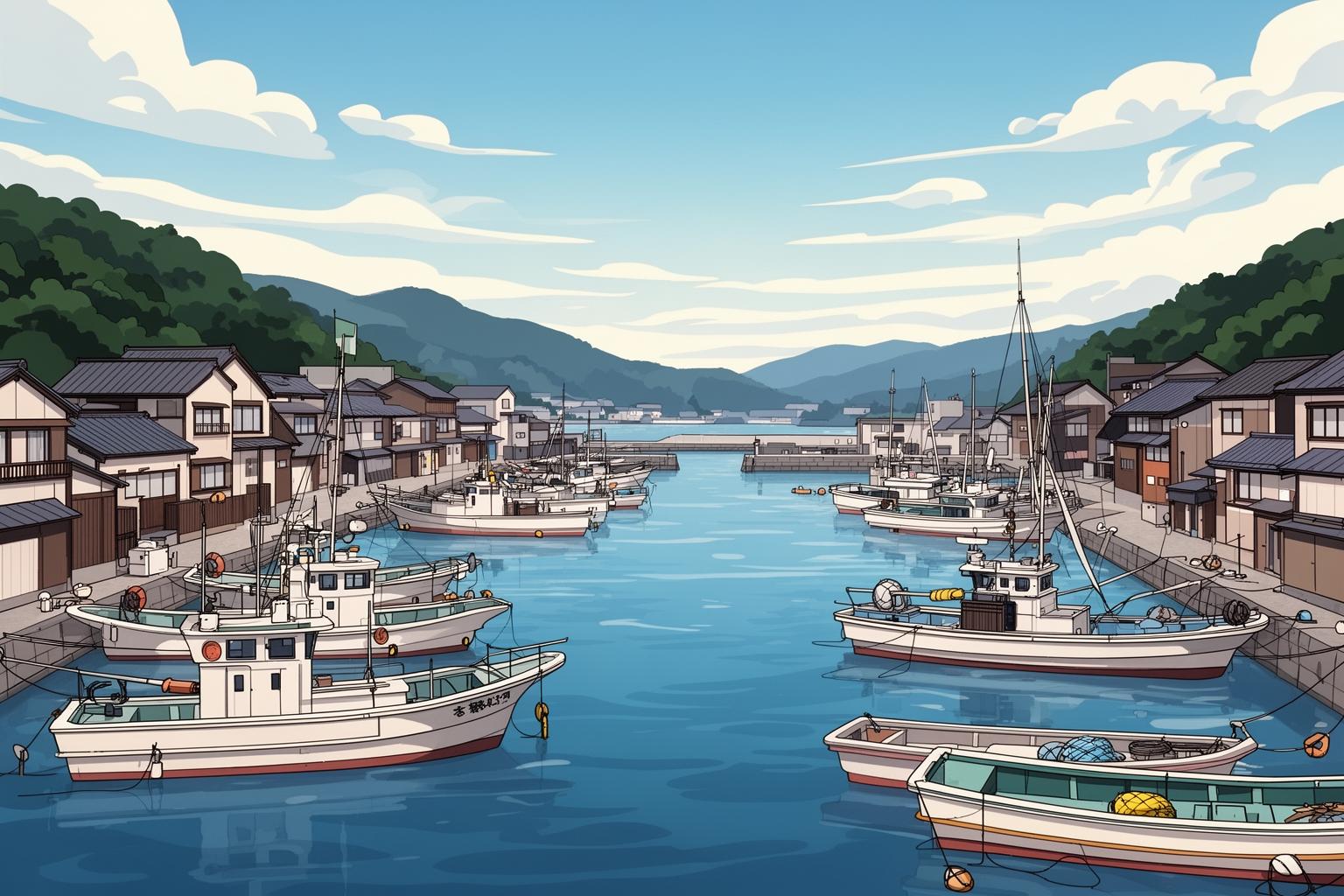
Leaving Tomonoura feels like awakening from a pleasant dream. As the bus pulls away, carrying you back to the bustle of modern life, the image of the Joyato lighthouse and the gentle curve of the bay lingers in your mind. A visit here is more than just a pilgrimage to an anime location; it’s a journey back in time and an immersion into a more tranquil way of living. It serves as a reminder that beauty often resides in what has endured—in the worn stone steps, the weathered wooden lattices, and the steady rhythm of the tides. Whether you come seeking the magic of Ponyo or simply a break from the noise of the 21st century, Tomonoura offers its gifts generously. It asks only that you slow down, breathe in the salt-tinged air, and listen to the stories the sea has been telling for centuries. It’s a small port with a vast, gentle soul, patiently awaiting your return.