The air in Tomonoura tastes of salt and time. It’s a gentle flavor, carried on a breeze that whispers across the Seto Inland Sea, a current that has guided sailors, merchants, and dreamers to this very shore for over a thousand years. This isn’t a place you simply arrive at; it’s a place you drift into, as if carried by the tide itself. Nestled in the embrace of Hiroshima Prefecture, this historic port town is a living postcard from a Japan that modernity has largely forgotten. Its narrow, labyrinthine alleys curve like ancient streams, flanked by dark, latticed buildings whose wooden walls have been burnished to a deep sheen by centuries of sun and sea spray. The gentle lapping of water against the stone-stepped harbor is the town’s constant, rhythmic heartbeat. But for a new generation of travelers from across the globe, Tomonoura’s ancient pulse beats in time with a more recent, more magical story. This is the town that captured the heart of legendary animator Hayao Miyazaki, the town whose charming, higgledy-piggledy rooftops and serene seascape became the vibrant, breathing backdrop for Studio Ghibli’s beloved masterpiece, Ponyo on the Cliff by the Sea. To walk these streets is to wander through the tangible inspiration for that animated wonder, to feel the Ghibli magic not on a screen, but under your feet and in the very air you breathe. It’s a journey into a storybook, where the pages are paved with stone and the illustrations are painted with the real, shimmering light of the Seto sun.
Uncover further layers of coastal enchantment where centuries-old traditions meet Ghibli magic in the heart of Tomonoura.
The Soul of a Bygone Era: Tomonoura’s Historic Seascape
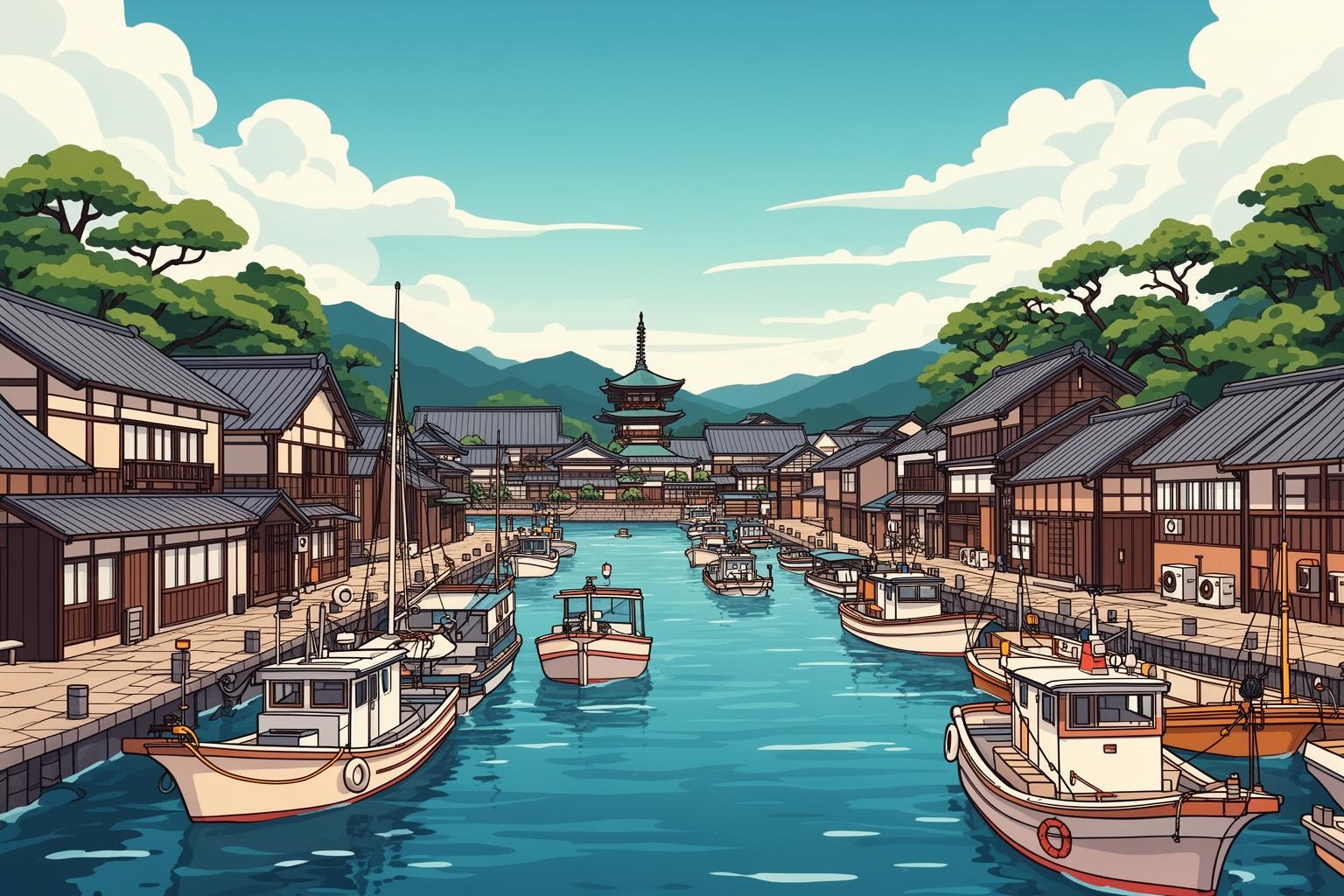
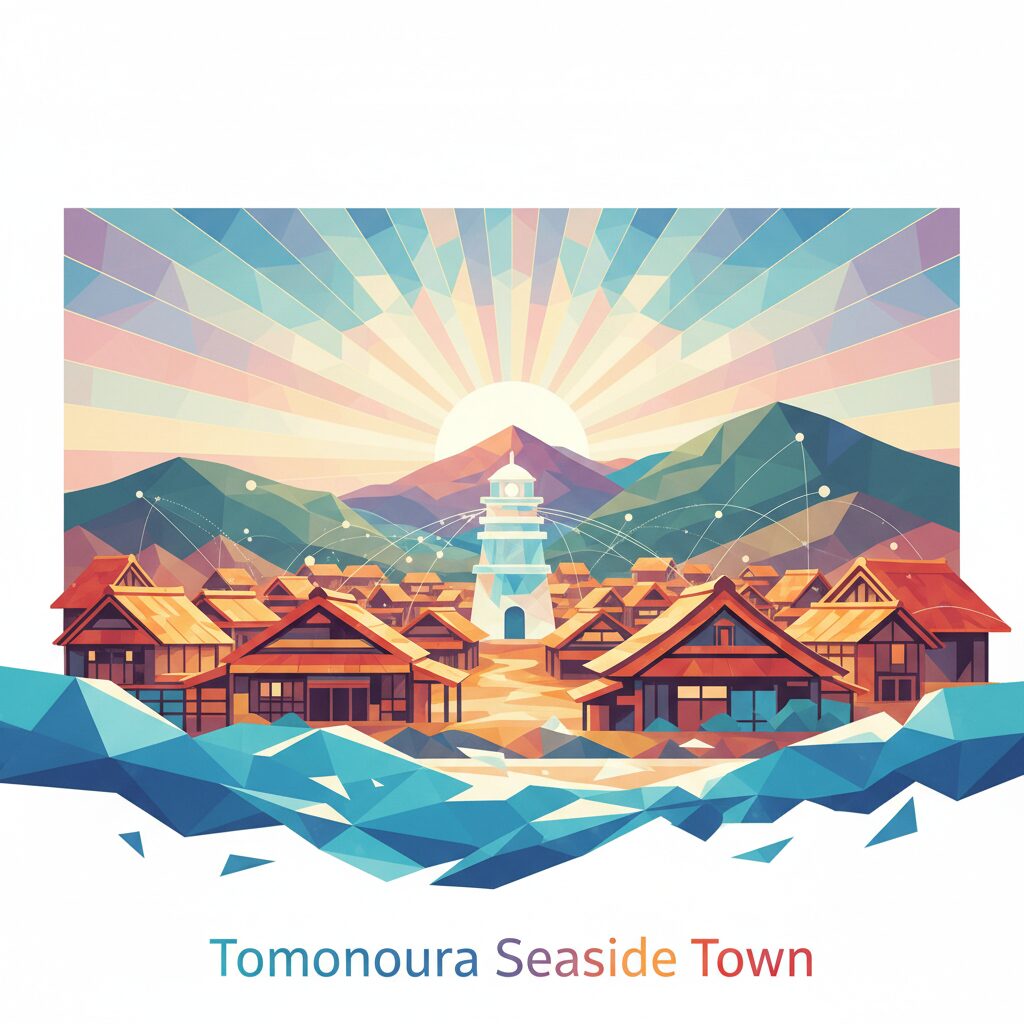
The true essence of Tomonoura is rooted in its harbor, a historic amphitheater opening to the sea. At its center stands the Joyato Lighthouse, a stone beacon that has faithfully guarded the town since the Edo Period. It is not a tall, modern tower but a compact, elegant lamp house that resembles a sculpture more than typical nautical equipment. It once guided the ships of feudal lords safely to shore, and today, it welcomes visitors into the heart of the town’s story. The harbor itself is a remarkable blend of engineering and beauty. Instead of concrete piers, there are gangi, or stone staircases, that lead directly into the water, creating a seamless bond between land and sea. These steps, smoothed by generations of fishermen and the relentless tide, rise and fall with the water level—a practical design shaped by the town’s unique geography. Tomonoura was famously known as a shio-machi no minato, a “port for waiting on the tide.” Because of the complex currents of the Seto Inland Sea, ships would anchor in this sheltered cove to wait for favorable tides to continue their journey east or west. This natural occurrence made Tomonoura a vibrant center of commerce and culture, where people, goods, and stories all converged. Walking here, one can almost hear the echoes of that lively past—the calls of merchants, the creak of wooden oars, the chatter of sailors sharing tales from distant lands. The town’s prosperity is reflected in its architecture, from the grand old merchant houses with their heavy-tiled roofs to the temples and shrines scattered across the hillsides, each standing as a silent testament to the wealth and faith that flowed through this port like the tide itself.
Echoes of Ghibli: Finding Ponyo in Every Corner
For many who visit on pilgrimage, Tomonoura is, above all, Ponyo’s town. Although you won’t find any official Ghibli merchandise or signs pointing to “Ponyo’s house,” the connection is unmistakable and deeply felt. The film’s world comes alive through small details. You’ll notice it in the cluster of houses with warm, orange-tiled roofs, nestled on the green hillside just like Sosuke’s village. You’ll sense it as you watch the small, colorful fishing boats gently bobbing in the harbor, their engines humming with a familiar, friendly rhythm. The winding, narrow roads where Sosuke hurriedly navigated his toy boat are echoed in the tight alleyways you can explore, where every corner reveals a new charming scene—a sleeping cat, a pot of blooming flowers, a weathered stone wall. Hayao Miyazaki famously spent two months living in the town, soaking in its rhythms, sketching its views, and immersing himself in its atmosphere. He didn’t merely replicate the landscape; he captured its essence. The result is a film that feels less like an animated feature and more like a love letter to this unique place. The film’s magical realism fits seamlessly here, where the boundary between the ordinary and the mythical has long been softened by the sea mist. Ghibli fans will smile recognizing the gentle curve of the bay, the shape of the offshore islands, and most of all, the strong sense of a community in harmony with the sea. It’s an experience that goes beyond simple location-spotting; it’s about feeling the same inspiration that gave rise to a cinematic masterpiece.
A Symphony of Sights and Scents: Experiencing Tomonoura with All Senses
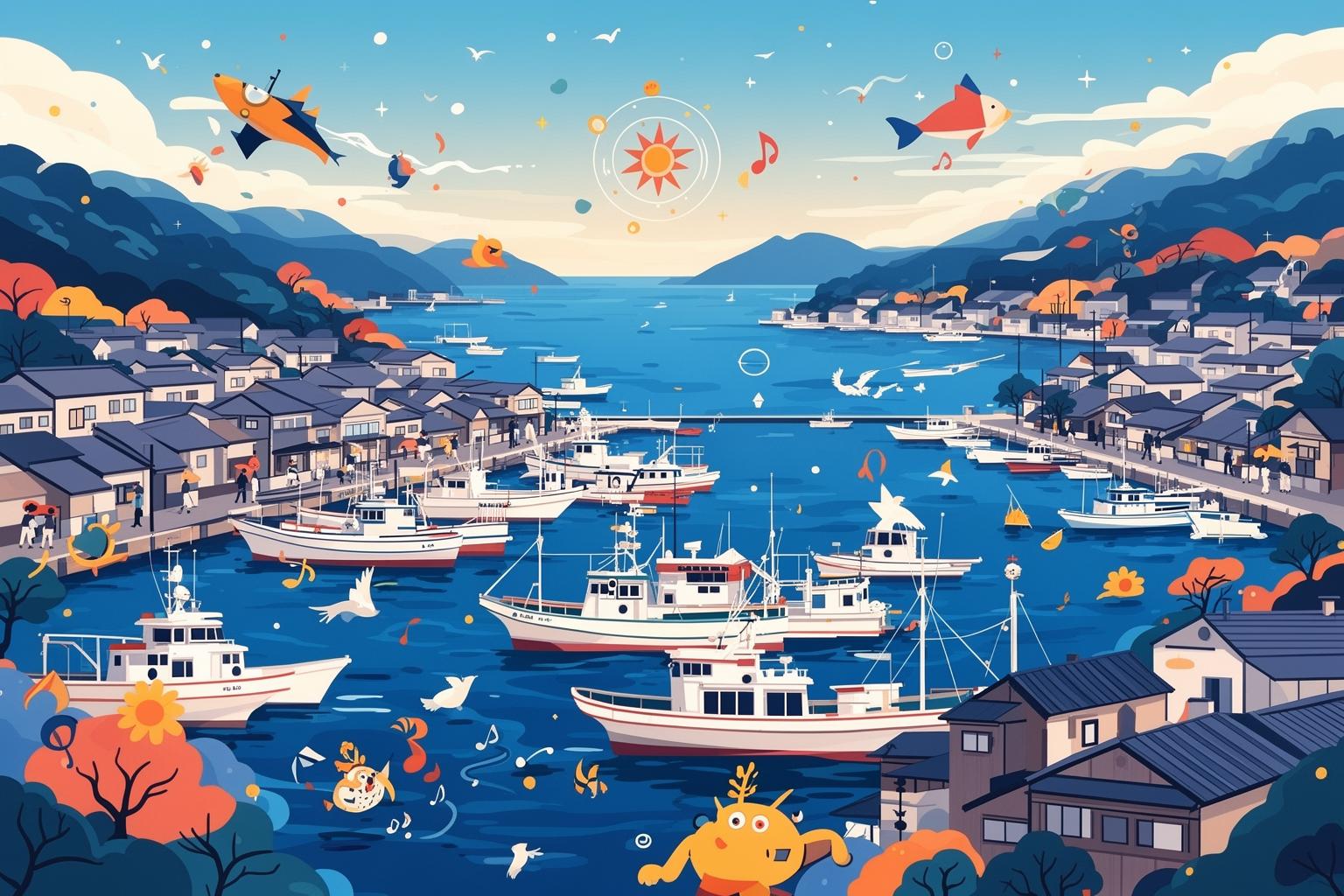
To fully appreciate Tomonoura, you need to engage all your senses. This is a place that rewards slow, mindful exploration. Visually, it offers a rich tapestry of textures and colors. The deep, dark wood of the traditional yakisugi (charred cedar) buildings contrasts strikingly with the bright white plaster walls. The sparkling sapphire blue sea lies alongside the emerald green islands just offshore. In the morning, soft golden light illuminates the mist rising from the water. Later in the afternoon, the sun casts long, dramatic shadows through the alleyways and sets the western sky ablaze with shades of orange and pink, a spectacle best enjoyed from the harbor’s edge. But the sounds are equally enchanting. Tomonoura’s soundtrack is subtle and soothing: the gentle, constant wash of waves against the gangi, the distant cry of a black kite circling above, the metallic clang of a bell from a nearby temple, and the quiet murmur of conversation drifting from an open doorway. There’s a peacefulness here, a notable absence of the urban noise that characterizes much of modern Japan. Then there are the smells. The air is thick with the clean, briny scent of the sea, a perfume that fills everything. Often mingled with this is the savory, tantalizing aroma of soy sauce and grilled fish wafting from local restaurants, or the soft, sweet fragrance of incense from a shrine. And of course, there is the taste. Tomonoura is famous for its seafood, especially sea bream, or tai. Enjoying a tai-meshi (sea bream over rice) lunch at a restaurant overlooking the harbor is an essential experience, a moment where you can literally savor the essence of the town. This immersive sensory experience is what makes a visit to Tomonoura unforgettable; it is not just a place to see, but a place to feel, hear, and taste.
Beyond the Harbor: Exploring the Hidden Alleys
While the iconic harbor is the town’s heart, its soul dwells in the maze of narrow streets spreading out behind it. Deliberately getting lost here is one of Tomonoura’s greatest pleasures. These car-free alleyways are quiet, intimate spaces where local life unfolds at a leisurely pace. As you wander, you’ll uncover hidden treasures. Look for massive, centuries-old camphor trees towering over temple grounds, their thick, gnarled branches creating a shaded canopy. You may come across the Ota Residence, a beautifully preserved merchant home and former brewery of Homeishu, a medicinal liqueur produced in Tomonoura for centuries. A peek inside reveals the opulent lifestyle of the town’s wealthiest residents during the Edo Period. Keep an eye out for small, family-run shops that have operated for generations, selling everything from local soy sauce to handmade crafts. One of the most breathtaking sights is the view from Fukuzenji Temple’s Taichoro reception hall. For a small entrance fee, you can sit on tatami mats in this elegant room and gaze through open frames at a view so perfect it has been called “the finest view in Japan” by historic dignitaries. The wooden frames of the hall capture the panorama of the harbor perfectly, with Bentenjima Island and its picturesque pagoda in the foreground and Sensuijima Island behind it. It’s a living painting, a moment of profound calm that connects you to the centuries of people who have sat in this very spot, admiring the same timeless view.
A View from the Water: The Island Escape to Sensuijima
For a fresh perspective on Tomonoura, a short, delightful journey across the water is a must. A charming Showa-era ferry, the Heisei Iroha Maru, shuttles passengers to Sensuijima Island in just five minutes. The boat itself is a replica of the vessel sailed by the famous samurai revolutionary Sakamoto Ryoma, adding a layer of historical romance to the trip. Sensuijima, which means “Hermit Island,” feels like a world apart. Stepping off the ferry, you leave the historic townscape behind and enter pristine nature. The island is part of the Setonaikai National Park and is blissfully car-free. It’s a place for walking, breathing, and reconnecting with the natural world. Several walking trails crisscross the island, ranging from easy coastal paths to more challenging hikes up to observation points. The reward for your effort is spectacular. From the island’s higher spots, you are treated to breathtaking panoramic views of the Seto Inland Sea, dotted with countless small islands extending to the horizon. More importantly, you see Tomonoura as if approaching by ship, nestled perfectly in its protective cove. From here, you can truly appreciate its strategic location and stunning natural beauty. The island also features unique, multi-colored volcanic rock formations along its shore, called Goshikiiwa, or “five-colored rocks,” the only ones of their kind in Japan. A walk along the beach here offers both a geology lesson and a meditative experience. A trip to Sensuijima provides the perfect balance to exploring the town; it is the natural yin to the town’s historic yang.
The Practical Pilgrim’s Guide to Tomonoura
Reaching this picturesque port town is a simple and enjoyable journey. Fukuyama City serves as the gateway to Tomonoura. From major cities like Tokyo, Kyoto, or Osaka, you can travel directly to Fukuyama Station via the Tokaido-Sanyo Shinkansen (bullet train). Upon arriving at Fukuyama Station, proceed to the bus terminal just outside the south exit. Find bus stop number 5, where the Tomotetsu Bus heading to Tomo Port (鞆港, Tomo-kō) awaits. The ride lasts about 30 minutes and offers a scenic introduction to the area, taking you from the urban center to the coastline. The bus drops you off right at the historic district’s edge, making it very easy to begin exploring.
Regarding the best time to visit, Tomonoura’s charm is evident in all seasons, though spring and autumn are especially enchanting. Spring brings mild weather and cherry blossoms, painting the landscape with delicate pink hues. Autumn features pleasant temperatures, crisp air, and brilliantly clear blue skies, perfect for walking and photography. Summer is lively and lush but can be hot and humid, so light clothing and hydration are advised. Winter is the quietest time, creating a peaceful atmosphere where you might feel as though the town is all yours.
Once in Tomonoura, the best way to get around is on foot. The historic center is a compact, pedestrian-friendly area designed to be enjoyed at a leisurely pace. Comfortable walking shoes are essential for any visitor, as the stone steps and sometimes uneven paths of the old town are unsuitable for heels. For newcomers, it’s a good idea to arrive in the morning to enjoy gentle light and quieter streets before day-trippers arrive from nearby cities. Many smaller, family-run shops and cafes have traditional hours, often closing by late afternoon. Don’t hesitate to wander without a map; every alley eventually leads back to the harbor, and the true pleasure is in the discovery. Lastly, be open to conversation. The locals take pride in their town and are usually happy to share stories or recommendations if you greet them with a warm smile and a simple “Konnichiwa.”
More Than a Movie Set: Tomonoura’s Enduring Legacy
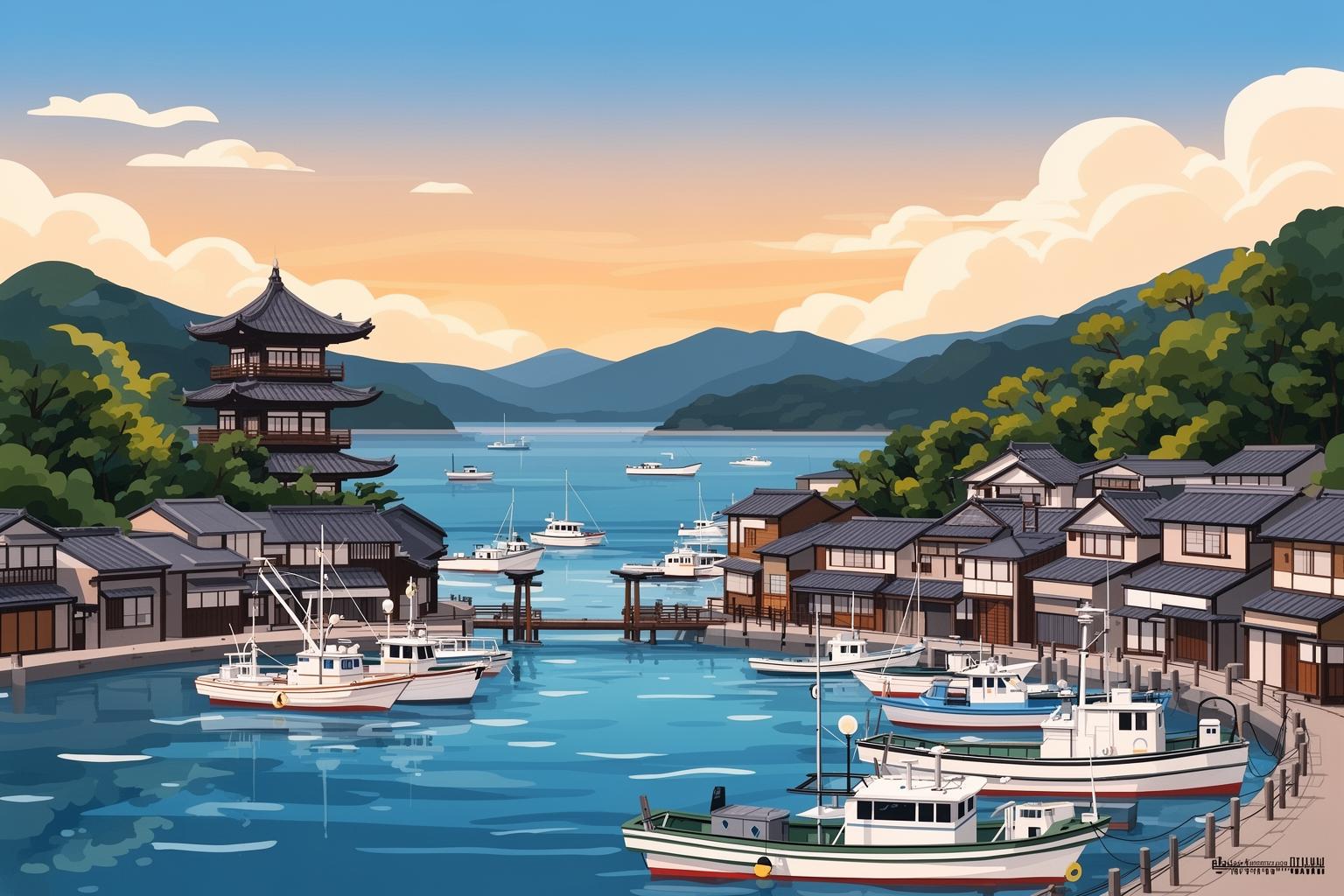
While the Ghibli connection has brought Tomonoura international recognition, its role as an inspiration for artists is long and well-established. Long before Miyazaki set up his easel here, the town’s beauty was captured in poetry and ukiyo-e woodblock prints. Its perfectly preserved Edo-period townscape has made it a sought-after filming location for many Japanese historical dramas and films. It has even reached Hollywood, serving as the backdrop for the Hugh Jackman film The Wolverine, where its timeless Japanese aesthetic provided a genuine setting. Yet perhaps its most notable historical event involves Sakamoto Ryoma, one of Japan’s most revered figures. In 1867, Ryoma, a key figure in the overthrow of the shogunate, arrived in Tomonoura to negotiate a settlement after a ship he had chartered, the Iroha Maru, was sunk by a rival clan’s vessel. The tense negotiations that took place here are a well-known episode in the lead-up to the Meiji Restoration. Today, you can visit a museum dedicated to the incident, located in a building overlooking the sea. This rich tapestry of history—from ancient tide-waiting sailors to feudal lords, from samurai revolutionaries to blockbuster film crews and legendary animators—gives Tomonoura its remarkable depth. It is not a town defined by a single story, but a place where countless narratives intersect, creating a cultural resonance that is both profound and enduring.
A Gentle Farewell from the Port of Waiting Tides
Leaving Tomonoura feels like emerging from a pleasant dream. As you board the bus back to the modern pace of Fukuyama Station, the town’s tranquil rhythm continues to resonate within you. You carry with you the image of the Joyato lighthouse standing watch, the warmth of the sun on your face as you gazed out from Taichoro hall, and the lingering taste of sea salt and soy sauce. Tomonoura is more than just a beautiful destination; it serves as a reminder that there are still places where time flows differently, where history is not locked away in museums but lives and breathes in everyday life. It is a town that teaches the value of patience—for the tide, the perfect light, or a quiet moment of reflection. Whether you arrive seeking the magic of Studio Ghibli, echoes of samurai history, or simply a peaceful escape from the rush of the 21st century, you will find it here, in this gentle port on the shores of the Seto Inland Sea. It is a place that lingers with you, a story you’ll want to share again, a dream you’ll hope to revisit one day.