
There’s a certain kind of magic that lives inside a Studio Ghibli film, a gentle yet profound energy that makes you believe in forest spirits, flying castles, and the quiet heroism of everyday life. We watch these animated wonders and secretly wish we could step through the screen, to feel the sea breeze that billows through the curtains or walk the mossy stones of an ancient path. For fans of Hayao Miyazaki’s enchanting seaside tale, ‘Ponyo on the Cliff by the Sea,’ that wish isn’t just a fantasy. There is a place where the film’s heart beats in time with the tides, a historic port town so perfectly preserved in its maritime charm that it captured Miyazaki’s imagination and became the blueprint for the world where a little fish girl found her human friend. This place is Tomonoura, a jewel nestled in a crescent bay within the Seto Inland Sea, part of Fukuyama City in Hiroshima Prefecture. It is more than just a film location; it’s a portal to a bygone era, a living museum where the rhythm of life is dictated by the lapping waves and the turning of the tide. Here, the line between cinematic dream and tangible reality blurs, inviting you to wander, to discover, and to feel the same inspiration that sparked a masterpiece. To understand Tomonoura is to understand the soul of ‘Ponyo,’ a story rooted in the profound, simple, and powerful connection between humanity and the ocean.
For those captivated by places where history and cinematic magic converge, exploring the ancient pilgrimage spirit of Kyoto can offer a fresh perspective on the enduring allure of such enchanted locales.
The Spirit of the Seto Inland Sea
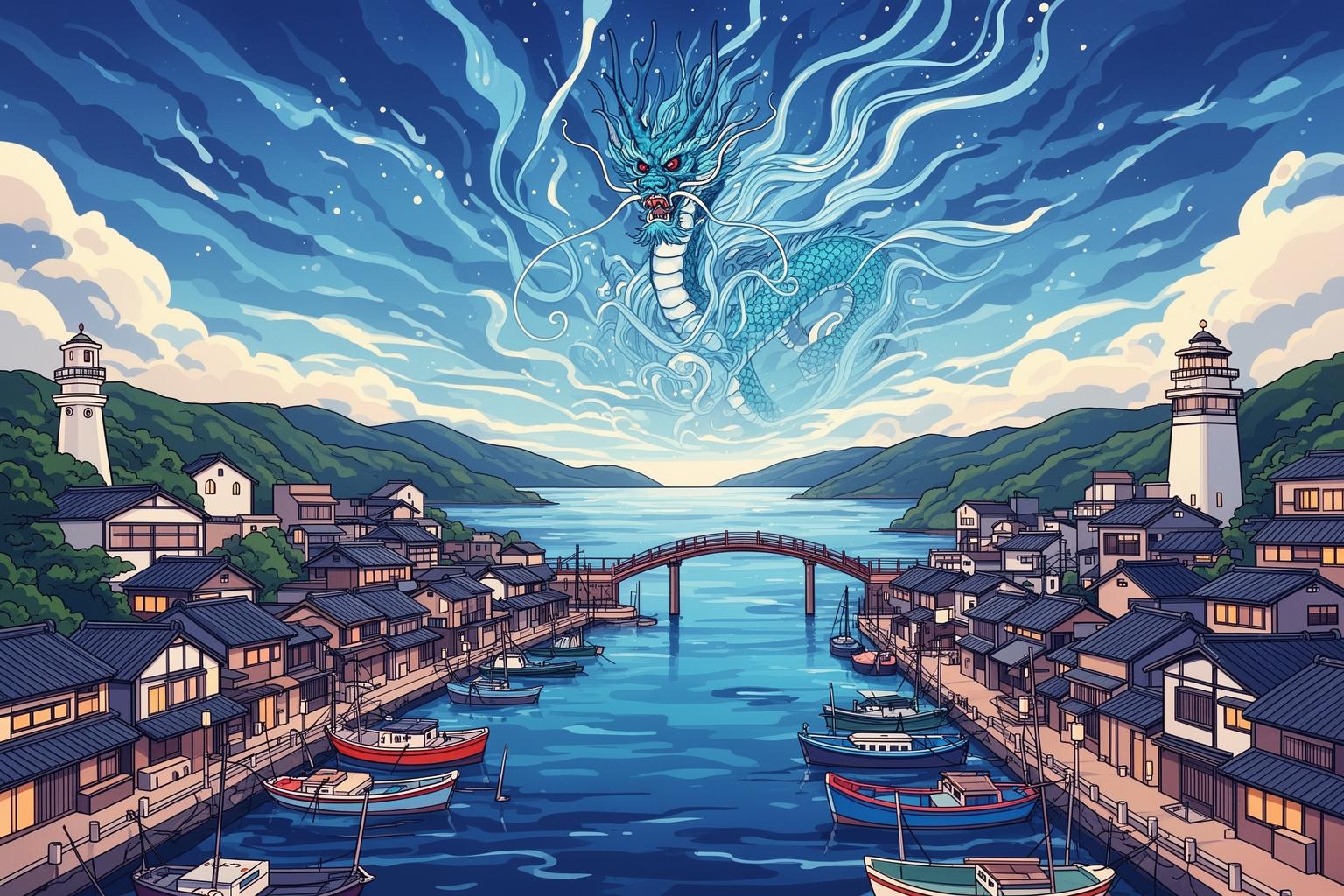
Before you start searching for specific scenes from the film, the first thing to do in Tomonoura is simply to breathe. Inhale the briny air, heavy with the scent of salt, sea, and the faint, sweet aroma of drying fish. The atmosphere is the town’s most powerful gift, a sensory experience that immediately transports you. This isn’t a bustling city; it’s a place of quiet reflection, where the loudest noises are often the cry of a black kite soaring above, the gentle hum of a fishing boat’s engine, or the rhythmic lapping of water against ancient stone piers. This is the very essence of what connects Tomonoura so deeply to ‘Ponyo.’ The film is a love letter to the ocean, and here, the ocean is not merely a backdrop; it is the main character, the town’s lifeblood, its past, and its future. For centuries, Tomonoura thrived as a ‘shiomachi no minato,’ a port where ships awaited the perfect tidal currents to navigate the challenging waters of the Seto Inland Sea. This history is etched into the very stones of the harbor. The town was built around the water’s ebb and flow, a symbiotic relationship that nurtured a unique culture of patience and profound respect for the natural world. As you stand by the harbor, watching small wooden boats gently bobbing on turquoise water, you can feel this history pulsing around you. It’s a sensation of time slowing down, of priorities shifting from the urgent demands of modern life to the simple, profound rhythms of nature. This vivid sense of timelessness is what Hayao Miyazaki and his team absorbed during their two-month stay here, living in a local house and embracing the town’s spirit. They didn’t just scout locations; they immersed themselves in daily life, sketching boats, rooftops, and the distinct curve of the bay, translating the soul of the place into the animated world that would captivate millions. The result is a film that feels genuine, not because it replicates buildings brick by brick, but because it captures the intangible feeling of a community shaped and sustained by the sea.
Tracing Ponyo’s Footsteps: Iconic Inspirations
While Tomonoura’s overall atmosphere forms the foundation of ‘Ponyo’s’ world, there are several key spots where the film’s imagery feels strikingly authentic. Exploring the town turns into a delightful treasure hunt—not for exact replicas, but for the architectural and scenic essence Miyazaki infused into his creation. This journey bridges the tangible history of the port with the limitless imagination of Studio Ghibli, making both seem even more magical.
The Joyato Lighthouse: A Beacon of History and Cinema
Dominating the harbor with its elegant, enduring presence is the Joyato Lighthouse. This isn’t a towering modern edifice, but a graceful, eleven-meter-tall stone lantern that has symbolized Tomonoura since the Edo Period. Its role was not to cast a powerful light across miles of ocean, but to gently guide sailors safely into the harbor. Today, it stands as a silent tribute to the town’s maritime heritage, its weathered stones bearing stories of countless voyages and returns. For ‘Ponyo’ fans, the lighthouse and surrounding harbor feel remarkably familiar. The film features scenes of the bustling port, small fishing boats, and distinctive waterfront architecture, all anchored by the town’s central beacon. Standing before the Joyato, with the crescent-shaped harbor curving around you and the small island of Bentenjima visible in the distance, it feels like you’re gazing at a masterfully composed painting brought to life by Miyazaki. It’s the heart of the town, both geographically and spiritually, and its steady, reassuring presence lends the landscape a sense of stability and history—qualities central to the Ghibli aesthetic.
The Stone ‘Gangi’ and Winding Gangways
One of Tomonoura’s most distinctive features is its ‘gangi,’ a series of stone-stepped piers that slope down into the water. These structures are a marvel of historic engineering, designed to remain functional at any tide level, letting boats dock whether the water is high or low. Walking along these broad, weathered steps feels like stepping into history. You can imagine merchants from centuries ago unloading goods and fishermen mending nets right where you stand. Visually, the gangi are striking, forming a textured, layered waterfront that feels far more organic than a modern concrete pier. This element clearly inspired the visual style of ‘Ponyo’s’ port. The film is full of scenes where water interacts directly with the town, waves splashing against house foundations, and characters navigating intricate, multi-level waterside paths. Tomonoura’s gangi provide the real-world foundation for this animated environment. Exploring further, you’ll encounter narrow alleys that open suddenly onto these stone stairways, offering breathtaking new views of the harbor. This intricate, labyrinthine link between land and sea gives the town its unique character and creates a direct, tangible connection to the world where Sosuke and Ponyo’s adventure unfolds.
A View from the Temple: The Real-Life Sosuke’s House?
Perched on a hillside overlooking the entire port is Fukuzenji Temple, a tranquil Buddhist sanctuary with a history spanning over a thousand years. While the temple itself is a worthy destination, its adjacent Taichoro guest hall holds special significance for Ghibli enthusiasts. This beautiful wooden hall, built to host Korean envoys during the Edo Period, offers what is said to be the most picturesque view in the entire Seto Inland Sea. Sliding open the shoji screens reveals a perfect, living panorama: tiled roofs cascading down to the harbor, the iconic Joyato lighthouse standing proudly, and the islands of Bentenjima and Sensuijima resting serenely in the bay. This exact vantage point, this breathtaking blend of sea, land, and sky, is widely believed to have inspired the cliffside location of Sosuke’s house in the film. Though the house itself is a product of Miyazaki’s imagination, the feeling of looking down upon a protected, nurturing harbor from a high, windy perch is captured flawlessly. Standing in the Taichoro, with the sea breeze flowing through the open hall, you can almost hear the film’s score swelling as you take in the magnificent view. It’s a moment of pure cinematic connection, where the line between reality and animation fades away, leaving only a sense of wonder.
Beyond the Silver Screen: The Enduring Charm of Tomonoura
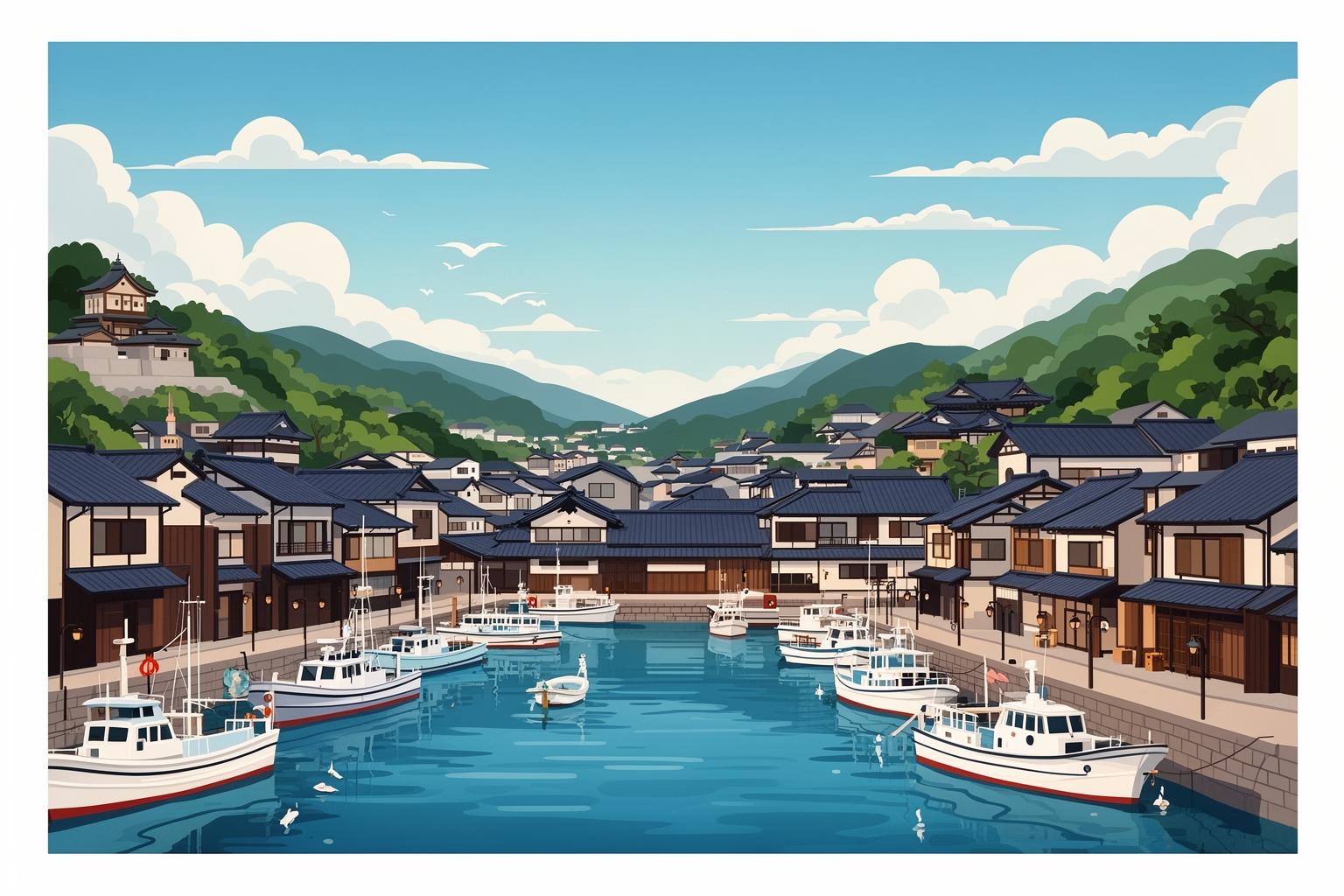
Tracing the inspirations behind ‘Ponyo’ is magical, but the true charm of Tomonoura lies in it being much more than just a film setting. It is a vibrant, living town with a rich culture and a strong sense of identity that existed long before Miyazaki ever arrived. To fully appreciate this place, one must go beyond the familiar Ghibli landmarks and immerse themselves in the genuine allure that initially captivated the filmmakers. The town invites slow, leisurely exploration, encouraging visitors to uncover its hidden gems at their own pace.
A Maze of Edo-Period Streets
Venture away from the harbor into the narrow backstreets, and you’ll find yourself in a maze of alleys that have remained largely unchanged for centuries. This is where the true spirit of old Tomonoura resides. The streets are too narrow for most cars, creating a peaceful pedestrian haven. Along the way, you’ll pass traditional wooden homes with distinctive lattice fronts, small family-run shops selling local crafts, and the occasional sleepy cat basking on a warm stone wall. There are no flashy signs or tourist traps, only an overwhelming sense of authenticity. It’s easy to understand why Studio Ghibli found this atmosphere so appealing. The town’s preservation—both intentional and due to its geography—gives the feeling of a complete, self-contained world. Every turn reveals a new scene: a hidden shrine between buildings, a carefully tended miniature garden, or a glimpse of the sea at the alley’s end. Deliberately getting lost in this labyrinth is one of the greatest pleasures of visiting Tomonoura. It offers a meditative experience, allowing you to soak in the town’s quiet beauty and appreciate the details that make it unique.
The Craft of Homeishu: A Taste of Local Heritage
One of Tomonoura’s most distinctive cultural traditions is the production of ‘Homeishu,’ a medicinal liqueur crafted here for over 350 years. This aromatic spirit is made by steeping a secret blend of sixteen herbs in sweet mirin rice wine, and is believed to encourage longevity and vitality. The history of Homeishu is deeply linked to that of Tomonoura itself. You can explore this tradition at the Ota Residence, a beautifully preserved merchant house and former Homeishu brewery now serving as a museum. This magnificent building, boasting an impressive collection of historical artifacts and elegant gardens, offers a fascinating look into the life of a wealthy Edo-period family. Several shops around town continue to produce and sell Homeishu, each with a slightly different take on the traditional recipe. Sampling this local specialty allows you to literally taste the town’s history. Its complex, sweet, and herbal flavor is a unique sensory experience that connects you to generations of residents who have enjoyed this traditional tonic. It exemplifies the deep-rooted culture thriving beneath the town’s cinematic fame.
Practical Guidance for Your Ghibli-Inspired Journey
Traveling to Tomonoura is relatively simple, but a bit of planning can help make your visit as seamless and enchanting as the town itself. The journey is part of the experience, a gradual shift from the pace of modern Japan to the relaxed rhythm of this historic port.
Getting to This Seaside Retreat
Your trip to Tomonoura will most likely start with the Shinkansen, Japan’s renowned bullet train. The closest major station is Fukuyama, a stop on the main Sanyo Shinkansen line connecting cities such as Osaka and Hiroshima. From Fukuyama Station, the last leg of the trip is a scenic and pleasant bus ride. Buses to Tomonoura Port (‘Tomo-no-Ura’ or ‘Tomo Port’) leave frequently from the terminal just outside the station’s south exit. The ride lasts about thirty minutes and serves as a perfect time to unwind. You’ll see the urban environment of Fukuyama slowly transition into peaceful countryside before the bus descends the winding roads toward the glistening sea. Once you step off, you’ve arrived. There are no train stations or major highways directly into the historic center, and this relative seclusion is part of what preserves its charm.
When to Visit: Experiencing the Seasons
Tomonoura captivates visitors throughout the year, with each season casting the town in a unique light. Spring is often the best time to visit, with mild temperatures ideal for walking and cherry blossoms adding soft pink highlights to the landscape. Summer brings a lively, energetic vibe, though it can be hot and humid. This season most closely resembles the bright, sunlit world of ‘Ponyo.’ Autumn is another excellent choice, offering crisp air, striking fall foliage on the nearby hills, and some of the year’s most breathtaking sunsets. Winter is quiet and contemplative, perfect for serene moments, though you’ll want to bundle up against the chilly sea breeze. Ultimately, the best time to visit depends on the atmosphere you desire. For that quintessential warm Ghibli ambiance, plan your trip from late spring through early autumn.
On Foot: Exploring by Walking
Once you arrive in Tomonoura, your best form of transportation is your own feet. The historic center is a compact network of narrow streets and stone paths that are delightful to explore on foot. Wear comfortable, sturdy shoes, as you will be traversing uneven stone ‘gangi,’ steep temple stairs, and traditional pavements. The town’s charm lies in its details, and walking lets you pause to appreciate them at leisure. Don’t hesitate to wander without a map—every route eventually leads back to the harbor, and the joy of discovery is a major part of the town’s allure. Families with young children might find a lightweight stroller useful in some spots but be ready to carry it up stairs. Embracing Tomonoura’s walking culture is the best way to connect with its intimate scale and relaxed pace.
Staying Longer: Embracing the Leisurely Rhythm
Though it’s possible to see Tomonoura’s main attractions on a day trip from Fukuyama or Hiroshima, the town truly unfolds its magic to those who stay overnight. After the last bus of day-trippers leaves, a deep tranquility settles over the harbor. The golden hues of late afternoon fade into the deep blues of twilight, and the Joyato lighthouse begins to shine. Staying at a traditional ‘ryokan’ (inn) or cozy ‘minshuku’ (guesthouse) lets you experience the town like a local. You can enjoy a peaceful morning stroll before the crowds arrive, watching fishermen ready their boats for the day. You can savor a multi-course ‘kaiseki’ dinner featuring the freshest seafood from the Seto Inland Sea. Waking to the sounds of the harbor and the soft morning light through a paper screen completes your immersion into this timeless place. It transforms your visit from a simple tour into a true retreat.
The Fading Light and Lasting Magic
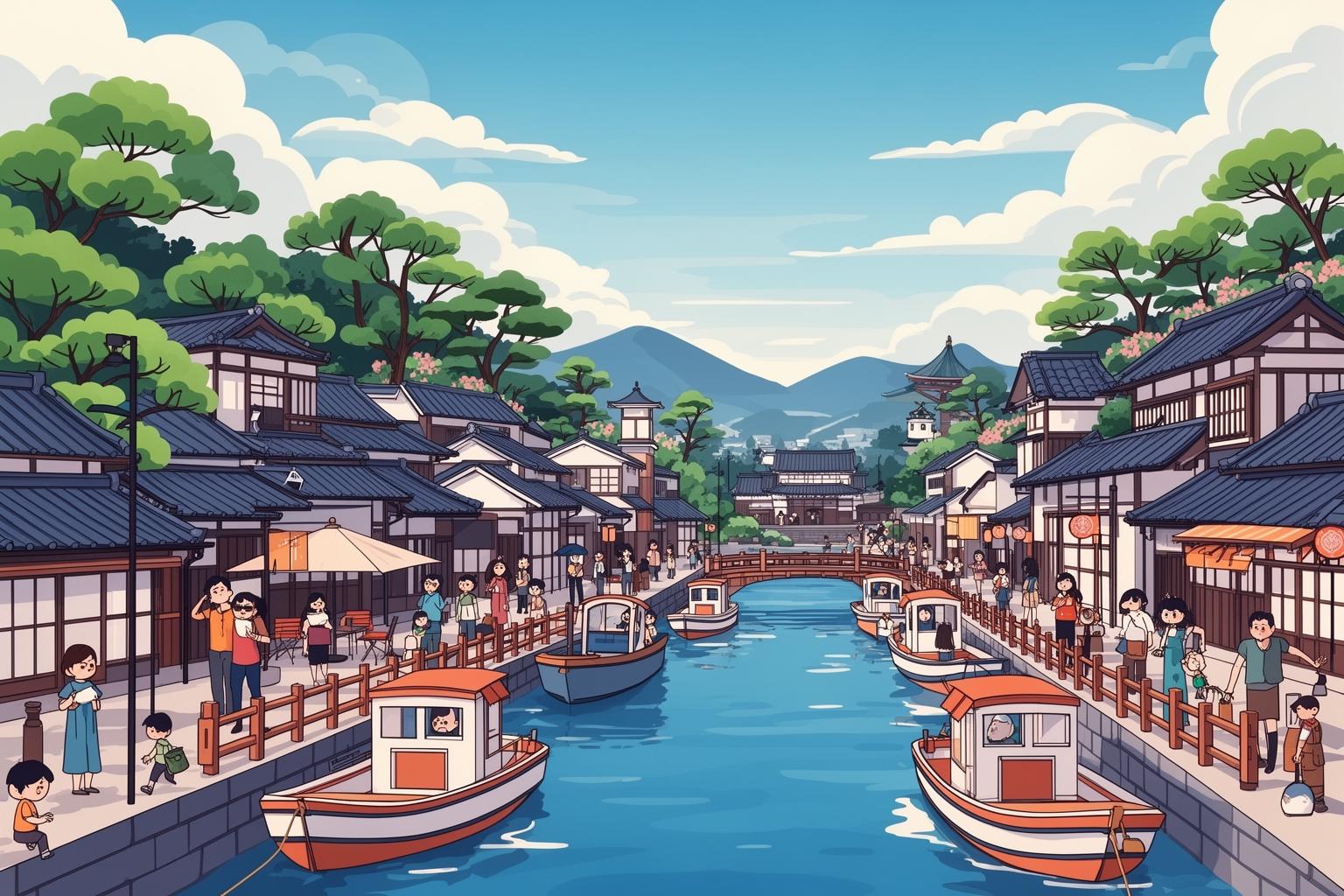
As the sun starts to sink toward the horizon, casting long shadows over the water and coloring the sky in shades of orange and violet, Tomonoura enters its most enchanting hour. The daytime bustle fades away, replaced by a profound and lasting tranquility. Find a spot along the harbor wall, watch the town’s lights begin to twinkle, and simply let the atmosphere envelop you. This is the magic Miyazaki recognized. It’s not only in the buildings or the views; it’s in the feeling of a place in harmony with its environment, a community that has lived by and for the sea for a thousand years. A trip to Tomonoura is more than visiting a film location. It’s a journey back in time, a lesson in the beauty of simplicity, and a reminder of the deep inspiration we draw from nature. You may arrive seeking Ponyo, but you’ll leave with a piece of Tomonoura’s quiet, enduring spirit in your heart. It’s a place that doesn’t just show you the magic of a Ghibli film; it allows you to feel it, breathe it, and carry it with you long after you’ve left.








