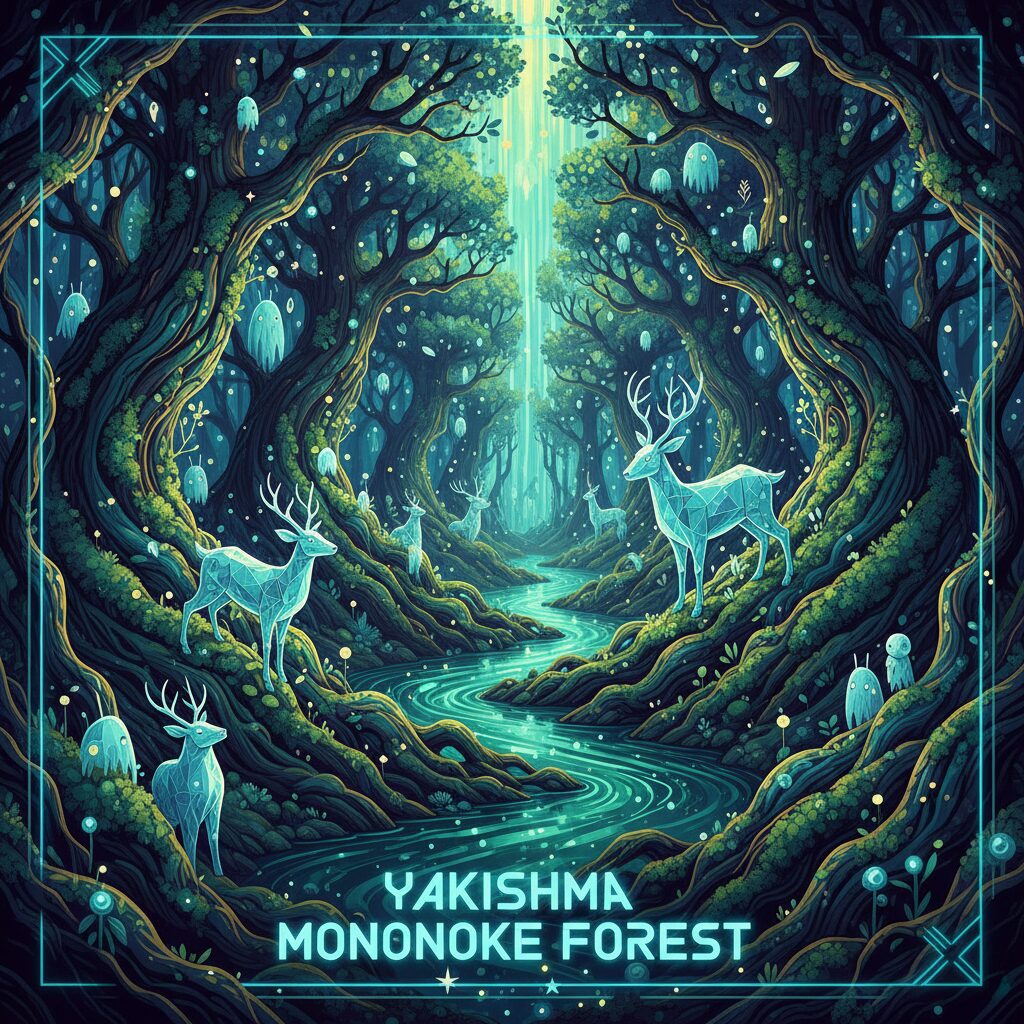
The air changes the moment you step onto Yakushima. It’s a physical shift, a tangible weight of humidity and life that settles on your skin. The scent of damp earth, of ancient wood, and of something wild and green fills your lungs with every breath. This isn’t just another island off the southern coast of Kyushu; it’s a world apart, a place where the veil between the modern age and primordial time feels impossibly thin. For travelers, hikers, and dreamers, Yakushima is a destination whispered with reverence. But for those of us who grew up mesmerized by the fierce, beautiful worlds of Studio Ghibli, it holds a deeper meaning. This is the island that breathed life into Hayao Miyazaki’s masterwork, Princess Mononoke. It is not merely a backdrop or a filming location; it is the living, breathing soul of the great Forest Spirit’s domain, a place where you can almost hear the rattle of the Kodama in the rustling leaves. To walk here is to walk through the heart of a legend, a pilgrimage into an ecosystem so powerful it inspired one of the greatest animated films of all time. My boots were laced, my rain gear was packed, and my spirit was ready to listen to the stories the forest had to tell.
For those whose heart resonates with the ancient magic of the forest, embarking on a Yakushima pilgrimage offers a deeper connection to the myth and mystery that inspired Miyazaki’s legendary creation.
The Living Inspiration for a Masterpiece
To grasp Yakushima’s deep connection to Princess Mononoke, one must look beyond mere visual resemblance. The island doesn’t simply look like the film; it evokes its spirit. It represents the movie’s core conflict: the sacred, untamable force of nature colliding with the unstoppable advance of human industry. When Hayao Miyazaki and his team scouted locations, they discovered more than just a visual backdrop within Yakushima’s depths. They uncovered a narrative, a history, and a spirit that would become the very foundation of their story. The film’s themes of environmentalism, spirituality, and the fury of forgotten gods are not abstract ideas here; they are embedded in the landscape itself. For centuries, this island supplied timber, with majestic Yakusugi cedars felled to build temples and castles far away. The scars of this history remain visible—the stumps of ancient giants stand like moss-covered tombstones, a quiet testament to a past where humanity took and the forest endured. This history parallels the tale of Irontown and its consumption of the mountain, lending the film’s message a potent, localized truth.
Miyazaki’s Vision and the Island’s Reality
Yakushima’s forests are realms of perpetual twilight, where the thick canopy of ancient trees filters sunlight into ethereal, shifting beams. It is in these silent, green cathedrals that the connection to the film becomes most vivid. You naturally find yourself searching for the Kodama, the small white tree spirits with their curious, rattling heads. Every twisted root and moss-covered stone seems to possess a life of its own, a quiet presence that watches you as you pass. It’s easy to imagine how Miyazaki’s imagination filled this world with spirits, gods, and giant creatures. The sheer size and age of the Yakusugi cedars, some thousands of years old, inspire awe and reverence. They are more than trees; they are living monuments, survivors of typhoons, landslides, and logging, standing sentinel for millennia. They are the true gods of this island, their enormous, silent presence a constant reminder of nature’s lasting power. The film captures this feeling flawlessly—the sense that the forest is a conscious being, far older and wiser than any human.
More Than Just a Movie Set
Long before it became a pilgrimage spot for Ghibli fans, Yakushima was valued for its extraordinary natural significance. It was designated a UNESCO World Heritage site in 1993, honoring its unique and incredibly diverse ecosystem. The island is effectively a mountain rising sharply from the sea, creating a vertical climate gradient often described as encompassing the entire Japanese archipelago—from the subtropical vegetation along the coast to the subarctic flora atop its highest peaks. This verticality drives the island’s most famous feature: its rain. A local saying humorously states, “it rains 35 days a month,” and while exaggerated, it conveys the near-constant moisture that nurtures this lush environment. This continual dampness is the forest’s lifeblood, sustaining the myriad moss species that cover every surface with a thick, velvety green carpet. This is more than just a backdrop; it’s a thriving, incredibly intricate biological system. The rain produces mist, the mist nourishes the moss, and the moss holds water that supports the entire forest during drier spells. Understanding this cycle deepens one’s appreciation of the film’s visuals; the beauty is not just artistic choice but a reflection of a real, vibrant ecological wonder.
Journey into the Moss Forest: Shiratani Unsuikyo Ravine
If there is one location on Yakushima that stands as the ultimate gateway into the world of Princess Mononoke, it is Shiratani Unsuikyo. This expansive, protected ravine embodies the film’s aesthetic most vividly, a place so surreal it seems purposefully crafted by a fantasy artist. Hiking here is less about reaching a specific destination and more about the experience of immersion. The moment you set foot on the trail, the outside world’s noise fades away, replaced by the gentle drip of water, the calls of unseen birds, and the soft cushion of moss and earth beneath your boots. The air is cool and rich with the scent of petrichor, even on dry days. Light struggles to break through the canopy, and when it does, it creates a breathtaking display of glowing greens and deep, mysterious shadows. It’s a photographer’s dream and a hiker’s haven, a place where every turn reveals a new arrangement of rock, root, and river that seems more perfect than the last.
The Heart of Mononoke’s World
Deep within the trail network at Shiratani Unsuikyo lies the area famously called the Koke no Mori, or the Moss Forest. This spot is widely recognized as the main inspiration for the film’s most iconic forest scenes. Entering this part of the ravine is truly awe-inspiring. The green is overwhelming, an unimaginable spectrum of hues ranging from deep emerald to bright lime, covering everything completely. Ancient, gnarled trees rise from a floor of moss-covered boulders, their roots forming intricate patterns across the terrain. A crystal-clear stream flows through the scene, its waters tumbling over stones softened and rounded by a lush green blanket. Here, you sense the full spirit of the island. You find yourself moving more slowly, speaking in whispers, as if not to disturb the profound tranquility of the place. A light rain, far from being a bother, actually enhances the enchantment, making the moss’s colors even more vivid and causing the entire forest to shimmer as if under a spell. It’s in this sacred space that you realize the forest of the Deer God was not mere fantasy, but a reality still alive on this island.
Planning Your Trek Through the Ravine
Shiratani Unsuikyo is surprisingly accessible, featuring several clearly marked trails suited to various fitness levels. You don’t need to be an expert mountaineer to enjoy its magic. The shortest routes take about an hour and pass through beautiful sections of forest and notable Yakusugi such as the Yayoi Sugi. For those seeking a deeper experience, the trail to the Moss Forest requires around three to four hours. The most challenging path continues upward, a tough but rewarding climb to a stunning granite viewpoint called Taiko Iwa, or Taiko Rock. On a clear day, the view from this perch ranks among the most spectacular in Japan, offering a panoramic sight of Yakushima’s mountainous interior. However, be warned: the weather at this elevation is unpredictable, and the peaks often lie shrouded in mist. Whatever route you choose, proper equipment is essential. Sturdy, waterproof hiking boots are a must, as the trails include wooden boardwalks, stone steps, and slippery muddy paths. High-quality rain gear, including both jacket and pants, will be invaluable. Even if the day starts sunny, mountain weather can change without warning.
The Quest for Jomon Sugi: A Pilgrimage to the Ancient King
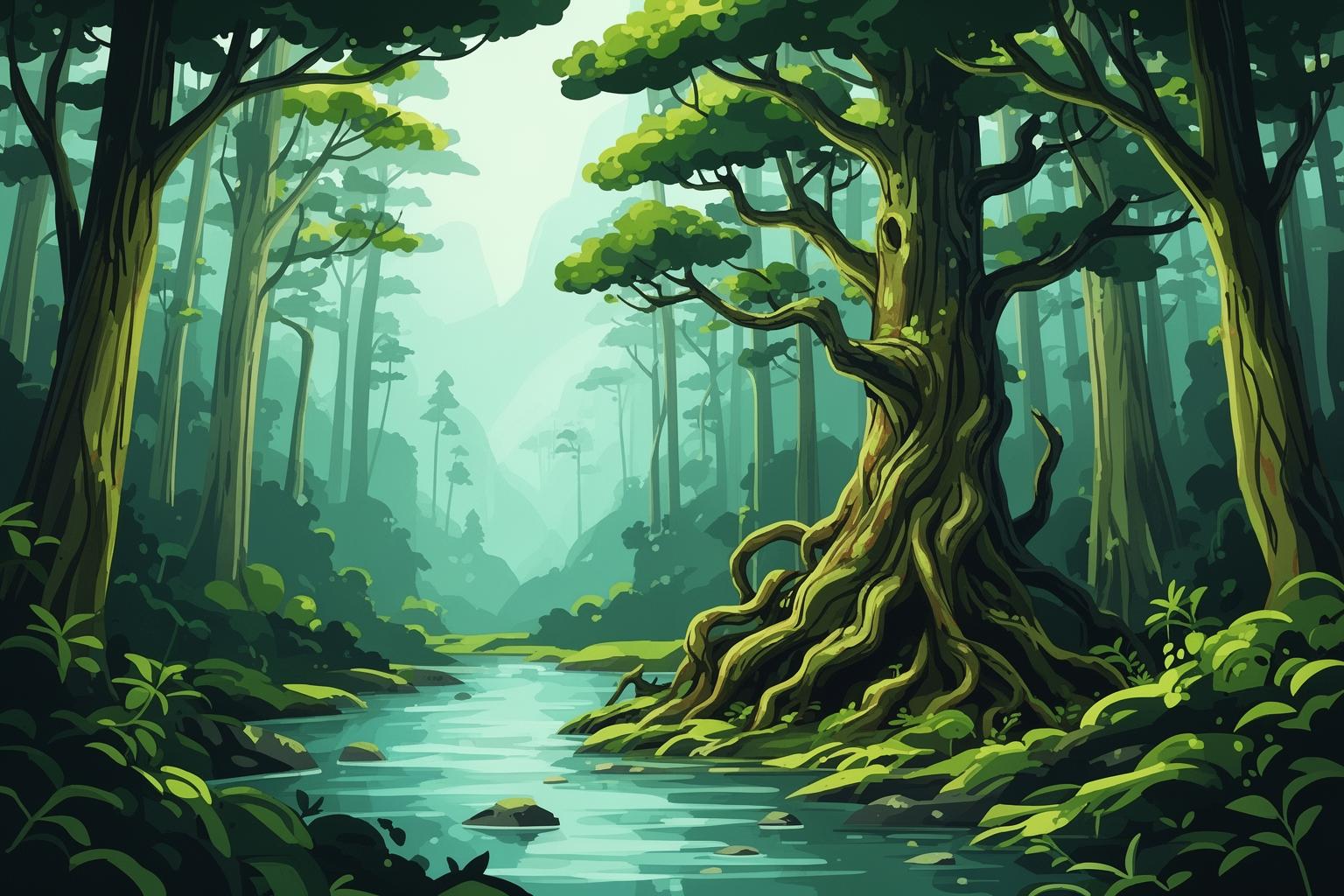
While Shiratani Unsuikyo captures the aesthetic spirit of Princess Mononoke, the hike to Jomon Sugi leads you to its spiritual core. This is far from a casual walk; it is a full pilgrimage—an intense ten to twelve-hour round trip that challenges both your physical stamina and mental resilience. The aim is to stand before a living being of unimaginable age. Jomon Sugi is the patriarch of the island, a massive Yakusugi cedar believed to be anywhere from 2,170 to a legendary 7,200 years old. Committing to this trek means dedicating a long day to relentless walking, but it also offers a chance to connect with the island on a deeper, more primal level. The journey itself is as meaningful as the destination, guiding you through varied landscapes and back through time.
Meeting a Living Legend
The hike to Jomon Sugi usually starts before dawn, with hikers setting off in darkness, guided by headlamps. The initial part of the most common route, the Okabu Trail, traces the path of an old logging railway. For several hours, you follow wooden planks laid over tracks, creating a rhythmic, almost meditative passage through the forest. This section is fairly flat but lengthy, serving as a warm-up for the more demanding mountain trail ahead. Along the railway, you encounter the haunting remains of the logging industry that once dominated the area—a poignant reminder of the film’s core themes. Once you leave the tracks, the steep, rugged climb begins, requiring navigation around giant roots and stone steps. Here you’ll come across other magnificent ancient trees, like Wilson’s Stump, the enormous hollowed remains of a felled cedar. You can step inside its vast interior and look up through a perfect heart-shaped opening in the sky—a moment of unexpected beauty amid the strenuous ascent.
The Reward at the End of the Trail
As you near Jomon Sugi, a sense of anticipation builds. After hours of tough hiking, you finally reach a specially built viewing platform located a short distance from the tree to protect its fragile root system. And there it stands. Words and photographs cannot fully convey Jomon Sugi’s commanding presence. It’s not just its immense size but its form: the gnarled, hollowed trunk scarred by millennia of typhoons and lightning, its branches stretching out like strong, arthritic arms. It resembles less a tree and more a living sculpture shaped by time itself. Standing before it, weary and aching, a profound humility washes over you. This is a life form that has stood here since long before the pyramids were built—a silent witness to all of human history. It is a deeply moving and spiritual encounter, the ultimate reward for a demanding journey. You don’t merely see Jomon Sugi; you experience its ancient, enduring energy.
Is the Jomon Sugi Hike for You?
It’s important to assess your physical fitness honestly before attempting this trek. Covering 22 kilometers with significant elevation gain in the second half, it requires confident hiking ability and good stamina. Starting well before sunrise and carrying ample water and high-energy snacks is strongly advised. Many choose to hire a local guide, which is highly recommended—not only do guides help manage pace and ensure safety, but they also offer invaluable knowledge about the forest’s ecology and history, greatly enriching the experience. If the full trek feels too intimidating, don’t be discouraged. The island features many other giant trees that are much easier to reach. For instance, Yakusugi Land park offers various trails on well-maintained boardwalks where you can see several cedars over a thousand years old—a wonderful alternative for those with less time or different fitness levels.
Beyond the Ancient Forests: Exploring Yakushima’s Diverse Charms
While the ancient cedar forests are Yakushima’s primary attraction, the island’s marvels extend far beyond its misty interior. It boasts a breathtaking range of landscapes, from serene beaches to jagged, cloud-reaching peaks. To fully appreciate Yakushima is to explore its entire spectrum, witnessing how the mountains and sea are entwined in a timeless, life-sustaining embrace. This variety is what makes the island so captivating; you could spend your morning wandering through primeval forests and your afternoon watching the sunset over the Pacific Ocean. The shift between these environments is rapid and striking, a constant reminder of the island’s compact yet remarkably diverse geography.
Coastal Wonders and Mountain Peaks
Yakushima’s coastline contrasts sharply with the deep green mountains. In the northwest, Nagata Inakahama beach stretches as a stunning expanse of golden sand, renowned as one of the key nesting sites for endangered loggerhead sea turtles in the North Pacific. From May to August, these majestic creatures come ashore under the cloak of darkness to lay their eggs. Witnessing this ancient ritual, or later in the summer, the tiny hatchlings making their frantic dash to the sea, is an unforgettable and deeply moving sight. For the adventurous, Yakushima offers some of Japan’s most demanding and rewarding mountaineering experiences. The island’s central cluster of peaks, including Kyushu’s highest, Mt. Miyanoura, is collectively known as the “Alps of the Ocean.” Climbing these mountains requires experience, proper equipment, and often several days, but the breathtaking views and profound sense of achievement are well worth it. No exploration of the island’s edges is complete without encountering its powerful waterfalls. Ohko-no-taki Falls in the southwest ranks among Japan’s tallest, a roaring cascade you can approach closely, feeling its spray on your skin. In contrast, Senpiro-no-taki Falls is admired from afar, a mighty torrent cutting through a massive granite cliff.
The Island’s Unique Culture and Cuisine
Life on Yakushima is deeply intertwined with the formidable nature that envelops it. The small, tranquil towns scattered along the coastal ring road, such as Miyanoura in the north and Anbo in the east, serve as the island’s main centers. Here, visitors can experience a local culture that is humble, resilient, and profoundly respectful of the environment. The island’s cuisine celebrates its natural abundance. A signature specialty is fresh flying fish, or tobiuo, often served fried whole with fins spread like wings. Yakushima is also well-known for its shochu, a distilled Japanese spirit. Brands like Mitake and Miyano-yuki are celebrated for their smooth flavor, attributed to the exceptionally pure, soft water flowing from the granite mountains. Additionally, many products are crafted from local tankan and ponkan citrus fruits, including juices, jams, and sweets. Engaging with the local community—whether by staying at a family-run minshuku guesthouse or enjoying a meal at a small local eatery—offers a meaningful contrast to the solitary mountain hikes and fosters a deeper appreciation for the people who call this extraordinary island home.
Practical Guide to Your Yakushima Adventure
Planning a trip to a wild and remote destination like Yakushima requires some foresight. The logistics of getting there and getting around the island are part of the experience, and being well-prepared will allow you to focus on absorbing the magic rather than struggling with travel details. The island’s weather is famously unpredictable, and its infrastructure is designed more for nature enthusiasts than casual tourists, so a bit of planning goes a long way. Think of it as gearing up for an expedition; the more you know ahead of time, the smoother your trip will be.
Getting There and Getting Around
Yakushima is most often accessed from Kagoshima, the southernmost major city on mainland Kyushu. From there, you have two primary options. The fastest route is the high-speed jetfoil ferry, commonly called the “toppy” or “rocket,” which takes about two to three hours. For those with more time or a tighter budget, the slower car ferry offers a more relaxed journey, taking around four hours and featuring open decks where you can watch for dolphins and flying fish. Alternatively, Yakushima has a small airport with daily flights from Kagoshima and less frequent direct flights from Fukuoka and Osaka. Once on the island, having freedom of movement is crucial. While a public bus system circles the island, its service can be infrequent, and schedules may not fit the early starts needed for long hikes. The best way to explore Yakushima is by renting a car, providing the flexibility to visit remote trailheads, pursue clear weather, and explore the coastline at your own pace. Be sure to book your rental car well in advance, especially during peak seasons, as the island’s fleet is limited.
When to Visit: A Calendar of Natural Wonders
Yakushima is a destination worth visiting year-round, with each season offering its own charm and unique experiences. Spring, from March to May, is a popular season for hiking. The weather is generally mild and pleasant, with forests bursting with new life and beautiful pink and white mountain rhododendron blossoms. Summer starts with the rainy season, or tsuyu, in June, bringing heavy downpours but also making the moss exceptionally vibrant. July and August are hot and humid, prime months for sea turtle nesting and hatching, as well as river and ocean activities like kayaking and snorkeling. Autumn, from September to November, is another excellent time for hiking, with cooler temperatures and fewer crowds than spring. The forests at higher elevations showcase stunning autumn colors, though this period is also typhoon season, so staying flexible with your plans is important. Winter, from December to February, is the quietest time on the island. While the coast remains mild, the high peaks often lie under deep snow, turning the island into a breathtaking winter wonderland. Hiking in the mountains during this time requires proper winter gear and experience, but the peaceful beauty and solitude can be truly magical.
Where to Stay and What to Pack
Yakushima’s accommodations range from budget-friendly hostels and traditional minshuku guesthouses to comfortable hotels and private rental cottages, mostly around the main towns of Miyanoura and Anbo. Staying in a minshuku offers a great chance to experience local hospitality, often including delicious home-cooked meals made with local ingredients. It’s important to book your lodging well in advance, especially if visiting during Golden Week in early May or the Obon holidays in August. When packing, one word should guide you: waterproof. High-quality, breathable rain gear (both jacket and pants) is the single most crucial item you’ll bring. Alongside that, pack sturdy, waterproof hiking boots with good traction that are already broken in. Clothes should be layered—synthetic, quick-drying fabrics are far better than cotton in this damp environment. Include a warm fleece or mid-layer since even in summer, mountain trails can be chilly. Don’t forget sunscreen, a hat, and strong insect repellent, especially for coastal areas. Finally, bring a reusable water bottle. Yakushima’s water is famously pure and delicious; you can refill it directly from mountain streams, a simple yet wonderful pleasure while hiking on the island.
A Final Word: The Enduring Spirit of the Forest
Leaving Yakushima feels like awakening from a vivid dream. The memory of the deep, resonant green of the moss, the immense scale of the ancient cedars, and the constant, life-giving presence of water lingers long after you’ve returned to the world of concrete and steel. A journey here is far more than a simple hiking trip or an anime pilgrimage. It’s a profound lesson in humility, an opportunity to stand before something truly ancient and sense your own place within the grand, slow timeline of the natural world. You come to Yakushima to see the forest that inspired Princess Mononoke, but you leave with the film’s message etched not only in your mind but deep within your very soul. It’s the realization that we are part of this wild, beautiful world, not its masters. The forest demands nothing but respect. If you arrive with an open heart and a willingness to listen, you might just catch the whispers of its enduring spirit in the wind—a story of resilience and a timeless echo of the gods who still dwell among the trees.