
There are stories that stay with you, not just as a narrative you consumed, but as a feeling you inhabited. They leave an echo in your heart, a resonance that hums softly long after the credits roll. Makoto Shinkai’s masterpiece, ‘Kimi no Na wa’ or ‘Your Name.’, is one such story. It’s a tale woven from starlight and circumstance, a celestial romance that transcends time, distance, and even memory itself. It captures the frantic, dazzling loneliness of Tokyo and contrasts it with the sacred, tranquil beauty of Japan’s countryside. The film’s central concept of musubi—the invisible, intricate threads of fate that tie everything together—is not just a plot device; it’s an invitation. An invitation to seek out these connections in our own world. And for fans across the globe, that journey begins with a ‘seichi junrei,’ an anime pilgrimage, to the very spots where the lives of Taki Tachibana and Mitsuha Miyamizu unfolded. This is not merely a sightseeing tour; it is a quest to stand where they stood, to feel the sun on your face as they did, and to understand, in a deeply personal way, the two disparate worlds that collided so beautifully. From the pulsing urban arteries of Shinjuku to the sleepy, traditional lanes of Hida, this pilgrimage is a physical act of tracing the threads of musubi, a journey to find the tangible soul of an animated dream. Before we begin, let this map be your guide, a constellation of points connecting two souls, waiting for you to explore.
Embarking on a pilgrimage through real-world locations can transform this cinematic journey into a tangible experience that deepens the magic of its celestial connections.
Tokyo’s Urban Heartbeat: Walking in Taki’s Footsteps
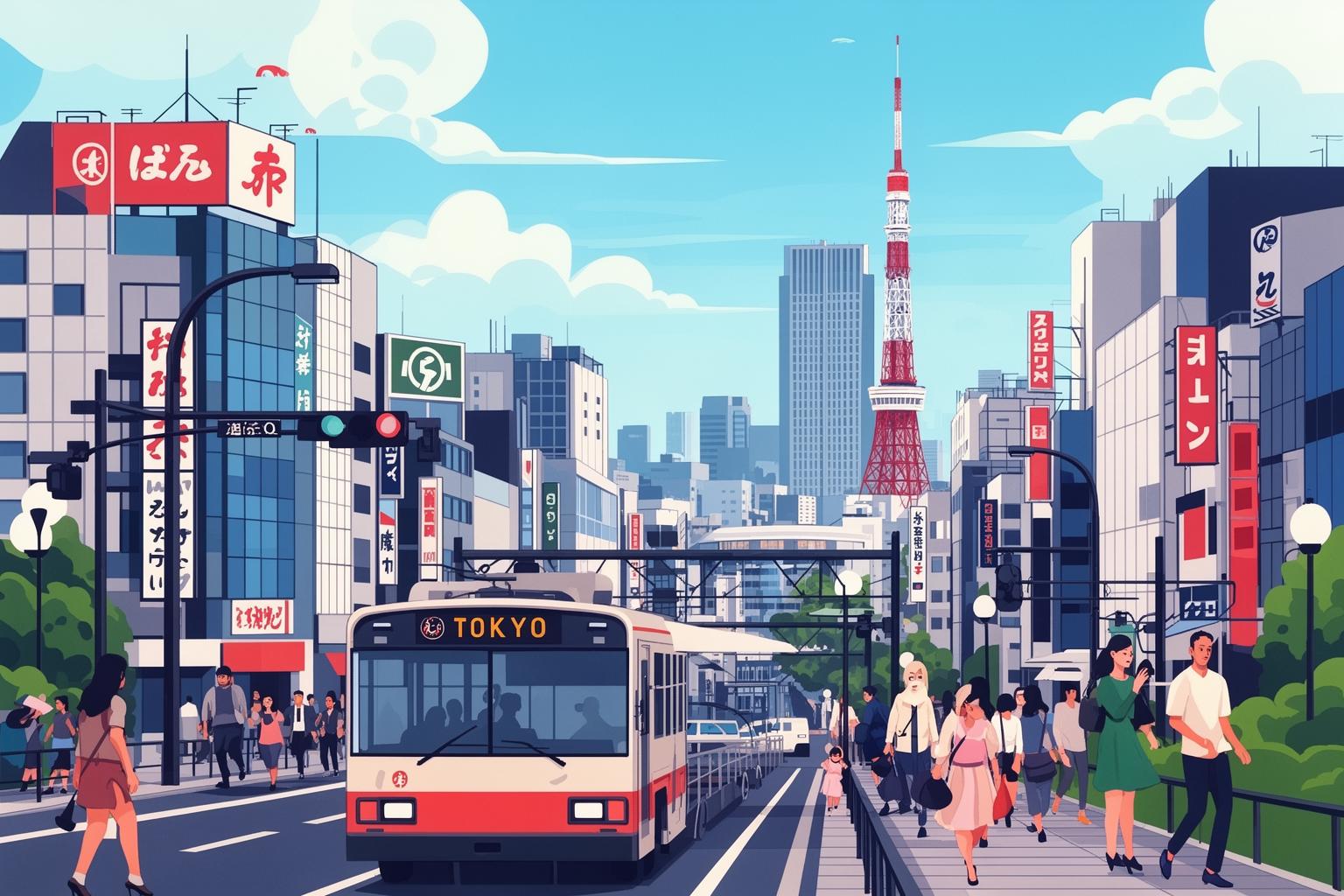
Tokyo is a city of constant motion, a vast mosaic of concrete, glass, and light, where millions of individual stories converge every second. This is Taki’s world. It’s a realm of ambition, opportunity, and a subtle undercurrent of anonymity. To wander through his Tokyo is to sense the rhythmic heartbeat of a metropolis that never truly sleeps. It’s a landscape of train schedules, part-time jobs, and fleeting moments of beauty discovered amid the overwhelming scale. The pilgrimage here isn’t about dramatic views; it’s about uncovering the quiet, character-revealing spots nestled within the city’s vast framework, the places that shaped Taki’s perspective long before he dreamed of a life in the mountains. This segment of the journey is an urban exploration, a treasure hunt for the cinematic frames hidden in plain sight within one of the world’s most dynamic cities.
The Iconic Red Staircase: Suga Shrine in Yotsuya
Every great story has its peak, a single image that captures its entire emotional weight. For Your Name., it is undeniably the poster image: Taki and Mitsuha, years after their memories have faded, passing each other on a striking red-railed staircase, a spark of inexplicable recognition flashing between them. This is the moment the whole film builds toward, the heart-stopping climax where fate hangs in the balance. Those stairs are real, leading to the Suga Shrine in a quiet, unassuming residential neighborhood of Yotsuya. Finding this spot feels like discovering a secret portal. One moment you’re navigating the pleasant but ordinary streets of Tokyo, and the next, you turn a corner and your breath catches. There it stands: the steep incline, the distinctive red handrails, the canopy of trees overhead—it’s a perfect recreation. Climbing these steps is a surprisingly emotional experience. You sense the phantom weight of Taki’s desperate search, years of nameless longing culminating in this single ascent. The city noise seems to soften, replaced by rustling leaves and the pounding of your own heart. At the top, the Suga Shrine itself is a peaceful local sanctuary, worlds apart from Tokyo’s grander, more crowded temples. It’s a place for quiet reflection. Visitors often pause at the top or bottom of the stairs, gazing across as if expecting to see a familiar face, a testament to the film’s powerful storytelling. For the best experience, visit late in the afternoon. The ‘golden hour’ light filters through the leaves, casting long shadows and bathing the scene in a warm, nostalgic glow that perfectly mimics the film’s aesthetic. This isn’t just a photo spot; it’s the physical embodiment of the movie’s central question: “What is your name?”
A City of Intersecting Lines: Shinjuku’s Scenery
If Yotsuya holds the film’s emotional climax, Shinjuku is its beating heart, the backdrop of Taki’s daily life. This ward is a microcosm of Tokyo itself, a place of dizzying contrasts. It’s home to the world’s busiest train station, serene gardens, towering skyscrapers, and intimate alleyways. Shinkai masterfully uses this setting to paint a portrait of Taki’s world—a place of endless movement and fleeting connections.
The Shinjuku Pedestrian Bridge
Featured in several of the film’s beautiful time-lapse montages, the circular pedestrian bridge near the Shinjuku Police Station symbolizes the city’s intricate network. Standing on it, you watch the endless flow of traffic below—headlights and taillights stretching into ribbons of red and white, just as they do in the anime. It’s a spot that makes you feel both small and deeply connected. You become one tiny point of light in a vast, interconnected web. It captures the essence of Taki’s urban existence, sharply contrasting with Mitsuha’s life, which moves to the slow, deliberate cycles of nature and tradition. The bridge itself is a piece of functional art, and finding the exact angle from the film offers a satisfying moment of aligning your reality with the animated world.
The National Art Center, Tokyo: Taki’s Date with Okudera-senpai
Beyond school and work, we glimpse a more cultured and aspirational side of Taki during his date with his coworker, Okudera-senpai. Their destination is The National Art Center in Roppongi, a building famed for its spectacular, undulating glass facade designed by Kisho Kurokawa. The scene is memorable not only for character development but also for its stunningly accurate depiction of the Center’s interior, especially the chic café, ‘Salon de Thé ROND,’ perched atop a giant concrete cone. Visiting this place feels like stepping directly into the film. You can sit in the very same café, savor coffee and cake, and gaze out at the light pouring through the massive glass walls. It’s a moment of quiet sophistication. The experience adds depth to Taki’s character, revealing his appreciation for art and design. For the pilgrim, it offers a stylish and welcome respite. The museum itself hosts a rotating series of world-class exhibitions, making it a worthy destination on its own. Plan to spend a few hours here, immersing yourself in both the art on display and the architectural beauty that inspired Shinkai.
Shinjuku Station and the Yunika Vision Screen
The overwhelming energy of Shinjuku Station feels like a character in its own right. As the world’s busiest transportation hub, it’s a vortex of humanity, a place where millions of paths intersect daily. This chaotic symphony forms the backdrop of Taki’s commute. Dominating the view outside the east exit is the Yunika Vision, a massive multi-screen display that features prominently in the movie, often showing news or music videos that ground the story in contemporary Japan. Standing in the square, watching the crowds surge past as advertisements flash across giant screens, you feel the electric pulse of Taki’s Tokyo. It’s a vivid reminder of the modern, loud, and relentlessly fast-moving world he inhabits. It provides the perfect contrast to the ancient, silent traditions that shape Mitsuha’s existence.
Capturing the Tokyo Vibe
To truly experience Taki’s Tokyo, embrace the public transportation system. The JR Yamanote Line, the city’s circulatory system, will be your best friend, connecting you to Shinjuku, Yotsuya, and other key locations. A Suica or Pasmo card is essential for smooth travel. The Tokyo part of the pilgrimage is a lesson in urban navigation and observation. It’s about finding beauty in the mundane: the way light reflects off a skyscraper, the organized chaos of a crosswalk, the quiet sanctity of a neighborhood shrine tucked just blocks from a busy avenue. It’s about understanding that in a city of millions, a fateful encounter can feel both impossible and inevitable.
Into the Verdant Calm: Discovering Mitsuha’s Itomori in Hida
Leaving the concrete canyons of Tokyo for the Hida region of Gifu Prefecture is a sensory transformation so profound it feels like an act of body-swapping in itself. The air becomes crisp and clean, perfumed with pine and damp earth. The dominant hues shift from gray and neon to deep greens and rich wood tones. The frantic city pace slows to the gentle rhythm of a flowing river. This is the world that shaped Mitsuha Miyamizu. Although the town of Itomori is fictional, its essence is crafted from the authentic and incredibly charming landscapes of Hida. This part of the journey is not about finding exact replicas but about breathing the air Mitsuha breathed, understanding the deep-rooted traditions she longed to escape, and appreciating the profound, quiet beauty she might have taken for granted.
Hida-Furukawa: The Soul of Itomori
The small, beautifully preserved town of Hida-Furukawa serves as the primary inspiration for Itomori’s townscape. It’s a place where time seems to move differently. The streets are lined with traditional white-walled storehouses (‘kura’) and dark wooden merchant homes. A network of clean, narrow canals, alive with enormous, colorful koi fish, crisscrosses the town. The atmosphere is one of serene authenticity. It’s a place where community is palpable and where the legacy of craftsmanship—from sake brewing to candle making—is a source of immense local pride. Walking these streets, you begin to grasp Mitsuha’s simultaneous love for her home and her feeling of being confined by its smallness.
Hida-Furukawa Station
This is the first and most direct connection between the film and the real world in Hida. The scene where Taki and his friends arrive, holding up a sketch of Itomori’s landscape and asking locals for information, takes place at this very station. The real Hida-Furukawa Station closely resembles its animated counterpart, from the platform’s design to the pedestrian overpass. Fans enjoy waiting for the Wide View Hida train to arrive, recreating the view from Taki’s perspective. Even the small mascot figure of Hida-gyu, the local brand of beef, is present—a charming detail that strengthens the connection. The station staff are well aware of their landmark’s fame and warmly welcome visiting pilgrims.
The Hida City Library
Another key location is the Hida City Library, where Taki’s research reveals the tragic history of Itomori. This beautiful, modern library with its stunning wooden interior and geometric design has embraced its role in the ‘Your Name.’ phenomenon. Upon entering, visitors are immediately struck by how faithfully Shinkai and his team recreated the space. The library has even designated a dedicated corner for fans, permitting photography in a specific spot to replicate the film scene without disturbing other patrons. This welcoming gesture is deeply heartwarming. Sitting in the library, surrounded by books and the quiet hum of study, you can almost feel the tension and dawning horror that Taki experienced as he pieced together the comet strike’s history. It is a powerful, immersive moment.
Keta Wakamiya Shrine
While the Miyamizu Shrine in the film is unique, its real-world spiritual counterparts are found throughout Hida. One notable inspiration is the Keta Wakamiya Shrine in Hida-Furukawa. A long flight of stone steps ascends a wooded hill to the shrine, evoking the path Mitsuha and her sister Yotsuha would take for their shrine duties. The feeling here contrasts greatly with that of Suga Shrine in Tokyo. It is not a place of urban encounter but of ancient, nature-based spirituality. The air is cool beneath the canopy of tall trees, and the silence is deep and reverent. It helps one understand the Shinto belief in ‘kami’ (gods or spirits) residing in natural objects, a belief central to the Miyamizu family’s traditions. This place feels ancient and powerful, a direct link to the traditions Mitsuha felt were holding her back.
The Mystical Landscape of Hida
The inspiration for Itomori stretches beyond the town itself, drawing from the breathtaking natural beauty of the wider region. It is a land of soaring mountains, dense forests, and crystal-clear lakes—a landscape imbued with myth and mystery.
Lake Suwa: The Model for Itomori’s Lake
Perhaps the most stunning visual model for Itomori is not in Gifu but several hours away in neighboring Nagano Prefecture. Lake Suwa is widely believed to be the direct inspiration for the beautiful, crater-like lake around which Itomori was built. For the dedicated pilgrim, the journey is well worth the effort. The best viewpoint is from Tateishi Park, a park perched on a hillside overlooking the water. From here, the shape of the lake and the surrounding town spread out below are uncannily similar to the sweeping aerial shots in the film. The view is breathtaking at any time, but becomes truly magical at dusk. This is the time of kataware-doki, or twilight—the magical hour when the boundary between worlds blurs, and when Taki and Mitsuha are able to meet for a few precious moments on the caldera’s edge. Watching the sunset from Tateishi Park, as the town lights begin to twinkle around the lake, is an almost spiritual experience—an echo of the film’s most poignant scene.
The Tradition of Kumihimo
One of the most potent symbols in ‘Your Name.’ is kumihimo, the intricately braided cords that Mitsuha and her family create. The film imbues these cords with the meaning of musubi itself, representing the flow of time, the twisting of fate, and the connections between people. This is not a fictional craft; it is a real and cherished Japanese tradition, strongly present in the Hida region. Several shops and centers in Hida-Takayama, a larger city near Hida-Furukawa, offer workshops where visitors can try making their own kumihimo bracelets. This is a wonderfully tangible way to connect with the film’s core themes. As you handle the threads, weaving them over and under, you gain a new appreciation for the patience, skill, and history behind the craft. It transforms a symbolic motif from the screen into a personal, physical souvenir—a thread of connection to Mitsuha’s world that you can carry with you.
The Pilgrim’s Practical Path: Planning Your ‘Your Name.’ Journey

Embarking on this pilgrimage requires some planning, as you are essentially connecting two very distinct regions of Japan. A carefully crafted itinerary will guarantee a smooth and meaningful journey, allowing you to fully immerse yourself in the experience without worrying about logistics. Consider this planning phase as the first threads woven into your own story.
Bridging Two Worlds: Travel Between Tokyo and Hida
The trip from Taki’s world to Mitsuha’s is a scenic adventure in its own right. The most efficient way is by train. From Tokyo, take the Tokaido Shinkansen (bullet train) to Nagoya, a key city serving as a gateway to the Chubu region. This ride is a marvel of speed and comfort, transporting you through the Japanese countryside in just over an hour and a half. In Nagoya, you will switch to the JR Hida Wide View Express, where the true transition begins. This train journey is among Japan’s most beautiful, winding through dramatic river valleys and deep mountain gorges. The train’s panoramic windows are designed to provide the best possible views of the breathtaking scenery. Many pilgrims end their journey in Takayama, a larger and popular tourist town, from which Hida-Furukawa is just a short, 15-minute local train ride away. For international visitors planning to explore other parts of Japan, the Japan Rail Pass can make this entire trip very cost-effective. The total travel time from Tokyo to Hida-Furukawa is roughly four to five hours, mirroring Taki’s own determined quest.
When to Weave Your Own Story
‘Your Name.’ is primarily set in the vibrant greenery of late summer, and visiting during July or August will provide an experience most closely matching the film’s visuals. The days are long and warm, and the Hida mountains are lush and vibrant. However, each season offers its own unique appeal. Autumn (October and November) is spectacular, with the mountains ablaze in striking reds, oranges, and yellows, adding a different kind of magic to the landscape. Winter (December to February) covers the Hida region in a thick blanket of snow, turning towns like Hida-Furukawa into serene, monochrome wonderlands. While beautiful, be prepared for cold temperatures and potential travel delays. Spring (April and May) brings cherry blossoms to Tokyo and fresh vitality to the mountains, a season of renewal and beauty. The timing of your visit can greatly influence the atmosphere of your pilgrimage, so choose the season that resonates most with you.
A Note on Respectful Pilgrimage
It is a profound joy to see these animated locations in the real world, but it’s important to remember they are not film sets—they are real places with real communities. Suga Shrine is located in a quiet residential neighborhood; please be mindful of noise and respect the privacy of local residents. The Hida City Library is a functional public space; follow their rules and be considerate of those studying or reading. Local shrines are active places of worship, not just tourist spots. Approach them with reverence. The spirit of a ‘seichi junrei’ embodies deep appreciation and respect. By being a courteous and thoughtful visitor, you honor both the creators of the film and the communities that inspired them, helping to keep these special places welcoming to future pilgrims for years to come.
Musubi: Tying It All Together
A journey through the world of Your Name. offers more than just a checklist of places to visit. It is an experience of striking contrasts and unexpected harmonies. It’s the rush of the Shinjuku scramble followed by the serene calm of a mountain shrine. It’s the sleek modernity of a Roppongi art museum alongside the timeless warmth of dark wood in a Hida storefront. Traveling from Tokyo to Gifu means physically tracing the vast distance—both geographical and cultural—that separates Taki and Mitsuha. You come to appreciate his wonder at the beauty of her world and her longing for the excitement of his. You sense the immense obstacles they face, which makes their eventual connection all the more moving. Standing on the stairs at Suga Shrine, you are not simply observing a location; you are experiencing the culmination of that seemingly impossible journey. This pilgrimage achieves what the film does so brilliantly: it intertwines the modern with the traditional, the ordinary with the magical, the urban with the rural. It reminds us that our world is full of unseen connections, those threads of fate and memory that link us to people and places in ways we might not always grasp. It’s a journey that leaves you with more than just photographs; it leaves you with a feeling, an echo of the central theme of musubi, and the quiet, hopeful belief that somewhere, someone is searching for your name, too.