
There are stories that feel like a dream you once had, a faint but powerful echo in your soul. Makoto Shinkai’s masterpiece, Kimi no Na wa, or Your Name, is one such story. It swept across the globe not just as an animated film, but as a shared emotional event, a beautiful ache of longing, connection, and the cosmic threads that tie us together. It’s a tale of two souls—Taki in bustling, electric Tokyo, and Mitsuha in the serene, fictional countryside town of Itomori—who find themselves inexplicably linked. The magic of the film lies not only in its heart-wrenching narrative but in its breathtakingly realistic world. Shinkai’s team painted a Japan so vivid, so tangible, that it blurred the line between animation and reality. This sparked a modern-day pilgrimage, a phenomenon the Japanese call seichi junrei, where fans travel to the real-life locations that inspired their favorite stories. This is more than just sightseeing; it’s a quest to stand in the very space where fiction felt real, to breathe the same air as the characters, and to feel that cinematic magic firsthand. Our journey will take us from the vibrant, sprawling heart of Tokyo to the quiet, traditional soul of the Hida region in Gifu Prefecture, tracing the footsteps of Taki and Mitsuha and discovering the profound beauty of the places that gave life to their world. Prepare to see Japan not just through your own eyes, but through the lens of a story that touched millions.
Dive deeper into Japan’s cinematic charm by checking out our Ghibli Museum guide for insights into another iconic cultural landmark.
Tokyo’s Concrete Dreams: Taki’s World
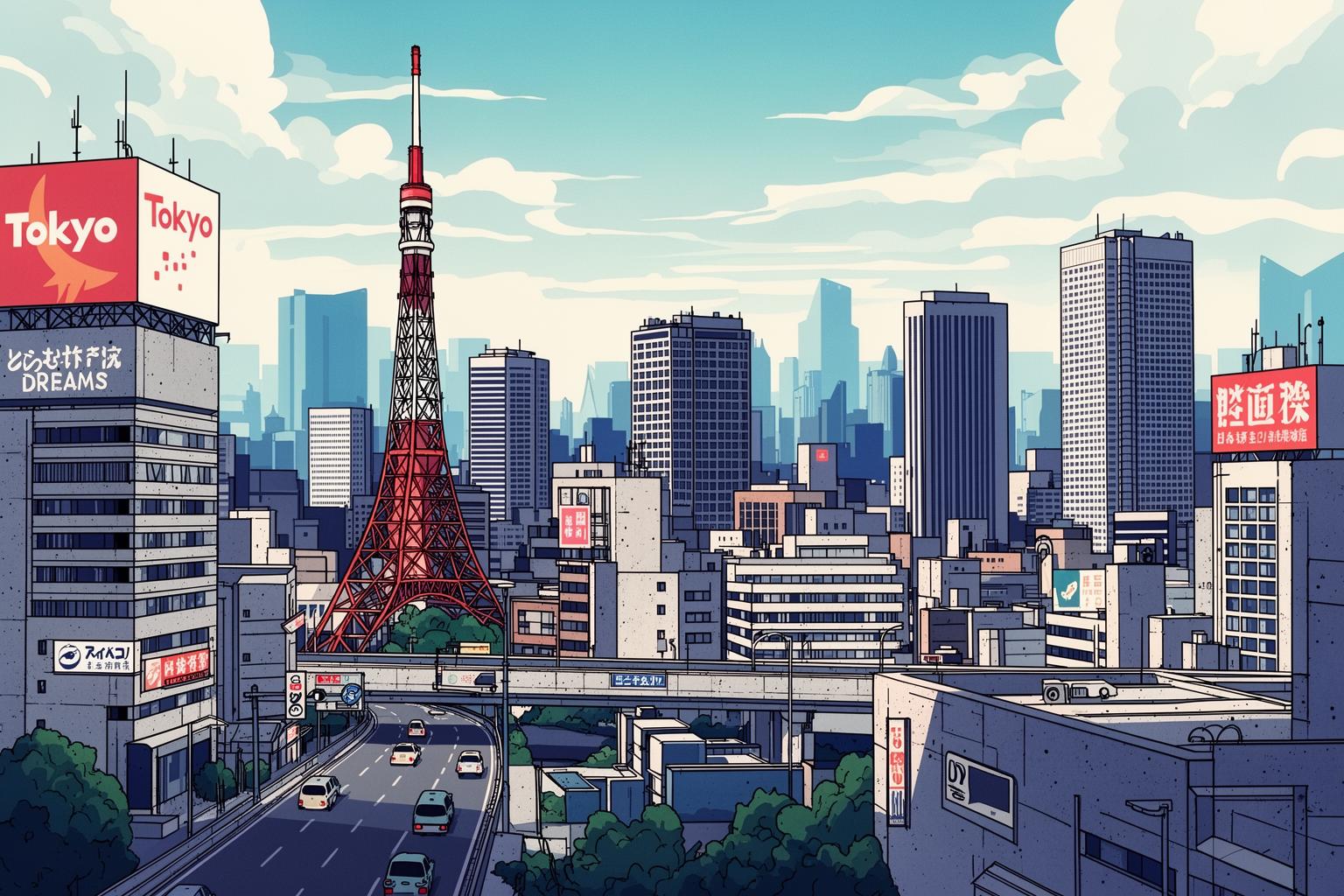
Tokyo is a city in constant motion—a symphony of hurried footsteps, humming train lines, and towering glass buildings that scrape the sky. This is Taki Tachibana’s world, a place brimming with vibrant energy, endless opportunity, and a subtle undercurrent of urban loneliness. Stepping into Shinjuku is like entering the film’s opening scenes. You are instantly surrounded by the immense scale of it all. The city breathes around you, a living entity of steel and light. Shinkai skillfully captured not only the landmarks but also the feeling of being a small part of this vast, interconnected network. The sunlight reflecting off skyscrapers, the intricate web of power lines against a twilight sky, the rhythmic clatter of trains pulling into a station—these sights and sounds form the backdrop of Taki’s life, inviting you to experience them and forge an immediate, powerful connection to his story.
The Iconic Red Staircase: Suga Shrine, Yotsuya
Few locations are as synonymous with Your Name as the red-railed staircase where Taki and Mitsuha finally, fatefully meet. This modest set of stairs, leading up to the serene Suga Shrine in a quiet Yotsuya neighborhood, has become sacred ground for fans. The journey there is part of the experience. Leaving the bustle of Yotsuya Station, you wind through narrow, peaceful streets where the city’s noise gradually fades into gentle quiet. Then, you turn the corner—and there it is. The view is so perfectly aligned with the film’s final, heart-stopping frame that it can genuinely take your breath away. What strikes you most is the contrast. In the film, this moment is a crescendo of emotion—years of searching culminating in one single question. In reality, it is a place of profound peace. You’ll likely notice other pilgrims, each patiently waiting their turn to capture the perfect photo, a quiet, shared understanding passing between strangers from across the world, all drawn here by the same story. Standing at the bottom looking up, or at the top looking down, you can’t help but overlay the animated characters on the real world, the afternoon light filtering through the trees exactly as it did on screen. For the best experience, visit on a weekday morning or late afternoon when the light is softer, more golden, and the atmosphere more contemplative—allowing you to fully absorb the magic of the moment without the weekend crowds. Remember to respect the residents; this is their home, a tranquil corner of Tokyo that has warmly welcomed visitors.
A Date with Destiny: Shinjuku and Yoyogi
Shinjuku is the vibrant heart of Taki’s Tokyo—where he lives, works, and spends time with friends. Many of the film’s key establishing shots and slice-of-life moments take place here, making it a treasure trove for any pilgrim. A perfect starting point is Shinjuku Gyoen National Garden, the beautiful oasis where Taki is often seen sketching. This sprawling park offers a stunning escape from the urban chaos just beyond its gates. You can almost sense the creative energy that Taki drew from this place. The park’s famed greenhouse, with its lush tropical plants, feels especially cinematic—a self-contained world of warmth and greenery. It’s an ideal spot to sit with a sketchbook of your own or simply enjoy a moment of peace and reflect on the film’s quieter themes. From there, prepare yourself for the human tide at Shinjuku Station. As the busiest railway station in the world, it offers an overwhelming yet exhilarating experience. It perfectly captures the feeling of being swept along by the city’s currents—a sensation both Taki and Mitsuha experienced. It’s a place to watch and absorb the endless flow of people and feel Tokyo’s pulse. Just a short walk or one train stop away is Yoyogi, another crucial location. The NTT Docomo Yoyogi Building, with its distinctive clock tower, plays a constant role in the Your Name Tokyo skyline, silently witnessing the unfolding drama. It serves as a geographical anchor, grounding the animated city in reality. For an immersive experience, visit Cafe La Bohème Shinjuku Gyoen—the real-life restaurant that inspired “Il Giardino delle Parole,” the Italian eatery where Taki worked part-time. The restaurant’s grand, villa-like décor and elegant ambiance perfectly complement its cinematic counterpart. Dining here offers a delicious, atmospheric way to connect with Taki’s everyday life.
Bridging Worlds: The Shintoshin Pedestrian Bridge
Another iconic site in Taki’s Tokyo is the Shintoshin Pedestrian Bridge near the Shinjuku Police Station. This circular walkway, with its crisscrossing paths and views of surrounding skyscrapers, appears in several montages. It symbolizes the intersections and connections defining city life. While interesting to visit during the day, the bridge truly transforms after dark. As night falls and the city lights blaze to life, the view from the bridge becomes a stunning, almost futuristic panorama that perfectly echoes the film’s aesthetic. Streams of car headlights below create ribbons of red and white light, visually representing the flowing energy of the city and subtly nodding to the braided cords, the musubi, that connect the characters. Surrounded by neon glow and the distant hum of traffic, you feel Tokyo’s vastness and the extraordinary idea that amid this sea of people, two souls could be searching for one another. It’s a contemplative spot and the perfect place to conclude a day exploring Tokyo’s Your Name locations, watching the city breathe and sparkle around you.
Gifu’s Whispering Soul: In Search of Itomori
Traveling from Tokyo to the Hida region of Gifu Prefecture feels like moving between two entirely different worlds, much like the journey of Taki and Mitsuha. You leave behind the towering cityscape of steel and glass for a sprawling terrain of rolling mountains, clear rivers, and towns rich in tradition. This region served as the main inspiration for Mitsuha’s fictional hometown of Itomori. Though Itomori itself is imaginary, its essence is drawn from real locations, evoking a strong sense of nostalgia and timeless beauty. The air here feels distinct—cleaner, crisper, carrying the scent of pine and damp earth. Life’s rhythm slows down, and a profound, comforting silence envelops you. This is Mitsuha’s realm, a world of ancient shrines, lasting traditions, and a deep bond with nature and the cosmos. Exploring Hida feels like seeking the ghost of Itomori, uncovering its soul in the curve of a river, the design of an old house, or the quiet reverence of a forest shrine.
Hida-Furukawa: The Heart of Itomori
The quaint town of Hida-Furukawa unmistakably serves as the physical blueprint for many scenes in Itomori. Stepping off the train at Hida-Furukawa Station is a surreal moment for any fan. The platform, the distinctive wooden station building, and the waiting area are recreated with such precision that it feels like stepping right into the film. The scene where Taki and his friends arrive to search for Mitsuha was so accurately replicated that you can perfectly match your photos with the animation cells. Just outside the station, you might even spot the Hida Beef mascot, Hidakuro, whom Taki humorously mistakes for a cow. A short stroll from the station leads to the Hida City Library, another important pilgrimage site. This beautiful, modern building with warm wooden interiors and striking design featured prominently in the film as the library where Taki researches Itomori’s history. The staff have embraced their cinematic fame with warmth, welcoming fans and providing a designated photography spot. They kindly request visitors register at the front desk for a photo permit to help maintain a quiet environment for locals. This reflects the community’s positive relationship with the film. Beyond these main attractions, simply wandering through Hida-Furukawa is a joy. The old town quarter, with the iconic Setogawa River and Shirakabe Dozogai Street, showcases picturesque canals brimming with thousands of vibrant koi fish swimming past the white-walled storehouses. The atmosphere is incredibly peaceful and photogenic, perfectly capturing the timeless, traditional feel of Mitsuha’s home.
Weaving Traditions and Star-Crossed Fates
A powerful and central motif in Your Name is musubi, the Shinto concept of connection, binding, and the flow of time, beautifully symbolized by Mitsuha’s braided cords, or kumihimo. This is not merely a fictional plot element; it is a real and cherished craft, and Hida-Furukawa offers opportunities to experience it firsthand. Several local shops host kumihimo braiding workshops. Taking part in one is a deeply meaningful experience. As you twist the threads and create your own intricate cord, you gain a tangible sense of the film’s core theme. You feel the threads intertwine and connect, just as Taki and Mitsuha’s lives did. This transforms an abstract idea into a physical, meditative practice. This hands-on engagement with the story is a unique and memorable part of the pilgrimage. The spiritual heart of Itomori, the Miyamizu Shrine where Mitsuha served as a shrine maiden, draws much of its inspiration from the Hida-Sannogu Hie Shrine in nearby Takayama, though some fans also find strong links to the Ketawakamiya Shrine in Hida-Furukawa. Visiting either shrine offers a sense of the atmosphere. The Hie Shrine in Takayama, in particular, with its long moss-covered stone steps ascending through towering cedar trees, powerfully evokes the entrance to the Miyamizu Shrine. The air is cool and still, and the deep sense of history and spirituality is palpable. You can almost hear the rustle of Mitsuha’s ceremonial robes and picture the ancient rites she performed.
The Ghost of the Lake: Lake Suwa
While Itomori is firmly rooted in Hida, the dramatic and tragic centerpiece of the landscape—the crater lake formed by the comet’s impact—was inspired by a real lake in neighboring Nagano Prefecture: Lake Suwa. This large, beautiful lake is surrounded by mountains, and to capture the iconic panoramic view that Taki sketches from memory in the film, you need to visit Tateishi Park. The view from this spot is breathtaking and clearly the inspiration behind the film’s imagery. The way the town curves along the shore, the shape of the surrounding mountains, the vast body of water—it’s all there. The best time to visit is during kataware-doki, the twilight hour that plays a key role in the film. As the sun sets, the sky and lake glow with shades of orange, purple, and deep blue, creating a magical, otherworldly atmosphere. At this moment, the boundary between worlds feels fragile, and the view carries a powerful sense of sorrow and beauty. Gazing down at the twinkling lights of towns around Lake Suwa, it’s impossible not to feel a stirring of recognition and a profound emotional connection to the film’s most poignant scenes. This is the visual and emotional climax of any Your Name pilgrimage.
A Practical Guide to Your Own Pilgrimage

Embarking on a seichi junrei for Your Name offers an incredibly rewarding experience, combining urban exploration with tranquil natural beauty. With some planning, you can seamlessly navigate between the worlds of Taki and Mitsuha. The key is to allow plenty of time not just to see the sights, but to fully absorb the distinctive atmosphere of each location. A well-paced itinerary gives you the chance to relax in a cafe, stroll through a side street, or simply pause and watch the world go by, fully immersing yourself in the journey. This pilgrimage is as much about feeling as it is about sightseeing, so giving yourself ample time is the best preparation.
Planning Your Journey: Tokyo to Hida
Your pilgrimage naturally divides into two parts: Tokyo and the Gifu/Nagano region. For Tokyo, at least two full days are recommended to explore the Shinjuku and Yotsuya locations without rushing. To reach Mitsuha’s world, the most efficient route is to take the Tokaido Shinkansen (bullet train) from Tokyo to Nagoya, a trip of about 1 hour and 40 minutes. From Nagoya, transfer to the JR Hida Wide View limited express train. This segment is a highlight itself, winding through stunning mountain scenery and along a picturesque river gorge with breathtaking views. The journey from Nagoya to Takayama takes approximately 2.5 hours, with Hida-Furukawa just 15 minutes further. For international travelers planning to explore more of Japan, the Japan Rail Pass is a very cost-effective choice, covering all JR train travel along this route. Consider basing yourself in the charming city of Takayama for a night or two—larger than Hida-Furukawa, with more accommodation options, it’s a beautiful destination known for its well-preserved old town. From Takayama, Hida-Furukawa is a short, easy train ride away. Lake Suwa in Nagano typically requires a separate trip, usually accessed via the JR Chuo Line from stations such as Shinjuku or Nagoya to Kami-Suwa Station. From there, you’ll likely need a taxi or local bus to reach Tateishi Park for the iconic view.
Navigating the Locations
In Tokyo, the public transportation system is your best ally. The sites are spread across several neighborhoods, but all are easily reachable via the extensive JR train and subway network. A prepaid IC card like Suica or Pasmo is essential—you simply tap at the gates and reload when needed, making travel effortless. Google Maps is highly reliable for navigating the complex system. Be prepared for plenty of walking, as this is the best way to uncover the city’s hidden gems and soak in its atmosphere. In the Hida region, the pace is much more relaxed. Hida-Furukawa is a small, compact town ideal for exploring on foot—you can easily walk between the station, the library, and the old town in just a few hours. Renting a bicycle is also a great way to cover more ground and explore the countryside. Takayama is similarly walkable, with most attractions clustered in the city center. To access the viewpoint at Lake Suwa, note that Tateishi Park is on a hillside. While walking from Kami-Suwa Station is possible, it’s a long, steep hike. A taxi is the most convenient option and is available at the station. Some local buses may get you close, but they can be infrequent, so it’s wise to check the schedule ahead, especially if you plan to watch the sunset.
Essential Tips for the Traveling Fan
As you embark on your pilgrimage, remember these are not theme parks but real places where people live, work, and worship. The most important rule is to be a respectful visitor. In residential areas like around Suga Shrine, keep your voice down and avoid blocking pathways. When visiting shrines, respect worshippers and observe proper etiquette. At the Hida City Library, embrace the quiet and appreciate the chance to share the space with local residents. Always ask permission before photographing inside private places such as shops or restaurants. A little courtesy goes a long way and helps keep these locations welcoming to fans in the future. While many in major tourist spots speak some English, learning a few basic Japanese phrases like Konnichiwa (Hello), Arigatou gozaimasu (Thank you), and Sumimasen (Excuse me) is always appreciated. Finally, immerse yourself in the local culture through its food. In Tokyo, enjoy ramen or explore food halls in department stores. In the Hida region, be sure to try local specialties. Hida is famous for its incredibly tender, marbled Hida beef, enjoyed in many forms—from steaks to skewers. Don’t miss regional treats like mitarashi dango (sweet soy-glazed rice dumplings) and goheimochi (grilled rice cakes with a sweet miso paste). These flavors are part of the story of the place, adding a rich sensory dimension to your journey.
More Than a Movie: The Enduring Magic of a Place
Completing a pilgrimage through the world of Your Name offers more than just a collection of photos that correspond to scenes from the film. It instills a deep appreciation for the power of storytelling to transform ordinary places into sites of extraordinary significance. A simple staircase in Tokyo ceases to be merely a staircase; it becomes a symbol of hope and reunion. A quiet library in a rural town transcends being just a building; it turns into a repository of history and a key to unlocking mystery. The film serves as a lens, directing your gaze toward the beauty and details of a world that was always present but might have gone unnoticed. You begin to grasp how Makoto Shinkai and his team were profoundly inspired by these locations. The energy, the light, and the atmosphere you experience in these spots are the very essence they infused into their art. This journey nurtures a deep connection, a musubi, between the viewer, the story, and the country itself. You come away realizing that the magic was not solely in the animation. It was in the sunlight filtering through the trees in Yoyogi, the quiet dignity of a Hida street, and the breathtaking view over Lake Suwa. The film didn’t create the magic; it simply revealed where to find it. As you travel home, memories of these places intertwine with memories of the film until the two become inseparable. And that is the true beauty of a seichi junrei—discovering that beautiful, glowing space where a beloved story and the real world merge as one.