
There are stories that stay with you, long after the credits roll. They weave themselves into the fabric of your memory, their colors and emotions becoming a part of your own. Makoto Shinkai’s masterpiece, “Your Name.” (Kimi no Na wa), is one such story. It’s a breathtaking tapestry of love, loss, and cosmic connection that captured the hearts of millions around the globe. But its magic isn’t confined to the screen. The world that Taki and Mitsuha inhabit, rendered with Shinkai’s signature photorealistic beauty, is a world you can actually walk through. From the electric pulse of Tokyo’s urban sprawl to the quiet, spiritual whispers of Japan’s mountainous heartland, the film’s locations are real, waiting to be discovered. This journey is more than just sightseeing; it’s a modern-day pilgrimage known in Japan as seichi junrei, a sacred tour of the places that give our favorite stories life. It’s a chance to stand where fiction and reality blur, to feel the echoes of a story that taught us about the invisible threads that bind us, no matter the distance. This is your guide to tracing those threads, to stepping through the screen and into the unforgettable dreamscape of “Your Name.”
Experience a Tokyo pilgrimage that takes you deep into the streets where the magic of the film comes alive.
The Urban Heartbeat: Tracing Taki’s Steps in Tokyo
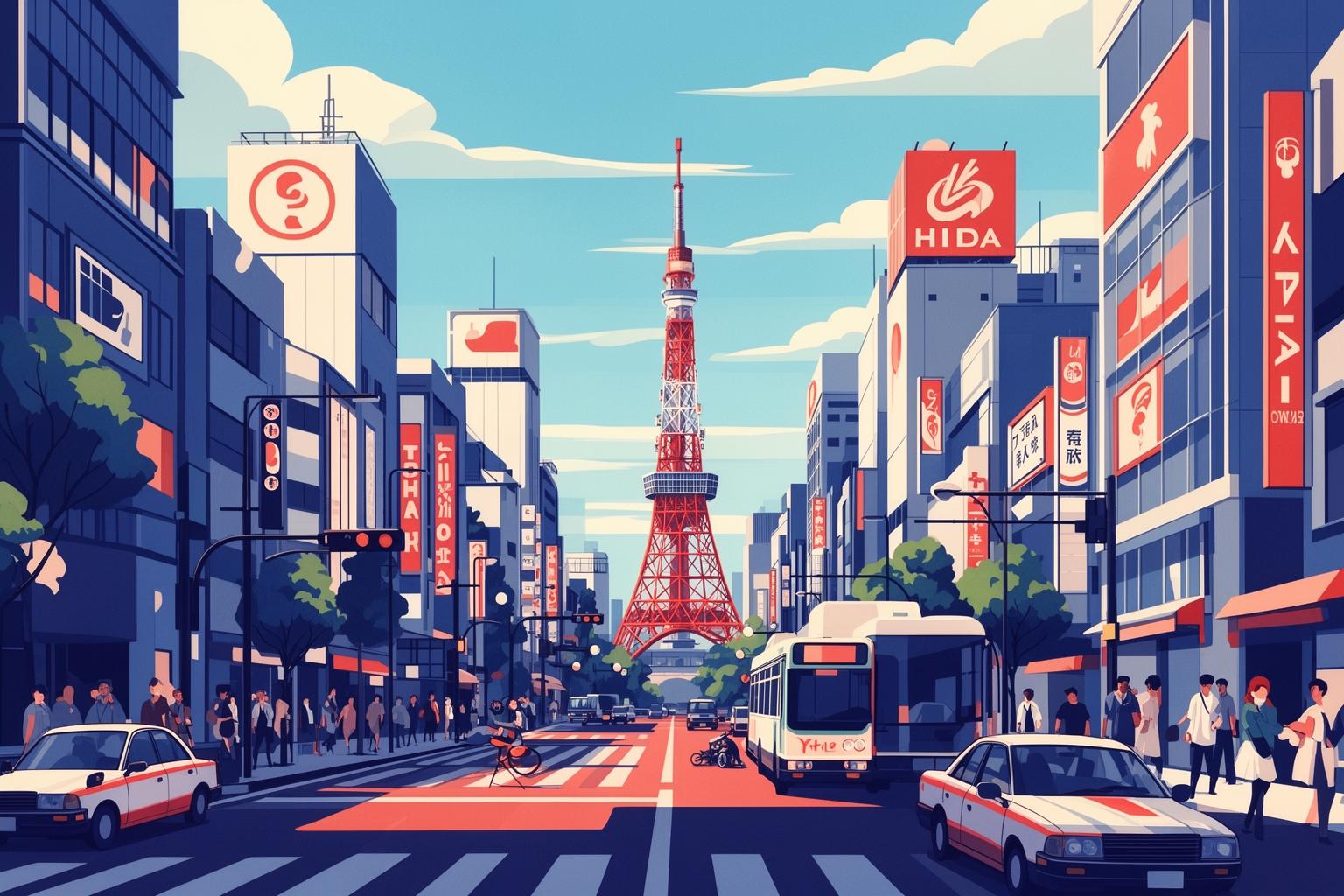
Our pilgrimage begins where Taki’s story takes place: in the vast, vibrant, and ever-moving metropolis of Tokyo. Shinkai presents the city not merely as a backdrop, but as a living entity—a sprawling web of intersecting lives, gleaming towers, and tangled train lines that reflect the complexities of fate. To walk through Tokyo following Taki’s footsteps is to feel the city’s pulse: a symphony of hurried footsteps on pavement, the soft chime of a train station, and the distant murmur of countless stories unfolding simultaneously. It’s a world of dazzling scale, yet dotted with intimate corners where personal histories are forged. Here, the pursuit of connection feels both daunting and hopeful—a sentiment every visitor to this incredible city can relate to. We’ll trace the threads of Taki’s life, from his daily commute to a fateful date, and uncover how the film’s animated frames are deeply rooted in tangible, breathtaking reality.
The Iconic Staircase: A Fateful Meeting in Yotsuya
Few images are as synonymous with the emotional climax of “Your Name.” as the red-railed staircase where Taki and Mitsuha finally, poignantly, reunite. This iconic spot lies in a quiet, unassuming residential neighborhood in Yotsuya, just a short walk from the Suga Shrine. Finding it feels like uncovering a hidden secret. You leave the main road, wander down narrow streets, and suddenly, there it is. The stairs ascend, framed by apartment buildings, the vivid red handrail a bold splash of color against the urban gray. Standing at the bottom and looking up, or at the top and looking down, you can almost hear their voices and feel the weight of their long search. The atmosphere is surprisingly peaceful. This is not a major tourist hotspot with flashing signs, but a simple part of everyday neighborhood life. Residents walk their dogs, children return home from school, yet for fans of the film, it is sacred ground. For the best experience, visit on a weekday morning or late afternoon. The softer light then is ideal for capturing that cinematic glow, and the thinner crowds offer a quiet moment to soak in the powerful sense of place. To reach this spot, take a train to Yotsuya Station and enjoy a ten-minute stroll. It’s a journey that builds anticipation for that final, breathtaking moment.
Shinjuku’s Concrete Canvases
Shinjuku is the vibrant core of Taki’s Tokyo. It’s a district defined by stark contrasts, where glittering skyscrapers pierce the sky and narrow, lantern-lit alleys conceal culinary gems. The film vividly captures this dynamic energy through dazzling montages of city life. Many fleeting and beautiful shots that characterize Taki’s world originate in this single, sprawling area. Here, Taki juggles his busy life—school, friendships, and a part-time job that leads to one of the film’s most memorable subplots.
The View from Above: The Tokyo Metropolitan Government Building
The sweeping panoramic shots of the city prominently featured in the film, displaying a sea of lights stretching to the horizon, are central to its visual identity. While no specific viewpoint is named, the free observation decks at the Tokyo Metropolitan Government Building in Shinjuku offer an experience that is spiritually identical. After ascending 45 floors in a quiet, swift elevator, you emerge to a 360-degree view of the world’s largest metropolis. On a clear day, Mount Fuji’s faint silhouette can be seen in the distance. At night, the view transforms into a glittering carpet of countless lights, visually representing the distance between Taki and Mitsuha. It’s a moment that makes you feel both small and part of something immense. Watching trains weave through the city like glowing rivers, you can’t help but reflect on the film’s themes of connection across vast, seemingly insurmountable distances.
A Date to Remember: Cafe La Bohéme
Taki’s part-time job at the chic Italian restaurant, “Il Giardino delle Parole,” is a key setting for his urban life and his blossoming relationship with his coworker, Okudera-senpai. The real-life inspiration for this spot is Cafe La Bohéme Shinjuku Gyoen, located near the stunning Shinjuku Gyoen National Garden. Stepping inside feels like entering the film’s set. The high ceilings, large windows, elegant decor, and open kitchen all feel wonderfully familiar. You can request a table by the window, order a plate of pasta, and imagine the hustle and bustle of Taki’s shifts. The restaurant has fully embraced its connection to the film, creating a welcoming space for fans. It’s a fantastic way to immerse yourself in the story through both taste and ambiance. After your meal, a stroll through the adjoining Shinjuku Gyoen is the perfect way to continue the experience. This park is a peaceful oasis in the heart of the city, its meticulously landscaped gardens offering a quiet moment of reflection, much like the one Taki and Okudera-senpai may have shared after a busy dinner service.
The National Art Center, Tokyo: A Study in Architecture
The location for Taki and Okudera-senpai’s much-anticipated date is another real-world architectural marvel: The National Art Center, Tokyo, situated in the upscale Roppongi district. Its undulating glass facade is instantly recognizable. Inside, the building is a stunning space filled with light and air, featuring a vast, open atrium and distinctive concrete cones housing cafes and restaurants. You can easily find the exact spot where Taki and Okudera shared lunch—at the Salon de Thé ROND on the second-floor cone. Sitting in that same circular café, suspended above the expansive atrium, and gazing out over the museum is a surreal experience. Beyond its role in the film, the center is one of Japan’s most important art institutions, showcasing a rotating lineup of world-class exhibitions. You can spend an entire afternoon here, absorbing both the art on display and the architectural artistry of the building itself. Access is convenient via Nogizaka Station, which has a dedicated exit leading directly into the museum.
The Soul of Itomori: Discovering Mitsuha’s World in Hida
Leaving behind the electric energy of Tokyo, our pilgrimage takes us deep into the heart of Japan, to the mountainous Gifu Prefecture. This is the land that inspired the soul of Itomori, Mitsuha’s fictional hometown. Although Itomori itself, with its mystical crater lake, is a creation of Shinkai’s imagination, its spirit, culture, and architecture are deeply rooted in the real-life Hida region. The journey itself marks a dramatic transition. Aboard the Hida Wide View Express train from Nagoya, the landscape shifts from urban density to expansive rice paddies, winding rivers, and mist-covered mountains. You feel yourself slowing down, your breathing deepening. The air grows crisper. This is a world shaped by nature, tradition, and a profound sense of history—the very elements that define Mitsuha’s life and identity.
Hida-Furukawa: The Town of White Walls and Canals
Hida-Furukawa serves as the primary visual model for Itomori. It’s a beautifully preserved town where time seems to flow more gently. Walking its streets, you are immediately struck by the sights and sounds that feel so familiar from the film. The traditional wooden buildings with dark lattice work, the crisp mountain air, and the gentle sound of water flowing through canals—it’s all here. The town exudes a quiet dignity, a place where craftsmanship and community are woven into the fabric of daily life.
The Unmistakable Station: Hida-Furukawa Station
Your arrival point is perhaps one of the most perfectly replicated locations in the entire pilgrimage. Hida-Furukawa Station essentially serves as Itomori’s station. The moment you step off the train onto the platform, you’ll recognize it. The simple wooden shelter, the footbridge crossing the tracks, the waiting area—it’s a one-to-one match. This is where Taki and his friends arrive on their desperate search for Mitsuha. Fans often wait for the Hida Wide View Express to pull in just to capture the exact shot from the movie. Even small details are faithfully reproduced, including the beloved Hida Beef mascot character, Hidakuro, standing near the ticket gates. It’s a powerful, immediate connection to the story, the first of many moments in Hida where the line between animation and reality feels beautifully thin.
A Quiet Moment at the Hida City Library
Just a short walk from the station lies another pilgrimage keystone: the Hida City Library. This is where Taki, Tsukasa, and Okudera spent hours poring over town records, trying to uncover the truth about the Itomori disaster. The library is not just an inspiration; it is the exact location. Its exterior is instantly recognizable. Inside, the staff have warmly embraced their role in the film’s legacy. In an extraordinary act of kindness, they allow visitors to photograph the interior after filling out a simple permission slip at the front desk. You can walk through the stacks, breathing in the scent of old paper and polished wood, and find the very corner and table where the characters sat. The large windows, the unique wooden beam design, the specific angle of the shelves—it’s all perfectly preserved. Sitting there in the quiet, you can feel the weight of Taki’s discovery, the dawning horror and desperate hope that filled that scene. It is, without a doubt, one of the most moving and immersive experiences a fan can have.
The Ritual and the Shrine: Echoes of Miyamizu
Mitsuha’s life as a shrine maiden, or miko, is central to the film’s spiritual and mystical elements. The Miyamizu Shrine, perched atop a hill and steeped in ancient tradition, is a fictional creation, but its essence is drawn from several real-world Shinto shrines in the region. These sacred spaces provide a glimpse into the deep cultural roots that inspired the story’s themes of tradition, ritual, and the interconnectedness of all things.
Hie Shrine in Takayama
Though not located in Hida-Furukawa itself, the Hie Shrine in nearby Takayama is widely regarded as a major inspiration for the Miyamizu Shrine. A walk up its long, moss-covered stone staircase, flanked by towering ancient cedar trees, immediately evokes the path Mitsuha and Yotsuha take to perform their rituals. The atmosphere is thick with history and reverence. The air is cool and still, and sunlight filters through the dense canopy above, dappling the path with light and shadow. You can almost hear the rustle of Mitsuha’s ceremonial robes and the distant sound of the kagura suzu bells. Standing before the main shrine hall, you can sense the deep respect for nature and ancestry so integral to Shintoism and to Mitsuha’s identity.
The Taste of a Memory: Goheimochi and Local Flavors
One of the most poignant aspects of the film is Taki’s fading memory of Mitsuha, which he desperately tries to hold onto. He can’t recall her name, but he remembers the feeling, the connection, and crucially, the “taste of something.” This sensory memory is rooted in the local cuisine of the Hida region. When Taki and his friends are searching, they stop to eat Goheimochi, a local specialty. This snack consists of pounded rice skewered, coated in a savory-sweet sauce made from miso, walnuts, and sesame, then grilled over an open flame. You can find it at small stalls and shops throughout Hida-Furukawa and Takayama. Taking a bite is a delicious experience, but for a pilgrim, it’s also a powerful act of connection—a way to taste the world Mitsuha lived in, creating a tangible memory tied to the story. Beyond Goheimochi, the region is famous for its melt-in-your-mouth Hida beef and the rich, savory broth of Takayama ramen, offering more opportunities to immerse yourself in local culture through its incredible food.
Crafting Your Pilgrimage: A Practical Guide
Embarking on the “Your Name.” pilgrimage involves some planning, as it covers two very distinct regions of Japan. A carefully crafted itinerary will let you fully experience both the vibrant energy of Taki’s Tokyo and the tranquil, traditional scenery of Mitsuha’s Hida. Think of it as a two-act journey, each with its own unique tempo and atmosphere. A bit of preparation will make your adventure as smooth and enchanting as the story that inspired it.
Planning Your Itinerary: Tokyo and Hida Combined
To do justice to this journey, allocate at least four to five days. Spend two full days in Tokyo to comfortably navigate the city’s extensive train network and visit key spots in Yotsuya, Shinjuku, and Roppongi without feeling hurried. You might dedicate one day to exploring the Shinjuku area and another to visiting Suga Shrine and the National Art Center. Reserve two to three days for the Hida region. Traveling between Tokyo and Hida will take a significant chunk of time. The fastest route is to take the Tokaido Shinkansen (bullet train) from Tokyo to Nagoya, which takes about 1.5 to 2 hours. From Nagoya, transfer to the JR Hida Wide View Express train, a roughly 2.5-hour journey to Takayama, followed by another 15 minutes to Hida-Furukawa. This train trip itself is a highlight, offering spectacular views of river gorges and mountain valleys. If you plan to travel extensively by train, consider purchasing a Japan Rail Pass to save money. For lodging in the mountains, Takayama is a convenient base with a wider range of accommodations, from modern hotels to traditional ryokan (inns), and it’s just a short, scenic train ride from Hida-Furukawa.
When to Visit: A Journey Through Seasons
Like the film, which spans several seasons, your pilgrimage experience will vary depending on when you visit. Summer, with its lush greenery and the sound of cicadas, best represents the film’s primary setting. The Hida landscapes are vibrantly verdant, and the long daylight hours provide plenty of time to explore. Autumn is perhaps the most breathtaking season in the Japanese mountains. From mid-October to mid-November, the hillsides burst into vivid reds, oranges, and yellows, creating a stunning natural backdrop for your trip. Winter covers the Hida region with a thick snow blanket, turning the towns into peaceful, magical scenes. While some paths may be harder to access, the serene beauty evokes the film’s later, more melancholic moments. Spring brings cherry blossoms to both Tokyo and, slightly later, the Hida region. Seeing iconic locations framed by delicate pink petals adds a fleeting beauty to the journey. Also, consider timing your visit with the famous Takayama Festival in April or October, one of Japan’s most beautiful festivals, but be prepared for large crowds.
More Than a Movie: The Deeper Connection
Traveling to these locations reveals that a seichi junrei involves much more than simply matching photographs with anime screenshots. It is about grasping the deep sense of place that gives a story its powerful resonance. This journey explores the film’s central theme: musubi. This beautiful Japanese concept, as explained by Mitsuha’s grandmother, symbolizes the invisible threads that link people, places, and time itself. It is the braiding of cords, the flow of water, the passing of moments. Undertaking this pilgrimage is a form of musubi itself—an act of physically intertwining your own story with those of Taki and Mitsuha. Standing on the Suga Shrine steps, you feel connected not only to the characters but also to the creator who selected that spot, and to the thousands of fans worldwide who have stood there before you, sharing the same emotional experience. Visiting Hida offers a profound appreciation for the culture of reverence and tradition that shapes Mitsuha’s world. You witness how the preservation of old towns and the continuation of ancient rituals serve as a living embodiment of musubi, linking the present with the past. This journey enriches your understanding of the film, transforming it from a beautiful story you watched into a living memory you lived.
A Traveler’s Final Thoughts

Your journey through the world of “Your Name.” tells the story of two Japans. It is the unstoppable progress of Tokyo, a city of glass and steel dreaming of the future, alongside the quiet, enduring charm of Hida, a land of wood and water that reveres the past. Experiencing both reveals the beautiful duality embodied by Taki and Mitsuha. One cannot exist without the other; they are two halves of the same story, two souls connected across distance. Whether you are a devoted fan of the film or a traveler seeking a unique and meaningful adventure, this pilgrimage offers something truly special. It invites you to look closer, to find magic in the ordinary, and to appreciate the deep beauty of connection. As you stand on a platform in Hida-Furukawa or gaze upon the lights of Shinjuku, you may discover your own invisible threads, your own unexpected bonds, waiting to be found. It is a journey that reminds us that no matter where we are, we are all part of the same beautiful, intricate braid.