There are places in Japan that feel like they were lifted from the pages of a storybook, where the air hums with the energy of legends and the streets whisper tales from centuries past. Dogo Onsen, nestled in the heart of Matsuyama city in Ehime Prefecture, is one such place. It isn’t just a destination; it’s a living, breathing narrative, a three-thousand-year-old sanctuary of steam and folklore that has captured the imaginations of emperors, authors, and animators alike. This is where history isn’t just remembered; it’s felt. It’s in the smooth, alkaline water that soothes your skin, in the rhythmic clip-clop of wooden geta sandals on stone pavement, and in the grand, imposing silhouette of a bathhouse that seems to welcome both humans and spirits. For travelers seeking a portal into the soul of Japan, a place where literary history and cinematic magic converge, Dogo Onsen is more than a stop on an itinerary—it’s the story you came to find. It’s the beloved setting of Natsume Soseki’s classic novel, “Botchan,” and the architectural muse for the fantastical bathhouse in Studio Ghibli’s masterpiece, “Spirited Away.” Prepare to immerse yourself in a world where every corner holds a secret and every bath is a baptism in history.
Embrace the ongoing allure of Japan’s cultural tapestry by embarking on a Tokyo pilgrimage that reveals yet another facet of its timeless charm.
The Echoes of Legends: Dogo’s Mythical Origins

The story of Dogo Onsen begins not with human hands, but with the wings of a bird. According to legend, an egret long ago dipped its injured leg into the hot water bubbling from the earth. Day after day, the villagers observed the bird returning to the spring, and eventually, its leg was fully healed. Witnessing this miracle, the people realized the water possessed powerful restorative qualities, and thus Dogo Onsen was born. This tale, a beautiful blend of nature and magic, sets the tone for the entire region. You sense it as you walk the streets—a feeling of ancient wellness, a power that predates written history. With a history dating back an estimated 3,000 years, it is widely regarded as the oldest hot spring in Japan. This is not a modern spa resort; it is a sacred healing site that has welcomed everyone from Prince Shotoku in the 6th century to countless pilgrims and travelers today. The water itself, drawn directly from the spring without any added tap water, is soft, alkaline, and renowned for its skin-beautifying properties. Immersing yourself in its warmth feels like connecting to an unbroken chain of bathers who have sought comfort and rejuvenation in these waters for millennia.
The Grand Dame of Onsen: The Dogo Onsen Honkan
At the heart of this historic district stands its emblem: the Dogo Onsen Honkan. It is more than just a building; it is a grand, multi-story wooden castle of steam and dreams, a maze of corridors, stairways, and bathing rooms that has served as the town’s vibrant core since its establishment in 1894. Without question, it is the primary reason visitors come from around the globe. The structure itself is a masterpiece of Meiji-era architecture, blending Japanese and Western styles in a chaotic yet harmonious way that gives it a distinctively fantastical look. This very quality captured the imagination of Hayao Miyazaki, who drew significant inspiration from its elaborate design for Aburaya, the memorable bathhouse of the gods in “Spirited Away.” Approaching the Honkan, especially at dusk when lanterns bathe its dark wood in a warm, golden light and steam rises from its windows, you can almost picture spirits and deities slipping through its doors.
A Castle of Steam and Stories
The Honkan’s most notable feature is the Shinrokaku, a red-paned drum tower perched atop the main roof. Three times daily—at 6 a.m., noon, and 6 p.m.—the deep, resonant beat of the taiko drum reverberates through the town, a sound that has marked the passage of time for over a century. It signals the baths, a timeless call linking the present to the past. The atmosphere surrounding the Honkan is electric. The air carries a faint, pleasant scent of sulfur mingled with the lively chatter of visitors, many of whom stroll the streets wearing traditional yukata provided by their ryokans. The sound of their geta sandals tapping on the pavement creates a percussive rhythm that forms the town’s unique soundtrack. It’s a full sensory experience that envelops you. You’re not merely an observer; you become part of the living scene. Travelers should note that this historic treasure is currently undergoing extensive restoration to ensure its preservation for another century. While scaffolding may partially obscure the building, the baths remain open, offering a rare opportunity to support this essential effort while still enjoying its legendary waters. This project speaks to Japan’s commitment to safeguarding its cultural heritage, and visiting during this time feels like witnessing a special chapter in the Honkan’s enduring story.
Bathing in History: The Kami-no-Yu and Tama-no-Yu
Inside, the Honkan is split into two main public bathing areas, each providing a different experience. The first floor houses the Kami-no-Yu, or “Bath of the Gods.” This larger, more energetic bath features beautiful granite floors and walls decorated with Tobe-yaki ceramic panels illustrating local legends. The vibe here is communal and lively, a genuine public bathhouse experience where locals and tourists relax side by side. On the second floor is the Tama-no-Yu, or “Bath of the Spirits.” Smaller, more refined, and crafted from exquisite Aji granite and marble, this bath offers a quieter, more luxurious atmosphere. A ticket to the Tama-no-Yu often includes access to a shared tatami-mat lounge on the second floor, where you can unwind after your bath, dressed in a rented yukata, while sipping tea and nibbling on a rice cracker. For first-time onsen visitors, the ritual is simple and respectful: leave your belongings in a locker, bring a small towel to the bathing area, and find a washing station where you thoroughly cleanse and rinse your body before entering the main bath. The bath is for soaking and relaxing, not for washing. Observing this etiquette helps keep the water clean for everyone and honors this cherished cultural tradition.
The Yushinden: An Imperial Retreat
One of the Honkan’s most exclusive and intriguing features is the Yushinden, a special bathing area and private suite built in 1899 solely for the Imperial Family’s use. It is the only onsen facility in Japan with this distinction. While bathing here is not allowed, you can take a guided tour of these revered rooms. It offers a stunning glimpse into the pinnacle of Meiji-era luxury and craftsmanship. You can admire the ornate Goryoku-no-Ma, the emperor’s private resting chamber, decorated with gilded folding screens and intricate woodwork. You can also see the imperial bathtub, made from the finest granite and reserved exclusively for the emperor. Walking through these quiet, immaculately preserved rooms is a humbling experience—a tangible connection to the nation’s highest ranks and a reminder of Dogo Onsen’s profound cultural significance.
Walking in Soseki’s Footsteps: The World of ‘Botchan’
Long before Dogo Onsen was recognized for its connection to anime, it was immortalized in the pages of “Botchan,” one of Japan’s most cherished novels. Written in 1906 by Natsume Soseki, a pioneer of modern Japanese literature, the story offers a satirical and humorous portrayal of a young, headstrong teacher from Tokyo who takes a post at a middle school in Matsuyama. The novel’s protagonist, Botchan, often visits Dogo Onsen, describing it as the only redeeming feature of his rural assignment. Today, the town proudly celebrates this literary legacy, with tributes to Soseki and his famous character found everywhere.
The Botchan Karakuri Clock and Footbath
Located directly in front of Dogo Onsen Station, the charming Botchan Karakuri Clock springs to life every hour. As cheerful music plays, the clock extends and transforms, unveiling animated figures of Botchan and other characters from the novel in delightful scenes. This enchanting display attracts a crowd of smiling spectators. Adjacent to the clock is a free public footbath, or ashiyu. After a long day of walking, nothing compares to removing your shoes, rolling up your trousers, and soaking your tired feet in the naturally hot spring water. It’s an ideal spot to relax, soak up the atmosphere, and watch the world go by, much as Botchan might have done over a century ago.
Riding the Botchan Train
For a fully immersive dive into Soseki’s world, be sure to ride the Botchan Ressha, or Botchan Train. This diesel-powered replica mimics the original light steam locomotives that once ran in the area during the Meiji era. Traveling along tram lines from central Matsuyama to Dogo Onsen, the train offers a captivating piece of living history. The conductors, dressed in crisp, period-style uniforms, enhance the nostalgic charm. As the whistle sounds and the small green carriages rattle along, it’s easy to imagine being transported back to when Soseki himself lived and wrote in Matsuyama. It serves both as a practical mode of transport and a memorable attraction in its own right.
Sweet Tastes of the Novel: Botchan Dango
No literary pilgrimage would be complete without tasting the local specialty named for the novel: Botchan Dango. These sweet mochi rice dumplings on skewers are colored green with matcha, yellow with egg, and brown with red bean paste. They are mentioned in the novel when Botchan stops to eat two skewers at a tea house on his return from the onsen. You can find these treats in nearly every souvenir shop and tea house along the Dogo Haikara Dori shopping arcade. The dango are soft, chewy, and mildly sweet, making them the perfect complement to a cup of green tea and a quiet moment to savor the literary ambiance.
Beyond the Main Bathhouse: Exploring the Dogo District
While the Honkan remains the unquestioned highlight, the Dogo Onsen district is brimming with other hidden gems waiting to be uncovered. The town has carefully expanded its onsen options, ensuring there is a bathing experience to match every preference and mood, all while maintaining the area’s historic charm.
The Asuka-no-Yu: A Modern Tribute to Ancient Grandeur
Just a short stroll from the Honkan lies the Dogo Onsen Asuka-no-Yu, a stunning new bathhouse that opened in 2017. Its architectural design draws inspiration from Japan’s Asuka period (538-710 AD), when Prince Shotoku is believed to have visited Dogo. The building is an artistic masterpiece, featuring traditional Ehime crafts such as Iyo-kasuri textiles and elaborate woodwork. Inside, the bathing halls are impressive, with walls decorated by Tobe-yaki ceramic panels depicting the ancient legends of Dogo. The Asuka-no-Yu provides a modern, spacious, and luxurious bathing experience that perfectly complements the historic ambiance of the Honkan. It also includes a large open-air bath and private, family-sized bathing rooms available for hourly rental, making it ideal for those with tattoos or seeking more privacy. Be sure not to miss the replica of the Yushinden’s imperial suite, used here for private relaxation.
The Tsubaki-no-Yu: The Locals’ Favorite
For a more modest and genuine onsen experience, visit the Tsubaki-no-Yu, or Camellia Bath. Situated right beside the main shopping arcade, this bathhouse was remodeled in a modern Japanese style while preserving its simple, unassuming atmosphere. This is the spot where locals enjoy their daily soak. The entrance fee is reasonable, the facilities are basic, and the emphasis is entirely on the quality of the water. Bathing here feels less like a tourist attraction and more like taking part in a treasured community ritual. It’s an excellent way to experience the everyday culture of Matsuyama and savor the famous Dogo water away from the crowds at the Honkan.
The Dogo Giyaman Glass Museum
When you want to take a break from bathing, the Dogo Giyaman Glass Museum offers a unique kind of beauty. Housed in a grand mansion surrounded by lush gardens, this museum displays an exquisite collection of rare Edo and Meiji period glassware. The word “giyaman” originates from the Dutch word for diamond, and the glass pieces exhibited are truly jewel-like in their detail and color. The museum itself is a serene haven. The garden is a particular highlight, featuring a charming water element that turns utterly magical at night when the glass artwork and paths are illuminated, creating a romantic and dreamlike setting.
Strolling the Dogo Haikara Dori Shopping Arcade
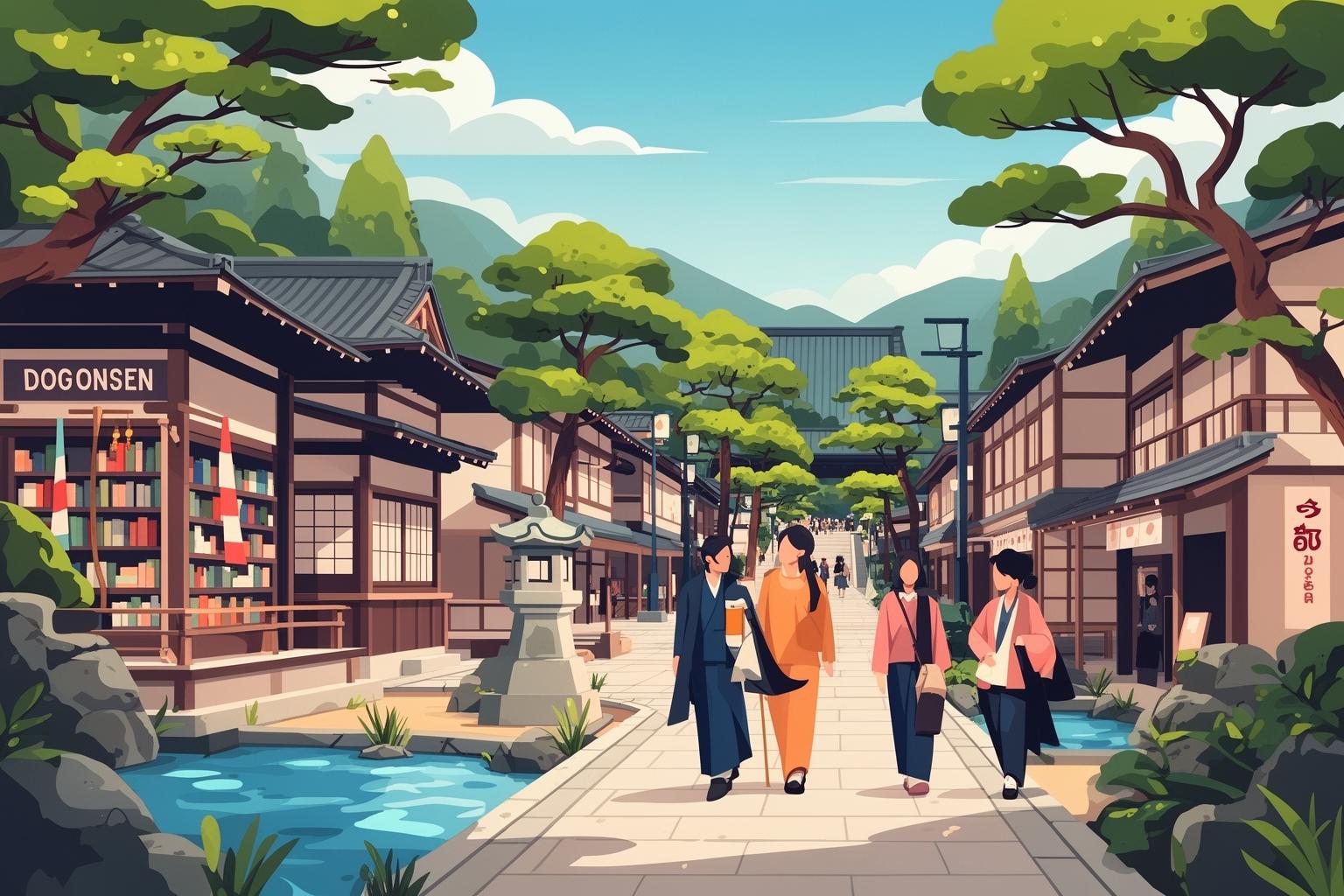
Linking Dogo Onsen Station to the Honkan is the Dogo Haikara Dori, a lively covered shopping arcade that serves as the district’s commercial hub. This vibrant street is a delight for the senses. Shops offer everything from local crafts and souvenirs to yukata and geta sandals. The air is filled with the tempting aromas of freshly grilled Jakoten (a local specialty of fried fish paste) and the sweet fragrance of Botchan Dango. It’s an ideal place to pick up a bottle of refreshing mikan juice, as Ehime is Japan’s citrus capital, or to find one-of-a-kind souvenirs such as the exquisite, indigo-dyed Iyo-kasuri textiles. Walking through the arcade, especially in the evening when people are out wearing yukata, is a quintessential part of the Dogo experience.
Practical Guidance for Your Pilgrimage
Planning a trip to a destination as rich in history and culture as Dogo Onsen might seem overwhelming, but getting there and enjoying your stay is surprisingly simple. A little preparation will help you make the most of your time in this enchanting part of Shikoku.
Getting to Dogo Onsen
Matsuyama is the largest city on the island of Shikoku and is well connected. The easiest way to reach it from Tokyo is by a short domestic flight to Matsuyama Airport. From cities like Osaka or Hiroshima, you can take the Sanyo Shinkansen to Okayama and then transfer to the JR Shiokaze Limited Express train for a scenic trip across the Great Seto Bridge to Matsuyama. Once in Matsuyama, the most charming way to get to Dogo Onsen is by the Iyotetsu streetcar. These trams crisscross the city, and a dedicated line runs directly to the Dogo Onsen terminus, dropping you right at the entrance of the district. The ride itself offers a delightful, slow-paced introduction to the city’s relaxed vibe.
When to Visit: A Year in Dogo
Dogo Onsen is a wonderful destination throughout the year, with each season bringing its own unique appeal. Spring is arguably the most beautiful time, as cherry blossoms burst into a stunning display of pink and white around Matsuyama Castle and Dogo Park. The weather is mild and perfect for leisurely walks. Summer brings vibrant festivals and lively energy to the city, although it can be hot and humid. Autumn offers crisp, comfortable air and breathtaking fall foliage, making it another great time for exploration. Winter is perhaps the most traditional season to enjoy an onsen. There’s nothing quite like soaking in the steaming hot water while the winter air remains cool and crisp — a truly restorative experience. Occasionally, the town hosts the Dogo Onsenart festival, where the entire district becomes a canvas for contemporary artists, with installations appearing in hotels, parks, and even inside the bathhouses, creating a captivating blend of the ancient and the avant-garde.
Where to Stay: Ryokan Dreams
To fully experience onsen culture, staying in a traditional Japanese inn, or ryokan, is highly recommended. Dogo offers a broad range of options, from historic, family-run inns that have been welcoming guests for generations to large, modern hotels with spectacular views and amenities. A stay in a ryokan typically includes a beautifully presented multi-course kaiseki dinner featuring local seasonal ingredients, a comfortable room with tatami mats and futon bedding, and, of course, access to the ryokan’s own onsen baths. Waking up, enjoying a traditional Japanese breakfast, and then strolling to the Honkan in the yukata provided by your inn is an iconic experience not to be missed.
The Soul of the City: Matsuyama Castle and Beyond
While Dogo Onsen is a destination in its own right, it also serves as the gateway to the attractions of Matsuyama. Towering over the city skyline from its position atop Mount Katsuyama is the impressive Matsuyama Castle. This castle is one of only twelve in Japan that has preserved its original keep through the post-feudal era. Reaching the summit is an adventure in itself, featuring a scenic ropeway or a single-person chairlift ride. The castle grounds provide sweeping views of the city, the surrounding mountains, and the sparkling Seto Inland Sea. Inside the keep, there is a captivating museum showcasing samurai armor and artifacts. Nearby Dogo is Ishite-ji, the 51st temple on the renowned 88-temple Shikoku Pilgrimage. This expansive and eclectic temple complex includes an intriguing network of caves and a beautiful three-storied pagoda, offering an insightful glimpse into the region’s spiritual heritage.
A Final Thought: The Lingering Warmth of Dogo
A trip to Dogo Onsen lingers with you long after you’ve gone. It’s more than just recalling a soothing bath. It’s the enduring warmth of the water on your skin, the sweetness of dango on your tongue, and the echo of the Shinrokaku drum resonating in your mind. It’s the sensation of stepping into a living story, where history, literature, and mythology seamlessly intertwine. You arrive as a visitor, but depart as part of its unfolding narrative. Whether drawn by the promise of spiritual renewal, the footsteps of a literary legend, or the enchantment of a cinematic gem, Dogo Onsen offers an experience that is deeply and memorably Japanese. It’s a place that heals the body, stirs the mind, and enchants the heart, inviting you to return time and again to bask in its timeless embrace.