Kyoto is a city that speaks in whispers. It’s a place where the modern world, with its sharp edges and hurried pace, seems to soften, yielding to the weight of centuries. We often think of it as a city of soaring temple roofs, immaculate gardens, and silent geishas gliding through lantern-lit alleys. And it is all of those things. But beneath that lustrous surface lies another identity, one that is quieter yet infinitely profound: Kyoto is a living manuscript, the stage upon which one of the world’s first great novels was born. To walk its streets is to trace the ink of a story written a thousand years ago, a story that shaped the very soul of Japanese culture. We are not just tourists here; we are literary pilgrims, following the spectral footsteps of Prince Genji and the brilliant woman who created him, Murasaki Shikibu.
Our journey is a quest into the heart of The Tale of Genji, a sprawling, psychologically rich narrative of courtly love, ambition, and the exquisite sadness of fleeting beauty. This isn’t a simple tour of landmarks. It is an immersion into the Heian period, an era of unparalleled aesthetic refinement, where poetry was a currency of courtship and the rustle of a silk robe could convey more than a thousand words. We will travel from the grand imperial stage of Kyoto to the misty, melancholic riverbanks of Uji, the setting for the novel’s most poignant and heart-wrenching chapters. This pilgrimage offers a unique lens, transforming ancient temples and serene landscapes from mere sights into resonant symbols, each echoing with the triumphs and sorrows of characters who have captivated readers for a millennium. Prepare to see, feel, and breathe the world that gave birth to a masterpiece.
For readers whose passion for literary pilgrimages extends into modern landscapes, exploring the wind-up bird in Tokyo offers a fresh perspective on the enduring interplay between history and urban life.
The Dawn of a Narrative: Murasaki Shikibu and the Heian Capital
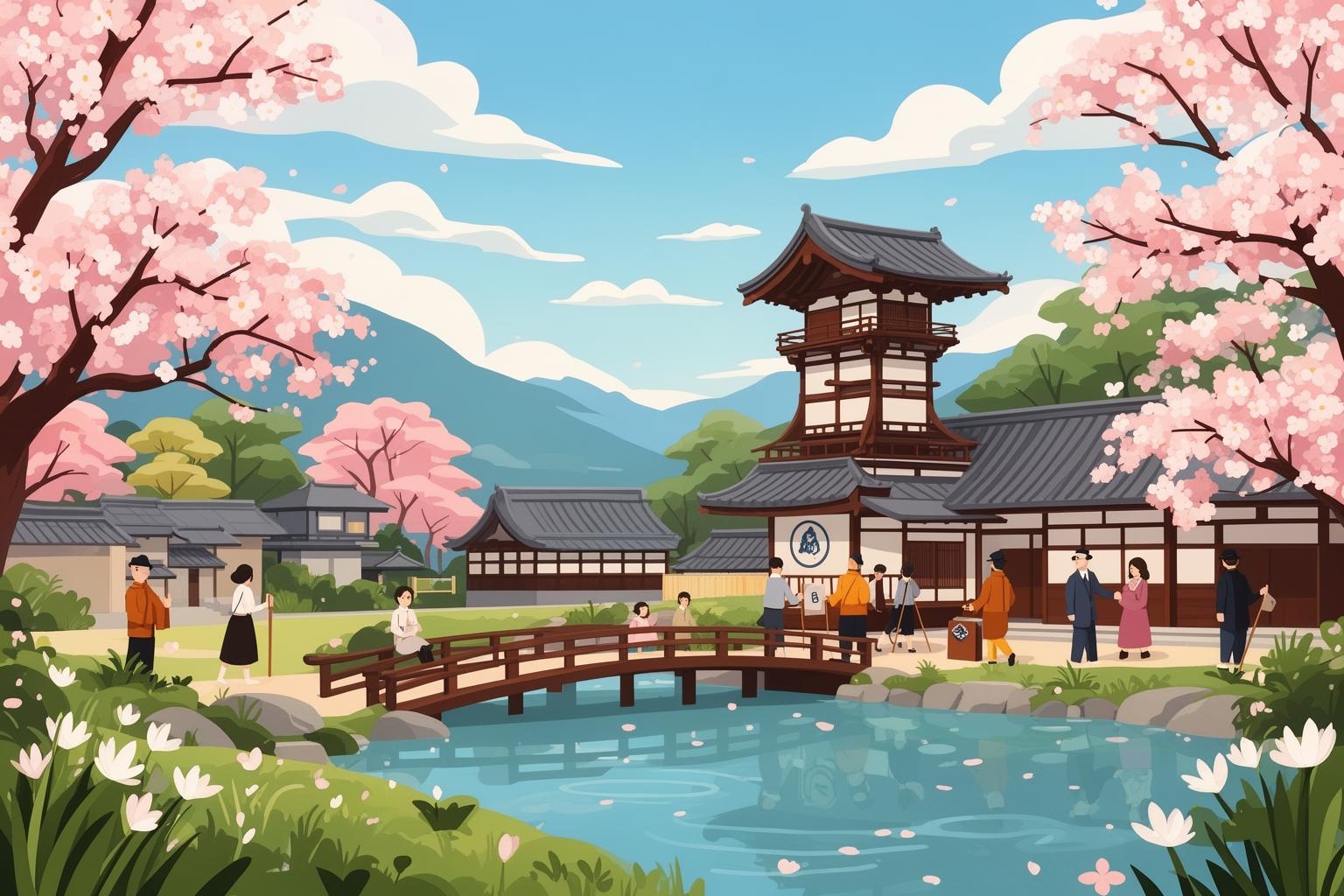
To understand The Tale of Genji, one must first envision its birthplace: Heian-kyō, the ‘Capital of Peace and Tranquility,’ now known as Kyoto. During the 10th and 11th centuries, this was the dazzling heart of the Japanese world. Aristocratic life centered around the Imperial Court, a secluded realm of elaborate ceremony, political intrigue, and boundless creative energy. This society was obsessed with aesthetics, governed by an unwritten code of elegance called miyabi. The ideal courtier was not a warrior but a poet, calligrapher, or musician—a person deeply attuned to the subtle beauty and fleeting nature of the world. This sensitivity, known as mono no aware, or the ‘pathos of things,’ forms the emotional core of The Tale of Genji.
It was in this rarefied environment that a lady-in-waiting, historically known as Murasaki Shikibu, took up her brush. Women of her rank, though excluded from the formal, Chinese-language sphere of government, became pioneers of a new literary form. Using the phonetic Japanese script, kana, they composed diaries, poems, and stories that captured the intimate, emotional realities of their lives with unprecedented psychological insight. Murasaki, a widow and a keen observer of human nature, created a fictional world that reflected her own yet elevated it to an epic scale. Her protagonist, the impossibly handsome and gifted ‘Shining Prince’ Genji, navigates a life filled with passionate romances and political exile, his story serving as a vast canvas through which Murasaki explored universal themes of love, loss, desire, and the unrelenting flow of time.
Strolling through the expansive gravel grounds of Kyoto Imperial Park today, one can sense the vastness of the world she inhabited. Although the current Imperial Palace is a later reconstruction, it stands on the same sacred site. Closing your eyes, you might almost hear the faint rustle of silk and the gentle plucking of a koto. This was the stage, with the court’s characters as actors. Murasaki was their most perceptive audience, and her novel, their eternal script.
In the Footsteps of the Shining Prince: Genji’s Kyoto
The early chapters of the novel take place in the aristocratic districts of Heian-kyō. Genji, a son of the Emperor, navigates a realm of splendid residences and secretive nocturnal encounters. Although the wooden mansions of his era have long disappeared, the spiritual landmarks that grounded his world still stand, offering enticing glimpses into the story’s landscape.
Whispers at the Imperial Palace (Kyoto Gosho)
The Kyoto Imperial Palace, or Gosho, was the heart of Genji’s world. It was where emperors ruled, ceremonies unfolded, and the most significant matters of state and emotion were decided. For Genji, it served as both his home and the center of his political rise and fall. Visiting the expansive park surrounding the palace today gives a sense of the grandeur and isolation of court life. The long, imposing walls called tsuiji-bei separated the court’s celestial realm from the ordinary city beyond.
Although access to the inner palace buildings is limited to guided tours, a stroll through the Imperial Park is an essential experience. The vast spaces of white gravel, dotted with carefully trimmed pines, create a minimalist atmosphere that is both majestic and tranquil. Here, one can appreciate the geography of power that Murasaki so skillfully portrays. A first-time visitor is best advised to wander freely, imagining the ox-carts that once clattered across these grounds, ferrying nobles to poetry contests or secret meetings.
The Silent Beauty of Rokkaku-dō Temple
While not a prominent setting in the novel, the Rokkaku-dō Temple is a place Murasaki Shikibu would have been familiar with. Founded by Prince Shōtoku in the 6th century, it stands as one of Kyoto’s oldest temples and holds special significance in the city’s spiritual life. Officially named Chōhō-ji, it is famously recognized for its distinctive hexagonal main hall, said to symbolize the six senses of Buddhist teachings.
Finding Rokkaku-dō is a delightful surprise. Nestled among the polished storefronts and office buildings of modern downtown Kyoto, it feels like a hidden garden. The air within its humble grounds is rich with the scent of incense and the soft cooing of the temple’s many doves. For the literary pilgrim, it provides a moment of quiet reflection, connecting to the deep Buddhist faith that informs the Heian worldview of karma and reincarnation—motifs that resonate throughout Genji’s life. It serves as a reminder that the novel’s world was not solely one of romance but also of profound spiritual exploration.
The Uji Chapters: A Bridge to a Deeper Sorrow
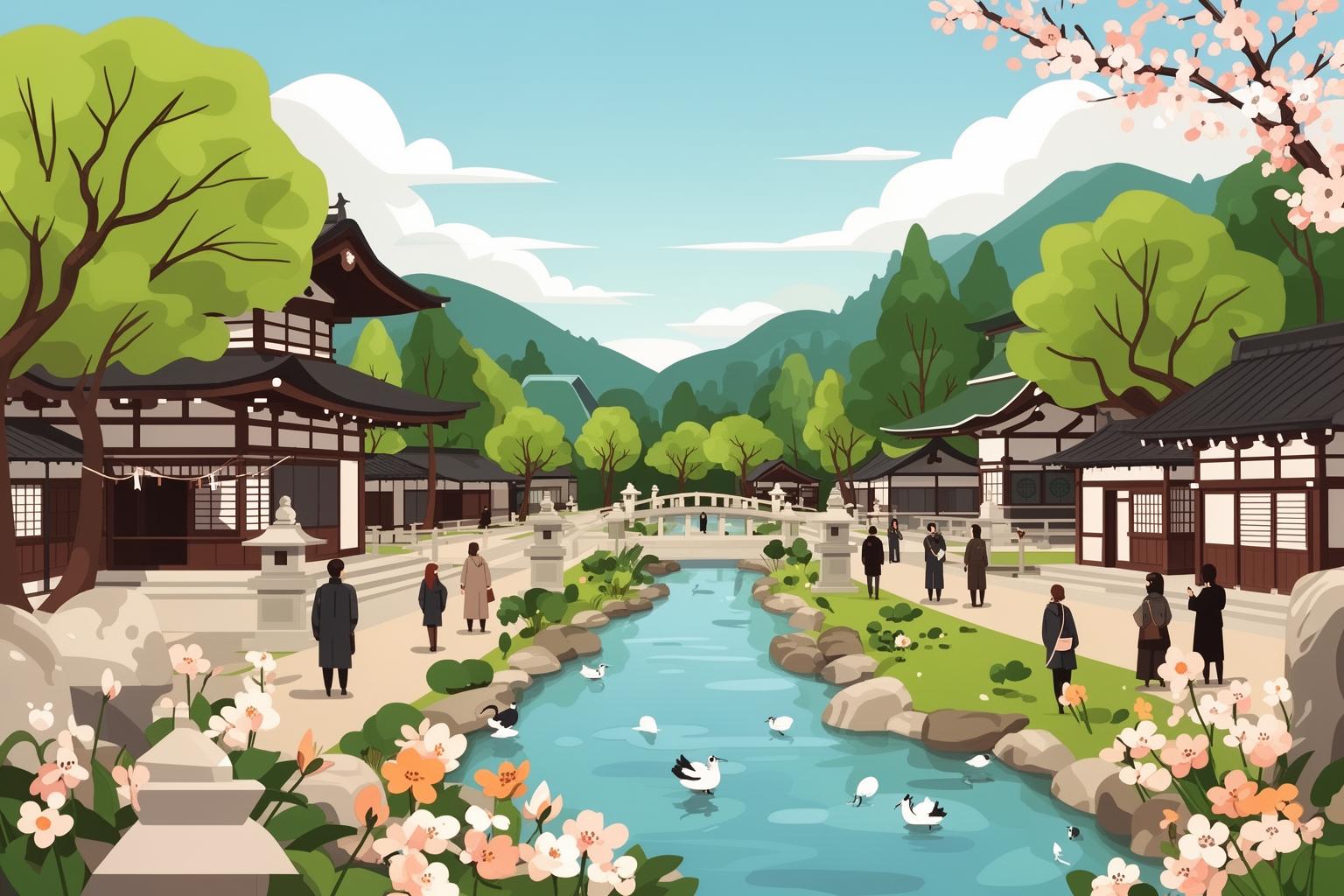
To truly grasp the essence of The Tale of Genji, one must leave the grand stage of Kyoto and travel south to Uji. This small city, situated along the swift-flowing Uji River, serves as the setting for the novel’s final ten chapters. Here, the tone shifts significantly. The dazzling world of the Shining Prince has dimmed, and the narrative now centers on his descendants, caught in a far darker, more intricate web of passion and despair. Uji is not a land of bright victories; it is a realm of mist, shadows, and unattainable love. Today, the town’s atmosphere still holds this poignant melancholy.
The sound of Uji is defined by the river, a steady, powerful rush of water that seems to carry the sorrows of countless ages. The scent is the gentle, toasty fragrance of green tea, for which the region is renowned throughout Japan. The feeling is one of timelessness, as though the thousand years since Murasaki’s era have left only the faintest traces. Visiting Uji is an immersion into mono no aware, the bittersweet beauty of fleeting things, and it is here that the novel’s emotional intensity reaches its most profound and heartbreaking heights.
The Tale of Genji Museum: A Scroll Unfurled
Your first destination in Uji should be The Tale of Genji Museum. This is far from a dusty display of artifacts; instead, it is a brilliantly designed immersive experience that employs light, sound, and carefully recreated scenes to transport you directly into the Heian period. It skillfully bridges the vast cultural and temporal divide, making the characters’ struggles feel immediate and relatable.
As you move through its dimly lit halls, you’ll encounter lifelike reconstructions of aristocratic life: a princess veiled behind bamboo blinds, a courtier composing poetry by moonlight. Short, exquisitely produced films dramatize crucial moments from the Uji chapters, focusing on the tortured love triangle involving Kaoru (Genji’s alleged son), Niou (his grandson), and the tragic maiden Ukifune. The museum doesn’t merely recount the story; it evokes its emotional gravity. It offers the perfect introduction, providing the emotional and historical context needed to fully appreciate the real-world sites just outside its doors.
Crossing the Uji Bridge: A Path of Fated Encounters
The Uji Bridge is more than just a means to cross; it is a character in its own right. Originally built in the 7th century, it stands as one of Japan’s oldest bridges and a legendary landmark that has inspired countless poems and artworks. In The Tale of Genji, it serves as the site of destined meetings and heartrending farewells, a physical and symbolic connection between the characters’ clashing worlds.
Standing on the modern reconstruction of the bridge today, you can feel the river’s powerful current below. The water rushes with raw energy, sharply contrasting with the tranquil temples along its banks. From its center, you can glimpse the distant, mist-covered mountains—a view little changed since Murasaki’s time. It is an ideal spot to pause and contemplate Ukifune’s story, who once stood here grappling with her desperate plight. The wind sweeping across the river seems to carry her whispered pleas, a tribute to the enduring strength of Murasaki’s storytelling.
Sacred Spaces and Literary Echoes in Uji
The spiritual landscape of Uji serves as the tangible foundation for the novel’s otherworldly drama. The town is home to two of Japan’s most important sacred sites, each embodying a different aspect of the Heian spirit: one of celestial magnificence, the other of ancient earthiness.
Byōdō-in Temple: The Phoenix Hall’s Earthly Paradise
Instantly recognizable from its depiction on the Japanese 10-yen coin, Byōdō-in Temple stands as the crown jewel of Uji. Its Amida-dō, commonly known as the Phoenix Hall, is among the most exquisite examples of Heian-period architecture still standing. Constructed in 1053 by the influential regent Fujiwara no Yorimichi, it was intended as a physical representation of Amida Buddha’s Western Paradise. For the Heian aristocracy, who lived with a profound awareness of life’s impermanence, the hope of rebirth in this paradise was a deeply spiritual ideal.
The hall appears to float effortlessly on the surface of Aji-ike Pond, its graceful wings spreading wide as if in flight. On a calm day, the reflection is stunningly precise, blending the boundaries between reality and illusion, earth and heaven. This image of paradise provides a striking, almost harsh, contrast to the very human suffering experienced by the characters in The Tale of Genji. Within the hall, a magnificent golden statue of Amida Buddha sits in peaceful meditation, surrounded by a host of celestial beings intricately carved into the walls. The Hōshōkan museum on the temple grounds displays a remarkable collection of original artifacts, offering an intimate glimpse into the extraordinary artistry of the era. Visiting Byōdō-in reveals the pinnacle of Heian aesthetic and religious ideals.
Ujigami Shrine: The Quiet Guardian
A short, serene walk from the grandeur of Byōdō-in brings you to a place that feels spiritually worlds apart. Nestled in the forested foothills at the foot of Mount Asahi, Ujigami Shrine exemplifies rustic simplicity. Thought to be the oldest existing Shinto shrine in Japan, its main hall, or honden, dates back to the late Heian period. In contrast to the opulent Buddhist temple, Ujigami radiates an aura of ancient animistic faith.
The ambiance here is calm and reverent. You walk along a path of compacted earth, encircled by towering trees and moss-covered stones. The buildings, made of plain dark wood, seem to have naturally sprung from the surrounding forest. This is the realm of the kami, Japan’s indigenous deities who dwell within natural features. The shrine was constructed to serve as a guardian for nearby Byōdō-in, exemplifying the harmonious blending of Shinto and Buddhist traditions in Japan. Visiting here connects you to a deeper, older stratum of the spiritual world that Murasaki and her characters would have inherently known. Be sure to find the Kiriharasui, the sole remaining spring of the “Seven Famous Springs of Uji,” where fresh, pure water still flows from the earth.
A Journey for the Senses: Experiencing Uji’s Culture
While the literary and historical landmarks are the primary attractions, a pilgrimage to Uji is also a sensory delight. The town’s culture is deeply intertwined with its most renowned product: green tea.
The Way of Tea: A Legacy of Flavor
Uji is widely recognized as the birthplace of Japanese tea cultivation. The exceptional quality of its tea, especially matcha and gyokuro, reflects a heritage spanning centuries. The elegant aesthetics of the tea ceremony are rooted in the miyabi culture of the Heian court. Experiencing Uji’s tea culture is more than a pleasant pastime; it offers a unique connection to the world of the novel.
The Omotesando, the main path to Byōdō-in, is lined with historic tea shops, many operated by the same families for generations. The air is filled with the aroma of roasting hōjicha. For an authentic experience, visit a traditional teahouse such as Taihoan, near the river, or the well-known Nakamura Tokichi Byōdō-in store. Here, you can sit in a tranquil tatami room overlooking a garden and observe the graceful preparation of a bowl of matcha. The rich, umami-laden flavor of the tea, paired with a delicate seasonal sweet (wagashi), creates a moment of pure, focused enjoyment—a contemporary taste of Heian elegance.
Navigating the Path: Practical Advice for the Pilgrim
Uji makes for an exceptionally easy and rewarding day trip from Kyoto. The JR Nara Line takes you from Kyoto Station to JR Uji Station in under 30 minutes on a rapid train. From the station, all major sights are within comfortable walking distance.
To maximize your visit, timing is essential. The seasons greatly influence the ambiance. Spring, with its fleeting cherry blossoms, perfectly captures the spirit of mono no aware. Autumn, when the maples on the mountainsides blaze with red and gold, is equally stunning. Aim to arrive in Uji in the morning to enjoy Byōdō-in before the crowds grow. A good approach is to visit the Tale of Genji Museum first for context, then cross the river to Ujigami Shrine, saving the magnificent Byōdō-in for late morning or early afternoon. First-time visitors should avoid rushing. The true enchantment of Uji emerges when you take the time to stroll along the river, listening to its gentle flow and letting the atmosphere soak in.
Beyond Genji: Kyoto’s Enduring Literary Heart
Although Murasaki Shikibu casts the longest shadow, Kyoto’s status as Japan’s literary heart did not end with the fall of the Heian court. The city has continued to inspire writers and artists throughout the centuries. A stroll along the Philosopher’s Path, a canal-side trail famously frequented by the 20th-century philosopher Nishida Kitaro, unveils a more modern, reflective aspect of the city’s intellectual life. The novels of Nobel laureate Yasunari Kawabata, especially The Old Capital, tenderly depict the traditional crafts and festivals of the Gion district. Even contemporary writers like Haruki Murakami have set key scenes in the city’s cafes and tranquil neighborhoods. This lasting creative spirit stands as a testament to the city’s influence. It is a place that nurtures introspection and a profound appreciation for the subtle flows of time and history.
A Final Reflection
A journey through the Kyoto and Uji of The Tale of Genji is like walking through the pages of a book etched onto the landscape itself. It is a pilgrimage that goes beyond simple sightseeing, turning you from a passive observer into an active reader. You start to view the world through a Heian perspective, feeling the deep connection between a place and the stories it contains. The reflection of the Phoenix Hall in its pond, the roar of the Uji River beneath the bridge, the quiet dignity of an ancient shrine—these become more than mere images; they are sentences and paragraphs in a narrative spanning a thousand years.
By following the footsteps of Genji, Kaoru, and Ukifune, we are ultimately tracing the contours of the human heart. Murasaki Shikibu’s brilliance lay in her understanding that while customs and empires fade, the fundamental emotions of love, jealousy, ambition, and grief remain timeless. Leaving Uji, with the taste of green tea on your tongue and the sound of the river in your ears, you carry a piece of that story with you. You have not merely seen Kyoto; you have read it. And its elegant, sorrowful, and profoundly beautiful tale will linger within you long after you depart.