There’s a moment when you arrive in Tomonoura when the hum of the modern world simply fades away. It doesn’t crash out; it dissolves, replaced by the gentle lapping of waves against stone, the distant cry of a seagull, and the faint, salty scent of the Seto Inland Sea. You step off the bus from Fukuyama, walk a few paces toward the water, and suddenly you’re standing inside a living watercolor painting. This is a town that doesn’t just sit by the sea; it breathes with it, its rhythm dictated by the ancient pulse of the tides. For centuries, this perfectly curved harbor was a vital nexus for sailors, a shiomachi no minato—a port for waiting on the tide—where ships would anchor, waiting for the currents to shift in their favor. That sense of patient waiting still lingers in the air, a peaceful stillness that feels both ancient and utterly present. It’s this captivating atmosphere that drew legendary filmmaker Hayao Miyazaki here for a months-long stay, a creative retreat that soaked into his soul and poured back out onto the screen as the unforgettable world of Ponyo on the Cliff by the Sea. To walk through Tomonoura is to walk through the very landscape that sparked a masterpiece, a place where the line between reality and the gentle magic of Studio Ghibli feels wonderfully, beautifully blurred. Here, the charming streets and weathered docks aren’t just a backdrop; they are the main character, and this journey is about getting to know its story.
For those captivated by Miyazaki’s creative magic, a visit to the Ghibli museum in Mitaka offers an intimate glimpse into his imaginative legacy.
The Rhythm of the Tides: Arriving in a Town That Time Embraced
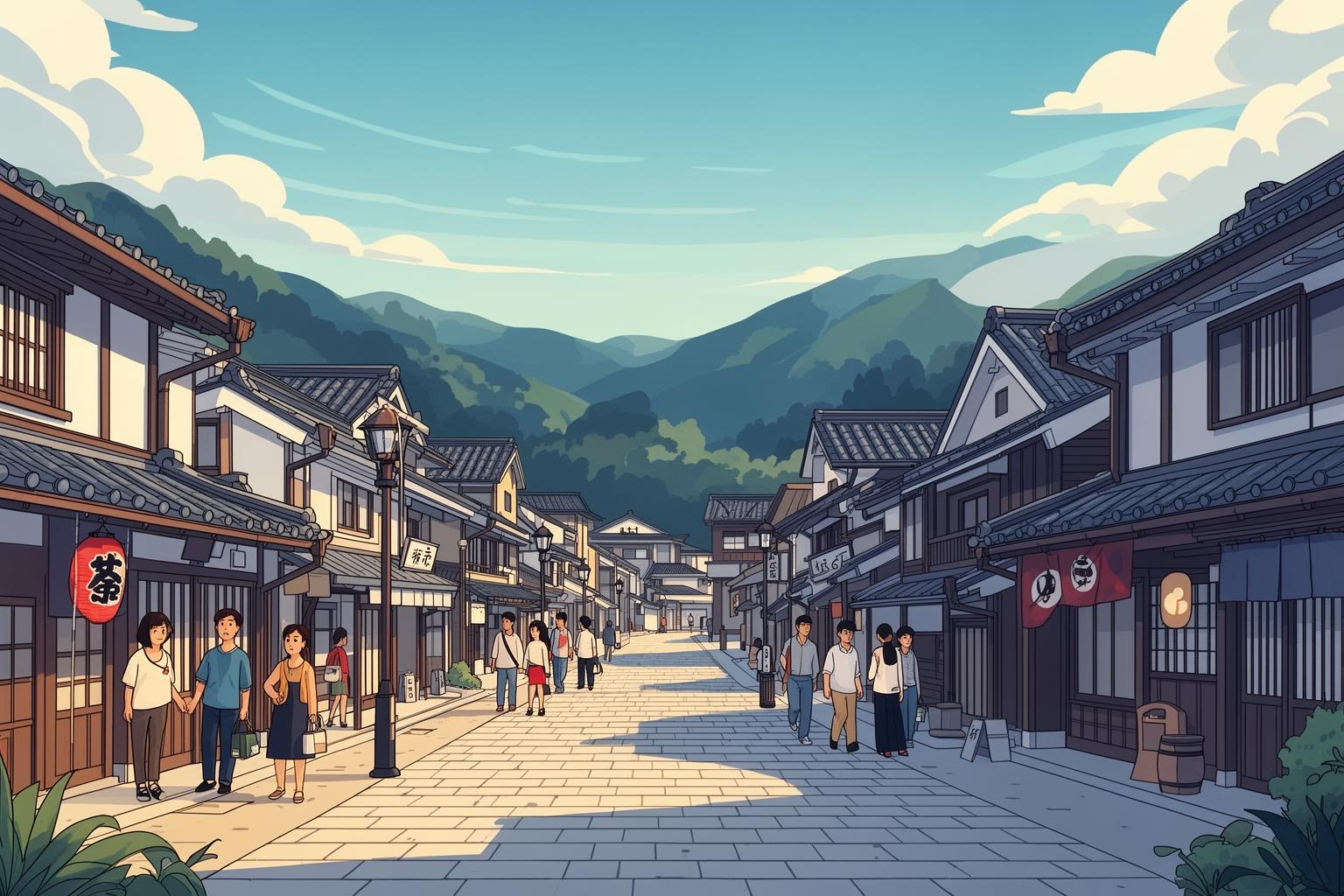
The true introduction to Tomonoura isn’t marked by a sign or a landmark but by a feeling. As an outdoor enthusiast who finds clarity along mountain trails, I’m familiar with landscapes that tell stories. Tomonoura’s story reflects a harmony between human effort and the powerful, patient forces of nature. The town isn’t constructed to oppose the sea; instead, it’s built to work with it. The harbor curves like a protective arm, with stone steps worn smooth by centuries of tides and footsteps descending straight into the water. Fishing boats, painted in vibrant blues and whites, gently bob at their moorings, their reflections dancing on the water’s surface. The air itself feels different here—thicker, cleaner, carrying the complex mix of brine, drying nets, and the faint sweetness of woodsmoke from a distant chimney. You can see it in the architecture: the dark, weathered wood of the old merchant houses, the intricate tile work on the roofs, and the narrow, winding alleys that seem designed to confuse the sea winds. These streets, too narrow for most cars, encourage a slower pace. They invite you to wander, explore, and get wonderfully lost. This isn’t a town to observe from afar; it’s one you experience with all your senses. The ambient sounds compose a symphony of tranquility: the rhythmic knock of a boat against a pier, the chatter of locals exchanging greetings, the satisfying crunch of gravel beneath your feet in a temple courtyard. It’s this immersive, sensory atmosphere that makes the Ghibli connection feel so genuine. Miyazaki didn’t merely replicate Tomonoura’s appearance; he captured its very essence, its soul.
Echoes of a Ghibli Seascape: Finding Ponyo’s World
For any fan of Ponyo, visiting Tomonoura is a surreal and delightful experience. It’s a pilgrimage where the sacred sites aren’t merely buildings but vistas, feelings, and everyday moments that echo scenes from the film. The challenge becomes not just locating exact spots but sensing the spirit of the animation in the living world around you. It’s a treasure hunt for the heart, with treasures everywhere, hidden in plain sight. The town’s gentle, sloping hills and the vibrant harbor below feel instantly and deeply familiar. You can almost imagine Ponyo’s sisters as a shimmering school of phosphorescent fish swirling in the bay or hear the gentle chug of a little pop-pop boat crossing the water. This connection is powerful, turning a simple walk through a historic town into a journey back to the wonder and innocence of the film.
The Joyato Lighthouse: A Beacon Through Centuries
Standing as the stoic, unmistakable heart of the harbor is the Joyato Lighthouse. This isn’t a modern reconstruction; it’s an Edo-period stone tower that has guided sailors safely to shore since the 1850s. It’s perhaps the single most recognizable feature of Tomonoura, symbolizing its enduring maritime identity. Its simple, elegant form, rising over eleven meters from the water’s edge at the pier’s tip, is both powerful and serene. By day, it stands against the blue backdrop of sky and sea, a perfect focal point for the harbor’s crescent. As dusk falls and the old-fashioned light within begins to glow, it transforms the scene, casting long, shimmering reflections on the darkening water. It’s easy to see how this iconic structure anchored the visual world of Ponyo. It represents stability, guidance, and the enduring heart of the port community—the very values that underpin the story of Sosuke and his seaside town. To stand before it is to feel a connection not just to a film but to generations of seafarers who looked to its light as a promise of home and safety.
Weaving Through the Alleys: Sosuke’s Neighborhood
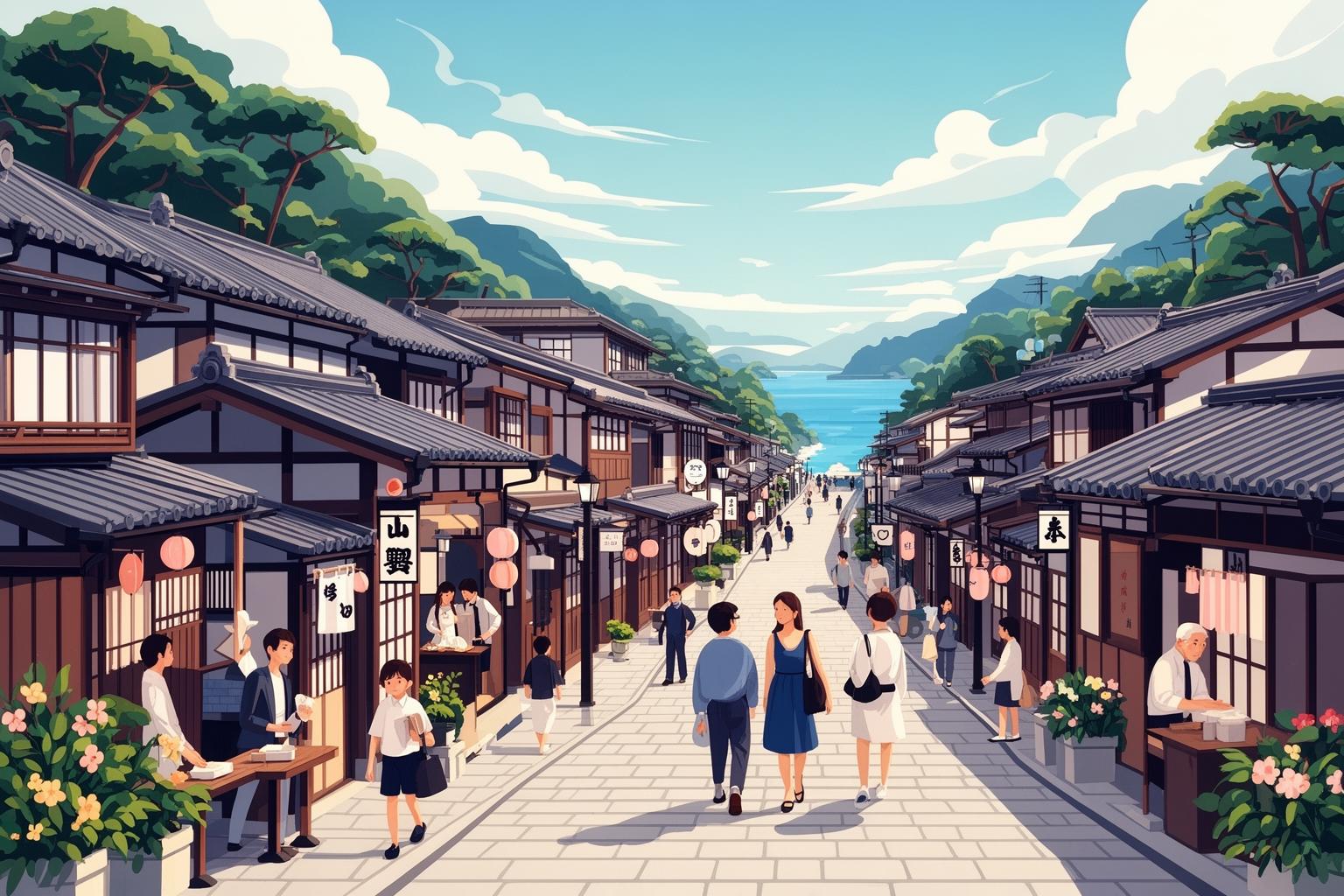
The town behind the harbor is a captivating maze of narrow alleys and traditional wooden houses called machiya. This is where the world of Ponyo truly comes alive. As you stroll these streets, it feels as if you’ve stepped into the very neighborhood where Sosuke lived and played. The paths twist and turn unexpectedly, opening onto small courtyards or revealing tiny hidden shrines nestled between buildings. The houses themselves are charming, with their distinctive slatted wooden fronts (koshi) and heavy tiled roofs. You’ll see neighbors tending potted plants, cats napping in sunlit spots on warm stone steps, and laundry fluttering in the sea breeze. It’s these small, intimate details that build the film’s strong sense of place. You can almost hear the echoes of Sosuke’s footsteps as he runs these same alleys, bucket in hand, on his way to school or down to the shore. Getting lost here isn’t a hazard—it’s the whole point. Each wrong turn leads to a new discovery: a quaint coffee shop, a gallery showcasing local art, or simply a perfectly framed view of the harbor at the end of a long, shadowy lane.
The View from Above: The Cliffside House
One of the most lasting images from Ponyo is the little house precariously perched on a cliff, overlooking the sea. While no single house in Tomonoura served as the exact model, the inspiration is all around. To find it, you need to climb. As a hiker, this is my favorite part of the pilgrimage. A short yet rewarding walk up the stone steps to Fukuzen-ji Temple provides the first taste of this elevated perspective. Within the temple complex is the Taichoro, a stunning reception hall built in 1690 to entertain envoys from Korea. Sliding open the wooden screens reveals a view so breathtaking that a Korean scholar once called it “the most beautiful view in all of Japan.” The entire harbor, the lighthouse, and the distant islands of the Seto Inland Sea are laid out before you like a map. For an even more cinematic vantage point, a slightly more strenuous hike up the hill behind the town leads to various viewpoints. From these quiet, wooded spots, you can gaze down on the clustered rooftops and the glittering bay, instantly understanding what it feels like to live between land and sky, just as Sosuke and Lisa did. It’s a view worth every step, a panoramic reward that connects the animated dream to breathtaking reality.
Beyond the Animation Cell: Tomonoura’s Rich Tapestry
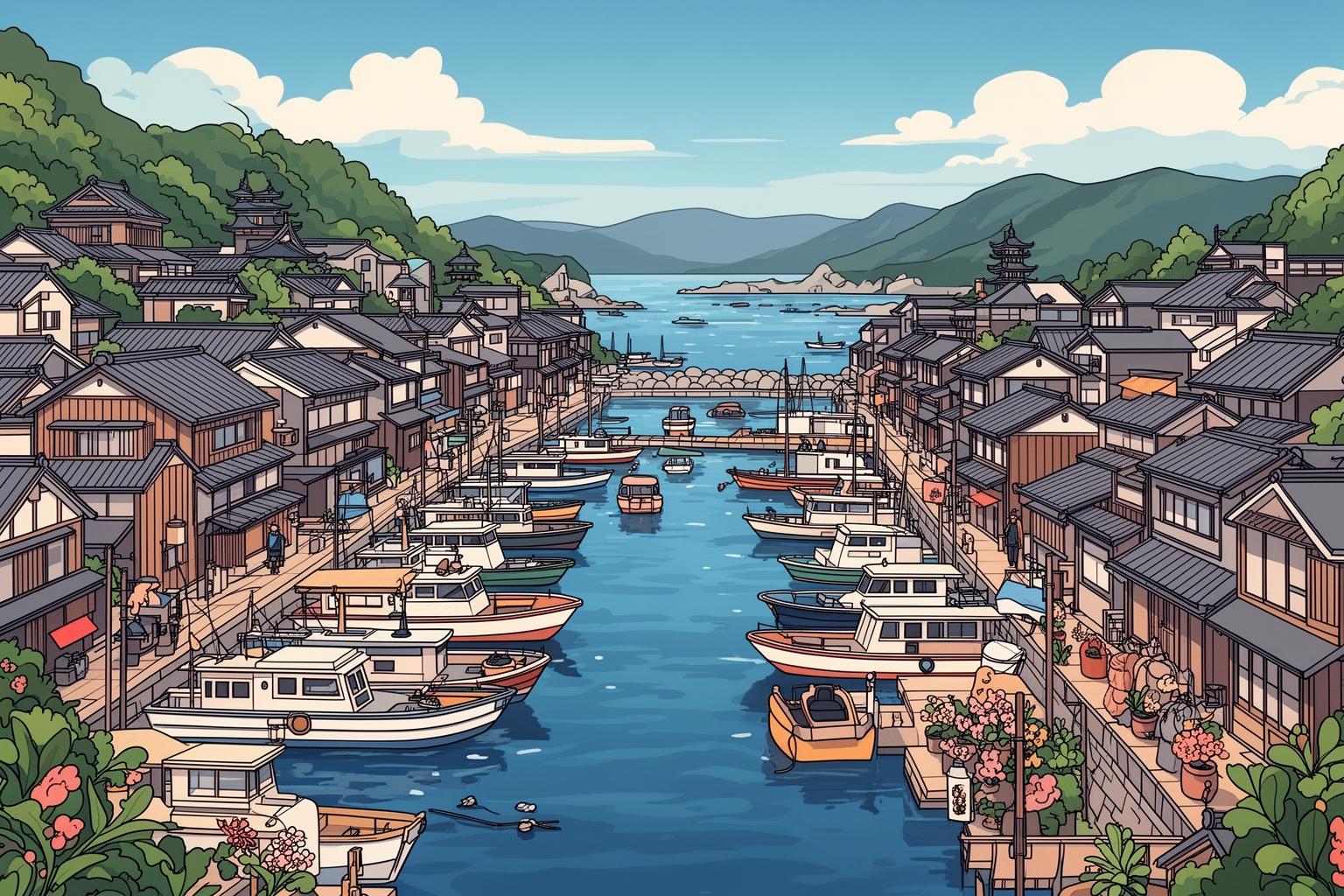
While the Ghibli connection is undeniably a strong attraction, viewing Tomonoura solely through the perspective of Ponyo overlooks the profound, rich history that truly defines the town. This port has quietly witnessed centuries of Japanese history, its fate ebbing and flowing with the tides of trade, politics, and culture. Miyazaki’s inspiration stemmed from the fact that the town’s history is not confined to museums; it is carved into the stones and timbers throughout. It’s a living museum, where every corner tells a story, and understanding this past greatly enriches the present experience. The town’s importance extends well beyond its scenic appearance; it was a cultural crossroads, a strategic naval point, and a commercial hub that shaped the region.
A Port Waiting for the Tide
Tomonoura’s distinct geography is central to its history. The currents of the Seto Inland Sea converge and reverse here, making it the ideal natural waiting spot for sailing vessels in the past. Ships heading east would pause for the tide to shift in their favor, and those traveling west did the same. This turned Tomonoura into a flourishing and lively harbor. Picture the harbor full of ships from across Japan, their crews coming ashore to trade goods, share stories, and exchange ideas. This legacy is reflected in the grand residences of wealthy merchants still lining the streets and the numerous temples and shrines built for the transient sailors and travelers. This tidal rhythm influenced not only the town’s economy but also its culture—marked by patience, attentiveness, and a profound respect for the sea’s power.
The Sakamoto Ryoma Connection
Adding another captivating dimension to Tomonoura’s history is its link to Sakamoto Ryoma, one of the most renowned samurai and visionaries of the Bakumatsu period who played a key role in the Meiji Restoration. In 1867, a vessel leased by his trading company, the Iroha Maru, collided with a ship from the Kishu Domain and sank off Tomonoura’s coast. Ryoma came to the town to negotiate compensation in what is regarded as Japan’s first-ever trial under modern maritime law. He and his companions stayed in a concealed room in a local shipping agent’s house, now preserved as a museum. Visitors can explore the very spaces where these critical negotiations unfolded, feeling the significance of this pivotal moment in Japanese history. Nearby, the Iroha Maru Tenjikan museum, located in a spacious old warehouse, exhibits artifacts recovered from the sunken ship, offering a tangible connection to this dramatic episode and the larger-than-life Ryoma himself.
Homeishu: The 16-Herb Elixir
Tomonoura’s history can also be savored. For over 350 years, the town has been renowned for Homeishu, a medicinal herbal liqueur. This sweet and potent drink is crafted by steeping sixteen different herbs in rice wine and is believed to promote longevity and health. The tradition endures at several historic breweries, notably the Ota-ke Jutaku, or Ota Residence. This beautifully preserved merchant house, designated an Important Cultural Property, served both as family home and brewery for generations of Homeishu makers. Touring the residence provides a remarkable glimpse into the life of a wealthy Edo-period merchant family, from grand reception rooms to intricate private quarters and the historic brewing facilities. And, naturally, visitors can sample the Homeishu itself. Its unique, complex flavor offers a direct taste of Tomonoura’s heritage—a warm, sweet reminder of the town’s long tradition of craftsmanship and commerce.
A Practical Guide to Your Tomonoura Journey
Planning a trip to a place that seems frozen in time requires a bit of modern-day planning. Yet, the journey to Tomonoura is part of its allure, a gradual shedding of the layers of the contemporary world as you approach the coast. The key to truly enjoying this town is to embrace its slower rhythm from the moment your travels begin. Don’t hurry. Allow space for serendipity. The best experiences in Tomonoura often come unplanned: a chat with a local shopkeeper, a quiet moment in an empty temple, or an hour spent simply watching the boats in the harbor. Taking care of the practical details ensures you have the peace of mind to let these magical moments unfold.
Getting There: The Path to the Port
The most common way to reach Tomonoura starts at Fukuyama Station, a major stop on the Sanyo Shinkansen line, making it easily accessible from cities like Osaka, Kyoto, Hiroshima, or Tokyo. From the station, the final part of the journey is a pleasant 30-minute bus ride. You’ll find the bus terminal just outside the station’s south exit, where signs for Tomonoura (鞆の浦) are usually clear. The bus ride itself offers a wonderful transition, moving you out of Fukuyama’s urban core, through sleepy residential neighborhoods, and then along the coastal road where you begin to catch enticing views of the Seto Inland Sea. As the bus winds along the shoreline, anticipation builds until you arrive at the Tomonoura bus stop, just a short walk from the historic harbor. It feels less like arriving at a tourist spot and more like being let in on a well-kept secret.
When to Visit: The Port for All Seasons
Tomonoura enchants visitors year-round, with each season bringing its own distinct charm. Spring covers the town and nearby hillsides in soft cherry blossom pinks, creating perfect picture scenes. Summer brings vibrant energy, with long sunny days ideal for boat trips and local festivals that fill the streets with color and music. Winter offers a quieter, more reflective experience, with crisp, clear air and the chance to enjoy seasonal seafood specialties like oysters. For the active traveler, however, my personal favorite is autumn. From late October through November, the weather is typically mild and dry, the summer humidity fades, and the surrounding foliage bursts into fiery reds and golds. It’s the ideal climate for walking, whether exploring every alleyway or hiking the trails in the hills for panoramic views. The soft autumn afternoon light seems to make the old wood of the buildings glow, adding an extra layer of nostalgic beauty to the entire town.
Navigating the Town: On Foot and by Feel
Once you arrive in Tomonoura, your best way to get around is on foot. The historic town center is compact and pedestrian-friendly, where a car would be more of a hindrance than a help. Wear your most comfortable walking shoes, as you’ll navigate stone-paved streets, steep temple stairs, and unpaved hillside paths. The true joy of Tomonoura lies in wandering without a set plan. Set the map aside for a while and follow your curiosity. A useful tip for first-time visitors is to remember that this is a living community. People’s homes open directly onto the narrow streets, so be respectful of their privacy. A quiet greeting of “Konnichiwa” to locals you pass goes a long way. For a fresh perspective, consider taking the five-minute ferry ride to Sensui-jima Island, a largely undeveloped island within the Setonaikai National Park. It offers several hiking trails with stunning views back toward the town and is a perfect way to spend a few hours immersed in the natural beauty that embraces this historic port.
Savoring the Moment: A Final Stroll Through Tomonoura
As your day in Tomonoura comes to a close, there is one last ritual that perfectly captures its magic: find a spot on the harbor wall as the sun begins to set. The sky softens into shades of orange and violet, casting a warm, golden glow over the water and the town. The fishing boats, all back at their moorings, sway gently, their silhouettes bold against the radiant sky. This is the golden hour, and in Tomonoura, it feels especially meaningful. The day-trippers start to leave, and a deep sense of calm descends upon the port. Soon, the light in the Joyato Lighthouse flickers on, its beam a comforting presence in the encroaching twilight. This is the moment when you truly grasp Tomonoura’s unique gift. It’s not merely a beautiful place or a film location; it’s an invitation to slow down, be present, and appreciate the simple, enduring beauty of a world in harmony with itself. The spirit of Ponyo is found not just in the scenery but in this feeling of profound contentment and connection to the sea, the sky, and the centuries of human life that have unfolded here. You leave Tomonoura with more than photographs; you carry a renewed sense of wonder, a quiet fragment of its timeless rhythm tucked away in your memory—a reminder that some places aren’t just seen, but deeply felt.