
There’s a certain kind of quiet magic that lives inside a Studio Ghibli film, a feeling that sinks deep into your bones and stays there long after the credits roll. It’s the gentle hum of nostalgia for a childhood you may not have even had, the sun-drenched haze of a perfect summer afternoon, the thrilling chill of stepping into a world humming with ancient spirits. It’s the scent of rain on dusty country roads, the taste of a perfectly ripe tomato, the sound of a distant train carrying you somewhere unknown. For years, we’ve watched these worlds unfold on screen, worlds crafted with painstaking love by Hayao Miyazaki and his team. But what if I told you that the veil between their animation cels and our reality is thinner than you think? What if you could walk the same paths, breathe the same air, and feel the same gentle wonder that inspired these cinematic treasures? This isn’t just about finding a filming location; this is a pilgrimage, a seichi junrei, to the very soul of Japan that Ghibli so beautifully captures. We will journey into the heart of the Sayama Hills, the whispering woods that gave birth to Totoro, and from there, we will chase the echoes of other beloved tales, tracing the steps of spirited girls and soaring dragons across the diverse landscapes of Japan. This is an invitation to step through the screen and find the magic that’s been waiting for you all along, hidden in the rustle of leaves and the creak of old wood. It’s a journey to the source, where the whispers of the woods become the soundtrack to your own adventure.
Experience the transformative allure of Japan’s landscapes by exploring Ponyo’s seaside inspiration, where the coastal charm resonates with the magic found in Studio Ghibli’s cinematic tales.
The Heart of Totoro: Stepping into the Sayama Hills

Our pilgrimage begins with a brief train ride from the unyielding, futuristic rhythm of central Tokyo, yet it feels like stepping back in time. The Sayama Hills, an expansive greenbelt spanning the border between Tokyo and Saitama Prefecture, are the undeniable birthplace of My Neighbor Totoro. This is not a theme park or a film set; it is a living, breathing landscape of rolling hills, dense forests, and patchwork farms that Miyazaki himself walked, explored, and fought to preserve. Here, the line between the movie and the forest blurs, leaving you with the feeling that if you wait patiently enough, a Catbus might just appear around the next bend.
A Forest Frozen in Time
As soon as you step off the train at Seibukyūjō-mae Station and head towards the network of trails, the atmosphere shifts. The urban noise fades, replaced by the countryside’s symphony: the buzz of summer cicadas, the crunch of autumn leaves beneath your feet, and the cheerful calls of unseen birds soaring through the canopy. Sunlight filters through myriad shades of green, casting dappled, living patterns on the path ahead. This is the Japan of the Showa Era—the post-war period in which Totoro is set—a time marked by simplicity and a deep bond with the land. You can feel it in the soil itself. The air carries a gentle, sleepy energy. You’ll stroll past small, carefully tended vegetable gardens where elderly farmers in straw hats straighten up to offer a quiet ‘konnichiwa’. You’ll glimpse traditional wooden farmhouses, or kominka, with their graceful tiled roofs and weathered verandas, standing like steadfast guardians of a bygone era. These are not mere props; they are living homes, each one telling a silent story. The narrow country lanes, barely wide enough for a small truck, are the very roads where Satsuki and Mei raced on their way to their new home. You half-expect their laughter to echo just around the corner. The experience feels less like sightseeing and more like inhabiting a memory, a shared dream of a simpler, more magical time.
The Kurosuke House (Totoro’s House)
Nestled within this nostalgic landscape is a tangible connection to the film: a charming, rustic house known as Kurosuke no Ie, or Kurosuke’s House. Though the house in the movie was an imaginative creation, this particular kominka, rescued from demolition and now managed by the Totoro no Furusato Foundation, perfectly captures its spirit. Approaching it, the dark wooden beams and white plaster walls seem to pulse with familiar energy. Sliding open the door and stepping inside feels like entering a cherished memory. The air is cool, scented with old wood and tatami mats. Light streams through paper-paned shoji screens, illuminating dust motes dancing in the air—you can almost see them gathering into the playful makkuro kurosuke, the soot sprites from the film. The house is not a sterile museum; it’s warm and welcoming. You are invited to touch the smooth, worn wooden pillars and imagine the family who once lived there. And then you see him: sitting in a large, open room overlooking the garden, a giant, plush Totoro, big enough for a child to curl up on. It’s a simple, delightful touch bridging two worlds. Seeing him there, in that quiet, sunlit room, feels less like a photo op and more like a genuine visit with an old friend. The volunteers who care for the house are often locals, full of stories and quietly proud of their role in preserving this piece of magic. Their warmth and hospitality form an essential part of the experience as much as the house itself.
Walking the Totoro no Furusato Foundation Trails
The true spirit of the Sayama Hills reveals itself best on foot. The landscape is traversed by trails maintained by the Totoro no Furusato Foundation, an organization Miyazaki helped establish. The foundation uses donations to acquire and protect sections of the forest, ensuring that ‘Totoro’s Forest’ endures for future generations. Walking these paths is a way to participate in that legacy. Each trail has its own character. One might lead you deep into a bamboo grove, where the towering stalks creak and sway, producing an otherworldly, percussive music. Another may wind alongside shimmering rice paddies, their surfaces reflecting the vast blue sky like mirrors. In early summer, the paddies brim with water and tiny green shoots, teeming with tadpoles and croaking frogs. By late autumn, the rice turns golden and heavy, ready for harvest. Along these trails, you’ll encounter the forest’s true monarchs: the majestic camphor trees (kusunoki). Their immense, gnarled trunks and sprawling canopies create a whole world beneath their shade. It is easy to imagine one of these giants as the home of a slumbering forest spirit. The trails are also sprinkled with small, nearly hidden details rewarding observant visitors. A tiny, weathered Shinto shrine, decorated with a zigzagging paper shide, marks a sacred place. Rows of Jizo statues, dressed in red bibs, stand as protectors of travelers and children. These are not tourist trappings; they belong to the authentic spiritual fabric of the Japanese countryside, reminders that here, the sacred and the everyday are woven inseparably together. Walking here means venturing into the heart of what makes Ghibli’s vision so profound: the belief that magic is not loud or spectacular but quiet, patient, and deeply rooted in nature.
Echoes of the Spirit World: Tracing the Steps of Chihiro
While the Sayama Hills invite us into the gentle, pastoral world of Totoro, the realm of Spirited Away beckons us toward a different kind of landscape—one filled with bustling bathhouses, nostalgic ghost towns, and enigmatic gateways. The inspirations behind Chihiro’s journey are not confined to a single location but form a masterful blend of places, memories, and historical aesthetics from across Japan. Retracing her path is like assembling a puzzle of Japanese history, mythology, and architectural elegance, uncovering the rich cultural currents that flow beneath the film’s fantastical surface.
The Majestic Bathhouse: Dogo Onsen’s Timeless Grandeur
At the heart of Spirited Away lies the Aburaya, the magnificent, bustling bathhouse for the gods. While several traditional inns and bathhouses throughout Japan claim a link, none boast a stronger or more widely recognized connection than the Dogo Onsen Honkan in Matsuyama, Ehime Prefecture. This journey takes you far from Tokyo, across the Inland Sea to Shikoku Island, but the reward is priceless. Upon seeing the Dogo Onsen Honkan, the connection is immediate and undeniable. It is a striking, three-story wooden maze of interlocking roofs, intricate latticework, and countless windows that seem to watch over the lively town square below. At night, when lanterns glow and steam rises from its vents, the building appears to breathe, coming alive with a sense of magic and mystery. Miyazaki and the Ghibli team famously visited this onsen during the film’s production, and its influence can be seen in every frame of the Aburaya. The complex network of corridors and stairways, the blend of varied architectural styles, and the building’s remarkable verticality—all are present. But a visit to Dogo Onsen offers more than architectural parallels. Stepping inside is a full sensory immersion. The air is thick with the scent of sulfur and cypress wood; the sounds form a gentle symphony of splashing water, quiet conversations, and the soft shuffle of feet in yukata robes. The main bath, Kami no Yu (Bath of the Gods), is a large stone-lined pool where locals and visitors soak side by side, melting away worldly stresses in its mineral-rich waters. For a truly special experience, you can choose access to the Tama no Yu (Bath of the Spirits) and a private resting area on the upper floors, where, reclining on tatami mats, sipping green tea, you can gaze over the town, feeling momentarily like one of the bathhouse’s honored guests. Bathing here, in a building that has welcomed visitors for over a century, connects you to a deep, flowing stream of Japanese history and ritual. It is a place that feels both grand and intimate—a perfect real-world counterpart to the unforgettable Aburaya.
A Town of Nostalgic Illusions: The Edo-Tokyo Open Air Architectural Museum
Recall the eerie, deserted town that Chihiro and her parents wander into at the film’s start? Rows of inviting food stalls, strangely silent streets lined with charming, old-fashioned buildings? The direct inspiration for this ghost town lies just outside Tokyo, at the Edo-Tokyo Open Air Architectural Museum in Koganei Park. This unique place is not a conventional museum filled with artifacts behind glass; rather, it is a sprawling park hosting dozens of historic buildings from around Tokyo that have been rescued, relocated, and meticulously restored. Walking its grounds feels like traveling through the city’s past, from the Edo period to the mid-20th century. Hayao Miyazaki was a frequent visitor during the production of Spirited Away, and his fascination with these structures is evident. As you wander, a strong sense of déjà vu arises. You’ll encounter a beautiful old stationery shop with rows of wooden drawers, the direct inspiration for Kamaji’s boiler room. You’ll find a magnificent public bathhouse, or sento, called Kodakara-yu, with its grand, temple-like facade and stunning Mount Fuji mural above the tubs—a clear visual reference for the Aburaya’s bathing areas. You can even peer into an old tram car, eerily similar to the one carrying Chihiro and No-Face across the flooded plains. The museum’s atmosphere is essential. On a quiet weekday, the streets are nearly deserted, allowing you to experience the same beautiful, unsettling stillness that Chihiro sensed. The buildings, empty of their original inhabitants, seem to hold their breath, awaiting stories to unfold. It is this feeling—a world rich with history but momentarily paused—that makes the museum such a powerful Ghibli location. It taps into the film’s themes of memory, loss, and the worlds that lie just beyond our own perception. It is a place to let your imagination roam, imagining spirits returning at dusk to reclaim their town.
The Enigmatic Tunnel and the Mysterious Sea Train
The power of Spirited Away also resides in its unforgettable symbolic imagery, much of which is drawn from Japan’s broader landscape and folklore. The ominous tunnel at the film’s opening acts as a classic portal between human and spirit worlds, a motif deeply rooted in Shinto beliefs where tunnels, bridges, and torii gates signify transitions to sacred spaces. This feeling can be found in countless rural Japanese spots, where dark, moss-covered tunnels pierce mountains, their mouths exhaling cool, mysterious air. A journey to a secluded mountain shrine often starts with such a passage, creating a tangible sense of leaving the ordinary world behind. Then there is the unforgettable sea train, gliding silently over a wide, shallow ocean. While no single rail line runs entirely over the sea, the imagery strongly evokes certain coastal views in Japan. Shimonada Station, also in Ehime Prefecture near Matsuyama, is one example. This small, unmanned station sits right beside the Seto Inland Sea, and at high tide, the water comes up to the embankment, forming a breathtaking illusion of a platform afloat on water. It has become a beloved spot for photographers and dreamers, a place to sit on a simple wooden bench, watch the sunset over the water, and imagine a train to another world. These locations are not about exact replicas. They capture an emotional truth. They remind us that Ghibli’s magic lies not just in specific buildings but in the atmosphere of the entire nation: its connection with nature, reverence for the past, and faith in the thin veil between the seen and unseen.
The Art of the Everyday: Finding Ghibli Magic in Daily Life
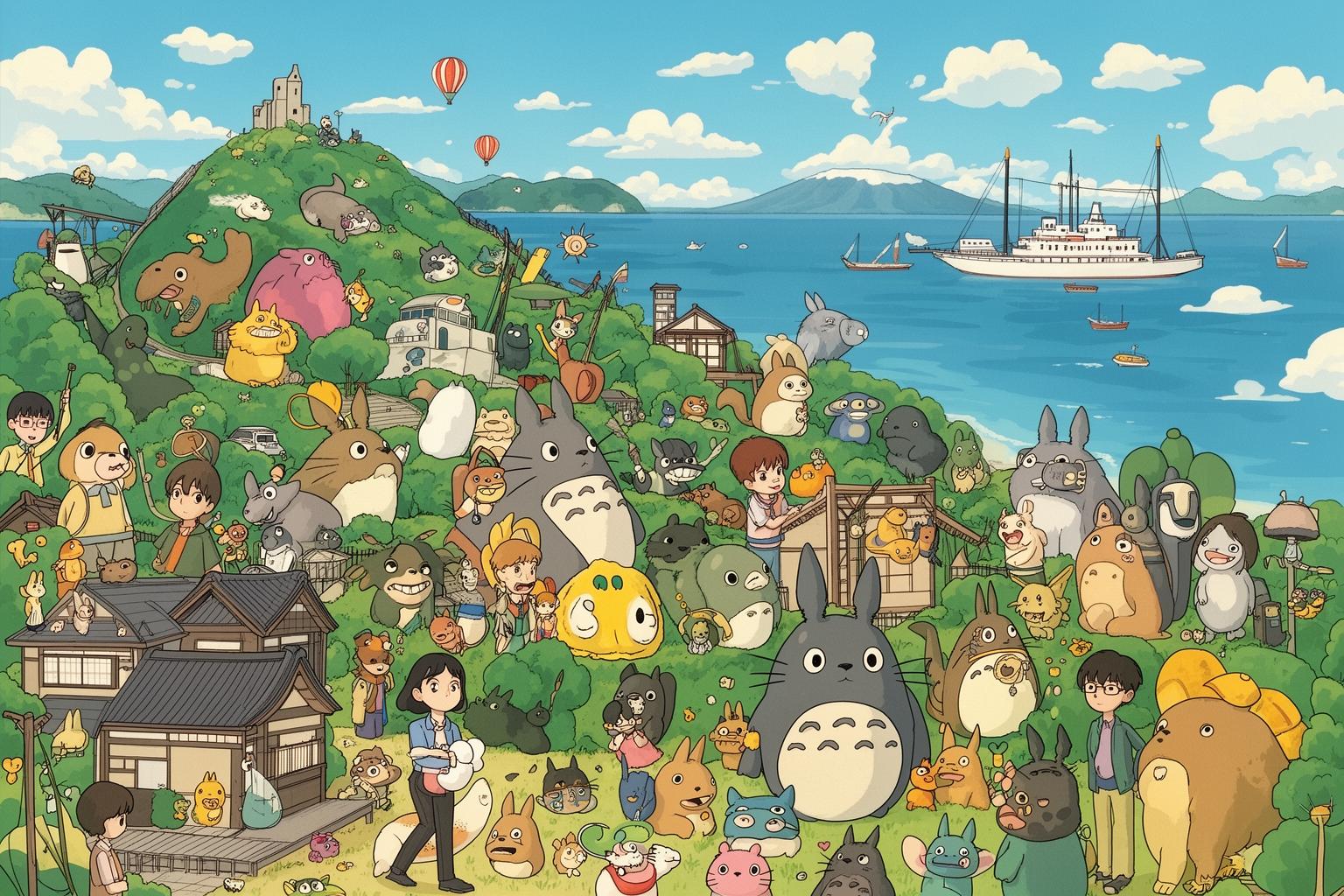
Perhaps the most profound secret behind Studio Ghibli’s appeal lies in its celebration of the ordinary. The films remind us that magic isn’t always hidden in grand castles or epic battles; more often, it can be found in the comforting ritual of making rice balls, the quiet beauty of a well-tended garden, or the communal warmth of a neighborhood street. To truly grasp the world of Ghibli, one must look beyond the famous pilgrimage sites and learn to see the magic woven into the fabric of everyday Japanese life. This involves understanding the philosophies and aesthetics that shape the landscapes, both natural and man-made, which so deeply inspired Miyazaki and his team.
The Concept of Satoyama: Where Nature and Humanity Meet
The world of My Neighbor Totoro perfectly illustrates a uniquely Japanese concept called satoyama. The term combines sato (village or home) and yama (mountain), referring to the transitional zone, a managed landscape lying between the untamed wilderness of the mountains and the cultivated plains of human settlement. It is neither wild nature nor purely agricultural land. Instead, it is a harmonious mosaic of woodlands, rice paddies, streams, and grasslands, all managed and utilized by local communities over generations. This landscape embodies coexistence. The woodlands supplied firewood, charcoal, and foraged foods. The rice paddies, irrigated by mountain streams, provided the staple of the Japanese diet. The grasslands were used for animal fodder and thatching roofs. This intimate, sustainable relationship between people and their environment fostered rich biodiversity and a landscape of exceptional beauty. When you walk through the Sayama Hills, you walk through a living satoyama. You can observe how forest edges are maintained, how water is carefully channeled from the hills to the fields, and how houses cluster together to preserve arable land. This philosophy is at the very heart of Totoro. The film is a love letter to this way of life—a world where nature is not a resource to be exploited but a neighbor to be respected. The spirits, like Totoro, serve as guardians of this balance. They are not frightening monsters lurking in deep, dark woods; they are part of the local ecosystem, visible only to those, like children, who still see the world with wonder and respect. Understanding satoyama allows you to perceive Ghibli magic throughout rural Japan. When you ride a local train and watch the landscape shift from dense forest to terraced fields dotted with farmhouses, you witness the living art that inspired the films.
Shitamachi Vibe: The Charm of Old Tokyo Neighborhoods
Just as satoyama embodies the spirit of the Ghibli countryside, the concept of shitamachi captures the essence of its urban settings. Shitamachi, meaning ‘low city,’ refers to the old, traditional downtown neighborhoods of cities like Tokyo. These areas are not the bustling, high-tech districts of Shinjuku or Shibuya, but rather the quieter, more human-scale neighborhoods such as Yanaka, Nezu, or Shibamata. These are the worlds that inspired the settings of films like Whisper of the Heart and From Up on Poppy Hill. The atmosphere, or vibe, of a shitamachi neighborhood is one of warmth, community, and layered history. The streets are often narrow and winding, ideal for strolling. They are lined with small, family-run shops: a tofu maker whose shop sends clouds of steam into the morning air, a tiny stationery store filled with hidden treasures, a rice cracker shop where the owner greets you warmly. You’ll find small temples and shrines tucked between modern apartment buildings, along with public bathhouses where neighbors gather to soak and chat at day’s end. This is the world Shizuku explores in Whisper of the Heart, set in the very real Tokyo suburb of Seiseki-Sakuragaoka. The film beautifully captures the feeling of discovering your own city, finding secret paths, steep staircases, and antique shops filled with untold stories. To experience this Ghibli magic, a traveler simply needs to step away from the major tourist hubs. Rent a bicycle and explore the backstreets of Yanaka, where the pace of life slows drastically. Walk along the shopping street leading to Shibamata Taishakuten Temple, and you’ll feel as though you’ve stepped back into the 1960s. It is in these places that the beauty of the everyday reveals itself: laundry hanging from balconies, potted plants lining the streets, the distant sound of piano practice. It reminds us that the world of Ghibli is not fantasy, but a heightened, more beautiful version of a reality that still exists, waiting to be discovered by anyone willing to wander.
A Pilgrim’s Practical Guide: Planning Your Ghibli Journey
Embarking on a Ghibli pilgrimage is a fulfilling adventure, but a bit of preparation can elevate a good trip into an unforgettable one. Navigating Japan is remarkably efficient, yet knowing the right train lines, the best times to visit, and a few cultural nuances will help you fully immerse yourself in the experience, allowing the magic of these places to speak to you without the stress of logistical concerns.
Access and Orientation: Reaching the Heart of the Magic
The Sayama Hills (Totoro’s Forest)
Reaching Totoro’s homeland is surprisingly straightforward from central Tokyo. The key is the Seibu Railway network, which departs from stations like Ikebukuro or Seibu-Shinjuku. Your main destination station is Seibukyūjō-mae. The journey is part of the experience, as the dense urban environment gradually transitions to suburbs and then to the lush greenery of the hills. From Seibukyūjō-mae Station, you are right at the edge of the forest. Kurosuke’s House is approximately a 20-30 minute walk from the station, a pleasant stroll taking you past Sayama Lake and into the countryside. Maps are available online from the Totoro no Furusato Foundation and sometimes at the station, but part of the joy is simply wandering and getting a bit lost. The area is best enjoyed on foot, so wear comfortable shoes and be ready for some gentle hills.
Dogo Onsen, Matsuyama
Reaching the inspiration for the Aburaya requires a longer journey. Matsuyama is located on Shikoku, the smallest of Japan’s four main islands. From Tokyo or Osaka, the fastest route is a domestic flight into Matsuyama Airport. Alternatively, you can take the Tokaido-Sanyo Shinkansen (bullet train) to Okayama and then transfer to the JR Shiokaze Limited Express train, which crosses the spectacular Great Seto Bridge to Matsuyama. Once there, the Dogo Onsen area is easily accessed via a charming, old-fashioned streetcar called the ‘Botchan Train’ from the main JR Matsuyama Station or the city center. The onsen itself remains the unmistakable centerpiece of the district.
Edo-Tokyo Open Air Architectural Museum
This treasure trove of Ghibli inspiration is nestled within Koganei Park in western Tokyo. From Shinjuku Station, take the JR Chuo Line Rapid service to Musashi-Koganei Station. The trip takes about 25 minutes. From the station’s north exit, you can catch a local bus from bus stop number 2 or 3, which will drop you right at the park’s entrance (look for the stop ‘Koganei-koen Nishi-guchi’). Alternatively, a pleasant 20-minute walk through the neighborhood will bring you there. The museum charges a modest entrance fee and is generally closed on Mondays, so be sure to check the official website before visiting.
When to Go: The Four Seasons of Ghibli
Each season casts the Ghibli landscapes in a unique light, offering a distinct emotional experience.
Spring (March – May)
Spring is a season of gentle renewal. In the Sayama Hills, cherry and plum blossoms form clouds of pale pink and white against the fresh green of the forest. The air is cool and crisp, perfect for hiking. This season reflects the themes of new beginnings found in many films, like Kiki’s departure from home or Satsuki and Mei’s move to the countryside.
Summer (June – August)
This is the quintessential Totoro season. The Japanese summer is hot, humid, and vibrantly alive. The forest greenery is at its deepest and most lush. The air buzzes with the deafening, electric hum of cicadas, a quintessential sound of summer in Japan. These are the days of long, hazy afternoons, towering cumulonimbus clouds, and the refreshing shade of forest paths. Though the heat can be intense, experiencing the landscape in summer directly connects you to the film’s sun-drenched atmosphere.
Autumn (October – November)
Autumn brings a spectacular transformation. The forests burst into a riot of color, with fiery reds from Japanese maple and brilliant yellows from ginkgo trees. The air turns crisp and clear, and the rice paddies glow golden, awaiting harvest. This season carries a beautiful, slightly melancholic vibe, a cozy introspection that echoes the poignant moments in films like Spirited Away or Whisper of the Heart.
Winter (December – February)
Winter in the Ghibli worlds is a time of quiet and stillness. Crowds thin out, and the landscape is stripped bare, revealing its essential beauty. The stark, leafless trees create intricate silhouettes against the low winter sun. A light dusting of snow can turn the Sayama Hills into a truly magical, silent realm. It’s an ideal time for a peaceful, contemplative pilgrimage—a chance to experience these places in their most serene state.
Local Etiquette and Traveler’s Wisdom
To ensure your pilgrimage is both respectful and enjoyable, keep a few points in mind. When exploring the Sayama Hills, remember you are in a protected nature reserve and wandering near private homes and farms. Stick to designated trails, avoid picking plants or disturbing wildlife, and carry out all your trash. A quiet greeting to locals you pass along the path is always appreciated. In Dogo Onsen, take the time to learn basic onsen etiquette: wash thoroughly at shower stations before entering the bath, keep your small towel out of the water, and maintain a quiet, respectful demeanor. While Japan is increasingly card-friendly, many smaller local shops and restaurants in these areas, especially around the Sayama Hills, may still accept only cash. It’s wise to carry some yen with you. Above all, bring a spirit of curiosity and an open heart—the greatest discoveries often come unplanned.
Beyond the Frame: The Enduring Spirit of Ghibli’s World

A journey through the real-life landscapes of Studio Ghibli is ultimately more than just ticking off photo spots. It is a deeper form of travel that reconnects you with a sense of wonder often lost in the rush of modern life. Standing in the dappled light of Totoro’s Forest or inhaling the steam-filled air of Dogo Onsen, you start to realize that Hayao Miyazaki was not merely crafting fantasy worlds; he was reflecting the most beautiful, soulful, and enduring parts of his own country. He was revealing the magic that already exists, if only we take the time to notice.
These places resonate so profoundly because they embody the very themes that make the films timeless: the importance of community, the essential and deep connection between humanity and nature, and the quiet dignity of living a life with intention and care. The Totoro no Furusato Foundation is not simply preserving a forest; it is safeguarding a philosophy of coexistence. The old buildings of the Edo-Tokyo Open Air Museum are not merely relics; they are carriers of memory, reminding us of worlds we have lost and the beauty they held. The pilgrimage, then, is not about discovering a perfect replica of a film scene. It’s about finding the feeling of that scene in the real world. It’s in the kindness of a volunteer at Kurosuke’s House, the flavor of a local orange in Ehime, the sound of a temple bell echoing through a quiet Tokyo neighborhood. The true spirit of Ghibli is portable; it is an outlook, a way of seeing. When you leave these places, you carry a piece of that spirit with you. You learn to recognize the potential for magic in a gnarled old tree in your neighborhood park, the history in a weathered storefront, and the quiet adventure in taking a path you’ve never walked before. The journey doesn’t end when you board the train home; it has only just begun.