
There exists a unique and powerful alchemy in storytelling, a moment when the boundaries between a fictional world and our own reality begin to dissolve. It is a magic often woven by masterful directors, but few have achieved it with the global, heart-stopping resonance of Makoto Shinkai. His 2016 masterpiece, ‘Your Name’ (Kimi no Na wa), did more than just tell a story of star-crossed lovers separated by time and space; it painted a portrait of Japan so vivid, so tangible, that it beckoned viewers to step through the screen. This phenomenon, known in Japan as ‘seichi junrei’ or sacred site pilgrimage, is a beautiful testament to how deeply a narrative can intertwine with place. Fans from across the globe now journey to Tokyo, not merely as tourists, but as pilgrims, seeking to walk the same streets, stand on the same steps, and feel the same city air as the film’s protagonists, Taki and Mitsuha. This is not just a tour; it is an emotional cartography, tracing the lines of a beloved story onto the sprawling, vibrant map of modern Tokyo. We begin this journey at its most iconic, emotionally charged epicenter: a simple staircase in a quiet residential neighborhood that has become a global symbol of connection and destiny.
Extend your journey by exploring the Tokyo pilgrimage that reveals more iconic real-life sites immortalized in ‘Your Name’.
The Red Staircase of Fate: Suga Shrine in Yotsuya
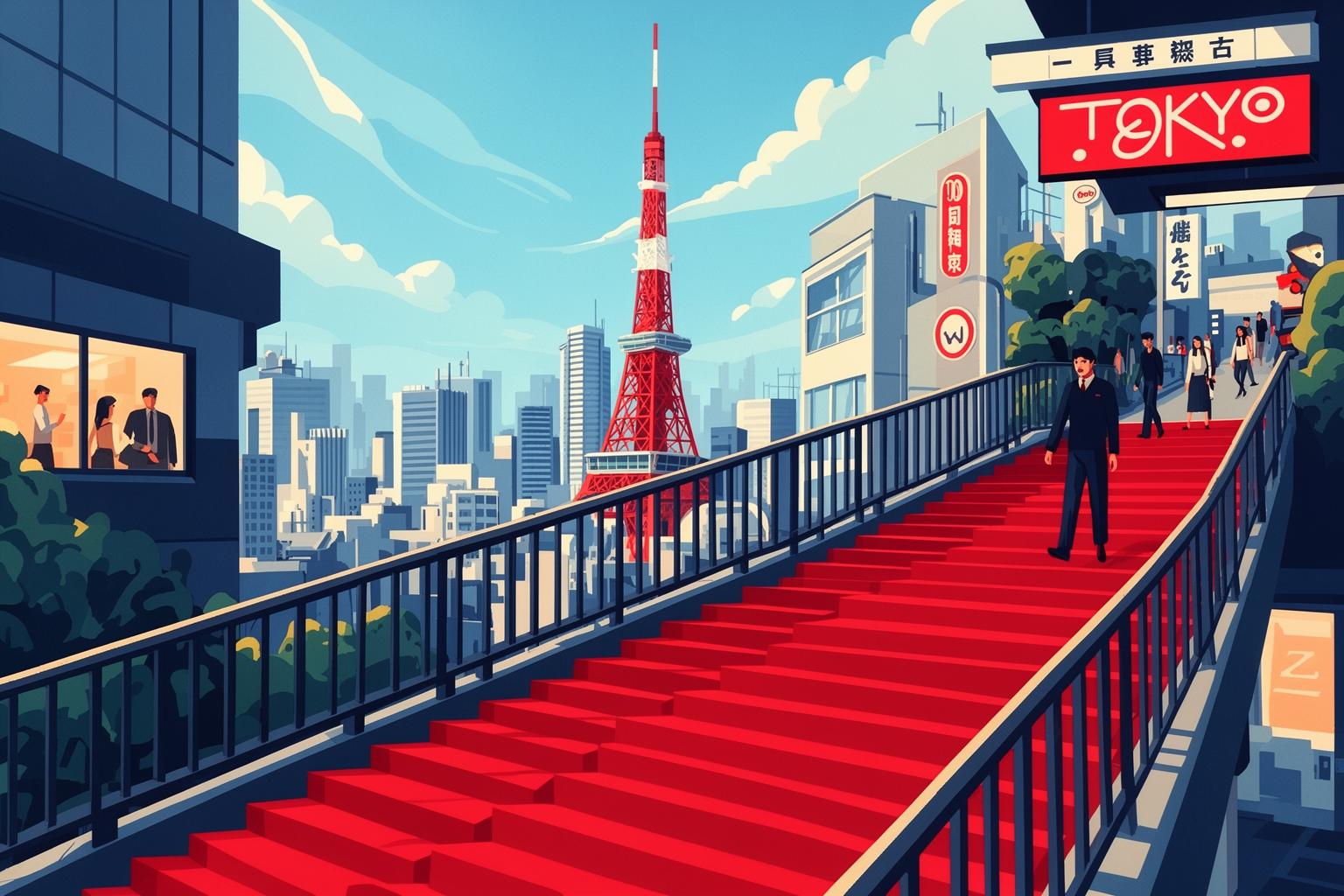
For anyone who has experienced the emotional peak of ‘Your Name,’ the image of a sunlit staircase framed by red railings is permanently imprinted in memory. It serves as the backdrop for the film’s moving climax, the moment when Taki and Mitsuha, years after their celestial ordeal, finally meet again as adults. The air hums with unspoken recognition, a strong sense of déjà vu that drives them to ask the question that pervades the entire story: ‘Have we met before?’ This singular location embodies the narrative’s core themes of memory, yearning, and the unseen ties that bind us. Being here allows one to fully grasp the weight of their journey.
The Cinematic Climax in a Quiet Neighborhood
What immediately strikes you upon arrival is the profound sense of everyday normalcy. The famous staircase is not part of a grand monument or bustling tourist spot. Instead, it is nestled in Yotsuya, a tranquil residential area in Shinjuku Ward. Children may be walking home from school, locals might carry groceries, and the ambient sounds are those of daily life rather than cinematic spectacle. This very ordinariness enhances the location’s impact, rooting the fantastical tale in a relatable reality. As you climb the stairs, the city skyline peeks through gaps between buildings, perfectly echoing the layout of the film’s iconic poster. The mood is one of quiet reflection. You’ll invariably encounter other visitors, each patiently waiting their turn to snap the perfect photo, sharing a silent understanding. They are not merely taking pictures; they are reliving a moment of profound emotional release, standing at the crossroads of two worlds. The gentle slope of the street, the exact angle of the railings, the texture of the concrete—every detail feels both mundane and deeply magical, charged with the energy of countless shared viewings.
A Historian’s Perspective on Suga Shrine
While the staircase has gained global renown, it is simply the approach to the Suga Shrine itself, which holds a quiet history. As a historian, this layering of significance is particularly fascinating. Long before it became a pilgrimage destination for anime fans, Suga Shrine was, and continues to be, an important spiritual hub for the local community. Founded in the early Edo period, it is dedicated to Susanoo-no-Mikoto, a prominent kami (deity) in Shinto mythology associated with storms and the sea, and his wife, Inadahime-no-Mikoto. The shrine serves the local parishioners, hosting seasonal festivals and offering a place for prayer and contemplation. Walking past the famous steps into the shrine grounds feels like entering another chapter of history. You’ll find traditional features of a Shinto shrine: a purifying water basin (temizuya), the main prayer hall (haiden), and wooden plaques (ema) on which visitors inscribe their wishes. This is a powerful reminder that while a location may be sanctified by modern pop culture, its roots often lie deep within centuries of tradition and faith. The shrine’s ongoing role as a place of worship adds a layer of authenticity and reverence to the pilgrimage experience.
Practical Pilgrim’s Notes: Getting It Right
Reaching this iconic spot is surprisingly simple. The nearest station is Yotsuya-Sanchome on the Tokyo Metro Marunouchi Line. From there, it’s an enjoyable ten-to-fifteen-minute stroll through the quiet neighborhood streets. Using a mapping app is recommended, as the final turns can be somewhat inconspicuous. The most important advice for visitors is to remain aware of your surroundings. This is a residential area. The homes flanking the staircase are lived in by families going about their daily routines. Visitors should keep noise levels down, avoid blocking the path for locals, and steer clear of any disruptive behavior. The best time for photography is often late afternoon, when the ‘golden hour’ light beautifully recreates the warm, nostalgic glow of Shinkai’s animation. Early morning is another great option for avoiding crowds and capturing a more peaceful ambiance. Respect is essential to keeping this place welcoming for both residents and future pilgrims.
Beyond the Steps: Tracing Taki’s Tokyo Life
The journey extends beyond Suga Shrine. Your Name presents an intricate array of Tokyo locations that let you follow the daily life of Taki Tachibana, the film’s Tokyo-based protagonist. Exploring these places deepens your connection to his narrative, unveiling a world of urban sophistication, youthful ambition, and the overwhelming vastness of the metropolis.
The National Art Center, Roppongi: An Elegant Date Spot
One of the film’s most visually striking scenes takes place within the flowing glass walls of The National Art Center in Roppongi. Here, Taki shares a somewhat awkward yet endearing date with his admired senpai, Okudera-Miki. The scene is memorable for its refined setting, with the camera gracefully sweeping across the building’s immense conical atrium and sun-dappled cafe. The actual location is just as breathtaking. Designed by the renowned architect Kisho Kurokawa, the building stands as a modern design masterpiece, its undulating facade creating a dynamic play of light and shadow. Inside, you’ll instantly recognize Salon de Thé Rond, the cafe atop the giant concrete cone where Taki and Okudera-senpai converse. It’s an ideal spot to pause and soak in the ambience. The center doesn’t host a permanent collection but instead features a rotating lineup of world-class special exhibitions. For visitors, the primary attraction is the architecture and the faithful capture of the film’s atmosphere of urban elegance. It’s easily accessible via Nogizaka Station on the Chiyoda Line, which offers a direct entrance, or a short walk from Roppongi Station. This provides a wonderful counterpoint to the traditional ambiance of Suga Shrine.
A Taste of Italy in Shinjuku: Cafe La Bohéme
Every student needs a part-time job, and Taki’s was at a refined Italian restaurant called ‘Il Giardino delle Parole’ in the film. This name cleverly references Shinkai’s earlier work, The Garden of Words. The real-life inspiration for this restaurant is Cafe La Bohéme, situated near the Shinjuku Gyoen National Garden. With soaring ceilings, dramatic chandeliers, and a grand, theatrical atmosphere, it perfectly captures the upscale yet inviting feel portrayed in the anime. The interior is instantly recognizable, from the layout to the checkered floor. Dining here is a highly recommended part of the pilgrimage, allowing you to immerse yourself fully in Taki’s world. Picture the lively rhythm of serving customers while juggling the challenges of high school life and a mysterious body-swapping phenomenon. The menu features classic Italian dishes, and reservations are advisable, as the cafe’s connection to the film has boosted its popularity. Enjoying a pasta meal here feels like actively stepping into the story—a delicious and memorable way to connect with the narrative.
Urban Panoramas: The Shinjuku Pedestrian Bridge
Makoto Shinkai excels at capturing the overwhelming beauty and scale of Tokyo’s urban landscape. Throughout Your Name, breathtaking montage shots establish the city environment that shapes Taki. One of the most iconic views is seen from a pedestrian bridge in Shinjuku, looking toward a cluster of skyscrapers dominated by the distinctive, web-like Mode Gakuen Cocoon Tower. This spot is near the Shinjuku Police Station intersection. Standing on this bridge, you sense the pulsating energy of the world’s busiest city. Streams of traffic flow beneath, crowds of pedestrians cross the streets, and neon signs flicker to life as dusk falls. It’s a powerful vantage point that encapsulates the feeling of being a small part of a vast, interconnected whole—a central theme in Taki’s life before his fateful bond with Mitsuha. For photographers, this location is a treasure trove, especially at night, offering a chance to capture the quintessential futuristic Tokyo cityscape that Shinkai portrays with such loving detail. It’s a moment to pause and watch the city breathe, just as Taki would on his way home.
A Journey’s Soul: Embracing the Seichi Junrei Spirit
To embark on a ‘seichi junrei’ for ‘Your Name’ is to partake in an experience that goes beyond mere sightseeing. It is an act of translation, transforming the emotional resonance of the story into physical movement and sensory perception. Each location acts as a chapter, and traveling between them becomes a form of narrative discovery.
More Than Just a Photo Opportunity
While capturing the perfect photo is a rewarding aspect of the journey, the true essence of the pilgrimage lies in the moments between. It’s found in the quiet stroll through Yotsuya, imagining the fears and hopes of Taki and Mitsuha. It’s in savoring coffee at the National Art Center’s café, contemplating the film’s themes of missed connections. It’s in feeling the vibrations of the trains that Taki took daily. This journey deepens the film, layering it with personal memories tied to the story. When you watch ‘Your Name’ again after this pilgrimage, it will no longer be just a beautiful animated film. It becomes a collection of places you’ve visited, air you’ve breathed, and emotions you’ve experienced. The fiction imbues real locations with new meaning, while those real places, in turn, lend a profound depth and permanence to the fiction. It becomes a part of your own narrative, your own journey.
A Word on Itomori: The Fictional Heart
It’s important to remember that Mitsuha’s idyllic hometown, Itomori, is a fictional creation, a blend of Shinkai’s nostalgic vision of rural Japan. However, it is not purely a product of imagination. Its landscapes draw heavily from the area around Hida-Furukawa in Gifu Prefecture, a picturesque, mountainous region known for its traditional townscape and skilled artisans. The beautiful Hida-Sannogu Hie Shrine is widely regarded as the inspiration for Mitsuha’s family shrine, and the local library bears a remarkable resemblance to the one in the film. Additionally, the stunning crater lake that characterizes Itomori’s geography is visually based on Lake Suwa in Nagano Prefecture. While visiting these more remote sites is a pilgrimage in itself, understanding their influence adds another dimension of appreciation for the remarkable world-building and meticulous detail that define Shinkai’s work. It connects the urban world of Taki with Mitsuha’s spiritual, traditional realm.
A Gentle Reminder for the Respectful Traveler
As this type of tourism increases, it is crucial that we serve as thoughtful ambassadors for the fan community. The locations featured in ‘Your Name’ are not studio backlots but lively parts of the city. They are homes, places of worship, public institutions, and private businesses. Their continued accessibility depends on the respectful conduct of visitors. Be conscious of noise levels, especially in residential neighborhoods and religious sites. Refrain from littering and avoid blocking public pathways for extended photography sessions. When stopping by a café or shop, consider making a purchase to support the local economy that has kindly embraced our shared fandom. A successful pilgrimage leaves no negative impact, ensuring that fans for years to come can enjoy the same enchanting experience.
Final Reflections on a Connected World
Tracing the footsteps of Taki and Mitsuha through Tokyo is to delve into the core of ‘Your Name’—the concept that even amidst vast distances and bustling crowds, deep and meaningful connections can exist. The journey takes you from the serene, prayerful grounds of a neighborhood shrine to the dazzling heights of contemporary architecture, reflecting the two worlds that the film so skillfully unites. You arrive in Tokyo as a fan of the film, but you leave as a part of its narrative. The red staircase in Yotsuya is no longer simply a backdrop for a cinematic climax; it becomes a tangible place, filled with the hopes of its characters and the shared emotions of a worldwide audience. It stands as a silent tribute to the power of stories to shape our world, direct our journeys, and remind us of the unseen threads that might be connecting us all.