
There’s a feeling, a phantom ache of nostalgia for a place you’ve never been, a face you’ve never seen. It’s a sensation the Japanese call natsukashii, but director Makoto Shinkai elevated it into a global phenomenon with his 2016 masterpiece, Your Name (Kimi no Na wa.). The film captured the hearts of millions not just with its breathtaking story of two teenagers swapping lives across space and time, but with its stunningly realistic portrayal of Japan. The world that Taki and Mitsuha inhabited felt so tangible, so incredibly real, because in many ways, it is. From the dizzying, electric pulse of Tokyo to the tranquil, spiritual whispers of the Gifu countryside, the film’s backdrops were meticulously crafted from actual locations. This dedication to realism sparked a massive wave of what is known in Japan as seichi junrei, or anime pilgrimage, where fans travel to the real-world settings that inspired their favorite stories. To embark on a Your Name pilgrimage is to do more than just sightsee; it is to physically walk through the frames of the film, to feel the ambient energy that Shinkai so brilliantly translated to the screen, and to chase that beautiful, bittersweet ache of connection that defines the entire experience. It’s a journey that blurs the line between animation and reality, inviting you to find your own musubi—your own fateful, intertwined connection—with the heart of Japan. This guide is your thread, your braided cord, to navigating the two worlds of Taki and Mitsuha.
For those captivated by the irresistible blend of nostalgia and reality, the Seiseki-Sakuragaoka pilgrimage offers another compelling route to experience Japan’s cinematic soul.
Tokyo’s Urban Heartbeat: Tracing Taki’s Footsteps
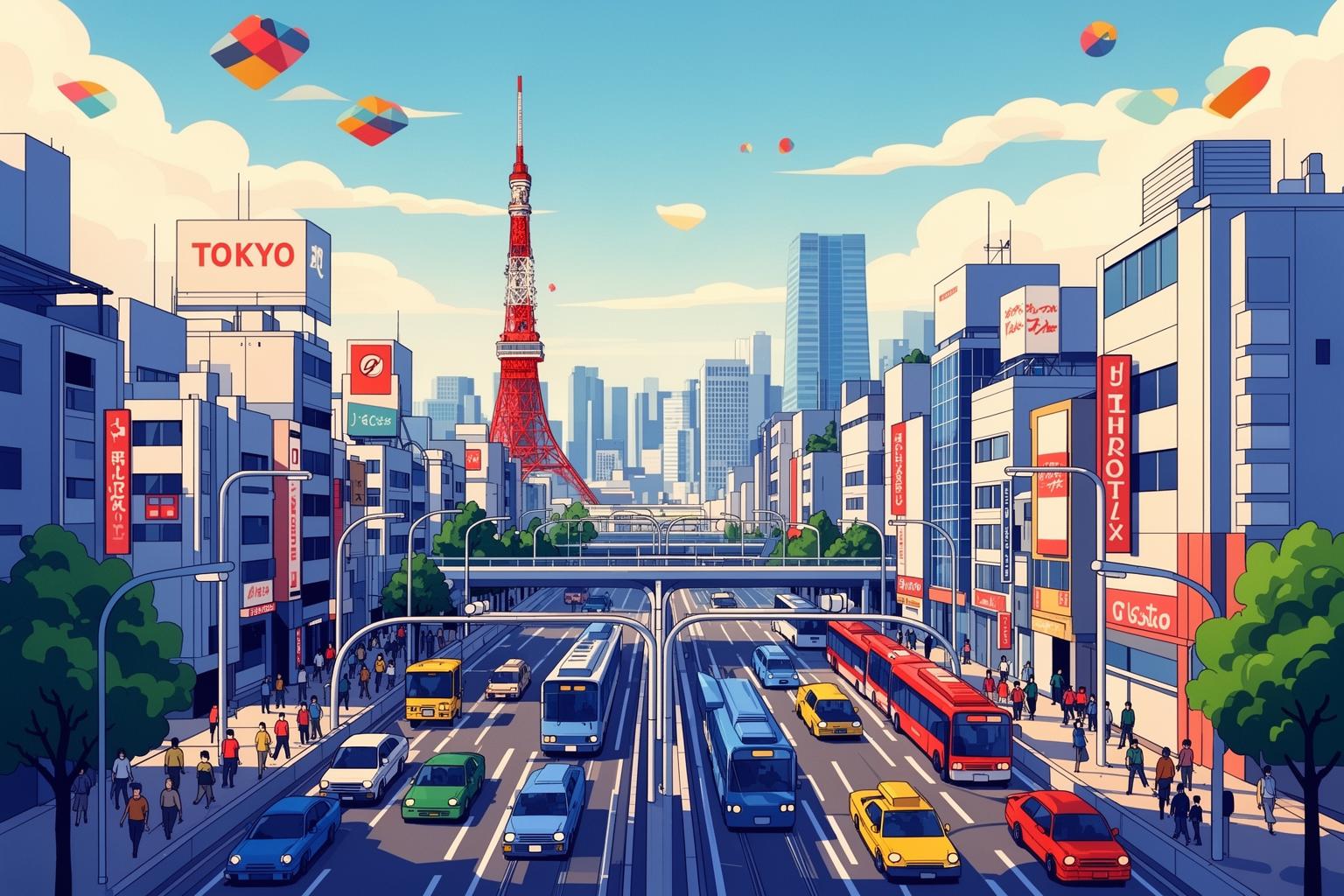
Tokyo is a city of endless motion, a vast metropolis where millions of individual stories intersect every day. This is Taki Tachibana’s world: a landscape of towering skyscrapers, intricate train networks, and infinite concrete horizons buzzing with energy. Shinkai portrays Tokyo not as a cold, impersonal place, but as a living, breathing entity, filled with moments of quiet beauty amid the chaos. Following Taki’s journey is a form of urban exploration, offering a chance to see the city through the eyes of a young man experiencing love, loss, and a bond that defies distance. It’s a vibrant, exhilarating beginning to any pilgrimage, immersing you directly in the kinetic energy driving the film’s first half. Here, every pedestrian crossing, train window, and skyline view feels like a potential scene, a memory waiting to be captured.
The Iconic Staircase: A Fateful Meeting in Yotsuya
Few locations in modern anime are as instantly recognizable or emotionally resonant as the red-railed staircase of Suga Shrine. This is the destined place where the film’s heart-stopping, cathartic climax unfolds, as Taki and Mitsuha finally and desperately find each other. Nestled in a quiet, unassuming residential neighborhood of Yotsuya, just a short walk from Yotsuya Station, the steps feel almost sacred to those who visit. As you draw near, the city’s noise seems to fade. The roar of central Tokyo softens to a gentle hum, replaced by the rustle of leaves and distant everyday chatter. Climbing the steps, a sense of anticipation builds with every step. The view from the top, looking down the curved path lined with apartment buildings, is exactly as you remember. It’s a surreal moment, standing in a place heavy with fictional significance, yet profoundly real.
For a first-time visitor, the experience often proves surprisingly moving. You’ll likely share the spot with fellow pilgrims, sharing a quiet camaraderie as you take turns capturing the perfect photo to recreate the scene where the two protagonists pass each other. The best time to visit is late afternoon, during the “golden hour,” when the setting sun casts long shadows and bathes the scene in warm, cinematic light that perfectly mirrors the film’s aesthetic. A key piece of advice: remember this is a residential area, and Suga Shrine remains an active place of worship. Be quiet, respectful, and mindful of the residents whose daily lives unfold around this now-famous landmark. The magic of the staircase lies not just in its cinematic fame, but in its peaceful, everyday presence.
Shinjuku’s Concrete Canvas
Shinjuku serves as the engine of Taki’s Tokyo. It’s where he juggles school life, his part-time job, and his confusing, blossoming feelings for Mitsuha. Shinjuku Station, the world’s busiest transportation hub, acts as a character itself—a maze of passages and platforms that perfectly symbolize the intersecting paths of the film’s story. The area features heavily in the film, with one standout scene on the pedestrian bridge near the Shinjuku police station, where Taki and his crush, Okudera-senpai, part ways after their date. Standing on that bridge, surrounded by the symphony of traffic and shimmering city lights, you truly sense Taki’s world. In the distance, the distinctive shape of the NTT Docomo Yoyogi Building cuts the skyline, a constant landmark in Shinkai’s vision of the city, almost like a silent guardian watching over the characters’ lives.
Exploring Shinjuku as a pilgrim means looking upward, appreciating how sunlight reflects off glass towers and the intricate web of power lines Shinkai so lovingly captured. It’s about feeling the vast scale of the environment and understanding how someone could feel both lost and profoundly connected within it. Although not featured extensively, Shinjuku Gyoen National Garden offers a peaceful escape from urban rush and strongly recalls the parks where Taki often sat and sketched. It’s easy to imagine him finding a quiet bench here, attempting to capture fragments of a life and landscape he struggles to remember. Shinjuku embodies contrast—overwhelming crowds alongside hidden pockets of calm—and it is within these contrasts that the essence of Taki’s Tokyo truly lives.
A Taste of Taki’s Life: Cafes and Culture
Taki’s life extends beyond dramatic cityscapes; it’s also shaped by the everyday places where he works and socializes. His part-time job as a waiter is a defining aspect of his character, and the Italian restaurant where he works, “Il Giardino Delle Parole” (a nod to Shinkai’s earlier film, The Garden of Words), was inspired directly by Café La Bohéme Shinjuku Gyoen. Visiting this restaurant offers a wonderfully immersive experience. The elegant, high-ceilinged interior, warm lighting, and sophisticated atmosphere are perfectly preserved from the animated version. You can sit down for a meal and order pasta just as Taki would have served, and for a moment, the boundary between fiction and reality feels delightfully thin. It’s a popular spot, so booking a reservation is wise if you want to enjoy the ambiance without a long wait.
Another key location is the National Art Center in Roppongi, where Taki and Okudera-senpai’s date takes place. The building’s stunning, wave-like glass facade is an architectural marvel, depicted with breathtaking accuracy in the film. Inside, the Salon de Thé ROND—a café atop a massive concrete cone—is where they sat and talked. You can enjoy coffee and cake in the very same seats, looking out at the vast, light-filled atrium. This experience adds a layer of cultural refinement to the pilgrimage, connecting Taki’s story to Tokyo’s vibrant arts scene. It shows that his world, while rooted in everyday life, is also touched by moments of high culture and beauty, enriching both his character and the world he inhabits.
Journey to Itomori: Finding Mitsuha in Rural Gifu
Leaving behind Tokyo’s electric hum, the pilgrimage shifts into a profoundly different tone. To find Mitsuha Miyamizu, you must venture into the heart of Japan’s mountainous countryside, a realm rich in ancient tradition, Shinto spirituality, and the gentle rhythms of nature. The fictional town of Itomori, with its mystical crater lake and deeply rooted customs, cannot be found on any map. Yet, its spirit was born from the very real landscapes of the Hida region in Gifu Prefecture. This segment of the journey is a pilgrimage in the truest sense—a slower, more reflective experience inviting you to heed the whispers of history and engage with the spiritual themes that ground the film. Here, beneath the vast rural Japanese sky, you’ll discover the other half of the story.
The Town of Hida-Furukawa: The Heart of Itomori
While Itomori draws from various inspirations, the town of Hida-Furukawa stands as its primary architectural and atmospheric model. Arriving at Hida-Furukawa Station is an uncanny experience for any fan. The charming wooden station building, the pedestrian footbridge, and even the waiting area closely mirror the scenes in the film where Taki and his friends begin searching for Mitsuha. The town itself is a beautifully preserved example of a traditional Japanese settlement. Canals teeming with vibrant koi fish line the old streets, bordered by white-walled storehouses and wooden merchant homes. It feels worlds away from Shinjuku’s neon glow.
A must-visit location is the Hida City Library. This modern, welcoming building served as the exact model for the library where Taki delves into Itomori’s history and uncovers the terrifying truth about the comet strike. The library staff have fully embraced their film connection, dedicating a section to Your Name and even allowing photography, provided visitors complete a form and respect other patrons. Sitting at one of the tables, surrounded by the quiet focus of a small-town library, you can sense the weight of Taki’s desperation and resolve. Another significant site is the Keta Wakamiya Shrine, which, along with other local shrines, inspired the Miyamizu family shrine. Though not an exact replica, its serene ambiance and wooden architecture evoke the spiritual core of Mitsuha’s life as a shrine maiden. Exploring Hida-Furukawa feels like assembling a puzzle; each street corner and building adds another layer to the living, breathing entity that became Itomori.
Echoes of a Vanished Lake: Lake Suwa
The most breathtaking and pivotal feature of Itomori is its magnificent crater lake, the silent witness to the town’s history and tragic fate. This stunning view was directly inspired by Lake Suwa, situated in neighboring Nagano Prefecture. For the quintessential Itomori panorama, head to Tateishi Park, perched on a hill overlooking the lake and the surrounding city. The observation deck offers a simply astonishing view: the sprawling lake, cradled by mountains and the twinkling town nestled along its shores, perfectly mirrors the film’s most iconic establishing shots. Seeing it in person, it’s easy to grasp why this landscape was chosen. There’s a certain magic to the scene—a sense of scale and history that feels both epic and deeply intimate.
A visit at dusk is highly recommended. As the sun sets, the sky bursts into shades of orange and purple—the kataware-doki, or “twilight time,” so vital thematically to the film. Watching the city lights spark to life around the lake as day fades into night is an unforgettable, nearly spiritual experience. It is the moment when Taki’s and Mitsuha’s worlds converged, and standing there, you can feel that connection vividly. Reaching Tateishi Park requires some effort; it’s a steep walk uphill or a brief, well-worth-it taxi ride from Kami-Suwa Station. This small journey heightens the reward, making the final reveal of the landscape feel well-earned, much like Taki’s own challenging quest for the truth.
The Pilgrim’s Experience: More Than Just Sightseeing

A seichi junrei for Your Name is far more than just a list of photo spots. It’s a comprehensive journey that links two distinct regions of Japan and immerses you in the cultural and thematic layers of the story. It involves appreciating the contrast between urban and rural life, embracing the fusion of modern and traditional elements, and experiencing the powerful concept of musubi not simply as a narrative device, but as a real force that connects places, people, and time. Thoughtful planning of this journey will turn it from a mere vacation into a rich, narrative experience that lingers long after you return home.
Weaving Your Own Story: Practical Tips for Your Journey
Combining Tokyo and the Hida region into a single trip is surprisingly easy thanks to Japan’s remarkable public transportation system. For international travelers, the Japan Rail Pass is an invaluable tool, covering the Shinkansen (bullet train) journey from Tokyo to Nagoya, and the scenic Limited Express Hida train that winds through the mountains to Takayama and Hida-Furukawa. Plan to spend at least two to three days in Tokyo to fully explore Taki’s world without hurrying. Then allocate another two to three days for the Gifu and Nagano areas. Staying overnight in Takayama, a larger and more tourist-friendly city near Hida-Furukawa, is an excellent base for encountering Mitsuha’s world. From Takayama, Hida-Furukawa is just a brief 15-minute local train ride away.
To deepen your connection to the region, savor the local cuisine. The Hida area is renowned for its beautifully marbled Hida beef, which can be enjoyed as steak, skewered, or in a sukiyaki hot pot. Takayama is also famous for its distinctive ramen, a light soy-sauce-based broth that is especially comforting after a long day of exploration. In Tokyo, dining options are endless—trying a traditional Italian meal at Cafe La Bohéme or indulging in a parfait at a chic cafe adds another dimension to the pilgrimage. Food plays a vital role in any culture, and by tasting dishes the characters might have eaten in the places they might have visited, you weave yourself more deeply into their story.
The Spirit of Musubi: Connecting with the Culture
The core theme of Your Name is musubi, a concept Mitsuha’s grandmother describes as the intricate, invisible threads connecting everything—people, time, and fate. The pilgrimage itself is a physical expression of this idea. You are actively creating a thread between yourself and the story, linking the animator’s imagination with the real world. This connection carries the responsibility of being a respectful traveler. Remember, these locations are not movie sets; they are living communities. In Hida-Furukawa, residents have warmly welcomed fans, but it is crucial to respect their privacy, keep noise to a minimum, and observe local customs. At shrines like Suga Shrine and Keta Wakamiya Shrine, follow proper etiquette: bow when passing through the torii gate, purify your hands and mouth at the chozuya (water pavilion), and approach the main hall with quiet reverence.
One of the most meaningful keepsakes from this journey is a kumihimo braided cord, the physical embodiment of musubi in the film. In Hida, you can find shops selling these beautiful handmade cords, and some even offer workshops where you can learn to braid your own. Making your own kumihimo is a meditative and rewarding activity. As you weave the colorful threads, you participate in an ancient Japanese craft, creating a tangible memento of your journey and the connections you’ve forged. It transforms a simple trip into a personal ritual, a way to tie your own story into the larger narrative of Your Name.
A Journey’s End, A Connection Made
To follow in the footsteps of Taki and Mitsuha is to embark on a journey marked by profound contrasts. It is a trip from the dazzling, vertical world of Tokyo, where futures are shaped by glass and steel, to the horizontal, grounded world of Hida, where traditions are maintained in wood and stone. It means experiencing the frantic rush of a Shinjuku crosswalk alongside the deep silence of a mountain shrine. By the end, you understand that these two worlds are not opposites but complements—two halves of a whole, just like the protagonists themselves. This pilgrimage reveals that one cannot be fully grasped without the other.
Why do these places resonate so deeply? It’s because Makoto Shinkai did more than replicate landscapes; he captured their essence. He distilled the essence of a specific time and place—the loneliness of a city, the warmth of a community, the ache of a memory—and infused it into every frame. When we visit these sites, we are not merely seeing a scene; we are tapping into that distilled emotion. We stand on the Suga Shrine steps not just to take a picture, but to feel a glimmer of the hope, relief, and love that define that moment. We look out over Lake Suwa and sense the epic scale of fate and time. The journey in Your Name is ultimately a quest for a feeling, and the remarkable thing is, in these very real places, you can truly discover it. You leave not just with photos, but with a heart full of musubi, ready to uncover the invisible threads that connect you to your own cherished people and places, no matter how distant they may seem.