
There are stories that feel like a dream you once had, a faint memory of a connection so profound it reshapes your very soul. Makoto Shinkai’s masterpiece, ‘Kimi no Na wa’ or ‘Your Name.’, is one such story. It’s a celestial romance that swept the globe, a tale of two high school students, Taki in bustling Tokyo and Mitsuha in the serene countryside, who find themselves inexplicably linked. Their journey across time, space, and memory left an indelible mark on audiences, not just for its heart-wrenching narrative, but for its breathtakingly beautiful and realistic world. This realism wasn’t just movie magic; it was a love letter to the actual landscapes of Japan. This has given birth to a modern-day pilgrimage, a ‘seichi junrei,’ where fans can step out of the cinema and directly into the frames of the film. It’s a quest to find the tangible threads connecting us to Taki and Mitsuha’s world, to stand where they stood, and to feel the ‘musubi’—the invisible, intricate knot of fate—that binds us all. This journey will take us from the electric, vibrant heart of Tokyo to the tranquil, mountainous embrace of Gifu and Nagano, chasing the ghost of a comet and the echo of a name you can’t quite remember. Prepare to walk the line between animation and reality, a path paved with familiar sights and newfound wonder.
For those curious to experience Japan’s fusion of urban energy and countryside charm in person, discovering the anime dreamscapes offers an immersive next step.
The Heartbeat of Tokyo: Taki’s Urban World
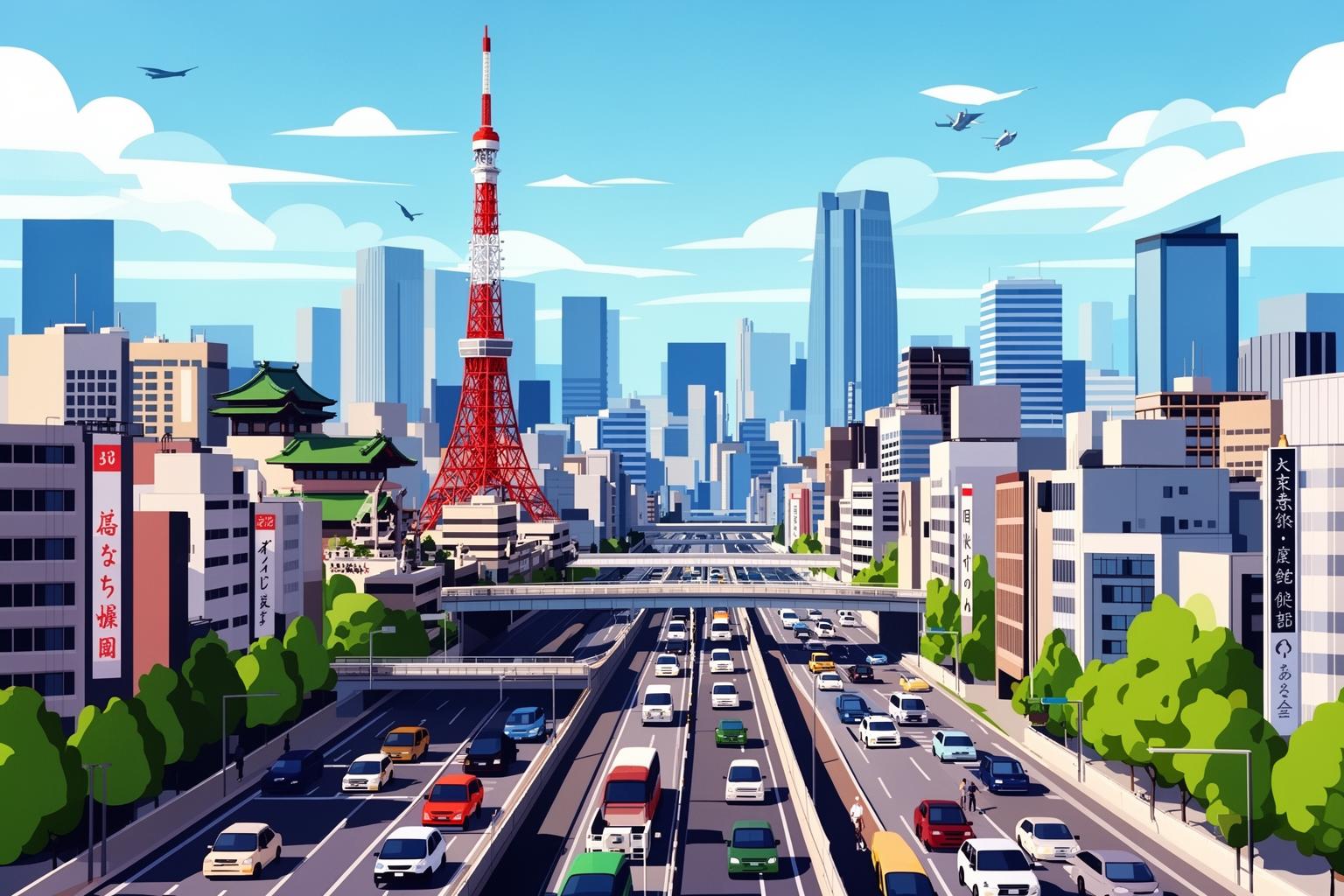
Our pilgrimage begins where Taki’s story comes to life, in the vast, glowing metropolis of Tokyo. This city serves not merely as a backdrop but as a character itself. It is a place of dazzling lights and hidden corners, immense crowds and deep solitude. Shinkai artfully portrays this duality, illustrating a city that is both overwhelmingly expansive and intimately personal. Walking these streets, you sense Taki’s hurried steps, his ambition, and his moments of quiet reflection amid the urban symphony. The atmosphere buzzes with a unique energy, a relentless forward momentum that carries you along. It’s a city brimming with countless stories unfolding simultaneously, and for a few days, we follow just one of them.
The Iconic Red Staircase: Suga Shrine
No image is more closely tied to Your Name. than the final, breathtaking scene set on a simple staircase. This is the emotional core of the film, where two worlds and two timelines converge in a stunning moment of recognition. Discovering these stairs in reality feels like finding a sacred relic. They belong to Suga Shrine, nestled in a tranquil residential neighborhood of Yotsuya. The walk from Yotsuya Station gently eases you away from the bustling city center. Streets grow quieter, buildings more modest, and the mood more serene. When you make the last turn and spot the iconic red handrail curving beneath a green canopy of trees, your heart will likely race. It’s real. That feeling is unmistakable. The air is still, carrying only the distant murmur of the city and the whisper of leaves. Standing at the top looking down, or at the base looking up, you can’t help but replay the scene in your mind. You sense the tension, the hope, the years of searching culminating in that fragile question: “Have we met before?” The ideal time to visit is late afternoon, when the ‘golden hour’ light filters through the trees, casting long shadows and bathing the scene in a warm, nostalgic glow reminiscent of ‘kataware-doki’ or twilight. While this spot draws many fans, it remains part of a working shrine within a quiet neighborhood. A moment of respectful silence—honoring both the tale and the place—is the best way to appreciate the experience. It powerfully reminds us that the most profound moments often occur in the most ordinary settings.
Crossroads of Fate: Shinjuku and Yoyogi
If Suga Shrine represents the heart, then Shinjuku is the film’s roaring pulse. This is Taki’s everyday environment—a dizzying labyrinth of skyscrapers, neon signs, and flowing crowds. To truly grasp his world, one must immerse in the controlled chaos of Shinjuku Station, the busiest train station on Earth. The movie perfectly captures the sensation of being swept along by the crowd, a single drop in an endless sea of humanity. Just outside the station, the enormous Yunika Vision screens, prominent in the film’s opening montage, broadcast news and music over the famous scramble crossing. It’s a sensory feast in the best sense. Nearby stands the distinctive, circular Shinjuku Police Station intersection, another fleeting film landmark, anchoring Taki’s life in specific, tangible geography. A brief walk from the station’s south exit leads to a pedestrian bridge offering a view of the NTT Docomo Yoyogi Building, its clock tower piercing the skyline. Here, Taki and his senior, Okudera-senpai, walk and talk, city lights twinkling behind them. As trains rumble beneath, you feel the urban solitude Shinkai often explores—the sensation of being surrounded by millions yet enveloped in private thoughts and desires. This place feels both immense and profoundly intimate, a concrete jungle where dreams and anxieties mingle beneath the glow of a thousand lights.
A Moment of Peace: The National Art Center, Tokyo
Amid Tokyo’s frenetic energy, Taki and Okudera-senpai share a refined moment of calm during their date. Their lunch takes place in the magnificent National Art Center, Tokyo, situated in the stylish Roppongi district. The building itself is a masterpiece of modern architecture, with its undulating glass facade resembling rippling waves. Inside, city noise fades away, replaced by a hushed reverence. Light floods through the glass walls, illuminating a vast, open atrium. The cafe where they dine, Salon de Thé ROND, is perched atop a massive concrete cone at the center of this space, offering a panoramic view. To sit here, perhaps with coffee and cake, is to fully immerse yourself in that scene. It’s a sanctuary of tranquility and culture, a place to pause and reflect. The atmosphere encourages quiet conversation and artistic appreciation—a stark contrast to the intense emotions of Taki’s connection with Mitsuha. This location reveals another layer of Taki’s life—his sensitivity to beauty, his growing maturity, and his navigation of ordinary teenage relationships alongside his extraordinary supernatural experience. It’s an essential piece of the story, a quiet chapter unfolding amid world-class art and design.
Whispers of Itomori: Mitsuha’s Mountain Town
Leaving the concrete canyons of Tokyo behind, our pilgrimage takes a dramatic turn as we follow Taki’s desperate search for Mitsuha into the heart of Japan’s mountainous countryside. The fictional town of Itomori, with its mystical lake and deep-rooted traditions, does not correspond to a single location on the map. Instead, it is a composite—a dream of rural Japan primarily woven from the essence of a real town: Hida-Furukawa, nestled in the mountains of Gifu Prefecture. The journey itself becomes part of the experience. Boarding the Wide View Hida limited express train from Nagoya, you watch the urban sprawl gradually give way to lush valleys, winding rivers, and dense forests. As the train winds through the landscape, it offers breathtaking views that seem animated by Shinkai himself. Stepping onto the platform in Hida-Furukawa, the first thing you notice is the air—crisp and clean, carrying the scent of wood and damp earth. The frantic pace of Tokyo fades away, replaced by a profound sense of peace and timelessness. This is Mitsuha’s world, a place governed by the seasons, ancient rituals, and the quiet rhythm of small-town life.
The Soul of the Town: Hida-Furukawa Station
For many pilgrims, this marks their first true moment of arrival. Hida-Furukawa Station is depicted with meticulous accuracy in the film. It’s the very spot where Taki and his friends disembark, clutching his hand-drawn sketches of Itomori, hoping for a clue. The wooden sign, platform layout, and taxi stand outside are all faithfully recreated, waiting to greet you. The sensation of watching the train depart, leaving you in the tranquil mountain town, is uncanny. Inside the station, you’ll find the friendly faces of the local tourism association, who have warmly embraced their connection to the film. They provide maps that highlight key locations, a testament to the town’s welcoming spirit. One of the most endearing touches is the Hida-gyu mascot statue on the platform—a cute cow character that Taki mistakenly identifies as a different local mascot in the movie. This small detail perfectly solidifies the link between fiction and reality. Standing on that platform, you can almost hear the film’s score swelling as you imagine Taki’s mix of hope and anxiety, embarking on a search for a place that might not even exist. The station is more than just a transit point; it is the gateway to Itomori’s soul.
Echoes of Tradition: Hida City Library and Local Life
One of the most memorable research scenes in the film is set in a beautiful library, where Taki finally uncovers the tragic truth about Itomori. That library is real—it is the Hida City Library. From the outside, it appears as a modern building, but stepping inside reveals a breathtaking interior crafted from local timber. The geometric wooden ceiling and gentle natural light create a warm, serene atmosphere. It feels less like a public facility and more like a sanctuary for knowledge and community. The staff are incredibly welcoming to fans. While it remains a fully functioning library for local residents, visitors are generally allowed to take photographs after requesting permission at the main desk. Discovering the exact corner where Taki and his friends sat, poring over records of the comet strike, is a quiet thrill. You can feel the weight of their discovery within the silent, reverent space. Beyond the library, the town of Hida-Furukawa itself feels like a living museum. You can stroll along the Setogawa Canal, where thousands of vibrant koi swim in clear water. You can hear the distant clang of a blacksmith’s hammer and admire the preserved wooden merchant houses adorned with distinctive latticework. This is the daily life Mitsuha longed to escape, yet it holds a deep, understated beauty that Taki, the city boy, would surely find captivating. It’s a place that encourages you to slow down, notice the small details, and appreciate the enduring power of tradition.
Ritual and Reverie: Ketawakamiya Shrine and Hida-Sannogu Hie Shrine
Mitsuha’s life as a Miyamizu shrine maiden is central to the story’s Shinto themes of ritual, sacrifice, and connection to the divine. Although the Miyamizu Shrine itself is fictional, its spirit is drawn from several real shrines in the Hida region. The small but significant Ketawakamiya Shrine in Hida-Furukawa is widely believed to be the model for the shrine where Mitsuha and her sister perform the kuchikamizake ritual—chewing rice to create sacred sake. Walking to this shrine, located on a small hill overlooking parts of the town, you pass one of the town’s iconic bus stops also featured in the film. The shrine is serene, surrounded by tall trees, and deeply connected to the surrounding nature. As an avid hiker, I felt a powerful sense of place here—a spiritual resonance that comes from grounds held sacred for centuries. For the grand stone staircase leading up to the Miyamizu Shrine, many pilgrims instead look to the Hida-Sannogu Hie Shrine in the nearby, larger city of Takayama. Its impressive entrance and towering cedar trees evoke the atmosphere of Mitsuha’s family shrine. Ascending these stone steps, you feel a profound sense of reverence and antiquity. These shrines are not merely photo spots; they are active places of worship. They lie at the heart of the film’s deeper themes, representing the unbroken thread of tradition and the cyclical nature of time, loss, and rebirth that defines the story of Itomori.
The View from Above: The Mystical Lake Itomori

The most striking geographical feature of Mitsuha’s hometown is the beautiful, crater-like lake that shapes the town’s fate. This breathtaking vista has a real-world counterpart: Lake Suwa, situated in Nagano Prefecture. While Hida-Furukawa forms the heart of the town, Lake Suwa defines its unforgettable outline. To experience this view is to see the film’s most iconic landscape come to life. The best vantage point is from Tateishi Park, located on a hill overlooking the lake and the city of Suwa. The climb or short drive to the park is a journey towards a grand unveiling. Upon reaching the observation deck, the scene spreads out spectacularly before you. The lake’s shape, the way the city curves along its shores, and the mountains embracing the entire view—it is an almost perfect reflection of Lake Itomori. Gazing down, you can easily picture the small town nestled by the water, the high school perched on the hill, and the Miyamizu Shrine hidden deep in the woods. The atmosphere here evokes a sense of vastness and contemplation. You feel the scale of both the landscape and the cosmic events of the story. Visiting at dusk offers a particularly magical experience. As the sun sets, the sky blazes with shades of orange and purple, and the city lights begin to twinkle. This is ‘kataware-doki,’ the twilight moment when boundaries between worlds blur—the very time when Taki and Mitsuha could meet briefly on the crater’s rim. At Tateishi Park, as day fades into night, you don’t just see the world of ‘Your Name.’; you feel its magic, its sorrow, and its enduring hope.
A Pilgrim’s Practical Guide: Making the Journey Real
Embarking on a pilgrimage through the world of ‘Your Name.’ is a highly rewarding adventure, but it demands some planning to ensure the journey is smooth and immersive. The key to fully experiencing the story’s narrative arc lies in weaving together the distinct locations of Tokyo, Hida-Furukawa, and Lake Suwa into a seamless trip. Think of it as creating your own personal story by following the threads set forth by the film.
Planning Your Route: Tokyo to Hida and Beyond
Your journey will most likely start in Tokyo, where you can spend a couple of days exploring Taki’s urban haunts. The city’s excellent public transportation system makes getting around easy. From Tokyo, the most scenic and effective way to reach the “Itomori” area is by train. Take the Tokaido Shinkansen (bullet train) to Nagoya, a major transportation hub. At Nagoya, transfer to the JR Wide View Hida limited express. This part of the journey is an experience on its own, offering breathtaking views as the train winds through the Japanese Alps toward Takayama and Hida-Furukawa. For international visitors, the Japan Rail Pass can be a valuable asset on this route, covering the entire trip. Allow at least two days in the Hida region to explore both Hida-Furukawa and nearby Takayama without feeling rushed. To complete the pilgrimage, Lake Suwa is best reached from the Hida area by traveling to Matsumoto and then taking the JR Chuo Line. Though it adds an additional leg to the trip, the view is well worth the effort for dedicated fans.
What to Pack and When to Go
Comfort is essential on this pilgrimage. You’ll be doing quite a bit of walking, from navigating Tokyo’s vast stations to wandering Hida’s historic streets and hiking to viewpoints. Comfortable, well-broken-in walking shoes are your most important gear. The seasons profoundly impact the character of these locations. Autumn is perhaps the most cinematic time to visit, as the fall foliage in the Hida mountains reflects the film’s rich color palette. The crisp air and vivid colors create a truly magical atmosphere. Spring brings delicate cherry blossoms, while summer offers lush greenery, though it can be hot and humid. Winter covers the region in snow, creating a peaceful, serene landscape, but be prepared for cold conditions and possible transport delays. Pack layers of clothing, a reliable mapping app on your phone, and, of course, a good camera to capture your personal versions of those iconic scenes. A portable battery charger is also recommended since you’ll be using your phone for navigation and photos throughout the day.
Local Flavors and Etiquette
A pilgrimage is also a sensory journey, including taste. In the Hida region, be sure to try the local specialty, Hida beef. It’s famous throughout Japan for its exceptional marbling and flavor, and you can enjoy it in many forms, from steaks to skewers. Also, sample Gohei Mochi, a grilled rice cake coated with a sweet miso sauce, which Mitsuha is seen eating in the film. In Tokyo, culinary options are endless, but you might want to seek out a charming Italian restaurant similar to the one where Taki worked. As you travel, remember that these are not film sets but real places where people live, work, and worship. When visiting shrines, maintain quiet and respect. At the Hida City Library, ask permission before taking photos and avoid disturbing patrons. Support local businesses by purchasing snacks from small shops or unique crafts as souvenirs. This mindful approach not only shows respect but also enriches your experience, allowing a deeper, more meaningful connection with the places and their people.
The End of the Search

To follow in the footsteps of Taki and Mitsuha is more than simply visiting a series of places. It is an opportunity to weave your own story into the vibrant tapestry of Your Name. It involves experiencing the electric energy of Shinjuku at night, the serene tranquility of a mountain shrine, and the awe-inspiring beauty of viewing a landscape you’ve only dreamed of. You begin the journey as a fan of the film, but you finish as an active participant in its world, having made your own tangible memories in the very spots where a beautiful story was born. The search for a place, a person, or a name is a universal human experience. This pilgrimage reminds us that these bonds, these threads of fate or musubi, surround us everywhere. They are found in the quiet kindness of a stranger in Hida, in the shared wonder of a sunset over Lake Suwa, and in the hopeful anticipation felt while standing on a staircase in Tokyo, waiting for a familiar face in the crowd. The comet may have passed, but the magic it left behind remains, waiting for you to discover it.