There are films that you watch, and then there are films that you inhabit. Hayao Miyazaki’s Spirited Away is a masterpiece of the latter, a cinematic dreamscape that wraps you in its ethereal arms and never quite lets you go. For years, fans have dreamt of crossing that crimson bridge, of wandering the bustling, lantern-lit streets of the spirit world, and of breathing in the steamy, mysterious air of the Aburaya bathhouse. The magic feels so potent, so tangible, that it’s impossible not to wonder: could such a place actually exist? The beautiful truth is that it does, and it doesn’t. The world of Spirited Away isn’t a single pin on a map, but a breathtaking mosaic, a collage of memories, feelings, and real-world locations that Miyazaki artfully wove into his animated tapestry. This journey isn’t about finding a perfect replica; it’s a pilgrimage to capture the soul of the film. We’ll trace the whispers of inspiration from the mist-shrouded mountains of Taiwan to the ancient bathhouses and forgotten buildings of Japan. It’s a quest to feel the phantom world flicker into life, to smell the food from the spectral stalls, and to see the glow of a thousand red lanterns reflected in your own eyes. Pack your sense of wonder; we’re about to step through the screen.
Embark on a Tokyo pilgrimage that unveils the real-world echoes of animated magic.
Jiufen’s Labyrinth of Lanterns: The Soul of the Spirit World?
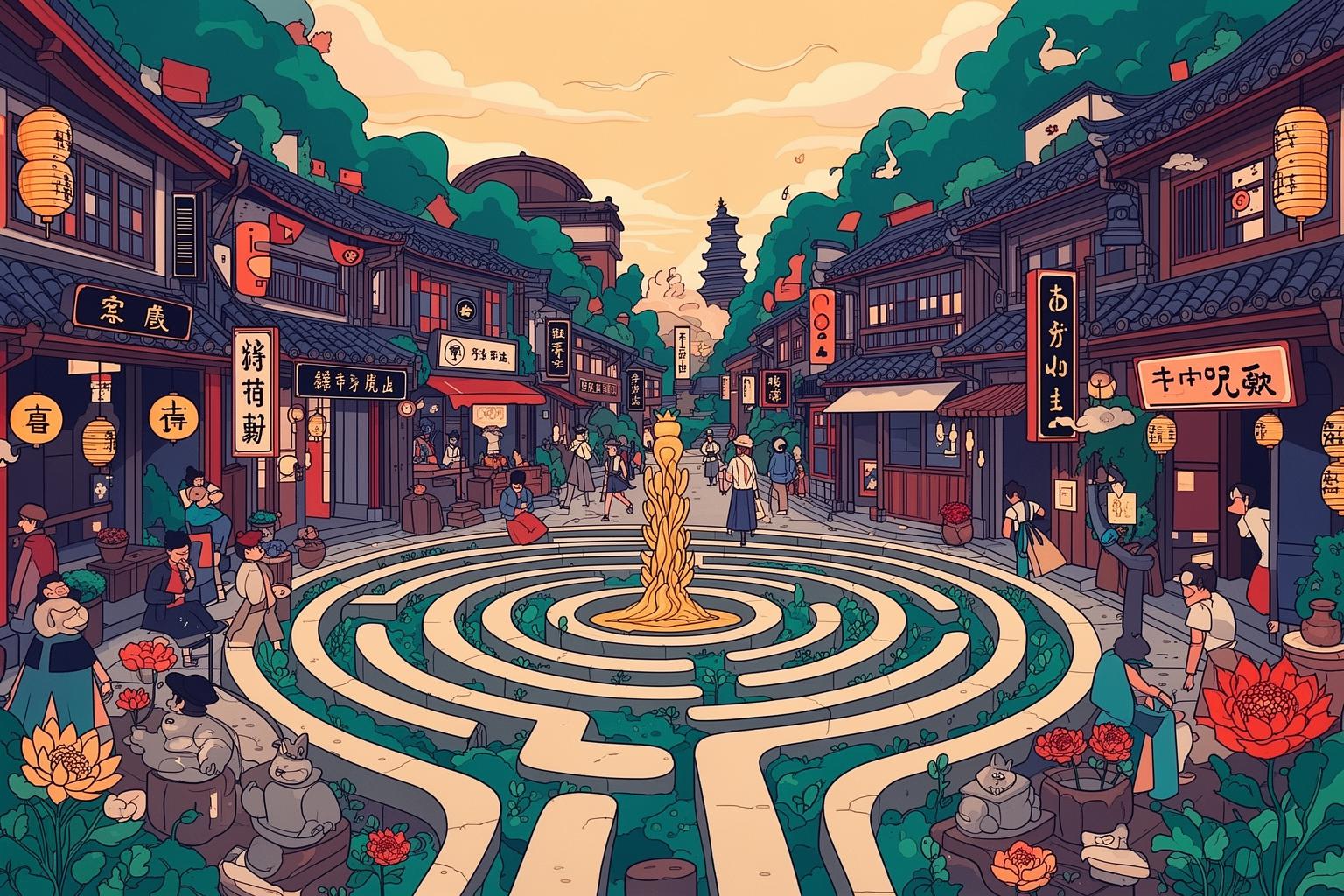
Our journey begins across the sea on Taiwan’s northern coast, at a place seemingly suspended between mountain and sky. Jiufen, a former gold rush town, clings precariously to a steep hillside, its narrow alleyways and crooked staircases forming a maze that feels crafted by a dreamer. Arriving here as dusk falls reveals a daily transformation of pure enchantment. The labyrinthine corridors, nearly impossibly narrow and buzzing with energy, begin to glow as hundreds, perhaps thousands, of red lanterns flicker to life. The effect is instant and mesmerizing. You are no longer simply in a mountain town; you stand on the threshold of Chihiro’s world.
A Golden Past, A Mystical Present
Jiufen’s history reflects the film’s themes of memory and forgotten realms. Once a small, isolated village, it blossomed into a lively ‘Little Shanghai’ during the Japanese era after gold was discovered. The prosperous days eventually waned, and the town slipped into a quiet slumber, almost forgotten. Its revival came through its appearance in films, transforming it into the captivating tourist destination it is today. This cycle of boom, abandonment, and rediscovery resonates deeply with the spirit world, a realm fueled by the memories of gods and traditions humans have started to forget. Walking through Jiufen, you sense the layers of its past. The architecture is a fascinating fusion of Japanese and Taiwanese styles, with wooden facades, tiled roofs, and winding stone steps that seem to lead both nowhere and everywhere at once. The air is thick with nostalgia for an era you never knew, a feeling central to the Ghibli aesthetic.
The Taste and Scent of Another Realm
Spirited Away is a film you can almost taste, and Jiufen vividly brings that sensory experience to life. Jiufen Old Street, the main thoroughfare, is a vibrant assault on the senses. Steam rises from bamboo baskets, carrying the aroma of savory buns and medicinal herbs. Vendors call out, offering samples of pineapple cakes, peanut ice cream rolls, and the town’s signature dish: taro balls. Served hot in sweet ginger soup or chilled over ice, their chewy, subtle sweetness is the perfect fuel for wandering. The food here is more than sustenance; it’s part of the atmosphere, a constant, delightful hum accompanying every step. Towering over the scene is the A-Mei Tea House, a stunning wooden building cascading down the cliffside. With its dark wood, glowing windows, and ornate details, it is the structure most famously linked to the Aburaya bathhouse. Securing a balcony table at nightfall is the quintessential Jiufen experience. As you sip fragrant oolong tea and gaze at the sea of lanterns below and the shimmering ocean beyond, the boundary between reality and fantasy blurs into a beautiful, unforgettable haze.
Practical Magic: Navigating Jiufen
Reaching Jiufen from Taipei is simple. You can take a train to Ruifang and then a local bus up the winding mountain road, or choose a direct bus from central Taipei for a more straightforward trip. For ease and comfort, a taxi or private car is also a great option. The key to experiencing Jiufen is timing. The town is crowded with tour groups during the day, which can make the narrow streets feel cramped. The ideal plan is to arrive mid-afternoon, around 3 or 4 PM. This allows you to explore in daylight and witness the mesmerizing moment when the lanterns are lit. As day-trippers leave, a calmer, more mystical vibe settles in. Don’t hesitate to get lost. While the main street hosts the bustle, true magic lies in the smaller, quieter alleys. Follow a flight of stone stairs upward, and you might discover a breathtaking, crowd-free lookout. A bit of exploration reveals the soul of the town, nestled just beyond the souvenir shops.
Dogo Onsen: The Grandeur of the Gods’ Bathhouse
While Jiufen may embody the chaotic energy of the spirit world’s streets, the architectural essence of the Aburaya lies in Japan, specifically in Matsuyama on the island of Shikoku. Here stands Dogo Onsen Honkan, a grand, multi-tiered wooden bathhouse and one of Japan’s oldest and most renowned hot springs. Its intricate rooflines, labyrinthine corridors, and imposing presence serve as an unmistakable blueprint for Yubaba’s grand establishment. With a history spanning over a thousand years, Dogo Onsen is rich in legend and lore, making it a fitting real-world counterpart to a bathhouse designed to host eight million gods.
A Soak in History
Approaching Dogo Onsen Honkan feels like entering a movie set. Completed in 1894, the building is a stunning example of Meiji Era architecture. It’s an expansive, elegant structure featuring sliding paper screens, wooden railings, and a central watchtower topped by a majestic white heron. At the tower’s summit, a drum is struck three times daily, its deep, resonant sound reverberating through the nearby streets and enhancing the timeless ambiance. The surrounding neighborhood forms a quaint district with covered shopping arcades, traditional ryokans, and visitors strolling in light cotton yukata provided by their inns. The soft clip-clop of their geta sandals on the pavement creates the defining soundtrack of this place. It’s easy to imagine the film’s spirits, from the Radish Spirit to the Stink Spirit, wandering through these very streets for a rejuvenating bath.
Experiencing the Ritual
For newcomers, engaging in the onsen ritual is a vital part of the journey. The Honkan provides several levels of access. Visitors can choose a simple ticket for the main baths, known as Kami no Yu or “Bath of the Gods,” or select a more inclusive pass granting entry to the exclusive Tama no Yu or “Bath of the Spirits,” along with a private tatami room for relaxing afterward with tea and sweets. The experience is a lesson in both tradition and serenity. The waters, smooth and alkaline, are famed for their beautifying effects. Immersed in the stone tubs and surrounded by echoes of the past, you feel an intimate connection to the purification ceremonies that lie at the heart of the film’s story. Here, Chihiro discovers the value of diligence and finds her place, and as you unwind in the therapeutic waters, you can appreciate the deep cultural importance of the public bathhouse in Japan—a space for cleansing both body and spirit.
Planning Your Pilgrimage to Matsuyama
Matsuyama is easily reachable by a short flight from major Japanese cities like Tokyo and Osaka, or via a combination of Shinkansen bullet train and local express train. Upon arrival, a charming vintage tram called the “Botchan Train” will take you directly to Dogo Onsen station. It is important to check the official Dogo Onsen website before visiting, as the historic Honkan is undergoing a multi-year preservation and restoration project. Although some sections may be closed, parts of it often remain open to visitors. Even if access to the main building is restricted, the area remains richly rewarding. Two newer annexes, Asuka no Yu and Tsubaki no Yu, offer stunning, modern takes on the traditional onsen experience, allowing visitors to enjoy the town’s legendary waters. Viewing the Honkan itself, even surrounded by scaffolding, stands as a testament to the commitment to preserving this cultural landmark.
Stepping Back in Time: The Edo-Tokyo Architectural Museum
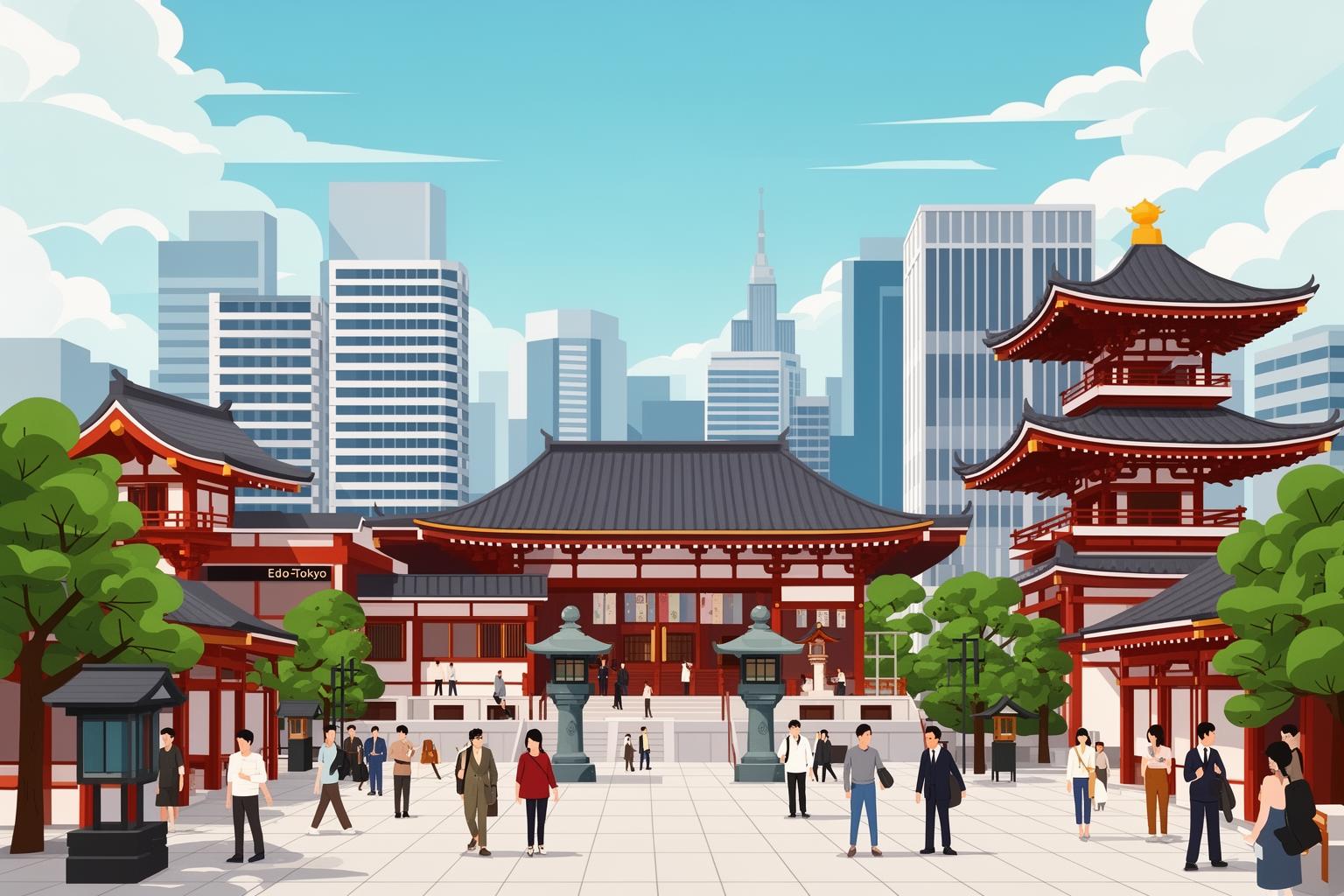
Our final key destination leads us to the outskirts of Tokyo, to a place that served as a direct source of visual inspiration for Miyazaki and his team of animators. The Edo-Tokyo Open Air Architectural Museum in Koganei Park is not a single building but an expansive village composed of relocated and reconstructed historic structures from across the city. It’s a place where time seems to have paused, a quiet town of forgotten shops, homes, and bathhouses. Miyazaki was known to be a frequent visitor here during the making of Spirited Away, wandering its streets and sketching details that would lend the film’s world its remarkable texture and nostalgic depth.
A City of Forgotten Buildings
Exploring this open-air museum is a surreal and deeply moving experience. You can enter dozens of buildings, ranging from the grand mansions of the wealthy to the modest shops of everyday people. For a Spirited Away fan, the connections are electric. You’ll encounter a beautiful old stationery shop, Takei Sanshodo, with walls lined with tiny wooden drawers. It’s easy to see it as the inspiration for Kamaji’s boiler room, where the soot sprites bustle about carrying coal and where Chihiro pleads for work. Nearby stands the Kodera-yu, a traditional public bathhouse or sento, with its ornate facade and iconic curtained entrance, closely resembling the entrance of the Aburaya. You can stroll along a street lined with Showa-era storefronts, their faded signs and vintage products evoking the ghostly, deserted town that Chihiro and her parents discover at the beginning of the film. It’s here, among these preserved remnants of old Tokyo, that the film’s powerful sense of ‘natsukashii’—a Japanese word expressing deep, sentimental nostalgia—comes vividly to life.
The Ghost of a Bygone Era
The atmosphere in the museum is one of quiet reverence. Unlike the lively energy of Jiufen or Dogo Onsen, this place is marked by a ghostly silence. You can hear the creak of floorboards beneath your feet and see dust motes floating in sunbeams filtering through old glass windows. It feels as if the residents have just stepped out momentarily and might return any moment. This unique feeling is exactly what makes it such a potent source of inspiration. The museum preserves the spirit of forgotten things, a central theme in the film. These buildings were saved from demolition, their stories safeguarded for future generations. They are tangible memories, and wandering among them feels like a privilege—a secret glimpse into the visual archive of a master storyteller. You come to realize that the spirit world isn’t just fantasy; it’s constructed from the very real ghosts of our own past.
A Day Trip into the Past
The museum makes for an easy and rewarding day trip from central Tokyo’s bustle. Take the JR Chuo Line to Musashi-Koganei Station, and from there, a short bus ride will bring you to the entrance of Koganei Park. The museum is situated within this large, beautiful park, which is a destination on its own, especially during the cherry blossom season in spring or when the autumn leaves are at their peak. For the ultimate Ghibli-themed pilgrimage, you might try combining this visit with a trip to the Ghibli Museum in the neighboring city of Mitaka. However, tickets for the Ghibli Museum are famously difficult to get and must be booked well in advance. Even without it, the Edo-Tokyo Architectural Museum offers a profound and fulfilling dive into the aesthetics that shaped one of animation’s greatest masterpieces. Plan to spend at least half a day here; there is so much to see, and you’ll want to savor the experience of connecting with these beautiful, silent storytellers.
Weaving the Threads Together: Finding the Spirit of the Film
After exploring these remarkable places, the brilliance of Miyazaki’s vision becomes even more apparent. Spirited Away isn’t a travel documentary focused on a single site but rather an emotional and architectural fusion. It stands as a tribute to how an artist absorbs the surrounding world and reshapes it into something fresh—something that feels both fantastical and intimately familiar. The film’s enchantment arises from this unique blend of powerful elements.
More Than Just a Location
Jiufen lends the film its otherworldly, vertical labyrinth of glowing lanterns and an overwhelming sensory experience. It embodies the chaos, energy, and sensation of a world brimming with hidden life. Dogo Onsen serves as the structural and spiritual foundation: a grand, historic bathhouse embodying ritual, hierarchy, and ancient tradition. Meanwhile, the Edo-Tokyo Architectural Museum provides intricate details, nostalgic textures, and a haunting atmosphere of a bygone era. Together, these locations form a composite memory—a place that exists in the heart rather than on any map. The journey to these sites isn’t about ticking boxes off a scavenger hunt but about grasping the alchemy of inspiration and witnessing how fragments of reality can be reassembled into a masterpiece.
Your Own Spirited Journey
The most profound lesson from this pilgrimage is the realization that the spirit of the film can be discovered anywhere if you know where to look. It invites you to observe the world around you more closely. You may find it in the quiet dignity of an old building in your city, the vibrant chaos of a night market, or the simple, soothing ritual of a hot bath. Miyazaki shows us that magic is concealed in the everyday, and that memory and reverence for the past imbue our present with depth and meaning. Your own spirited journey is about embracing this viewpoint, uncovering wonder hidden in plain sight, and appreciating the stories woven into the places we inhabit.
A Final Word from the Threshold

To chase the ghost of Spirited Away is to embark on a journey offering far more than just stunning photographs. It serves as a profound reminder of art’s power to transform our perception of reality. These real-world sites—a Taiwanese mountain town, an ancient Japanese onsen, a museum of silent buildings—are remarkable destinations on their own, each rich with unique histories and charm. Yet, through the lens of Miyazaki’s masterpiece, they become something greater. They act as portals, gateways to a world that has enchanted millions. They remind us that the greatest adventures often begin with a single, curious step into the unknown, and even when we return, like Chihiro glancing back at the tunnel, a part of that other world remains with us. The lanterns are lit, the baths are ready, and a world of wonders awaits.