There’s a certain kind of magic that lingers, long after the credits roll. It’s a whisper in the subconscious, a faint melody that hums just beneath the surface of our waking thoughts. For millions around the globe, that magic has a name: Spirited Away. Hayao Miyazaki’s masterpiece isn’t just an animated film; it’s a portal. A shimmering gateway to a world of mischievous spirits, ancient gods, and forgotten traditions, all navigated by a young girl finding her strength. It’s a story that feels profoundly, achingly real, so much so that it sparks a deep-seated yearning within us: a desire to find that portal for ourselves. This desire is the heart of the modern pilgrimage, a quest not for a holy relic, but for a feeling, an atmosphere, a tangible connection to the stories that shape us. We travel thousands of miles, not just to see a place, but to feel a moment, to stand where inspiration struck and perhaps, for a fleeting second, see the world through the creator’s eyes. Our journey today isn’t to a single location, because the world of Spirited Away isn’t a simple carbon copy of one town. Instead, it’s a breathtaking mosaic, a composite of places, memories, and histories carefully pieced together by a master storyteller. We will chase these phantom landscapes, from the mist-shrouded mountains of Taiwan to the ancient, steaming bathhouses of Japan, tracing the footsteps of inspiration and discovering the very real magic that fueled a cinematic dream. This is a journey into the soul of a story, a traveler’s guide to the heart of Studio Ghibli.
For those inspired to embark on their own pilgrimage, a similar journey of discovery awaits in Seiseki-Sakuragaoka, a real-world location that served as the muse for another beloved Studio Ghibli film.
The City of Wandering Spirits: Jiufen, Taiwan
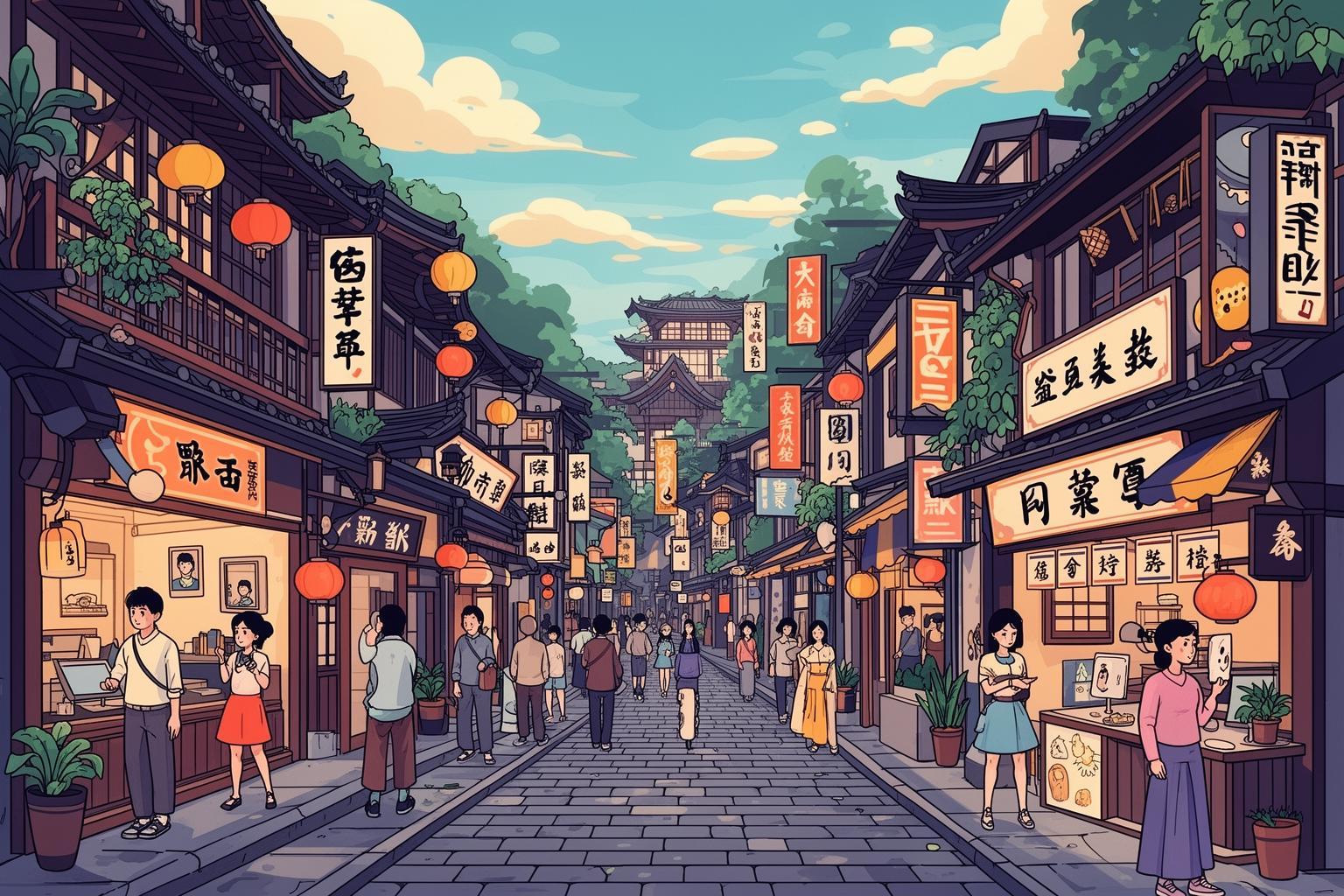
Our first stop leads us across the sea to Taiwan’s northern coast. Perched precariously on a mountainside overlooking the Pacific lies the former gold mining town of Jiufen. Stepping off the bus from Taipei into its narrow, labyrinthine streets, the feeling is immediate and overwhelming. You’ve been here before—not physically, perhaps, but in spirit. This place softly echoes the unnamed town where Chihiro first enters the spirit world. Although Studio Ghibli has never officially named Jiufen as a direct inspiration, the visual and atmospheric similarities are so striking and uncannily precise that they go beyond mere coincidence. In every meaningful way, it serves as the emotional blueprint for that magical, mysterious world.
An Atmosphere Steeped in Time and Lantern Light
Jiufen’s true enchantment unfolds as the sun dips below the horizon, painting the sky in shades of orange and violet. This magical hour is when the town truly comes alive. One by one, then in a breathtaking cascade, hundreds of red paper lanterns lining the alleyways flicker on. Their warm crimson glow lights up the steep, stone staircases weaving through the town, casting long, dancing shadows that seem almost alive. The air, already infused with the salty tang of the nearby ocean, becomes a rich tapestry of scents: the sweet steam rising from taro ball soup, the smoky aroma of grilled sausages, and the delicate fragrance of oolong tea wafting from hidden teahouses. The low murmur of visitors, speaking dozens of languages, forms a constant energetic hum—the sound of a vibrant, breathing marketplace. Walking Jiufen at night feels like drifting away from the modern world. Around every corner awaits another narrow passage, another steep flight of stairs, another teahouse impossibly perched on a cliffside. You half expect to glimpse a radish spirit waddling by or hear the clatter of soot sprites in a dark alcove. It’s a delightful disorientation, a sensation of wandering completely and wonderfully lost in a waking dream.
Navigating the Golden Maze
Reaching Jiufen is an adventure itself—a transition from Taipei’s bustling metropolis to a serene mountain setting. The most common route combines train and bus: take a train from Taipei Main Station to Ruifang Station, a journey of about 40 to 60 minutes. Just outside Ruifang Station, buses await to carry travelers up the winding mountain roads to Jiufen Old Street. The bus ride itself is a spectacle, revealing breathtaking coastline views as it climbs higher and higher. Alternatively, direct buses run from central Taipei locations like Zhongxiao Fuxing, providing a simpler, though slightly longer, option. For those seeking maximum convenience, taxis or pre-booked private cars are the easiest route, albeit more expensive. A critical tip for visitors: wear comfortable, reliable walking shoes. Jiufen’s steep, often uneven stone staircases are not suited for heels or flimsy sandals. The terrain adds to the town’s charm but demands respect. Visiting on a weekday is highly advisable, as the narrow lanes become extremely congested on weekends and holidays, turning what could be a magical stroll into a frustrating shuffle. Arriving in the mid-afternoon gives you daylight to explore before settling into a teahouse for a front-row seat to the magnificent transition into evening, when the town truly embraces its cinematic magic.
A Taste of History and Fantasy
Jiufen’s captivating atmosphere is rooted in its rich history. Once a sleepy, isolated village, the discovery of gold in the late 19th century sparked a massive gold rush. The town flourished, its chaotic yet beautiful architecture—a mix of wooden and brick buildings clinging to the mountainside—reflecting this rapid, unplanned growth. Eventually, the boom faded, and Jiufen entered a quiet decline, bordering on ghost town status. Ironically, this period of neglect preserved its character, protecting it from modern development. The town’s revival began in the late 1980s when it served as the setting for the acclaimed historical film A City of Sadness. But it was the whispered connection to Spirited Away that propelled Jiufen to international renown, drawing visitors from around the globe. To fully experience Jiufen, be sure to visit one of its iconic teahouses. The A-Mei Tea House, with its striking resemblance to the Bathhouse’s façade and cascading red lanterns, is the most famous. Securing a balcony seat at dusk here is a quintessential Jiufen moment. As you sip fragrant high-mountain tea and nibble delicate sweets, you can watch the ocean fade to black and see fishing boat lights twinkling like scattered stars on the water. Beyond tea, be sure to sample local culinary delights: chewy taro balls in sweet, warm soup offer comfort on cool, misty days, while the unique peanut ice cream roll—a sweet and savory treat wrapped in a thin crepe—is a must-try. Exploring Jiufen means allowing yourself to get lost. Wander away from the bustling main street of Jiufen Old Street and you’ll find quiet residential alleys, sleeping cats, and stunning, unexpected views of the coastline. Here, away from the crowds, lies the town’s peaceful soul.
The Grand Bathhouse of the Gods: Dogo Onsen, Japan
Our pilgrimage now leads us back across the water to the island of Shikoku in Japan, specifically the city of Matsuyama. Here stands a building of such grandeur, intricacy, and historical significance that it seems almost fantastical. This is the Dogo Onsen Honkan, one of Japan’s oldest and most renowned hot spring bathhouses. As you approach this magnificent, multi-tiered wooden structure, with its complex array of roofs, balconies, and sliding paper screens, the inspiration for Yubaba’s bustling Bathhouse—the very heart of Spirited Away—becomes unmistakably clear. This is not merely a building; it is a living, breathing piece of history where sacred bathing and relaxation rituals have been observed for over a thousand years. It stands as the architectural core of the spirit world, brought to life in our own reality.
An Air of Sacred Steam and Timeless Tradition
The atmosphere surrounding Dogo Onsen is alive with history. The streets resonate with the steady, rhythmic clip-clop of geta, traditional wooden sandals worn by guests dressed in yukata (light cotton kimonos) as they move between the bathhouse and their ryokan (traditional inns). The air is thick with humidity, carrying the faint sulfurous aroma of healing thermal waters rising from deep underground. Unlike the vibrant chaos of Jiufen, here the mood is one of order, tradition, and a profound sense of peace. The Dogo Onsen Honkan itself is a masterpiece of Meiji-era architecture—an almost castle-like, whimsical structure crowned by a striking white heron, the onsen’s legendary emblem. Entering its halls feels like stepping back in time. The wood is dark and polished by countless hands and footsteps. The air is warm, filled with the sound of dripping water and hushed, respectful voices. It is a place that demands reverence. You can almost picture the gods and spirits from the film arriving, shedding their earthly disguises to immerse their tired bodies in the restorative waters. Here, the boundary between the mundane and the magical feels incredibly thin, with centuries of stories and traditions permeating the very steam rising from the baths.
The Path to Rejuvenation
Dogo Onsen is situated in a dedicated district of Matsuyama, the capital of Ehime Prefecture. Traveling to Matsuyama is straightforward, with an airport offering domestic flights from major cities like Tokyo and Osaka, alongside a well-connected train system. From the main JR Matsuyama Station, the most delightful way to reach the onsen district is by boarding the “Botchan Train,” a vintage-style steam train replica, or the regular city tram. This short, pleasant ride enhances the sense of journeying to a special destination. It’s important for visitors to note that the Dogo Onsen Honkan is currently undergoing a multi-year preservation and restoration project. However, this should not discourage a visit. The restoration is being carried out with great care, allowing parts of the bathhouse to remain accessible. You can still enjoy the main Kami-no-Yu (Bath of the Gods) and admire the splendid exterior, often adorned with art installations by renowned artists during the renovation. The surrounding area remains fully operational and rich with charm. To get the full experience, it’s wise to stay overnight at one of the many ryokan in the Dogo area. This way, you can fully immerse yourself in onsen culture, making multiple visits to the bathhouse—once in the evening to relax, and again in the early morning for a refreshing start. The experience encourages slowing down, something a day trip simply cannot capture in its entirety.
Immersing in Myth and Literature
Dogo Onsen’s history is steeped in legend. Its waters are said to have been discovered when an injured white heron dipped its leg into a spring and emerged fully healed. Over the centuries, the onsen’s reputation grew, drawing pilgrims, samurai, and even members of the Imperial Family. A special section of the Honkan, the Yushinden, was built in 1899 solely for their visits and remains open for tours today, offering a glimpse into unparalleled luxury and craftsmanship. The onsen is also immortalized in one of Japan’s most famous modern novels, Natsume Soseki’s Botchan, a satirical tale about a young Tokyo teacher who relocates to Matsuyama. The novel’s popularity further cemented Dogo Onsen’s place in the national imagination. This rich cultural and historical tapestry is what gives the site its power. When Miyazaki drew inspiration from it, he wasn’t merely borrowing a visual style; he was tapping into a deep reservoir of Japanese folklore, history, and the spiritual importance of water and purification. Bathing here is a ritual. After paying a modest fee, you leave your belongings in a locker and enter the bathing area carrying only a small modesty towel. The baths themselves are simple, stone-lined pools filled with soft, alkaline spring water celebrated for its skin-nourishing qualities. You wash and rinse thoroughly at faucets lining the walls before entering the main pool. The aim is not simply to get clean, but to soak, release your worries, and absorb the history of the place deep within you. After your bath, you can unwind in the public tatami lounges on the second floor, sipping tea and nibbling rice crackers, just as bathers have done for over a century. It’s a simple yet profound pleasure.
The Philosophy of the Pilgrimage: Finding Ghibli in the Everyday
While Jiufen and Dogo Onsen may be the most iconic and recognizable landmarks associated with the world of Spirited Away, the journey of a true pilgrim extends beyond them. It’s important to realize that Miyazaki’s creative process is a form of alchemy. He is a master observer, absorbing the world’s details and transforming them into something entirely new. The real-world sites serve not as blueprints but as ingredients. Another essential ingredient can be discovered at the Edo-Tokyo Open Air Architectural Museum in Koganei, a western suburb of Tokyo. This delightful park houses a collection of historic buildings from various periods that have been relocated and preserved. As you wander its grounds, you’ll encounter a traditional stationery shop with walls lined by small wooden drawers that closely resemble the boiler room where Kamaji, the spider-like spirit, performs his magic. You’ll also find old public bathhouses (sento) boasting grand, temple-like façades. This museum is a treasure trove of Showa-era nostalgia and Meiji-era elegance that saturates much of Ghibli’s work. It supports the idea that the spirit world isn’t a single location, but a fusion of Japan’s fading past, forgotten corners, and treasured memories. A pilgrimage to uncover Spirited Away ultimately becomes an exercise in seeing the world from a different perspective. It goes beyond merely ticking off locations on a list. It involves cultivating an appreciation for the details that inspired the film: the intricate woodwork on an old building, the way moss clings to a stone lantern, the flavor of a simple traditional meal, the sensation of steam on your skin. It’s about understanding the Japanese concept of ma (negative space or interval), the profound emptiness and quiet moments Miyazaki uses so effectively in his films. You encounter ma in the quiet alleys of Jiufen after the day-trippers have departed, or in the tranquil silence of the post-bath tatami room in Dogo Onsen.
Advice for the Aspiring Pilgrim
For those undertaking this journey for the first time, a few suggestions can enrich the experience. First, manage your expectations. You are not visiting a film set but real, living places with their own histories and rhythms. Seek out the echoes and atmosphere, not exact replicas. Embrace the differences and allow the places to share their own stories. In Taiwan, keep some New Taiwan Dollars handy for street food vendors and small shops in Jiufen, as many accept cash only. In Japan, although credit cards are commonly accepted, carrying some yen is advisable for minor purchases and entrance fees. Respect local customs. In a Japanese onsen, it is essential to wash thoroughly before entering the communal baths. Tattoos can still be a sensitive topic at some traditional onsens, so if you have them, it’s wise to check the policies of specific bathhouses or ryokans in advance. Most importantly, slow down. It’s tempting to rush, snap a photo for social media, then move on. But the magic of these places reveals itself gradually. Linger in the teahouse for an extra hour. Take another dip in the onsen. Wander down the alley that seems to lead nowhere. In these unhurried, unplanned moments, you will discover the true spirit of your pilgrimage.
The Journey Home
To chase the phantoms of Spirited Away is to set out on a journey that is both outward and inward. It carries you across oceans and into the heart of cultures steeped in history and beauty. Yet, it also leads you deeper into your own appreciation of a story that has touched countless souls. You return home with more than just photographs and souvenirs; you carry a renewed sense of wonder. You have felt the mist of a Taiwanese mountain on your face and the ancient, healing waters of a Japanese spring upon your skin. You have walked the very paths that may have inspired a master animator’s vision. You come to realize that the magic wasn’t confined to the screen. It was always present, waiting in the real world—hidden in the glow of a red lantern, in the rising steam of a hot spring, in the quiet dignity of an old wooden building. Though the film’s portal may be fictional, the journey to discover it is wonderfully and beautifully real.