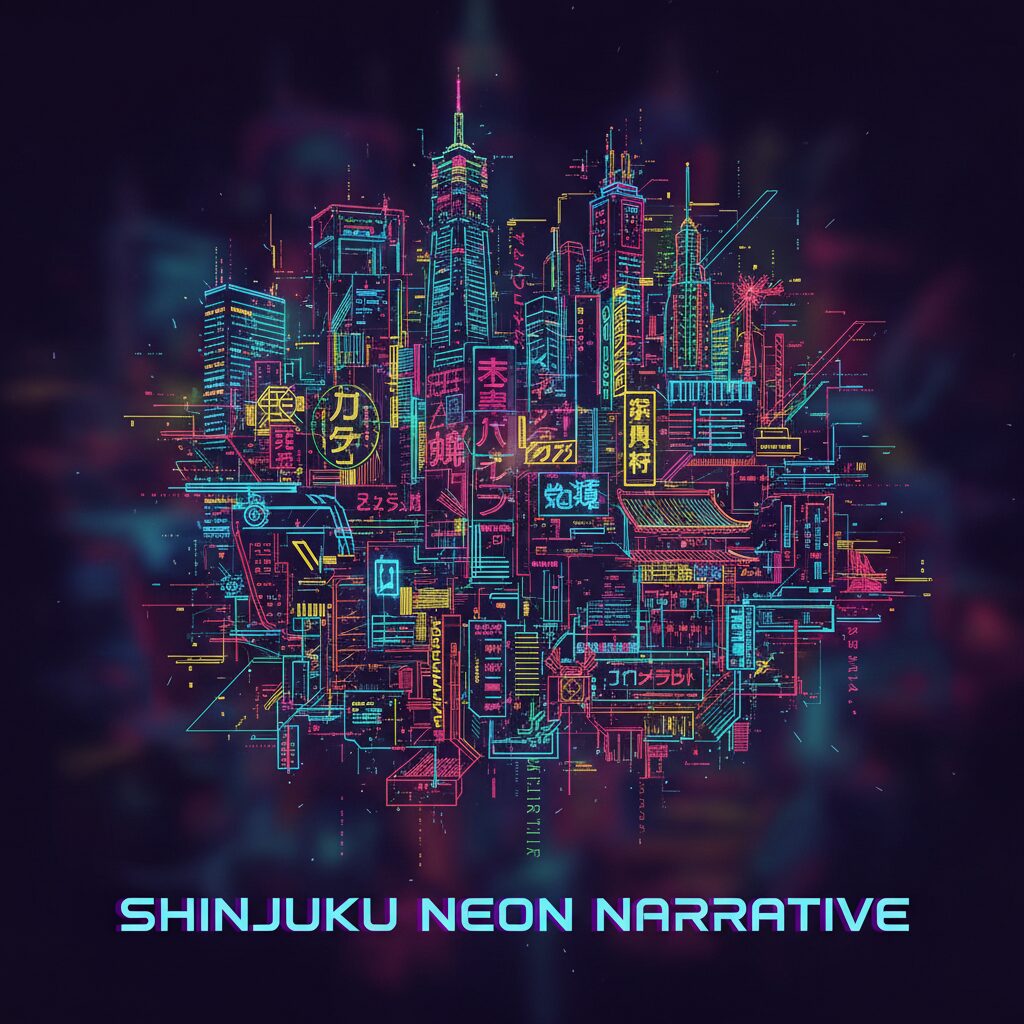
There’s a strange and wonderful feeling of déjà vu that washes over you the first time you step out into Shinjuku. You feel it as you’re swept into the human river flowing from the world’s busiest train station. You feel it when you look up, your gaze tracing the spires of skyscrapers that pierce the Tokyo sky. You feel it in the evening, when a million neon signs ignite in a riot of color, painting the streets in hues of electric blue, magenta, and gold. This isn’t just familiarity with a famous place; it’s the sensation of walking directly into a memory, into a scene from a story you already know and love. Shinjuku is not merely a district in Tokyo; it is a living, breathing nexus of modern mythology, a real-world stage upon which some of the most iconic narratives in anime, film, and video games have been built. For the pop culture pilgrim, this is sacred ground. It’s where the star-crossed lovers of Makoto Shinkai’s Your Name yearned for each other across time and space. It’s the rain-drenched, atmospheric world of Weathering with You and the serene escape of The Garden of Words. It’s the glittering, lonely cityscape that cradled the characters of Sofia Coppola’s Lost in Translation. And it is the chaotic, vibrant battleground of Kamurocho, the fictional alter-ego of Kabukicho from the globally beloved Like a Dragon video game series. A journey through Shinjuku is a journey through these worlds, a unique quest where the lines between the fabricated and the tangible blur into a mesmerizing, unforgettable experience. Here, every street corner holds the potential for a new story, or the echo of a cherished one. Prepare to explore the map of your imagination laid over the very real, very electric streets of Tokyo.
To fully immerse yourself in the world of Makoto Shinkai’s masterpiece, consider embarking on a dedicated Your Name pilgrimage through Tokyo.
The Living Set: Shinjuku Through the Lens of Storytellers
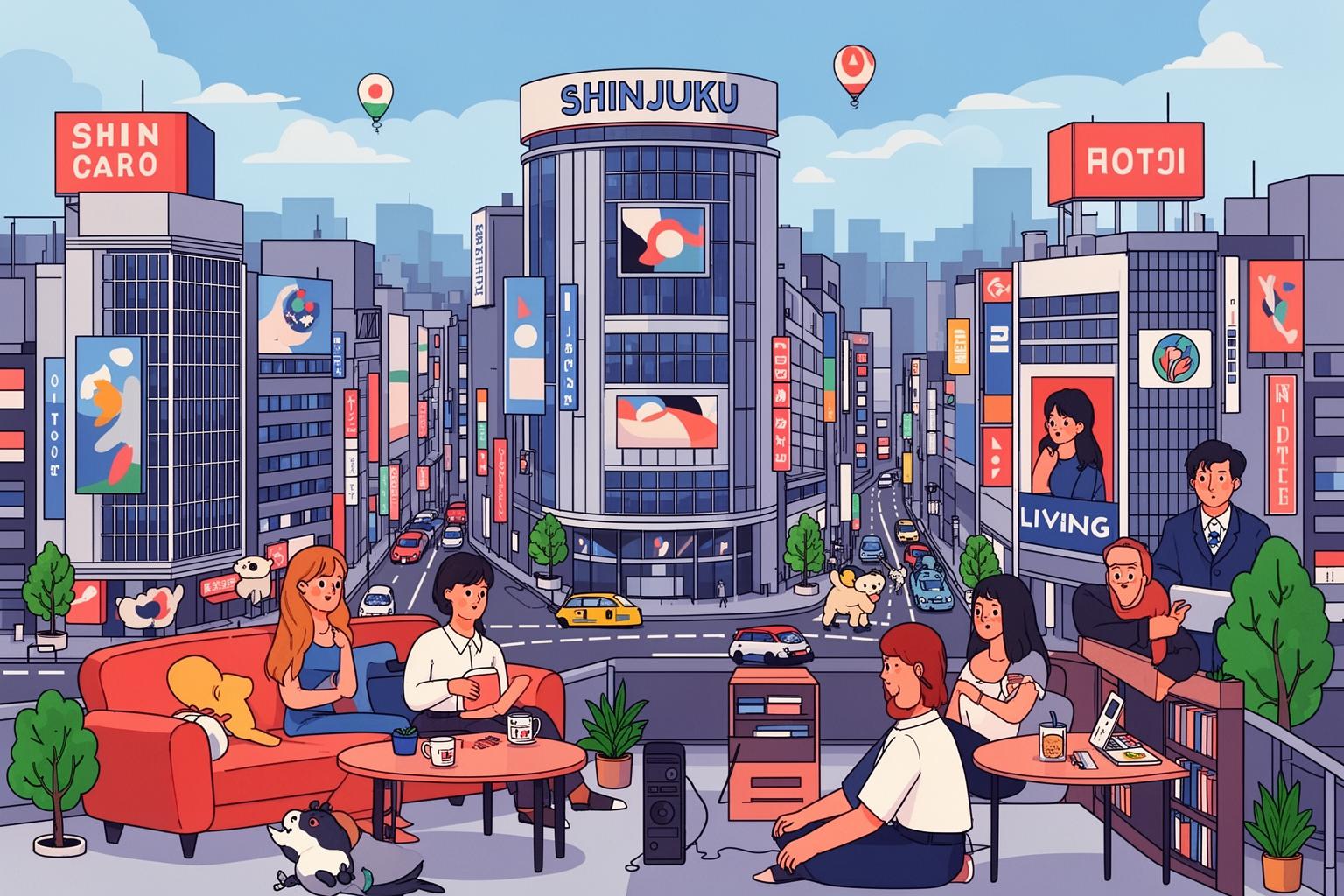
Strolling through Shinjuku is like passing through a gallery of cinematic and animated masterpieces. The district itself feels like a character, with its unique areas providing the ideal backdrop for moods ranging from epic romance to thrilling suspense. Directors and artists are drawn to its contrasting nature: the shiny, futuristic west side dominated by towering government and corporate buildings, and the chaotic, intensely human east side, filled with sprawling entertainment districts, cozy restaurants, and maze-like alleys.
Chasing Comets in a Concrete Sky: The World of Makoto Shinkai
No creator has encapsulated the ethereal beauty and emotional depth of Shinjuku quite like Makoto Shinkai. His films serve as love letters to the city, portraying its ordinary corners with such stunning detail that they become suffused with magic. For fans, a pilgrimage to his Shinjuku is an emotional experience. The most iconic of these spots is undoubtedly the red-railed staircase where Taki and Mitsuha finally meet at the end of Your Name. Hidden away in a quiet residential neighborhood near Suga Shrine, finding this place feels like uncovering a secret. Standing there, with the city buzzing in the distance, it’s easy to sense the powerful climax of the film lingering in the air. The view from the top of the stairs, gazing down as Taki did, is surprisingly simple, yet it carries the weight of a universe of emotion for those familiar with the story.
But Shinkai’s vision spans the entire district. Just a short walk away, you’ll find yourself gazing up at the NTT Docomo Yoyogi Building. While technically in Shibuya, its distinctive clock tower is a constant, watchful presence on the Shinjuku skyline, a landmark featured in countless establishing shots in Your Name and Weathering with You. It serves as an anchor, a piece of reality grounding his fantastical tales. Then there is Shinjuku Gyoen National Garden, the main setting for The Garden of Words. Visiting the park, especially the small pavilion by the water on a rainy day, is a fully immersive experience. The sound of rain on the roof, the lush greenery mirrored in the pond—it offers a direct portal into the quiet, reflective world of Takao and Yukari.
Neon Noir and Midnight Rendezvous
Shinjuku’s cinematic essence is not limited to animation. It reveals a darker, more sophisticated side that has captivated live-action filmmakers. Perched atop the Park Tower, the New York Bar at the Park Hyatt Tokyo stands as a monument to this mood. As the setting for many key scenes in Lost in Translation, it exudes elegant melancholy and stunning views. Visiting the bar feels like stepping into the film’s celluloid frames. As you sip a cocktail and gaze out over the endless sea of city lights, you can almost catch whispers of the film’s dialogue, experiencing the same mix of isolation and connection that defined its characters.
Then, as night deepens, another facet of Shinjuku comes alive in Kabukicho. Known as Japan’s most famous red-light district, it’s a dizzying, overwhelming maze of neon lights, clamorous sounds, and endless distractions. For gamers, this is sacred ground: the real-life Kamurocho from the Like a Dragon franchise. Walking beneath the iconic red arch of the Kabukicho Ichiban-gai is a surreal experience. You’ll recognize the location of the Don Quijote store, the winding streets, the Sega arcades (now GiGO), and the chaotic energy that makes the game’s world so vivid. Although the real Kabukicho lacks the constant street brawls, the spirit of the game—a blend of danger, absurdity, and hidden humanity—is tangible around every corner.
The Pulse of Tokyo: Decoding Shinjuku Station
Before you can explore any of these iconic locations, you must first confront the beast: Shinjuku Station. It’s less of a station and more of an underground city, a vast, multi-layered complex that serves over a dozen railway and subway lines and handles more than 3.5 million passengers each day. For newcomers, it can be overwhelming—a true maze of signs, escalators, and endlessly branching corridors. But fearing the station means missing the point. It is the very heart of Tokyo, the central artery through which the city’s lifeblood flows. Experiencing it is an essential part of the Shinjuku pilgrimage.
An Ocean of People
The spectacle of the station is truly remarkable. During peak rush hour, the synchronized yet seemingly chaotic movement of thousands is like a mesmerizing urban ballet. It’s a testament to Tokyo’s remarkable organization and the collective rhythm of its people. Here you’ll find all walks of life: sharply dressed office workers, trendy students, curious tourists, and elderly locals navigating the familiar chaos with practiced ease. The key is not to resist the flow but to move with it. Don’t stop abruptly in the middle of a walkway; instead, step to the side if you need to check your phone or orient yourself. Observing the unspoken rules of this human ocean is an experience in itself.
A Practical Guide to the Labyrinth
Navigating the station is a skill, but one that can be mastered. The most important advice is to know your exit. Shinjuku Station has over 200 exits, and coming out of the wrong one can leave you completely disoriented. Before you arrive, check which exit is closest to your destination—the West Exit for the skyscraper district and the Tokyo Metropolitan Government Building, the East Exit for Kabukicho and shopping, and the South Exit for Shinjuku Gyoen and the bus terminal. Follow the large, color-coded signs overhead. The yellow signs for JR lines are your main guides. Avoid trying to navigate directly from the train platform; it’s far easier to go up to the main concourse level where all exits are clearly marked. And if you do get lost, don’t panic—information counters and numerous maps are available to help you. Treat it as the first leg of your adventure.
The City from a God’s-Eye View
After conquering the underground maze, your reward is the chance to see Shinjuku from above. A ten-minute walk from the station’s west exit brings you to the Tokyo Metropolitan Government Building, a stunning architectural work by Kenzo Tange. What makes this a must-visit spot are its twin observation decks, which are completely free to enter. An elevator will take you 45 floors up in under a minute, and as the doors open, the entire Tokyo metropolis unfolds before you. This is the panoramic view featured in countless films and anime. The expansive urban landscape stretches to the horizon in every direction, a dense mosaic of buildings, roads, and parks. On a clear day, the majestic silhouette of Mount Fuji can be seen far away. This perspective is priceless; it helps you grasp the vast scale of the city you’re exploring and ties all the individual places you’ve visited into a single, coherent map.
Oases of Calm and Whispers of the Past
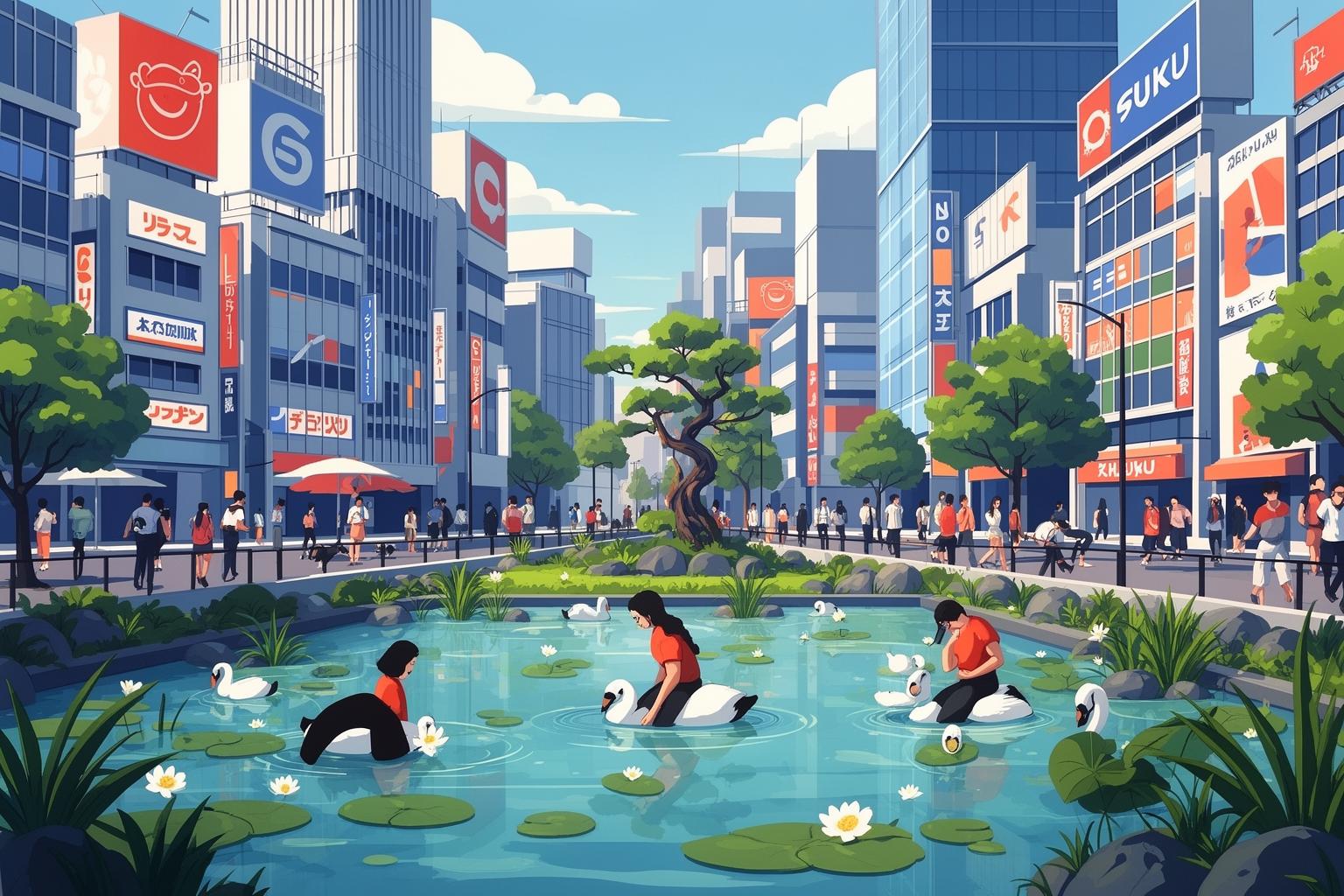
Despite its futuristic sheen and bustling energy, Shinjuku contains pockets of deep tranquility and nostalgia. These are the spots where you can pause, escape the city’s relentless pace, and connect with a quieter, different facet of its character. They provide a crucial balance, demonstrating that even in the heart of the world’s largest metropolis, peace and history endure.
Shinjuku Gyoen: The Garden of Words and Worlds
Shinjuku Gyoen National Garden is more than just a park; it offers an escape into another world. A short walk from the noisy station, passing through its gates feels like entering a portal. The city’s clamor fades away, replaced by the rustling leaves and gentle bird calls. Once an imperial garden, it opened to the public after World War II and is now among Tokyo’s most beloved green spaces. The garden is a masterpiece of landscape design, uniquely combining three distinct styles: a traditional Japanese garden with its scenic ponds, bridges, and teahouses; a formal French garden with symmetrical flowerbeds; and a vast English landscape garden with expansive lawns. Within the Japanese section, fans of The Garden of Words will recognize the pavilion used as the film’s main setting. Sitting there, you understand Shinkai’s choice: it is a place for quiet reflection, chance meetings, and witnessing the changing seasons. Visiting during cherry blossom season or the vibrant autumn foliage is truly magical.
Time Travel Down a Lantern-Lit Alley
To step back in time, you only need to find the right alley. Shinjuku hosts two of Tokyo’s most atmospheric mid-20th century relics: Omoide Yokocho and Golden Gai. Omoide Yokocho, meaning “Memory Lane” but more commonly known as “Piss Alley,” is a narrow maze of tiny yakitori (grilled skewer) stalls. The air is filled with the mouthwatering scent of charcoal and grilling meat. Sitting shoulder-to-shoulder with locals at one of these counters offers an authentic taste of Showa-era Japan. Just a few blocks away is Golden Gai, another architectural time capsule. It consists of six impossibly narrow alleys lined with over 200 tiny bars, some seating only a handful of patrons. By day, it is quiet and sleepy, but by night it glows warmly with lantern light and hums softly with conversation. Each bar has its own distinctive theme and personality. While some remain exclusive to regulars, many now welcome foreign visitors, providing a rare glimpse into a more intimate, bohemian side of Tokyo nightlife. These areas stand in stark contrast to polished, modern Shinjuku, their existence a testament to the city’s rich, layered history.
A Symphony of Flavors: The Taste of Shinjuku’s Stories
No pilgrimage is truly complete without enjoying the local cuisine, and in Shinjuku, the culinary scene is as varied and thrilling as its pop culture heritage. The food here can enhance your connection to the stories you cherish, letting you dine as your favorite characters might. The choices are endless, accommodating every budget and taste, from a quick, steaming bowl of noodles to an extravagant, sky-high dining experience.
From Ramen Counters to Skyscraper Lounges
Picture the satisfying, restorative meal a video game hero might have between missions—that’s the essence of a Shinjuku ramen shop. Savor a rich, savory bowl of tonkotsu ramen at a counter where your sole focus is the delicious food before you. Shinjuku is a battleground for ramen dominance, with well-known chains and independent shops competing for your attention. Alternatively, you can rise to the heights for a taste of cinematic luxury. The New York Bar is one option, but many skyscrapers in West Shinjuku feature outstanding restaurants on their upper floors, serving world-class dishes paired with breathtaking nighttime views. For an overwhelming range of options, explore the basement food halls of major department stores like Isetan or Takashimaya. Known as depachika, these are true food museums, offering everything from exquisite sushi and delicate pastries to high-end bento boxes and artisanal sake.
The Ritual of the Izakaya
The izakaya, or Japanese-style pub, is a pillar of Japanese social life and a common backdrop in films and dramas. It’s where friends gather after work, deals are struck, and relationships flourish. Visiting an izakaya in places like Omoide Yokocho or the many others scattered around the station’s east side is an essential cultural experience. The menu consists of small, shareable plates called otsumami. You might start with edamame, karaage (Japanese fried chicken), and agedashi tofu, followed by sashimi and grilled fish. The food is crafted to complement drinks, whether it’s a cold draft beer, a flask of warm sake, or a refreshing highball. The atmosphere is lively and convivial, a perfect setting to soak up the local energy and feel like part of the city rather than just an observer.
Your Guide to the Urban Expedition
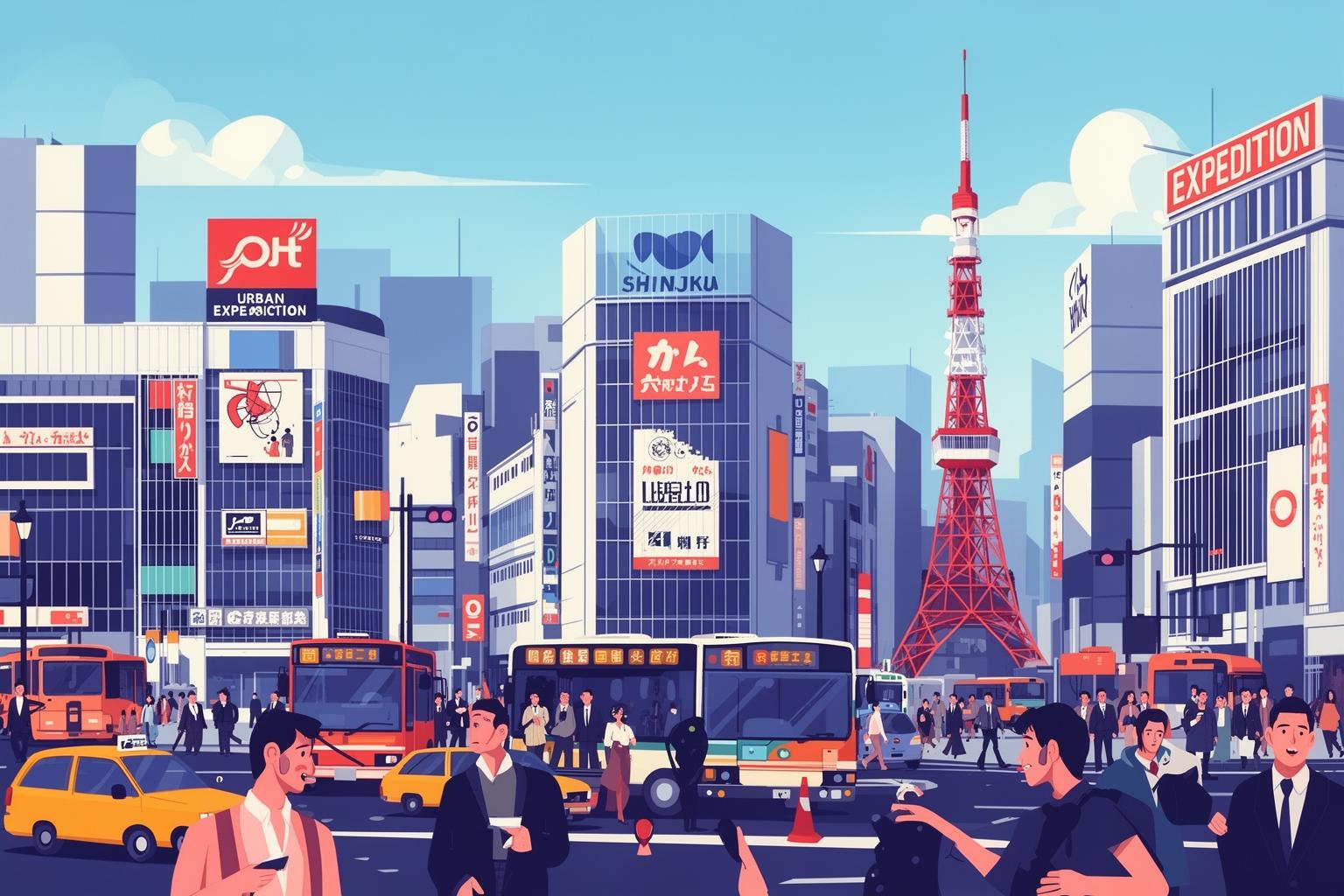
Embarking on a pilgrimage to Shinjuku is an exciting prospect. With a bit of practical knowledge, you can ensure your trip goes smoothly, allowing you to fully immerse yourself in the atmosphere and uncover the magic of this remarkable district. This city rewards exploration, and being prepared will give you the confidence to roam freely.
Day and Night: The Two Sides of Shinjuku
To genuinely appreciate Shinjuku, you need to experience it at different times of the day. By day, it serves as a hub of commerce and transportation. The west side is characterized by the purposeful stride of office workers, while the east side is alive with shoppers visiting massive department stores and electronics shops. Shinjuku Gyoen is most stunning in daylight, when you can admire the carefully maintained gardens and vivid colors. Yet, as the sun sets, the city undergoes a dramatic transformation. It bursts to life. The neon signs of Kabukicho and nearby entertainment areas illuminate the streets with a vibrant, futuristic glow. The energy intensifies, turning the district into a playground for dining, drinking, and entertainment. Plan your day to experience this shift: spend a peaceful afternoon in the garden, then cross the station to enjoy the electric spectacle of the evening.
Essential Tips for First-Time Visitors
A few simple tips can make a huge difference. First and foremost, wear comfortable shoes. You’ll be doing a lot of walking, both above and below ground. Second, get a Suica or Pasmo IC card. This rechargeable smart card lets you tap in and out of all trains and subways effortlessly, and you can even use it to pay at convenience stores and vending machines. Third, a portable phone charger is invaluable. You’ll be relying on your phone constantly for maps, photos, and translation. While Shinjuku is very safe—even at night—stay alert, especially in crowded areas like Kabukicho, where touts may try to lure you into bars. A polite but firm refusal is all that’s needed. Lastly, don’t hesitate to get a little lost. Some of the best discoveries happen when you wander down an unexpected alley or step into a building that catches your eye. Embrace the chaos, look up at the towering skyscrapers, and let yourself be absorbed by one of the most dynamic places on Earth.
Shinjuku exists in two worlds simultaneously: the concrete reality of Tokyo and the boundless landscape of our collective imagination. It’s a place where, standing on a street corner, you can sense the presence of anime heroes, cinematic lovers, and digital warriors. It’s a canvas continually reinterpreted by new storytellers, while its iconic images remain unforgettable. A pilgrimage here is more than a sightseeing trip; it’s an active engagement in those stories. You’re not just visiting a filming location—you’re stepping into the frame, becoming part of the ongoing narrative of this incredible, electric, and deeply soulful city.