
There’s a curious magic that happens when a place you’ve only seen in a dream, on a screen, or within the pages of a book suddenly materializes before your very eyes. The lines blur. The fictional world bleeds into our own, and for a moment, the story feels breathtakingly real. This is the heart of “seichi junrei,” the beautiful Japanese custom of making a pilgrimage to the real-world locations featured in our favorite anime, manga, and films. It’s a journey of reverence, a way to walk in the footsteps of characters we love, and to feel the pulse of their world beneath our own feet. Perhaps no other film in recent memory has inspired this pilgrimage on such a global scale as Makoto Shinkai’s masterpiece, “Kimi no Na wa,” or “Your Name.” This animated phenomenon didn’t just tell a story; it painted a world, using the vibrant, sprawling, and deeply personal canvas of Tokyo as its primary backdrop. It captured the city’s electric energy, its quiet neighborhood corners, and its stunning skyline with such loving detail that Tokyo itself became a central character in the tale of Taki and Mitsuha.
Our journey today is a dive into that world. We’re not just visiting tourist spots; we are tracing the threads of fate, memory, and connection—the very essence of “musubi” that weaves through the film. From the frantic, crisscrossing dance of commuters in the world’s busiest train station to the hushed, sun-drenched steps of a neighborhood shrine where two souls finally find each other, we will explore the tangible locations that gave “Your Name” its soul. This is a guide for the dreamers, the cinephiles, and the adventurers looking to see Tokyo through a different lens, a lens colored by the faint, shimmering light of a once-in-a-lifetime comet. Prepare to feel the echoes of Taki’s hurried footsteps and Mitsuha’s wide-eyed wonder as we uncover the real, beating heart of their story, hidden in plain sight within the magnificent organised chaos of Japan’s capital. The city is waiting to share its secrets with you, to let you write your own verse in a story that continues to resonate across the globe. Let’s begin our search.
As you follow the cinematic trail of “Your Name” across Tokyo, you might also be inspired to explore a fairytale village in Shirakawa-go for a taste of Japan’s enchanted landscapes.
The Heart of the Story: Shinjuku and Yotsuya
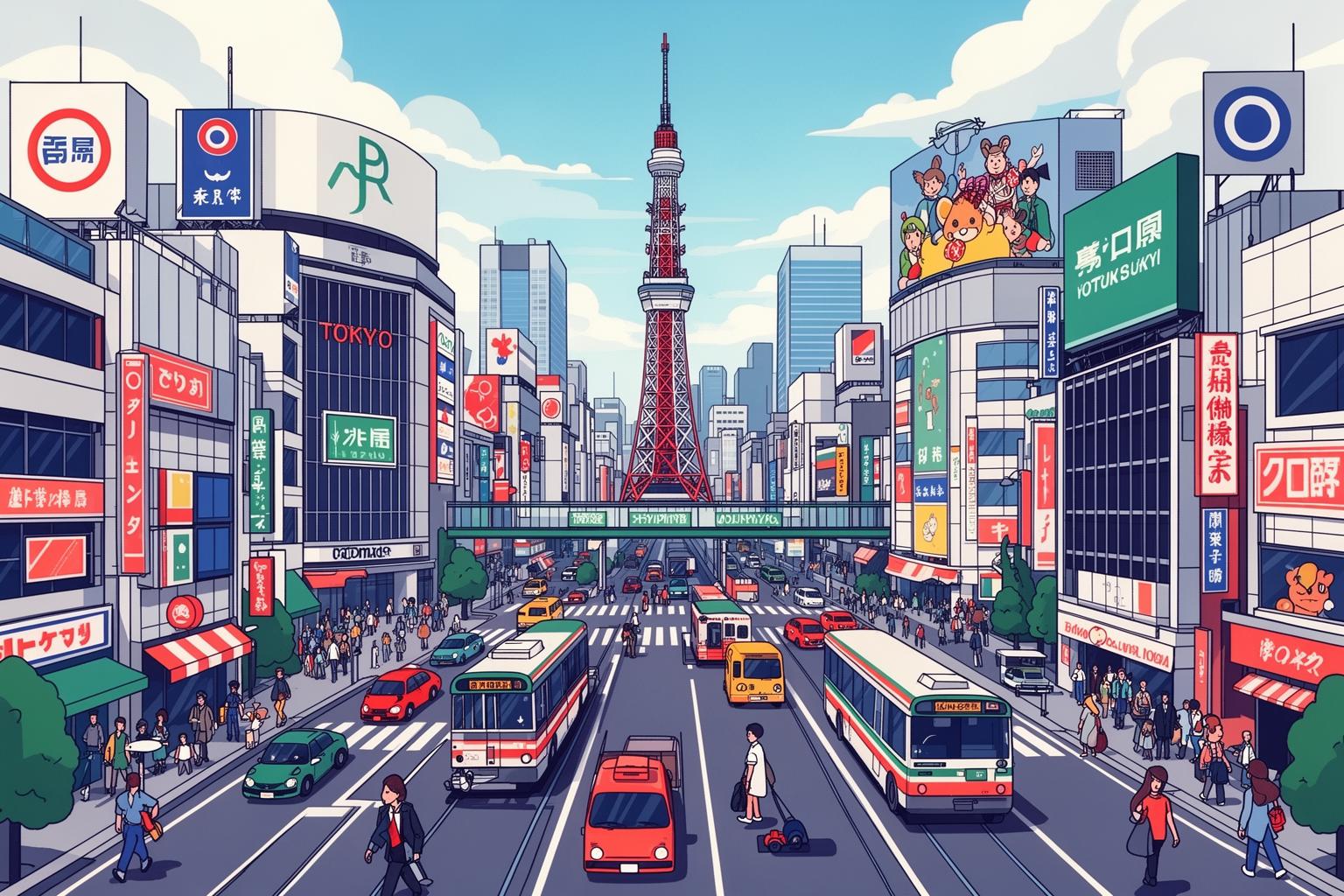
Tokyo is a city of countless faces, a vast metropolis where gleaming skyscrapers can give way to tranquil, lantern-lit alleys within the span of a single block. The world of “Your Name” is primarily set in two such contrasting yet adjacent districts: the dizzying, high-energy hub of Shinjuku and the quieter, more residential neighborhood of Yotsuya. This is where the heart of Taki’s life takes place and where the story’s most emotionally powerful moments unfold. To truly grasp the film’s visual and emotional language, one must first walk these streets, experiencing the rhythm of daily life that Shinkai and his team so masterfully captured. It’s here that the story’s fantastical elements feel most grounded, anchored in the familiar sights and sounds of a Tokyo that is both vast and intimately personal.
The Iconic Red Staircase: Suga Shrine
Few locations in modern cinema carry as much emotional weight as the red-railed staircase of Suga Shrine. This is the setting for the film’s stunning climax, where years of searching, fragmented memories, and a desperate, nameless longing culminate in a question: “Haven’t we met before?” For fans of “Your Name,” this staircase is more than just steps; it’s a sacred place, a symbol of hope and reunion. Discovering it tucked away in a quiet residential corner of Yotsuya feels like uncovering a treasured secret. The walk from the nearest station, Yotsuya-sanchome, is a pleasant, gentle stroll through narrow streets lined with homes and small businesses, a world apart from the commercial frenzy of central Shinjuku just minutes away. This contrast is crucial. The film’s most poignant moment happens not in a grand landmark, but in an ordinary, everyday place, making the magic feel all the more real and accessible.
As you approach, the iconic incline and distinctive red rail come into view, evoking an immediate and powerful feeling. It’s a genuine thrill, a ripple of recognition that sends a shiver down your spine. Standing at the bottom looking up, or at the top looking down, you can almost hear the film’s score swelling in your head. The atmosphere here is one of quiet reverence. After all, it’s a functioning neighborhood shrine. You’ll see locals stopping briefly to offer prayers, children walking home from school, and the gentle rustle of leaves in the trees flanking the staircase. For the best experience—and to capture that perfect, uncrowded photo resembling the film’s final shot—try visiting on a weekday morning. The soft morning light filters beautifully through the surrounding buildings, and the calmness lets you fully absorb the moment. Remember to be respectful. This is a place of worship and a residential area. Keep your voice low and be considerate of locals going about their day. The true magic of Suga Shrine isn’t just recreating a cinematic moment; it’s feeling the peaceful, hopeful energy of a place where two worlds, and two souls, finally connected.
Taki’s Urban Jungle: Shinjuku’s Concrete Canvases
If Yotsuya embodies the story’s quiet emotional resolution, Shinjuku is its vibrant, pulsing heart. This is Taki’s domain, a dizzying landscape of towering skyscrapers, neon-lit streets, and an unceasing tide of people. It perfectly represents his modern, fast-paced life, a stark contrast to the traditional, serene world of Mitsuha’s Itomori. The film uses Shinjuku’s iconic landmarks not merely as background, but as visual anchors that root Taki’s experiences in an intensely realistic portrayal of contemporary Tokyo. To wander through Shinjuku is to step directly into the anime’s frames.
Your first encounter with Taki’s world will likely be at Shinjuku Station. As the world’s busiest transportation hub, it’s a bustling symphony of announcements, footsteps, and intersecting lives—a fitting metaphor for the film’s themes of crossed paths. Don’t resist the flow; simply allow yourself to be carried along by the stream of people, and you’ll sense the same feeling of being a small, anonymous part of a vast, interconnected network that Taki navigates every day. From almost anywhere nearby, your eyes will be drawn to the NTT Docomo Yoyogi Building. Though you can’t enter it, its distinctive spire, reminiscent of a clock tower, recurs throughout the film, a constant presence in the skyline that helps orient you in Taki’s Tokyo. It looms in the backdrop of many key scenes, silently observing the unfolding drama.
For a deeper experience, seek out locations connected to Taki’s part-time job and social life. The restaurant where he works, “Il Giardino delle Parole” in the film, is modeled after the real-life Cafe La Bohéme Shinjuku Gyoen. Finding this charming Italian eatery, situated on the ground floor of a large building, feels like stepping onto the set. The interior is elegant and cozy, and dining here offers a tangible link to Taki’s everyday grind and his developing relationship with Okudera-senpai. It’s a popular spot, so consider making a reservation. Another significant site is the Shintoshin Pedestrian Bridge, a circular walkway near the Tokyo Metropolitan Government Building. Featured in several montages, this is where Taki strolls against the dramatic Shinjuku skyline. Standing here, especially at dusk when the city lights start to sparkle, you can feel the urban melancholy and ambition that define Taki’s character. The sweeping views of traffic flowing below and skyscrapers reaching skyward are pure Shinkai. It’s a place for reflection, a spot to sense the immense scale of the city and contemplate your own place within it.
Echoes of Connection: Beyond the Main Hubs
While Shinjuku and Yotsuya constitute the narrative core of the Tokyo-based scenes in “Your Name,” the story of Taki and Mitsuha’s brief, body-swapped life together extends into other parts of the city. These locations, mainly revolving around Taki’s memorable and slightly awkward date with his coworker Okudera-senpai, reveal a different side of Tokyo—one that is more curated, artistic, and sophisticated. Visiting these spots adds another dimension to your pilgrimage, allowing you to delve into the city’s cultural heart and witness the breathtaking views that frequently appear in Makoto Shinkai’s works. These places are not just about reenacting scenes; they offer a chance to experience the awe and wonder Mitsuha (in Taki’s body) felt while exploring a city that seemed a universe away from her own.
A View from Above: Roppongi Hills and The National Art Center, Tokyo
The date sequence takes you through some of Tokyo’s most modern and stylish landmarks. The first stop is The National Art Center, Tokyo, situated in the chic district of Roppongi. You’ll immediately recognize it by its stunning, undulating glass facade. The building itself is a masterpiece of contemporary architecture. Inside, the film focuses on Salon de Thé ROND, a café perched atop a massive concrete cone in the museum’s atrium. This is where Taki and Okudera-senpai have lunch. You can do the same, though be prepared for a queue, as it is a popular photo spot for both art lovers and anime fans. Even if you don’t dine there, simply standing in the sunlit atrium and admiring the architectural ambition is an experience in itself. The scale and artistry perfectly capture the feeling of a special day out in the big city.
From the art center, the date moves on to Roppongi Hills, a vast urban complex featuring shops, restaurants, an art museum, and, most importantly for our pilgrimage, the Tokyo City View observation deck. This is where the date reaches its emotional climax. As Taki (or rather, Mitsuha) gazes out at the endless cityscape, he is moved to tears—a subconscious reaction born from Mitsuha’s longing and the overwhelming beauty of a world she feels she has seen before, perhaps in a dream. Standing on that same observation deck, with Tokyo spread beneath you like a glittering carpet of light, is a truly profound experience. The 360-degree view is one of the city’s best. You can spot Tokyo Tower, the Tokyo Skytree, and on a clear day, even the distant outline of Mount Fuji. The best time to visit is late afternoon. You can watch the sun sink below the horizon, painting the sky in shades of orange and purple, then experience the magical moment when the city transforms into a galaxy of artificial stars. It is here, high above the relentless energy of the streets, that you can appreciate the vastness of the world Taki and Mitsuha were trying to bridge. It’s a moment that connects you not only to the film but to the immensity of human connection itself.
Subtle Nods and Quiet Moments
For the truly dedicated pilgrim, the journey doesn’t end with the major landmarks. Makoto Shinkai peppered his film with numerous smaller, more subtle real-world locations that enrich his vision of Tokyo with texture and realism. These spots reward the keen-eyed observer. One such beautiful place is the ginkgo-lined avenue of Meiji Jingu Gaien. This picturesque walkway appears in a brief flashback, but its serene beauty leaves a lasting impression. It is especially stunning in late autumn, typically from mid-November to early December, when the ginkgo leaves turn a brilliant, uniform gold, forming a magical tunnel of color. It offers a wonderful place for a peaceful stroll, providing a moment of natural beauty amid the urban environment.
For those curious about the very origins of the story’s fictional town, there is the inspiration for Itomori. While Mitsuha’s village is fictional, its most striking feature—the crater lake formed by a meteorite—was inspired by a real location: the remote volcanic island of Aogashima. This is not a casual day trip; Aogashima is part of the Izu Islands, administered by Tokyo but located hundreds of kilometers south in the Philippine Sea, accessible only by ferry or helicopter. Visiting it is a pilgrimage in the truest sense. But knowing this connection adds a fascinating layer of depth to the film. It demonstrates the creators’ incredible dedication to grounding their fantasy in tangible, awe-inspiring aspects of the real world. While most visitors will focus on the mainland Tokyo locations, simply seeing photographs of Aogashima’s remarkable double caldera landscape helps you appreciate the mythical, otherworldly beauty that Shinkai aimed to capture in Itomori.
The Pilgrim’s Practical Guide: Weaving Your Own Story
Embarking on a “Your Name” pilgrimage is more than simply ticking locations off a list; it’s about creating a personal journey through Tokyo. With some careful planning, you can seamlessly weave these cinematic moments into an unforgettable day of exploration. The key is to think strategically about the city’s geography while embracing the small, unscripted discoveries along the way. Tokyo’s public transportation system is incredibly efficient, making it easy to travel between districts and follow in the footsteps of Taki and Mitsuha.
Crafting Your Itinerary
A well-organized route can make all the difference. A logical one-day pilgrimage might begin in Shinjuku. Start your morning by immersing yourself in the controlled chaos of Shinjuku Station, then take a walk to see the NTT Docomo Yoyogi Building and the Shintoshin Pedestrian Bridge. From there, it’s a short walk to Cafe La Bohéme for a mid-morning coffee or an early lunch. Afterward, you can conveniently hop on the Marunouchi subway line or the JR Chuo-Sobu line for the brief ride to Yotsuya. Spend some time exploring this quiet neighborhood before heading to the emotional heart of the journey, Suga Shrine. In the afternoon, take the subway to Roppongi. Start with a visit to The National Art Center, then head to Roppongi Hills to watch the sunset from the Tokyo City View observation deck. This itinerary blends the bustling energy of the morning with a more reflective afternoon and a stunning evening finale. To navigate the city smoothly, pick up a Suica or Pasmo IC card. These rechargeable cards work on nearly all trains and buses, sparing you the trouble of buying individual tickets for every trip.
Capturing the Perfect Shot
One of the greatest pleasures of this pilgrimage is recreating your own versions of the film’s iconic shots. To help with this, keep a few reference images from the anime saved on your phone. When you arrive at spots like the Suga Shrine staircase or the pedestrian bridge in Shinjuku, take time to match the exact angle used in the film. Focus on the framing, perspective, and background details. This enjoyable challenge turns your tour into a creative scavenger hunt. However, it’s important to balance your photography goals with respect for the surroundings. Suga Shrine, especially, is a sacred site in a tranquil residential area. Avoid loud noises, using flash photography inside the shrine grounds, or blocking pathways used by residents and worshipers. Be a considerate pilgrim. The aim is to capture the essence of the place, not to disturb it. Often, the most memorable photos aren’t just perfect copies, but those that capture unique lighting, atmosphere, or a personal moment of connection felt during your visit.
Beyond the Anime: Experiencing the Neighborhoods
While the anime locations serve as your main guide, don’t forget to explore the rich character of the neighborhoods themselves. Use the pilgrimage as a starting point for deeper discovery. After visiting Suga Shrine in Yotsuya, spend some time wandering around Arakicho, a charming district filled with small traditional restaurants and hidden bars, offering a glimpse of a more old-fashioned Tokyo. In Shinjuku, after visiting Taki’s haunts, retreat to the expansive green space of Shinjuku Gyoen National Garden for a quiet moment, or explore the atmospheric alleyways of Omoide Yokocho and Golden Gai for dinner and drinks. In Roppongi, pair your visit to the observation deck with a stop at the Mori Art Museum, located in the same building, which frequently showcases outstanding contemporary art. By venturing beyond the specific filming locations, you’re not just retracing a story—you’re letting the city share its own stories, creating a richer, more personal travel experience.
The Feeling of “Musubi”: Tying It All Together
As your day tracing the footsteps of Taki and Mitsuha draws to a close, standing high above the shimmering expanse of Tokyo, you may notice the city appears and feels transformed. It is no longer just an anonymous metropolis of steel and glass. Instead, it has become a living landscape woven with narrative—each landmark a chapter, each street a verse in a story you now carry within you. This is the true essence of a “seichi junrei.” It’s a journey that turns the ordinary into the extraordinary, blending threads of fiction into the fabric of reality.
The central theme of “Your Name” is “musubi”—a concept embodying the delicate, unseen threads linking people, places, and time. It represents the braiding of bonds, the flow of time, the ties that unite us. By embarking on this pilgrimage, you are actively engaging in that act of musubi. You are weaving your own thread into the story, connecting to the creators and countless other fans worldwide who have stood in these same places, sharing the same feeling of wonder. The red staircase at Suga Shrine is no longer merely a staircase; it becomes a channel for shared emotion. The view from Roppongi Hills is more than a vista; it becomes a collective memory of awe and yearning.
This journey offers you a unique and deeply personal map of Tokyo, one defined by emotion rather than train lines alone. You begin to see the city not just for what it is, but for what it symbolizes within a story that has touched millions. It’s an experience that enriches your appreciation for both the film and the remarkable city that served as its backdrop. As you depart these places, you carry a fragment of their story with you, leaving behind a faint trace of your own presence. Though the comet was a once-in-a-lifetime event, the bonds it created endure forever. May your journey through Taki and Mitsuha’s Tokyo be filled with discovery, wonder, and your own moments of musubi.