
There are stories that stay with you, that echo in your heart long after the credits roll. Makoto Shinkai’s masterpiece, Kimi no Na wa, or Your Name, is one of those stories. It’s a film that captured the world with its breathtaking animation, its soul-stirring story of connection, and its poignant exploration of fate, time, and memory. It painted a portrait of two lives—Mitsuha in the idyllic, rural town of Itomori and Taki in the vibrant, sprawling metropolis of Tokyo—intertwined by a mysterious, celestial event. But for so many of us, the film did more than just tell a story; it created a world so vivid, so real, that it felt like a memory of a place we’d known forever. And here in Tokyo, that world is not just a dream. It’s real. The streets Taki walked, the views that filled his eyes, the quiet corners where he searched for a connection he couldn’t quite name—they are all here, waiting to be discovered. This is the heart of seichi junrei, the anime pilgrimage, a journey where fiction and reality blur, and where fans can step directly into the frames of their favorite stories. It’s a quest not just to see locations, but to feel the emotions that bloomed there. So, we’re going on a journey. We’ll trace the threads of Taki’s life through the urban labyrinth of Tokyo, from the dizzying heights of its skyscrapers to the quiet, fateful staircase where two worlds finally collided. This isn’t just a checklist tour; it’s an immersion, a chance to feel the pulse of the city that served as the backdrop for one of the most beloved animated films of all time, and maybe, just maybe, to find a connection of your own. Let’s begin our search. Here is a map to guide your steps as we walk through the world of Your Name.
As you wander Tokyo’s vibrant streets searching for that elusive connection, you may find it inspiring to delve into the art of film and nature in Miyazaki landscapes that similarly blur the lines between reality and cinematic dreams.
The Heart of the Connection: Suga Shrine’s Iconic Steps
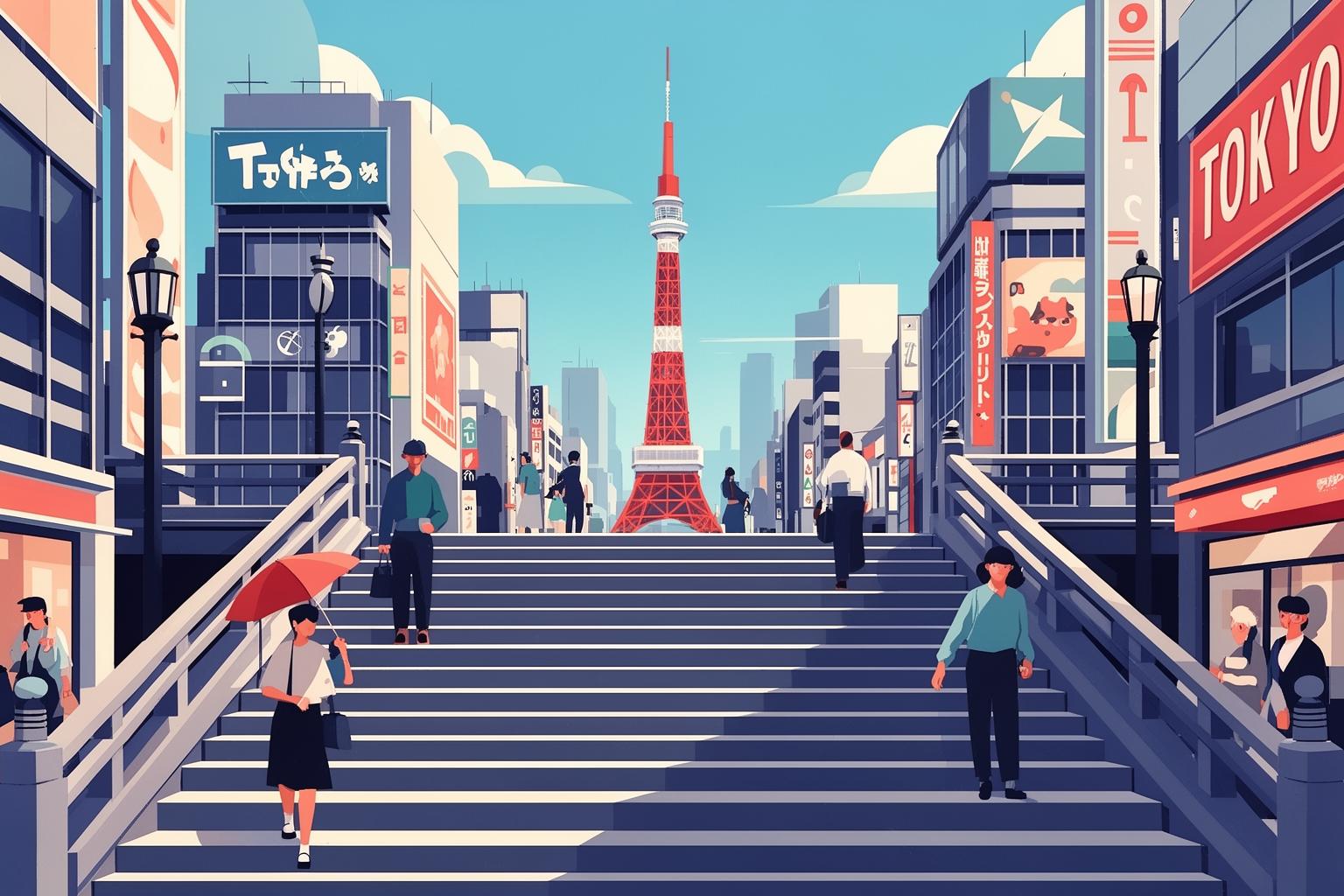
Our pilgrimage, like the film, reaches its peak at the spot where the story’s emotional intensity finally unfolds. This place has achieved legendary status among fans—a simple staircase imbued with deep significance. To arrive there, we first journey to Yotsuya, a district that delicately balances the bustling commercial energy of central Tokyo with the tranquility of a residential area. The walk from Yotsuya-sanchome Station gently decompresses you; the city’s roar fades step by step, replaced by the soft hum of everyday life. You’ll pass small shops, modest apartment buildings, and an occasional vending machine casting a warm glow onto the sidewalk. There’s a tangible sense of anticipation, a feeling of nearing something important. As the path winds through narrow streets, just when you might feel lost in this peaceful maze, there it appears.
A Cinematic Climax in Reality
The stairs of Suga Shrine. They emerge almost unexpectedly—a streak of vibrant red from the handrail standing out against the muted hues of the surrounding houses. The moment you see them, the film’s powerful final scene floods back. You can almost hear the soaring soundtrack, feel the pounding hearts of Taki and Mitsuha as they finally, finally reunite. Standing at the base, looking up, you see the world through Taki’s eyes. The incline stretches toward the sky, symbolizing a climb toward a long-lost memory. From the top, looking down, you adopt Mitsuha’s viewpoint, gazing at the figure who feels so deeply familiar. The atmosphere here is truly unique. It remains a living part of a local neighborhood, yet carries the energy of countless cinematic pilgrimages. You’ll likely encounter other fans, speaking in hushed, excited whispers, each patiently awaiting their turn to capture the perfect photo. There’s an unspoken, shared understanding among everyone present. We’ve all made this journey for the same reason: to stand where a miracle occurred.
Practical Tips for Pilgrims
To fully enjoy the steps’ serene beauty, timing is crucial. An early morning visit is ideal. The soft morning light is perfect for photography, and you’ll have the place mostly to yourself, allowing for a quiet, reflective moment. As the day goes on, more visitors arrive; while the communal spirit is wonderful, the morning’s solitude feels truly magical. Remember, this is not merely a film location—it’s part of a sacred space. The stairs lead up to Suga Shrine, a local Shinto shrine with its own history and community. At the top, take a moment to visit the shrine itself. Offer a small prayer, bow respectfully, and appreciate the peaceful atmosphere. It’s a chance to connect not only with the film but also with the cultural essence of the neighborhood. Being a respectful visitor—speaking softly, not blocking paths, and treating the area with care—is the best way to honor both the film and the spirit of the place.
How to Capture the Perfect Shot
Every visitor hopes to recreate the iconic movie poster shot, and for good reason. For the classic angle, you’ll need two people or a well-positioned tripod. One person stands at the top, beginning to descend, while the other stands below, looking up. The magic lies in the distance and framing created by the walls and trees on either side. Experiment with angles: a low shot from the bottom emphasizes the height and drama of the stairs, while a top-down shot captures the city peeking through the buildings just as in the film. Afternoon sunlight casts long, dramatic shadows, whereas an overcast day offers soft, even lighting that beautifully highlights the handrail’s vibrant red. Don’t just mimic the poster; find your own perspective, your own moment. Capture the feeling of being there—the culmination of your personal journey.
Taki’s Urban Jungle: Navigating Shinjuku
If Suga Shrine is the heart of Your Name, then Shinjuku is its roaring, vibrant soul. This is Taki’s domain—a dazzling, overwhelming, and endlessly captivating district that perfectly captures the scale and tempo of life in Tokyo. Emerging from Shinjuku Station is an experience in itself. You are instantly swept into a stream of humanity, a river of people flowing beneath towering skyscrapers and colossal video screens that broadcast a kaleidoscope of colors and sounds. This is the Tokyo of global imagination, and it’s the perfect place to start understanding Taki’s reality, a sharp contrast to Mitsuha’s peaceful, tradition-bound life in Itomori.
The Crossroads of a Million Stories
Shinjuku Station is famously the world’s busiest railway station, a complex maze of platforms and passageways that can feel like a city within a city. It’s here that the film sets the rhythm of Taki’s daily life—the crowded commutes, the rush to school, the feeling of being a small part of a vast, interconnected whole. To experience the area, head toward the Shinjuku Southern Terrace. There you’ll find the Shintoshin Pedestrian Bridge, an elevated walkway offering stunning views over the train tracks and the surrounding cityscape. This spot features prominently in the film, especially during scenes establishing Taki’s routine and in the backdrop of his date with his coworker, Okudera-senpai. Standing on that bridge, watching trains—the city’s lifeblood—glide into and out of the station below, you can sense the unceasing movement, the relentless pulse that powers Tokyo. The view is especially breathtaking at dusk, as office lights begin to twinkle and neon signs ignite against the darkening sky.
A View from Above
To fully appreciate the scale of Taki’s world, you need to look from above. While the stylish restaurant where Taki and Okudera-senpai dine is fictional, the panoramic view they enjoy is very real. The best place to experience this for yourself is the Tokyo Metropolitan Government Building. Just a short walk from Shinjuku Station, this architectural marvel offers free observation decks on the 45th floors of both its North and South towers. The elevator ride is swift and silent, and when the doors open, the city sprawls out before you like a vast, intricate circuit board. On a clear day, the view seems limitless. You can see the densely packed city center fade into sprawling suburbs, with Mount Fuji often visible as a majestic silhouette on the horizon. This is the view Taki would have regarded as normal. Gazing out over this urban ocean, you can deeply appreciate the wonder and longing Mitsuha must have felt seeing it through his eyes for the first time. It’s a moment to pause and admire the sheer enormity of Tokyo.
Shinjuku’s Rhythms
Shinjuku changes its character depending on the time of day. In the morning, it’s a sea of commuters in sharp suits, moving with purpose and precision. By afternoon, shoppers and tourists fill the department stores and wide streets. But it’s at night that Shinjuku truly comes alive. The entire district transforms into a dazzling wonderland of light and energy. For a taste of this electric atmosphere, venture into the narrow alleys of Omoide Yokocho, also known as “Memory Lane,” where tiny yakitori stalls cram shoulder-to-shoulder, with smoke and savory aromas filling the night air. Or explore the famed Golden Gai, a maze of miniature bars, each with its own unique character and just a handful of seats. Though not directly shown in the film, these places offer an authentic glimpse into the nightlife and social fabric of the world Taki inhabits after his restaurant shift ends. It’s in these intimate, human-scale corners, nestled beneath towering skyscrapers, that you find the true heart of Shinjuku.
Moments of Reflection: From Cafes to Crossings
Beyond the grand vistas and bustling crowds, Taki’s story is also interwoven with smaller, more intimate settings. These are the places where his personal life unfolds—where he works, goes on dates, and experiences the film’s quieter moments. Visiting these locations offers a different kind of pilgrimage—a chance to slow down and immerse yourself in the unique ambiance that Shinkai and his team so expertly captured.
The Date Spot: Cafe La Bohème Shinjuku Gyoen
Taki’s part-time job at the fictional Italian restaurant “Il Giardino delle Parole” (a reference to Shinkai’s other film, The Garden of Words) was inspired by a real place: Cafe La Bohème. Situated near the peaceful Shinjuku Gyoen National Garden, stepping inside this café feels like entering an anime scene. The resemblance is striking. The soaring ceilings, grand arched windows that flood the room with natural light, ornate chandeliers, and elegant dark-wood interior all mirror the film’s depiction. The atmosphere combines upscale sophistication with a relaxed, welcoming vibe. It’s easy to imagine Taki bustling about with plates of pasta, and envision the slightly awkward but charming date with Okudera-senpai unfolding there perfectly.
Dining Like Taki and Okudera-senpai
A visit to Cafe La Bohème is essential for any devoted fan. While you can stop in for just coffee and dessert, it’s worth enjoying a full meal to truly absorb the atmosphere. The menu features classic Italian dishes, from pizza to pasta, all of excellent quality. Because it’s a popular spot, making a reservation—especially for dinner or weekends—is advisable. Request a table by the large windows to fully experience the cinematic feel. As you eat, take a moment to observe the details: how the light filters across the tables, the gentle clinking of cutlery, the low murmur of conversation. It’s a sensory experience that bridges the gap between animation and reality, making you feel like a character in your own version of the story.
The Iconic Scramble: Yoyogi and the NTT Docomo Tower
Certain landmarks serve as visual anchors in Your Name, appearing repeatedly to ground the viewer in Taki’s Tokyo. The most prominent is the NTT Docomo Yoyogi Building. With its distinctive, clock-tower-like spire, it stands as a constant presence on the skyline, silently observing Taki’s journey. One of the most memorable shots featuring the tower is taken from a pedestrian bridge just outside Yoyogi Station, one stop south of Shinjuku on the JR Yamanote Line. From this bridge, you can align the exact view from the film: railway tracks curving into the distance with the sleek, elegant form of the Docomo Tower rising behind them. It’s a simple yet powerful scene, symbolizing Tokyo’s modern, ever-present technology and infrastructure—a city always looking ahead. This visual motif is a steady reminder of the urban environment that shaped Taki, a world of timetables, technology, and towering ambition.
A Landmark in the Distance
The Docomo Tower recurs throughout the film, visible from many vantage points. You’ll glimpse it from the observation deck of the Tokyo Metropolitan Government Building and even within parts of Shinjuku Gyoen. Its presence highlights the meticulous detail of Shinkai’s background art, which incorporates real-world landmarks to create a sense of place that’s both accurate and artistically heightened. When exploring Shinjuku and the surrounding neighborhoods, make a little game of spotting the tower on the skyline. Each sighting feels like a subtle nod from the film, confirming that you’re walking the same world and following the right path.
Weaving the Threads of Time: Deeper Connections
Taki’s pilgrimage through Tokyo is more than just a glimpse into his daily life; it’s also a journey through the moments that shaped his relationships and his worldview. The locations tied to his key date with Okudera-senpai, in particular, guide us to some of Tokyo’s most beautiful and culturally significant places, offering an opportunity to explore the film’s themes more deeply.
The National Art Center, Tokyo: A Modern Architectural Gem
The venue for Taki and Okudera-senpai’s museum date is one of Tokyo’s most stunning architectural landmarks: The National Art Center, Tokyo, situated in the upscale Roppongi district. Designed by the renowned architect Kisho Kurokawa, the building itself is a masterpiece. Its sweeping glass facade undulates like a wave, creating a captivating play of light and shadow inside and out. Upon entering the spacious atrium, you are welcomed by two enormous, inverted concrete cones housing cafes and a restaurant. The entire space feels open, airy, and inspiring—a perfect setting for conversations about art and dreams. The film beautifully captures the center’s grand scale and tranquil ambiance, allowing you to almost envision Taki and Okudera-senpai wandering through the sun-drenched lobby as they discuss the exhibition.
Immersing in Art and Atmosphere
Although the exhibition featured in the film was fictional, The National Art Center hosts a rotating schedule of world-class special exhibitions. It’s advisable to check their official website before visiting to find out what’s currently on view. Even if you opt not to enter a ticketed exhibition, the building’s lobby, library, and gift shop are open to the public. Be sure to take the elevator up to the cafe perched atop one of the concrete cones, just as the characters did. Enjoying a coffee there while gazing over the magnificent atrium is an unforgettable experience that brings the film to life in a vivid, elegant way. The easiest access to the center is via a direct exit from Nogizaka Station on the Tokyo Metro Chiyoda Line. It’s a place that inspires the mind and calms the spirit, mirroring the film’s blend of intellectual curiosity and emotional depth.
The Fabric of Fate: Grasping the Concept of Musubi
A pilgrimage into the world of Your Name would be incomplete without contemplating its core theme: Musubi. As Mitsuha’s grandmother explains, Musubi is the Shinto idea of connection—the tying of threads, the flow of time, and the bonds between people. It’s the unseen force linking Taki and Mitsuha across time and space. This journey, this seichi junrei, embodies Musubi itself. By physically following the same routes, observing the same sights, and standing in the same places as the characters, you weave a new thread—a personal bond among yourself, the narrative, and the city of Tokyo. It transforms passively watching a film into an active, immersive experience. As you move from the bustling energy of Shinjuku to the serene reverence of Suga Shrine, reflect on the threads you are spinning. The train rides, the chance meetings with fellow fans, the feeling of recognition at landmarks—these all form part of your own unique connection to the story. This elevates the journey beyond mere sightseeing into a profound, personal quest.
A Practical Guide for Your “Your Name” Journey
Embarking on a seichi junrei through a sprawling city like Tokyo may feel overwhelming at first, but with a bit of preparation, it transforms into an exciting and smooth adventure. Taki’s world is centered around a few key districts, all easily reachable via the city’s exceptional public transportation network. The key is to approach your day with a spirit of exploration rather than a strict checklist.
Planning Your Itinerary
An effective and sensible way to visit the main spots is to group them by neighborhoods. You might want to dedicate an entire day to this pilgrimage. Begin your morning in Shinjuku. Explore the station area, visit the Tokyo Metropolitan Government Building for a stunning view, and enjoy lunch at Cafe La Bohème near Shinjuku Gyoen. From there, it’s a short train ride or a pleasant walk to Yoyogi to see the pedestrian bridge and the iconic NTT Docomo Tower. In the afternoon, take the metro to Roppongi to experience the architectural marvel of The National Art Center. Plan to finish your day in Yotsuya. Arriving at Suga Shrine in the late afternoon, as the sun sets, creates a deeply atmospheric and emotionally poignant way to close your journey, echoing the film’s climactic timing. This sequence allows anticipation to build naturally, saving the most iconic and emotionally charged location for last.
Navigating Tokyo
Tokyo’s public transport system is a marvel of efficiency and will be your best companion on this journey. The JR Yamanote Line, a loop line encircling the city center, will serve as your main route, linking Shinjuku and Yoyogi with ease. For stops like Suga Shrine (via Yotsuya-sanchome Station) and The National Art Center (via Nogizaka Station), the Tokyo Metro will be indispensable. To simplify travel, pick up a rechargeable IC card such as Suica or Pasmo upon arrival. These cards allow you to tap in and out of train gates and buses, sparing you from buying individual tickets every time. Apps like Google Maps offer highly accurate, real-time transit guidance, telling you exactly which train to take, which platform to head to, and how long your trip will last. Embrace the experience of navigating Tokyo’s transit system; it’s an essential part of living the life of a Tokyoite like Taki.
Beyond the Checklist: Savoring the Atmosphere
The most important advice is not to let your pilgrimage turn into a hectic dash from one photo spot to another. The magic of Your Name lies not only in its iconic scenes but also in the city’s overall ambiance—the feeling of being there. Give yourself permission to get delightfully lost for a while. Wander down a curious side street. Stop at a convenience store for a drink and watch life go by. Sit on a bench in a quiet park. These spontaneous moments let you truly feel Tokyo’s rhythm. The film is about connection, and the best way to connect with its world is to be present within it. Let the city guide you. After all, you are searching for something—or someone. Keep your eyes and heart open.
A Final Echo
As your day of pilgrimage comes to an end, standing on those tranquil steps in Yotsuya, you may realize that the line between the world on the screen and the world beneath your feet has become beautifully and irrevocably blurred. You set out to find the locations of a story, but what you discovered was a city—a living, breathing character in its own right. You have experienced the electric rush of a Shinjuku crossing, gazed upon an endless urban horizon, and stood where two souls, separated by time and tragedy, ultimately reunited. The journey of Taki and Mitsuha is a testament to the lasting power of connection—the invisible threads that bind us together. By walking these streets, you have woven your own thread into the rich tapestry of their tale. You leave not just with photos, but with a feeling—the echo of a beautiful melody, the memory of a light-filled afternoon, and the quiet, hopeful question that lingers in the Tokyo air: “What’s your name?”