
There’s a feeling every Studio Ghibli fan knows intimately. It’s that deep, quiet yearning to step through the screen and into the worlds Hayao Miyazaki created. We want to feel the wind on the grassy plains of the Valley of the Wind, walk the curious streets of the Spirit World, and, perhaps most powerfully, lose ourselves in the primeval, breathing forests of films like Princess Mononoke. It’s a world that feels both fantastical and profoundly real, a place where nature is alive with ancient gods and untamed power. For those who feel that call, that whisper of the wild, I’m here to tell you that this place is not a fantasy. It exists. It’s an island floating in the East China Sea, a teardrop of granite and green off the southern coast of Kyushu. Its name is Yakushima, and it is the soul of Princess Mononoke’s world made manifest. This journey is more than a simple tour; it’s a pilgrimage to the very heart of the inspiration that fueled a masterpiece, a chance to walk in the footsteps of spirits and understand the story on a level that visuals alone can never convey. Welcome to the enchanted isle.
Those captivated by Yakushima’s ancient magic may also find inspiration in Takayama’s anime dreams as another gateway to Japan’s enchanted realms.
The Soul of an Ancient Forest
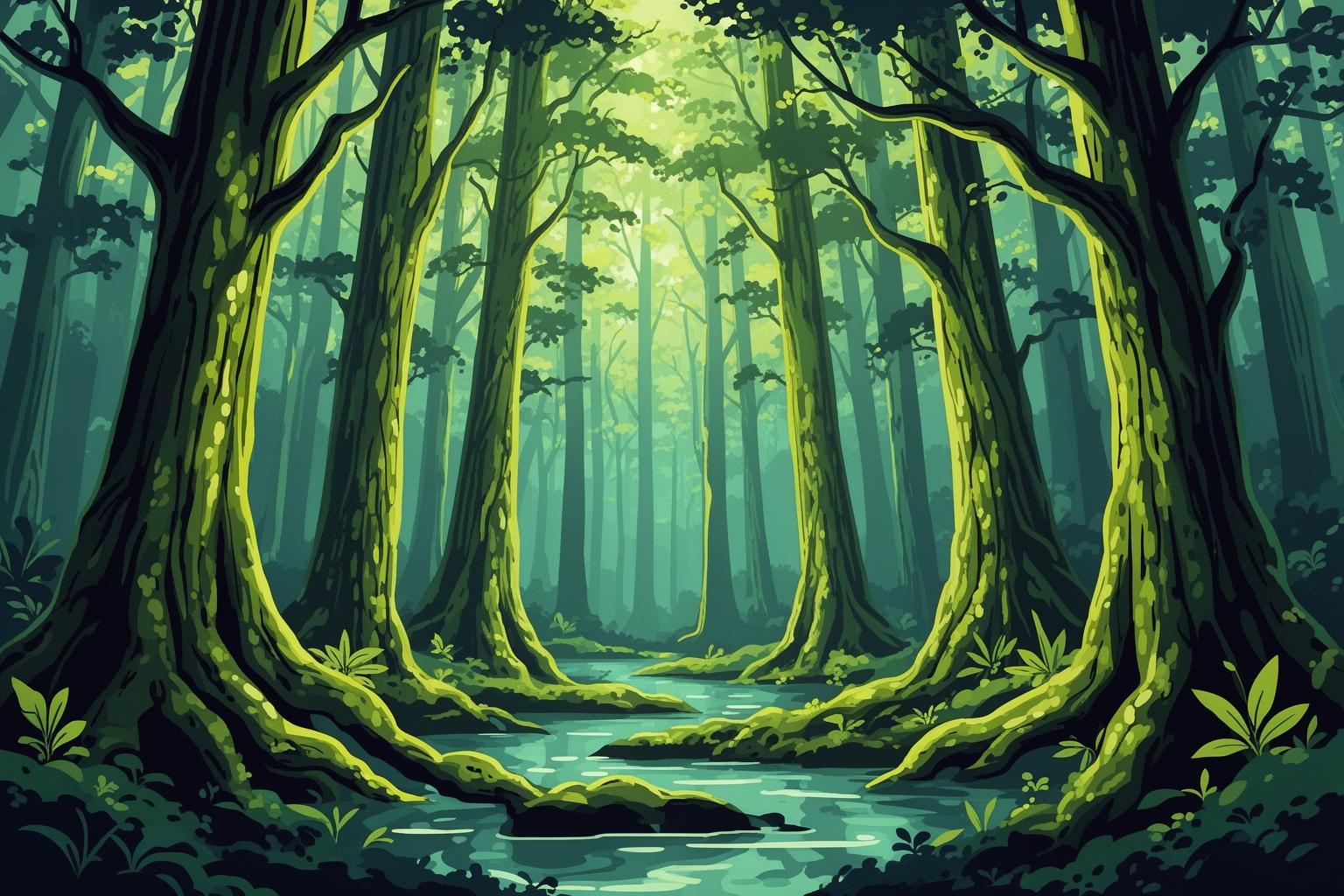
To truly understand Yakushima, you must first grasp its atmosphere. The moment you step onto a trail beneath the canopy of ancient trees, the outside world disappears. The air cools and thickens with moisture, filled with the scent of damp earth, decaying wood, and fresh, living moss. This place is not silent, but its sounds are elemental: the steady drip of water from leaf to fern, the rush of a hidden stream over granite boulders, the rustle of a Yakushika deer in the underbrush. Everything is green—not just one shade, but an endless spectrum of verdant tones, from the deep emerald of cedar leaves to the nearly fluorescent lime of moss covering every surface. Rocks, fallen logs, and tree trunks are cloaked in a soft, velvety carpet that has taken centuries to grow. Light struggles to break through the dense foliage overhead, and when it does, it filters down in ethereal, cathedral-like beams that illuminate patches of the forest floor, making the mist shimmer and the water droplets on spiderwebs sparkle like diamonds. This immersive, overwhelming environment forms the living backdrop of Princess Mononoke. You can almost sense the presence of the Shishigami, the Forest Spirit, in the profound stillness. You find yourself searching for the faint rattle of the Kodama, the small white tree spirits peeking from behind gnarled roots or mossy stones. The forest feels sentient, aware. It’s a humbling experience—a powerful reminder of nature’s vast scale and permanence compared to our own fleeting existence. This is the island’s magic; it doesn’t simply present a beautiful landscape, it draws you into its spiritual core.
Tracing the Steps of Ashitaka: Key Pilgrimage Sites
While the entire island embodies the spirit of the film, certain locations are so strikingly familiar that they become sacred landmarks for any Ghibli pilgrim. These spots are more than just scenic views; they represent hikes and journeys that demand effort and reverence, with the reward being a direct, tangible connection to the art you cherish.
Shiratani Unsuikyo Ravine: The Moss Forest
If there is one place on Yakushima that stands as the undisputed heart of the pilgrimage, it is Shiratani Unsuikyo. This ravine, featuring a network of well-maintained trails, is home to an area affectionately known by locals and fans as “Mononoke Hime no Mori,” or Princess Mononoke’s Forest. Walking through it is a surreal experience. The twisted roots of ancient cedar trees, called Yakusugi, stretch over the forest floor like the grasping fingers of sleeping giants. The ground is a mosaic of mosses, and the air remains perpetually damp with a fine mist drifting between the trees. The trail takes you over clear, rushing streams and past enormous, moss-covered boulders. There are several routes to choose from, but the most rewarding leads to Taiko-iwa, or Taiko Rock. After a steep final climb, you emerge from the dense woods onto a massive granite boulder perched at the mountain’s edge. The view is stunning. The entire forest canopy unfolds beneath you—a vast sea of green stretching toward the island’s highest peaks. Here, you feel like Ashitaka, gazing across the Wolf Clan’s domain, a wild and untouched world. A vital tip for visitors: do not fear the rain. Yakushima’s famously wet weather only enhances the magic of Shiratani Unsuikyo, making the greens more vibrant and the atmosphere even more mystical. Just be sure to wear waterproof hiking boots and reliable rain gear.
Jomon Sugi: The Elder God of the Woods
The hike to Jomon Sugi is not for the faint-hearted. It is a challenging, ten-to-twelve-hour round-trip trek that begins before sunrise. But for those who undertake it, the journey itself becomes the destination, and the final arrival offers an encounter with a true natural deity. Jomon Sugi is the island’s oldest and largest cedar tree, a colossal being estimated to be anywhere from 2,000 to over 7,000 years old. It is a living monument from an era when the world was young. The hike follows the route of an old logging railway line—a poignant reminder of the conflict between humans and nature depicted in Princess Mononoke. As you walk the tracks winding through the dense forest, you literally tread the boundary between two worlds. The final approach is a steep climb, and then you see it. No photograph can capture the sheer presence of Jomon Sugi. Its massive, gnarled trunk is a universe unto itself, shaped by thousands of years of typhoons and storms. You cannot touch the tree—a viewing platform protects its fragile roots—but that is unnecessary. Its age and power radiate through the clearing. Standing before Jomon Sugi offers an understanding of the profound reverence for nature that inspired Miyazaki. It’s a deeply spiritual experience that connects you not only to the film but to the ancient history of the planet itself. This trek demands serious preparation: start early, bring ample water and food, and consider hiring a local guide who can ensure your safety and enrich the journey with knowledge and stories about the forest’s flora and fauna.
Beyond the Forest: The Living Culture of Yakushima
While the ancient forests are the primary attraction, the island’s character is shaped by much more than its trees. The distinct culture and geography of Yakushima offer a deeper context for the world that inspired Miyazaki’s masterpiece. The island is not a static movie set; it is a living, breathing community where nature sets the pace of life.
The Rhythm of Rain and Sun
There is a local saying that it rains “35 days a month” in Yakushima. Although an exaggeration, it reflects a fundamental truth: water is the lifeblood of this island. The massive granite mountains capture the moist sea air, producing impressive amounts of rainfall. This constant precipitation nourishes the lush forests and forms countless rivers and waterfalls that cascade down the mountainsides. Senpiro-no-taki and Oko-no-taki are two of the most spectacular and accessible waterfalls, where you can witness the immense power of water shaping the landscape. Understanding this climate is essential to enjoying your visit. Rather than viewing rain as a nuisance, embrace it as a vital part of the Yakushima experience. It’s the rain that allows the moss to grow and the forests to flourish. The best times to visit are spring (April-May) and autumn (October-November), when the weather tends to be milder. Summer brings the deepest greens but also the highest humidity and a risk of typhoons, while winter brings snow to the highest peaks, offering a contrasting, starker beauty.
Where Mountains Meet the Sea
Yakushima is essentially one enormous mountain rising steeply from the ocean floor. This means that just a short drive from the dense, mist-shrouded forests, you can find yourself on a sunlit coastline. Circling the island along its perimeter is a journey in itself, with winding roads providing breathtaking views of the turquoise sea. On the west side lies the Seibu Rindo forest path, a narrow, rugged road where you are almost certain to encounter the island’s native Yakuzaru monkeys and Yakushika deer. Along the northwestern coast, Nagata Inakahama Beach stretches with golden sand and serves as a crucial nesting site for endangered loggerhead and green sea turtles. From May to August, you can join guided tours to respectfully observe the turtles laying their eggs at night. For a truly unique experience, seek out the Hirauchi Kaichu Onsen, a natural hot spring nestled among rocks along the shoreline. This onsen is accessible only for a few hours daily during low tide, allowing you to soak in geothermally heated water while watching waves crash just feet away. It’s a raw, elemental experience that perfectly embodies the island’s blend of mountain and marine energy.
Practical Magic: Planning Your Journey
A trip to a wild and remote destination like Yakushima requires some planning. Traveling there and getting around are part of the adventure, and being well-prepared will enable you to fully enjoy the island’s magic without worrying about logistics.
Getting to the Enchanted Isle
Yakushima’s main access point is the city of Kagoshima on Kyushu’s mainland. From there, you have two main options. The quickest is the high-speed jetfoil ferry (commonly called the “Toppy” or “Rocket”), which takes about two to three hours and provides an exhilarating ride across the water. Keep in mind these ferries may be canceled during rough seas, so a flexible schedule is advisable. The other option is the slower, larger car ferry, taking around four hours but cheaper and allowing you to bring a vehicle. Alternatively, you can fly directly to Yakushima Airport (YAK) from Kagoshima, Fukuoka, or Osaka. Flights are quick and convenient but usually the most expensive choice.
Navigating the Island
Upon arrival, you’ll soon notice Yakushima is much bigger than it seems. Public transportation is limited, with buses running infrequently along the main coastal road. To genuinely explore the island and reach trailheads for the main hikes, renting a car is nearly essential. This gives you the freedom to travel at your own pace and discover hidden spots. Be ready for narrow, winding roads, especially in remote areas, and drive carefully, watching for the island’s abundant wildlife that often crosses the road unexpectedly. If you’re uncomfortable driving or want a deeper insight into the island’s ecology and history, hiring a local guide is an excellent option. A good guide can manage transportation, lead you safely along trails, and turn your hike into an educational and memorable experience.
A First-Timer’s Guide to Respectful Travel
Yakushima is a UNESCO World Heritage Site, and its fragile ecosystem demands our highest respect. The fundamental rule is to leave no trace. Carry out everything you bring with you, including food wrappers and trash. For longer hikes like Jomon Sugi, hikers are encouraged to use portable toilet kits to protect the environment. Stay on marked trails to prevent damage to the delicate moss and root systems. Although the deer and monkeys are charming, do not feed them; it disrupts their natural behavior and can make them aggressive. Also, it’s wise to carry sufficient cash, as many smaller shops, restaurants, and inns don’t accept credit cards. Lastly, prepare for all weather conditions. Sturdy, waterproof hiking boots are essential. Bring layers, reliable rain gear (both jacket and pants), and insect repellent. Being well-prepared lets you face the island’s wild elements with confidence and comfort.
An Echo in Your Heart: Leaving Yakushima
You don’t simply leave Yakushima; you take a piece of it with you. You carry the memory of light filtering through the ancient canopy, the sensation of cool mist on your skin, and the sound of the river rushing over stones. It’s more than just a destination for an anime pilgrimage—it’s a journey to the source. Visiting this island reveals why Hayao Miyazaki was so inspired to create Princess Mononoke. He didn’t merely find a setting for his story here; he discovered the story’s very soul. The film’s powerful message about the delicate, essential balance between humanity and nature isn’t an abstract idea on Yakushima—it’s a living truth. You sense the immense power San fought to protect and come to understand the deep reverence owed to a world that existed long before us and will endure long after we are gone. The whispers of the forest gods linger within you, an echo in your heart calling for respect, wonder, and a deeper connection to the wild magic still present in our world.








