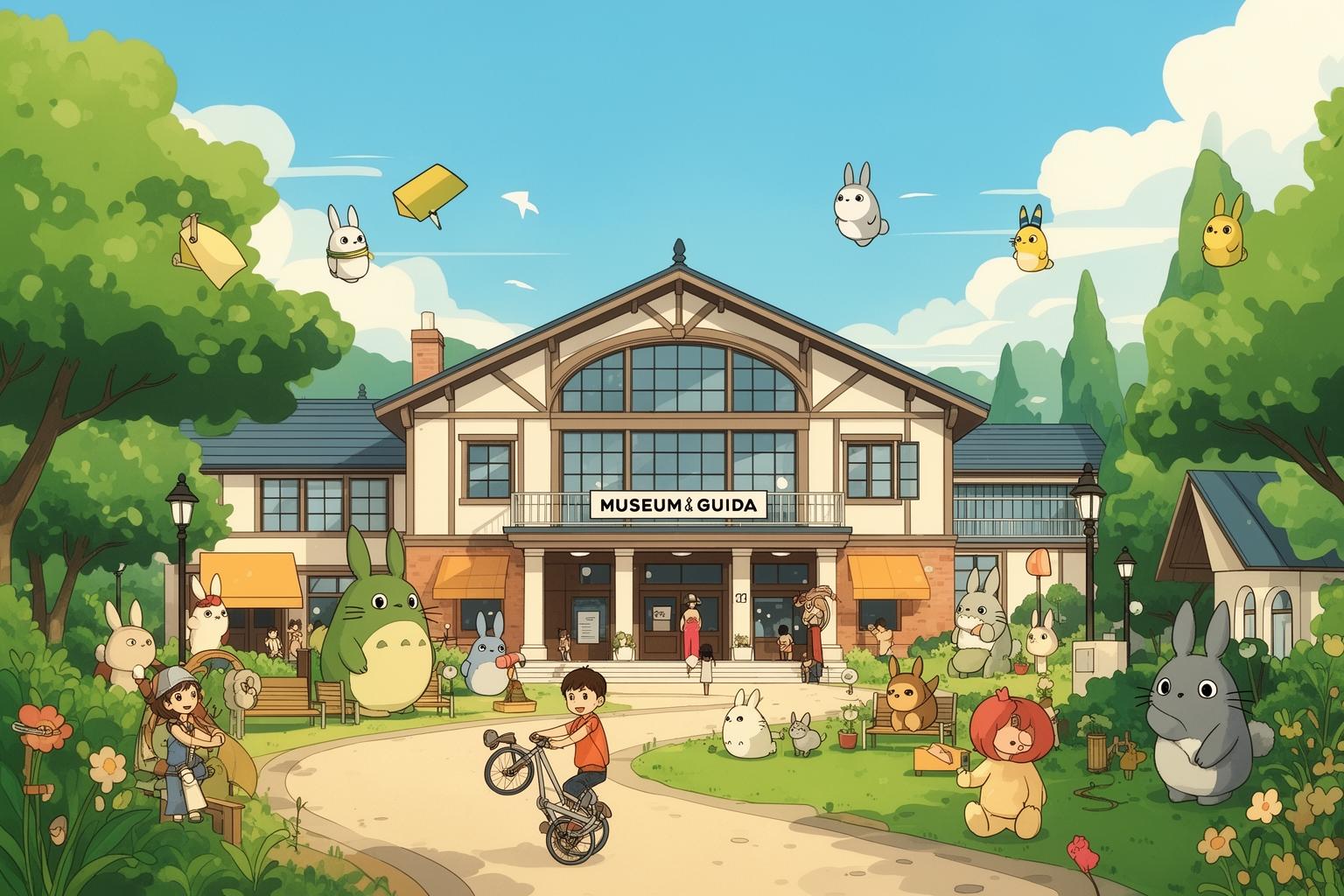
In a quiet corner of Tokyo, nestled against the lush expanse of Inokashira Park, stands a building that seems to have sprouted from a dream. It’s a whimsical structure of swirling pastels, ivy-clad walls, and stained-glass windows that don’t just catch the light—they capture stories. This is the Ghibli Museum, Mitaka, a place that serves less as a museum and more as a portal into the heart and soul of Studio Ghibli, the legendary animation studio helmed by the visionary Hayao Miyazaki. It’s not a place you simply observe; it’s a world you inhabit, a puzzle you piece together with your own two feet. Forget what you know about traditional museums with their quiet halls and roped-off exhibits. The Ghibli Museum operates on a different kind of magic, one built on the philosophy, “Let’s get lost, together.” It’s an invitation to wander, to discover hidden passages, to peek into the brilliant, cluttered minds that brought worlds like My Neighbor Totoro, Spirited Away, and Princess Mononoke to life. This isn’t just a destination for anime fans; it’s a pilgrimage for anyone who believes in the power of imagination, a testament to the painstaking art of breathing life into drawings, and a joyful reminder that wonder can be found around every corner, if you only know where—and how—to look.
For those looking to uncover more hidden wonders behind this enchanted realm, an insightful Ghibli museum guide reveals essential details about Studio Ghibli’s creative legacy.
The Heart of Imagination: What is the Ghibli Museum?
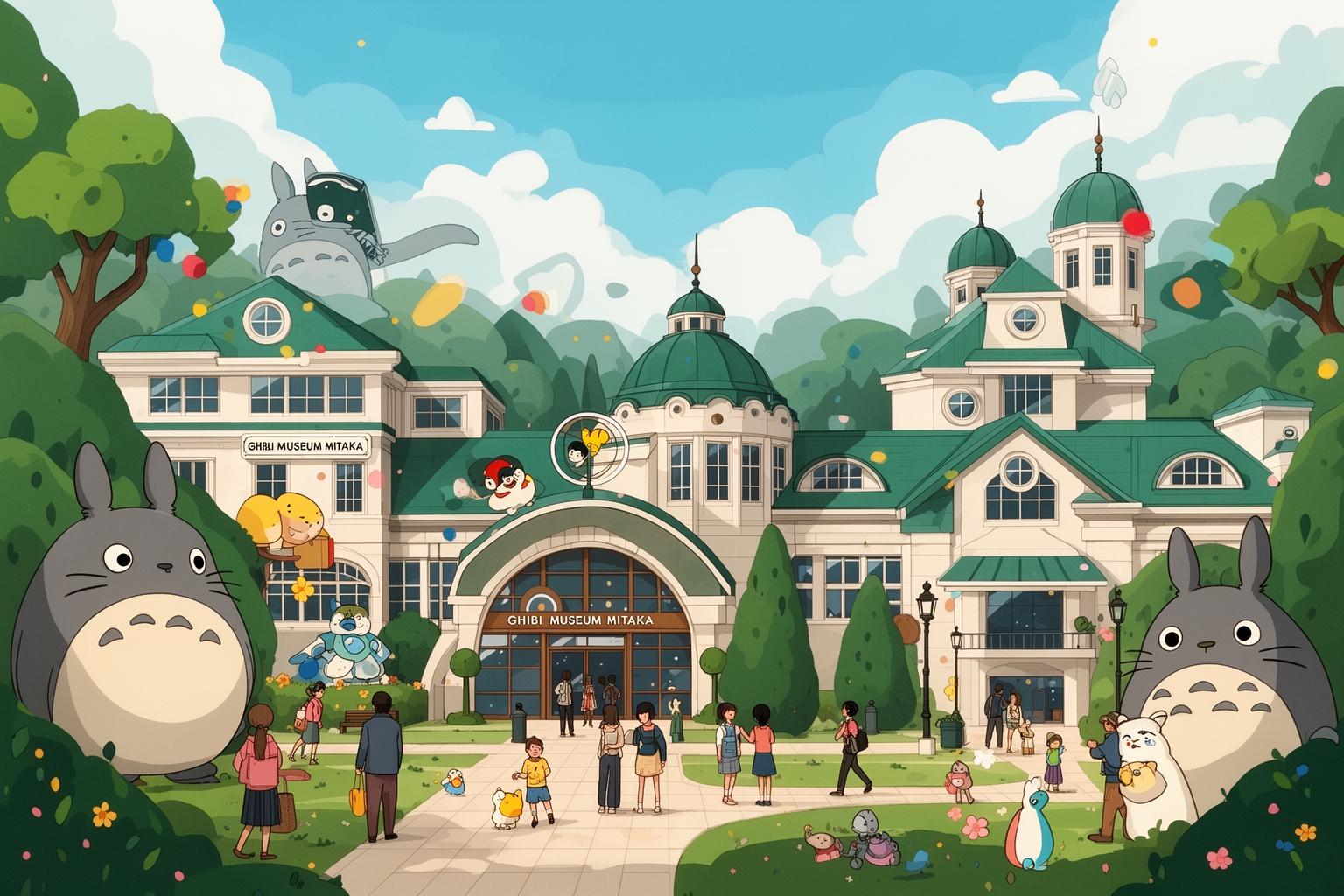
To truly understand the Ghibli Museum, you first need to grasp its creator’s intention. Hayao Miyazaki did not aim to create a monument to his own work; rather, he sought to design a space that was engaging, soothing to the soul, and left visitors feeling enriched upon departure. The museum is a tangible expression of this vision, where the building itself serves as the main exhibit. It’s an architectural masterpiece meant to ignite curiosity from the moment you see it. Every detail, from the rounded doorframes to the wrought-iron embellishments of vines and characters, is deliberate. The museum feels less like a public institution and more like a private, enchanted workshop for which you’ve been handed a special key.
A Building That Tells a Story
The exterior features warm, earthy tones that seem to naturally blend with the surrounding park. But as you approach, finer details reveal themselves. A giant Totoro welcomes visitors from a faux ticket booth, setting a playful mood. Inside, the space unfolds into the Central Hall, an expansive, multi-story area bathed in daylight from a stunning glass dome. A large wooden fan turns slowly overhead, while a maze of spiral staircases, aerial bridges, and hidden balconies crisscross the open space. It’s a dazzling and delightful scene that immediately dispels any sense of a straightforward route. Stained-glass windows scattered throughout the building depict beloved characters—Kiki on her broomstick, the forest spirits from Princess Mononoke, a smiling Totoro—each casting vibrant, shifting images on the walls as the sunlight moves. The architecture invites you to look up, down, and all around, promising a secret always awaits discovery.
“Let’s Get Lost, Together”
This phrase, the museum’s official slogan, encapsulates the entire experience. No map is given at the entrance, no set path delineated. Visitors are encouraged to roam freely, guided only by their curiosity. One moment you might be crouched to peek through a tiny window into a diorama; the next, climbing a narrow spiral staircase to a new floor. This thoughtful design transforms passive observation into an immersive adventure. Each person’s visit is unique, shaped by the paths they take and the details they uncover. It nurtures a sense of personal discovery, making the magic feel sincerely earned, as if you’ve unveiled Ghibli’s secrets on your own. It’s an invitation to put your phone away, be fully present, and explore with the wide-eyed wonder of a child.
Unlocking the Doors to Wonder: Securing Your Golden Ticket
Before you can immerse yourself in the magic, you must first navigate one of the world’s most notoriously difficult ticketing systems. Ghibli Museum tickets are not sold at the entrance; they must be purchased in advance and typically sell out within minutes of release. This is no exaggeration. Careful planning is absolutely essential, and a bit of luck certainly helps. The process demands dedication, but the reward is an intimate experience in a museum that intentionally limits its guest numbers to prevent overcrowding.
The Monthly Quest for Tickets
For those living in Japan or with access to the Japanese system, tickets go on sale online through the Lawson Ticket website at 10:00 AM Japan Standard Time on the 10th of each month for the following month. For instance, all tickets for May become available starting April 10th. The website experiences a surge of traffic as soon as tickets are released, and they usually sell out within an hour. It’s a frantic race against time that requires both persistence and quick reflexes.
International Visitor Tips
For international visitors, the process can seem even more intimidating. Some overseas travel agencies receive a limited number of tickets, but these are in high demand and often bundled within larger tour packages. The most straightforward option remains the official Lawson Ticket website, which offers an English interface. Be mindful of the time difference, be logged in, and ready to click as soon as sales start. Keep your passport information handy, as the name on the ticket must match your ID. Although it’s a stressful process, successfully securing a ticket feels like a triumph—the first step in your Ghibli adventure. Since entry times are staggered throughout the day, you must select your entry slot when booking. However, once inside, you can stay as long as you like until closing.
A Journey Through Ghibli’s Soul: Inside the Museum Walls
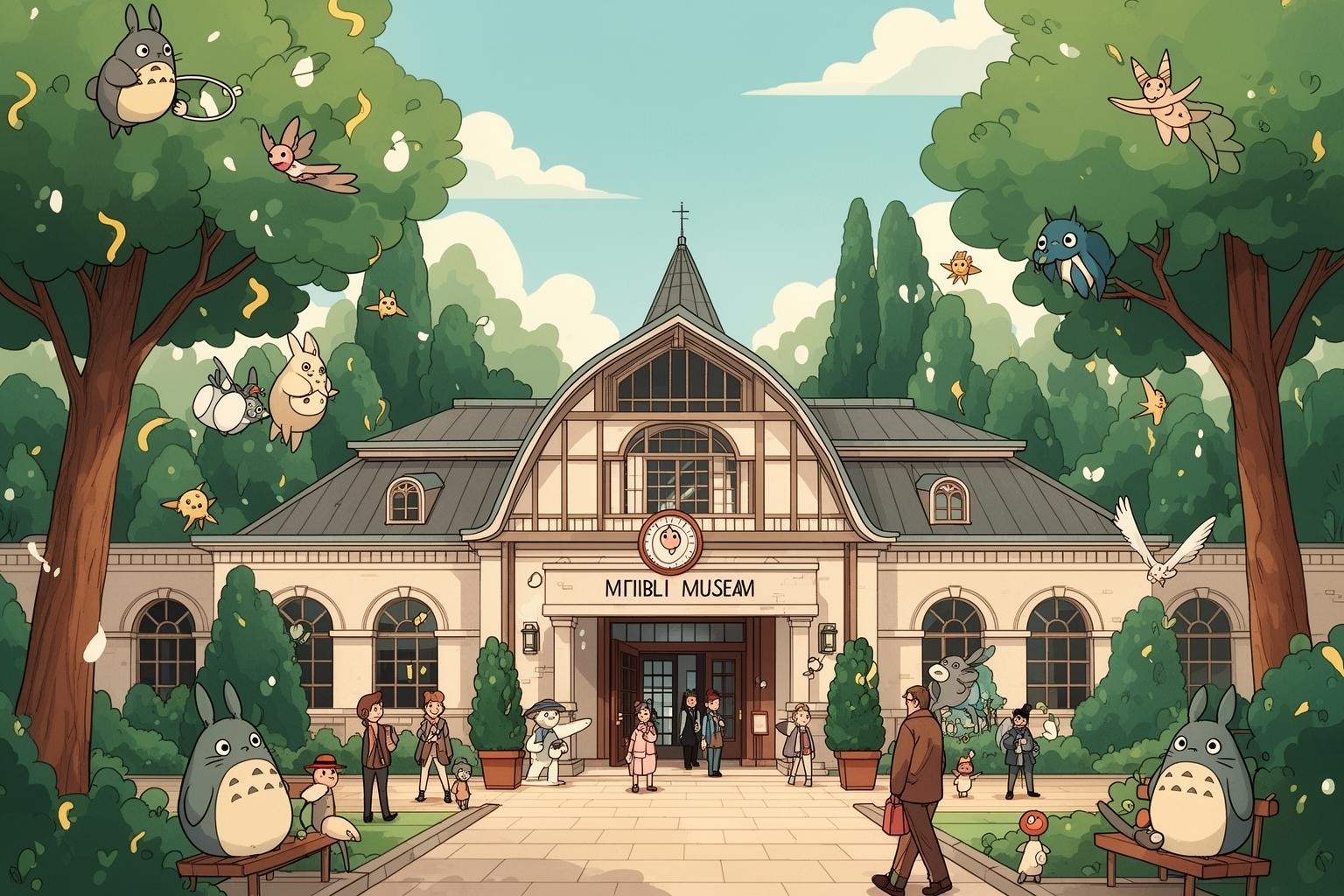
Once you step through the doors with your unique film-strip ticket in hand, the true adventure begins. The museum is broadly divided into several sections, each offering a distinct perspective on the world of Studio Ghibli. The strict no-photography policy inside is a blessing in disguise; it encourages you to engage directly with the exhibits, creating memories far more vivid than anything captured on a camera.
The Permanent Exhibits: Where a Film is Born
The main floor houses a permanent exhibition titled “Where a Film is Born.” This five-room display delves deeply into the creative chaos of an animation studio. It’s designed to make you feel as if you’ve just stepped into the artists’ workspace. One room, called “A Boy’s Room,” is a treasure trove of inspiration filled with books, sketches, airplane models, and fascinating artifacts. It feels deeply personal, offering insights into the things that ignited the imaginations of Miyazaki and his team. Another room recreates the studio itself, with desks piled high under mountains of concept sketches, storyboards, and jars filled with pencil stubs worn down from countless hours of drawing. You can see the layers of a scene — from the initial pencil sketch to the final painted cel — gaining a profound appreciation for the immense human effort and passion behind every frame of a Ghibli film.
The Magic of Movement
Perhaps the most mesmerizing displays in the museum are those devoted to the principles of animation. Here, art and mechanics combine to create pure magic. The highlight is a stunning three-dimensional zoetrope featuring characters from My Neighbor Totoro. A series of sculpted figures — a running Catbus, bouncing Totoros, a leaping Mei — are arranged in a circle on a spinning platform. As the platform rotates under a strobe light, the static figures spring to life in seamless, fluid motion. It’s an illusion, of course, but it feels like witnessing genuine sorcery. Both children and adults gasp in unison as the scene animates. It’s a powerful, tangible demonstration of how animation truly works, stripping away the digital veil to reveal its mechanical core.
A Seat at the Saturn Theater
Your museum ticket also grants you access to one screening at the intimate, eighty-seat Saturn Theater. This special venue exclusively shows original animated short films from Studio Ghibli that cannot be seen anywhere else in the world. The film on rotation changes, so your experience will be a delightful surprise. These shorts are charming, exquisitely crafted stories filled with classic Ghibli warmth and humor. Before the film begins, the theater’s windows automatically close, and the ceiling — painted with a smiling sun and moon — becomes part of the show. It’s an intimate and utterly enchanting cinematic experience that makes your visit truly unique.
The Catbus Awaits (For the Little Ones)
Upstairs, a dream comes true for the museum’s youngest guests. A large, plush, and incredibly fluffy Catbus from My Neighbor Totoro is ready to be climbed on and played with. This kids-only exhibit (specifically for elementary school-aged children and younger) showcases the pure, unfiltered joy as children climb in, on, and through the iconic vehicle — a heartwarming sight. For adults who grew up with the film, it’s a moment of playful envy and vicarious delight. Nearby, a collection of giant, cuddly Soot Sprites completes this picture-perfect scene.
Beyond the Exhibits: The Museum’s Hidden Charms
The enchantment of the Ghibli Museum goes far beyond its formal exhibition spaces. Every nook of the building and its surrounding grounds is crafted to be part of the experience, providing moments of tranquility, nourishment, and discovery.
The Rooftop Guardian: The Robot Soldier of Laputa
Ascend a narrow, wrought-iron spiral staircase from the upper floor, and you’ll arrive at the rooftop garden. Standing sentinel over the museum and the park below is a five-meter-tall, life-sized statue of the Robot Soldier from Castle in the Sky. It’s a breathtaking, poignant sight. Weathered and cloaked in moss, the Robot Soldier feels less like a threatening weapon and more like a peaceful, ancient protector. The rooftop is a calm, breezy spot, offering a quiet moment of reflection and an excellent photo opportunity (as outdoor photography is permitted). Tucked behind the robot is a pathway leading to the unpretentious control cube from Laputa, a small detail that rewards the observant visitor.
A Taste of Magic: The Straw Hat Café
When hunger calls, the Straw Hat Café serves a menu of simple, hearty, and wholesome dishes that seem lifted straight from a Ghibli film. The emphasis is on quality ingredients and comforting tastes, featuring items like satisfying pork cutlet sandwiches, straightforward pastas, and vibrant salads. The true highlight, however, is the giant slice of strawberry shortcake. The café is extremely popular, often with long lines, so a smart approach is to arrive right when it opens or during less busy times. For a faster snack, a nearby take-out stand offers hot dogs, soup, and scrumptious homemade ice cream, ideal for savoring on one of the outdoor benches.
Treasures to Take Home: Mamma Aiuto!
No visit would be complete without stopping by the museum’s gift shop, “Mamma Aiuto!,” named after the sky pirates in Porco Rosso. In keeping with the museum’s spirit, the shop is stocked with exclusive merchandise you won’t find elsewhere. Forget generic souvenirs; here, you’ll discover beautiful art books, replica film cells that serve as your entry ticket, stunning stained-glass-style postcards, and unique character goods. It’s the perfect place to find a meaningful keepsake to commemorate your journey into the world of Ghibli.
Exploring Mitaka and Kichijoji: The World Outside the Museum
Your Ghibli adventure doesn’t have to conclude at the museum’s exit. The surrounding area provides an ideal setting to extend your day and ease back into everyday life. The museum is situated within Mitaka’s Inokashira Park, a vast and lovely green space that is a destination all on its own.
A Stroll Through Inokashira Park
Rather than taking the bus back to the station, consider a leisurely walk through Inokashira Park. This cherished local park centers around a large pond where you can rent swan-shaped paddle boats. The trails are shaded by abundant trees, making it a wonderfully tranquil place to roam. In spring, it’s a popular cherry blossom viewing spot, while in autumn, the foliage is stunning. The park feels like a natural extension of the Ghibli world, where the magic of nature is fully on display. The walk from the museum to the lively neighborhood of Kichijoji takes about fifteen to twenty minutes and offers a pleasant way to unwind and reflect on all the wonders you’ve just experienced.
The Vibe of Kichijoji
Kichijoji is consistently ranked among Tokyo’s most desirable neighborhoods, and it’s easy to understand why. It achieves a perfect blend of trendy and relaxed. The area is filled with stylish boutiques, cozy cafes, excellent restaurants, and traditional covered shopping arcades like Sunroad. For a more authentic, local experience, explore the narrow alleys of Harmonica Yokocho near the station—a maze of tiny standing bars and eateries that come alive at night. Discovering Kichijoji is an ideal post-museum activity, letting you dive into a slice of modern Tokyo life that is both vibrant and charming.
A Traveler’s Guide to Mitaka
Finding your way to the Ghibli Museum is easy, but a few practical tips will help make your visit as seamless as possible. Once you have your precious ticket in hand, the final step is to arrive on time and be fully prepared for the experience.
The Path to Magic: Getting There
Shinjuku Station in Tokyo is the most common starting point. From there, take the JR Chuo Line, a rapid train that will bring you to Mitaka Station in about twenty minutes. Upon reaching Mitaka Station, exit through the South Exit where you’ll immediately see the bus stop for the Ghibli Museum Community Bus. It’s impossible to miss—the bus is brightly decorated with Ghibli character illustrations. The ride is short, scenic, and drops you right at the museum entrance. Alternatively, if the weather is good and time allows, the walk through Inokashira Park from either Mitaka Station or Kichijoji Station is well worth it. The route takes roughly fifteen minutes and is clearly marked with charming signs featuring Totoro.
First-Timer’s Field Notes
Keep in mind that photography and video recording are strictly prohibited inside the museum. This rule is in place to allow all visitors to enjoy the exhibits without distractions and to maintain a sense of discovery for future guests. When you enter, you’ll need to show both your ticket voucher and passport for identification, so be sure to bring both. Wear comfortable shoes since you’ll be walking a lot and climbing stairs. Most importantly, embrace the spirit of the museum. Let go of any expectations, wander freely, and open your eyes to the countless small details hidden in every corner. The magic lies not only in what you see but in the joy of the exploration.
Your visit to the Ghibli Museum is more than a tour; it’s an emotional journey. It offers a chance to reconnect with the childlike wonder that Ghibli films so beautifully inspire. You’ll leave not only with memories of stunning art but also with a renewed appreciation for the creativity, dedication, and imagination that bring entire worlds to life from a single pencil stroke. The museum stands as a living tribute to the idea that animation is not mere entertainment but a profound art form capable of touching the deepest parts of the human soul. It is truly a place where dreams come alive, inviting you to step inside and discover a little piece of your own.