
There’s a certain kind of magic that hums in the air when a place you’ve only ever seen in animated cells becomes tangible, real enough to touch. The screen dissolves, and suddenly you’re breathing the same air, walking the same cobblestones, hearing the same river rush past as the characters who feel like old friends. This is the heart of anime pilgrimage, the journey to find the soul of a story in the soil of the real world. For fans of Kyoto Animation’s beautifully understated mystery series, Hyouka, that journey leads to a quiet, elegant town nestled in the mountains of Gifu Prefecture: Takayama. In the world of Hyouka, this town is called Kamiyama, a place of thoughtful pacing, quiet revelations, and deep-rooted traditions. It’s the home of the Classics Club and their energy-conserving protagonist, Houtarou Oreki. But Takayama is no mere backdrop; it’s the lifeblood of the series. Its preserved Edo-period streets, its crystal-clear Miyagawa River, and its serene shrines are characters in their own right, shaping the very mood and texture of every mystery the club unravels. To walk through Takayama is to step directly into the world of Kamiyama, to see the world through Houtarou’s curious, observant eyes, and to feel the gentle pulse of a town where history and fiction beautifully intertwine.
For those captivated by the art of blending real-world history with anime magic, exploring Tokyo comet pilgrimage may unveil yet another enchanting perspective.
The Soul of Kamiyama: Takayama’s Old Town Vibe
The moment you enter the Sanmachi Suji district, the historic heart of Takayama, it becomes clear why this location was chosen for Hyouka. Time seems to slow down here. The streets are bordered by dark, latticed wooden buildings, their eaves nearly touching, forming intimate pathways that feel worlds away from modern Japan. This isn’t a theme park replica; it’s a living, breathing neighborhood where sake breweries, identified by large cedar balls called sugidama hanging at their entrances, have been in operation for centuries. You can catch the faint, sweet scent of fermenting rice mixed with the sharp, clean aroma of cedar wood. The air carries the soft murmur of conversations alongside the gentle gurgle of water flowing through the narrow canals flanking the streets—an element prominently featured in the anime’s establishing shots. This ambiance perfectly reflects the contemplative spirit of Hyouka. The series isn’t driven by high-stakes drama; it’s about the slow unfolding of curiosity, the assembling of small, forgotten histories. Walking here feels like stepping into one of Houtarou’s reflective moods, noticing details and letting the surroundings speak to you. You find yourself observing the intricate carvings on the buildings, how the sunlight filters through the wooden slats, and the colorful sarubobo dolls hanging in shop windows. It’s a place that invites you to conserve your energy, not from laziness, but from a desire to absorb the rich, layered history that fills every corner. It’s a town meant for wandering, for getting lost in thought, and for discovering mysteries in the mundane—the very essence of the Classics Club.
Tracing the Footsteps of the Classics Club
A pilgrimage to Takayama is like a scavenger hunt for memories, a journey to stand in the very places where the story unfolded. The town is so compact and the real-life locations so faithfully depicted in the anime that every step you take brings an uncanny sense of déjà vu. It’s a deeply rewarding experience for any fan, turning a simple sightseeing trip into a personal narrative.
Miyagawa Morning Market & Yayoi Bridge
Your first stop should be the Miyagawa Morning Market, a lively stretch of white tents and stalls lining the river. This vibrant scene is instantly recognizable from the Hyouka opening credits and various episodes. From early morning, local farmers and artisans gather along the riverbank, selling everything from crisp, oversized vegetables and glistening pickles to handmade crafts and freshly grilled mitarashi dango. The atmosphere here is bright and cheerful, a stark contrast to the quiet old town. It’s a place of community, a daily ritual for the townspeople. As you stroll through, sampling local apples or sipping fresh tomato juice, you can almost see Eru Chitanda’s eyes sparkle with curiosity at every new discovery. Overlooking the market stands the iconic Yayoi Bridge, a simple yet elegant red bridge that has become a symbol of the anime. Standing in the middle of this bridge, you can capture the exact same view shown in the series: the flowing river, the market stalls, and the traditional buildings beyond. It’s one of those perfect moments where fiction and reality blend seamlessly. It feels less like visiting a filming location and more like stepping into the next scene.
Hida High School: The Real Kamiyama High
No Hyouka pilgrimage is complete without visiting the institution at the heart of it all: Kamiyama High School, modeled after the real-life Hida High School. Perched on a hill overlooking the town, the school is an imposing and classic structure. Its exterior, from the main gate to the layout of the schoolyard, is meticulously recreated in the anime. You can easily imagine Houtarou and Satoshi making their daily climb up the hill to class. However, it’s crucial to remember that this is an active school. Visitors must be respectful. Entry to the school grounds is strictly prohibited. The proper pilgrimage etiquette is to admire and take photos from the public street outside the gates. This respectful distance doesn’t diminish the experience; in fact, it enhances the feeling of being an outside observer, much like Houtarou himself, watching the students’ everyday lives unfold from afar. The best views are from the road leading up to the school, where you can appreciate the building in its entirety and admire how perfectly Kyoto Animation captured its spirit.
The Kissa Pipeline & Bagpipe Cafe
Perhaps the most beloved destination for any Hyouka pilgrim is the café where the Classics Club frequently gathered to unravel their latest mysteries. In the anime, it’s called Kissa Pipeline; in reality, it’s the charming Kissa Bagpipe. Stepping inside feels like a warm embrace from the past. The café is a time capsule of Showa-era charm, with dark wood paneling, plush velvet seats, antique lamps, and the gentle ticking of a grandfather clock—the very same clock featured prominently in the series. The owners are well aware of their café’s fame among anime fans and are incredibly welcoming. They even maintain a guestbook filled with drawings and messages from pilgrims around the world. Find a cozy booth, order their famous Vienna coffee—a rich, dark brew topped with a mountain of whipped cream, just as seen in the anime—and let the atmosphere envelop you. It’s nearly impossible not to imagine Houtarou, Chitanda, Satoshi, and Mayaka hashing out theories about school festivals and forgotten films. It’s an intimate, quiet space that feels both nostalgic and alive, a true sanctuary for any fan wishing to connect with the heart of the series.
Hie Shrine & The Living Doll Festival
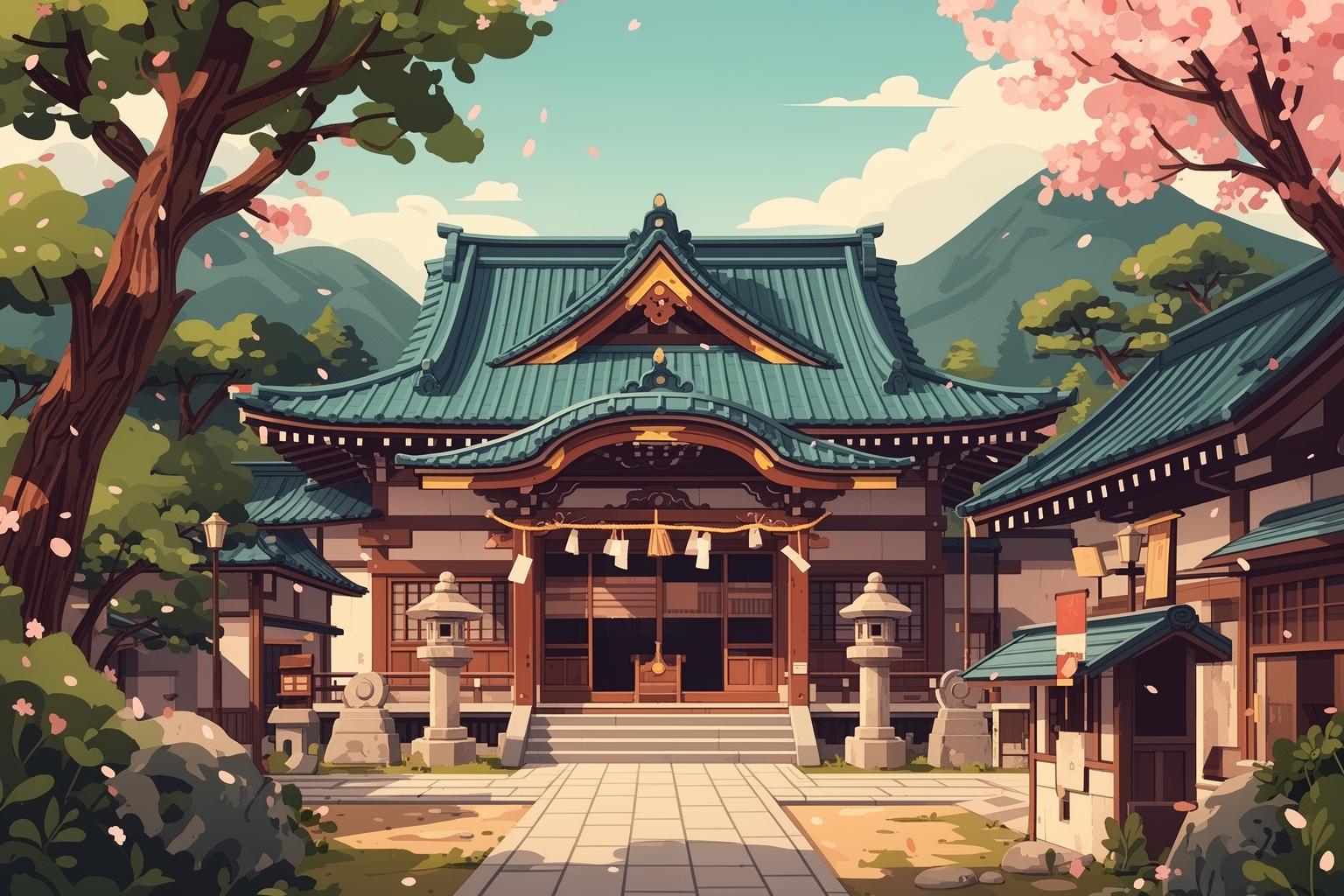
The final arc of Hyouka’s first season centers around a local festival at Ikinagara Shrine. This fictional shrine is based on the stunning Hie Shrine, the spiritual heart of Takayama. A short walk from the old town, its entrance is marked by a towering torii gate leading into a forest of ancient, giant cedar trees. The air immediately grows cooler, quieter, and filled with a profound sense of peace. The path to the main shrine is lined with moss-covered stone lanterns, creating a mystical and timeless ambiance. Exploring the grounds, you’ll recognize the setting for the dramatic conclusion of the New Year’s mystery. The shrine itself is a magnificent example of Shinto architecture. It is also the center of the Sanno Matsuri, part of the Takayama Festival—one of Japan’s three most beautiful festivals. This event, with its elaborate floats and traditional processions, heavily inspired the fictional festival in the anime. While you may not see Chitanda dressed as a living doll, visiting Hie Shrine offers a deep appreciation for the cultural traditions intricately woven into Hyouka’s narrative. It’s a place that connects the story not only to a physical location but also to a living cultural heritage.
Beyond the Anime Frame: Experiencing Takayama’s Culture
While the Hyouka pilgrimage is a significant attraction, Takayama’s own story is equally captivating. The town presents a rich blend of culture, cuisine, and history that deserves to be discovered. To genuinely appreciate Kamiyama, one must also become familiar with Takayama. Doing so offers a deeper context for the world inhabited by the Classics Club, revealing the authentic details that make the anime’s setting feel so genuine and vibrant.
A Taste of Hida
The Hida region is famed for its culinary treasures, and Takayama is the ideal place to experience them. The standout is Hida beef, a variety of wagyu that rivals the more renowned Kobe beef. It’s celebrated for its intense marbling, which melts into the meat when cooked, resulting in an incredibly tender and flavorful delight. You can enjoy it in many forms, from exquisite steaks at specialty restaurants to more casual beef buns and skewers found at street stalls in the old town. Another local specialty is mitarashi dango. Unlike the sweet, syrupy versions found elsewhere in Japan, Takayama’s dango are brushed with a savory soy sauce and grilled over charcoal, offering a smoky and delicious snack. Be sure to try sansai, or mountain vegetables, which are prominent in local dishes, often served pickled, boiled, or in tempura. And naturally, there is the sake. The pristine mountain water and cold winters create ideal conditions for brewing. Many historic breweries in the Sanmachi Suji district offer tastings, allowing visitors to sample various local brews and learn about the detailed brewing process from master craftsmen.
The Craftsmanship of a Castle Town
Takayama boasts a long tradition as a town of master artisans, especially carpenters. During the Edo period, the town was renowned for sending its skilled woodworkers to assist in building temples and palaces in the capital. This heritage of craftsmanship is evident everywhere, from the intricate latticework of old merchant houses to the stunning floats of the Takayama Festival. To experience this history firsthand, visit the Takayama Jinya, a beautifully preserved complex that once served as the local government office for the Tokugawa shogunate. It is the only remaining building of its kind in Japan and provides a fascinating insight into the governance and daily life of the era. For an even more impressive showcase of local artistry, visit the Takayama Festival Floats Exhibition Hall. Here, you can admire several of the massive, elaborately decorated floats (yatai) that parade through the streets during the spring and autumn festivals. Their intricate carvings, detailed lacquerwork, and ingenious mechanical puppets are a tribute to the remarkable skill passed down through generations of Takayama craftsmen.
A Detour to a Living Museum: Hida Folk Village
Just a short bus ride from Takayama’s center lies the Hida Folk Village (Hida no Sato), an open-air museum that offers a journey back in time. The village features over 30 traditional houses gathered from across the Hida region, all carefully dismantled and reconstructed on a hillside overlooking a serene pond. These buildings, including several stunning gassho-zukuri farmhouses with their steep, thatched roofs designed to withstand heavy snowfall, display a style of rural architecture unique to this mountainous area. Visitors can enter the houses, smell the smoke from the sunken hearths, and observe the tools and crafts from a past era. The village is not just a static exhibit; it is an interactive experience. You can try your hand at traditional crafts like weaving or woodblock printing in workshops offered throughout the village. It’s a peaceful and educational outing that provides a deeper understanding of the environment and lifestyle that shaped the culture of the entire Hida region—the very culture that subtly influences the world of Hyouka.
Practical Pilgrim’s Almanac
Planning your trip to Takayama is simple, but a few local tips can help make your journey smoother and more enjoyable. While the town is well-prepared for tourists, it still retains its authentic charm, making it an accessible and delightful destination for first-time visitors to Japan.
Getting to Takayama
Takayama is nestled in the Japanese Alps and is well-connected by rail and bus. The most scenic way to get there is via the JR Hida Wide View Express train from Nagoya. This trip takes about two and a half hours and offers breathtaking views as the train meanders through mountain valleys and along stunning river gorges. The train’s panoramic windows are designed to maximize the viewing experience. Alternatively, you can take a shinkansen (bullet train) to Toyama and then transfer to the Hida Wide View Express, which is a convenient option if you are traveling from Tokyo or Kanazawa. Highway buses also provide a direct and more economical choice from major cities like Tokyo, Kyoto, Osaka, and Nagoya.
When to Visit: A Town for All Seasons
Takayama is a city that showcases the beauty of every season, each offering a unique perspective on the world of Hyouka. Spring is highlighted by the spectacular Spring Takayama Festival (Sanno Matsuri) in April, a vibrant and bustling event. Late April and early May bring cherry blossoms that frame the red Nakabashi Bridge in an exquisitely beautiful scene. Summer provides a refreshing escape from the heat of Japan’s major cities, featuring lush greenery and pleasant mountain air. Autumn is perhaps the most breathtaking season, as the surrounding mountains burst into vibrant shades of red, orange, and yellow, typically peaking in late October. This is also when the Autumn Takayama Festival (Hachiman Matsuri) takes place. Winter covers the town with a thick blanket of snow, transforming the old town into a quiet, magical wonderland. The stark, monochrome landscape of snowy Takayama particularly resonates with Houtarou’s “gray” worldview before it was brightened by his experiences with the Classics Club.
Navigating Kamiyama
Once you arrive, you’ll find Takayama to be an extremely walkable town. The main attractions, including the old town, the morning markets, and most of the Hyouka pilgrimage spots, are all within a 15-to-20-minute walk from Takayama Station. Walking is the best way to absorb the atmosphere and discover hidden alleyways and charming little shops. For locations that are a bit farther away, like the Hida Folk Village, local buses run frequently and are easy to use. Bicycle rentals are also popular, allowing you to cover more ground while still enjoying the fresh mountain air. The tourist information center, located just outside Takayama Station, is a great resource. Here you can pick up English maps, bus schedules, and even unofficial Hyouka pilgrimage maps created by fellow fans that highlight all the key locations from the anime.
A Final Thought from the Classics Club Room
Leaving Takayama feels like closing the cover of a cherished book. The story has ended, yet the world remains with you. The pilgrimage is more than a list of places to visit; it is an act of engagement. By standing on Yayoi Bridge or enjoying coffee at Bagpipe, you contribute your own small story to the town’s rich tapestry of narratives. You realize that Takayama isn’t remarkable simply because it appeared in an anime; rather, the anime is special because it so authentically captured Takayama’s quiet, inquisitive, and deeply traditional spirit. The town existed long before the Classics Club, filled with mysteries and forgotten histories waiting to be discovered. The greatest souvenir you take home is not a photo or a keepsake, but a fresh way of seeing. You leave with a heightened curiosity, a desire to look more closely at the world around you, and an appreciation for the stories hidden in plain sight. And isn’t that what the Classics Club was all about? So go. Wander the streets of Kamiyama, breathe in its air, and let yourself wonder. I promise, you’ll be glad you didn’t say no.