There are places on this earth that feel older than memory, where the air itself seems to hum with a forgotten frequency. Yakushima is one such place. It’s an island sculpted by rain and time, a fortress of granite and ancient cedar rising from the turbulent waters south of Kyushu, Japan. For many travelers, its name is whispered in the same breath as Studio Ghibli’s masterpiece, Princess Mononoke. This is no coincidence. The film’s director, Hayao Miyazaki, and his team walked these very same moss-covered paths, breathing in this saturated air, and translated the island’s profound, untamable spirit into the colossal forests of the Deer God. To journey to Yakushima is to step through the screen, to walk into the living, breathing soul of that animated world. It’s a pilgrimage not just to a filming location, but to the source of its very essence. Here, the boundary between myth and reality dissolves under a canopy of green, and you begin to understand the deep, primal power that inspired a story of gods, demons, and the fragile, ferocious heart of the natural world. This is a land that demands your attention, your respect, and your rain gear. It promises nothing but its own wild truth, and in return, it offers a glimpse into a world that existed long before us, and will, with any luck, persist long after.
Discover more about the island’s timeless allure as you delve into Yakushima’s living essence, a tribute to the natural wonder that inspired Studio Ghibli’s epic vision.
The Living Forest: Echoes of the Shishigami
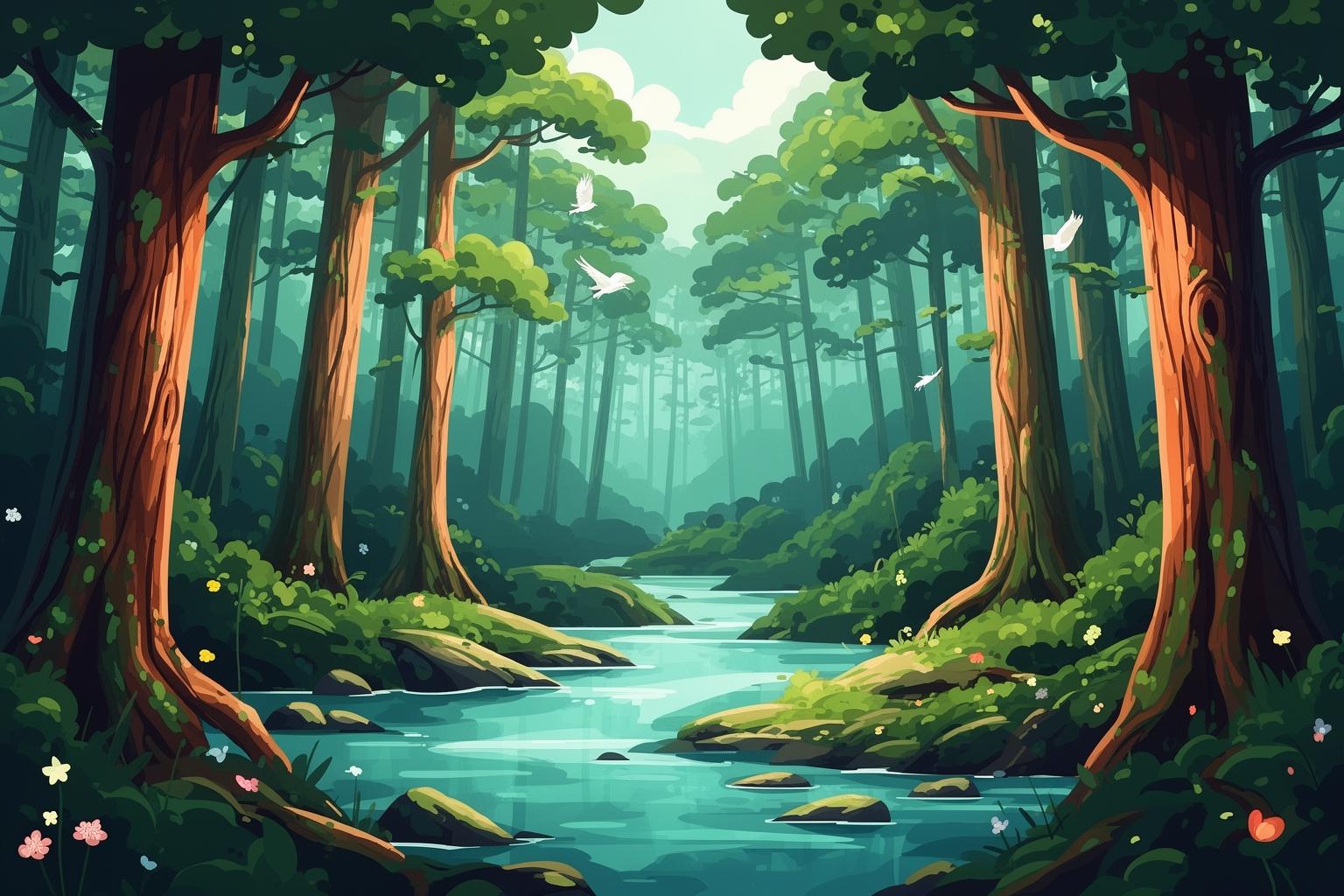
The moment you enter the forests of Yakushima, the outside world fades away. It becomes a full sensory immersion. The air turns cool and heavy, filled with the scent of damp earth, decaying wood, and the clean, sharp aroma of cedar. Sounds are softened by the lush, verdant moss that covers everything—rocks, fallen logs, tree roots, and the forest floor itself. This pervasive, almost sentient moss forms the most immediate connection to Princess Mononoke. In the film, the forest of the Shishigami, or Deer God, is a realm of vivid green, a landscape so vibrant it feels alive. Here, in places like the Shiratani Unsuikyo ravine, that vivid vision becomes a tangible reality. Light struggles to penetrate the dense canopy, and when it does, it falls in ethereal, cathedral-like beams, illuminating moisture particles in the air and causing the countless shades of green to glow with an inner radiance. You find yourself instinctively lowering your voice and walking lightly, as if not to disturb the spirits of the forest. It’s easy to imagine the little white kodama, the tree spirits from the film, nodding their heads from the gnarled branches of a seven-hundred-year-old cedar. The forest is a maze of twisting roots that cascade over granite boulders, forming natural stairways and abstract sculptures. Streams of the purest, clearest water you will ever encounter cut through the ravines, gurgling over mossy stones. The water is so pristine that locals and guides often advise filling your bottle directly from the source. Tasting that cold, crisp water amidst the silent, ancient woods is a communion—a way to absorb a piece of the island’s life force. This is Yakushima’s power: it doesn’t just reveal the world of the film; it lets you feel the deep respect for nature that lies at the heart of its story.
Beyond the Moss: Charting Your Own Mononoke Path
While the entire island exudes a cinematic quality, certain trails deliver a more concentrated dose of that signature Ghibli enchantment. Exploring Yakushima is an active endeavor, requiring sturdy boots and a willing spirit. The island’s interior is a hiker’s paradise, offering paths that range from gentle afternoon strolls to grueling multi-day expeditions. The key is to select a trail that matches your own pace and physical ability, as each route provides its own unique rewards and distinct dialogue with the ancient landscape. Preparation is essential; the weather here is famously unpredictable, and a sunny morning can swiftly change into a torrential downpour. But with the proper gear and mindset, you can safely venture into the heart of this extraordinary world.
Shiratani Unsuikyo Ravine: The Core Experience
This is the quintessential Yakushima hike and the site most famously recognized as the direct inspiration for Princess Mononoke. The name itself, meaning “White Valley Cloud Water Ravine,” is poetic and perfectly captures its essence. The ravine offers several well-marked trails of varying lengths, making it accessible to most visitors. A shorter loop may take only an hour or two, while the full route to Taikoiwa Rock viewpoint and back can take four to five hours. As you ascend, the forest becomes denser and more primeval. You’ll cross crystal-clear streams on charming wooden bridges and navigate pathways shaped by ancient, gnarled tree roots. The main draw for Ghibli enthusiasts is a small, designated area officially nicknamed “Mononoke Hime no Mori,” or Princess Mononoke’s Forest. It’s an impossibly beautiful section where moss grows thickest and ancient trees enclose a sacred-feeling space. It genuinely feels like stumbling upon a secret clearing where forest spirits might gather. For the best experience, and ideal lighting for photography, aim to arrive early in the morning. This not only helps you avoid larger tour groups, but also lets you witness the forest awakening, with mist clinging to the valleys and low-angle sunbeams piercing the canopy. For many, the hike culminates at Taikoiwa Rock, a massive granite boulder offering breathtaking panoramic views over the island’s mountainous interior. After hours beneath the dense canopy, stepping onto this sunlit rock feels like a true rebirth—a moment of profound release and perspective.
Jomon Sugi: The Timeless Sentinel
For those seeking a greater challenge and a deeper connection to the island’s ancient history, the pilgrimage to Jomon Sugi is the ultimate journey. This is no casual hike; it’s a demanding ten to twelve-hour trek that requires an early start, often before dawn, and a solid level of fitness. Jomon Sugi is a single, colossal Yakusugi cedar, estimated to be between 2,000 and over 7,000 years old, making it one of the oldest living trees on Earth. The journey to reach it is as meaningful as the destination. The trail begins on a disused railway track, the Anbo Forest Railway, which provides a flat but lengthy path through the forest. This section serves as a meditative warm-up before the real ascent on the Okabu Trail. The path grows steep and challenging, forcing you to clamber over roots and up wooden staircases. Along the way, you’ll pass other magnificent, named cedars such as Meoto Sugi, two trees fused like a married couple, and Daiosugi, a massive stump recalling the island’s logging past. But nothing prepares you for the sight of Jomon Sugi itself. It feels less like a tree and more like a geological monument, a living symbol of immense power. Its bark is gnarled and weathered, branches stretching like ancient arms. Due to its age and significance, viewing is only allowed from a specially constructed wooden deck—a necessary measure to protect its fragile root system. Standing there, in the quiet depths of the forest, looking up at a being that has silently witnessed millennia of history, is a humbling and profoundly moving experience. It serves as a powerful reminder of nature’s endurance and our own fleeting place within the vast timeline.
Yakusugi Land: An Accessible Ancient Realm
If the strenuous trek to Jomon Sugi or even the moderate hike in Shiratani Unsuikyo feels too intimidating, Yakushima offers a wonderful alternative in Yakusugi Land. Don’t be deceived by the somewhat theme-park-like name; this beautifully maintained park provides an excellent and accessible way to experience the island’s iconic ancient cedars and mossy landscapes. The park features a network of well-paved trails and wooden boardwalks, suitable for visitors of all ages and fitness levels. Paths vary from short thirty-minute loops to longer, more adventurous ninety-minute routes that delve deeper into the forest. Even on the shortest walk, you are immediately immersed in the Yakushima atmosphere. You’ll cross a dramatic suspension bridge over a rushing gorge and encounter several impressive Yakusugi cedars, including Buddhasugi and Sennensugi. Yakusugi Land is a perfect choice for rainy days, as the boardwalks keep you above the mud, and the forest arguably becomes even more mystical when shrouded in mist and rain. It’s an ideal introduction to the island’s ecosystem or a rewarding final stop, allowing you to absorb the primeval forest’s beauty without the physical strain of a major mountain hike. It proves that Yakushima’s magic isn’t reserved solely for the most intrepid explorers; its spirit is generous and can be felt just a few steps from the road.
The Rhythm of the Island: Life Between Rain and Sun

To truly grasp Yakushima, one must appreciate its intimate connection with water. A local saying claims it rains “35 days a month” on the island—a delightful exaggeration that contains a grain of truth. Yakushima ranks among the wettest places in Japan, and this relentless rainfall sustains its famously vibrant ecosystem. Visitors should embrace the rain not as a nuisance but as an essential element of the experience. The rain nourishes the moss, swells the rivers, and produces the mystical mist that drifts through mountain passes. It enriches the forest’s hues, making the greens almost electric and deepening the cedars’ bark to a rich, dark red. When the rain subsides and sunlight breaks through, the transformation is stunning. The wet landscape sparkles as if sprinkled with diamonds, and the air feels freshly washed. This ongoing interplay between rain and sun sets the island’s natural rhythm—a cycle of saturation and renewal that visitors soon learn to value and adapt to.
Coastal Whispers: Where Forest Meets Sea
While the ancient forests inland draw most attention, Yakushima’s coastline offers a different yet equally captivating charm. The island is encircled by a road providing breathtaking views of the East China Sea and the Pacific Ocean. Driving this scenic route exposes you to dramatic granite cliffs, secluded coves, and pristine sandy shores. One of the most notable coastal destinations is Nagata Inakahama, a stunning stretch of golden sand and the largest nesting site for loggerhead sea turtles in the North Pacific. From May through August, visitors can take part in carefully supervised night tours to witness the remarkable spectacle of female turtles coming ashore to lay their eggs. This powerful, protected natural event highlights the island’s vital role as a wildlife sanctuary. Along the coast, you’ll also find a uniquely Yakushima experience: natural seaside onsen, or hot springs. Hirauchi Kaichu Onsen is perhaps the most renowned, consisting of rock pools accessible only a few hours a day during low tide. Bathing in the volcanically warmed water while waves crash on nearby rocks is an unforgettable, elemental experience—a perfect way to relax muscles after a long day of hiking.
Sustenance for the Spirit: Island Flavors
Yakushima’s gifts extend to its distinctive culinary traditions. The local fare is simple, fresh, and closely tied to the environment. One of the island’s most celebrated ingredients is flying fish, or tobiuo. It appears in many dishes, most commonly as karaage (deep-fried whole), which is so crispy it can be eaten from head to tail. The fish’s delicate flavor captures the essence of the local seas. Another island specialty is kame-no-te soup, a dish made with green tea and mackerel. Yakushima is also famous for its citrus fruits, especially the sweet, juicy ponkan and tankan tangerines, which are often sold at roadside stands when in season. For an ideal hiking companion, be sure to order a bento—a packed lunch box—from your hotel or a local shop. These typically include local delicacies such as rice balls, fried flying fish, and pickled vegetables, offering perfect sustenance for a day on the trails. And no meal is complete without sampling the local shochu. Yakushima is known for its sweet-potato-based distilled spirits, with Mitake as the most popular brand. Enjoying it oyuwari (mixed with hot water) after a long day is a cherished local custom and a wonderful way to warm up from within.
A Pilgrim’s Practical Guide: Navigating the Mystical Isle
Planning a trip to a remote and wild destination like Yakushima can seem daunting, but a bit of preparation makes a big difference. The island is well-prepared for tourists, yet it has preserved its rugged, off-the-beaten-path appeal. Organizing the logistics properly will let you relax and fully enjoy the natural wonders that await.
Getting There and Around
Your trip to Yakushima will most likely start in Kagoshima, the southernmost major city on Japan’s main island of Kyushu. From there, you have two main options. The quickest is to fly. Japan Air Commuter operates several daily flights from Kagoshima Airport directly to Yakushima’s small, charming airport. The flight is brief, about 35 minutes, and provides stunning aerial views of the island as you approach. The more popular and cost-effective option is to take the high-speed ferry, or jetfoil, from Kagoshima’s port. This scenic trip takes between two and three hours, depending on the route. Upon arrival on the island, transportation is your next consideration. Although there is a public bus system that circles the island and serves main trailheads, schedules can be infrequent and limiting. To truly explore at your own pace, renting a car is strongly recommended. It allows you to visit more remote locations, stop for photos whenever you want, and travel on your own timetable, which is especially important if you plan for an early morning hike like Jomon Sugi. Be sure to book your rental car well in advance, particularly during busy travel periods such as Golden Week or summer holidays.
Where to Rest Your Head
Yakushima offers a broad range of accommodations catering to various budgets and travel preferences. The main port towns of Miyanoura and Anbo have the greatest concentration of options, ranging from simple guesthouses and traditional Japanese inns (minshuku and ryokan) to modern hotels. Staying in one of these towns is convenient for access to restaurants, shops, and tour operators. For a more tranquil experience, cottages and resorts are scattered around the island, often located in quieter spots with stunning ocean or mountain views. Staying in a minshuku can be especially rewarding, often including home-cooked meals made with local ingredients and offering a chance to engage with the island’s warm and friendly residents. No matter where you choose to stay, booking early is crucial. Yakushima is a popular destination for both Japanese and international visitors, and the best accommodations fill up quickly, sometimes months ahead.
Essential Gear for the Trail
Bringing the right gear is essential for a trip to Yakushima. The mountainous landscape and unpredictable, rainy weather require appropriate equipment for safety and comfort. The most important item is high-quality waterproof gear. This includes a dependable rain jacket, waterproof pants, and, critically, waterproof hiking boots with good traction. Trails can be wet, slippery, and muddy, so sturdy footwear is indispensable. Dressing in layers is also wise, as temperatures can vary widely between the coast and mountain peaks, allowing you to adjust your clothing as you hike. A small backpack is necessary for carrying water, snacks, your bento, and a compact first-aid kit. For those who prefer not to bring bulky hiking equipment, several gear rental shops in Miyanoura and Anbo offer boots, rain gear, backpacks, and hiking poles at reasonable prices. This service makes the trails accessible to all kinds of travelers.
The Photographer’s Lens: Capturing the Soul of Yakushima
For a photographer, Yakushima is both an aspiration and a challenge. Its beauty is overwhelming, yet truly capturing its essence demands more than simply pointing and shooting. The first obstacle is the light. Within the forest, lighting is frequently dim and dappled, resulting in a high-contrast setting. A tripod is nearly essential for achieving sharp, clear shots of the moss-covered landscapes, allowing for slower shutter speeds without camera shake. A polarizing filter is another indispensable tool; it reduces glare from wet leaves and rocks, enhancing the saturation of greens and blues, making the forest’s colors truly stand out. The second challenge is the moisture. The atmosphere is often misty or rainy, which adds beauty but poses risks for camera gear. A reliable rain cover for your camera and bag is essential, and it’s smart to carry a few microfiber cloths to clean your lens. Beyond technical factors, the secret to photographing Yakushima lies in balancing scale and detail. Use a wide-angle lens to capture the majesty of ancient cedars and the forest’s vastness, but remember to switch to a macro or telephoto lens to highlight intricate details: the moss’s texture, a water droplet on a fern, or the gnarled bark pattern. These small elements tell the forest’s story as vividly as sweeping views. Observe the interplay of light and shadow, how mist softens the light, and the leading lines formed by winding streams and twisted roots. The most compelling images of Yakushima often convey not only the forest’s appearance but also the feeling of being there: ancient, silent, and profoundly alive.
A Parting Word: Carrying the Forest With You
Leaving Yakushima feels like emerging from a vivid dream. Returning to the concrete and noise of the modern world can be jarring after days immersed in the deep green and tranquility of the ancient forests. Yet the island leaves an unforgettable impression on your soul. It’s a place that reshapes your sense of time and scale, reminding you of a world that moves to a much slower, more profound rhythm. You arrive seeking the landscapes of a beloved film, but you depart with something far more intimate: a deep, visceral connection to the power and fragility of nature. The whispers of the kodama may be imaginary, but the spirit of the forest is real. It’s found in the taste of the pure river water, the softness of the moss beneath your fingertips, and the awe-inspiring presence of a tree that has stood for thousands of years. You carry that forest within you—a quiet wellspring of peace and perspective to draw from long after your hiking boots have dried. Visiting Yakushima is a reminder that the most potent magic in this world needs no animation; it simply exists.