
Kyoto. The name itself conjures a cascade of images: vermilion gates standing against a deep green forest, the silent shuffle of a geisha in a Gion alley, the golden reflection of Kinkaku-ji shimmering on its placid pond. This is the Japan of postcards, the cultural heart of a nation, a city where a thousand years of history whisper from every temple corner and cobblestone street. But there’s another layer to this ancient capital, a vibrant, modern story woven from animation cels, manga panels, and the pages of novels that have captured the imagination of the world. This is the Kyoto of “seichi junrei,” the sacred pilgrimage, where fans walk the same streets as their favorite characters, transforming a simple trip into a profound connection with the stories they love. This isn’t just about sightseeing; it’s about stepping through the screen, beyond the page, and into the very world that inspired the art. It’s a journey to find the tangible soul of fiction, to stand on a bridge where a fateful encounter happened, or to feel the same evening breeze that carried a character’s thoughts. From the surreal, looping university life of The Tatami Galaxy to the whimsical, all-night adventures in The Night is Short, Walk on Girl, Kyoto is not merely a backdrop; it is a character in its own right, its geography and atmosphere deeply embedded in the narrative DNA of these beloved works. This guide is your map to that other Kyoto, a city where the fictional and the real bleed into one another, creating a travel experience unlike any other. Prepare to see the familiar streets of the old capital through a new, exhilarating lens.
While Kyoto offers its own unique blend of reality and fiction, the phenomenon of anime pilgrimage extends across Japan, as seen in the journey to the real-world locations of Your Name.
The Labyrinth of The Tatami Galaxy: Chasing Your Rose-Colored Campus Life
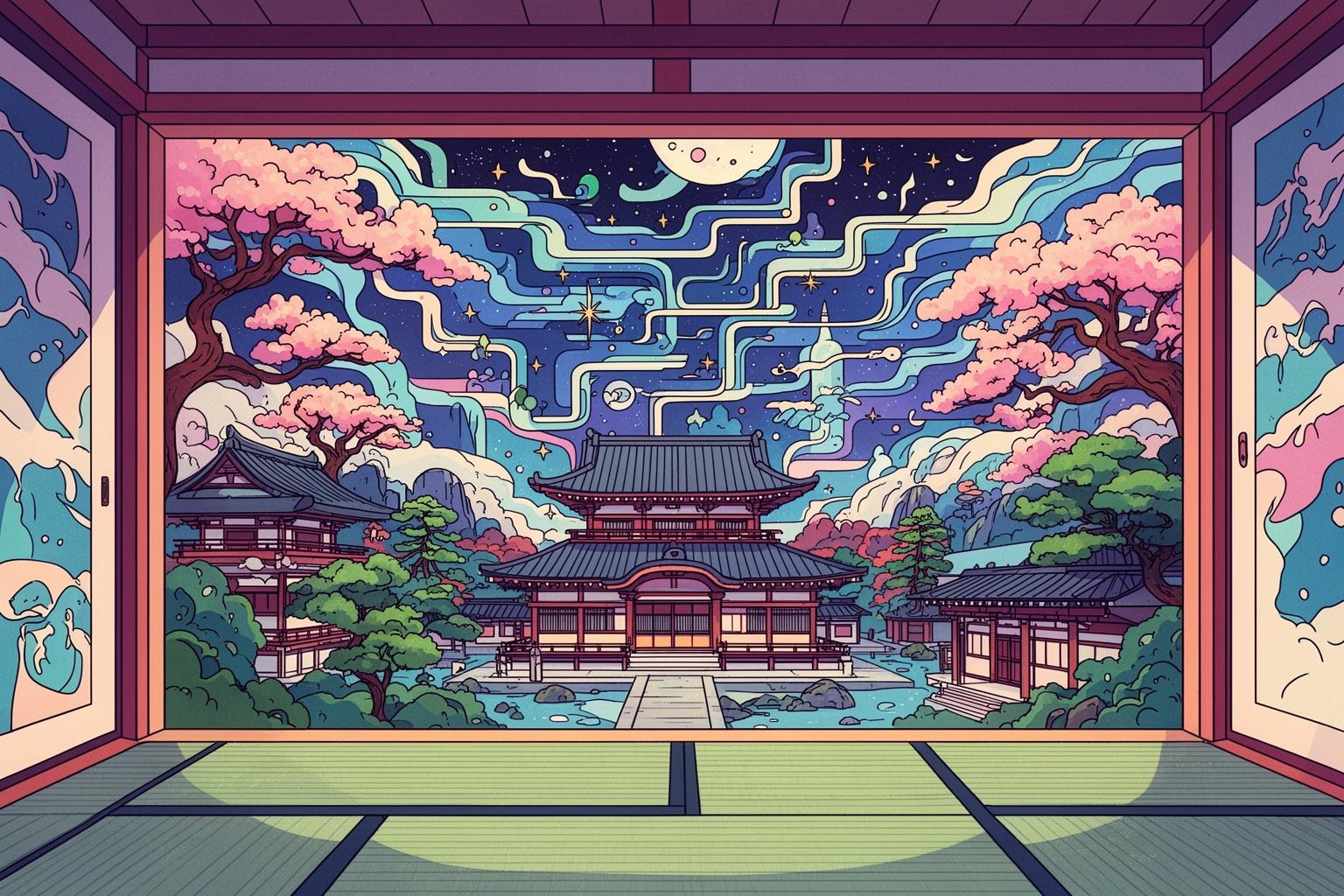
Few anime capture the distinct, chaotic, and hopeful spirit of university life as brilliantly as Masaaki Yuasa’s The Tatami Galaxy. The story follows an unnamed protagonist who repeatedly relives his first two years of college, joining a different club each time in a frantic quest for a “rose-colored campus life.” That campus is Kyoto University, and the city itself becomes a vast, looping maze of his choices. Walking through these locations lets you experience the protagonist’s delightful confusion and boundless potential. The very atmosphere feels thick with the promise of new beginnings and the bittersweet sting of youthful regret, making it an ideal starting point for any anime pilgrim.
Kyoto University: The Narrative’s Epicenter
At the core of the protagonist’s world is undoubtedly Kyoto University. As you step onto the Yoshida Campus, the iconic clock tower rises before you—a silent witness to countless parallel timelines and club hijinks. This isn’t a polished, tourist-oriented landmark; it’s a dynamic, living institution. You’ll see students hurrying to class, posters advertising film clubs and tennis teams plastered on bulletin boards, and a tangible buzz of intellectual curiosity. The anime perfectly conveys this atmosphere—the mix of earnest academia and utter absurdity that defines student life. You can almost hear the mischievous Ozu’s laughter or see the protagonist fleeing from a disastrous run-in with the film circle. As you explore, remember this is an active university. Visitors are generally welcome to walk the grounds, though it’s best to remain respectful and discreet. Take a seat beneath the shade of a camphor tree and simply absorb the scene. Here, you’ll realize the “rose-colored life” isn’t about finding the perfect club, but about embracing the chaotic, beautiful reality of the journey itself.
The Kamo River Delta: Where Realities Intersect
Just a short stroll from the university lies a spot central to both The Tatami Galaxy and its spiritual successor, The Night is Short, Walk on Girl. The Kamogawa Delta, or Kamo Delta, is where the Kamo and Takano rivers converge. In the anime, it represents a liminal space—a place of reflection, chance encounters, and pivotal decisions. For Kyoto’s people, it’s the city’s communal backyard. On any sunny afternoon, the grassy banks fill with students strumming guitars, families picnicking, and couples enjoying the view. The most iconic feature, immortalized in numerous scenes, is the turtle-shaped stepping stones that cross the shallow river. Hopping across them is a rite of passage, a simple, joyful act that connects you directly to the characters who have done the same. The atmosphere here is one of pure relaxation. The gentle flow of the river, the distant hum of conversation, the sight of large kites drifting in the breeze—it’s the perfect counterbalance to the bustling city. Grab a coffee or snack from a nearby convenience store, find a spot on the bank, and watch the world pass by. It’s a place to pause your own frantic search and simply be—a lesson the protagonist of The Tatami Galaxy desperately needed to learn.
A Night is Short, Walk on Girl: An Endless Kyoto Evening
If The Tatami Galaxy explores the infinite possibilities within two years, The Night is Short, Walk on Girl condenses that boundless energy into a single, fantastical night. Following the “Girl with the Black Hair” (Otome) as she embarks on an epic pub crawl, and the “Senpai,” who desperately tries to orchestrate a “fateful” encounter with her, the film serves as a love letter to Kyoto’s magical, interconnected nightlife. After dark, the city transforms, with its narrow alleys and lantern-lit streets becoming a stage for a surreal cast of characters. The central theme is “go-en”—the invisible threads of destiny and connection that bind people together, a concept that feels deeply real as you navigate the city’s nocturnal labyrinth.
Pontocho Alley: A Cascade of Lanterns and Libations
Pontocho is the vibrant heart of Otome’s alcoholic adventure. This exquisitely narrow alley, running parallel to the Kamo River, is one of Kyoto’s most atmospheric spots. By day, it’s quiet and sleepy, but as dusk falls, hundreds of paper lanterns ignite, casting a warm, inviting glow on the dark wooden facades of traditional restaurants and exclusive tea houses. Walking down Pontocho feels like stepping into the film. You can almost see Otome confidently striding from one bar to the next, effortlessly outdrinking seasoned veterans. The air carries the scent of grilled delicacies and the faint sounds of music and laughter spilling from behind sliding doors. A practical tip for modern visitors: many Pontocho establishments can be pricey and often require reservations or introductions. Still, the real magic lies in the stroll itself. Wander from one end to the other, peek into the even narrower side alleys, and soak up the cinematic atmosphere. For a more accessible experience, seek out smaller izakayas (Japanese pubs) or standing bars on nearby Kiyamachi Street, where you’ll find the same vibrant energy without the steep price.
The Demachi Masugata Shopping Arcade: A Universe of Local Life
The adventure in The Night is Short, Walk on Girl extends beyond drinking. A significant part of the story unfolds at a second-hand book fair, a haven for bibliophiles and eccentrics. The setting that captures this spirit of community and hidden gems is the Demachi Masugata Shopping Arcade. Unlike the more touristy Nishiki Market, this “shotengai” is a thoroughly local venue. It’s a covered street lined with small shops selling everything from fresh tofu and pickled vegetables to clothing and household goods. It’s loud, bustling, and wonderfully authentic. As you stroll through, you’re wrapped in the sounds and scents of everyday Kyoto life—the friendly calls of shopkeepers, the aroma of freshly fried croquettes, the sight of locals going about their daily shopping—it’s a feast for the senses. Though the fantastical book market from the film doesn’t exist in reality, the arcade houses its own unique shops and a beloved local cinema. This is the ideal place to grasp the film’s theme of interconnectedness. It’s a microcosm of the city, where different lives and stories intersect. Don’t forget to try some local snacks; it’s an affordable and delicious way to fuel your pilgrimage.
The Spiritual Backdrops: Where Gods and Stories Collide
Many of Kyoto’s most renowned landmarks are its shrines and temples, places rich in spiritual significance. For storytellers, these sites are more than just picturesque backdrops; they carry centuries of folklore, belief, and an unmistakable sense of the supernatural. They become characters in their own right, their sacred grounds serving as stages where gods, monsters, and mortals enact dramatic tales. Visiting these locations lets you connect not only with the anime they feature in but also with the deeper cultural currents that inspired them.
Fushimi Inari Shrine: A Thousand Gates Leading to Another World
Few sights embody “Kyoto” as vividly as the thousands of vibrant red torii gates winding up the mountainside at Fushimi Inari Shrine. This visually striking location has appeared in numerous films, anime, and manga, from a memorable scene in Memoirs of a Geisha to brief yet beautiful cameos in series like K-On! and Aria the Scarlet Ammo. The shrine is dedicated to Inari, the Shinto god of rice and sake, and the gates are donations from individuals and businesses hoping for good fortune. Walking along the main path, Senbon Torii (“a thousand gates”), is a hypnotic experience. Light filters through the densely packed gates, creating a surreal, flickering tunnel of vermilion and black. The atmosphere feels mystical, especially if you venture farther up the mountain, away from the initial crowds. The hike to the summit and back can take a few hours, but it’s well worth the effort. As you ascend, the crowds thin, the air cools, and you’ll find smaller sub-shrines and moss-covered fox statues (foxes are considered Inari’s messengers) nestled in the forest. For the best experience, visit either very early in the morning at sunrise or late in the afternoon. The light at these times is magical, giving you a better chance to capture that perfect photograph of an empty, endless corridor of gates, making you feel as though you’ve stepped into a truly sacred, storied realm.
Shimogamo Shrine: An Ancient Forest Amidst the City
While Fushimi Inari is a star on the screen, Shimogamo Shrine holds a special place in stories deeply entwined with Kyoto’s unique mythology, particularly Tomihiko Morimi’s The Eccentric Family. This anime centers on a family of tanuki (shape-shifting raccoon dogs) who live secretly among humans, and Shimogamo Shrine is their home and playground. The shrine is one of Kyoto’s oldest, predating the city’s status as the capital. Its most captivating feature is the Tadasu no Mori, the “Forest of Truth,” a primeval forest of ancient trees through which you walk to reach the main shrine buildings. The moment you enter the canopy, city sounds fade away, replaced by the rustling of leaves and birdsong. The atmosphere is timeless and peaceful. It’s easy to imagine the tanuki from The Eccentric Family scampering up gnarled trunks or holding their amusing family meetings here. The shrine itself is elegant and understated, with beautiful vermilion halls nestled against the deep green of the forest. It’s also where the Kamo River Delta begins, physically and thematically linking the worlds of The Eccentric Family and The Tatami Galaxy. This place feels less like a tourist attraction and more like a sanctuary, a treasured pocket of wilderness and myth preserved within the heart of a modern city.
The Melodies of K-On!: A High School Dream in Sakuragaoka
Not every pilgrimage leads directly to the heart of Kyoto City. Sometimes, the most devoted fans must travel a bit farther to discover the exact place that brought their favorite story to life. This is certainly true for the many followers of K-On!, the beloved and widely acclaimed anime about a group of high school girls who form a light music club. The story is a tender, joyful tribute to friendship, music, and the fleeting beauty of youth, and its real-world setting has become a treasured destination for fans worldwide.
Toyosato Elementary School: The Real-Life Sakuragaoka High
The inspiration for the fictional Sakuragaoka High School is the former Toyosato Elementary School, located in the town of Toyosato in neighboring Shiga Prefecture. Although it’s a bit of a trip from Kyoto, for any true fan of Ho-kago Tea Time, it is an essential pilgrimage. The building itself is a stunning example of architecture, designed by William Merrell Vories in the 1930s. As you approach, you’ll instantly recognize the facade, the broad staircases adorned with bronze turtle and hare statues, and the long, sun-drenched hallways. The real wonder, however, lies within. The local community and fans have carefully preserved the building and, most importantly, recreated the iconic third-floor music room as an exact replica of the anime’s clubroom. Here, you’ll find the same table where Yui, Mio, Ritsu, and Mugi enjoyed their tea and cake, a full set of instruments, a whiteboard filled with character scribbles, and even a lovingly maintained fish tank for Ton-chan, the club’s pet turtle. The level of detail is remarkable. It feels less like a museum and more as if the girls have just stepped out for a moment. The atmosphere is one of pure, heartfelt love for the series. Visitors can sit at the table, pose with the instruments, and leave messages in the guestbooks, which are filled with touching notes from fans around the world. To reach the site, you’ll take a train from Kyoto to Toyosato Station and then walk about fifteen minutes. Though it demands some planning, the emotional reward of stepping into that room is an experience unlike any other.
Echoes of Murakami: Wandering the Author’s Imagined Kyoto
Some pilgrimages do not lead to exact locations from a story but rather to places that evoke the distinctive atmosphere of an author’s entire oeuvre. Haruki Murakami, one of Japan’s most acclaimed contemporary novelists, often sets his tales in ordinary yet subtly surreal urban settings. While Tokyo is his most common backdrop, the contemplative, enigmatic, and historically rich city of Kyoto serves as an ideal real-world counterpart for a Murakami narrative. His characters tend to be solitary wanderers, navigating a world filled with talking cats, parallel universes, and deep melancholy, all accompanied by a soundtrack of jazz and classical music. Kyoto is a city perfectly suited for such wanderings.
The Path of Philosophy: Contemplation and Quietude
If there is a place in Kyoto that feels especially fitting for a Murakami protagonist, it is the Philosopher’s Path, or Tetsugaku no Michi. This tranquil, two-kilometer stone walkway follows a canal bordered by hundreds of cherry trees. It is named after Nishida Kitaro, a celebrated Japanese philosopher who reportedly walked this route daily for meditation. The path itself offers a journey of quiet reflection. Along the way, you pass small temples, cozy cafes, and residential homes, accompanied by the gentle sound of the flowing canal. This is the kind of spot where a Murakami character might embark on a long, aimless stroll to process a strange event or a lost love. The atmosphere is peaceful and introspective. In spring, it transforms into a breathtaking tunnel of pale pink cherry blossoms, though it becomes quite crowded. To experience its true, tranquil spirit, visit early on a weekday morning or during the lush greenery of summer or the fiery hues of autumn. The walk, connecting Ginkaku-ji (the Silver Pavilion) to the area near Nanzen-ji Temple, invites you to slow down, contemplate, and simply observe the world around you—a genuinely Murakamiesque experience.
Jazz Bars and Coffee Shops: The Soul of the City
Music and coffee lie at the heart of the worlds Murakami creates. His characters are often found putting on records—typically jazz or classical—and spending hours in quiet, old-fashioned coffee shops known as kissaten. Kyoto boasts a rich and thriving culture of both. Here, the pilgrimage is not to a single location but to a whole genre of establishment. Hidden in basements, on second floors of unremarkable buildings, and down quiet side streets, you’ll discover numerous intimate jazz bars and historic kissaten. These spots are often run by passionate owners who have dedicated their lives to their craft. Finding them is part of the journey. Places like Yamatoya, a legendary jazz venue, or François Salon de Thé, a beautiful European-style kissaten operating since 1934, seem to have stepped right out of one of his novels. The aim is to find a small, quiet spot, order a dark roast coffee or a whiskey, and let the ambiance envelop you. It is in these moments of quiet solitude, surrounded by echoes of past conversations and the timeless cool of a John Coltrane solo, that you can truly sense the soul of Murakami’s Kyoto.
Weaving Your Own Narrative: Practical Tips for a Pilgrim’s Journey
Embarking on a pilgrimage through Kyoto’s fictional realms is an adventure, but a bit of practical knowledge will help ensure your story unfolds smoothly and satisfyingly. The city is both ancient and modern, and mastering its unique rhythm is essential for a successful journey.
Navigating the Ancient Capital
Kyoto’s public transportation can be intimidating at first. The city is mainly served by a grid-like bus system and two primary subway lines. While buses can take you nearly anywhere, they tend to be slow and crowded, making the routes challenging for newcomers to interpret. A smart approach is to use the subway for longer north-south and east-west trips and then walk to your final destination. Even better, embrace the city’s preferred mode of travel: the bicycle. Kyoto’s terrain is mostly flat, and renting a bike for a day lets you explore at your own pace, especially along the scenic Kamo River. This freedom allows you to follow your whims, turn down inviting alleyways, and uncover hidden gems—just like the characters you’re tracing.
Timing Your Visit: The City of Four Seasons
Kyoto changes its appearance with each season, and your experience will vary greatly depending on when you come. Spring (late March to April) is marked by the iconic cherry blossoms, which drape the city in shades of pink and white. It’s stunningly beautiful but also the busiest and most expensive period. Summer (June to August) is hot and humid, yet it’s also festival season, highlighted by events like the Gion Matsuri. Autumn (November) rivals spring with its spectacular displays of red, orange, and gold as the maple trees transform. Winter (December to February) is the quietest time, cold with occasional light snow dusting temple roofs, offering serene and peaceful scenery. For a pilgrimage, the shoulder seasons of late spring (May) or early winter provide a perfect balance of mild weather, smaller crowds, and a more intimate city experience.
Beyond the Checklist: Discovering Your Personal Kyoto
The most important advice for any pilgrim is to remember this is your story. While it’s delightful to visit the exact staircase from an anime or the bar from a film, the true magic lies in the moments between. Let yourself get lost. Explore beyond the main tourist spots. Follow narrow paths that catch your eye. Step into small, family-run eateries where you might be the only foreigner. The essence of these stories isn’t just in the famous locations; it’s found in quiet residential neighborhoods, local markets, and the city’s undiscovered corners. Let fictional maps guide you, but don’t hesitate to create your own. Your pilgrimage will be all the richer for the personal discoveries you make along the way.
A Journey’s End, A Story’s Beginning
Traveling through Kyoto is like journeying through time, but experiencing it as a pilgrim means traveling across dimensions. The city is a palimpsest, where historical facts, Shinto myths, and modern fiction overlap, each layer visible through the others. Standing by the Kamo River, you’re not merely in a place; you’re immersed in a moment from The Tatami Galaxy, sharing the same breeze as the protagonist. Nursing a drink in a dimly lit Pontocho bar, you follow the footsteps of the Girl with the Black Hair. This journey goes beyond checking off locations from a list; it’s about grasping how a real place can inspire the imagination so deeply that it creates worlds as vivid as our own. You came to Kyoto to find the settings of your favorite stories, but you will leave having forged your own. Your footsteps will have joined countless others, both real and imagined, tracing the paths of this extraordinary city. And as you depart, you’ll carry not only memories of temples and shrines but also the sense that your own rose-colored chapter has just begun.