Kyoto. The name itself hums with the resonance of a thousand years, a city of vermilion gates, silent gardens, and whispered histories. But beneath the polished surface seen by millions, there exists another Kyoto—a city alive with mischief, magic, and the delightful chaos of folklore. This is the world brought to life in Tomihiko Morimi’s novel and the subsequent anime series, The Eccentric Family (Uchōten Kazoku). It’s a story that proposes a wonderful, whimsical truth: that tanuki (shape-shifting raccoon dogs) and tengu (heavenly dog-like goblins) live among us, navigating the currents of modern life with ancient traditions and a healthy dose of foolishness. The series is more than just a fantasy; it’s a love letter to Kyoto, with the city itself becoming a central character. Following the Shimogamo family of tanuki—Yasaburo, the carefree third son, his overly serious brother Yaichiro, the timid Yajiro who has turned himself into a frog, and the youngest, Yashiro—is to take a tour of the city’s very soul. This pilgrimage isn’t a simple hunt for animated backdrops; it’s an invitation to see Kyoto through their eyes, to feel the city’s pulse from the sacred grounds of their forest home to the bustling markets where humans and mythical creatures alike seek out a tasty snack. It’s a journey into the belief that the most interesting way to live is to embrace the ‘fool’s blood’ that flows within, finding joy in the beautiful, the strange, and the utterly nonsensical. Before we dive into this magical reality, let’s orient ourselves in the heart of their world.
Kyoto’s enchanting interplay of history and modern magic invites travelers to embark on a complementary journey like a visit to the Ghibli museum where wonder meets tradition.
The Sacred Heart: Shimogamo Shrine and the Tadasu no Mori Forest
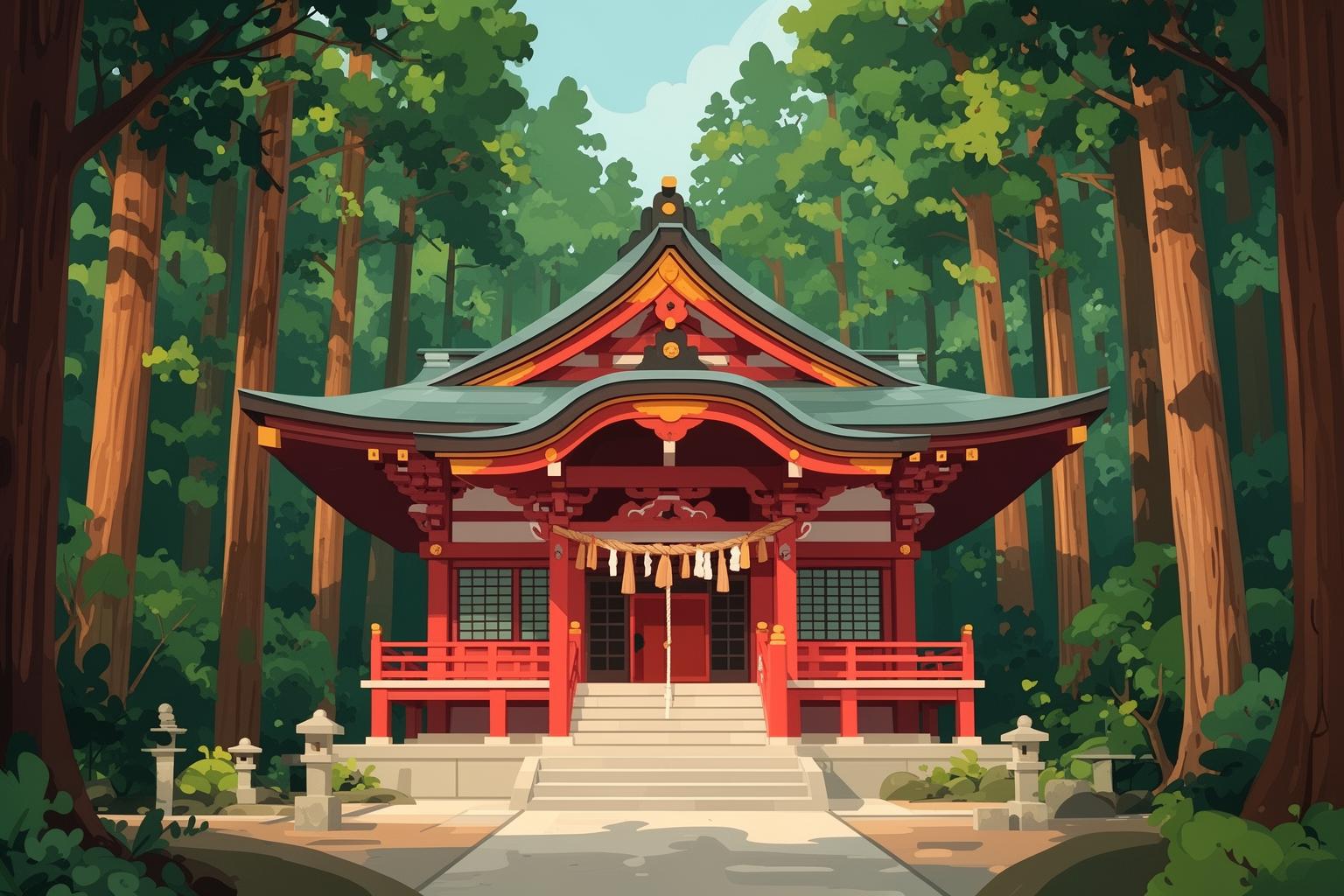
Our journey begins where the Shimogamo family’s tale unfolds: within the ancient, revered grounds of Shimogamo Shrine, formally known as Kamo Mioya Jinja. This place is more than just a backdrop; it is their home, their refuge, and the root of their identity. To walk here is to step beyond time. The path leads you through Tadasu no Mori, the “Forest of Correction,” a primeval woodland that has stood for centuries, long before Kyoto became the imperial capital. The atmosphere shifts immediately. The city’s noise fades away, replaced by the rustle of leaves from thousand-year-old trees and the crunch of gravel beneath your feet. Sunlight filters through the dense canopy, casting shifting patterns on the forest floor. It feels sacred, potent, and vibrantly alive—exactly the kind of place where one would believe a noble tanuki clan has quietly lived for generations.
In the anime, the Shimogamo family resides in a modest apartment building within the shrine grounds, symbolizing how they seamlessly blend the ordinary with the magical. As you stroll through Tadasu no Mori, it’s easy to picture Yasaburo bounding through the underbrush or the stern Yaichiro practicing his transformations. This forest is a living presence. Viewed from a wider East Asian context, it embodies a strong Daoist sentiment—the reverence for wild, natural forces. Although Shintoism is uniquely Japanese, this deep respect for nature as a home for spirits resonates strongly with traditions beyond the sea. The forest is more than just a collection of trees; it is an entity, a guardian of the shrine and its inhabitants, both visible and hidden.
At the forest’s core lies the shrine itself, an elegant complex of vermilion and white buildings that exude quiet dignity. Shimogamo Shrine stands as one of Kyoto’s oldest and most significant sites, predating the city’s founding. It is situated at the meeting point of the Kamo and Takano rivers, a location chosen for its spiritual significance. The shrine is dedicated to the gods of harvest and protection, and the Shimogamo family’s role in the story reflects this ancient responsibility. Visitors are encouraged to take their time exploring the grounds. Observe the beautiful two-storied gate, the Rōmon, and the main halls devoted to the deities. A particularly intriguing spot is the Mitarashi-sha, a small sub-shrine built above a spring where bubbles rise from the sacred pond. During the Mitarashi Festival in late summer, people wade into these waters to purify themselves, a ritual as old as the forest itself. This is the Kyoto of The Eccentric Family—not a static museum exhibit, but a place of living faith and ongoing tradition, where the boundary between history and myth is gracefully and intentionally blurred.
The Flow of Life: Along the Banks of the Kamo River
If Shimogamo Shrine is the family’s sacred heart, then the Kamo River, or Kamogawa, serves as their grand, public stage. Flowing gently through the city’s center, this river is Kyoto’s lifeblood, a place where people from all walks of life come together. For the Shimogamo clan, it functions as a highway, a playground, and a place for reflection. Walking along its banks means following in the literal footsteps—or paw prints—of Yasaburo and his family. The anime is rich with iconic scenes set here: the brothers good-naturedly arguing, Yasaburo observing humans with amused curiosity, or the great tengu Professor Akadama soaring overhead in a fit of pique.
The atmosphere of the Kamogawa shifts dramatically with the seasons and the time of day. On a sunny spring afternoon, its banks are crowded with students strumming guitars, families picnicking beneath cherry blossoms, and artists sketching the gentle current. In summer, the famous nōryō-yuka are set up—temporary wooden platforms built over the river where diners can enjoy meals in the cool evening breeze. This tradition, beautifully portrayed in the anime, offers a quintessential Kyoto experience. Seeing the lanterns of restaurants on Pontocho Alley reflected in the dark water is pure magic. Autumn brings crisp air and a fiery palette to the distant mountains, while winter presents a stark, quiet beauty, the river flowing steadily beneath grey skies.
A key spot for fans of the series is the Kamo Ohashi bridge and the turtle-shaped stepping stones at the delta where the Kamo and Takano rivers converge. This is an actual place, and hopping across those stone turtles is a simple, joyful ritual for locals and visitors alike. It’s an ideal spot to sit and watch the city pass by, to feel the rhythm of daily life that Yasaburo cherishes. As someone who appreciates classical Chinese landscape painting, the Kamo River strikes me as a living ink wash scroll. The interplay of water, bridges, the low-rise city skyline, and the ever-present Higashiyama mountains in the background creates a sense of harmony and balance. It serves as a reminder that in many East Asian cultures, the city is not viewed as separate from nature, but as something that must coexist harmoniously with it. The river is more than just a landmark; it’s the city’s soul made visible, a constant, flowing presence connecting the sacred northern forests to the bustling commercial districts in the south.
A Taste of the Everyday: Demachi Masugata Shopping Arcade
From the serene flow of the river, we dive into the delightful, human-scale bustle of the Demachi Masugata Shopping Arcade. Just a short walk from the river delta, this covered market offers a glimpse into the everyday life of Kyoto’s residents. In The Eccentric Family, it’s a frequent gathering place for the characters—a spot to exchange gossip, find delicious food, and observe the entertaining antics of humans. The moment you step inside, your senses are enlivened in the best way. The air is thick with the scent of freshly pounded mochi, savory pickles, and frying croquettes. Friendly vendors’ calls echo beneath the high ceiling, blending with shoppers’ chatter and the rumble of bicycles being pushed through the narrow aisles.
This is not the polished, tourist-focused experience of Nishiki Market; it’s a genuine neighborhood institution. It feels wonderfully nostalgic, a relic of a slightly older, slower Japan. Shops sell everything from fresh fish and vegetables to handmade tofu, tea, and traditional sweets. The arcade in the anime is a faithful recreation, perfectly capturing its lively, slightly cluttered charm. One of the most popular stops for pilgrims is Futaba, a mochi shop famous for its incredibly popular mame-mochi (rice cakes with black beans). There’s almost always a line, but it moves quickly, and the reward is an authentic taste. Holding a warm, soft mame-mochi while exploring the arcade lets you partake directly in the world of the show.
What makes the Masugata Arcade so special is its strong sense of community. Neighbors catch up, shopkeepers have known their customers for decades, and there is a genuine warmth often missing from grander tourist spots. It embodies the side of life Yasaburo finds endlessly entertaining. He loves humanity for its imperfections, appetites, and simple daily rituals. Spending an hour here, just browsing and snacking, offers a deeper insight into his philosophy. It’s a lesson in discovering the extraordinary within the ordinary, a core theme of the story. For any visitor, it’s a must-visit to feel the local pulse and understand that Kyoto’s magic lies not only in its grand temples but also in the humble, vibrant heart of its neighborhoods.
The Eccentric’s Perch: Rokkakudo Temple and the Whimsical Professor

Venturing into the heart of downtown Kyoto, amidst modern office buildings and department stores, you might easily overlook one of the most curious and significant locations in The Eccentric Family: Rokkakudo Temple. This temple is the residence of Professor Akadama, the cantankerous, retired tengu who acts as a mentor and a frequent source of trouble for Yasaburo. Choosing this temple as his home is a masterstroke. Secluded and modest from the outside, Rokkakudo is an oasis of eccentricity and history, perfectly reflecting the professor’s own nature—a powerful being concealed in plain sight.
Officially named Chōhō-ji, it’s better known as Rokkakudo because of the distinctive hexagonal shape of its main hall. This design is believed to symbolize the six senses in Buddhist belief. Founded by Prince Shōtoku in the 6th century, the temple is also renowned as the birthplace of ikebana, the Japanese art of flower arrangement. A statue of the prince stands near a pond, with the headquarters of the Ikenobo school of ikebana located next door. This association with a refined, ancient art adds another dimension to Professor Akadama’s character. He is a being of great power and knowledge, yet one who harbors a deep, if occasionally reluctant, appreciation for beauty and form.
Stepping onto the temple grounds feels like crossing into another realm. The noise of Karasuma Street disappears. Aside from the hexagonal hall, a weeping willow tree stands as the centerpiece. According to legend, tying an omikuji (paper fortune) to this willow will help one find a good partner, making it a favored spot for those seeking love. The temple is also surprisingly dotted with dozens of small stone swan statues, adding to its quirky charm. It is a place of quiet corners, the scent of incense, and the soft cooing of pigeons. You can almost imagine Professor Akadama in his cluttered apartment above, sipping his cherished Akadama Port Wine and grumbling about the state of the world. Visiting Rokkakudo serves as a reminder that even in Kyoto’s most modern areas, history and myth linger nearby, tucked away in a quiet courtyard or an unusually shaped building. It encourages you to look closer, to uncover the hidden stories just beneath the city’s surface.
Beyond the Anime: Weaving Your own Kyoto Story
A pilgrimage through the world of The Eccentric Family offers a wonderful way to plan a visit to Kyoto, yet the true spirit of the show urges you to go beyond merely checking off locations. Yasaburo’s philosophy is to make life as fascinating as possible, following his curiosity wherever it leads. Use the anime’s settings as your starting points, but allow yourself to become wonderfully, blissfully lost. Let the city itself guide you to discover your own magical spots.
The Philosopher’s Path
Though not a primary setting for the Shimogamo family, the Philosopher’s Path captures the contemplative mood often present during the story’s more reflective moments. This stone path winds alongside a canal lined with hundreds of cherry trees, and a relaxed walk here—especially during the spring bloom or beneath the lush green summer canopy—is a meditation in itself. It connects several smaller, quieter temples, offering a peaceful escape from the more crowded sites. It feels like a place where Yajiro, in his frog form, might spend a quiet afternoon pondering the meaning of it all from the bottom of his well.
Pontocho Alley
To glimpse the world of the enigmatic and beautiful Benten, the human woman who commands both tanuki and tengu, a nighttime stroll through Pontocho Alley is essential. This narrow, atmospheric lane runs parallel to the Kamo River and is lined with traditional wooden restaurants and tea houses. The gentle glow of lanterns, the faint sound of music from behind sliding doors, and the occasional sighting of a geiko or maiko hurrying to an appointment create an enchanting, slightly secretive atmosphere. This is the Kyoto of mysteries and hidden power—a world that exists alongside the everyday but follows its own ancient rules: Benten’s world.
A Fool’s Perspective from Kiyomizu-dera
Perched high on the hillside overlooking the city stands Kiyomizu-dera, one of Kyoto’s most iconic temples. Its vast wooden stage, constructed without a single nail, is an engineering marvel. A famous Japanese saying, “to jump off the stage of Kiyomizu,” means to take a leap of faith or make a bold, decisive move. This idea resonates deeply with the “fool’s blood” of the Shimogamo family. They live with a certain recklessness, embracing the notion that to make life interesting, one must be willing to take risks and accept the ridiculous. Standing on that stage, with the entire city stretched out below, is a powerful experience. It’s a place to reflect on your own journey and perhaps resolve to live a little more foolishly, a little more bravely.
A Pilgrim’s Practical Guide to Navigating Tanuki Kyoto
Exploring Kyoto can be an adventure in itself. Although the city follows a grid pattern, its true charm is found in the unexpected detours. Here are some practical tips to help make your journey as smooth and enjoyable as possible.
Access and Getting Around
Kyoto is easily accessible via the Tokaido Shinkansen (bullet train) from Tokyo or from Kansai International Airport (KIX) via the Haruka Express train. Once in the city, the public transportation system is efficient but may be confusing for first-time visitors. The extensive bus network is the best way to reach many temples, including Shimogamo Shrine. A one-day bus pass offers excellent value. For trips along a north-south or east-west route, the subway is faster. However, to truly experience Kyoto like a local, consider renting a bicycle. The city is mostly flat, and cycling along the Kamo River is pure pleasure, allowing you to stop wherever your curiosity leads. Walking, of course, remains the best way to explore individual neighborhoods—let your feet guide you down narrow lanes and into hidden courtyards.
Timing Your Visit
Kyoto is beautiful year-round, with each season revealing a different aspect of its charm, many of which are captured in the rich visuals of the anime. Spring (late March to April) is famous for cherry blossoms, turning the city into a pastel dreamscape, though it is also the busiest season. Autumn (mid-November to early December) is equally breathtaking, as maple trees set hillsides and temple gardens ablaze with crimson and gold. Summer (June to August) can be hot and humid but offers vibrant green scenery, lively festivals like the Gion Matsuri, and the aforementioned `nōryō-yuka` dining experience. Winter (December to February) is quiet, cold, and less crowded; viewing the Golden Pavilion or a rock garden dusted with snow is an ethereal and serene experience.
Small Tips for the First-Time Pilgrim
Be respectful. When visiting shrines and temples, keep in mind that they are active places of worship. Bow lightly when passing through a shrine’s torii gate, and perform the simple purification ritual with water at the `temizuya` before approaching the main hall. Speak softly and move thoughtfully.
Embrace the details. The magic of The Eccentric Family‘s Kyoto lies in the little things. Look for the humorous tanuki statues, often holding a flask of sake, which stand outside many local shops. Notice the intricate family crests on temple lanterns and the subtle patterns on manhole covers. The city is full of small treasures waiting to be discovered.
Savor the flavors. Food plays a big role in the story, from Professor Akadama’s sweet wine to the tanuki’s fondness for mochi. Don’t hesitate to try local specialties. Sample various kinds of `wagashi` (traditional Japanese sweets), enjoy a bowl of yudofu (simmered tofu) at a temple restaurant, and explore the food basements of department stores for an overwhelming array of treats.
The Fool’s Blood and the Joy of Living
To follow the footsteps of the Shimogamo family through Kyoto is to experience more than just a series of filming locations. It is to embrace a philosophy. The “fool’s blood” that Yasaburo proudly inherits from his great father isn’t about foolishness; it represents a deliberate choice to value joy, curiosity, and connection over the mundane, serious matters of everyday life. It is the wisdom to understand that a good nap, a playful prank, or a shared meal with family can be just as meaningful as any lofty ambition.
This journey invites you to view the world through that perspective. It encourages you to discover the wonder in a bustling market, the history in a quiet temple, and the vibrant life in a flowing river. The Eccentric Family reveals a Kyoto where the ordinary consistently intersects with the magical, where gods, humans, and tanuki coexist, each navigating life in their own unique way. As you roam these streets, may your own ‘fool’s blood’ awaken. May you follow a path unmarked on any map, strike up a chat with a local shopkeeper, or simply sit by the river and watch the world pass by. For, as the great tanuki Soichiro Shimogamo once said, “All that is interesting is good.” And in Kyoto, something interesting is always waiting just around the next corner.