There’s a certain kind of magic that settles deep in your soul when a story transcends the screen, a feeling that the world you witnessed is not merely fiction, but a place you could actually breathe in. For millions around the globe, Hayao Miyazaki’s masterpiece, Princess Mononoke, is one such story. It paints a world of furious gods, ancient forests, and the fragile, violent balance between humanity and nature. What many don’t realize is that this world has a terrestrial anchor, a real-life sanctuary of primeval wonder. That place is Yakushima, a subtropical island floating in the waters south of Kyushu, Japan. It is a land where myth feels tangible, where the air itself seems to hum with ancient energy. This is not just a filming location; it is the very heartwood from which the soul of Princess Mononoke was carved. A designated UNESCO World Heritage site, Yakushima is a testament to nature’s enduring power, a place where thousand-year-old cedars, known as Yaku-sugi, stand as silent sentinels, and where moss carpets the entire world in an impossible, vibrant green. To visit Yakushima is to undertake a pilgrimage, to walk through the frames of an animated legend and discover the profound, living truth that inspired it. It’s a journey into the forest of the Deer God, and a chance to hear the whispers of the kodama in the rustling leaves.
For those inspired to explore other real-world landscapes that have shaped beloved anime, consider embarking on a pilgrimage to the stunning locations of Your Name.
The Heart of the Ancient Forest: Shiratani Unsuikyo Ravine
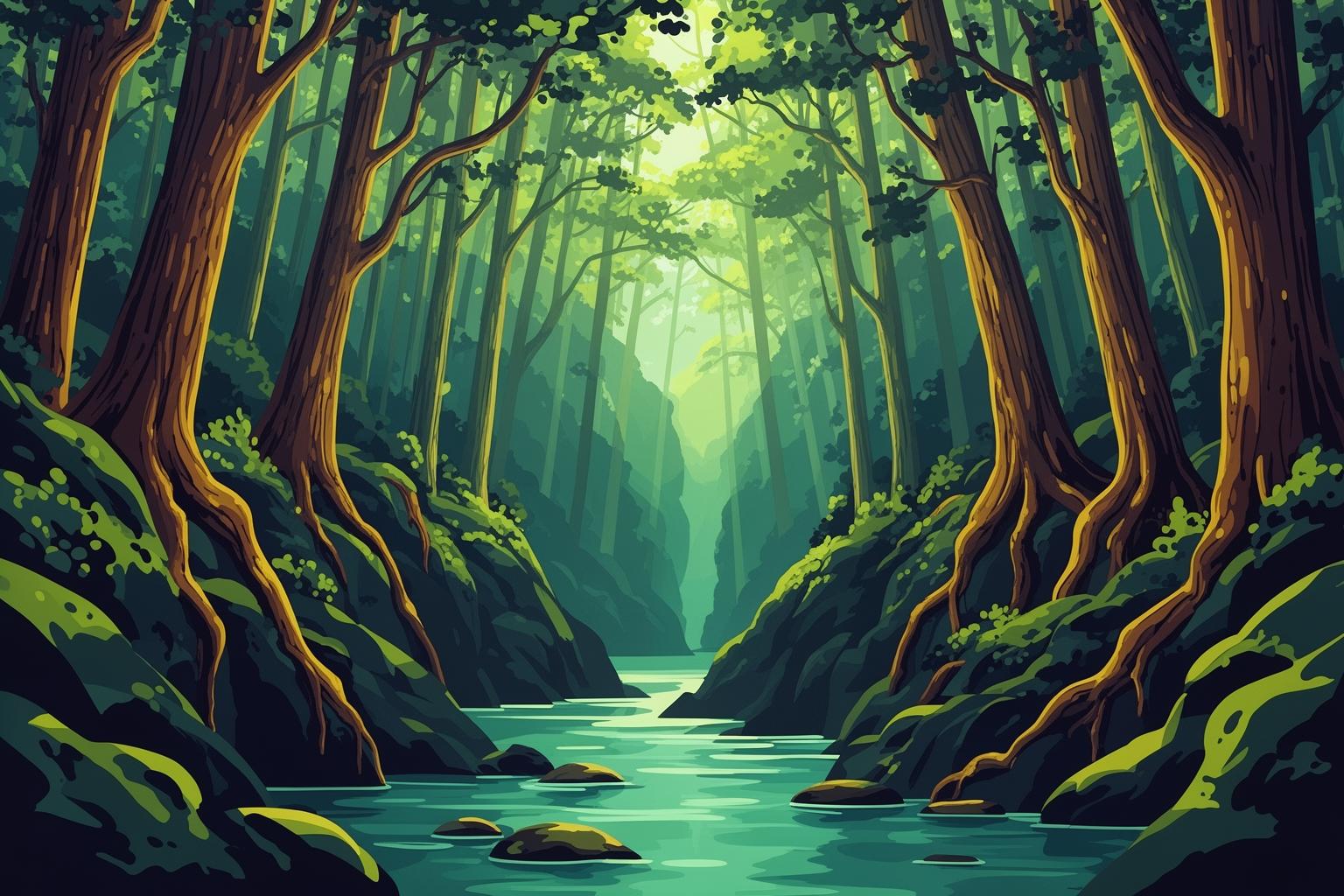
For most visitors arriving on Yakushima with visions of Ashitaka and San in their hearts, the first and most crucial destination is Shiratani Unsuikyo Ravine. This is the place. As you step from the trailhead onto the path, the modern world fades away behind you. The air cools, thickens with moisture, and carries the damp, earthy aroma of moss and decomposing leaves—the scent of life itself. This is no ordinary forest; it is a cathedral of green, a realm shaped by water and time. The very name, Unsuikyo, means “Cloud Water Ravine,” a fitting description for a location that experiences some of the heaviest rainfall on Earth. This constant moisture serves as the life force that blankets every surface in a lush layer of moss. There are hundreds, perhaps thousands, of shades of green here, ranging from deep emerald on ancient tree trunks to bright, almost neon lime green on new growth sprouting from fallen logs. Sounds are softened, absorbed by the velvety surfaces, creating a profound silence broken only by the chirps of unseen birds and the gentle, steady murmur of streams flowing over granite boulders.
This, truly, is the Moss Forest of Princess Mononoke. You will find yourself pausing every few steps, drawn to touch the gnarled roots of a cedar or to follow the intricate patterns of ferns. The forest floor is a wild mosaic of twisted roots, moss-covered stones, and fallen giants slowly reclaimed by the earth. Here, you half-expect to catch sight of small, white kodama, their heads bobbing with curiosity. The trails themselves combine well-maintained wooden boardwalks with rougher paths made up more of roots and rocks than soil. Choosing your route becomes part of the adventure. While shorter loops offer a beautiful glimpse of the forest’s magic, the true pilgrim aims for Taiko-iwa, or Taiko Rock. The final climb is a steep, challenging scramble, but the payoff is magnificent. You emerge from the dense woods onto a vast granite boulder, with the entire island’s interior spread out before you. You stand over a sea of green, Yakushima’s highest peaks piercing the sky. It’s a view nearly identical to the one Ashitaka beholds—a panorama that reveals the sheer scale and wild spirit of this land.
Advice for the Thoughtful Traveler
Exploring Shiratani Unsuikyo demands respect and preparation. Yakushima’s weather is famously unpredictable; a clear morning can swiftly turn into a torrential rainstorm. Waterproof clothing is not optional but essential. Bring a rain jacket and pants, along with waterproof hiking boots that offer excellent traction. Moss-covered rocks and roots become treacherously slippery when wet. Carry water and energy-rich snacks. Although the trails are marked, the forest can easily disorient visitors. A map—available at the entrance—is an invaluable companion. Above all, allow yourself time. Hurrying through this forest means missing its soul. Its magic lies in the details—the way light filters through the canopy, the tiny mushrooms sprouting from a log, the crystal-clear water flowing in the streams. This is a place for reflection, a living work of art that rewards slow, mindful exploration.
In the Realm of Giants: The Jomon Sugi
If Shiratani Unsuikyo serves as the soul of the Mononoke forest, then the Jomon Sugi is its ancient, pulsing heart. This is more than just a tree; it is a living monument that has stood on this island for millennia. Estimates of its age vary greatly, ranging from a conservative 2,200 years to an astonishing 7,200 years. To stand before it is to witness the profound and humbling weight of deep time. The journey to the Jomon Sugi is a demanding, full-day trek—a true pilgrimage that challenges both your physical stamina and mental resilience. It requires a commitment of around ten to twelve hours hiking a 22-kilometer round trip. The trail begins with a long, contemplative walk along a disused logging railway line, the Anbo Forest Railway. This flat and easy section offers a gentle introduction but also serves as a poignant reminder of the island’s more recent logging history—the very conflict central to Princess Mononoke. The rusting iron tracks, slowly being reclaimed by nature, physically embody the clash between industry and wilderness.
Once you leave the railway behind, the real ascent starts. You climb into the mountains, fording streams via suspension bridges and using your hands to scramble through steep, root-covered sections of the trail. Along the way, you encounter other spectacular Yaku-sugi, each a giant in its own right—such as the Meoto Sugi (Husband and Wife Cedars) and the Daiosugi (Great King Cedar). A highlight of the trail is Wilson’s Stump, the massive, hollowed remains of a cedar felled long ago. From inside its cavernous interior, if positioned just right, the opening above forms a perfect heart shape against the sky—a moment of unexpected natural poetry. Yet nothing truly prepares you for the final arrival. After hours of effort, you reach a wooden observation deck, constructed to protect the tree’s delicate roots. And there it stands: the Jomon Sugi. Its shape surpasses any usual idea of a tree. It is gnarled, twisted, and hollowed, its bark resembling a rugged landscape. It does not soar with grace; it commands with sheer, indomitable presence. This tree has survived countless typhoons, earthquakes, and the rise and fall of civilizations. It feels less like a plant and more like a deity, a living embodiment of the life force Miyazaki so masterfully captured in the Forest Spirit, the Shishigami. Gazing at the Jomon Sugi, you realize the forest is not merely a collection of trees—it is one ancient, living entity.
The Pilgrim’s Path
Embarking on the Jomon Sugi hike demands careful preparation. This is no casual stroll. You must start before dawn, typically between 4 and 5 AM, to ensure completion within daylight hours. A headlamp is indispensable for the first hour or two on the trail. Proper hiking gear—including sturdy boots, rainwear, and layered clothing—is essential. You need to carry all the food and water required for the entire day. Many hikers buy a “bento” lunchbox from their hotel or a local shop the day before. Hiring a local guide is strongly advised, especially for less experienced hikers. A guide not only guarantees your safety and helps maintain pace but greatly enriches the experience by pointing out unique flora and fauna and sharing stories about the island’s history and ecology. The physical challenge is considerable, but the spiritual reward is immense. It’s a journey that strips you down and rebuilds you, leaving you with a deep and quiet appreciation for life’s resilience.
Beyond the Forest: Yakushima’s Living Tapestry
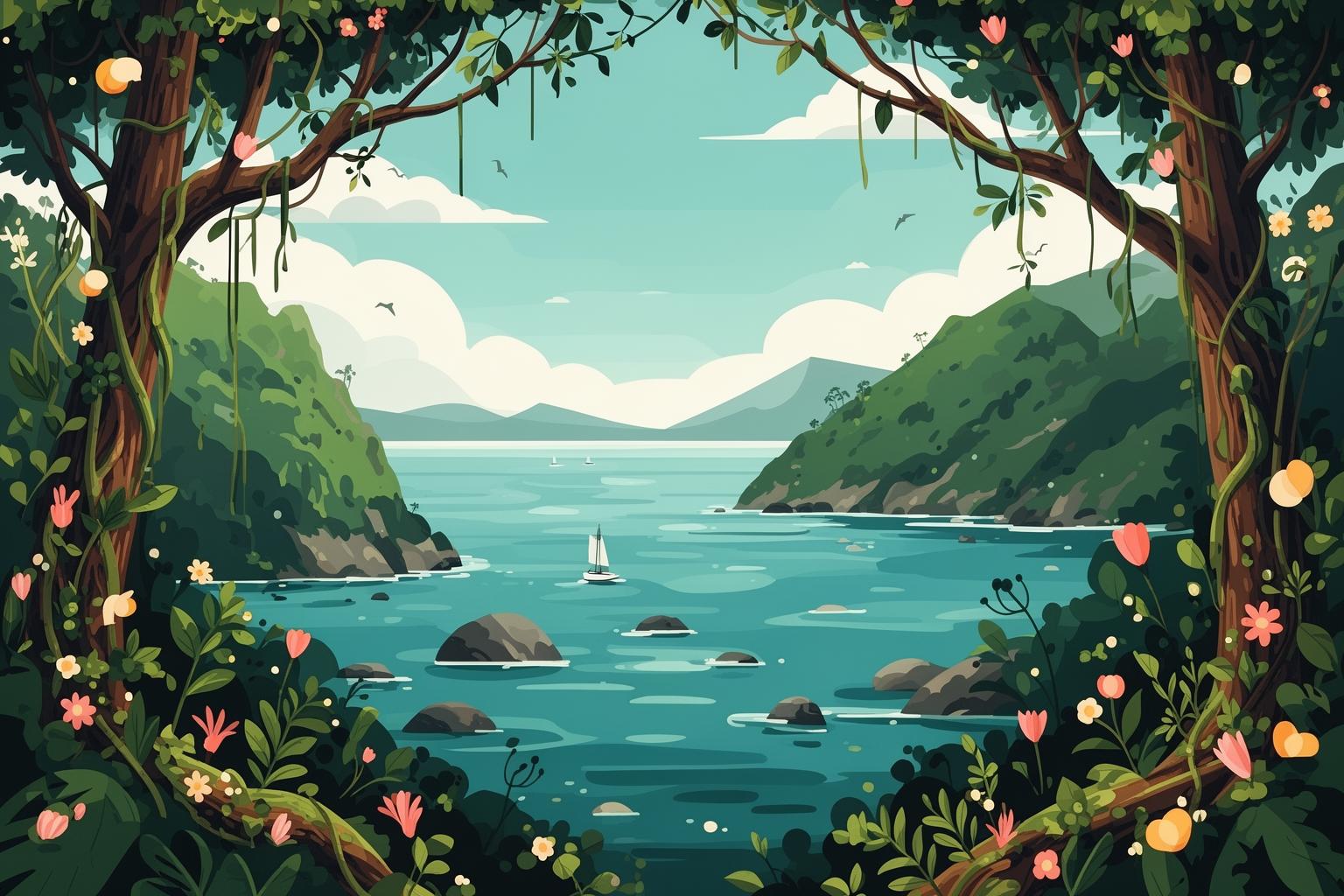
While the ancient forests are the primary attraction, the island of Yakushima is a complete and dynamic ecosystem where every element is interconnected. To fully grasp the world that inspired Princess Mononoke, one must look beyond the cedar canopy to the coasts, rivers, and the unique creatures that inhabit this island.
Coasts Caressed by the Kuroshio Current
The island is surrounded by a dramatic coastline where mountains drop steeply into the sea. The powerful Kuroshio Current, a warm ocean stream, flows nearby, fostering a rich marine environment and contributing to the island’s humid, rainy climate. The most renowned beach is Nagata Inakahama, a pristine stretch of golden sand on the northwest coast. This beach is not only beautiful but also one of the most critical nesting sites for loggerhead and green sea turtles in the North Pacific. From May through July, under the cover of darkness, female turtles come ashore to lay their eggs. Then, from August through September, tiny hatchlings emerge and dash toward the sea. Witnessing this ancient ritual is profound, offering a tangible connection to the cycles of life and death central to Miyazaki’s work. It reminds us that the health of the forest and the ocean are deeply intertwined.
The Dance of Water and Stone
Yakushima is an island formed from granite and water. Its mountainous ridge is a solid granite mass pushed up from the earth’s crust, and it is a place defined by its rainfall, poetically said to rain “35 days a month.” This abundant water has sculpted the island’s landscape, creating deep ravines and a stunning array of waterfalls. Traveling around the island, you will encounter one waterfall after another. Oko-no-taki, in the southwest, is one of Japan’s top 100 waterfalls, an 88-meter thunderous cascade you can approach at the base, feeling the cool spray on your face. Senpiro-no-taki is another giant, where water plunges down a vast granite monolith. These waterfalls act as the island’s arteries, carrying life-giving water from mountain peaks through the forests and out to the sea. The constant sound of flowing, gushing, and seeping water is the soundtrack of Yakushima.
The Whispers of Yaku-sugi and Yaku-shika
The island hosts its own unique subspecies, most notably the Yaku-shika (Yakushima deer) and the Yaku-zaru (Yakushima macaque). These animals, smaller than those on the mainland, roam the island with remarkable boldness. It is common to see macaques grooming each other by the roadside or deer grazing peacefully just feet away. They embody the animal characters of Princess Mononoke—not magical gods, but natural residents of this sacred place. Observing them in their habitat strengthens the sense of being in a world where the line between human and nature is thin. Likewise, understanding the term Yaku-sugi is essential. It refers specifically to cedar trees over 1,000 years old on the island. Trees younger than that are called Ko-sugi (small cedars). This distinction, made by locals, reflects a profound cultural reverence for age and endurance, seeing these ancient trees not as timber, but as ancestors.
A Taste of the Island: Sustenance and Community
A journey to Yakushima also provides an opportunity to connect with the resilient human communities that have adapted to life in this challenging environment. The island’s main towns, Miyanoura in the north and Anbo in the east, are small, functional ports with a quiet charm. Here, you will find guesthouses, small restaurants, and shops run by locals who share a deep bond with their island home. The local cuisine reflects the surrounding environment directly. A signature dish is flying fish (tobiuo), often served fried whole, its wings outstretched as if in mid-flight. The island is also renowned for its fruits, especially the sweet Tankan and Ponkan oranges. No visit is complete without tasting the local shochu, a distilled spirit. The most famous brand, Mitake, is crafted using Yakushima’s famously pure and soft water, giving it a uniquely smooth character. Dining in a small, family-run izakaya and sharing a meal of fresh seafood and local vegetables offers a sense of the community’s rhythm. It is a way of life lived in harmony with nature’s provisions and its unpredictable weather, a quiet balance that sharply contrasts with the industrial ambitions of Lady Eboshi’s Irontown.
Practical Pilgrimage: Planning Your Journey to the Enchanted Isle
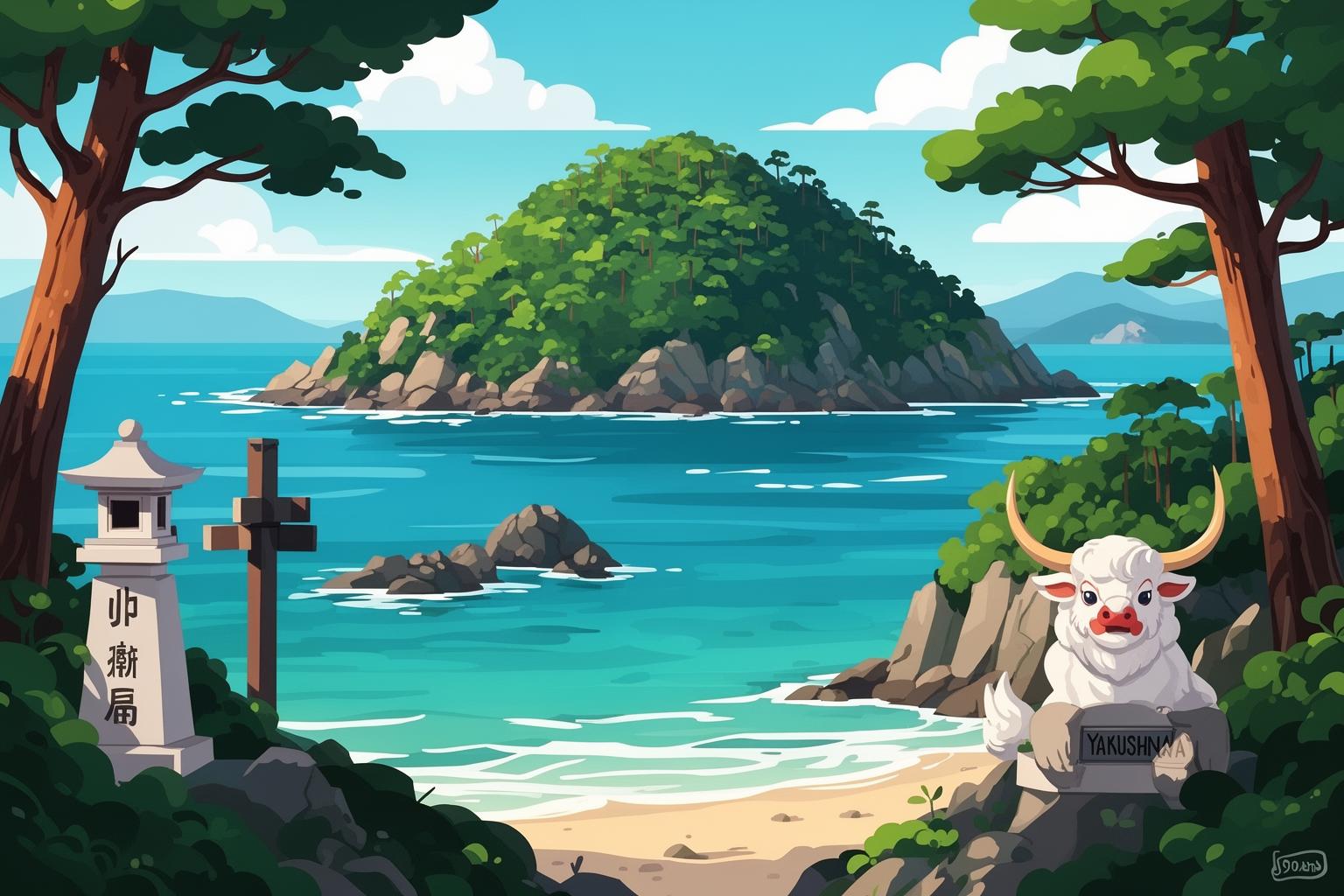
Embarking on a trip to Yakushima demands more logistical planning than visiting a major Japanese city, but the effort is part of the pilgrimage and is richly rewarded.
Reaching the Sanctuary: Accessing Yakushima
The main gateway to the island is the city of Kagoshima, located at the southern tip of mainland Kyushu. From there, you have two primary options. The quickest is to fly. Japan Air Commuter operates several flights daily from Kagoshima Airport to Yakushima’s small airfield, a flight of about 40 minutes. This is the most convenient but also the priciest choice. The more common and atmospheric way to arrive is by sea. There are two types of ferries available. The high-speed hydrofoil, known as the “Toppy” or “Rocket,” crosses the water in about two to three hours, depending on the route. This option strikes a popular balance between speed and cost. For those on a tighter budget with more time, the slower car ferry takes roughly four hours and offers open decks where you can stand outside, watch for flying fish, and feel the anticipation build as the island’s dramatic mountain silhouette appears on the horizon.
Navigating the Island’s Veins
Once you arrive, your next challenge is getting around. Although a local bus service circles the island, the schedules are infrequent and may not align with the early starts needed for major hikes. To fully experience the freedom and flexibility Yakushima offers, renting a car is by far the best option. It lets you travel at your own pace, stop at scenic viewpoints, and access the trailheads for Shiratani Unsuikyo and the Arakawa Trail (for Jomon Sugi) on your own schedule. Be sure to book your rental car well in advance, especially during peak seasons. For those who don’t drive, a mix of buses and taxis is possible but requires careful planning. Alternatively, hiring a private guide who provides transportation can be an excellent, stress-free way to explore the island’s main sights.
When to Heed the Forest’s Call: Best Time to Visit
Yakushima can be visited year-round, with each season offering a different experience. Spring (March to May) is a beautiful time when mountain cherry blossoms bloom and the weather is generally pleasant. Summer (June to August) is the warmest season, ideal for coastal activities and seeing nesting sea turtles, but it is also the peak of the rainy season and typhoon risk. Autumn (September to November) is often considered the best time to visit, with more stable weather, comfortable temperatures, and stunning autumn colors in the mountains. Winter (December to February) attracts fewer tourists and offers a stark, quiet beauty. Coastal areas remain mild, but the high peaks are often covered in deep snow, making major hikes like the Jomon Sugi trek impossible for all but the most experienced and well-equipped mountaineers. Regardless of when you visit, one thing remains constant: rain. Prepare for it, embrace it, and remember that it is the source of the island’s otherworldly greenery.
An Echo in the Heart: The Enduring Spirit of Yakushima
Leaving Yakushima is a peculiar experience. You return to a world of concrete and schedules, yet the island’s deep, green resonance lingers with you. It is more than just a beautiful destination; it offers a profound lesson in resilience, balance, and the humbling scale of time. To have walked beneath the Yaku-sugi is to have sensed the presence of something eternal. To have breathed the misty air of the Moss Forest is to have inhaled the very essence of life. A pilgrimage to the real-life setting of Princess Mononoke reveals that Hayao Miyazaki was not merely creating a fantasy world; he was interpreting a real one. He captured the spirit of Yakushima—its sacred fury, its delicate beauty, and its solemn warning about what we risk losing. This journey offers a chance to step through the screen, discover the truth within the fiction, and return with a renewed sense of wonder and a deeper understanding of the ancient, powerful world that still exists, waiting in the whispering heart of the forest.