
There are places on this earth that feel older than time itself, where the air hums with a silent, ancient energy. They are remnants of a world untouched, sanctuaries where nature’s soul is palpable. Yakushima Island, a subtropical jewel floating in the waters south of Kyushu, is one such place. It’s a realm of dripping moss, gnarled cedar giants, and mountains that scrape the clouds, a landscape so primeval it feels like stepping into a forgotten myth. For millions around the world, this myth has a name: Princess Mononoke. This is not merely a place that inspired Hayao Miyazaki’s animated epic; it is the very heart of the film, a living, breathing testament to the wild, untamable spirit he so masterfully captured on screen. To visit Yakushima is to undertake a pilgrimage, to walk through the celluloid frames of a masterpiece and find that the reality is even more magical, more profound than you could ever imagine. It’s a journey into the world of forest gods, kodama, and the deep, resonant power of nature in its purest form.
For those keen to explore nature’s mystic secrets, a kodama pilgrimage offers a captivating journey deeper into Yakushima’s enchanted forests.
The Soul of the Forest: Shiratani Unsuikyo Ravine
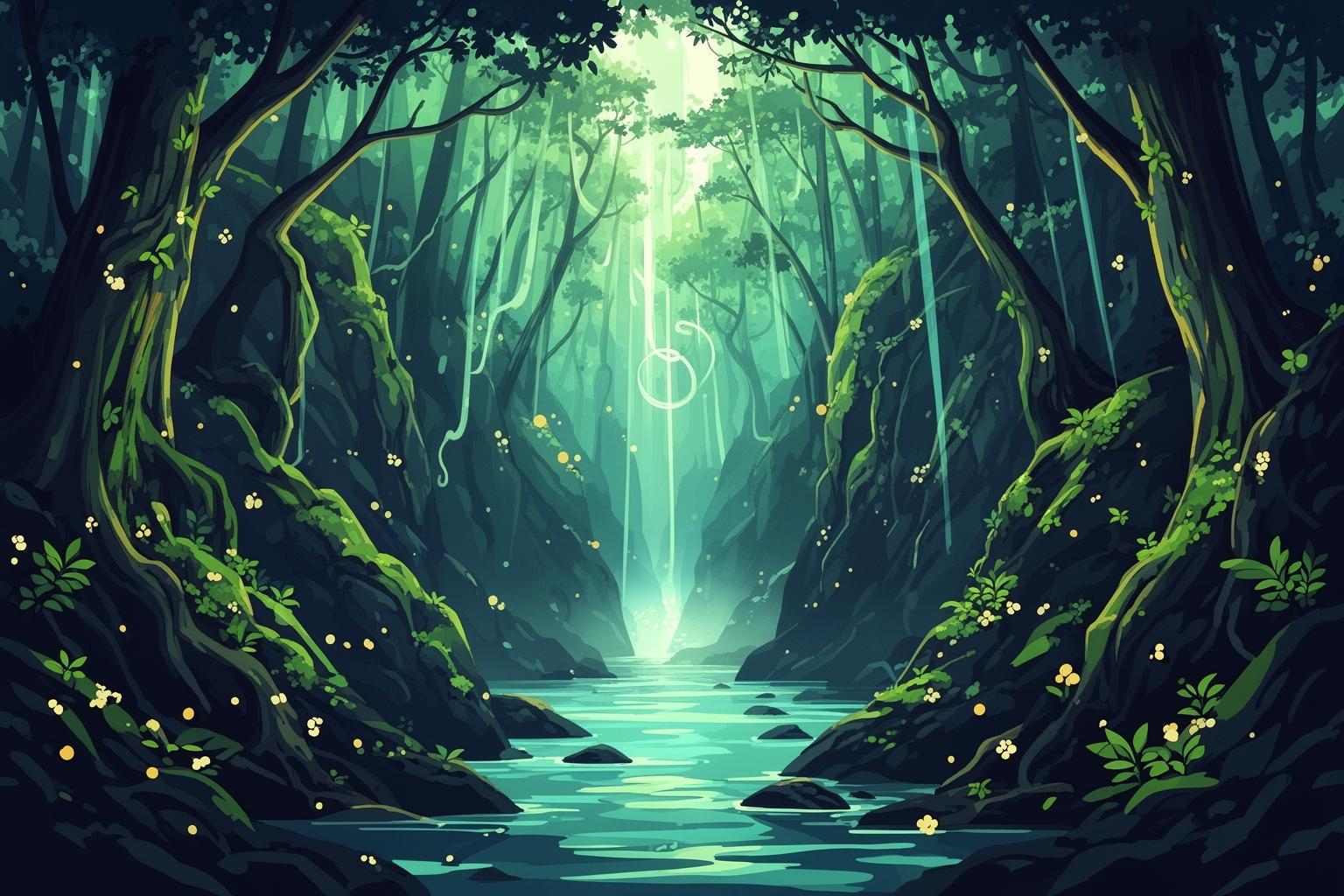
Your pilgrimage into the world of Princess Mononoke truly begins the moment you set foot on the trails of Shiratani Unsuikyo. The name itself, meaning “White Valley Cloud Water Ravine,” is poetic, perfectly capturing a place that seems suspended between earth and sky, forever shrouded in mist and moisture. This is the forest where Miyazaki and his team of artists spent countless hours sketching, absorbing its essence to create the realm of the Deer God. The air here is thick, cool, and filled with the scent of damp earth, decaying leaves, and the sweet perfume of wood. Every surface is alive, covered in a tapestry of over 600 varieties of moss, glowing in shades of emerald, jade, and lime. The silence is broken only by the gentle gurgle of crystal-clear water flowing over granite boulders and the occasional drip of condensation from a fern frond. It feels less like a hike and more like a baptism, a complete immersion into a world ruled by ancient rhythms.
Echoes of the Kodama
As you follow the winding, root-covered paths, vivid scenes from the film will flash through your mind with surprising clarity. A particular clearing, where sunlight pierces the dense canopy to spotlight a moss-covered rock, becomes the place where San first confronts Ashitaka. The twisted branches of a centuries-old cedar seem ready to echo with the curious clicking of the kodama, the little white tree spirits. The most famous location in the ravine is the “Moss-Covered Forest” (Kokemusu-no-mori), a place so strikingly similar to the film’s signature aesthetic that it feels like stepping onto a Studio Ghibli set. The trees here are more than just plants; they are characters. They lean on each other, their roots entwined in a complex dance of support and rivalry, their bark marked with the stories of centuries. There is a profound sense of reverence here, a feeling that you are a guest in a sacred space. From a broader East Asian viewpoint, this resonates deeply with Daoist and Shinto beliefs, seeing nature as a living entity—a network of spirits and energy where mountains and ancient trees are themselves deities.
Planning Your Trek into the Green
Shiratani Unsuikyo offers several trails of various difficulties, making its magic accessible to many. The shortest routes can be completed in an hour, taking you through some of the most scenic areas. For those seeking a fuller experience, the complete loop to the Taikoiwa Rock viewpoint takes about four to five hours. This more challenging path rewards you with a stunning panorama of the island’s mountainous interior, a view that truly makes you feel atop a world shaped by gods. One piece of practical advice cannot be overstated: be prepared for rain. The local saying goes that it rains “35 days a month” in Yakushima, and this constant moisture is what gives the forest its lush, life-filled character. Waterproof hiking boots, a quality rain jacket and pants, and a waterproof cover for your backpack are not recommendations—they are essentials. The trails can become slippery, and the weather can shift suddenly, but being well-equipped allows you to embrace the island’s wet spirit rather than resist it.
A Pilgrimage to the Elder Gods: The Jomon Sugi
If Shiratani Unsuikyo represents the soul of the Mononoke forest, then the Jomon Sugi stands as its ancient, beating heart. This enormous Yakusugi cedar is the island’s elder statesman, a living monument estimated to be between 2,170 and 7,200 years old. Standing before it evokes a humbling, almost spiritual feeling. Its twisted, massive trunk, boasting a circumference of over 16 meters, seems to defy the very laws of life. It has endured countless typhoons, earthquakes, and the march of human history, serving as a silent witness over millennia. The trek to see the Jomon Sugi is truly a pilgrimage. It is a demanding ten-hour round-trip hike that challenges both physical and mental endurance, but the reward is a profound connection to deep time.
The Journey is the Destination
The hike to Jomon Sugi unfolds as a story on its own. The first few hours involve walking along a disused logging railway track, the Anbo Forest Railway line. These now-silent tracks serve as a poignant reminder of a period when these sacred forests were seen not with reverence, but as resources. The contrast between this industrial relic and the wild forest it cuts through is striking. Leaving the tracks, you begin a steep mountain ascent into a realm of ancient trees. Along the way, you’ll encounter other named giants such as the Dai-o Sugi (Great King Cedar) and the Meoto Sugi (Wedded Couple Cedars), two trees that have merged together in a centuries-long embrace. Perhaps the most enchanting stop is Wilson’s Stump (Wilson-kabu), the massive, hollowed remains of a cedar felled centuries ago. Step inside and look up to find the opening above forms a perfect heart shape. It’s an accidental natural artwork, a moment of unexpected wonder that renews your spirit for the final stretch to the Jomon Sugi.
A Test of Spirit and Body
This is far from a casual hike. It demands an early start, often before dawn, to finish it within daylight hours. Sturdy hiking gear, ample water, and high-energy snacks are essential. Hiring a local guide is strongly advised, not only for safety on the sometimes-treacherous trails but also for the invaluable insights they offer about the forest’s flora, fauna, and history. They highlight details you might otherwise overlook and manage the group’s pace to ensure everyone reaches the destination. Upon arriving at the viewing platform for the Jomon Sugi, you share a sense of collective achievement with your fellow hikers. Though touching the tree is prohibited to protect its fragile root system, simply being in its presence is deeply moving. You feel a connection to something eternal, a life force that puts our brief existence into perspective. It is the living incarnation of the forest’s deity—a silent, powerful presence demanding nothing but reverence.
Beyond the Ancient Cedars: The Life of the Island
While the ancient forests are the main attraction, Yakushima’s enchantment stretches from its mist-covered mountain peaks all the way to its rugged, wave-lashed coastline. The island serves as a microcosm of Japan’s climate, featuring subtropical flora along the coast and subarctic plants on the highest summits. This remarkable biodiversity is what secured its UNESCO World Heritage status. Yakushima is also a sanctuary for distinctive wildlife. You are sure to encounter the Yakushika deer and Yakuzaru macaques. Smaller than their mainland counterparts, they wander the forests and roadsides with calm assurance, a clear sign that they are the true inhabitants here while we are mere visitors. Watching a macaque grooming its young on a mossy log or a deer gently nibbling leaves just feet away deepens the sense that you’ve entered a unique realm, where the line between human and wildness is beautifully blurred.
Coastal Wonders and Mountain Streams
After a long day of hiking, there is no better way to relax tired muscles than by immersing yourself in the island’s natural waters. Yakushima is threaded with rivers and waterfalls, such as the roaring Senpiro-no-taki and Oko-no-taki falls, which are particularly spectacular after heavy rainfall. Along the coast, you’ll discover unique natural hot springs. The Hirauchi Kaichu Onsen comprises rock pools on the shore accessible only for a few hours daily at low tide. Bathing in these geothermally warmed pools while watching the Pacific Ocean’s waves crash just feet away is an unforgettable experience, offering a raw and elemental connection to the island’s power. For a different coastal experience, visit Nagata Inakahama Beach, a breathtaking stretch of golden sand that serves as the largest nesting site for loggerhead sea turtles in the North Pacific. From May to July, guided tours allow you to witness the extraordinary sight of female turtles coming ashore at night to lay their eggs.
The Flavors of Yakushima
The island’s bounty is also reflected in its culinary offerings. The local cuisine is simple, fresh, and deeply intertwined with the environment. A signature dish is flying fish (tobiuo), often served deep-fried crisp, fins included, or as savory fishcakes called ‘tsukeage’. The island is also renowned for its fruits, especially the sweet and juicy tankan and ponkan oranges. For a taste of the island’s spirit in liquid form, try the local shochu, Mitake, distilled using Yakushima’s famously soft and pure water. Sharing a meal on the island is yet another way to connect with its essence, sampling the very water and produce that make this place so distinctive.
Practical Magic: Planning Your Yakushima Adventure
Visiting and exploring this enchanted island requires some careful planning, but the rewards are well worth the effort. Early preparation is essential, as accommodations and transportation can fill up months ahead, especially during busy periods like Golden Week in spring and Obon in summer.
Reaching the Enchanted Isle
Your trip to Yakushima will most likely start in Kagoshima, the southernmost major city on Japan’s Kyushu island. From there, you have two main transportation choices. The quickest option is a 40-minute flight to the small Yakushima Airport. Alternatively, the more scenic and popular way is by ferry. The high-speed jetfoil, called the “Toppy” or “Rocket,” takes about two to three hours and offers an exciting ride. For travelers on a tighter budget with more time, the slower car ferry takes around four hours and has open decks where you can watch the island’s majestic green peaks gradually appear on the horizon. Watching the island rise out of the sea is a magical beginning to your adventure.
When the Spirits Call: Best Times to Visit
Yakushima is open to visitors year-round, with each season providing a unique experience. Spring (March to May) offers pleasant weather and stunning rhododendron blooms in the mountains. Summer (June to August) is hot and humid, coinciding with the rainy and typhoon seasons, but it also marks turtle nesting time. Autumn (September to November) is often regarded as the best season, featuring more stable weather, comfortable hiking temperatures, and beautiful fall foliage in higher elevations. Winter (December to February) keeps coastal areas mild while the high peaks are snow-covered, creating a striking contrast and making high-altitude hikes suitable only for the most experienced and well-prepared adventurers.
Where to Rest Your Head
The island’s main hubs are the port towns of Miyanoura in the north and Anbo in the east. These areas host most accommodations, restaurants, and gear rental shops. Choices range from simple ‘minshuku’ (family-run guesthouses), offering a chance to experience local hospitality, to comfortable hotels and a handful of luxury resorts like the Sankara Hotel & Spa. Renting a car is by far the most convenient way to get around the island, since the local bus service can be infrequent and doesn’t reach all trailheads. Driving the island’s single road is an adventure in itself, particularly along the narrow western Seibu Rindo forest road, a World Heritage-registered route where you’re more likely to encounter deer and monkeys than other vehicles.
A Note for the First-Time Pilgrim
For first-time visitors, a few small tips can make a big difference. Reserve your accommodation, rental car, and any guided hikes well ahead of time. Bring layers of clothing, as temperatures can vary significantly between the coast and mountains. Carry a reusable water bottle; the island’s water is famously pure and tasty, and can be refilled from mountain streams. Lastly, embrace the island’s tranquil pace. Shops often close early, and nightlife is minimal. Yakushima invites you to disconnect from the hectic rhythm of modern life and reconnect with something far older and more profound.
The Enduring Legacy of an Animated Masterpiece
Leaving Yakushima feels like awakening from a vivid dream. The memory of the deep green, the scent of the damp air, and the sound of the ever-present water linger with you. The island is more than just a beautiful place; it is a character in its own right, a powerful presence that leaves an indelible impression on all who visit. The connection between Yakushima and Princess Mononoke is a remarkable symbiosis. The film drew its lifeblood from the island’s ancient forests, and in turn, it brought global attention to this precious ecosystem, emphasizing the importance of its preservation. Visiting Yakushima offers a chance to realize that the conflict between humanity and nature depicted in the film is not merely fantasy. It is a very real and ongoing struggle, and this island stands as a shining example of how reverence and respect can create a harmonious balance. You arrive as a fan of the film, but you leave as a disciple of the forest, forever transformed by your journey through the world of the forest gods.








