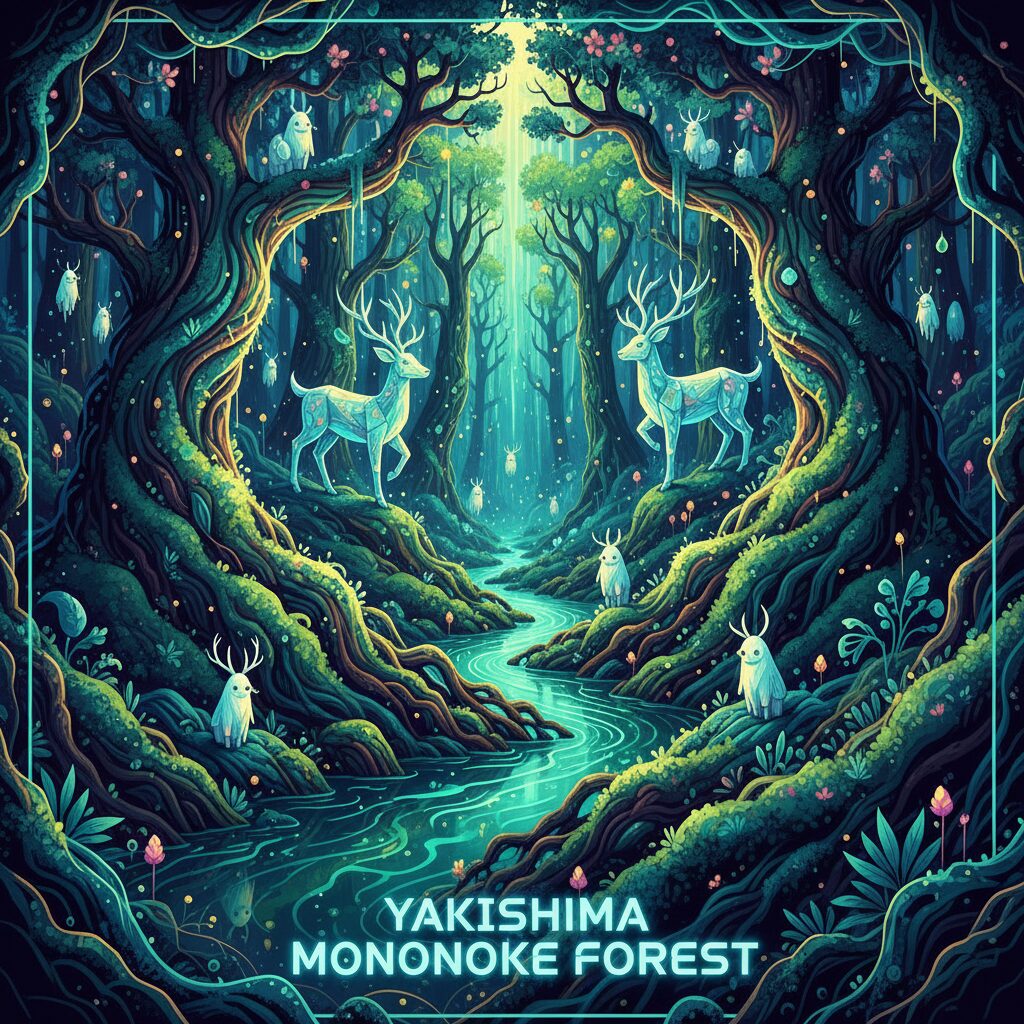
There’s a certain kind of green that lives only in your imagination, a shade so deep and ancient it feels like a memory. It’s the color of fairy tales, of forgotten gods, and of dreams you can’t quite recall upon waking. It’s the green of a Hayao Miyazaki film, specifically the primordial forest of Princess Mononoke. You can almost hear the soft rustle of the Kodama, the little tree spirits, their heads clicking with curiosity. You can feel the weight of the air, thick with moisture and the scent of thousand-year-old wood. For most, this world is confined to a screen. But it’s real. This place exists, and its name is Yakushima. Tucked away south of Japan’s main islands, this subtropical jewel is a circle of granite rising from the sea, a place where the mountains catch the clouds and it’s said to rain for thirty-five days a month. It’s a designated UNESCO World Heritage site, not for its castles or temples, but for its raw, untamable nature. This isn’t just a tourist destination; it’s a pilgrimage. It’s a journey into the heart of what inspired one of the most powerful animated films ever made, a story of the battle between humanity and the wild. Coming here is like stepping through the screen, to walk where gods of the forest still roam, to feel the profound silence of a world that existed long before us, and will likely exist long after we are gone. This is your guide to that world, a map to the soul of an island that time itself seems to respect.
The silent call of Yakushima’s ancient forests invites curious souls to dive even deeper into enchanted worlds through Ghibli dreamscapes.
Echoes of the Iron Town: The Human History of a Sacred Island
Before you even step onto the moss-covered trails, it’s crucial to recognize that the central conflict of Princess Mononoke—the clash between industrial humanity and the sanctity of nature—is not mere fantasy. It is deeply rooted in the very history of Yakushima. Although the island is now celebrated as a sanctuary, its past tells a story of exploitation and resilience that parallels Lady Eboshi’s Iron Town. During Japan’s Edo Period, spanning the 17th to 19th centuries, the island’s majestic Yakusugi cedars were extensively logged. The wood, valued for its high resin content, durability, and beautiful grain, was used to make shingles for temples and castles throughout Japan. This industry brought prosperity to the island, establishing settlements and leaving a human footprint in the dense wilderness. The old logging railway, now part of the trail to the ancient Jomon Sugi tree, stands as a tangible, physical reminder of this era. Walking along those tracks, you are following the path of a history in which the forest was not only a spiritual entity but also a vital resource, a source of conflict and survival.
This history is what gives the island its profound depth. It is not a pristine, untouched paradise; rather, it is a landscape that has been wounded, healed, and ultimately found a delicate balance with its human inhabitants. The story of the island’s conservation is equally compelling. Figures like the English botanist Ernest Henry Wilson, who visited in the early 20th century and brought global attention to the island’s unique ecosystem, helped change the narrative. The famous Wilson’s Stump, a colossal, hollowed-out remnant of a logged cedar, is named in his honor. Standing inside it and looking up, you see a perfect heart shape formed by the opening against the sky. It serves as a poignant symbol of the island’s journey: a wound left by industry has become a beloved landmark, embodying both loss and enduring beauty. The local people of Yakushima have lived this duality for generations, holding a deep, spiritual respect for the mountains and forests— which they call their `okuyama`, or inner mountains—while also depending on them. This living history adds a layer of meaning to every step you take, transforming a simple hike into a conversation with the past.
Whispers of the Kodama: Entering the Shiratani Unsuikyo Ravine
If there is a single place on Yakushima that acts as a direct gateway into Miyazaki’s vision, it is the Shiratani Unsuikyo Ravine. The name itself translates to “White Valley Cloud and Water Gorge,” a poetic and perfectly fitting description. This area is most famously credited as the inspiration for the film’s otherworldly forest. From the moment you step onto the trail, the outside world fades away. The air cools, sounds are muffled by a thick carpet of moss, and a surreal, emerald light filters through the dense canopy of ancient cedar and fir trees. This is not merely a place with moss; it is a world created from it. Over 600 varieties thrive here, covering every imaginable surface—the gnarled roots of trees, the faces of enormous granite boulders, the fallen logs nurturing new life. It’s a soft, living, vibrant kingdom of green.
The Moss-Covered Kingdom
The atmosphere here brims with a tangible sense of life. It’s a miniature world where every inch teems with activity, yet the overall impression is one of deep peace and quiet. The only sounds are the rhythmic drip of water from leaf to moss, the gentle murmur of the ravine’s crystal-clear streams, and the occasional call of a bird hidden high in the canopy. Within this silence, your imagination begins to wander. You find yourself scanning the ancient tree trunks and mossy stones, half-expecting to glimpse the stark white figures of the Kodama, their heads tilting in quiet observation. This is what Miyazaki mastered so brilliantly: not only the forest’s appearance but its spirit. It feels intelligent, aware, and ancient beyond human understanding. The air carries the rich, earthy scent of decay and renewal, a continual cycle of life unfolding before your eyes. You walk slower, breathe deeper, your senses overwhelmed by the sheer, pure vitality of it all.
Walking the Ancient Trails
Shiratani Unsuikyo offers various well-marked trails suitable for different fitness levels and time constraints. The shortest routes can be completed in about an hour, giving a beautiful glimpse of the ravine’s magic. However, to fully immerse yourself, the longer hike to the Taikoiwa Rock viewpoint is essential. This trail leads deeper into the primeval forest, past iconic trees such as the Nidaiosugi, where a younger cedar grows atop an older fallen giant, and the Kugurisugi, a tree you can walk through. The final climb to Taikoiwa Rock is steep, but the reward is one of the most stunning views on the entire island. You emerge from the dense forest onto a single, massive granite boulder, with a sweeping panorama of Yakushima’s mountainous interior stretching out before you. On a clear day, the highest peaks are visible, making you feel on top of the world. For this journey, proper gear is not optional but essential. The stone- and root-covered paths remain constantly damp and slippery. Sturdy, waterproof hiking boots are a must. A good rain jacket is also crucial, as showers can appear suddenly, even on sunny days. Remember to tread lightly; this ecosystem is incredibly fragile, and its magic depends on the respect of those who visit.
In the Realm of the Forest Spirit: The Quest for Jomon Sugi
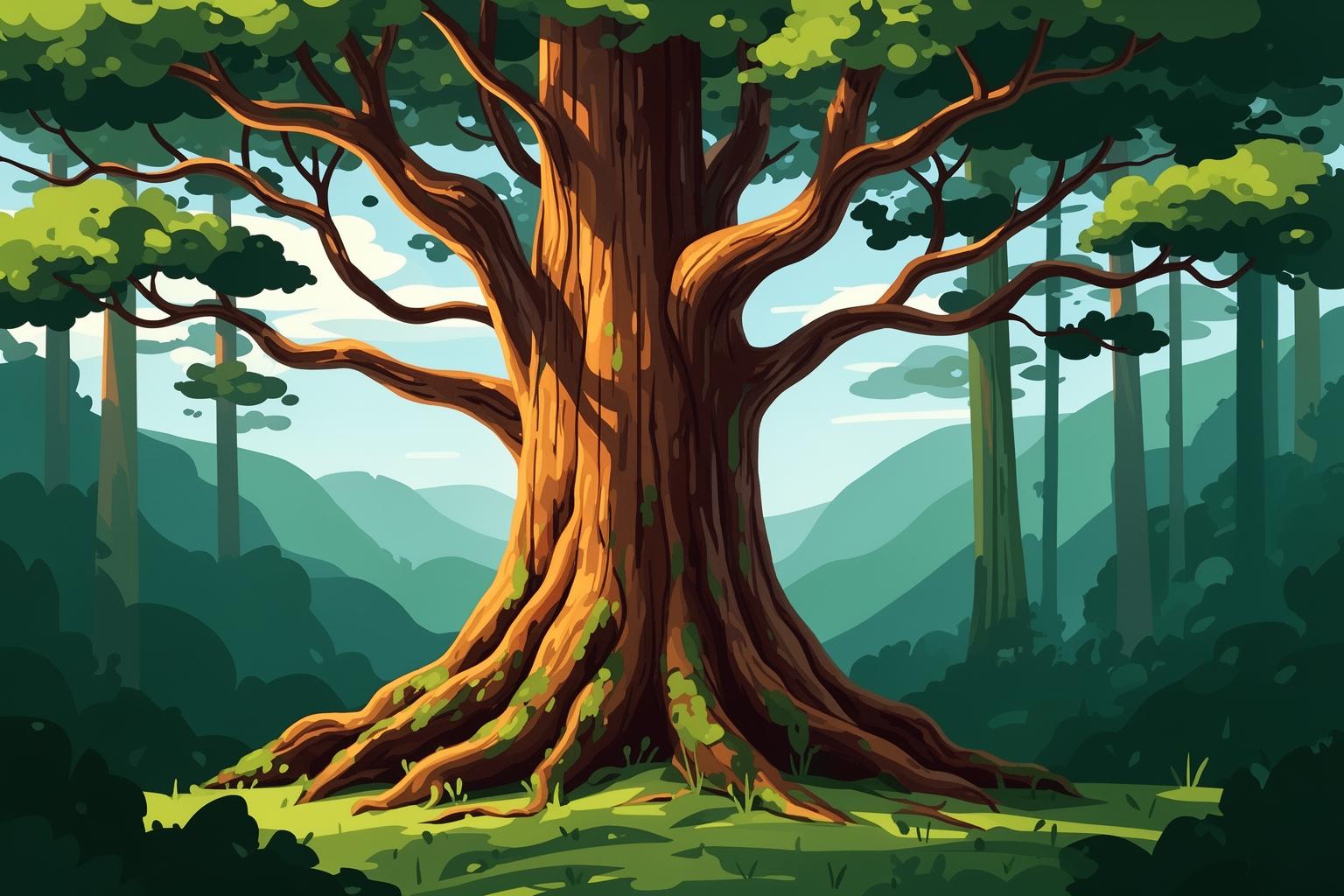
While Shiratani Unsuikyo represents the essence of the Princess Mononoke aesthetic and the soul of the island, its ultimate deity is Jomon Sugi. This ancient and revered Yakusugi cedar is the island’s oldest living monument, with an age estimated to range from 2,170 to an astonishing 7,200 years. Visiting it is no simple stroll; it is an epic pilgrimage—a full-day, ten-to-twelve-hour trek that challenges your body while uplifting your spirit. This journey serves as the ultimate homage to the Shishigami, the Forest Spirit from the film—a quest to encounter a being embodying the life force and resilience of the entire forest.
An Epic Journey Through Time
The adventure begins in the pre-dawn darkness. Most hikers set out around 4 or 5 AM to complete the 22-kilometer round trip within daylight hours. The trail initially follows the Anbo Forest Road before shifting to the Okabu Trail, a former logging railway line. For several hours, you traverse these tracks, crossing narrow wooden trestle bridges spanning deep ravines. The steady clank of your boots on wooden sleepers becomes a meditative rhythm, a journey through history. As you climb higher, the forest transforms: subtropical vegetation yields to towering conifers, with the trees growing older and more majestic. Along the way, you’ll pass other famous Yakusugi, such as Meoto Sugi (Husband and Wife Cedars) and the enormous Daiosugi (Great King Cedar). Each stands like a guardian, a lesser deity paying respect to the great spirit awaiting you at the trail’s end. Although physically demanding, with long stretches and steep climbs, the breathtaking surroundings continually replenish your energy and motivation.
Standing Before a Living God
After hours of intense hiking, you arrive at the final ascent. Then, it appears. Jomon Sugi does not announce itself dramatically; it rises quietly from the mountain mist, a massive, gnarled presence beyond comprehension. Its trunk is immense and otherworldly, a terrain of twisted bark, deep hollows, and branches stretching toward the sky like weary arms. It feels less like a tree and more like a living being—a silent observer of millennia of history. Conservation efforts restrict viewing to a specially built wooden platform a short distance away, preserving its fragile root system. Yet even from here, its power is undeniable. You feel incredibly small and transient beside it. This is the Shishigami in its purest form—not a creature of motion or speech, but a quiet, enduring symbol of life itself. The moment fills you with awe, reverence, and a humbling perspective on your place in the world. This feeling lingers long after the challenging journey back down the mountain.
Beyond the Ancient Forest: Yakushima’s Otherworldly Charms
While the ancient forests remain the island’s main attraction, the spirit of Yakushima is felt throughout its entire landscape, from its striking coastline to its roaring waterfalls. To truly experience the island, one must venture beyond the well-known trails and uncover the other marvels it offers. The vast amount of fresh water flowing down from the mountains shapes a network of powerful rivers and breathtaking waterfalls. Among these, Senpiro-no-taki and Oko-no-taki stand out as particularly impressive. Oko-no-taki, especially, is a magnificent sight, plunging 88 meters onto the rocks below with a thunderous roar. You can approach its base and feel the mist on your face—a raw, invigorating testament to nature’s force.
Waterfalls of the Gods and Ocean Breezes
Yakushima’s coastline presents a different kind of enchantment. Unlike the deep, shaded greens of the interior, the coast is a realm of bright sunlight, blue seas, and rugged black rocks. Nagata Inakahama Beach is a stunning stretch of golden sand, best known as the largest nesting ground for loggerhead sea turtles in the North Pacific. From May to July, female turtles crawl ashore under the cover of night to lay their eggs—a timeless and moving ritual. Visiting during this period requires great caution and often a guided tour to protect the turtles, but witnessing it is an unforgettable experience. For a whimsical touch, visit Hoshizuna-no-hama, or Star Sand Beach, where the “sand” consists of star-shaped exoskeletons of tiny marine creatures. Gathering a handful and discovering the small, perfect stars is a simple yet delightful joy.
The Flavors of a Timeless Island
Yakushima’s gifts extend to its cuisine, which is fresh, local, and deeply tied to the island’s environment. A local specialty you must try is `tobiuo`, or flying fish. Served grilled with salt, as sashimi, or deep-fried to crispy perfection, it offers a delicious taste of the surrounding ocean. The island is also known for its citrus fruits, especially the `tankan` and `ponkan` oranges, which are exceptionally sweet and juicy. These fruits are sold at roadside stands and used in juices, jams, and desserts. To truly capture the island’s spirit, sample the local shochu. Distilled with Yakushima’s famously pure and soft spring water, it boasts a uniquely clean and smooth flavor. Enjoying fresh seafood and local vegetables, accompanied by a glass of island shochu, is the perfect way to recharge after a long day of hiking and connect with the island’s culture.
Soaking in Nature’s Embrace: Onsen Experiences
After days of mountain trekking, few rewards compare to soaking tired muscles in a natural hot spring, or `onsen`. Yakushima offers a uniquely special onsen experience with its seaside hot springs. Hirauchi Kaichu Onsen is perhaps the most famous—a series of natural rock pools located right on the ocean shore. The pools are accessible only during low tide for a few hours each day, when hot spring water blends with cooler seawater to create an ideal temperature. Bathing in the steaming, sulfur-scented water while watching waves crash against the nearby rocks is a sublime experience. It’s a co-ed, rustic setting with no changing rooms, requiring a sense of adventure, but the sensation of being cradled between the earth’s warmth and the vast ocean is pure magic.
Planning Your Pilgrimage: A Practical Guide to the Mystical Isle
Embarking on a trip to Yakushima requires more planning than visiting a major city, but the effort is generously rewarded. This is not a destination for spontaneous, last-minute trips, especially during peak travel times. Careful preparation is essential for a smooth and deeply fulfilling experience on this mystical island.
Getting There and Getting Around
Your journey to Yakushima will most likely start in Kagoshima, the southernmost major city on Japan’s Kyushu island. From there, you have several options. The fastest is the high-speed jetfoil ferry, commonly known as the “Toppy” or “Rocket,” which takes about two to three hours to reach either Miyanoura or Anbo, the island’s two main ports. For a slower, more budget-friendly choice, the car ferry takes about four hours and offers the chance to stand on deck and watch the island grow larger in the distance. Alternatively, you can fly directly from Kagoshima, Fukuoka, or Osaka to the small Yakushima Airport (YAK). Once on the island, transportation presents the biggest logistical challenge. The public bus system is available but infrequent and doesn’t conveniently serve all trailheads. The best way to explore the island’s dispersed sights is by renting a car, giving you freedom to travel at your own pace, stop at scenic viewpoints, and reach trailheads early. Be sure to reserve your rental car well in advance, as availability is limited and they book up quickly.
When to Visit: The Island’s Changing Seasons
There is no truly bad time to visit Yakushima, but each season has a distinct character. Spring (March to May) is a beautiful period when mountain rhododendrons bloom, adding pink bursts to the green landscape, though it can still be chilly at higher elevations. Summer (June to August) is the height of lush greenery and sea turtle nesting season; however, it’s also the rainiest period and falls during typhoon season, so flexibility is essential. Autumn (September to November) is often considered the best hiking season, with more stable weather, clearer skies, and pleasant temperatures. Winter (December to February) brings the fewest visitors, offering peaceful solitude. Coastal areas remain mild, but the high mountain peaks are often blanketed in deep snow, creating a stunning yet more demanding hiking environment. No matter when you visit, always be prepared for rain. The local saying that it rains “35 days a month” is only a slight exaggeration. Rain sustains the island’s life—embrace it as part of the adventure.
Where to Stay
Accommodations on Yakushima range from luxurious resort hotels with on-site onsen to simple family-run guesthouses called `minshuku` and budget-friendly hostels. Staying in a minshuku offers a wonderful way to experience local hospitality, often including delicious home-cooked dinners and breakfasts made with local ingredients. The main towns of Miyanoura and Anbo have the greatest selection of lodging and serve as convenient bases for accessing ferries, restaurants, and shops. For those seeking greater seclusion, smaller settlements along the island’s coastal road provide quieter accommodations. As with rental cars, booking your lodging well in advance is crucial, especially if visiting during Japanese public holidays or peak summer months.
Essential Tips for the Trail
A few important tips can greatly enhance your Yakushima adventure. First and foremost: waterproof everything. Use a rain cover for your backpack and consider dry bags for electronics. Second, invest in sturdy footwear since trails are rugged and often wet. Third, for the long hike to Jomon Sugi, you are required to use a portable toilet to protect the environment—these are available for purchase at local shops. Fourth, always carry enough water and high-energy snacks. Lastly, bring cash. While larger hotels and shops may accept credit cards, many smaller restaurants and local businesses operate on a cash-only basis. By preparing for the island’s unique conditions, you allow yourself to fully immerse in its magic without worry.
The Spirit of Yakushima: A Final Reflection
Leaving Yakushima feels like emerging from a vivid dream. The lush green moss and the towering presence of ancient trees stay etched in your mind’s eye. A visit to this island offers far more than a mere sightseeing trip or an anime pilgrimage. It is a profound and humbling encounter with the raw power of nature. It provides a chance to walk through a landscape that feels genuinely sacred, to sense the vastness of geological and biological time, and to contemplate our own small place within it. You come to Yakushima in search of the forest from Princess Mononoke, but you depart with something far more personal: the spirit of Yakushima itself. This spirit embodies resilience, balance, and a deep, quiet wisdom found only in the silence between raindrops falling on a bed of moss. Carry that spirit with you, and a small part of that ancient, magical forest will remain in your heart forever.