
There are stories that feel like they belong to the world, and then there are stories that feel like they belong to you. Makoto Shinkai’s masterpiece, “Your Name.” (Kimi no Na wa), is both. It’s a global phenomenon that shattered box office records, a dazzling spectacle of animation and sound. But at its core, it’s an intimate whisper about connection, a melancholic poem about memory, and a hopeful shout across time and distance. The film weaves a phantom thread, a musubi, between two souls—Taki, a high school boy navigating the electric maze of Tokyo, and Mitsuha, a shrine maiden dreaming of a life beyond her tranquil, mountain-ringed town. Their story feels so real, so tangible, because in many ways, it is. The world they inhabit is not a fantasy. It’s a meticulously rendered portrait of real places in Japan, from the pulsing heart of Shinjuku to the quiet, traditional towns of the Hida region. This journey isn’t just for anime fans; it’s for anyone who has ever felt a strange sense of longing for a place they’ve never been. It’s an invitation to step through the screen and walk in the footsteps of Taki and Mitsuha, to feel the sun on the same steps where they finally met, and to discover that the magic of the film is embedded in the very fabric of modern Japan. This is a pilgrimage, a seichi junrei, to the soul of the story.
For those who feel a deep connection with Japan’s tangible landscapes, exploring the real-life magic of Sayama Hills can offer another enchanting perspective.
The Heart of the Connection: Suga Shrine’s Iconic Steps
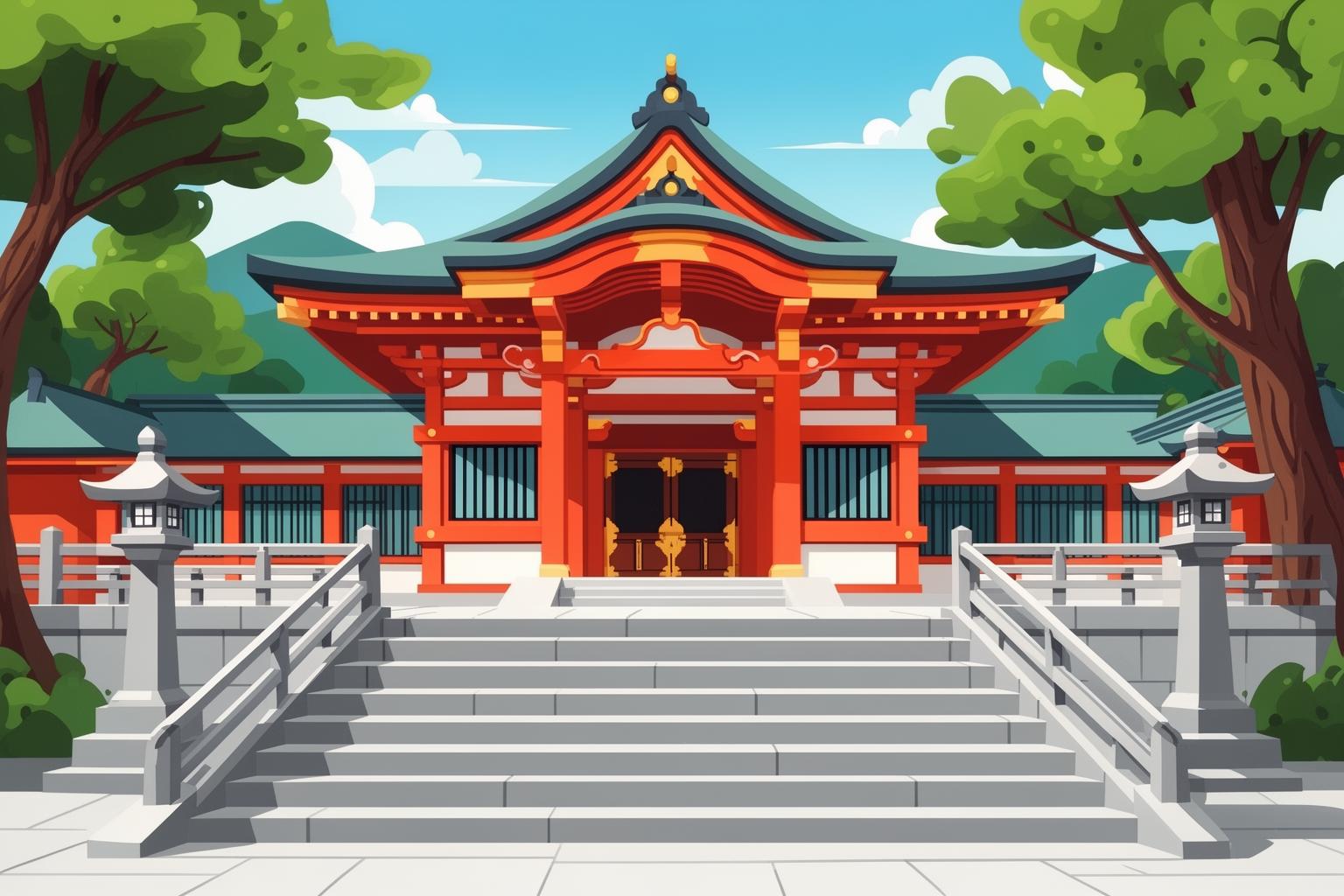
Every pilgrimage has its sacred center, its emotional peak. For “Your Name.”, that focal point is a modest, unpretentious staircase nestled in a quiet residential corner of Yotsuya, Tokyo. These are the steps of Suga Shrine, the backdrop for the film’s breathtaking, cathartic climax. The journey to reach them is an experience in itself, a gradual descent from the urban clamor of central Tokyo into a maze of narrow streets, humble homes, and the gentle rhythm of everyday life. There are no prominent signs to guide you, no throngs of tourists bustling about. You simply turn a corner, and there it stands. The scene, lifted directly from the animation cell, comes to life before your eyes.
The First Encounter with a Memory
The sensation is surreal. Your mind takes a moment to grasp the perfect fusion of reality and fiction. The vivid red handrail that draws the eye down the gentle curve of the steps. The soft green moss creeping along the stone walls. The city buildings looming in the background, a subtle reminder that this tranquil enclave exists within a vast metropolis. It’s all exactly as depicted. The feeling of arrival is less about discovery and more about recognition, as if recalling a memory of a place you’ve known all your life. The atmosphere is heavy with quiet reverence. Naturally, you’ll see other fans, but there’s an unspoken respect among them. They wait patiently at the top or bottom, each taking their turn to capture the view, lost in their own reflections of the film’s final moments. The air is still, interrupted only by the distant hum of a train or the rustle of leaves from the trees overhanging the staircase, casting dappled shadows that dance on the concrete.
Capturing Your Own Movie Poster Moment
Standing on these steps turns you into the protagonist of your own story. Everyone who makes this pilgrimage hopes to capture that iconic shot—the one that echoes the movie’s poster. For the best lighting, aim for late afternoon. As the sun dips lower, it casts a warm, golden glow that softens the cityscape and wraps the scene in the same nostalgic, dreamlike atmosphere Shinkai is renowned for. This “magic hour” light makes the red railing vibrant and creates long, dramatic shadows, adding cinematic beauty to your photos. Yet, it’s important to remember this is not a film set; it’s a living neighborhood and the entrance to an active Shinto shrine. Be considerate and respectful. Local residents use these stairs daily. Avoid blocking the path for long periods, and keep your voice low. The beauty of this place lies in its authenticity, and maintaining that tranquility is a shared responsibility. The true magic isn’t just in the photograph but in standing there, the Tokyo breeze on your face, imagining that poignant, hopeful question: “Haven’t we met?”
Exploring Suga Shrine Itself
While the stairs are the main draw, the pilgrimage wouldn’t be complete without visiting Suga Shrine itself. Climb the steps and pass beneath the modest torii gate at the top. The grounds are small and serene, a genuine local shrine that has served the community for centuries. It’s a place for quiet reflection, dedicated to deities who watch over the neighborhood. Take a moment to observe the traditional Shinto rituals. You can purify your hands at the temizuya water basin, approach the main hall, bow, toss a coin as an offering, and say a silent prayer. Look for the ema, small wooden plaques on which visitors write their wishes. Many are decorated with beautiful, heartfelt illustrations of Taki and Mitsuha, showcasing the film’s emotional resonance. Purchasing an omamori, a protective charm, at the small shrine office provides a meaningful souvenir—a tangible piece of musubi to carry with you.
Taki’s Tokyo: A Journey Through Shinjuku and Yotsuya
Taki’s world is shaped by the relentless, beautiful, and occasionally lonely rhythm of Tokyo. His story unfolds amid towering skyscrapers, jam-packed train stations, and trendy cafes. To explore his haunts is to immerse yourself in the modern pulse of Japan—a realm of ambition, fleeting moments, and the pursuit of connection within a city of millions. The contrast between his urban existence and Mitsuha’s rural life stands as a central theme, and to fully grasp his side of the story, you must dive into the vibrant chaos he calls home.
The Urban Jungle of Shinjuku Station
Shinjuku Station feels less like a building and more like a living, breathing organism. As the busiest transportation hub in the world, it is a dizzying intersection of train lines, department stores, and an endless flow of people moving with a mysterious, unspoken purpose. This is Taki’s daily reality. The film captures the sensation perfectly: fleeting glimpses of faces in the crowd, the overwhelming scale of the architecture, and the symphony of train announcements, electronic chimes, and the shuffling of countless feet. For first-time visitors, it can be overwhelming. The secret is to go with the flow. Avoid stopping abruptly in busy walkways. Keep your eyes on the extensive English signage guiding you through the maze-like corridors. Find a spot on an upper-level concourse or near a large window and simply watch for a few minutes. It’s a hypnotic ballet of organized chaos, a perfect snapshot of the energy powering Tokyo.
Taki’s Part-Time Job: The Real Cafe La Bohème
One of the most memorable places in Taki’s life is the stylish Italian restaurant where he works part-time—the setting for his encounters with the sophisticated and kind Okudera-senpai. This restaurant truly exists and is called Cafe La Bohème Shinjuku Gyoen. Located just steps from the renowned park, stepping inside feels like walking directly into the anime. The resemblance is remarkable. The spacious interior with high ceilings, grand chandeliers, dark wood details, and romantic, theatrical atmosphere are all faithfully preserved. It’s the kind of place that makes you feel a little more grown-up, just as Taki was trying to be. Because it’s very popular, making a reservation—especially for dinner—is strongly advised. You can enjoy a full meal of delicious pasta or pizza, or simply stop by for an indulgent dessert and coffee. Surrounded by warm lighting and the gentle murmur of conversation, it’s easy to picture Taki rushing through the dining room, balancing plates while navigating the delicate dance of customer service and a workplace crush.
The Pedestrian Bridge of Taki’s Frustration
Near Shinanomachi Station, a short walk from the area around Suga Shrine, lies another important location: the pedestrian bridge where a distressed Taki repeatedly tries to call Mitsuha, only to have the connection fail. It’s a poignant scene, a moment of desperate and dwindling hope. The bridge itself is unremarkable, but its view is iconic. From here, you get a clear view of the distinctive, pencil-like silhouette of the NTT Docomo Yoyogi Building. This skyscraper is a recurring visual motif in Shinkai’s films, a landmark that instantly proclaims “Tokyo.” Standing here, you sense the city’s vastness and the great distance separating the two protagonists. It’s a powerful spot for a photo, especially at dusk when the sky takes on an indigo hue and city lights begin to twinkle. The view captures a particular urban melancholy—the feeling of being surrounded by millions yet profoundly alone—that defined Taki’s search.
The Soul of Itomori: Echoes in the Hida Region
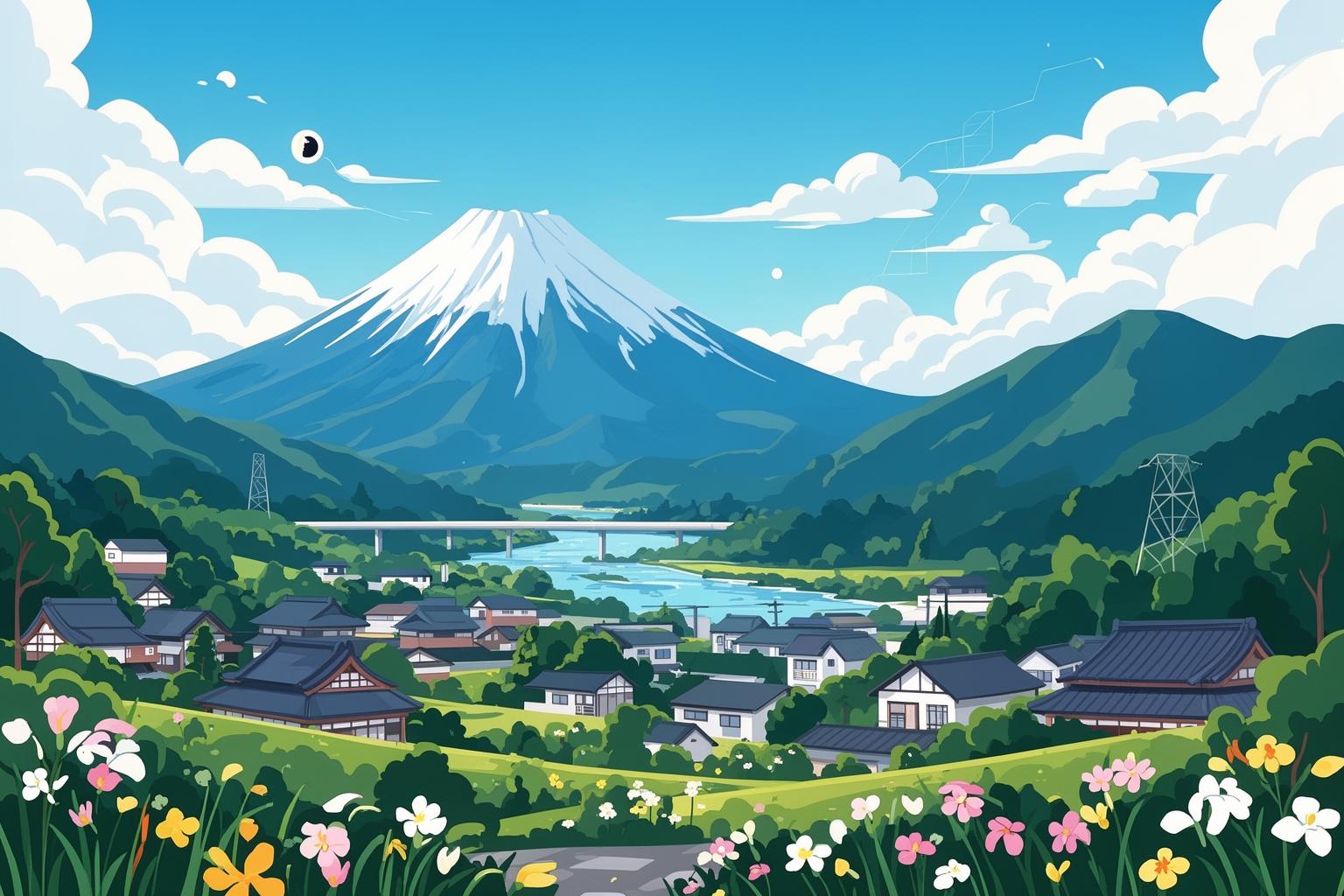
To discover Mitsuha’s world, you need to leave behind the glittering towers of Tokyo. Her fictional town of Itomori, with its rich traditions and breathtaking natural scenery, is not purely a product of imagination. Its essence is rooted in the Hida region of Gifu Prefecture, a mountainous, rural area renowned for preserved historic towns, skilled artisans, and a lifestyle paced by the seasons rather than the clock. The journey itself is part of the pilgrimage—a gradual shift from the digital buzz of the city to the quiet analog rhythm of the countryside. As your train winds through valleys and follows riverbeds, concrete gives way to cedar forests and traditional farmhouses with distinctive sloped roofs. You are entering Mitsuha’s Japan.
Hida-Furukawa Station: Mitsuha’s Gateway
The quaint, charming town of Hida-Furukawa serves as the primary inspiration for Itomori’s scenery. Your arrival point is Hida-Furukawa Station, a place that almost instantly sparks a sense of déjà vu. The film recreates it with remarkable accuracy. Stepping off the local train, you’ll recognize the wooden benches on the platform, the characteristic signage, and the open-air footbridge that Taki and his friends cross. In the movie, they spot the town’s mascot, a comical cow. In reality, you’ll find a small statue of Hida-gyu, the region’s famous premium beef, a charming nod to local culture. The station is small, and trains run far less frequently than in Tokyo, so be sure to check the schedule for your return trip. The town has warmly embraced its connection to the film, and you’ll encounter a genuine sense of pride and welcome from the local community.
The Itomori Library: Hida City Library
A key scene in the film shows Taki and his friends poring over records in the Itomori town library, trying to uncover the history of the comet strike. This beautiful building is actually the Hida City Library, possibly the most fan-friendly spot on the entire pilgrimage. The library’s interior is a stunning example of wooden architecture, with warm, gentle lighting and a serene atmosphere. The staff are well aware of its fame and are highly accommodating. In a rare gesture for Japanese libraries, they allow visitors to photograph the interior—just ask for permission at the front desk. You can find the exact place where Taki sat, identifiable by the distinctive circular arrangement of study carrels, and witness the real-world setting of his desperate quest for truth. It’s a wonderful example of how a community can share its public spaces with appreciative visitors from around the world.
The Taste of Itomori: Goheimochi and Local Flavors
While searching the region, Taki and his friends stop to eat a local snack from a roadside stall: goheimochi, a specialty of the Hida area. It consists of a flattened rice cake skewered, brushed with a savory-sweet sauce made from miso, walnuts, and sesame, then grilled over an open flame. The result is a rustic, comforting treat with a slightly charred, smoky flavor and a chewy texture. You absolutely must try it in Hida-Furukawa or the nearby larger town of Takayama. Hunting down a small, local shop selling freshly grilled goheimochi is a delicious way to connect with Mitsuha’s homeland culture. It’s a simple, authentic taste that grounds the film’s fantasy in a real, flavorful experience.
The Mystical Heart: Lake Suwa and Miyamizu Shrine
While the townscape of Itomori is primarily based on Hida-Furukawa, its most mystical and dramatic elements draw inspiration from various locations, forming a composite landscape of memory and magic. Two of the most significant are the crater lake that shapes Itomori’s geography and the ancient Miyamizu Shrine, which serves as the core of Mitsuha’s spiritual life.
The Crater Lake That Inspired a Legend
The stunning, bowl-shaped Lake Itomori, around which the entire town is situated, is fictional. Yet, its visual inspiration is widely thought to be Lake Suwa, found in neighboring Nagano Prefecture. To witness the view that sparked countless fan theories, you need to visit the Tateishi Park observation deck, perched on a hillside overlooking the lake. The panoramic view from this spot is breathtaking. The vast, shimmering water, nestled among mountains and bordered by the lights of lakeside towns, closely mirrors the film’s portrayal of Itomori. Visiting at dusk or twilight is an unforgettable experience. As the sun sets, the sky bursts with color, and the city lights below begin to twinkle one by one, creating a scene of deep beauty and subtle melancholy. It’s easy to imagine a comet streaking across this very sky, and it becomes clear why Shinkai chose this magnificent landscape as the model for his story’s pivotal location.
Searching for Miyamizu Shrine
Miyamizu Shrine, the spiritual home of Mitsuha’s family traditions and the site of the sacred kuchikamizake ritual, does not exist as a single location. Instead, it is a blend of several shrines, combining elements to craft a perfect cinematic setting. However, one key inspiration for its environment is believed to be Hie Shrine in the nearby city of Takayama. What makes Hie Shrine particularly evocative is its entrance: a long, steep stone staircase ascending a hillside, cutting through a forest of towering, ancient cedar trees. Walking up these steps feels like stepping into another world. Sunlight filters through the dense canopy above, casting patterns of light and shadow on the moss-covered stone lanterns lining the path. The air is cool and carries the scent of damp earth and wood. It’s a place that feels ancient, sacred, and intimately connected to nature, perfectly reflecting the spiritual essence of the Miyamizu traditions and the timeless, cyclical nature of musubi.
Planning Your “Your Name.” Pilgrimage: A Practical Guide

Embarking on a seichi junrei for “Your Name.” is a deeply rewarding experience, though it requires some preparation since it covers both a bustling metropolis and a distant rural area. The best way to approach it is to think of it as two separate yet connected journeys.
The Tale of Two Trips: Tokyo and Hida
The Tokyo segment of the pilgrimage is fairly straightforward. Key spots in Yotsuya and Shinjuku are easily reachable via Tokyo’s excellent subway and train system. With a well-organized plan, you can comfortably see all the main city locations in one day. Traveling to the Hida region, however, demands more time. From Tokyo, you’ll take a shinkansen (bullet train) to a major hub like Nagoya or Toyama, then transfer to a scenic but much slower local train line. This leg of the trip will take several hours. To fully experience Hida-Furukawa, Takayama, and perhaps a detour to Lake Suwa, plan to spend at least two days with an overnight stay in the area. For international visitors covering such distances, a Japan Rail Pass can be a highly cost-effective way to handle the long train rides.
When to Weave Your Own Story
Japan showcases four distinct and stunning seasons, each providing a unique way to experience your pilgrimage. Spring cloaks Tokyo in pale pink cherry blossoms, adding an ephemeral beauty that echoes the film’s themes of fleeting moments. Summer in Hida is rich with vibrant greens, though the weather can be hot and humid. Autumn may be the most fitting season thematically—the countryside bursts into fiery reds, oranges, and golds, reflecting the film’s vivid color palette, while the crisp, clear air is ideal for travel. Winter turns the Hida region into a serene, magical snowscape. The sight of traditional wooden buildings covered in snow is breathtaking, but be prepared for cold temperatures and possible travel delays.
More Than a Checklist: The Spirit of the Journey
The most crucial advice is to treat this pilgrimage not as a mere checklist of photo spots, but as an immersive experience. Don’t just snap a picture of the Suga Shrine steps and move on—take time to absorb the quiet of the neighborhood. Don’t just photograph Cafe La Bohème; step inside, order a coffee, and soak up the ambiance. Wander the backstreets of Hida-Furukawa, listen to the water flowing through the town’s famous canals, and sample the local sake. The magic of “Your Name.” lies not only in its iconic landmarks, but in the small, everyday details of Japanese life that Shinkai captures so tenderly: the lonely glow of vending machines at night, the distinct sounds of a train crossing, the intricate web of power lines silhouetted against a twilight sky. These are the threads weaving the rich tapestry of the film’s world. By noticing them, you don’t just visit the movie’s locations—you feel its essence.
This pilgrimage is a journey of connection—between two characters, between city and countryside, between fiction and reality. By walking these same streets, you bridge the gap between the world on screen and the world beneath your feet. You realize the story isn’t just about Taki and Mitsuha anymore. It’s about you, standing on a staircase in Tokyo, sensing the strange, wonderful, and unmistakable pull of a red string of fate, wondering who you might be destined to meet.