There’s a certain kind of magic that never fades, a cinematic enchantment that winds its way into the very fabric of your memory. For millions, that magic is Hayao Miyazaki’s masterpiece, Spirited Away. It’s more than just an animated film; it’s a living, breathing world that feels impossibly real, a place we’ve all visited in our dreams. We remember the trepidation as Chihiro steps onto that iconic red bridge, the overwhelming sensory explosion of the spirit world’s marketplace, the steam and grandeur of Yubaba’s bathhouse, the Aburaya. The film leaves an indelible mark, a quiet longing for a place that feels both strangely familiar and utterly fantastical. This longing is the spark that ignites a unique kind of travel, a modern-day pilgrimage known in Japan as seichi junrei—a journey to the “sacred sites” that inspired our favorite stories. And for fans of Spirited Away, this pilgrimage is a global quest, a puzzle of architectural whispers and atmospheric echoes scattered across East Asia. It’s a journey that blurs the line between animation and reality, sending travelers in search of tangible pieces of a world born from imagination. The most famous destination on this map of dreams is a mist-shrouded mountain town in Taiwan, a place of red lanterns and impossible alleyways that seems torn directly from a cel of the film. Yet, the true story of inspiration is, much like the film itself, a complex and layered tapestry woven from many threads. This is not just a quest to find one single location, but to chase a feeling, to understand the mosaic of places and memories that coalesced in Miyazaki’s mind to create the spirit world. Our journey begins where the myth is strongest, in a place that will test our balance on ancient stone steps and dazzle our eyes with a constellation of crimson light, before we follow the trail back to the heart of Japan, uncovering the deeper, quieter truths behind the magic. Prepare to get lost, to wander, and to find the spirit world waiting for you in the most unexpected corners of our own.
Intrigued by the allure of hidden realms, some travelers delve into Yakushima’s ancient woodlands to experience nature’s timeless magic echoing the cinematic spirit.
The Lantern-Lit Labyrinth: Unraveling the Myth of Jiufen
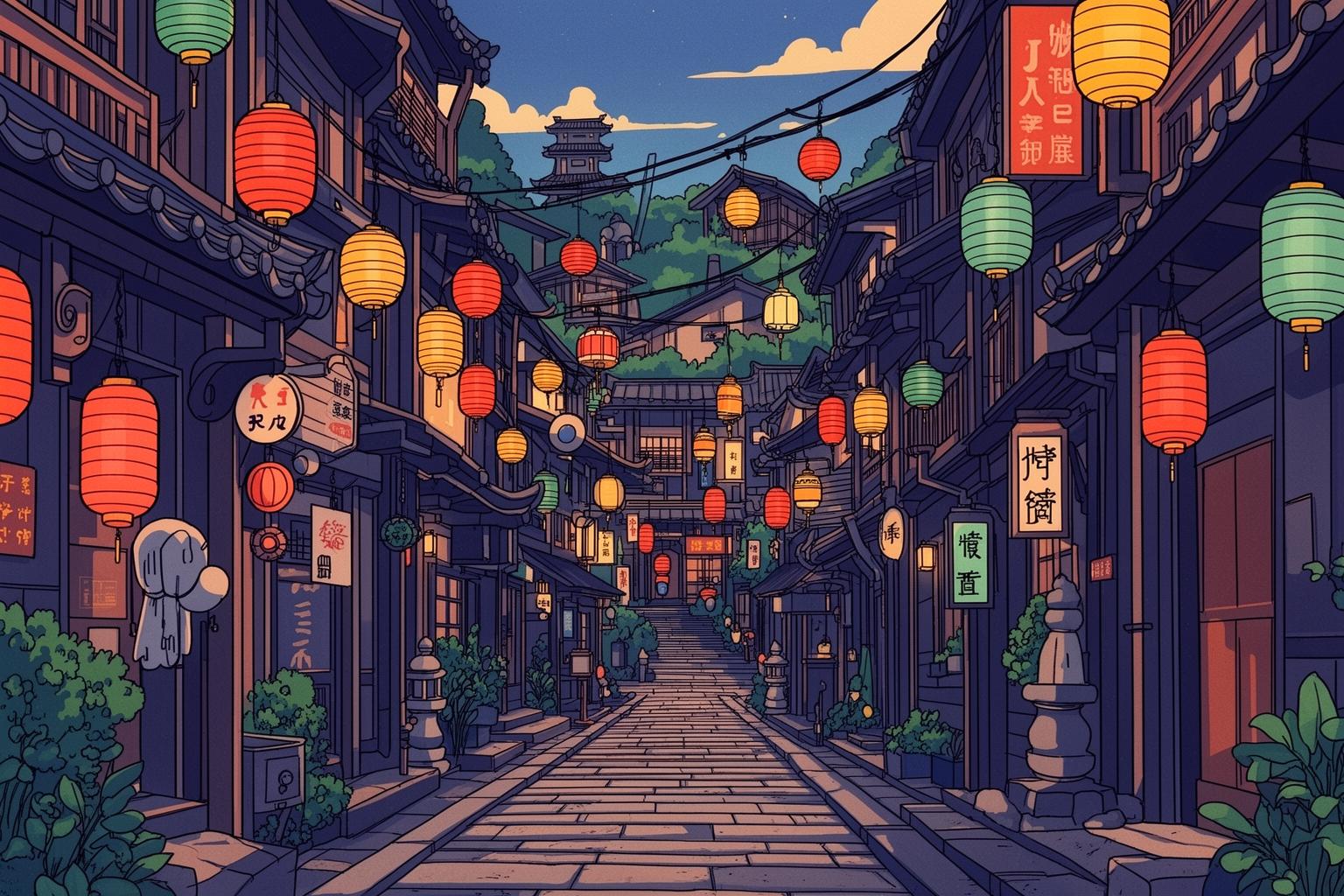
The bus journey from Taipei is a slow, winding climb, shifting from the sleek urbanity of the capital to the raw, verdant embrace of the mountains. Then, you see it: Jiufen. It doesn’t simply appear on the horizon but emerges from the mist—a cascade of buildings precariously perched on the mountainside, overlooking the churning blue of the East China Sea. The first impression is one of beautiful impossibility. It’s a vertical town, a labyrinth of stone staircases and impossibly narrow alleys, where the sky is often just a sliver of gray between sagging tiled roofs. The air here feels different—heavy with moisture, carrying the scent of street-food steam, fragrant tea, and the subtle, earthy perfume of damp stone and history. This is the place that has become legendary among Ghibli fans, the town whispered to be the definitive real-world Spirited Away. And as you step off the bus and into the bustling crowd of Jishan Old Street, it’s easy to understand why.
A Step into a Cinematic Dreamscape
Walking through Jiufen means surrendering your sense of direction. The main artery, Jishan Old Street, is a covered bazaar—a river of people flowing past stalls selling everything imaginable. The energy is palpable—a delightful chaos of sounds and smells. But the true magic begins when you stray, turning onto Shuqi Road, the iconic steep staircase at the heart of Jiufen’s visual identity. Here, the red lanterns appear. Hanging densely from the eaves of every teahouse and shop, they form a crimson canopy glowing with an otherworldly warmth. As daylight fades, transformation sets in. The lanterns flicker on one by one, bathing the stone steps and wooden facades in gold and scarlet hues. The mist rolling in from the sea acts as a natural diffuser, softening the light and enveloping the scene in an ethereal haze. It’s a moment of pure, unfiltered atmosphere. You instinctively slow your pace, eyes drawn upward to the cascading lights, and in that instant, the resemblance to the film’s vibrant, chaotic spirit world is breathtakingly clear. You can almost hear the rustle of spirits and see shadowy figures hurrying toward the glow of a hidden bathhouse.
The Spirited Connection: Fact vs. Folklore
For years, the legend persisted: Hayao Miyazaki visited Jiufen and based the world of Spirited Away on its stunning scenery. It’s a captivating story that has fueled the town’s tourism for decades. However, the truth, as confirmed by Miyazaki and Studio Ghibli, is more nuanced. The director has officially stated that Jiufen was not the direct model for the film. Yet, dismissing the connection entirely feels wrong. The parallels are too strong, the atmosphere too similar. Perhaps the best way to understand it is to view inspiration not as a photograph but as a collage. Jiufen’s aesthetic—the vertical layout, maze-like alleys, sea of red lanterns, and old wooden teahouses—perfectly aligns with the film’s visual language, becoming a spiritual anchor for its world regardless of intent. It represents the type of place that fuels Ghibli’s imagination. Visiting Jiufen, then, becomes less about verifying a director’s travel history and more about experiencing a place that embodies the film’s soul. It’s a testament to how certain locations hold a universal magic that resonates with and reflects a beloved work of art, creating a symbiotic relationship where place and story enrich one another.
Navigating the Alleys of A-Mei Teahouse
The heart of Jiufen’s cinematic fame is undoubtedly the A-Mei Teahouse. With its striking dark wood facade, glowing windows, and cascades of red lanterns, it is the town’s postcard image. Climbing the final steps of Shuqi Road and standing before it, you experience a jolt of recognition. Its multi-storied, complex structure perched on the cliffside immediately evokes the imposing yet inviting presence of the Aburaya. Finding a seat on one of its open-air balconies is quintessential Jiufen. The ritual of traditional tea service begins—a small pot, tiny cups, and a canister of high-quality local oolong leaves. As you learn to brew your tea, the world outside seems to slow. From this vantage point, you can gaze out at the sea, watch the lanterns below grow brighter as night falls, and see the lights of fishing boats appear on the dark water. The crowd’s chatter fades into a pleasant hum, suspending you in a moment of pure tranquility. It’s in these quiet moments, sipping fragrant tea amid glowing lanterns, that you feel closest to Chihiro’s world—not in its bustling chaos but in the pockets of peace and beauty she discovered within it.
A Culinary Pilgrimage
One of the most memorable and haunting scenes in Spirited Away is when Chihiro’s parents transform into pigs after gorging themselves at a mysterious food stall. Jiufen’s Jishan Old Street offers a similar sensory overload, though less perilous. A stroll down this alley is a culinary adventure. The air is thick with the sweet, nutty aroma of peanut ice cream rolls—a crepe filled with shaved peanut brittle, taro ice cream, and cilantro. It sounds unusual, but the combination is delightful. Further along, vendors sell glutinous rice cakes, grilled sausages, and the town’s signature dish: taro ball soup. Served hot or cold, these chewy, subtly sweet taro, sweet potato, and mung bean balls in sugary syrup are ultimate comfort food, especially on a cool, misty evening. The taste of that first warm bowl, steam rising into the mountain air, is unforgettable—a simple yet profound pleasure. For the more adventurous, the pungent aroma of stinky tofu fills the air, a challenge and delight for the senses. Exploring Jiufen’s food scene is a vital part of the pilgrimage, a way to connect with the film’s themes of consumption, temptation, and the grounding power of a good meal.
Practical Magic: Timing Your Visit to Jiufen
To fully experience Jiufen’s magic, a bit of planning helps. The journey from Taipei is straightforward, with options ranging from public buses offering a scenic if slow ride, to a combination of train and bus or taxi for faster, more comfortable travel. The single most important advice concerns timing. Jiufen is a popular day-trip destination, and the narrow alleys can become extremely crowded from noon to late afternoon. To avoid peak crowds and witness the town’s enchanting transformation, aim to arrive mid-afternoon, around 3 or 4 PM. This gives time to explore in daylight and secure a good spot at a teahouse or viewing platform to watch the sunset and lantern lighting. The real secret, however, is to stay overnight. Once the last tour buses leave around 7 or 8 PM, a profound quiet descends on the town. Crowds vanish, and the lantern-lit lanes become your private domain. Wandering the empty, echoing staircases late at night or early morning offers a vastly different experience—peaceful, mysterious, and deeply personal. It’s in these quiet hours that you can truly feel the old spirit of this former gold-mining town.
Echoes of the Bathhouse: Finding Yubaba’s Domain in Japan
While Jiufen sets the perfect atmospheric prelude, the architectural soul of Spirited Away resonates most strongly back in Japan. Hayao Miyazaki drew inspiration from the landscapes and structures of his homeland, and to find the model for the Aburaya—the magnificent bathhouse at the film’s center—we must visit the places where the gods themselves are said to bathe: Japan’s traditional onsen towns. Here, we discover not only aesthetic parallels but a profound cultural connection that roots the film’s fantasy in centuries of history and tradition.
Dogo Onsen Honkan: The Majestic Spa of the Gods
In Matsuyama city, on the island of Shikoku, stands a building of great historical and cultural significance: the Dogo Onsen Honkan. As one of Japan’s oldest and most renowned hot springs, with a history spanning over a thousand years, it possesses an inherent enchantment. For any Ghibli fan, arriving before its intricate, castle-like architecture is a moment of deep realization. This is the place. The complex, multi-layered rooflines, the maze of windows and balconies, the grand entrance, and the central watchtower crowned with a shirasagi (white heron)—all these details bring the Aburaya vividly to life. Miyazaki has confirmed Dogo Onsen as a key inspiration, and it’s easy to understand why. The structure feels alive, a collection of wings and extensions from different eras that form an organic, almost chaotic whole—as if it grew rather than was constructed. It perfectly embodies the scale and majesty of the spirits’ bathhouse. Inside, the building is a labyrinth of dark, polished wooden corridors, steep staircases, and tatami-matted resting rooms. The air is warm and steamy, filled with the sounds of splashing water and hushed conversations echoing through the halls. Bathing here is engaging in a ritual upheld for centuries. There are two main public baths—the Kami no Yu (Bath of the Gods) and the smaller, more ornate Tama no Yu (Bath of the Spirits). There is even a special bath, the Yushinden, reserved exclusively for the Imperial Family. Although the main building is currently undergoing extensive restoration and access may be restricted, its powerful exterior presence remains, and other facilities in the Dogo area offer access to the same legendary waters. The surrounding district, with its covered shopping arcades and traditional ryokans, completes the setting, making you feel as though you’ve stepped through a portal into a more enchanted era of Japan.
Shima Onsen’s Sekizenkan: A Gateway to Another World
If Dogo Onsen represents the body of the Aburaya, then a quiet inn in Gunma Prefecture embodies one of its most vital and symbolic features. Nestled in the mountains is Shima Onsen, a quaintly retro hot spring town. Here lies the Sekizenkan Ryokan, a historic inn reputed to be the oldest wooden hot spring hotel in Japan. While the inn itself is stunning, visitors come primarily for one reason: the Keiun-no-hashi, a vivid red bridge linking the main building to the forested mountainside. The instant you see it, the film’s scene becomes startlingly clear. This is the bridge Chihiro crosses, holding her breath, to enter the spirit world. The design, color, and placement form an almost perfect match. Standing before it, you can nearly feel the gravity of that moment—the shift from the human world to the magical realm. The bridge connects the street to the Genroku-no-Yu, a beautifully retro bathhouse featuring Romanesque arches that exude a unique charm. Crossing this bridge feels like a rite of passage. On one side lies the familiar world; on the other, the promise of something ancient and mysterious. Sekizenkan offers a potent, concentrated glimpse of the film’s magic—an architectural element that perfectly embodies the story’s most crucial turning point.
The Architecture of Memory: The Edo-Tokyo Open Air Museum

Sometimes, the most profound inspirations come not from grand vistas or iconic landmarks, but from a collection of smaller details—a collage of textures and shapes from a time long past. For an insightful glimpse into the mind of Hayao Miyazaki, one of the most crucial stops is not a tourist city but a sprawling, carefully preserved park on the outskirts of Tokyo: the Edo-Tokyo Open Air Architectural Museum. Miyazaki frequently visited this place during the making of Spirited Away, wandering its grounds to observe and soak in the atmosphere of a Japan that had faded away. The museum serves as a sanctuary of memory, where historic buildings from around Tokyo have been relocated and lovingly restored, safeguarding them from the relentless advance of modernization.
A Walk Through Time
Visiting the museum, nestled within Koganei Park, feels like stepping into a time machine. One moment, you’re immersed in a bustling modern city; the next, you’re strolling down a street lined with shops from the Meiji and Taisho periods. There’s a tangible sense of nostalgia, a quiet melancholy that lingers in the air—a feeling that echoes throughout many Ghibli films. Almost every building is open to exploration, from grand mansions of the wealthy to modest farmhouses and pre-war downtown shops. You can touch the weathered wood, peer through the old glass, and imagine the lives once lived within these walls. This is not a static exhibition behind velvet ropes but an immersive, tactile experience. It’s this collection of lived-in details that provided a rich visual source for the creators of Spirited Away, enabling them to craft a fantasy world that felt both authentic and deeply rooted in a specific cultural memory.
Spotting the Spirited Details
As you explore the museum, you begin to see the spirit world all around. The key is to focus on the details. Visit the “Shitamachi” or downtown district, where a row of old shops awaits. Pay close attention to the facade of the Kodera-san Soy Sauce Shop, with its distinctive green exterior and rows of wooden shelves, instantly recognizable. But the real treasure lies inside. Peek into the back rooms of these shops, especially the Takei Sanshodo, a former stationery store. There, walls are lined with hundreds of small wooden drawers, each labeled carefully. Suddenly, you’re transported to Kamaji’s boiler room. You can almost see the soot sprites scurrying about and hear the old spider-man extending his long arms to pluck a combination of herbs from these very drawers to craft a bath token. Then, there’s Kagi-ya, a former public bathhouse or sento. Step inside and look up at the grand, high-ceilinged changing room. The rows of wooden lockers, the intricate carvings, and the sheer scale evoke the employee quarters and behind-the-scenes areas of the Aburaya, a place of both work and community.
The Ghostly Train Ride
One of the most haunting and beautiful scenes in Spirited Away is the train ride Chihiro takes with No-Face. The train glides quietly across a vast, shallow sea, passing shadowy figures and lonely stations. It’s a moment filled with a profound sense of peace and sadness. While the Edo-Tokyo Museum doesn’t feature a sea, that feeling of the journey is strongly evoked. You can see a vintage Toden streetcar, the very model that would have rattled through old Tokyo’s streets. Standing beside it or gazing out from the window of a second-story shop at the preserved street below, you can tap into that same sense of nostalgic travel. The museum captures a world that no longer exists, a place inhabited only by memories and ghosts of daily life. In this way, a visit to the museum is like that train ride: a quiet, contemplative journey through a beautiful, half-forgotten world.
The Pilgrim’s Mindset: Embracing the Spirit of the Journey
A seichi junrei for a film as cherished and thematically layered as Spirited Away is much more than a typical sightseeing tour. It offers a chance to connect with the story on a deeper level, to grasp not only what the world looked like but also what it felt like. The aim isn’t merely to recreate a photo from a movie scene, but to capture the atmosphere that ignited the original spark of creation. This requires a shift in perspective—from that of a tourist to that of a pilgrim, someone seeking meaning and connection.
Beyond a Checklist of Locations
It’s easy to approach a pilgrimage as a checklist: Jiufen, Dogo Onsen, Sekizenkan, done. However, doing so misses the true purpose. The real enchantment of this journey is found in the spaces between these destinations. It lies in quietly observing how light falls on an old wooden building, savoring a local specialty, or feeling the soothing warmth of mineral-rich water that has comforted travelers for centuries. The key is understanding that Hayao Miyazaki didn’t simply copy these places, but absorbed their essence. He captured the vibrant energy of a Taiwanese market, the stately grace of a Meiji-era bathhouse, and the gentle nostalgia of a preserved downtown street. Your pilgrimage is truly successful not when you’ve visited every location on the list, but when you start seeing the world through a similar lens—finding magic and stories in the everyday around you.
Finding Your Own Spirited Away
Ultimately, the spirit world is not limited to these specific sites. Once you attune yourself to the Ghibli aesthetic, you begin to discover it everywhere. It could be a small moss-covered shrine nestled between two modern buildings in Tokyo, an ancient camphor tree soaring in a quiet park, or the way evening mist settles in a mountain valley. The journey teaches you to be present, to notice the details that make a place unique and memorable. It invites you to stray from the main path, get lost in a maze of alleyways, or strike up a conversation with a local shop owner. The true spirit of the film—Chihiro’s journey of uncovering her own strength and resilience by adapting to a strange new world—is reflected in the act of traveling itself. By embracing the unexpected, you create your own story, your own personal bond with the world that inspired you.
A Note on Respectful Pilgrimage
As pilgrims, we bear a responsibility toward the places we visit. Many sites, especially Jiufen, are not simply tourist attractions; they are living communities where people work and live. Being a mindful traveler is essential. This means avoiding blocking narrow stairways for photos, keeping noise to a minimum—especially at night—and supporting the local economy by buying from small vendors and family-run teahouses. In Japan’s onsen towns, it also means taking the time to learn and respect bathing etiquette. A respectful attitude ensures these magical places remain welcoming for future pilgrims, preserving the very atmosphere that draws us to experience them in the first place.
Weaving Your Own Tapestry: A Traveler’s Guide

Embarking on a multi-location Spirited Away pilgrimage involves some logistical planning, but the payoff is an exceptionally rich and varied travel experience. You’ll transition from the subtropical, vibrant energy of Taiwan to the calm, orderly beauty of Japan, following the threads of inspiration across different cultures and landscapes. Designing a cohesive itinerary is part of the journey itself.
Crafting an Itinerary
Considering the geography, it’s best to view this as two separate trips or as two chapters of a broader Asian adventure. For the Japan segment, Tokyo is an ideal base. You can spend a day exploring the western suburbs, combining a visit to the Edo-Tokyo Open Air Architectural Museum in Koganei Park with the nearby Ghibli Museum in Mitaka (keep in mind, Ghibli Museum tickets are notoriously hard to secure and must be booked months in advance). From Tokyo, you can take advantage of the highly efficient Shinkansen bullet train. A trip to Shima Onsen in Gunma works as either a long day trip or a delightful overnight stay. To reach Dogo Onsen in Matsuyama, you can fly from Tokyo or take a series of trains, including a scenic crossing over the Great Seto Bridge to Shikoku Island. For the second chapter, Jiufen is easily reachable from Taipei, Taiwan. You can base yourself in Taipei and do a day trip, or, preferably, stay overnight in one of the charming guesthouses in Jiufen to fully soak in its nocturnal charm. Combining these destinations offers a journey that extends beyond anime, presenting a rich cross-section of East Asian culture, from futuristic cities to historic spa towns.
Seasonal Considerations
The mood of these places shifts dramatically with the seasons, providing different experiences all year round. Jiufen is famous for its rain and mist, which can happen anytime but is most common in winter. While this weather can be challenging, it also enhances the town’s enigmatic, otherworldly atmosphere. Spring and autumn bring milder temperatures. In Japan, spring features the iconic cherry blossoms, casting a dreamy glow over sites like Dogo Onsen and the Edo-Tokyo Museum. Autumn is just as stunning, surrounding traditional architecture with vivid red and gold leaves. Winter in mountainous onsen towns like Shima can bring snow, creating a picturesque scene of steam rising from hot springs into crisp, cold air. Summer in Japan is hot and humid but also hosts lively local festivals. There is no single “best” time to visit; instead, choose the season whose ambiance best fits your vision of the spirit world.
What to Pack for the Path
Your packing should prioritize practicality and comfort. Above all, bring excellent walking shoes. You’ll be climbing numerous stairs in Jiufen, exploring expansive museum grounds in Tokyo, and wandering historic, uneven streets in onsen towns. A portable battery charger for your phone and camera is a must for long days of capturing memories. For visits to Dogo Onsen or Shima Onsen, consider bringing a small, quick-drying towel, though these are often available for rent or purchase. Pack clothing in layers, as mountain weather can be unpredictable, and even on warm days, the interiors of old wooden buildings can feel cool. Most importantly, pack light and keep space both in your luggage and your mind. The best discoveries often come unplanned—a unique souvenir from a tiny shop, a new favorite snack, or a peaceful moment of reflection on a teahouse balcony. An open and curious mind is the most vital item for any pilgrim.
The Journey Home
After the lanterns of Jiufen have disappeared into the mist, after the steam of Dogo Onsen has dissipated, and after the ghosts of old Tokyo have shared their tales, you are left with more than just photographs and souvenirs. You are left with a new appreciation of the nature of inspiration. The world of Spirited Away is not confined to a single spot on a map. It is a mosaic—a collection of feelings, memories, and architectural details gathered from across time and place. It’s the rain on a tiled roof in Taiwan, the echo of laughter in a century-old Japanese bathhouse, the quiet dignity of a forgotten shopfront.
The pilgrimage reveals that the true magic of Hayao Miyazaki’s creation lies in its ability to find the fantastical within the real. The journey encourages you to see your own world with fresh eyes, to appreciate the history etched into the buildings you pass every day, and to recognize the potential for wonder in the ordinary. You came searching for Chihiro’s world, but in the end, you found pieces of it scattered all around you. The greatest keepsake you bring home is that perspective—the lasting lesson of the film itself. Like Chihiro, you’ve navigated a strange and enchanting world and emerged stronger, more perceptive, and with a quiet confidence. The trip to the sacred sites may be over, but the adventure of seeing the spirit in the world around you has only just begun.