
There’s a unique kind of magic that happens when the world on a screen bleeds into the world you can walk through. It’s a subtle alchemy, turning familiar streets into storybook pages and everyday moments into cinematic scenes. For millions around the globe, Makoto Shinkai’s breathtaking anime masterpiece, ‘Kimi no Na wa’ or ‘Your Name,’ wasn’t just a film; it was an emotional landscape. It painted a portrait of connection, loss, and destiny against a backdrop so vividly real that it felt like you could step right into it. The truth is, you can. The film’s meticulously rendered cityscapes aren’t just inspired by Tokyo; in many cases, they are a frame-for-frame recreation of its bustling heart. This guide is your invitation to walk the same paths as Taki and Mitsuha, to stand in the very spots where their lives intertwined across time and space. It’s a journey not just to see the sights, but to feel the lingering echoes of their story in the hum of the city, from the quiet residential lanes of Yotsuya to the neon-drenched canyons of Shinjuku. This pilgrimage, or ‘seichi junrei’ as it’s known in Japan, is a chance to chase the ghost of a falling comet and find your own connection in the heart of Tokyo.
Amid Tokyo’s cinematic streets, exploring Mitaka’s Ghibli museum offers another captivating window into Japan’s rich animated heritage.
The Heart of the Connection: Suga Shrine’s Iconic Steps
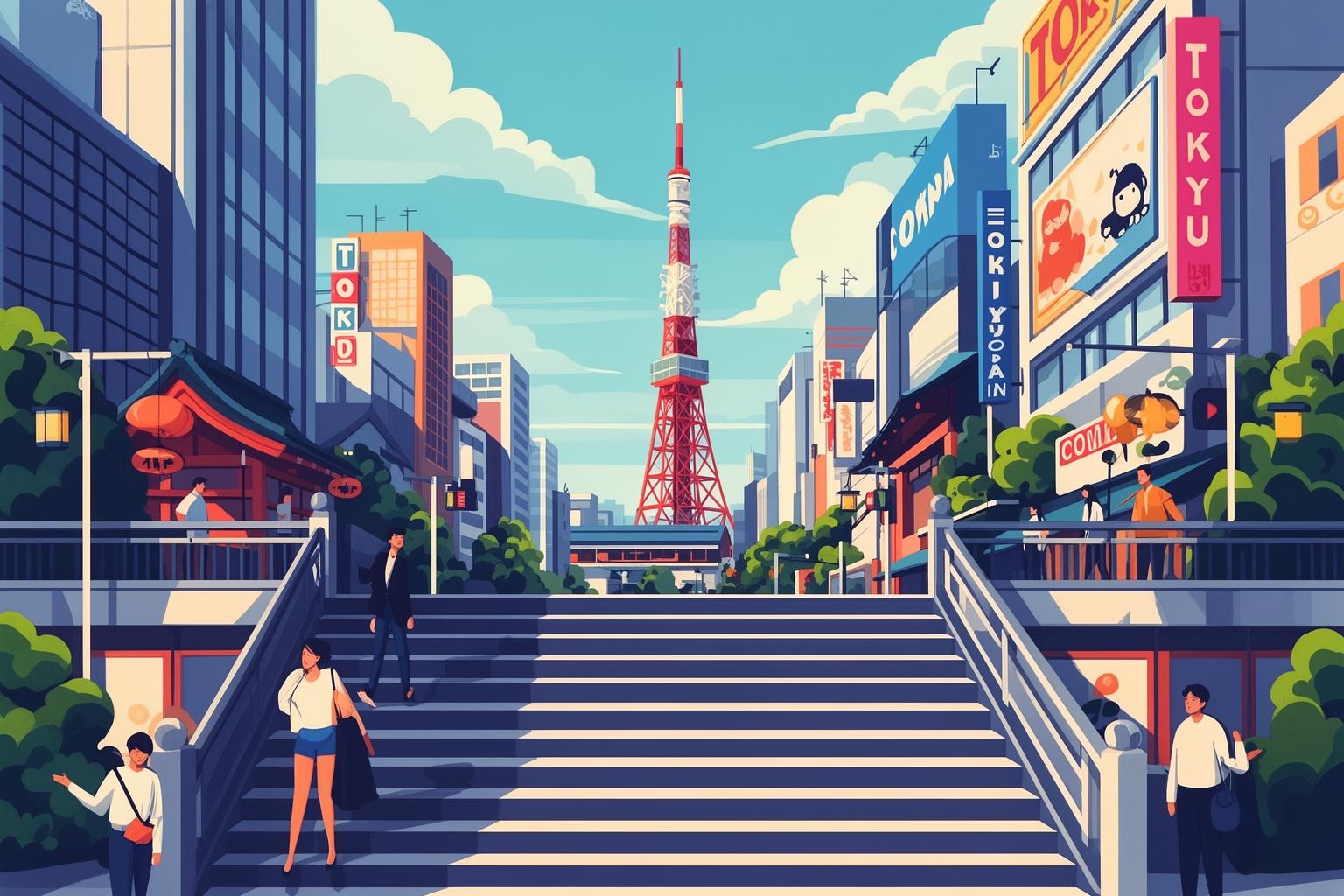
Every great story has its focal point, a single spot where all its narrative strands come together. For ‘Your Name,’ that spot is undeniably the red-railed staircase at Suga Shrine. This is where the film’s deeply emotional final scene takes place, with Taki and Mitsuha—now adults and strangers haunted by an unplaceable sense of loss—finally reuniting. The actual location, tucked away in a surprisingly peaceful residential neighborhood of Yotsuya, holds the same emotional significance. The walk to the steps is part of the experience itself. After exiting Yotsuya-sanchome Station on the Tokyo Metro Marunouchi Line, you’ll find yourself winding through quiet, narrow streets lined with modest apartment buildings and small local shops. There’s a tangible feeling of leaving the city’s constant hustle behind. The atmosphere shifts to something more intimate and serene. You might even question your navigation app, wondering if such an iconic place could really be hidden here. Then, as you round a corner, there it is. The scene is instantly recognizable—a perfect reflection of the anime’s imagery. The steep stone steps, bordered by pristine white walls and topped with lush green trees, appear exactly as you remember. The bold red handrail slices through the muted tones of the surrounding buildings. Standing at the bottom and looking up, or at the top and looking down, you can almost sense the characters’ racing heartbeats and desperate hope. It’s a profound moment of convergence where fiction and reality merge into one. For the best experience, try to visit on a weekday morning or late afternoon. The light at these times is softer, resembling the ‘magic hour’ or ‘kataware-doki’ so central to the film’s theme, and you’ll encounter fewer people. This creates a chance for quiet reflection and, naturally, the perfect opportunity to take your own photo of that iconic scene without a crowd. Remember that this is a residential area. The quiet is an important part of its charm, so speak softly and be considerate of the locals going about their day. This isn’t a theme park; it’s a living part of the city, and our respect as visitors helps keep it a special place for all who come seeking it.
A Cityscape of Crossed Paths: Shinjuku’s Scenery
If Suga Shrine represents the serene heart of the story, Shinjuku is its vibrant, pulsating core. This vast Tokyo ward is where Taki lives, works, and carries out his daily routine. It’s a realm of soaring skyscrapers, flowing crowds, and a luminous nighttime glow that Shinkai captured with stunning accuracy. Entering Shinjuku after the tranquility of Yotsuya feels like stepping into a completely different world, one that perfectly embodies the urban environment Mitsuha found both overwhelming and fascinating. Your journey into Taki’s world naturally begins at Shinjuku Station, a massive maze reputed to be the busiest transportation hub on Earth. Don’t worry about replicating any particular scene inside; just let yourself absorb its energy. The immense scale, the continuous stream of commuters, the chorus of announcements and footsteps—all provide an immersion into the core of urban Japan, a sensory experience that anchors the film’s fantastical elements in a tangible reality.
The Pedestrian Bridge of Lingering Thoughts
A brief walk from the station’s west exit, near the Shinjuku Police Station, reveals another important, yet more understated, spot: the pedestrian bridge where Taki and his coworker, Okudera-senpai, converse after their date. In the film, this is a moment of reflection for Taki, a quiet respite amid the city’s bustle. In reality, the bridge offers one of the most cinematic views of Shinjuku. From here, you can gaze down on a multi-lane river of traffic, framed by the iconic donut-shaped Mode Gakuen Cocoon Tower and other skyscrapers that form a futuristic skyline. The true enchantment comes at night. As dusk falls, the city stirs into a symphony of lights. Headlights and taillights merge into ribbons of red and white, neon signs flicker on, and the entire scene transforms into the neon-soaked image Tokyo is known for. Standing here, you sense both the isolation and connectivity that define city living. You are one person amidst millions, an anonymous observer watching the metropolis breathe. It’s a fantastic place for photographers and dreamers alike—a spot to reflect on your own path as you watch countless city stories unfold beneath you.
Taki’s Workplace: Cafe La Bohème Shinjuku Gyoen
After a lengthy walk, a break is crucial, and there’s no better place to pause than the real-life inspiration for the restaurant where Taki held his part-time job, known in the film as ‘Il Giardino delle Parole.’ The actual venue is Cafe La Bohème, situated near the peaceful Shinjuku Gyoen National Garden. Stepping inside brings a delightful sense of recognition. The high ceilings, ornate chandeliers, elegant European decor, and spacious open-kitchen design are all faithfully mirrored in the anime. The atmosphere exudes casual elegance—a refreshing contrast to the hectic pace of Shinjuku’s center. As a popular and fully operational restaurant, be prepared for potential waits, especially during busy hours; making a reservation is recommended if you plan to dine. You can simply order coffee and cake to rest your feet or enjoy a full Italian meal. While seated, you can easily imagine Taki bustling between tables, balancing dishes, and juggling the social dynamics of his job. This adds depth and realism to his character, turning him from a mere protagonist into a young man with a life, work, and responsibilities—all grounded in a place you can actually visit.
The Cocoon of Modernity: Shinjuku’s Architectural Icons
Beyond individual sites, Shinjuku’s overall atmosphere serves as a character in its own right. The film is rich with sweeping panoramic shots that highlight the ward’s verticality and density. One of the most notable, though never directly visited, landmarks is the NTT Docomo Yoyogi Building. Its distinctive clock-tower spire stands as a constant feature in the skyline, acting as a visual anchor in many of the film’s establishing city shots. You can’t enter the building, but its presence pervades Shinjuku and the nearby Yoyogi area. Simply wandering and lifting your gaze, you begin to see how Shinkai incorporated real-world architecture into his vision of Tokyo. The vicinity of the Tokyo Metropolitan Government Building also offers stunning, free panoramic views from its observation decks. From there, the entire cityscape stretches out before you—a vast mosaic of concrete and light. It’s an ideal way to grasp the scale of Taki’s world and understand how a girl from a quiet mountain town could be utterly captivated by its immense magnitude.
Beyond the Frame: Immersing Yourself in the ‘Your Name’ Experience

A ‘Your Name’ pilgrimage is more than just a list of photo spots. It’s about developing a particular way of seeing the world—an appreciation for the beauty in the everyday that Makoto Shinkai excels at capturing. The film’s true strength lies in its ability to elevate the ordinary, discovering poetry in Japan’s commonplace landscapes. This is where your personal journey truly begins: by looking past the well-known scenes and focusing on the details that give the film its heart.
The Art of the Everyday
As you move between the main locations, take care to observe your surroundings closely. Notice the details Shinkai lovingly brought to life—the ubiquitous vending machines glowing softly on quiet street corners at night, the complex web of overhead power lines stretching across the sky, and the steady clang of warning bells at a train crossing as a yellow-and-green JR line train rumbles by. These are the textures of daily life in Tokyo. By consciously observing them, you begin to see the world through the director’s perspective. You realize the beauty wasn’t created for the film; it was simply noticed and magnified. Your walk from Yotsuya to Shinjuku, which takes around thirty to forty minutes, can become the most rewarding part of your pilgrimage. It guides you through a cross-section of Tokyo life, from tranquil neighborhoods to lively commercial streets, allowing you to soak in the atmosphere at a human pace.
Timing Your Pilgrimage: Light, Weather, and Seasons
Light is a crucial element in ‘Your Name.’ The idea of ‘kataware-doki,’ or twilight, is a magical moment when the boundary between worlds becomes thin. To fully connect with the film’s aesthetic, aim to visit key locations—especially the Suga Shrine steps—at sunrise or sunset. The long shadows and warm, golden tones of this ‘magic hour’ will immediately transport you to the film’s most moving scenes. Weather also influences the experience. A clear, sunny day sharpens and brightens cityscapes, while a rainy day, like during Taki’s date with Okudera-senpai, brings its own quiet melancholy. Reflections on wet pavement and soft, diffused light provide stunningly atmospheric photo opportunities. The seasons add yet another dimension. Picture the Suga Shrine steps framed by delicate cherry blossoms in spring or by vibrant reds and oranges of autumn maple leaves. Each season dresses the city in a unique palette, offering a fresh perspective on these now-iconic places.
A Practical Guide for the Modern Pilgrim
Setting out on this journey is surprisingly simple, but a bit of preparation will guarantee a smooth and memorable experience. Tokyo’s public transit system is impressively efficient, and the main ‘Your Name’ locations are conveniently connected and fairly close to one another, making this an ideal itinerary for either a half-day or a leisurely full day of exploration.
Navigating Tokyo’s Maze
Your most important tool will be a prepaid IC card, like Suica or Pasmo, which you can buy at any major train station. This lets you easily tap in and out of train gates and buses, sparing you from purchasing individual tickets for each trip. For directions, Google Maps is very reliable for train routes, departure times, and walking guidance. The key stations for this pilgrimage are Yotsuya-sanchome on the Tokyo Metro Marunouchi Line for Suga Shrine, and Shinjuku Station, served by numerous JR and metro lines. From Shinjuku Station, Cafe La Bohème and the pedestrian bridge are all within a comfortable walking distance. A good strategy is to start at Suga Shrine in the morning to beat the crowds, then walk or take a short subway ride to Shinjuku to explore Taki’s story throughout the rest of the day.
Etiquette at Sacred Places
While we refer to this as a pilgrimage, it’s important to remember these are not typical tourist spots. Suga Shrine remains an active place of worship, and its surrounding neighborhood is a residential area. When visiting, approach with respect. At the shrine, if you wish to visit the main hall, you may follow traditional customs like bowing before the torii gate and cleansing your hands and mouth at the ‘temizuya’ water basin, though this is optional. The most important aspect is to maintain a quiet and respectful attitude. In the nearby streets, avoid loud noises and be mindful not to block driveways or doorways while taking photos. Be patient, waiting for a clear shot rather than occupying the space. At Cafe La Bohème, please remember it is a business—be a considerate customer by ordering something and not lingering, especially during busy times. By being thoughtful visitors, we help ensure these cherished locations remain enjoyable for fellow fans for years to come.
The Echo of a Story: A Final Reflection
Following the footsteps of Taki and Mitsuha through Tokyo allows you to engage with their story on a deeply personal level. It turns you from a passive observer into an active adventurer. You’re no longer merely watching a film; you’re stepping into its vibrant, living setting. Each spot acts as a gateway, a physical connection to the emotions and moments that made ‘Your Name’ a worldwide sensation. Yet, by the journey’s end, you realize something beautiful: the magic isn’t limited to these exact locations. The true lesson from a ‘Kimi no Na wa’ pilgrimage is discovering the cinematic wonder in the world around you. It’s found in the sparkle of sunlight on a skyscraper, the serene charm of a local shrine, and the countless stories reflected in the faces of strangers on a busy train. The film showed us that every place, no matter how ordinary, holds its own story and unique light. As you depart from the Suga Shrine steps or watch the Shinjuku skyline dim at dusk, you carry with you a fragment of that magic—a fresh appreciation for the beautiful, fleeting, and unforgettable connections that, just like in the movies, may be waiting right around the next corner.