
There are stories that stay with you, that weave themselves into the very fabric of your memory. They aren’t just watched; they are felt. Makoto Shinkai’s masterpiece, Your Name (Kimi no Na wa), is one such story. It’s a celestial romance painted with breathtakingly beautiful animation, a tale of two souls separated by distance and time, yet bound by the red string of fate. The film captured the hearts of millions with its emotional depth, its stunning visuals, and its profound exploration of connection, or musubi. But what makes the world of Taki and Mitsuha so incredibly immersive is that it is, in large part, real. The dazzling urban sprawl of Tokyo and the tranquil, tradition-steeped countryside of Gifu Prefecture are not mere fantasy; they are tangible places you can walk, breathe, and experience. This is the magic of seichi junrei, the anime pilgrimage, where fans can step through the screen and into the story they love. It’s a journey that transforms you from a passive viewer into an active participant in the narrative. This guide is your invitation to that journey, a roadmap to chasing the echoes of a comet across Japan, from the neon-drenched heart of the city to the whispering soul of the mountains. It’s a chance to find not just the locations from a film, but to discover the powerful sense of place that gave the story its heartbeat.
Explore Japan further by venturing into the Tokyo pilgrimage spots that echo the film’s mesmerizing urban charm.
The Urban Heartbeat: Taki’s Tokyo
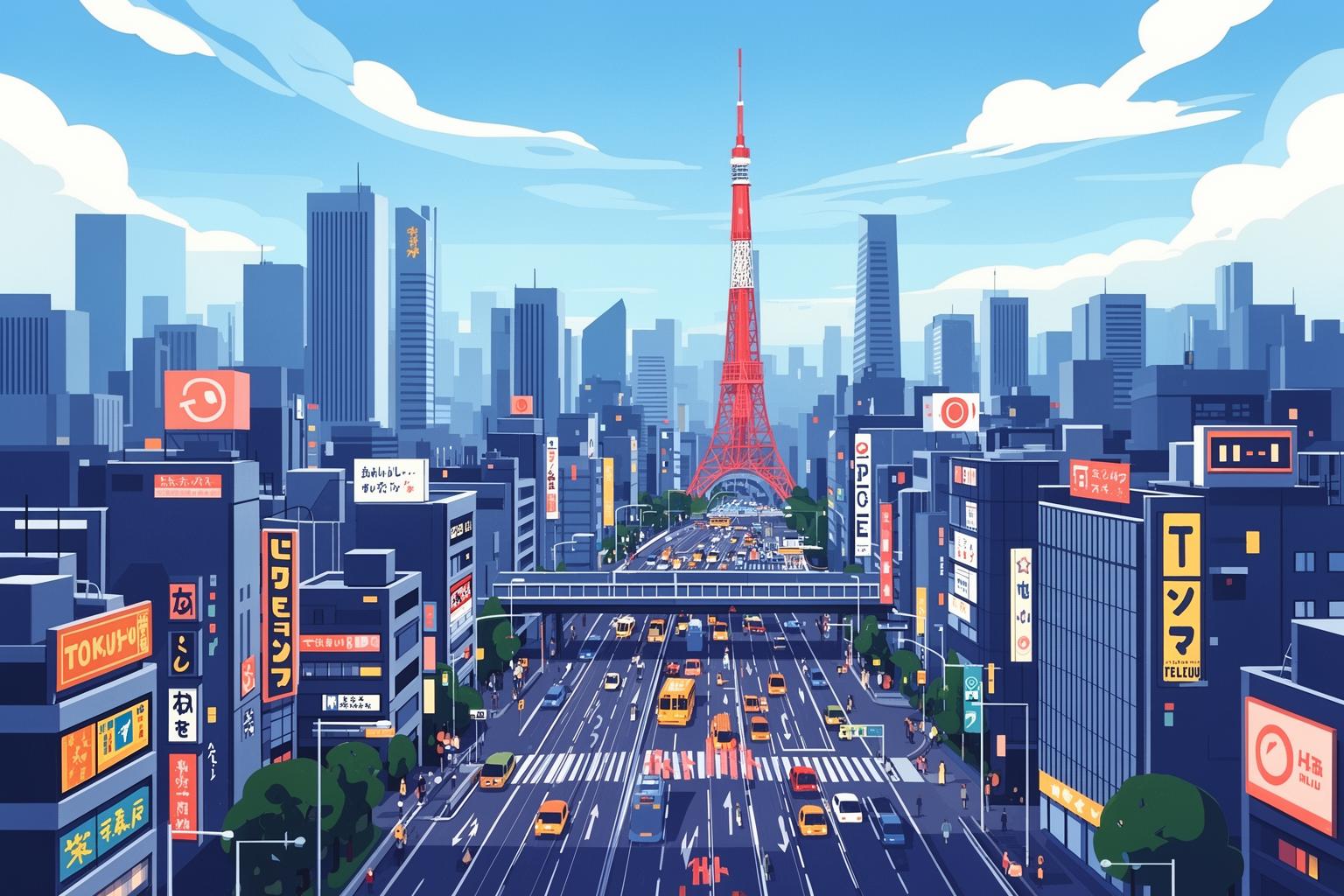
The story of Your Name is one of striking contrasts, most evident in its two distinct settings. Our journey begins in the realm of Taki Tachibana, a vast, dynamic, and endlessly captivating metropolis: Tokyo. This city moves at lightning speed, a concrete jungle where millions of lives intersect every moment. Shinkai skillfully portrays both its immense scale and its intimate, hidden corners, painting a picture of a city that is simultaneously lonely and vibrant with life. Walking through Taki’s Tokyo allows you to feel the rhythm of modern Japan and see the world through the eyes of a high school boy yearning for a different life, unaware of the profound connection awaiting him just beyond the horizon.
Echoes of Longing at the Suga Shrine Stairs
Perhaps no location in Your Name is as iconic or emotionally charged as the red-railed staircase where Taki and Mitsuha finally meet. Finding it feels like a quest itself. After arriving at Yotsuya Station and moving away from the main streets, the city’s symphony begins to fade. The roar of traffic softens into a gentle hum, replaced by the distant sound of a train and the rustling of leaves. You enter a quiet, unassuming residential area—a maze of narrow lanes, modest apartments, and meticulously tended homes. It’s a serene pocket of everyday life. Then, turning a corner, your breath catches. There it is. The Suga Shrine staircase climbs skyward, a silent, powerful promise frozen in time. The vivid red handrails create a striking, beautiful contrast against the subdued hues of surrounding buildings and the deep green trees. Standing at the bottom looking up, or at the top looking down, you are immediately drawn into the film’s heart-wrenching climax. You can almost hear the characters’ desperate questions, feel their frantic search. This is the magic of seichi junrei: not just seeing a place, but sensing the story’s emotional core resonate within you. You’ll likely share the spot with other pilgrims, a quiet camaraderie passing between you as you take photos, each reliving that powerful moment of connection and reunion. For the best experience, visit early in the morning when soft light filters through the trees, or in the late afternoon golden hour, echoing the film’s magical twilight, or kataware-doki. Be sure to remain quiet and respectful; this is a cherished place for fans, but it also serves as a pathway for local residents.
A Skyline of Dreams: The National Art Center, Tokyo
Tokyo is a city of breathtaking architectural wonders, and the National Art Center in Roppongi stands as a modern design masterpiece. Its wave-like glass facade ripples, creating a dynamic play of light and shadow that feels both organic and futuristic. This is the setting for one of the film’s more grounded and poignant scenes: Taki’s date with his coworker, the elegant Okudera-senpai. Inside, you are enveloped by a vast, light-filled atrium. The sheer scale of the space is awe-inspiring. Pilgrims flock here mainly to visit the café where Taki and Okudera shared lunch. Situated atop one of the center’s massive inverted concrete cones is the Salon de Thé ROND. Seeing it in person is surreal. The setting is as chic and sophisticated as it appears on screen. You can sit down for coffee or cake, gazing out at the architectural marvel surrounding you, feeling as though you’ve stepped directly into the animation cell. It offers a moment of quiet reflection amid the city’s hustle, embodying Taki’s aspirations and his growing uncertainty about his feelings. No ticket is required to enter the atrium or visit the café, making it an accessible and deeply rewarding stop on your pilgrimage. The center is directly connected to Nogizaka Station, which makes visiting especially convenient.
Crossroads of Fate: Shinjuku’s Scrambles and Sights
Shinjuku is the chaotic, vibrant, and electrifying core of Taki’s world. It’s where he lives, works, and navigates daily life. The film features many glimpses of this iconic district, from soaring skyscrapers to dizzying pedestrian crossings. Visiting Shinjuku immerses you in the energy that defines Tokyo. Standing before the massive Yunika Vision screens, you see the exact backdrop from the film, playing advertisements and music videos to the continuous flow of people below. This is the scene Taki encounters daily, a nonstop stream of information and stimulation. One of the district’s most recognizable landmarks is the sharply pointed NTT Docomo Yoyogi Building, which towers over the skyline in many shots, serving as a constant geographical anchor. Another significant location is the Shintoshin Pedestrian Bridge, a circular walkway near the Tokyo Metropolitan Government Building that Taki crosses. Walking across it, surrounded by glass and steel canyons, offers a profound sense of the urban scale shaping his life. No pilgrimage to Shinjuku is complete without experiencing one of its massive scramble crossings. Though Shibuya is more famous, the crossings around Shinjuku Station—the world’s busiest transport hub—are equally impressive. Standing among the crowd, all moving in a strange, unspoken harmony, you can feel the essence of musubi—countless individual threads crossing and weaving together to create the city’s grand tapestry. Navigating Shinjuku can be overwhelming for first-time visitors, so focusing on a couple of key areas rather than trying to see everything at once is advisable.
The Soul of Tradition: Mitsuha’s Itomori (Hida, Gifu)
Leaving behind Tokyo’s electric pulse, our journey takes us deep into Japan’s heart, entering the world of Mitsuha Miyamizu. Her fictional town, Itomori, nestled beside a mystical crater lake, embodies the soul of the film. It symbolizes tradition, nature, and a slower, more intentional pace of life. Although Itomori doesn’t appear on any map, its spirit was inspired by the real and stunningly beautiful city of Hida in Gifu Prefecture. Traveling here feels like stepping back in time—the air is purer, the pace gentler, and the landscape dominated by lush mountains and clear streams. Here, skyscrapers give way to cedar trees, and the roar of trains is replaced by the chirping of cicadas. This is where you discover the quiet, resilient heart of Mitsuha’s story.
The Timeless Townscape of Hida-Furukawa
Hida-Furukawa served as the main model for Itomori’s landscapes, and the resemblance is striking. Arriving at Hida-Furukawa Station feels like a moment of cinematic déjà vu. The quaint station building, the open-air pedestrian bridge, and the local Hida-gyu beef mascot are all lifted directly from the film. Standing on that platform, you can almost picture Taki and his friends stepping off the train on their quest to find Mitsuha. A brief walk from the station brings you to the town’s most picturesque spot: Shirakabe Dozogai, a street lined with traditional white-walled storehouses. Alongside it runs the Setogawa Canal, its crystal-clear waters home to hundreds of large, colorful carp. Watching these fish swim lazily in the pristine water is utterly charming and reflects the town’s deep bond with nature. Another must-see is the Hida City Library. This beautiful modern building, with its stunning wooden interior and thoughtfully designed spaces, served as the direct inspiration for the library where Taki researches Itomori’s history. The staff have embraced their connection to the film, even creating a special section for visitors and permitting photography in designated areas—a rare gesture in Japanese libraries. This reflects the positive relationship between the town and the film’s fans. Strolling through Hida-Furukawa, you’ll feel Mitsuha’s world come alive: in the clack of wooden geta sandals on the pavement, the intricate latticework on old merchant houses, and the warm greetings of the locals.
Whispers of the Shrine Maiden: Ketawakamiya Shrine and Hida-Sannogu Hie Shrine
Mitsuha’s life is deeply intertwined with her family’s role as keepers of the Miyamizu Shrine. This sacred place, with its towering torii gate and long stone staircase leading into the forest, forms a central part of the film’s spiritual landscape. The fictional Miyamizu Shrine is actually a composite inspired by several real locations. One primary source is believed to be the Hida-Sannogu Hie Shrine in nearby Takayama. Its grand entrance and forested surroundings strongly evoke the feeling of Mitsuha’s home. Yet within Hida-Furukawa itself lies the Ketawakamiya Shrine. Smaller in scale, its position on a small hill and the experience of walking up its steps into a quiet, sacred grove perfectly capture the essence of a local community shrine. It’s easy to imagine Mitsuha and her sister Yotsuha performing their duties here, sweeping the grounds and preparing for festivals. Visiting these shrines offers a chance to connect with the film’s deeper spiritual themes. You can feel centuries of tradition, the reverence for nature central to Shinto belief, and the profound sense of place shaping Mitsuha’s identity. Here, the concept of musubi becomes tangible, symbolizing the connection between gods, nature, and the local people.
The Ghost of the Lake: Searching for Lake Itomori
The most breathtaking and tragic landmark in Mitsuha’s world is the crater lake that holds her town. While the town’s inspiration comes from Hida, the iconic lake draws from a different source: Lake Suwa in neighboring Nagano Prefecture. To complete the pilgrimage, visiting this stunning lake is essential. The most famous viewpoint, which best recreates the sweeping panoramic shots from the film, is Tateishi Park. Situated high on a hillside overlooking the lake and surrounding towns, reaching it often requires a short taxi ride from Kami-Suwa Station, but the view is well worth the effort. From the overlook, the scene spreads out like a living painting: a vast expanse of water cradled by mountains, utterly spectacular. The best time to visit is at dusk. As the sun sets, the sky ignites with hues of orange, pink, and purple, and the towns’ lights begin to twinkle. This is kataware-doki, the magical twilight hour when boundaries between worlds blur. Seeing Lake Suwa at this time is nearly a spiritual experience: the moment the film’s two worlds collide, blending beauty with impending tragedy. It is a place for quiet reflection on the film’s themes of memory, loss, and the enduring hope of reunion.
Weaving the Threads: A Culinary and Cultural Pilgrimage

A journey through the world of Your Name involves more than merely sightseeing; it means immersing yourself in the culture that lends the story its texture and depth. Food and local crafts play a subtle yet significant role in the film, linking the characters to their surroundings and to one another. Engaging with these elements adds an additional layer of richness to your pilgrimage.
Tasting the Connection: Food from the Film
Food often serves as a bridge between Taki and Mitsuha’s worlds. Consider the chic, fluffy pancakes Taki enjoys at a Tokyo café, symbolizing his modern, urban lifestyle. Or the comforting bowl of ramen he and his friends share after a long day of searching in Hida. To truly follow their path, you must seek out these flavors. The most notable culinary experience, however, is trying Goheimochi. This local specialty is what Taki eats at the restaurant Ajidokoro Furukawa while asking for information about Itomori. Goheimochi is a regional delicacy from the Chubu area, made from pounded rice that is skewered, coated with a sweet and savory miso, soy, and walnut glaze, and then grilled over an open flame. The result is a treat that is crispy on the outside, chewy on the inside, and bursting with umami flavor. Eating Goheimochi in Hida offers a wonderfully authentic experience. It’s a taste of the mountains, a humble yet delicious food that has nourished the local people for generations. It roots you in Mitsuha’s world in a way that sight-seeing alone cannot.
The Art of Musubi: Braided Cords and Local Crafts
The most powerful symbol in Your Name is the kumihimo, the braided cord Mitsuha makes that ultimately connects her to Taki across time. This cord represents musubi—the flow of time, the bonds between people, and the unseen threads of fate. Kumihimo is not a fictional creation; it is a traditional Japanese art of intricate braid-making. In Hida, you have the unique chance to experience this beautiful craft firsthand. Several shops and cultural centers in the area offer kumihimo workshops where you can sit at a traditional wooden stand, called a marudai, and learn to weave your own cord. The process is meditative and rhythmic, as you move the weighted bobbins in a specific pattern, watching the threads gradually intertwine to form a strong, beautiful braid. As you make your own kumihimo, you gain a deeper appreciation for the film’s central metaphor. It’s a tangible way to connect with the story’s themes and create a deeply personal souvenir of your journey—a red thread to remind you of the connections you’ve made and the places you’ve visited.
Practical Notes for the Aspiring Pilgrim
Embarking on a seichi junrei calls for some planning to ensure a smooth and fulfilling experience. Here are some tips to help you create your own Your Name adventure.
Planning Your Itinerary: Tokyo and Gifu
The trip naturally divides into two segments. It’s advisable to dedicate at least two full days to Tokyo to explore the various sites in Shinjuku, Roppongi, and Yotsuya without feeling hurried. The city’s efficient subway system makes it easy to travel between these districts. After enjoying the urban atmosphere, get ready for the journey to Gifu. The most common route is to take the Tokaido Shinkansen (bullet train) from Tokyo to Nagoya, then transfer to the JR Hida Limited Express train. This scenic ride ventures deep into the mountains and adds to the overall experience. Plan to spend at least two days and one night in the Hida region, allowing one day to explore Hida-Furukawa at a relaxed pace and another to visit nearby Takayama, known for its charming old town and as another source of inspiration for the film. If you want to see Lake Suwa, you can visit it as a day trip from Tokyo or as a stop between Tokyo and Nagoya on the JR Chuo Line.
Getting Around and Accommodation
For long-distance travel, a Japan Rail Pass can be a cost-effective choice if you intend to take several long trips. In Tokyo, a rechargeable IC card like Suica or Pasmo is essential for convenient access to subways and local trains. In Hida-Furukawa, the town is compact and very walkable. For a truly immersive experience, consider your lodging carefully. Staying in or near Shinjuku in Tokyo puts you right in the heart of Taki’s world. In the Gifu countryside, skipping a standard hotel in favor of a traditional ryokan (Japanese inn) or minshuku (family-run guesthouse) is highly recommended. This offers a chance to experience Japanese hospitality, with tatami-mat rooms, futon bedding, and often delicious homemade local meals.
Etiquette and Respect
It is crucial to remember that these locations, although famous, are not film sets. They are real places where people live, work, and pray. The continued hospitality extended to anime pilgrims depends on the respectful conduct of every visitor. When visiting the Suga Shrine stairs, keep your voice low and be considerate of residents in nearby apartments. At the Hida City Library, follow their photography policies and maintain silence. When visiting shrines, observe proper etiquette: bow before passing under the torii gate and be discreet during your visit. Always ask permission before photographing people or inside private establishments. By being a thoughtful and considerate visitor, you help ensure these magical places remain welcoming for all fans who come after you.
Beyond the Frames: The Enduring Magic of a Shared Dream

To explore the real-life locations of Your Name is to grasp the film on a profoundly deeper level. It is a pilgrimage that connects the world on the screen with the world beneath your feet. You realize that the stunning beauty of Makoto Shinkai‘s vision is not an exaggeration, but a heartfelt and faithful portrayal of Japan’s remarkable diversity—from its ultra-modern cities to its serene, timeless countryside. Standing on the staircase in Yotsuya, you don’t merely see a spot; you sense the weight of destiny. Looking out over Lake Suwa at twilight, you don’t just witness a view; you feel the ache of memory and the spark of hope. This journey is more than ticking off photo locations—it’s an immersive experience, a way to weave your own story into the tapestry of Taki and Mitsuha’s lives. You follow their paths, savor their food, and breathe their air. In doing so, the story becomes a part of you, and you become a part of it. It’s a powerful reminder that the most magical stories are those grounded in a genuine, tangible sense of place, and that sometimes, what we seek is not just a person, but a connection to the world itself.