
In the vast, sprawling tapestry of Tokyo, where neon-drenched avenues pulse with relentless energy and ancient temples stand in serene defiance of time, there are pockets of magic that feel entirely worlds away. Kichijoji is one of those rare enclaves. Tucked away in the western suburbs, it’s a place that hums with a different kind of rhythm—a creative, bohemian heartbeat that has long drawn artists, writers, and dreamers to its leafy streets. This isn’t just another stop on the JR Chuo Line; it’s a destination, a pilgrimage site for those who believe in the power of stories. For many, the journey begins with a name whispered in reverence: Ghibli. The enchanting, world-renowned Ghibli Museum, Mitaka, the brainchild of the master animator Hayao Miyazaki, lies nestled at its edge. But the story of Kichijoji doesn’t end there. It whispers from the pages of tragic literature, echoes in the laughter from lakeside cafes, and rustles through the canopy of Inokashira Park. It’s a place where the fantastical worlds of anime bleed into the poignant reality of human history, creating a destination that nourishes the soul as much as it dazzles the eye. To walk through Kichijoji is to trace the footsteps of giants, both real and imagined, and to discover that in this corner of Tokyo, the line between art and life is beautifully, irrevocably blurred.
Exploring Tokyo’s vibrant intersections of art and modern myth, visitors can also embark on a your name pilgrimage that unveils further layers of the city’s enchanting narrative.
The House That Dreams Built: Inside the Ghibli Museum
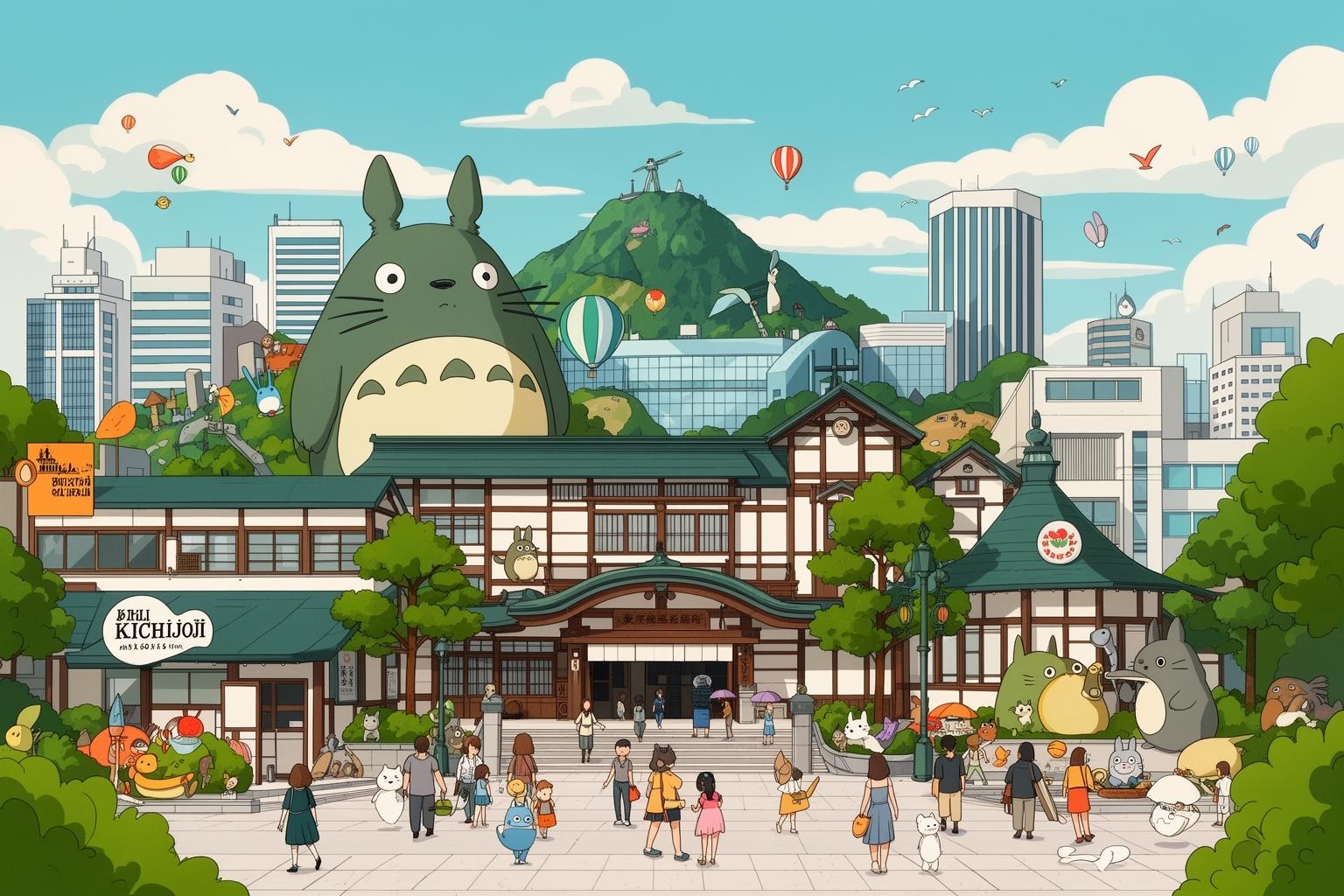
The Ghibli Museum doesn’t announce its presence with grand arches or imposing columns. Instead, it unfolds gradually, a whimsical, ivy-covered structure that appears to have grown naturally from the earth of Inokashira Park. Its motto, “Let’s get lost, together,” is more than a catchy phrase; it serves as a direct invitation. This is not a place for strict schedules or systematic gallery-hopping. It’s a labyrinth meant for wandering, for childlike curiosity, for the pure joy of discovery. From the moment you exchange your ticket for a unique film strip frame—a small, tangible piece of Ghibli magic you can hold up to the light—you realize this experience is unlike any other. The building itself is the main exhibit. Winding spiral staircases lead both nowhere and everywhere, tiny doors are tucked into walls at knee height, and stained-glass windows, glowing with images of Totoro, Kiki, and the whimsical creatures of Miyazaki’s world, bathe the interior in colorful light. The central hall soars three stories high, a dizzying spectacle of wooden beams, balconies, and a glass dome that fills the space with a soft, ethereal glow. An intricate web of bridges and walkways crisscross the open air, inviting you to explore every nook and cranny.
The Heart of Animation
One of the museum’s core missions is to pull back the curtain on the meticulous process of animation. The ground-floor permanent exhibit, “Where a Film is Born,” offers a breathtaking immersion into an artist’s studio. The five rooms feel intensely personal, as though the animators just stepped out for a moment. Desks are cluttered with sketches, jars packed with colored pencils, and books on every imaginable topic—from botany and aviation to medieval armor—are stacked high, revealing the deep well of inspiration behind these cinematic worlds. You can trace the evolution of a single character from a rough pencil sketch to a vivid celluloid frame. The true highlight, however, is the three-dimensional zoetrope, featuring characters from My Neighbor Totoro. On their own, they are static figures, but when the strobe light flashes and the platform spins, they burst to life, running, jumping, and chasing each other in a fluid, mesmerizing dance. It’s a moment of pure, unfiltered magic that draws gasps from visitors of all ages—a powerful demonstration of how still images create the illusion of movement, the very essence of animation.
Exclusive Sights and Sounds
Deep inside the museum lies a treasure found nowhere else in the world: the Saturn Theater. This small, cozy cinema, with its sky-painted ceiling and charming wooden benches, screens original animated short films created exclusively for the museum. These shorts, often without dialogue, tell universal stories infused with Ghibli’s signature warmth, humor, and heart. The film rotates regularly, so each visit may bring a new story. This ephemeral aspect makes the experience especially unique. And then there’s the rule: no photography is allowed inside the museum. While this may feel restrictive at first, its purpose soon becomes clear. It encourages you to be fully present, to see with your own eyes rather than through a lens. It invites you to absorb the details, to feel the texture of the plastered walls, to spot the hidden soot sprites tucked in corners, and to share an undistracted, collective experience with fellow visitors. Photography is only permitted outside, which draws many to the museum’s most iconic resident.
The Guardian on the Roof
After ascending a caged spiral staircase, you emerge onto the rooftop garden. Here, among the waving grasses, stands the gentle giant: a five-meter-tall Robot Soldier from Castle in the Sky. He is not threatening but melancholic, a silent, weathered guardian watching over the museum below. His presence is both powerful and poignant, a tangible link to the epic, emotional scope of Ghibli’s storytelling. It’s a place for quiet reflection, offering panoramic views of the park and a perfect moment to let the museum’s wonder sink in. Nearby, you can decipher the cryptic cuneiform on the black control cube from the same film, a detail that die-hard fans will instantly recognize and appreciate.
A Word on Tickets: The Quest for the Golden Ticket
Visiting the Ghibli Museum requires careful planning and a good deal of luck. Tickets are not sold at the door. They go on sale online on the 10th of each month for entry the following month, and they sell out, without exaggeration, within minutes. The process is a frantic race against thousands of fans worldwide. It is absolutely essential to check the official Ghibli Museum website for exact sale times and procedures. Be prepared with your passport information and credit card, and have multiple browser tabs open. For travelers, some third-party tour operators and agencies offer packages that include tickets, often at a premium price, but this can be a less stressful way to secure admission. The difficulty of obtaining tickets only adds to the museum’s mystique, making a successful visit feel like a truly special accomplishment.
Inokashira Park: The Verdant Stage for Kichijoji’s Stories
The Ghibli Museum is not merely an isolated realm of fantasy; it is deeply intertwined with its surroundings, the magnificent Inokashira Park. The stroll from Kichijoji Station to the museum through this park is an integral part of the journey. Inokashira is one of Tokyo’s most cherished green spaces—a vast oasis that feels both wild and cultivated. At the park’s core lies a large, tranquil pond where couples and families glide across the shimmering water in whimsical swan boats. The paths encircling the lake are sheltered by a dense canopy of trees, forming a cathedral of dappled light. In spring, the park bursts into a cloud of pale pink as hundreds of cherry trees bloom, attracting large crowds for hanami (flower viewing) celebrations. In autumn, the foliage blazes with fiery reds, oranges, and golds, creating a stunning display of natural beauty that is equally breathtaking. The air here feels different—cleaner, calmer, and scented with earth and blossoms. The city’s noise fades away, replaced by birdsong, the rustling of leaves, and the distant tune of a street performer’s guitar.
A Living Canvas for Art and Life
Inokashira Park is far more than a beautiful space; it is a vibrant cultural hub. On weekends, the paths come alive with a diverse array of artisans, musicians, and performers. You might spot a portrait artist sketching in charcoal, a puppeteer delighting a crowd of children, or a lone musician playing a traditional shamisen. The atmosphere is creative, relaxed, and warmly inviting. Within the park lies the small, charmingly intimate Inokashira Park Zoo, while the Benzaiten Shrine—dedicated to the goddess of water and music—rests on a small island in the pond, its vivid red architecture standing out against the lush greens and blues of the natural surroundings. This is a place where spirituality, art, and nature blend seamlessly. The park’s vibrant, slightly wild beauty feels distinctly Ghibli. It’s easy to imagine Mei and Satsuki from Totoro running along these paths or to sense the spirit of the forest dwelling in the ancient, twisted trees. The park frequently appears in other anime and manga, its iconic bridge and swan boats serving as the setting for heartfelt confessions and quiet moments of contemplation.
Echoes of a Bygone Era: The Literary Soul of Kichijoji
Beneath the cheerful facade of Kichijoji’s parks and cafes lies a deeper, more melancholic layer of history. The area served as a refuge for some of Japan’s most significant 20th-century literary figures, none more renowned or tragic than Osamu Dazai. A masterful yet tormented writer, known for his dark, introspective novels like No Longer Human and The Setting Sun, Dazai was a familiar presence in Kichijoji. He frequented its bars, strolled the paths of Inokashira Park, and found inspiration in its bohemian atmosphere. Haunted by personal demons and turmoil, it was here—in the waters just downstream from the park—that his life met a tragic end in 1948. This history gives the area a certain weight, a literary ghost that lingers amid its beautiful surroundings. To walk along the pond’s banks is to follow in Dazai’s footsteps, to glimpse the world that influenced his brilliant, troubled mind. This connection to one of Japan’s literary giants adds profound depth to the Kichijoji experience. It serves as a reminder that this place has nurtured not only whimsical fantasies but also some of the most intense explorations of the human condition. For literature lovers, visiting Kichijoji is a pilgrimage of a different kind—a chance to connect with the spirit of a writer who laid bare his soul on the page.
The Vibrant Maze: Exploring Kichijoji Town
Emerging from the serenity of the park, you find yourself immersed in the vibrant bustle of Kichijoji town. The area around the station offers an intriguing mix of old and new, where sleek department stores stand side-by-side with decades-old kissaten (traditional coffee shops) and narrow, lantern-lit alleyways. Kichijoji regularly ranks among Tokyo’s most sought-after neighborhoods, and it’s clear why. It combines the energy and conveniences of a major urban center with a relaxed, community-oriented atmosphere. The shopping streets, or shotengai, truly embody the heart of the town.
Harmonica Yokocho: A Maze of Flavors
Just north of the station, Harmonica Yokocho represents the soul of old Kichijoji. This compact network of alleys, so narrow you can almost touch both walls at once, is named for the way tiny shops line up like the reeds of a harmonica. By day, it buzzes as a market where vendors sell fresh fish, flowers, and traditional sweets. But when dusk falls, the lanterns ignite the space and the yokocho transforms. It becomes a smoky, aromatic labyrinth of tiny standing bars, yakitori stalls, and ramen shops, each with only a few seats. The air is filled with the sizzle of grilling meat, the clatter of dishes, and the lively chatter of locals unwinding after work. Exploring this maze is an adventure on its own. You might squeeze into a tiny gyoza shop for a plate of perfectly pan-fried dumplings and a cold beer, or stand shoulder-to-shoulder with salarymen at a yakitori counter, pointing to skewers of glistening chicken. It’s an intimate, slightly rough-around-the-edges, but utterly genuine Tokyo experience, worlds apart from the polished restaurants of Shibuya or Ginza.
Sunroad and Beyond: A Shopper’s Haven
For a more contemporary vibe, the covered Sunroad and Daiyagai shopping arcades present a lively selection of stores. Here you’ll discover everything from major Japanese chains and drugstores to independent boutiques, quirky zakka (miscellaneous goods) shops, and vintage clothing stores brimming with carefully curated finds. Kichijoji serves as a hub for fashion and design, but the focus is less on high-end luxury and more on personal style and craftsmanship. It’s an ideal spot to search for a unique souvenir, a one-of-a-kind garment, or simply to absorb the local street style. The area is also renowned for its dense concentration of charming cafes, ranging from old-world kissaten where time seems to pause to modern, minimalist coffee shops serving artisanal brews. It’s a neighborhood that encourages you to slow down, grab a seat, and quietly watch life unfold.
A Practical Guide for the Kichijoji Pilgrim
Navigating Kichijoji is fairly simple, but a few helpful tips can make your visit smoother and even more enjoyable.
Getting There
Kichijoji Station is conveniently situated and easy to access. From Shinjuku, you can take the JR Chuo Line (Rapid) and arrive in about 15 minutes. From Shibuya, the Keio Inokashira Line provides a direct and scenic route, ending at Kichijoji Station in around 20 minutes. The Ghibli Museum is a pleasant 15-20 minute walk south from the station through Inokashira Park. Alternatively, a community bus runs from the station to the museum, but walking is highly recommended as it forms an essential part of the experience.
Timing Your Visit
Kichijoji is delightful year-round, though spring and autumn stand out especially with cherry blossoms and vibrant fall colors in Inokashira Park. Weekdays usually see fewer crowds than weekends, both in the park and around the town’s shops and eateries. If you plan to explore the nightlife at Harmonica Yokocho, keep in mind that many of the small venues get very busy, so arriving a little earlier in the evening can improve your chances of securing a spot.
A Note on Safety
Like much of Japan, Kichijoji is exceptionally safe. Nevertheless, as in any bustling area, it’s prudent to stay mindful of your surroundings. When moving through crowded shopping arcades or the narrow spaces of Harmonica Yokocho, be sure to watch your belongings carefully. For solo travelers, the yokocho is generally very safe and welcoming, but since it’s an area where alcohol is served, it’s wise to be aware of your limits and stick to the better-lit main alleys if you’re out late at night. The overall atmosphere is very friendly, but maintaining basic situational awareness is always advisable.
Kichijoji is a neighborhood that rewards curiosity. It doesn’t reveal all its charms at once but instead unveils them in layers. You may visit for the Ghibli Museum, but you’ll stay for the peaceful beauty of the park, the creative energy of the streets, and the lingering traces of literary history. It’s a part of Tokyo where fantasy feels within reach, where every narrow alley and dappled sunlit path seems to tell a story waiting to be uncovered. It reminds us that the most profound journeys often take us along unexpected routes, encouraging us—as the museum does—to get a little lost and, in the process, find something truly wonderful.








