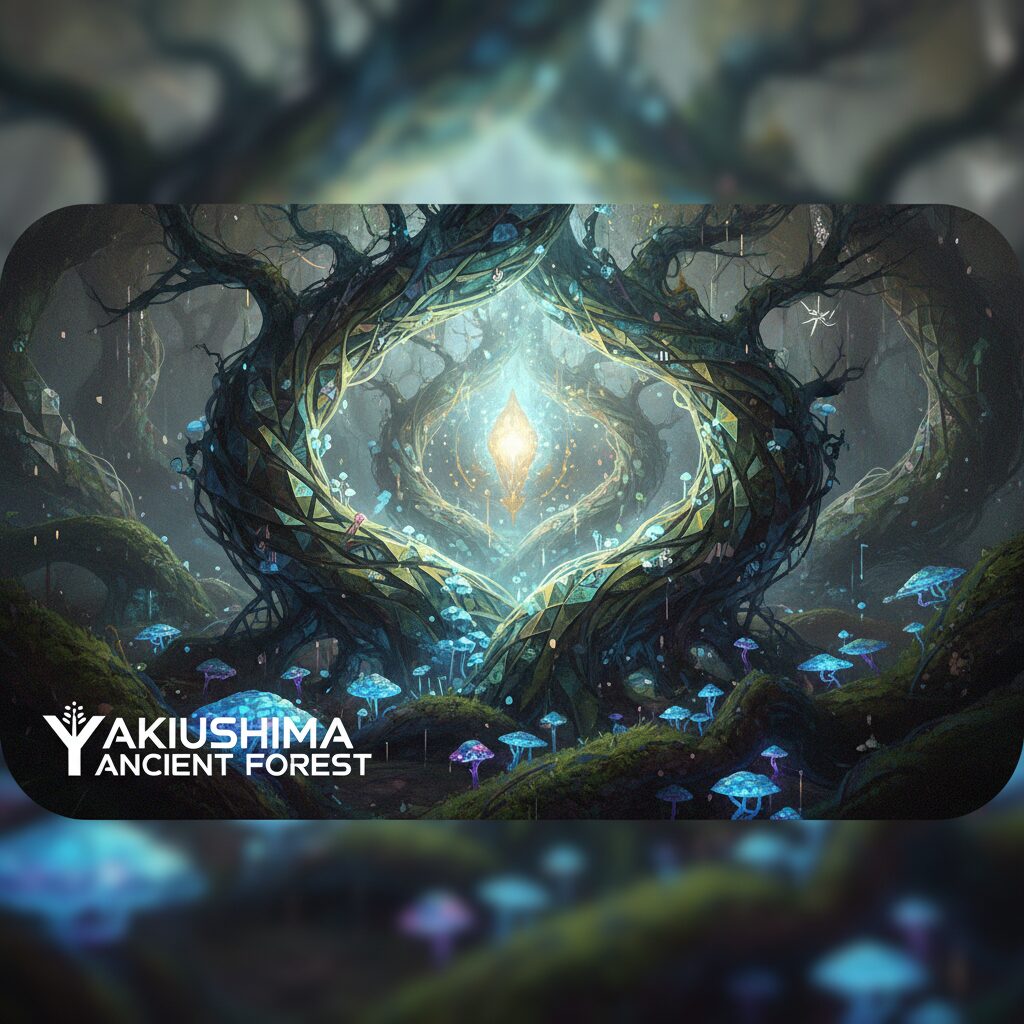
There are places on this earth that feel older than memory, places where the air itself seems to hum with a forgotten energy. Yakushima is one of them. This subtropical island, a teardrop of granite and green off the southern coast of Kyushu, Japan, is more than just a destination; it’s a passage into another world. For many, it’s known as the real-life inspiration for the primeval forests in Studio Ghibli’s masterpiece, Princess Mononoke. But even for those unfamiliar with the film, the island resonates with a power that is deeply, fundamentally wild. It is a land of giants, where Yakusugi, ancient cedar trees, have stood for millennia, their gnarled bark holding the stories of ages. It’s a land sculpted by water, where rain is not just weather but a life force, feeding the emerald moss that carpets every surface and the thunderous waterfalls that carve through its mountains. As a hiker, I came seeking the challenge of its peaks and the serenity of its trails. What I found was a profound connection to a world where nature reigns supreme, a living, breathing echo of Hayao Miyazaki’s powerful vision. This is a journey for the body and the soul, a pilgrimage to the very heart of Japan’s sacred wilderness. Before you take your first step on its mossy trails, let’s orient ourselves to this island where myths feel real.
As you wander through these mystical trails, you might draw further inspiration by exploring this pilgrim’s guide that reveals other real-life sites where myth and nature intertwine.
The Spirit of the Forest: Echoes of the Shishigami
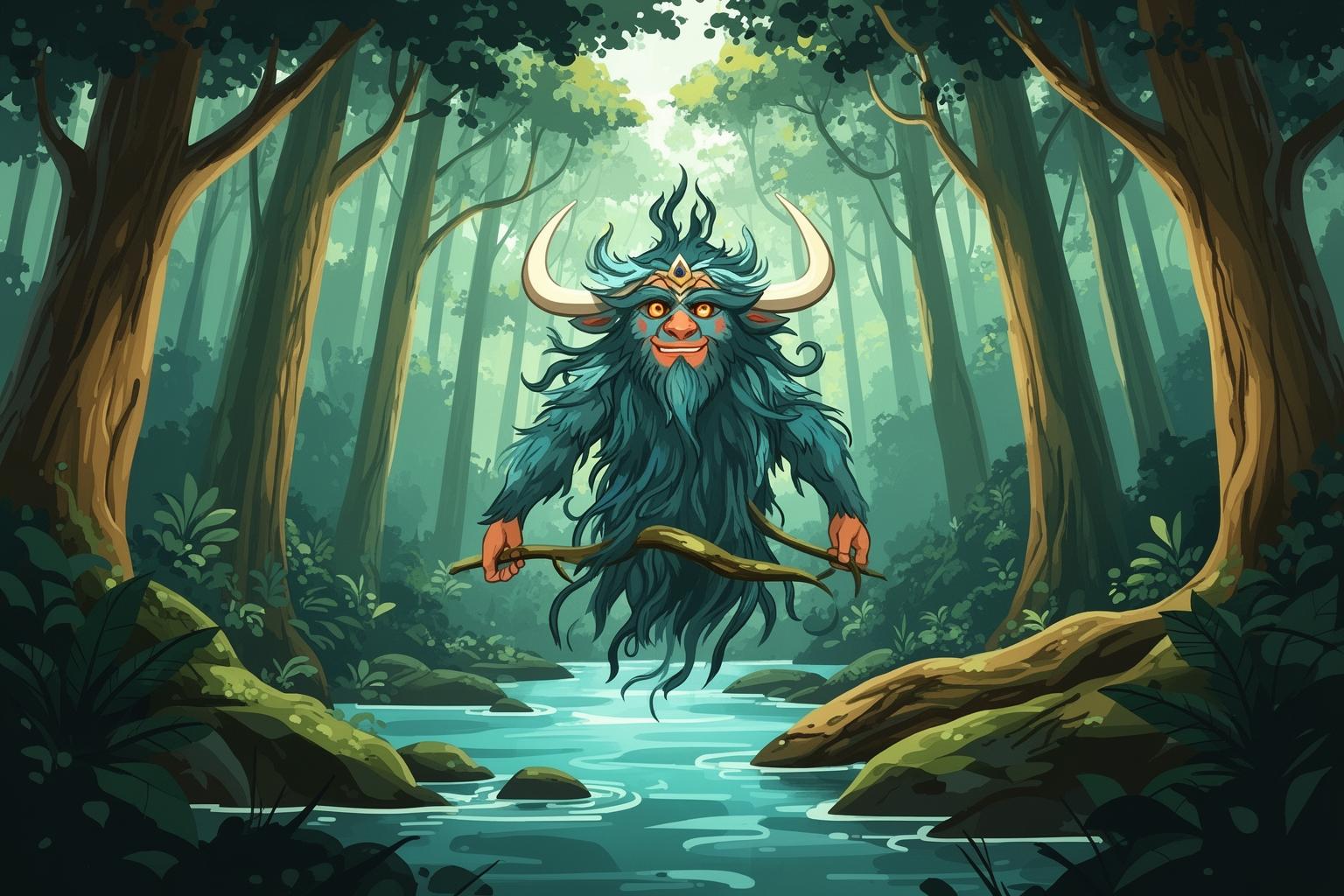
Entering the forests of Yakushima feels like the screen between you and the animated world of Princess Mononoke dissolves. The connection goes beyond the visual; it’s atmospheric. The air turns cool and heavy with the scent of damp earth and cedar. Sunlight streams through the thick canopy in ethereal beams, illuminating a world bursting with every shade of green imaginable. This sensation is strongest in the Shiratani Unsuikyo Ravine, an area so closely linked to the film that it’s often called Mononoke Hime no Mori, or Princess Mononoke’s Forest. Here, the ground disappears beneath a vibrant carpet of moss. It clings to ancient tree roots that twist over the earth like sleeping dragons, covers granite boulders as large as small houses, and hangs from low-hanging branches. The soundscape is a gentle symphony of dripping water, softly rustling leaves, and the distant call of birds. It’s easy to imagine the mischievous clicks and rattles of the Kodama, the tiny tree spirits from the film, echoing just out of sight. You find yourself walking slower, breathing deeper, your senses sharpened. The forest feels sentient, aware. This is the realm of the Shishigami, the Deer God, and you are simply a guest. The film captured this reverence flawlessly—the sense that the forest is not just a collection of trees but a single, living entity, and a visit here is an encounter with an ancient power. The experience goes beyond mere sightseeing; it becomes a conversation with nature, a reminder of a world where spirits dwell in wood and stone, a feeling that stays with you long after you’ve left the treeline.
In the Realm of Giants: Meeting the Yakusugi
The true rulers of Yakushima are the Yakusugi, the Japanese cedars revered almost like mythical beings. To be deemed a Yakusugi, a tree must be at least 1,000 years old. These are far more than simple trees; they are living monuments, silent witnesses to centuries of history. Their presence is humbling, grounding you in a timeline that far surpasses your own. The pilgrimage to witness these giants is central to the Yakushima experience, and two particular encounters stand out as essential.
The Legendary Jomon Sugi
The reigning monarch of all Yakusugi is the Jomon Sugi. Named after the Jomon Period of Japanese prehistory, it attests to its extraordinary age, estimated between 2,000 and over 7,200 years old. Reaching it is no easy task. The journey is a full-day, ten-to-twelve-hour trek starting before dawn. The trail begins along the remnants of an old logging railway, the Anbo Forest Railway, winding through a deep, misty valley. For the initial hours, you walk on wooden planks laid between the rails, the rhythmic sound of your boots keeping time in the quiet morning. This part is relatively flat, allowing you to find your pace and absorb the forest as it gradually awakens around you. Along the way, you’ll encounter other remarkable Yakusugi, such as the Meoto Sugi—two cedars fused together like a married couple. But these are just the prelude. Once you leave the railway, the trail turns into a steep and challenging mountain hike, winding over roots and rocks. The air thins, your muscles tire, but anticipation grows with each step. At last, you arrive. The Jomon Sugi doesn’t stand in an open clearing but nests among its fellow cedars, yet its presence is unmistakable. It is a towering giant, its trunk gnarled and hollowed, branches stretching skyward like weathered arms. A viewing platform maintains a respectful distance to protect its fragile roots, yet even from afar, its immense size and ancient aura overwhelm you. Standing silently, you gaze at a life form that was already a sapling when the pyramids were built. It is a moment of sheer, unfiltered awe.
Shiratani Unsuikyo: The Moss-Covered Kingdom
If the Jomon Sugi trek tests endurance, Shiratani Unsuikyo Ravine offers an immersion into nature’s artistry. This forest was the primary inspiration for the animators of Princess Mononoke. It’s more accessible than the Jomon Sugi route, featuring several well-marked trails ranging from one to four hours, ideal for a half-day adventure. As you step onto the path, you are immediately enveloped in an impossible green world. Moss, thick and velvety, blankets everything. The forest floor is a chaotic mosaic of exposed roots, ferns, and moss-covered stones, all gleaming with moisture. Streams running through the ravine are so clear the water seems invisible, rushing over smooth granite beds. The trail passes notable sights like the Nidaio Sugi and the Kuguri Sugi, a cedar you can walk through. For many hikers, the ultimate goal is Taiko Iwa, or Taiko Rock. After a final steep climb, you emerge from the dense forest onto a vast, exposed granite boulder. The view is stunning. On a clear day, you can see Yakushima’s central mountain range, including its highest peak, Miyanoura-dake. This panorama recalls the film’s dramatic landscapes and offers a reward that makes you feel as though you’re standing atop the world. Here, you truly grasp the island’s scale and wildness—a perfect balance to the intimate, enclosed beauty of the mossy forest below.
Planning Your Expedition: Logistics and Rhythms of the Island
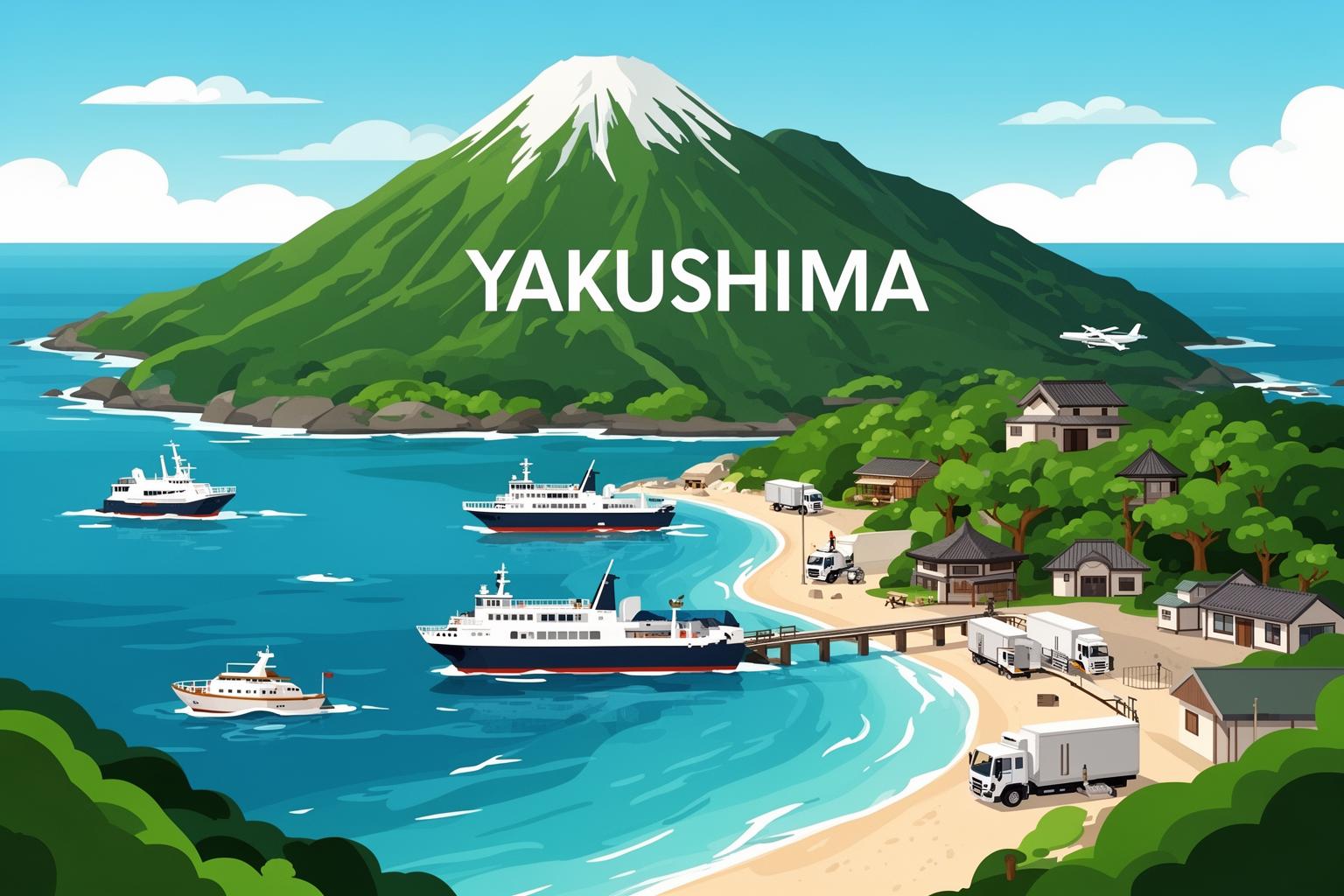
Yakushima’s wildness is its most compelling feature, but it also means visiting requires careful planning. The island follows its own pace, governed by mountains and tides rather than the fast rhythm of mainland Japan. Adapting to this natural tempo is essential for a successful trip.
Getting There: The Journey to the Island
Your adventure starts in Kagoshima, the southernmost major city on Kyushu. From there, you have two main options. The quickest is flying. Yakushima Airport (YSJ) is small, but Japan Air Commuter operates several daily flights from Kagoshima, with additional direct flights from Fukuoka and Osaka (Itami). The flight is brief and offers stunning aerial views of the island’s mountainous spine as you approach. Alternatively, you can travel by sea. The high-speed jetfoil, known as the “Toppy” or “Rocket,” is a popular choice, taking about two to three hours from Kagoshima to one of Yakushima’s main ports (Miyanoura or Anbo). It’s faster than the regular ferry and less likely to be canceled due to rough seas. For those on a tighter budget or with a vehicle, the slower car ferry is the most affordable option, though it takes around four hours. Whatever you choose, booking ahead is strongly advised, especially during busy periods like Golden Week in spring or Obon in summer.
Navigating Yakushima: A World of Its Own
Upon arrival, you’ll quickly notice that Yakushima is larger and more rugged than it looks on the map. Public transportation is available via a bus system that circles the island, but buses are infrequent, especially to trailheads deep in the interior. Depending solely on the bus can be limiting and time-consuming. For maximum freedom and flexibility, renting a car is by far the best choice. Several rental agencies operate near the airport and Miyanoura Port. Having your own vehicle lets you reach remote waterfalls, discover secluded beaches, and keep your own schedule—which is vital for catching the first light on a trail. If you’re uneasy driving on the left side or on narrow mountain roads, consider hiring a local guide. A good guide not only handles transportation but also greatly enriches your visit by sharing in-depth knowledge of the island’s ecology, history, and folklore.
A Note on Driving the Seibu Rindo
The Seibu Rindo, or Western Forest Path, is a narrow, single-lane road winding through the UNESCO World Heritage wilderness along the island’s western coast. This road is often closed to larger vehicles and requires cautious driving. It’s also the prime spot on the island to observe wildlife. Yakushika deer and Yakuzaru monkeys—both smaller than their mainland relatives—are abundant here and often appear on the road, unperturbed by vehicles. Driving this route is a slow, enchanting experience, like a mini-safari offering a glimpse into Yakushima’s pristine ecosystem. Be sure to check road conditions beforehand, as it can close due to weather.
Beyond the Ancient Woods: The Island’s Other Faces
While the forests are the primary attraction, Yakushima’s character is also defined by its dramatic coastline and the powerful presence of water. Taking time to explore beyond the treeline reveals a fuller, more nuanced view of this multifaceted island.
Coastal Wonders and Waterfalls
Yakushima’s mountains are so steep that they create spectacular waterfalls, many of which plunge directly into or near the ocean. Senpiro-no-taki and Toroki-no-taki are among the most impressive, demonstrating the immense power of water as it carves through solid granite. Oko-no-taki, in the southwest, ranks as one of Japan’s tallest waterfalls, and visitors can walk right up to its base to feel the thunderous spray. The island is also lined with beautiful beaches. Nagata Inakahama Beach, a stunning stretch of golden sand, is famous as a major nesting site for loggerhead sea turtles. From May to August, guided night tours offer the incredible chance to see female turtles coming ashore to lay their eggs. For a more active water experience, the island’s rivers, known for their pure, clean water, are ideal for kayaking, stand-up paddleboarding, and ‘shower climbing’—a unique Japanese sport involving climbing up waterfalls and through gorges.
The Culture of Water and Mountain
Life on Yakushima is deeply connected to the natural world. The small port towns of Miyanoura and Anbo serve as the main centers of activity, providing insight into the local culture. Here, excellent restaurants serve island specialties, most notably tobiuo, or flying fish, often served fried whole. The island is also renowned for its production of shochu, a distilled spirit, with the local brand Mitake being a popular souvenir. Perhaps the most distinctive way to experience the island’s geothermal energy is by visiting an onsen, or hot spring. Hirauchi Kaichu Onsen offers an unforgettable experience. This natural hot spring is located on the rocky shore, and its pools are accessible only for a few hours each day at low tide. Soaking in the steaming, sulfurous water while watching waves crash on the rocks just a few feet away is a magical experience that connects you to the island’s raw, elemental forces.
A Hiker’s Guide to Preparedness: Respecting the Mountain Gods
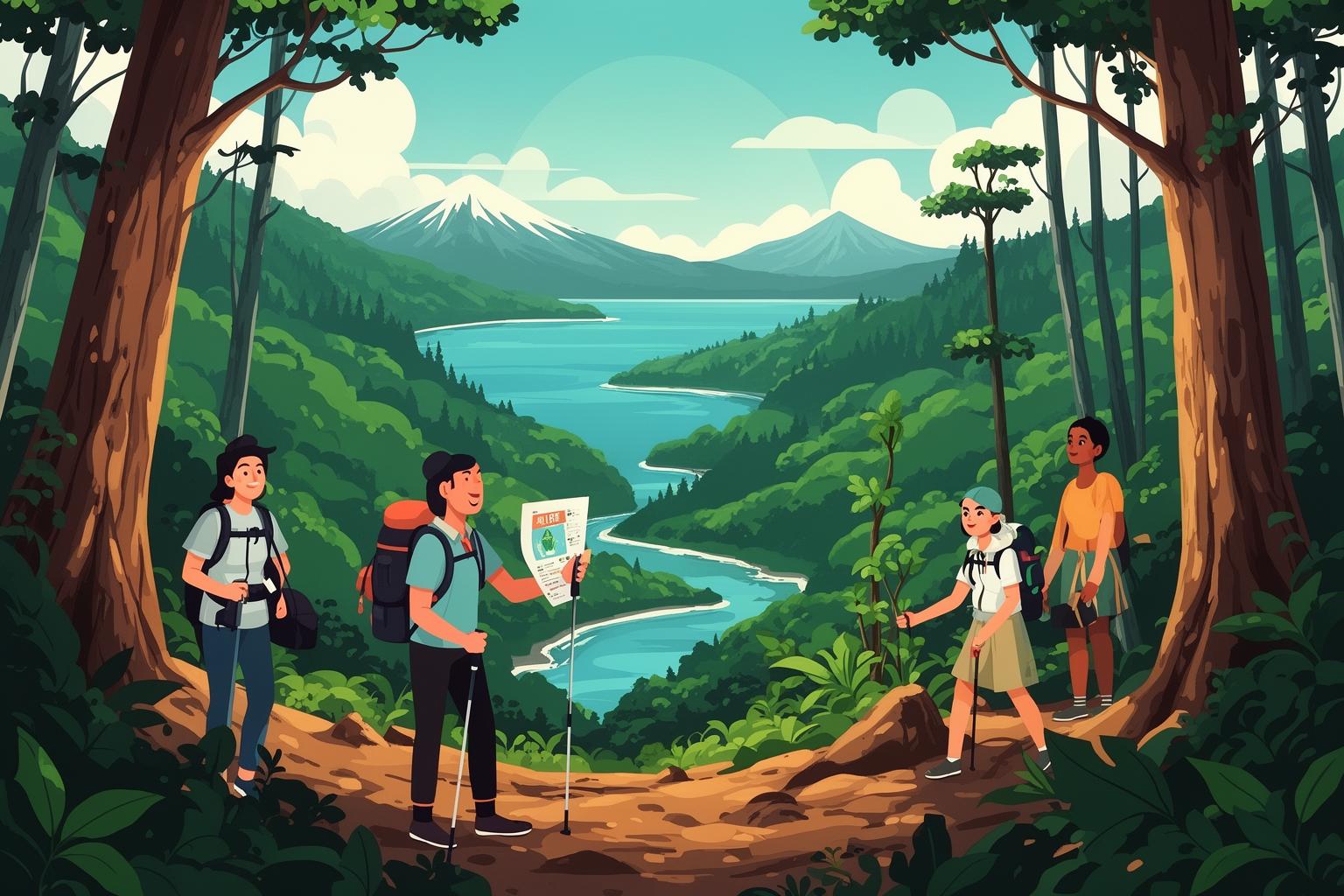
Yakushima’s beauty is raw and untamed, commanding respect. Locals say, “It rains 35 days a month.” Though an exaggeration, it perfectly describes the island’s climate. The weather is famously unpredictable and can shift suddenly. Proper preparation is essential not just for comfort, but for safety.
What to Pack for the Trails
Your most vital gear is high-quality rainwear. A cheap poncho won’t suffice. Invest in durable, waterproof, and breathable jacket and pants. Sturdy, waterproof hiking boots with strong ankle support are essential, as the trails are often wet, rocky, and slippery. A backpack with a rain cover is necessary to keep your belongings dry. Inside, bring plenty of water, high-energy snacks, a headlamp (for early starts), and a small first-aid kit. Dressing in layers is crucial since you’ll warm up during climbs and cool down quickly at rest stops. If you prefer to travel light, many rental shops in Miyanoura and Anbo offer full hiking equipment sets, from boots and rainwear to backpacks and walking poles.
When to Visit: The Four Seasons of Yakushima
Each season on Yakushima provides a unique experience. Spring (March to May) is popular, with mild temperatures and mountain rhododendrons in bloom. It’s also one of the busiest times. Summer begins with the rainy season in June, bringing heavy showers but also making the moss exceptionally lush. July and August are hot and humid, perfect for river and ocean activities. Autumn (September to November) is often considered the best season for hiking, with cooler weather and more stable conditions, though typhoon risks persist. Winter (December to February) sees fewer visitors. Coastal areas remain mild, but the high mountains get significant snowfall, turning the landscape into a winter wonderland. Hiking to Jomon Sugi in the snow is challenging yet immensely rewarding for those well-prepared and experienced.
A Word on Trail Etiquette and Safety
The ecosystems here, especially the moss, are extremely delicate. Always stay on designated wooden boardwalks and trails. Never step on the moss. Follow Leave No Trace principles—pack out all your trash. For longer hikes like the one to Jomon Sugi, carrying a portable toilet is strongly recommended to protect the environment. Before a serious mountain trek, it’s wise to submit a hiking plan (a tozan todoke) at a police box or trailhead station. This is an important safety precaution in case of emergencies. Always check the weather forecast before heading out and be ready to turn back if conditions worsen. The mountain gods of Yakushima are powerful, and showing them respect is the foremost rule when exploring their realm.
The Enduring Legacy: Why This Forest Stays With You
A trip to Yakushima is more than simply a vacation or an item checked off a Ghibli fan’s bucket list. It’s an experience that profoundly shifts your perspective. Standing in a forest that has thrived since before the rise and fall of empires, you are struck by an overwhelming sense of humility and connection. The central conflict of Princess Mononoke—the clash between the unstoppable advance of human industry and the sacred sovereignty of nature—becomes more than an abstract idea. On Yakushima, that tension is tangible, and the need to find balance feels urgent and deeply personal. You leave the island with more than just photos. You carry with you the sensation of cool, damp air in your lungs, the memory of sunlight dappling an ancient canopy, and the sound of pure water flowing over granite. You depart with a renewed awe for the resilience and beauty of our planet. This forest lingers with you, a quiet whisper within your soul, reminding you that there are still places where magic is real, where gods walk among the trees, and where the ancient heart of the world continues to beat strong. It calls you, someday, to return and listen once more.