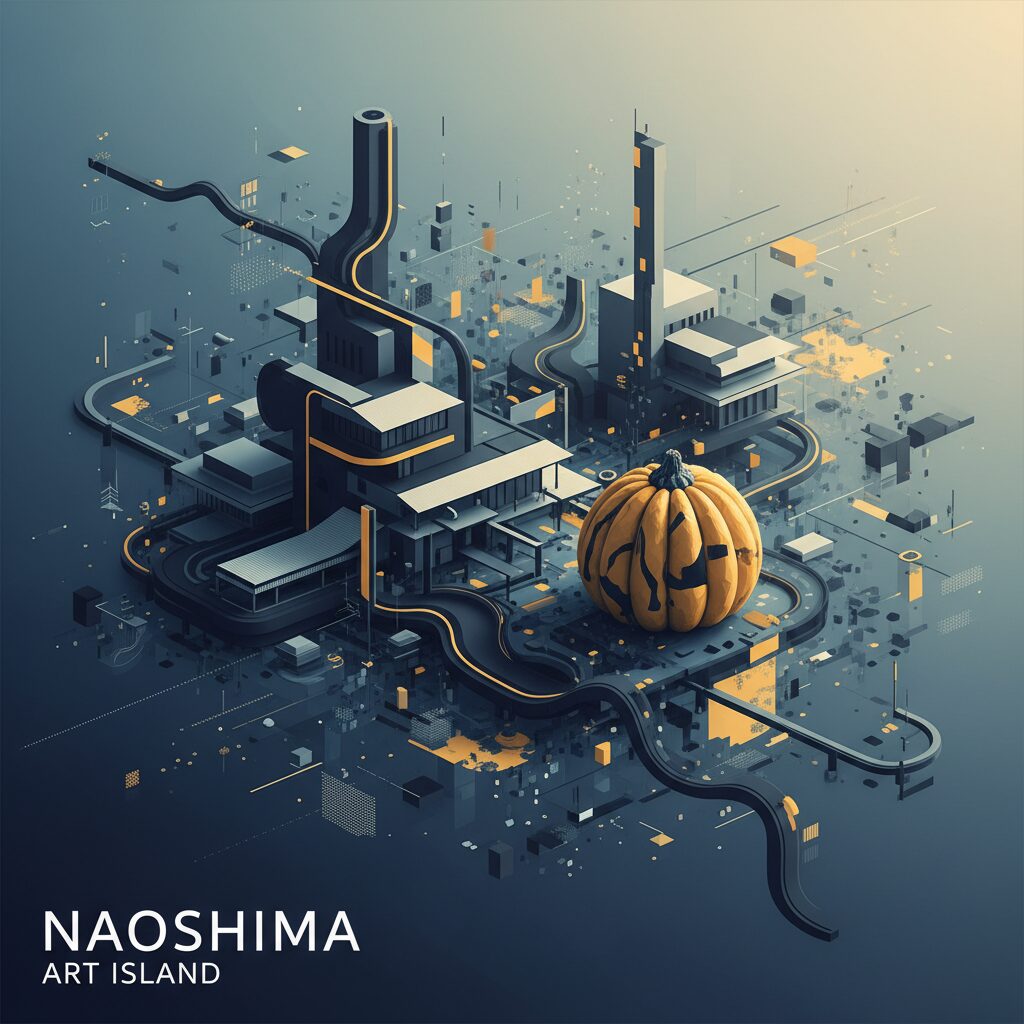
There’s a certain magic that hums in the air of the Seto Inland Sea, a gentle rhythm that seems to slow time itself. It’s a feeling that crystallizes the moment you step onto the ferry, leaving the mainland’s frantic pulse behind. As the boat slices through the calm, turquoise waters, dotted with emerald islands like sleeping giants, a singular vision emerges on the horizon. First, it’s a flash of brilliant color against the coastline—a giant, polka-dotted pumpkin. This is your welcome to Naoshima, an island where the boundaries between nature, life, and art simply dissolve. Once a quiet, industrial island grappling with decline, Naoshima was reborn through a visionary dream, transforming into a world-renowned sanctuary for contemporary art. It’s not a place where art is confined to galleries; it’s a landscape you inhabit, a journey you walk through, and a conversation between human creativity and the profound beauty of the sea and sky. This is more than a destination; it’s an experience, a pilgrimage for the soul that seeks beauty in the unexpected, a place where every corner holds a new perspective waiting to be discovered.
For those inspired by the transformative power of art in a city, consider a similar art pilgrimage to Paris that moves beyond its most famous museum.
The Genesis of an Art Haven: From Industry to Inspiration
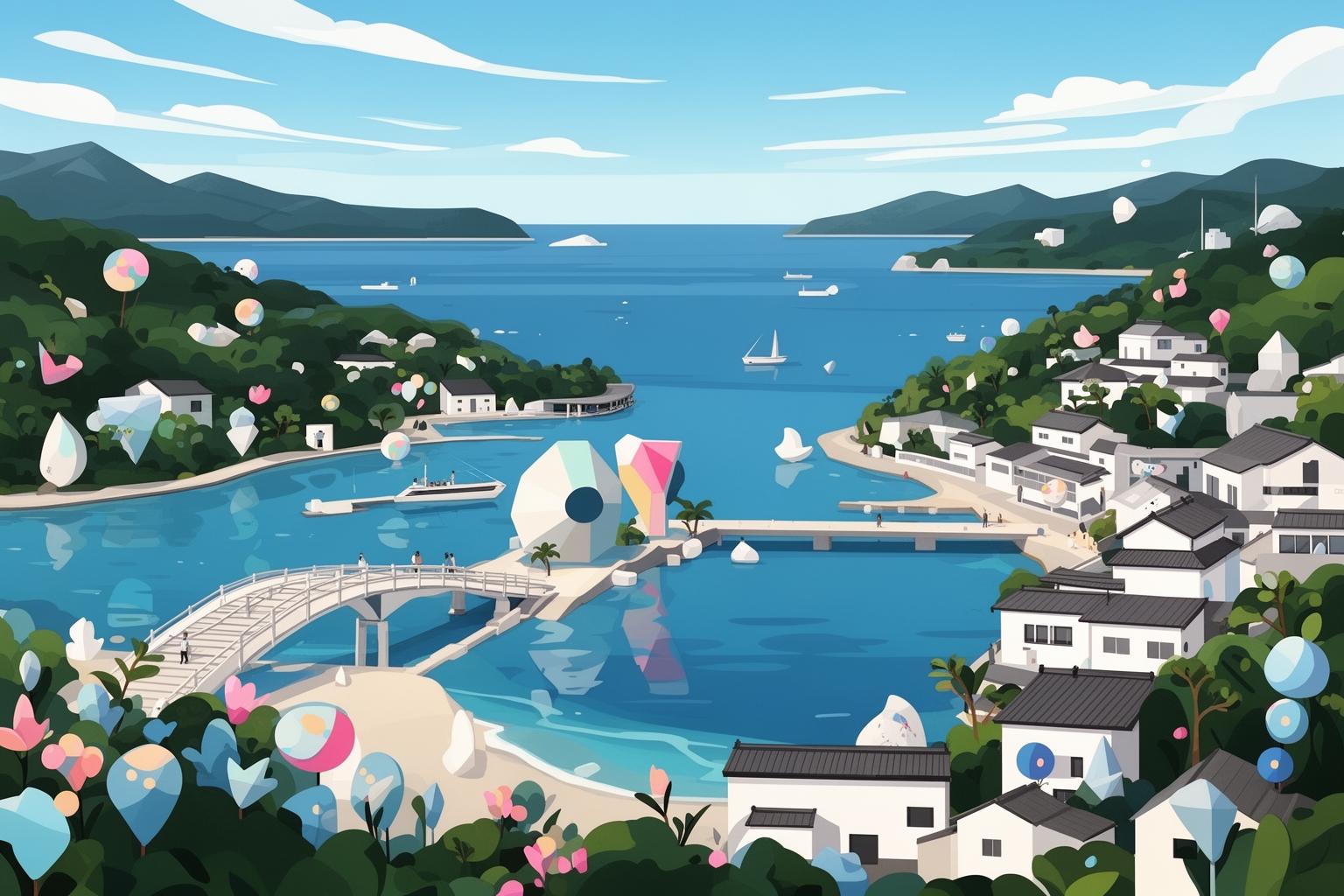
To fully appreciate Naoshima’s tranquil and artistic landscape, one must understand its extraordinary transformation. The island was not always a sanctuary for minimalist architecture and avant-garde installations. For much of the 20th century, industrial processing dominated its northern half, providing jobs but leaving a lasting impact on the environment. Meanwhile, the southern half, with its beautiful beaches and pristine nature, remained mostly isolated. The island’s future seemed uncertain until the late 1980s, when a visionary plan began to emerge, led by the Fukutake family, founders of the Benesse Corporation—a name that appears throughout the island. Their philosophy was straightforward yet revolutionary: to create a place where art, nature, and architecture coexist harmoniously, promoting well-being and inspiring fresh perspectives. This endeavor was both a cultural and environmental revival. The key collaborator in this ambitious project was the now-iconic architect, Tadao Ando. His approach—featuring clean lines, raw concrete, and striking uses of natural light—became the architectural essence of Naoshima. Rather than imposing on the landscape, Ando aimed to engage in dialogue with it. He submerged museums underground to protect the ridgelines, opened buildings to the sky and sea, and designed spaces that stimulate the senses, encouraging reflection and a deeper bond with the surroundings. This essential partnership between Benesse’s vision and Ando’s architectural mastery forms the unifying thread throughout the island, transforming what might have been a mere collection of museums into a comprehensive, immersive art environment.
Miyanoura Port: Your Gateway to Wonderland
The moment your ferry docks at Miyanoura Port, you realize you’ve arrived somewhere truly special. This isn’t just a practical transit point; it’s the island’s grand, artistic entrance. The atmosphere here hums with a gentle excitement, as travelers rent electric bikes, check maps, and snap their first wide-eyed photos. It’s the perfect way to introduce Naoshima’s philosophy: that even the most utilitarian elements of life can be crafted with beauty and creativity.
The Iconic Welcome: Yayoi Kusama’s Red Pumpkin
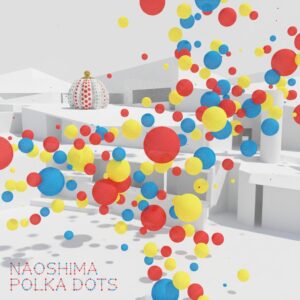
It’s impossible to miss. Proudly positioned against the sea, Yayoi Kusama‘s “Red Pumpkin” acts as the island’s vibrant, unofficial greeter. Unlike its more secluded yellow counterpart, the red pumpkin invites interaction. Its hollow interior, dotted with black polka holes, beckons you to step inside. During daylight, sunlight filters through, casting playful patterns on the ground. It feels less like a static artwork and more like a lively, whimsical creature. Children delight in climbing in and out, their laughter resonating within its vivid shell. This sets the tone for your visit: here, art isn’t kept behind ropes. It’s meant to be touched, experienced, and woven into your memories. It boldly declares that you’ve entered a world where imagination rules.
More Than a Terminal: The Marine Station & I♥︎湯 Bathhouse
Even the ferry terminal itself is a masterpiece. Designed by the architectural firm SANAA, the Miyanoura Port Marine Station is a light, airy, almost ethereal space. Its flat, expansive roof rests on slender, mirrored columns that reflect the port, the sky, and the flow of people, blurring boundaries between building and surroundings. The area feels open and inviting, housing a café, gift shop, and transport information—all within a design that balances function with artistic grace. Just a short walk away is another charming surprise: the Naoshima Bath “I♥︎湯”. Created by artist Shinro Ohtake, this fully operational public bathhouse, or sento, doubles as a bold, collage-style art installation. The exterior bursts with color and found objects—from neon signs to repurposed boat parts—while inside, elaborate tile mosaics and a giant elephant statue await. It’s a celebration of Japanese bathing culture with a playful, eccentric flair, offering visitors a unique chance to literally immerse themselves in art.
The Benesse House Area: Where Art and Nature Collide
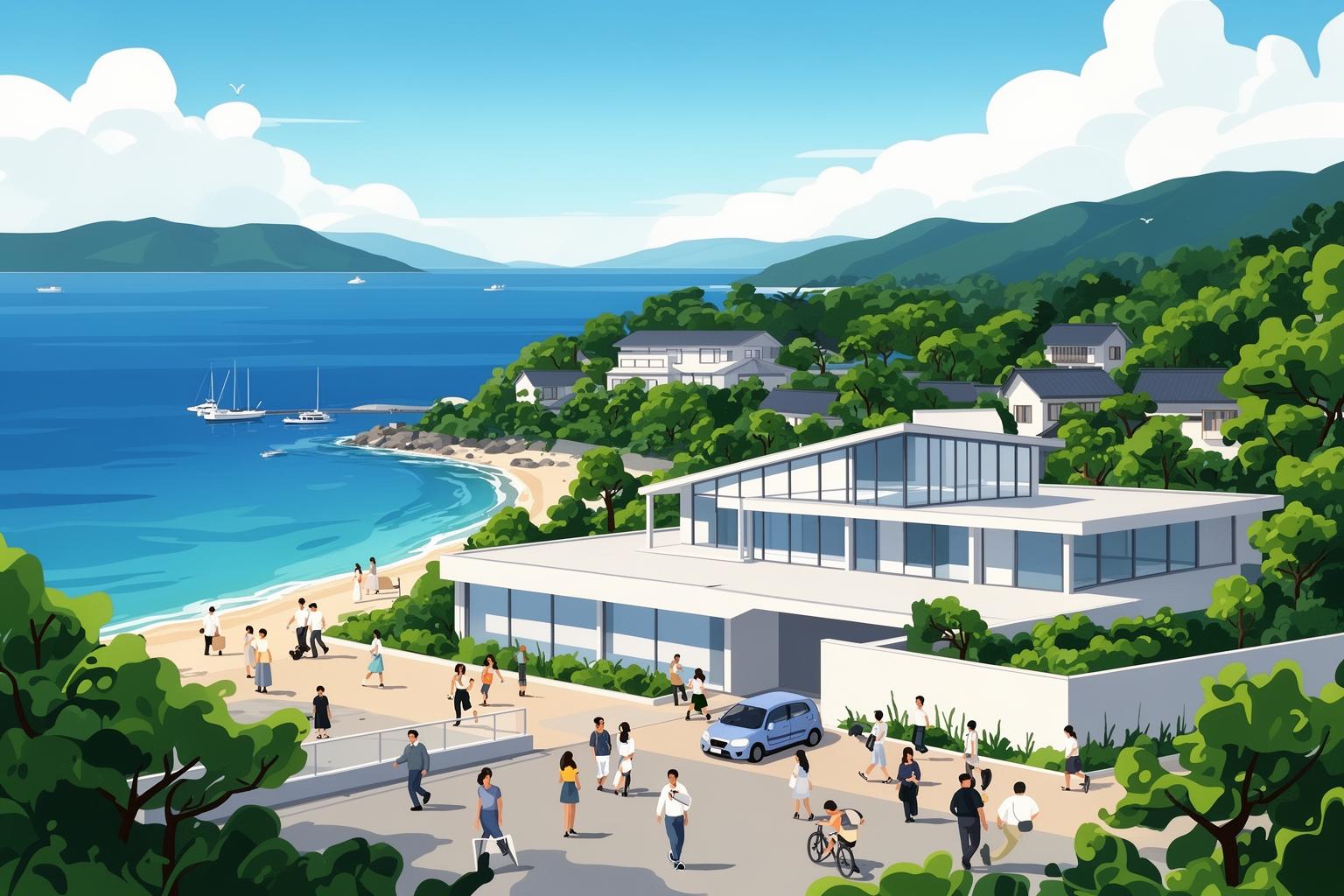
Traveling south from Miyanoura Port, you arrive at the heart of Naoshima’s artistic vision: the Benesse House Area. This vast coastal expanse is where the island’s core philosophy is most tangible. Here, world-class art and Tadao Ando’s masterful architecture do not merely coexist with nature—they engage in an ongoing, dynamic dialogue with it. The salty breeze, the sound of crashing waves, and the changing sunlight all become integral components of the artistic experience. It’s a place to slow down, stroll, and allow discoveries to unfold naturally.
Benesse House Museum: A Night Among Masterpieces
Picture waking up, stepping out of your room, and finding yourself inside a world-class art museum before the day’s visitors arrive. This is the unique experience of staying at Benesse House. The complex is a hybrid marvel, effortlessly blending a museum and a hotel into a unified structure. Designed by Tadao Ando, the building is a masterpiece of refined elegance, with its signature smooth concrete walls framing breathtaking views of the Seto Inland Sea. The art collection features works by international icons like Andy Warhol, Jean-Michel Basquiat, and Gerhard Richter, displayed in spacious, naturally lit galleries. However, the true magic lies in the exclusive after-hours access granted to hotel guests. Wandering the silent halls at night, accompanied only by the soft glow of gallery lights and the distant sound of the sea, is almost a spiritual experience. It creates an intimate, personal connection with the art that is impossible to find in crowded daytime galleries. The accommodation itself is spread across four distinct wings—Museum, Oval, Park, and Beach—each offering a unique perspective on the fusion of art, architecture, and nature.
Outdoor Art Trail: Sculptures Under the Sun and Stars
The coastline extending from the Benesse House Museum to the Tsutsuji-so bus stop forms an extraordinary open-air gallery. A leisurely walk or gentle bike ride along this path reveals a collection of striking sculptures set against the breathtaking natural backdrop of sand and sea. The undeniable highlight of this trail is Yayoi Kusama’s “Yellow Pumpkin.” Situated at the end of a small pier, it stands in solitary grandeur, its vivid yellow color and black polka dots creating a surreal and iconic image against the blue water and sky. The pumpkin has become a symbol of Naoshima’s resilience and enduring spirit, especially after being swept away by a typhoon in 2021 and painstakingly restored to its original place. Yet the trail offers more than Kusama’s masterpiece. You will encounter the colorful, whimsical animal sculptures of Niki de Saint Phalle, as if sprung from a dream, alongside the bold, abstract forms of Karel Appel. Each piece is thoughtfully positioned to interact with its environment, changing character with shifting light from dawn to dusk. This art walk is a vivid reminder that on Naoshima, the journey itself is the exhibition.
Lee Ufan Museum: A Dialogue Between Stone, Steel, and Space
Tucked away in a tranquil valley overlooking the sea, the Lee Ufan Museum offers a profound space for quiet contemplation. A collaboration between Korean artist Lee Ufan, a leading figure of the avant-garde Mono-ha school, and architect Tadao Ando, the museum meditates on the relationship between natural and human-made materials. Mono-ha, meaning “School of Things,” advocates leaving materials such as stone, wood, and steel mostly untouched, arranging them to reveal their essence and connection to the surrounding space. Ando’s semi-underground design perfectly complements this ethos. Visitors enter through a long, high-walled concrete corridor that calms the mind and heightens the senses. Inside, minimalist galleries showcase Lee Ufan’s paintings and sculptures. His works are deceptively simple, often featuring a single brushstroke on a vast canvas or a carefully positioned stone beside a sheet of industrial steel. The effect is mesmerizing. The space invites you to slow down, notice subtle textures, observe the interplay of light and shadow, and reflect on the silent, powerful dialogue unfolding between the art, architecture, and the nature enveloping it all.
Subterranean Splendor: The Chichu Art Museum
Among all the artistic marvels on Naoshima, the Chichu Art Museum stands out as perhaps the most stunning. The word “Chichu” translates literally to “in the earth,” which is exactly where this museum is located. In a bold and ingenious effort to protect the pristine coastal landscape, Tadao Ando designed the entire museum to be underground, using only geometric skylights and sunken courtyards carved from the earth to light the interior. The outcome is an architectural masterpiece that feels both timeless and futuristic, a sacred space devoted to the profound experience of art and light.
An Architectural Marvel Hidden Beneath the Earth
The experience of Chichu begins well before you encounter any artwork. The path through its concrete corridors is a carefully orchestrated sequence meant to cleanse you from the outside world. The coolness of the concrete, the echo of your footsteps, and the dramatic beams of sunlight piercing the darkness all heighten your senses. Ando excels in what he terms the “architecture of transitions.” You continuously move between light and shadow, enclosed spaces and open-air courtyards, creating a rhythm that primes you for the artistic revelations ahead. The building itself is a work of art, embodying the idea that the container for art is as significant as the art it holds.
Monet’s Water Lilies: A Sanctuary of Light and Reflection
Deep underground, you enter a space of breathtaking light and elegance. Chichu houses five paintings from Claude Monet’s famous “Water Lilies” series. But this is no typical gallery. The room is crafted to serve as a sanctuary for the paintings. With walls, floor—composed of 700,000 tiny marble cubes—and ceiling all painted pure white, the only illumination comes from natural light softly filtered through a high ceiling, shifting throughout the day and weather changes. You remove your shoes before entering, a gesture of respect that enhances the contemplative atmosphere. Viewing Monet’s Impressionist masterpieces in this setting is transformative. The natural light lets the colors breathe, while the tranquil environment invites you to immerse yourself in the artist’s vision of his Giverny pond. It’s an experience that connects you intimately to Monet’s obsession with capturing the transient qualities of light and nature.
The Contemplations of Walter De Maria and James Turrell
Chichu is devoted to just three artists, allowing each space to fully immerse visitors in their world. After Monet, you encounter Walter De Maria’s work. His installation, “Time/Timeless/No Time,” is a monumental, temple-like environment. A vast, flawlessly polished granite sphere sits at the top of a grand staircase, with gilded wooden sculptures lining the walls. Natural light floods the space from a long skylight, its position shifting with the sun’s movement, marking the passage of time. The scale and precision of this installation evoke a profound sense of awe. The final artist featured is James Turrell, a master of manipulating light and space. Chichu showcases three of his works, each intriguing your perception uniquely. In “Open Field,” you ascend a short flight of stairs to what initially appears as a flat, glowing blue panel, only to find you can step into a room bathed in ethereal, disorienting light. The most renowned piece is “Open Sky,” a room featuring a large square aperture cut into the ceiling, perfectly framing the sky above. By day, it acts as a living painting of shifting clouds and changing blue tones. An exclusive night program, requiring separate booking, transforms this space into a mesmerizing light show where Turrell uses colored LEDs to alter your perception of the twilight sky.
Practical Tips for Visiting Chichu
Planning a visit to Chichu is essential, but wholly rewarding. Tickets must be bought online in advance, often several weeks or months ahead, for a specific timed entry. This system is vital for preventing overcrowding and maintaining the museum’s quiet, contemplative environment. Note that photography is strictly forbidden inside. Although this may seem limiting at first, it proves to be a blessing in disguise, compelling you to be fully present and engage directly with the art rather than through a lens. The on-site Chichu Cafe, with expansive windows offering uninterrupted views of the Seto Inland Sea, is an ideal place to sit and reflect on the extraordinary experiences you’ve just encountered.
Honmura’s Living Art: The Art House Project
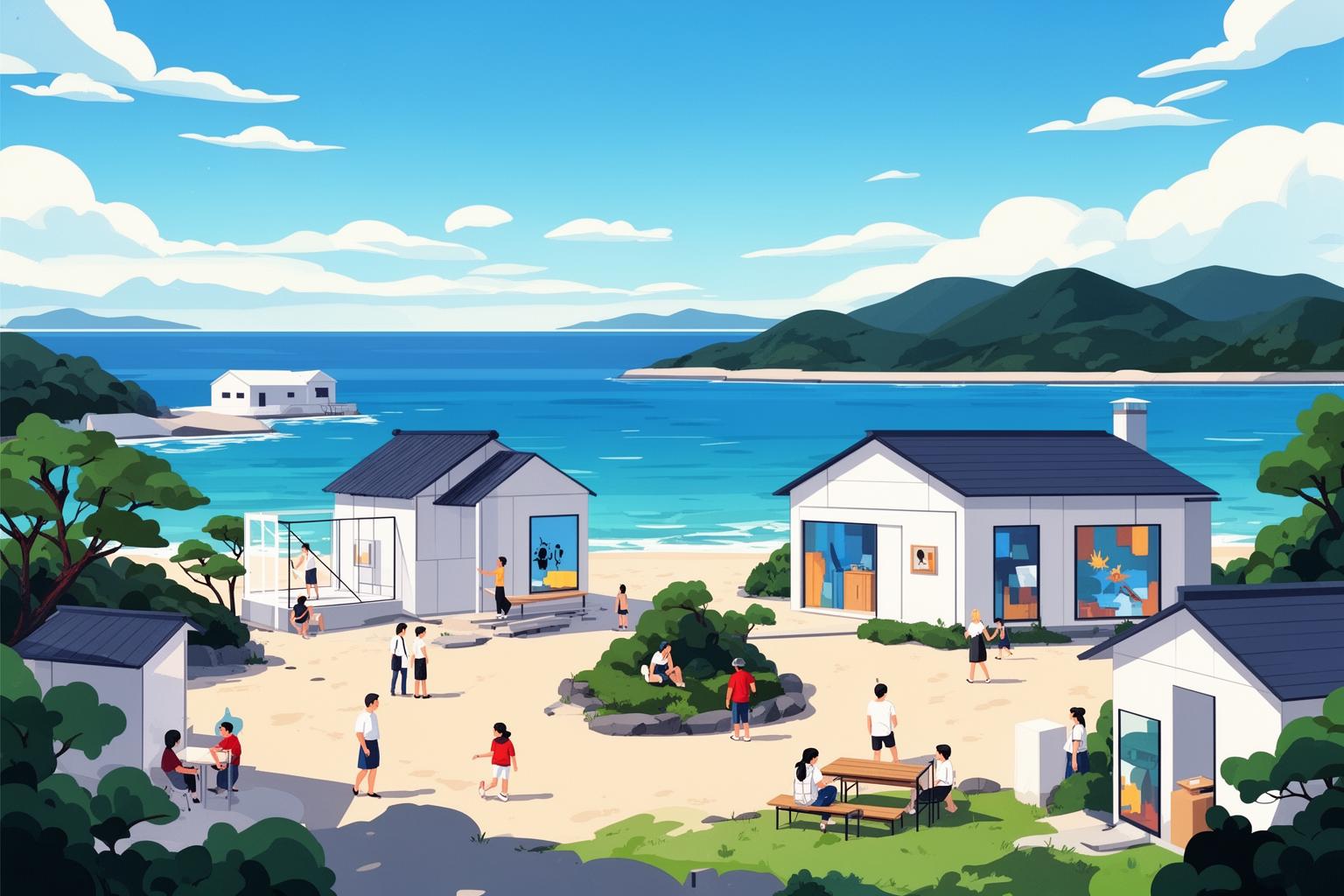
While the southern part of Naoshima is characterized by monumental museums, the eastern village of Honmura offers a distinctly different but equally captivating art experience. Here, art is not confined to grand new buildings but is instead intricately woven into the community itself. The Art House Project revitalizes empty and abandoned traditional houses in this charming port town by transforming them into permanent, site-specific art installations. This project pays homage to the town’s history while injecting new life into it, creating a unique art walk that feels like a treasure hunt through the quiet, maze-like streets.
Weaving Art into the Fabric of Daily Life
The genius of the Art House Project lies in its subtlety and seamless integration. As you stroll through Honmura’s narrow lanes, past well-kept gardens and traditional wooden homes still inhabited by local residents, you suddenly encounter an art site. The project fosters a beautiful dialogue between past and present, the ordinary and the extraordinary. You might notice an elderly resident tending her plants beside a house housing a cutting-edge light installation. This harmonious blend cultivates a profound respect for the community and its history, making the art feel grounded and deeply connected to its surroundings. It’s an experience that invites slow, mindful exploration.
A Journey Through the Houses: Highlights and Hidden Gems
Currently, the project comprises seven houses, each offering a unique world to explore. Visitors purchase a multi-site ticket that grants access to six houses, while one requires a separate timed reservation.
Minamidera: This house requires a separate booking for good reason. A collaboration between architect Tadao Ando and artist James Turrell, Minamidera offers a sensory experience of deprivation and revelation. Visitors are led into a pitch-black wooden building and asked to find a bench by touch. Sitting in complete darkness for several minutes, the eyes gradually and almost unbelievably adjust until a faint, distant light begins to emerge from the void. It’s a powerful, meditative reflection on perception that lingers long after you leave.
Kadoya: The first house of the project, Kadoya features Tatsuo Miyajima’s “Sea of Time ’98.” Inside a restored 200-year-old home, a pool of water contains 125 colorful LED counters, each blinking at a rhythm set by a local resident. The quiet, rhythmic flashing in the dim room is mesmerizing, symbolizing the eternal passage of time and the unique life rhythms of individuals in the community.
Haisha: Formerly the home and office of a local dentist, Haisha was radically transformed by artist Shinro Ohtake into a vibrant, chaotic “scrapbook” house. Both inside and out, it’s a collage of found objects, paintings, and fragments of signs and memories. Offering a stark contrast to the island’s minimalism, it bursts with frenetic, creative energy, feeling like a direct glimpse into the artist’s wildly imaginative mind.
Navigating the Project
Exploring the Art House Project is best done on foot. Pick up a map from the Honmura Lounge & Archive, which serves as the project’s information and ticket center. Allow at least half a day to wander unhurriedly. The houses are spread throughout the village, and the joy lies in the discoveries along the way. Honmura also offers several cozy cafes and restaurants, perfect for a break to soak in the tranquil atmosphere of this art-filled village. Be sure to book your timed ticket for Minamidera online in advance, as it is one of the most sought-after and profound experiences on the island.
Island Practicalities: A Stylish Traveler’s Guide
Exploring Naoshima is part of the adventure itself, and with a bit of planning, it can be a smooth and stylish experience. The island’s compact size and excellent infrastructure make it a pleasure to navigate, letting you focus on the art and stunning scenery. Here’s a guide to help make your trip as seamless as the polished concrete of an Ando wall.
Getting There and Getting Around
Your trip to Naoshima will likely start with a ferry ride, which is beautiful in its own right. The two main access points are Uno Port in Okayama Prefecture (on Japan’s main island of Honshu) and Takamatsu Port in Kagawa Prefecture (on the island of Shikoku). Both provide regular and reliable ferry services. Upon arriving at Miyanoura Port, you have several options for getting around. The town bus operates between the main ports and museum areas, offering a dependable and affordable choice. However, for true freedom and the ability to explore at your own pace, I highly recommend renting an electric bicycle. The island is quite hilly, and the electric assist makes climbing slopes effortless. It allows you to pause whenever a beautiful view catches your eye, discover hidden beaches, and feel the sea breeze as you ride along the coastal roads. This is both the most efficient and the most romantic way to experience Naoshima.
Timing Your Visit: Seasons and Schedules
Naoshima is lovely year-round, but spring (March–May) and autumn (September–November) offer the best weather for exploring, with mild temperatures and clear skies. Summer can be hot and humid, plus it’s the peak tourist season. One of the most important tips for planning your trip is to check museum schedules. Most museums and art sites on Naoshima close on Mondays. If a Monday falls on a national holiday, they usually remain open but close the following Tuesday instead. Always verify the official Benesse Art Site Naoshima website before you go to avoid disappointment. For those wanting a deeper art experience, consider aligning your visit with the Setouchi Triennale, a major art festival held every three years across several islands in the Seto Inland Sea, with Naoshima as its centerpiece.
Where to Stay and Dine
Accommodations on Naoshima vary from luxurious art-centric experiences to charming local guesthouses. For full immersion, nothing surpasses staying at Benesse House. If you prefer a more local and budget-friendly option, try one of the many minshuku (family-run guesthouses) in the Miyanoura or Honmura areas. These provide a wonderful chance to experience Japanese hospitality. Dining options are also diverse. Museum cafes offer stylish settings and delicious, though pricier, fare with incredible views. Scattered throughout the villages, you’ll find cozy cafes, traditional udon noodle shops, and okonomiyaki restaurants serving authentic and affordable local cuisine.
A Note on Safety and Comfort
As a solo female traveler, I found Naoshima to be extremely safe and welcoming. The island’s relaxed and peaceful atmosphere instantly puts you at ease. However, comfort is crucial for enjoying your explorations. Stylish sneakers or comfortable walking shoes are essential, as you’ll be walking a lot, often on uneven terrain. Pack layers, since the weather can shift near the coast, and don’t forget sunscreen and a hat, especially during warmer months. While most major facilities accept credit cards, many smaller guesthouses and local cafes are cash-only, so it’s wise to carry enough yen. Finally, take your time. The true charm of Naoshima emerges when you slow down, sit and watch the light change, and let the powerful blend of art and nature wash over you.
The Lingering Impression of Naoshima
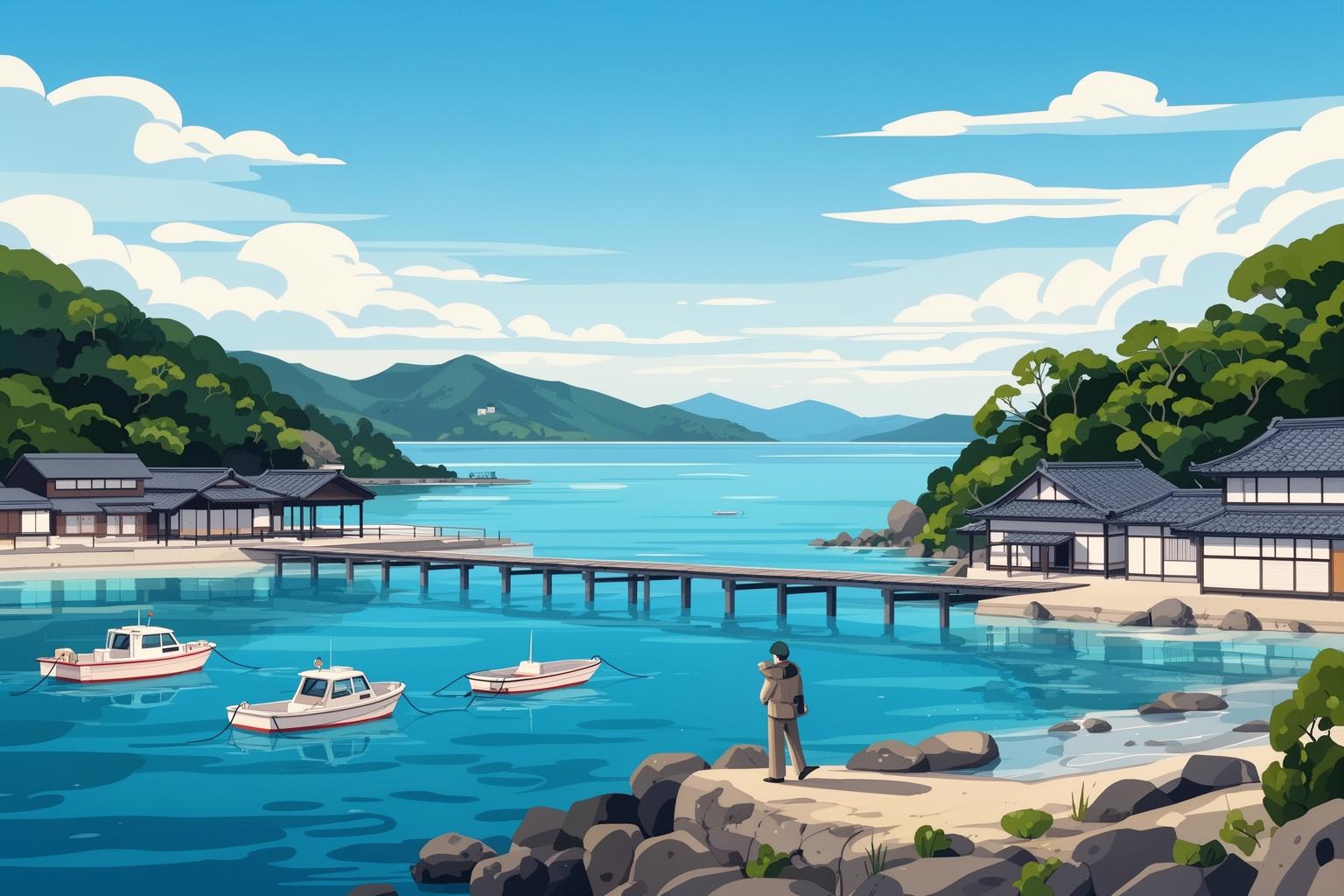
Leaving Naoshima feels like emerging from a beautiful, vivid dream. As the ferry moves away from the shore and the Red Pumpkin shrinks into a tiny speck of color, you take with you more than just photographs. You carry a feeling—a memory of standing in a quiet, sunlit concrete hall, the awe of seeing the sky framed as a flawless work of art, and the simple pleasure of discovering a whimsical sculpture on a tranquil beach. Naoshima stands as a testament to the transformative power of art—not only to rejuvenate a place but to change how we perceive the world. It serves as a reminder that beauty exists in the dialogue between old and new, natural and man-made, monumental and intimate. It’s an island that doesn’t just display art; it invites you to live within it, if only briefly. That impression will linger in your mind and spirit long after you’ve returned to the mainland.