
There are films that you watch, and then there are films that you inhabit. Hayao Miyazaki’s masterpiece, Spirited Away, is firmly the latter. It’s a sensory experience, a dream woven from the threads of Japanese folklore, childhood fears, and a profound respect for the unseen world. For over two decades, viewers have been captivated by the journey of Chihiro, a young girl lost in a world of gods, spirits, and monsters, forced to work in a magnificent bathhouse run by the formidable witch Yubaba. The world is so vivid, so tangible, that it feels real. It begs the question that has sent countless travelers on a quest across Japan and beyond: where can you find this magic in our world? This journey isn’t about finding exact replicas, as Miyazaki himself is known for creating worlds from a tapestry of memories and influences rather than a single blueprint. Instead, this is a pilgrimage to the soul of the film. It’s about walking down alleys that whisper with the same energy, breathing in the steam of bathhouses that have stood for centuries, and feeling the presence of the spirits that hide just beyond our sight. It’s a search for the atmosphere, the architecture, and the cultural heartbeats that pulsed through Miyazaki’s pen and into his animated classic. Prepare to cross the bridge into the spirit world; your journey begins now.
Immerse yourself in the tangible inspirations behind this mystical realm by embarking on a Ghibli museum pilgrimage that reveals the legacy of Miyazaki’s iconic vision.
The Grand Bathhouse of the Gods: Dogo Onsen in Matsuyama
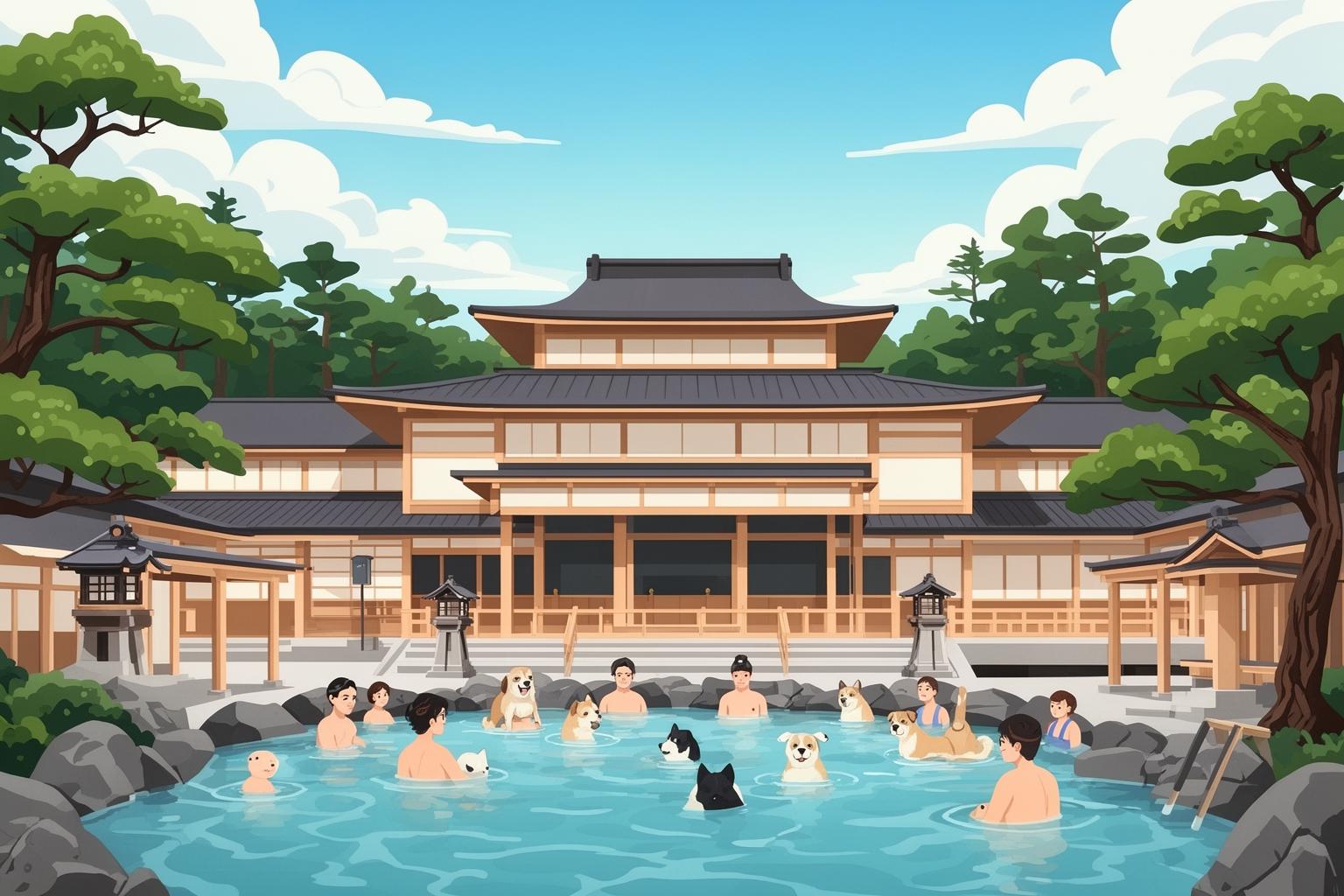
Our first and most important stop is on the island of Shikoku, in Matsuyama City, Ehime Prefecture. Here stands the impressive Dogo Onsen Honkan, a building that seems as if it emerged straight from Miyazaki’s imagination. With its intricate, multi-tiered rooflines, maze-like passages and stairways, and the ever-present plume of steam rising from its peak, it unquestionably mirrors Yubaba’s Aburaya bathhouse in spirit. As one of Japan’s oldest and most renowned hot springs, its history spans over a thousand years, and a tangible sense of timelessness clings to its weathered wooden walls. This is more than just a building; it is a living, breathing entity where the sacred and communal have mingled for centuries. Approaching it, you can almost hear the bustling spirits, the clinking of bath tokens, and the stern commands of the staff.
A Labyrinth of History and Steam
The Dogo Onsen Honkan, built in 1894, is a masterpiece of Meiji Period architecture. It presents a beautiful, chaotic blend of Japanese and Western design elements, creating a fantastical silhouette against the sky. The main building is topped by a drum tower called the Shinrokaku, where a drum is beaten three times daily, its deep sound echoing through the town, beckoning visitors to the baths. Inside, the bathhouse is a maze of wooden corridors, polished smooth by millions of footsteps. The air is thick with the mineral scent of the hot spring water and the humidity of the steam. Visitors can choose from various bathing experiences, from the main Kami no Yu (Bath of the Gods) to the more exclusive Tama no Yu (Bath of the Spirits). For the dedicated pilgrim, a visit to the Yushinden, a special bathing area built for the Imperial Family in 1899, is a must. Its ornate decorations and regal atmosphere offer a glimpse of the luxury once afforded to the highest-ranking “customers” of Yubaba’s establishment. In its narrow, winding hallways and steep staircases, the film truly comes alive—you might half-expect to see Lin guiding you on your next task or find No-Face lurking in a shadowy corner.
The Atmosphere of Arrival
The magic of Dogo Onsen starts even before you step inside the Honkan. The whole area is a charming resort town built around the hot spring. Arriving at the tram station, itself a lovely replica of the original Meiji-era station building, feels like stepping back in time. Visitors stroll through the covered Dogo Shotengai arcade, many dressed in light cotton yukata provided by their ryokan, their wooden geta sandals clicking rhythmically on the pavement. The street is lined with shops selling local crafts, souvenirs, and Ehime’s famous mikan (mandarin orange) products. The atmosphere buzzes with a relaxed, festive energy. At its center stands the Botchan Karakuri Clock, a whimsical clock tower that springs to life every hour with animated characters from Natsume Soseki’s famous novel Botchan, set in Matsuyama. The entire district feels like the town Chihiro and her parents stumbled upon—a place existing at its own pace, dedicated to relaxation, food, and the restorative power of water. This infectious energy encourages you to slow down, roam, and soak in the ambiance.
Your Pilgrimage to Dogo
Getting to Matsuyama is relatively straightforward. You can fly directly into Matsuyama Airport from major cities such as Tokyo and Osaka, or take the JR Sanyo Shinkansen (bullet train) to Okayama and transfer to the JR Shiokaze Limited Express train, which goes straight to Matsuyama Station. From the city center, the historic Iyotetsu tram line provides the most atmospheric route to the Dogo Onsen stop. A practical tip for visitors: since 2019, the Dogo Onsen Honkan has been undergoing extensive preservation and repair work. While bathing remains available in the Kami no Yu bath, other parts of the building, including the second-floor lounges and the Tama no Yu, may be occasionally closed to the public. It’s important to check the official Dogo Onsen website for the latest details on opening hours and access before visiting. Despite the renovations, the experience remains profoundly moving, and even admiring this grand structure from outside is well worth the trip. Be sure to try the local specialty, Botchan Dango, a sweet skewer of three small, colored mochi dumplings mentioned in the novel. It’s the perfect treat to savor while sitting and admiring the bathhouse that inspired a whole world.
The Boiler Room and the Open Air Museum: A Glimpse into Old Tokyo
While Dogo Onsen evokes the grandeur of the Aburaya, the film’s mechanical core—the chaotic and captivating boiler room operated by the six-armed Kamaji—originates from a more modest location. To discover this, we head to the outskirts of Tokyo, to the Edo-Tokyo Open Air Architectural Museum in Koganei Park. This expansive seven-hectare museum serves as a refuge for historic buildings from the Tokyo region, relocated and preserved for future generations. It offers a tangible journey through the city’s past, spanning from the Edo Period to the mid-20th century. Miyazaki was known to be a frequent visitor during the making of Spirited Away, and the museum’s influence is clearly reflected in the film’s nostalgic and subtly melancholic atmosphere.
Kamaji’s Kingdom at Takei Sanshodo
In the museum’s East Zone lies a former stationery shop called Takei Sanshodo. Upon stepping inside, you immediately sense its significance. The interior is filled from floor to ceiling with countless small wooden drawers, each once holding various types of paper, pens, and other stationery items. The resemblance to Kamaji’s herb cabinet, from which he pulls ingredients with his many arms to produce bath tokens, is striking and immediate. One can almost imagine the scent of medicinal herbs and the sound of soot sprites scurrying with coal. This single room perfectly captures the film’s blend of the ordinary and the magical. It’s a simple, practical space, yet the sheer scale and complexity of its organization inspire a sense of wonder. This exemplifies Miyazaki’s talent for discovering enchantment in overlooked aspects of daily life, transforming a wall of drawers in an old stationery shop into the command center of a magnificent spiritual world.
Wandering Through a Bygone Era
The museum’s impact goes well beyond Kamaji’s boiler room. The entire East Zone, which reconstructs a Shitamachi (downtown) area from the pre-war era, exudes the same mysterious, deserted town feeling that Chihiro encounters at the film’s start. You can stroll past vintage shops, a flower store, a soy sauce vendor, and even an old public bathhouse, or sento, called Kodakara-yu. With its stunning mural of Mount Fuji above the baths and its grand, temple-like front, the sento radiates the same ambiance as the Aburaya, though on a much more intimate scale. Nearby, a vintage Toden streetcar can be seen, almost identical to the one Chihiro and her friends ride across the calm sea to visit Zeniba. Touring the Edo-Tokyo Open Air Architectural Museum feels like gaining backstage access to Miyazaki’s creative world. You are immersed in the textures, colors, and architectural styles of the Meiji and Taisho periods, which deeply shape the Ghibli aesthetic—a time when Japan was modernizing rapidly, yet the old spirits and traditions remained visibly alive in the streets.
Planning Your Trip to the Past
Accessing the Edo-Tokyo Open Air Architectural Museum is straightforward for visitors staying in Tokyo. From Shinjuku Station, take the JR Chuo Line to Musashi-Koganei Station, a journey of about 25 minutes. From the station’s north exit, you can either take a short bus ride directly to the museum entrance at “Edo-Tokyo Tatemono-en-mae” or enjoy a scenic 20-minute walk through Koganei Park. The museum is spacious and seldom feels crowded, especially on weekdays, making for a peaceful, contemplative visit. Photography is allowed in most areas, letting you capture your own Ghibli-inspired moments. Plan to spend at least half a day exploring the varied collection of buildings. Visiting in spring adds the charm of cherry blossoms in the park, while the crisp autumn air lends a nostalgic glow to the weathered wooden structures. It provides a perfect, soothing contrast to the bustle of modern Tokyo and is an essential stop for any fan wanting to grasp the visual language of Spirited Away.
Echoes in the Mountains: The Rustic Charm of Shima Onsen
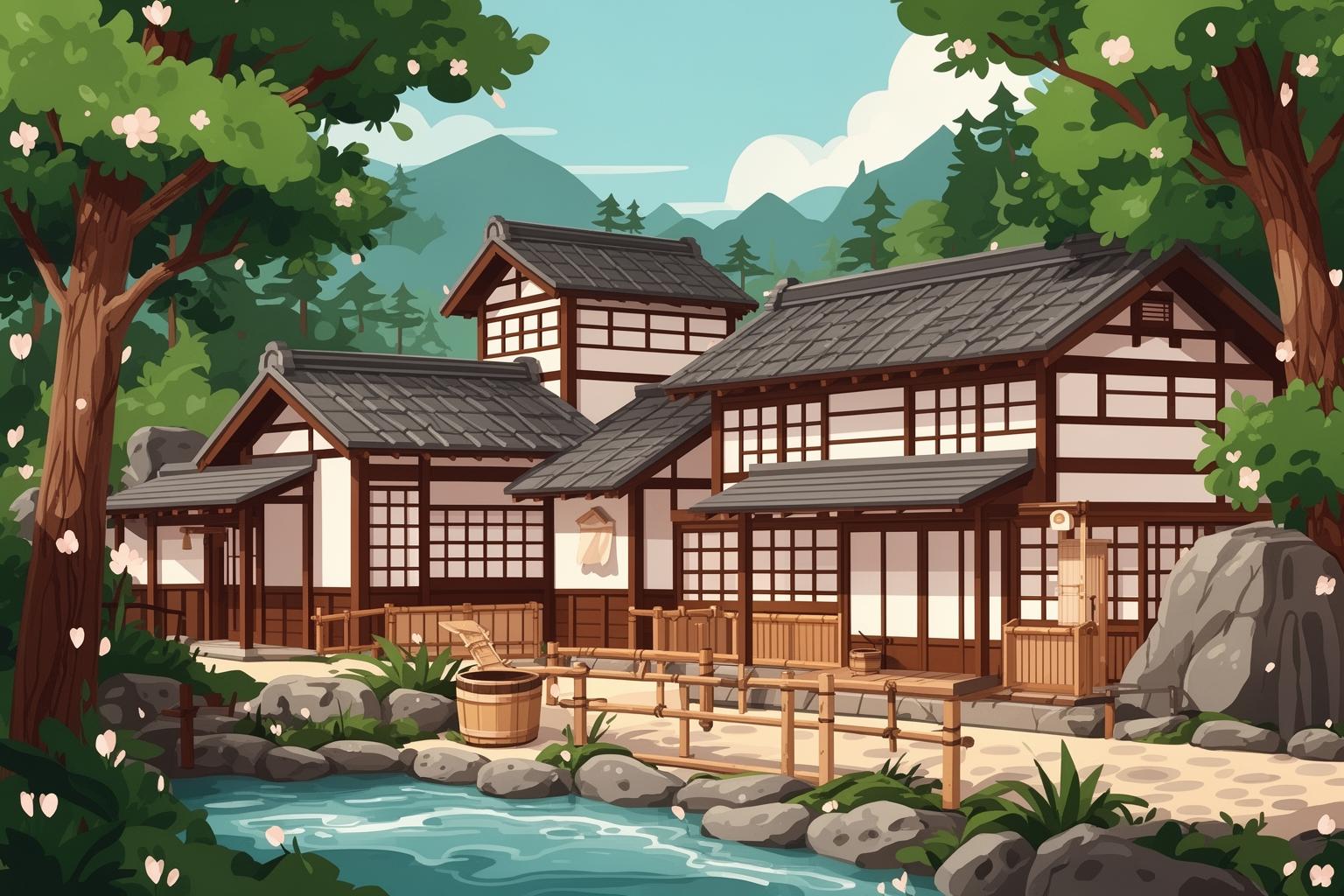
Our journey now leads us deep into the mountains of Gunma Prefecture, a region renowned for its abundant hot springs. Nestled in a quiet valley here is Shima Onsen, a traditional onsen town that offers another powerful visual link to the world of Spirited Away. While Dogo Onsen showcases architectural grandeur, Shima Onsen provides a more intimate and atmospheric connection, especially through one of its oldest and most beautiful ryokans (traditional inns), Sekizenkan.
The Iconic Red Bridge of Sekizenkan
For many fans, the film’s most breathtaking arrival scene is when Chihiro first spots the bridge leading to the Aburaya—a vibrant red archway bridging the human world and the realm of spirits. At Sekizenkan Ryokan, that image comes to life. A striking red bridge, the Keiun-bashi, spans the Shima River, leading directly to the inn’s main hall entrance. The similarity is so vivid that it seems like an intentional homage. Standing before this bridge, with the historic, multi-story wooden inn rising on the hillside behind it, is a moment of pure pilgrimage. You can almost sense the need to hold your breath, just as Haku told Chihiro, to avoid fading away. Sekizenkan itself, dating back to 1691, is a designated Important Cultural Property. Its winding wooden corridors, traditional tatami rooms, and historic Roman-style bathhouse enhance the feeling of stepping into another era—a place where time flows differently and spirits might rest and rejuvenate.
The Soul of a Traditional Ryokan
Beyond the famous bridge, the entire atmosphere of Shima Onsen adds to the Ghibli-esque feeling. The town is quiet, serene, and deeply connected to nature. The sound of the river accompanies you as you wander the narrow streets. Unlike more commercialized resort towns, Shima Onsen has preserved its rustic, untouched charm. Staying at a ryokan like Sekizenkan, or any other traditional inn in the area, offers an immersive experience. It’s not just a place to sleep; it’s about embracing a slower pace of life. It’s the sensation of sliding open a paper shoji screen to a view of the forest, the scent of woven tatami mats beneath your feet, the taste of an elaborate kaiseki dinner featuring local, seasonal ingredients, and, of course, the deeply relaxing experience of soaking in mineral-rich onsen water, said to have healing properties. This embodies the spirit world’s purpose in the film: a place of rest and purification. Within this tranquility, you can truly connect with the film’s deeper themes of healing and rediscovery.
A Secluded Mountain Retreat
Reaching Shima Onsen takes a bit more effort than other locations, but the journey itself adds to its charm, reinforcing the sense of escaping to a hidden world. The most common route is taking a JR train from Tokyo to Nakanojo Station in Gunma Prefecture. From there, it’s a 40-minute bus ride up into the mountains to Shima Onsen. The scenic trip helps shed the layers of the modern world. Due to its popularity, especially among Ghibli fans, it is strongly recommended to book your accommodation at Sekizenkan well in advance. However, even if you’re not staying at the inn, you can visit to admire the bridge and enjoy its historic bathhouse, the Genroku no Yu, for a day-use fee. A visit to Shima Onsen is ideal for those wanting to combine their anime pilgrimage with an authentic, peaceful Japanese countryside experience. It’s an opportunity to disconnect, rejuvenate, and cross the very bridge that separates one world from another.
The Taiwanese Connection: A Spirited Debate in Jiufen
While our journey has so far been centered in Japan, one of the most beloved and visually striking pilgrimage sites related to Spirited Away lies just across the sea in Taiwan. The hillside village of Jiufen, a former gold mining town near Taipei, bears such a remarkable resemblance to the film’s bustling spirit town that fans have long embraced it as a key inspiration. The reality, however, is somewhat more nuanced, adding an intriguing layer to the concepts of fandom and inspiration.
Lanterns, Tea Houses, and Bustling Alleys
Visiting Jiufen, especially as dusk approaches, is an otherworldly experience. The town is a labyrinth of narrow alleys and steep stone staircases clinging to the side of a mountain overlooking the sea. As evening falls, hundreds of red lanterns light up, casting a warm, enchanting glow over the busy streets. The air is filled with the scent of street food—stinky tofu, taro ball soup, and grilled sausages. At the heart of this magical scene stands the A-Mei Tea House, a stunning wooden building that seems like a counterpart to the Aburaya. For many, viewing its lantern-lit exterior from across the street offers a definitive real-life Spirited Away moment. The chaotic, lively, and slightly overwhelming energy of Jiufen’s Old Street perfectly reflects the scene where Chihiro’s parents are drawn in by the gods’ endless buffet—a place both seductive and perilous. The sensory richness, glowing lights, and continuous stream of intriguing sights make the connection to the film feel undeniable.
Miyazaki’s Official Word (and Why It Doesn’t Matter)
Here we find an interesting twist. In a 2013 television interview, Hayao Miyazaki himself, along with Studio Ghibli, officially denied that Jiufen served as a model for the film. He explained that the film’s aesthetic was inspired by various locations, primarily within Japan. For some, this was a disappointing discovery, but for many others, it changed nothing. The spirit of a place isn’t decided by official statements. The striking visual and atmospheric similarities between Jiufen and Spirited Away have made the village a pilgrimage destination embraced by fans worldwide. This phenomenon highlights the universality of the film’s aesthetic. While Miyazaki may not have visited Jiufen for inspiration, he tapped into an archetypal East Asian nostalgia—for wooden architecture, glowing lanterns, and the mysterious ambiance of mountain towns—that Jiufen embodies perfectly. In this way, the fan-driven connection makes the pilgrimage even more meaningful. It stands as a testament to the film’s power that it can create its own sacred sites across the world, regardless of the creator’s original intent. The magic is genuine because the millions who visit genuinely feel it.
Experiencing the Magic of Jiufen
If you find yourself in Taiwan, a visit to Jiufen is truly unforgettable. It is easily reachable from the capital, Taipei. You can catch a direct bus from the Zhongxiao Fuxing MRT station, or take a train to Ruifang Station followed by a brief bus or taxi ride up the mountain. One important tip for visitors: try to avoid weekends when the narrow streets become extremely crowded. The best time to visit is on a weekday afternoon, allowing you to explore the shops and alleys in daylight before settling on a spot to watch the lanterns illuminate at sunset. Stay for a cup of tea at the A-Mei Tea House to fully immerse yourself in the atmosphere. Jiufen is a beautiful reminder that the quest for the spirit world is a deeply personal journey, and sometimes the most magical places are those we discover and cherish on our own.
Finding Your Own Spirited Away

Embarking on a pilgrimage to the real-life locations featured in Spirited Away is more than a simple sightseeing trip; it is a journey into the creative spirit of one of the world’s greatest storytellers. As we’ve seen, there isn’t a single “Spirited Away Town.” Rather, the film’s world is a skillful collage—a unique fusion of specific places, childhood memories, and a profound cultural reverence for the past. Dogo Onsen provides the scale and history, the Edo-Tokyo Museum offers the nostalgic details, Shima Onsen represents the spiritual threshold, and Jiufen reflects its universal soul. Each place reveals a different part of the puzzle.
The Philosophy of Ghibli’s Worlds
Grasping this concept is essential to fully appreciating a Ghibli pilgrimage. Miyazaki’s artistry lies in his ability to capture the essence of a place, rather than its precise appearance. He constructs his worlds from sensations—the creak of an old floorboard, the way light filters through a dusty window, the scent of rain on a summer afternoon. Therefore, the aim of your journey should not be merely to check off a list, but to engage your own senses. When at Dogo Onsen, close your eyes and listen to the bathhouse’s sounds. While walking through the Edo-Tokyo Museum, let your hand trail along the weathered wood of an old storefront. The true magic unfolds when you stop searching for the film and begin feeling the world that inspired it.
A Final Word for the Wandering Spirit
In the end, the spirit of Spirited Away is not limited to these particular sites. It can be found throughout Japan, hidden in the quiet corners of the country. You might encounter it in the misty morning fog that cloaks a mountain shrine, in the rhythmic clatter of a local train running beside a river, or in the warm smile of an elderly shopkeeper on a forgotten market street. The film encourages us to look more closely, to be attentive to the world around us, and to honor the idea that there is more to this world than meets the eye. So, as you travel, keep your heart and eyes open. Be curious. Be courageous. Don’t be afraid to lose your way. You never know when a wrong turn might lead you to your own mysterious tunnel. The next spirit world could be waiting just for you.