There’s a certain kind of magic that settles deep in your bones when you step into a place that feels more like a memory than a destination. It’s a gentle hum of nostalgia for a time you never lived, a story you only watched on screen. For anyone who has ever been captivated by the whimsical, breathtaking worlds of Studio Ghibli, that feeling is a familiar friend. We search for it in the quiet rustle of a camphor tree, in the silhouette of an old-fashioned bathhouse, or in the rhythmic chug of a seaside train. But rarely do you find a place where the entire atmosphere, the very soul of a town, feels like it was lifted directly from Hayao Miyazaki’s sketchbook. Welcome to Tomonoura, a sleepy, crescent-shaped port town nestled in Hiroshima Prefecture, where the salty air carries whispers of maritime history and the undeniable spirit of the beloved animated film, Ponyo on the Cliff by the Sea. This isn’t just a filming location; it’s the living, breathing muse that gave the movie its heart. To visit Tomonoura is to wander through the cobbled streets of Ponyo’s world, to see the world through her curious eyes, and to discover that the magic wasn’t just animation—it’s real, and it has been waiting here by the tide for centuries.
If you’re inspired to seek out more real-life anime worlds, consider embarking on a pilgrimage to the real-life locations of ‘Your Name.’.
The Ghibli Connection: Finding Ponyo in the Port
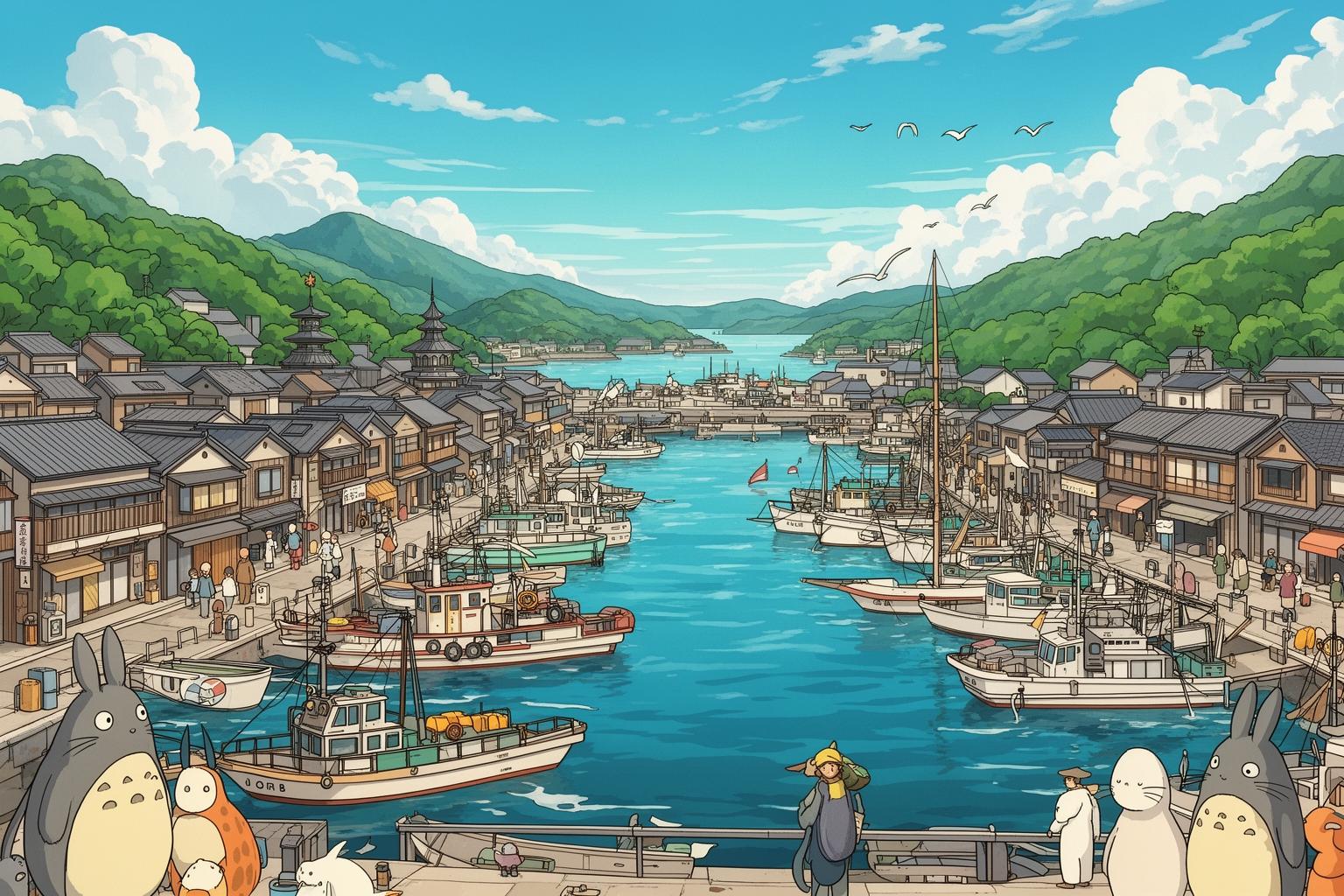
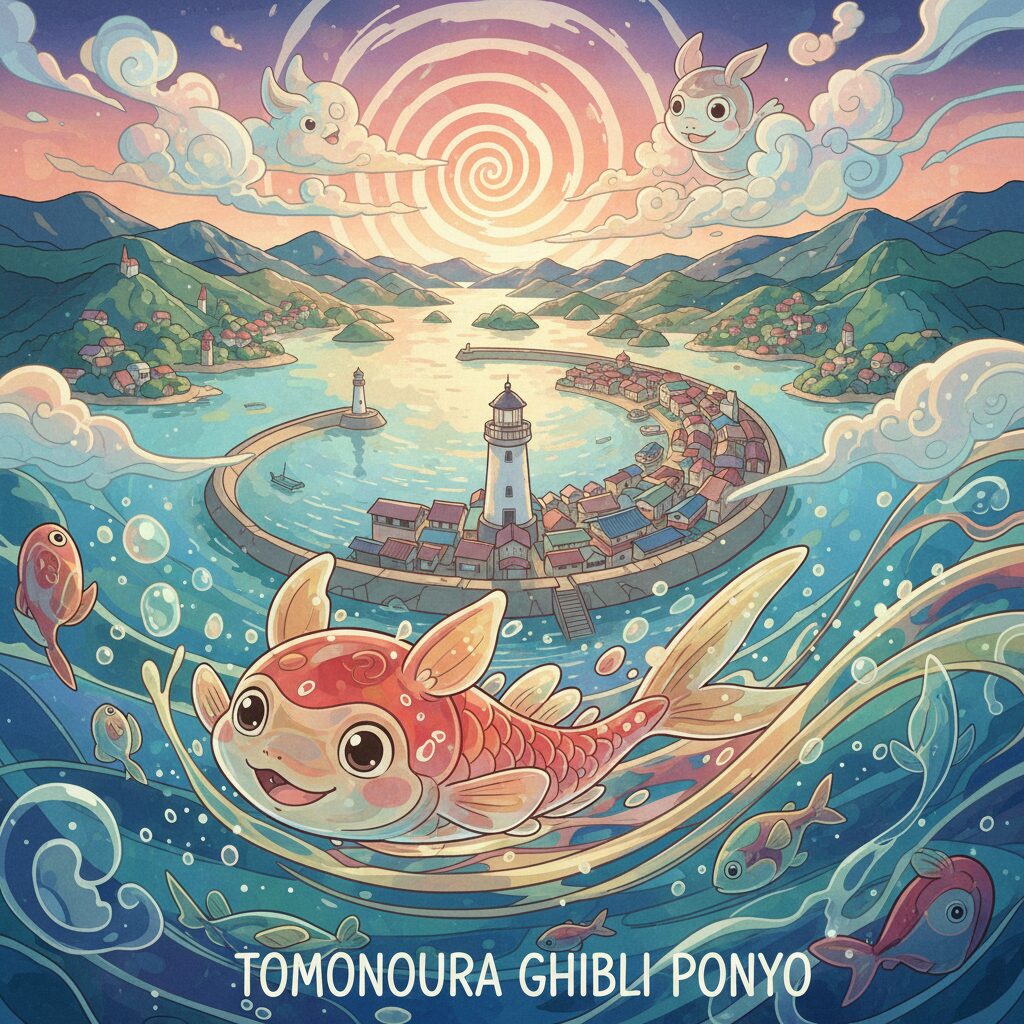
The story goes that in 2005, renowned director Hayao Miyazaki and his team of animators stayed in this modest fishing village for two months. They weren’t merely visitors; they were creative sponges, soaking in every detail of Tomonoura’s distinctive character. Living in a rented house, they sketched the rolling coastline and let the town’s slow pace permeate their creative minds. The outcome was Ponyo, a film that feels less like a tale set in a town and more like one that emerged from it. This connection is evident from the moment you arrive. The tightly clustered houses with their dark, tiled roofs cascading down the green hillside toward the harbor are instantly recognizable as the backdrop for Sosuke’s home. The small, bobbing fishing boats, with their single-bulb lamps used to lure fish at night, look exactly like the vessels that drifted in the film. The harbor, a gentle curve shielding the town from the moods of the Seto Inland Sea, is the very one Ponyo triumphantly ran across on the wave crests. While there is no specific house to point to and say, “Sosuke lived here,” the entire town feels like his neighborhood. It’s an atmosphere pilgrimage rather than a visit to specific landmarks. You can almost picture the locals, with their weathered faces and kind eyes, as models for the film’s warm and resilient characters. Miyazaki famously prefers to draw inspiration from reality, grounding his fantasies in the tangible and true. In Tomonoura, this philosophy is brought to life. The town provided the texture, the sounds, and the spirit. The soft lapping of waves against the stone seawall, the cries of gulls circling above, the quiet work of fishermen mending their nets—these elements were woven into the film’s rich tapestry. Walking here, especially with children, becomes a charming treasure hunt. My own little ones were thrilled, pointing out every red-roofed house and tiny boat, fully convinced they had found the real-life home of their favorite magical fish. It’s a tribute to how perfectly the Ghibli team captured not only the look but also the essence of this special place.
A Step Back in Time: The Living History of Tomonoura
Long before it became a popular destination for anime fans, Tomonoura held immense significance in Japanese history. Its reputation was founded on a simple yet powerful natural phenomenon: the tides. Tomonoura is located at a point in the Seto Inland Sea where tidal currents from the east and west converge. This made its harbor a natural and essential waiting spot for ships. For centuries, sailors and merchants anchored here, sometimes for days, waiting for the tide to shift in their favor to continue their voyages. This earned it the name shiomachi no minato, the “port that waits for the tide.” This unique geographical feature transformed the town into a thriving center of commerce, culture, and information. During the Edo period (1603–1868), it was a lively hub, and remarkably, the townscape from that era has been preserved with great care. Stepping off the bus from Fukuyama Station feels like passing through an invisible curtain into the past. The narrow, winding streets are lined with traditional wooden buildings featuring intricate lattice work and heavy, tiled roofs. There are no towering modern buildings, no glaring neon signs. The town breathes history. You can feel the weight of centuries in the worn stone steps descending to the water and the dark, polished wood of the old merchant houses. It’s a place that invites you to slow down and match its unhurried rhythm. The absence of modern rush does not mean a lack of life, but rather a different quality of it—one that is more deliberate and more connected to the sea and the seasons. This historical foundation is the bedrock of the town’s charm. It’s what gives the Ponyo setting its depth and authenticity. The world Sosuke inhabits feels old and established because Tomonoura itself is a living museum, a town that honors its past while continuing to thrive in the present.
Symbols of the Seafaring Past
Scattered throughout the town are landmarks that speak directly to its maritime heritage. These are not merely tourist attractions but functional parts of its history, woven into daily life for generations. The most iconic is the Joyato Lighthouse. Positioned at the harbor’s edge, this stone lighthouse, built at the end of the Edo period, is the heart of Tomonoura. It’s not a towering, modern beacon but a stout, elegant structure exuding both strength and grace. It is said to be the largest Edo-era harbor lighthouse still standing in Japan. For centuries, its light guided and protected countless vessels navigating challenging currents. Today, its flame is extinguished, but its presence remains a powerful symbol of the town’s identity. It anchors every view of the harbor, a steadfast guardian watching over the fishing boats. At night, it is beautifully lit, casting a soft golden glow over the water, creating an incredibly romantic and peaceful scene. Another key feature is the Gangizen, stone-paved steps descending directly into the sea in front of the old merchant houses. These were not merely ornamental; they served as loading docks. Boats would pull up tight to the steps, and goods were loaded and unloaded directly into warehouses. Today, children sit on them, dipping their toes in the cool water, and locals pause to chat, but you can easily imagine the bustling energy of merchants and sailors from centuries ago, hauling cargo and shouting over the sounds of the sea. These tangible links to the past make history feel immediate and alive, not confined to a museum exhibit.
Savoring the Slow Pace: What to Do in Tomonoura
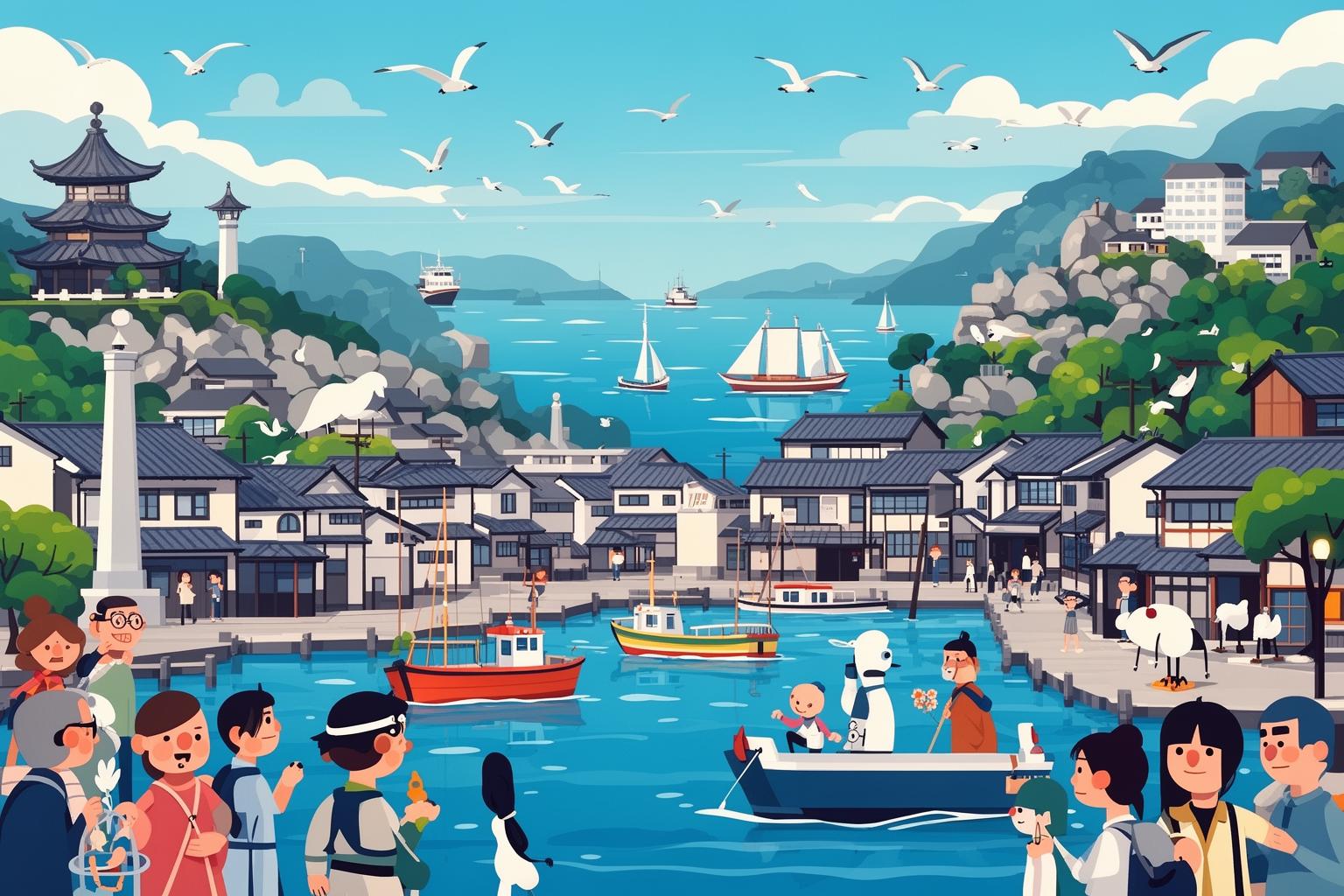
Tomonoura’s greatest charm lies in its atmosphere, and the best way to absorb it is by simply wandering. The real magic is found in unplanned moments: turning a corner to discover a hidden shrine, peeking into a courtyard filled with bonsai trees, or stumbling upon a tiny shop run by the same family for generations. The town is a maze of narrow alleyways, each offering a new discovery. You can spend hours strolling, guided by the salty breeze. However, for those seeking a more organized experience, Tomonoura provides several profound and beautiful stops. One absolute must-see is Fukuzenji Temple, particularly its Taichoro guest house. After a short, steep climb up stone stairs, you arrive at a tranquil temple complex. For a small fee, you can enter the main hall’s parlor, which opens onto a view so magnificent it was once named “the most beautiful scenery in Japan” by a Korean envoy in the 18th century. That view remains unchanged. The room’s large, open frame perfectly captures the harbor, the Joyato lighthouse, and the picturesque islands of Sensuijima and Bentenjima in the distance. Sitting on tatami mats, sipping complimentary tea, and gazing out at this living painting is a meditative experience. It’s a moment of perfect stillness that embodies the serene beauty of the Seto Inland Sea. It’s also an ideal spot to rest your feet and, if you have children, to give them a quiet pause before the next adventure.
For a taste of local culture, one must explore the world of Homeishu, a unique medicinal liqueur produced in Tomonoura for over 350 years. This aromatic blend of shochu is infused with sixteen different herbs, including ginseng, cinnamon, and cloves. Several historic breweries in town continue to produce this potent elixir, and visitors can sample it during tours. The Ota Clan Residence, which also houses a Homeishu brewery, is a beautifully preserved example of a wealthy merchant’s home from the Edo period. Stepping inside offers a fascinating glimpse into life of the past, with the distinct, sweet, and spicy aroma of herbs filling the air. Whether or not you enjoy the taste, trying Homeishu is an essential part of the Tomonoura experience—it’s literally a taste of the town’s history.
For another historical layer, the Irohamaru Museum is dedicated to a more dramatic event. It tells the story of the Iroha Maru, a ship leased by the famous samurai Sakamoto Ryoma, which sank off Tomonoura’s coast after a collision in 1867. The museum, housed in a charming old warehouse, contains artifacts recovered from the shipwreck and details this pivotal moment in Ryoma’s life. It adds a touch of samurai drama and political intrigue to the town’s otherwise peaceful narrative.
A Taste of the Seto Inland Sea
Given its location, it’s no surprise that Tomonoura’s cuisine is dominated by the bounty of the sea. The local specialty is sea bream, or tai. In spring, the town hosts a Sea Bream Net Fishing event, a traditional and dramatic spectacle practiced for centuries. Throughout the year, you can enjoy this delicious fish in many forms, from sashimi to grilled (tai-meshi, sea bream cooked with rice, is a particular delicacy). Dotted along the harbor and tucked into side streets are numerous small, family-run restaurants serving incredibly fresh seafood. There’s nothing quite like sitting at a simple table, looking out on the boats that caught your lunch, and savoring the clean, delicate flavors of the Seto Inland Sea. As a family, we found many welcoming spots. The simplicity of the food was a major advantage—a bowl of rice topped with fresh fish or a simple grilled skewer often proved more popular with kids than a complicated dish. We discovered a small eatery serving delicious fish cakes that quickly became a favorite and a perfect, easy snack while walking. This isn’t a town for modern fine dining, but for honest, fresh, and deeply satisfying food that speaks of its origin. It’s about tasting the place itself, making the experience all the richer.
Practical Guidance for Your Tomonoura Journey
Reaching this well-preserved pocket of Japan is part of the adventure, as it lies just off the main Shinkansen (bullet train) route. The journey is simple and well worth the extra effort. The primary gateway is the city of Fukuyama, a stop on the Sanyo Shinkansen line, making it easily reachable from major cities like Osaka, Hiroshima, and Kyoto. From Fukuyama Station, the remainder of the trip is a delightful 30-minute bus ride. The bus stop is located right outside the station’s south exit, with frequent buses headed for Tomonoura (鞆の浦). As the bus travels out of the city along the coast, the scenery gradually changes, and you can sense the pace of life slowing with each kilometer. The last stop drops you off right at the historic port town’s edge, ready for exploration. The ideal time to visit is arguably during the mild seasons of spring (March to May) and autumn (October to November). The weather is pleasant for walking, and the town is at its most picturesque. Spring brings cherry blossoms, adding a delicate pink touch to the landscape, while autumn offers crisp air and clear skies, enhancing the sea views. Summer (June to August) can be hot and humid, making extensive walking somewhat challenging, especially for families with young children. However, the summer evenings are lovely, with the town adopting a relaxed, lazy atmosphere. Winter is quiet and peaceful, with fewer crowds, offering a more reflective experience. No matter the season, Tomonoura is best explored on foot. Its historic center is compact, and the real charm lies in wandering the narrow lanes. The main harbor area is mostly flat and quite easy to navigate. For visiting the temples and viewpoints on the hills, be ready for some slopes and stone steps. Comfortable shoes are essential. For families, the pedestrian-friendly nature of the town center is a major benefit. It felt safe letting little ones walk a bit ahead, knowing there was no heavy traffic in the historic alleys. To cover ground faster or explore further along the coastline, renting a bicycle near the bus terminal is a great option. A key tip for first-time visitors is to be mindful of time—Tomonoura is not a late-night town. Many shops and attractions close around 5:00 PM, so it’s best to start early to make the most of your visit. Although its popularity has grown, it has fortunately avoided being overwhelmed by commercialism that can spoil such places. You won’t find large convenience store chains in the old town’s heart; instead, there are small, independent shops. It’s wise to bring specific necessities and carry some cash, as smaller businesses may not accept credit cards.
Beyond the Harbor: Nearby Explorations
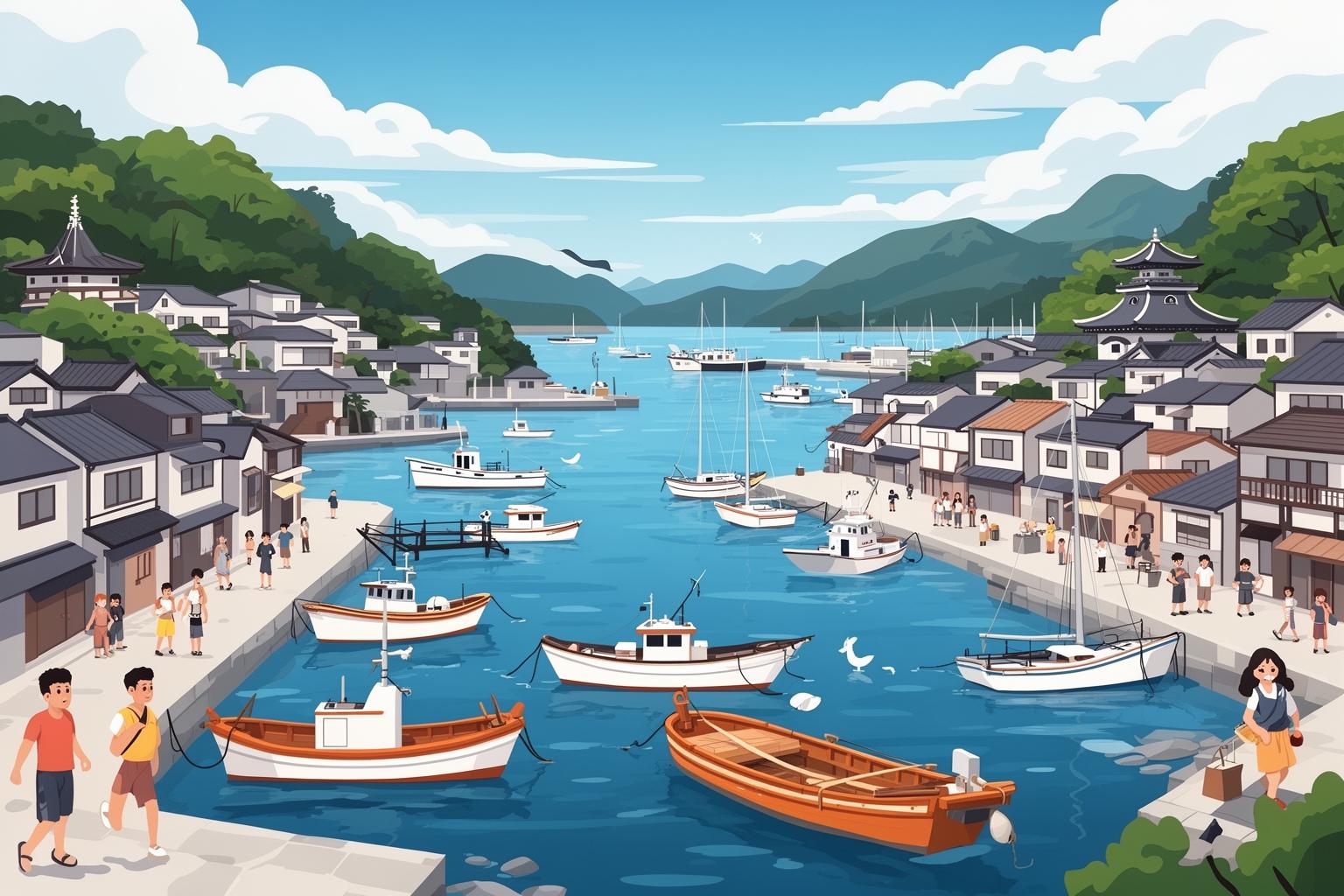
If you have more than a few hours to spare, an excellent way to enhance your Tomonoura experience is to take a short trip to Sensuijima Island. This small, mostly uninhabited island lies directly opposite the harbor, and a charming little ferry, a “heidaisen” that seems to belong to the Edo period, makes the five-minute journey back and forth regularly throughout the day. The trip itself is a pleasure, offering a fantastic view of Tomonoura from the water. Sensuijima is part of the Seto Inland Sea National Park, and its charm comes from its untouched, natural beauty. Several walking trails crisscross the island, leading through lush forests and up to viewpoints with panoramic vistas of the surrounding sea and islands. There are also a couple of small beaches where you can relax and listen to the waves. For families, it’s a perfect little retreat. The trails are not overly challenging, and the opportunity to run around in nature after exploring the town provides a welcome change of pace. We spent a delightful hour just collecting shells and watching the ferries pass by. It offers a beautiful contrast to the town’s history and culture—a moment to appreciate the natural landscape that has shaped Tomonoura’s destiny for centuries.
Capturing the Heart of Tomonoura
Tomonoura is more than just the sum of its parts. It is more than a historical town or the inspiration for a famous movie. It is a feeling—a gentle rhythm of the tide that has shaped life here for a thousand years. It is the warmth of the sun on ancient stone, the kindness in a shopkeeper’s eyes as they offer your child a small candy, and the quiet dignity of a town that knows its worth without needing to proclaim it. You come seeking Ponyo, and find her spirit in the playful splash of water and the vibrant hues of the harbor. But you leave with something far deeper—a sense of connection to a slower, more intentional way of life. You depart with the scent of salt and medicinal herbs lingering in your memory, and the image of the steadfast lighthouse forever imprinted on your mind. It is a place that gently invites you to set aside your map, follow your curiosity down a narrow lane, and simply be present. In a world that moves too quickly, Tomonoura serves as a precious, vital reminder of the profound beauty found in waiting, watching, and cherishing the stories—both real and imagined—that drift on the tide.