
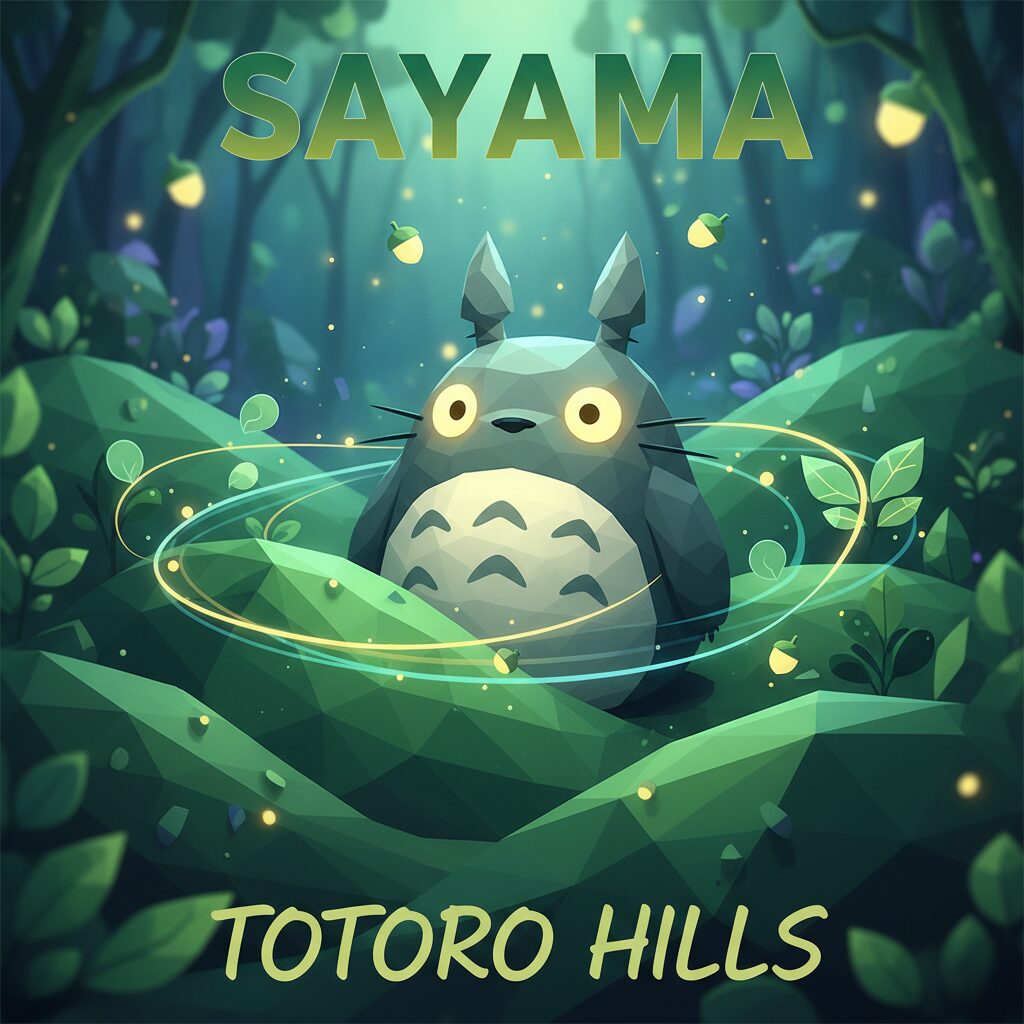
There are stories that live inside us, long after the final credits roll. They become a part of our childhood, a warm, fuzzy memory of simpler times. For millions around the world, Hayao Miyazaki’s cinematic lullaby, My Neighbor Totoro, is one such story. It’s a tale of two sisters, magical forest spirits, and the gentle, wondrous power of nature. We’ve all dreamed of waiting at that bus stop in the rain, of seeing a giant, furry creature appear with a leaf on its head. We’ve all wished we could tumble down a woody tunnel and land on the soft belly of a sleeping Totoro. What if I told you that a piece of that world, the very soul of that forest, is real? Tucked away on the border of Tokyo and Saitama Prefecture lies a sprawling green sanctuary known as Sayama Hills. This isn’t just a place that looks like the movie; this is the landscape that breathed life into it, the very woods that whispered their secrets to Miyazaki himself. It is, in every sense of the word, Totoro’s Forest. This journey is more than a simple day trip from the city; it’s a pilgrimage to the heart of a cherished memory, a chance to walk through the celluloid and into the rustling, sun-dappled reality of a world we thought only existed in our imagination. So, lace up your most comfortable shoes, pack a sense of wonder, and let’s go find Totoro.
Embrace the magic of your journey by exploring the real-life Totoro forest where each step reconnects you with the wonder of Miyazaki’s enchanted world.
The Whispers of the Woods: Finding Ghibli Magic in Nature
The magic of Sayama Hills isn’t announced with flashy signs or elaborate displays. Instead, it’s a subtle, all-encompassing feeling that deepens the further you venture into its leafy embrace. The air itself seems to transform, leaving behind Tokyo’s urban hum for a symphony of rustling leaves, chirping birds, and the gentle pulse of life. It’s a place that invites you to slow down, breathe deeply, and simply observe. The Ghibli spirit isn’t contained in a single monument; it lives in the way sunlight filters through the canopy, casting dancing patterns on the forest floor—a phenomenon known in Japanese as komorebi. It’s found in the twisted roots of an ancient camphor tree that seem ready to come alive at any moment, and in the sudden, breathtaking glimpse of a shimmering reservoir through a break in the trees. Here, the line between the real world and the animated one begins to blur, where every shadow could be a friend, and every gust of wind sounds like a whispered secret.
The Kurosuke House (Cromwell’s House): A Portal to Nostalgia
Your first true step into this storybook world begins at a charming, slightly mysterious building known as Kurosuke’s House. Kurosuke is the Japanese name for the mischievous little Soot Sprites that darted around the attic in the film, and this house feels like their perfect home. It’s a registered Tangible Cultural Property—a Showa-era house from the early 20th century with dark, weathered timber walls, a traditional tiled roof, and sliding wooden doors that creak with history. Stepping onto its engawa, the smooth, worn wooden veranda, you immediately feel transported back in time. The air carries the scent of aged cedar and tatami mats. Inside, the real treasure awaits. In the main room, surrounded by information about the forest’s conservation, sits a magnificent, larger-than-life Totoro figure. He waits patiently, a huge, welcoming grin on his face. It’s an irresistible photo opportunity, a moment to finally “meet” the gentle giant. But the house is more than just a photo spot; it also serves as an information center for the Totoro no Furusato Foundation, the organization devoted to preserving these hills. You can pick up maps, learn about the local flora and fauna, and sense the deep community love that has gone into protecting this precious landscape. It’s a warm, inviting place that serves as the perfect gateway to your woodland adventure.
Walking the Totoro Trails: More Than Just a Hike
With a map in hand and anticipation in your heart, it’s time to explore the trails themselves. The Sayama Hills are crisscrossed by a network of paths called the “Totoro’s Forest” routes numbered one, two, three, and beyond. These aren’t strenuous mountain climbs; rather, they are gentle, meandering paths that encourage quiet reflection. As you walk, the world of the film unfolds around you. You may find yourself unconsciously scanning the ground for acorns, just as Mei did, half-expecting to spot a tiny, white Totoro scurrying away with a sack full of them. The paths wind through dense bamboo thickets that sway and knock together in the breeze, creating a natural hollow percussion. They open into clearings where sunlight warms your face, then dip back into the cool shade of ancient trees. Each trail has its own unique character. Some are narrow dirt paths requiring single-file walking, brushing past ferns and wildflowers. Others are wider, gravel-lined tracks ideal for a leisurely stroll. The true joy lies in observing. You might discover a tiny shrine tucked among the roots of a tree, or notice how moss has cloaked a fallen log in vibrant green velvet. It’s an experience that awakens all your senses—the earthy scent of soil after a light rain, the sight of a brilliant blue butterfly fluttering by, and the profound peace that envelops you when you pause to simply listen to the silence of the woods.
A Tapestry of Green: Understanding the Soul of Sayama Hills
To truly appreciate this place, one must realize that its link to My Neighbor Totoro is neither a happy accident nor a clever marketing tactic. This connection is profound, genuine, and born from a sincere love for the land. Sayama Hills is not a theme park; it is a living, breathing ecosystem that faced a very real threat, and its survival stands as a testament to art’s power to inspire action. The forest’s story is as enchanting as the film it inspired—a tale of creativity, community, and conservation that adds a meaningful dimension to every step you take along its paths. When you walk here, you are moving through the canvas of a masterpiece, as well as through a landscape preserved by the very love that masterpiece sparked.
The Birthplace of a Masterpiece: Miyazaki’s Inspiration
In the years before creating My Neighbor Totoro, Hayao Miyazaki lived in Tokorozawa, right at the edge of the Sayama Hills. This area was his backyard, a place of refuge and contemplation. He would walk these trails, absorbing the scenery, atmosphere, and spirit of the land. The film’s setting, Matsugo, meaning “Pine Village,” directly reflects the satoyama landscape he saw daily. Satoyama is a Japanese term for the border zone between mountain foothills and arable flat land—a mosaic of forests, rice paddies, and grasslands shaped by human hands for centuries. This is Totoro’s world: rolling hills, patchwork vegetable gardens, and dense forests full of life. The iconic giant camphor tree that serves as Totoro’s home was inspired by the majestic trees scattered throughout these hills. The winding country roads, wooden bus stops, and traditional farmhouses were all drawn from the tangible reality of Tokorozawa. Knowing this changes the experience. You’re not just seeing elements reminiscent of the film; you’re seeing the original source. You’re viewing the world through Miyazaki’s eyes, understanding how this particular shade of green, this unique quality of light, inspired one of the most beloved animated films ever made.
A Forest Saved by Love: The Totoro no Furusato Foundation
The story takes a dramatic turn in the 1980s. As Japan’s economic bubble grew, rapid urban development began encroaching on the Sayama Hills. This precious green lung, an irreplaceable pocket of nature, was threatened with destruction. Concerned local residents and conservationists united to protect it. After My Neighbor Totoro was released in 1988 and became a cultural phenomenon, the movement gained remarkable momentum. The film revealed to the nation the beauty and spiritual significance of the satoyama landscape. Building on this awareness, the conservation group founded the Totoro no Furusato National Trust, known as the “Totoro Fund.” They launched a nationwide campaign to raise funds to purchase parcels of land in the hills, piece by piece, to shield them from development permanently. Hayao Miyazaki and Studio Ghibli fully supported the effort, allowing Totoro’s image to be used for fundraising. People from across Japan, and eventually the world, donated from their love of the film and its message. Today, when you walk the trails marked “Totoro’s Forest,” you tread on land bought and preserved through thousands of small acts of love—all inspired by a story about a gentle forest spirit. It’s a powerful, heartwarming legacy that makes the forest feel even more magical.
Your Pilgrimage Practicalities: Navigating to Natsukusa Valley
Though the journey to Totoro’s Forest feels like stepping into another world, it’s surprisingly easy to reach from central Tokyo, making it an ideal day trip for those seeking a break from the city’s hectic pace. Planning your visit is simple, but a bit of preparation will help ensure your experience is as smooth and magical as possible. From transport options to the best season to visit, here’s how to navigate your way to that enchanting bus stop—figuratively speaking, of course. The key is to enjoy the journey itself, as the shift from the bustling urban environment to the peaceful greenery is integral to the experience, offering a gradual decompression that readies you for the calm that lies ahead.
The Journey from Tokyo: Access and Transportation
Your adventure most likely begins at one of Tokyo’s main western stations, such as Ikebukuro or Shinjuku. The most direct route is on the Seibu Railway. From Seibu-Shinjuku Station or Takadanobaba, board a train bound for Hon-Kawagoe and transfer at Tokorozawa Station to the Seibu-Sayama Line, disembarking at the final stop, Seibu-Kyujomae Station. Alternatively, and perhaps more conveniently, from Ikebukuro Station, take the Seibu-Ikebukuro Line straight to Nishi-Tokorozawa, then switch to the Seibu-Sayama Line for a short ride to Seibu-Kyujomae. The station’s name, meaning “In Front of Seibu Stadium,” hints at its location next to the Belluna Dome, home to the Seibu Lions baseball team. Don’t be misled by the large stadium; your tranquil destination is just a brief walk away. From the station, expect a 15-20 minute walk to the entrance of the hills and the Kurosuke House. The stroll is pleasant, passing through a quiet residential area where the scenery gradually changes from suburban to rural. Following your phone’s map or the foundation’s signs will lead you directly to Totoro’s world.
Timing Your Visit: Seasons of Sayama
Totoro’s Forest is beautiful throughout the year, with each season coloring the landscape uniquely and offering a distinct experience. When you decide to visit will greatly influence the atmosphere of your journey. Spring is arguably the most enchanting season. From late March to early April, cherry blossoms adorn the trails in soft pinks and whites, while fresh green shoots carpet the forest floor. The weather is mild and ideal for walking. Summer, from June to August, showcases an intense, almost overwhelmingly lush green. The forest is at its peak vibrancy, accompanied by the loud, buzzing chorus of cicadas that create a perfect Ghibli-like soundtrack. Be prepared, though, for heat, humidity, and mosquitoes. Starting early in the morning is strongly advised. Autumn is a photographer’s paradise. From October to November, maple and other deciduous trees burst into brilliant reds, oranges, and golds. The air is crisp and cool, perfect for hiking, and the crunchy leaves beneath your feet add to the charm. Winter reveals a different beauty. With bare branches forming stark, elegant silhouettes against the sky, fewer leaves mean you can often enjoy extended views of the reservoirs. It’s also the quietest season, providing a profound sense of solitude and calm. One important tip: always confirm the opening hours of the Kurosuke House before your visit. It generally opens only on Tuesdays, Wednesdays, and Saturdays, and being able to enter is a highlight you won’t want to miss.
Beyond the Trails: Immersing Yourself in the Local Charm
A trip to Sayama Hills offers more than just a simple walk through the woods. The surrounding Tokorozawa area presents its own quiet charms that can enrich your day and deepen your appreciation for the region that inspired such an enduring film. After spending a few hours immersed in nature, exploring the local culture and cuisine provides a delightful contrast and an opportunity to experience another side of this tranquil part of Saitama. Whether finding the perfect lunch spot or discovering additional scenic views, extending your adventure slightly can make your journey even more memorable. It’s about embracing the full atmosphere of the place, from the forest floor to the local dining table.
A Taste of Tokorozawa: Local Eats and Hidden Gems
After a morning of exploring, you’ll no doubt have built up an appetite. While no restaurants are located inside the nature reserve itself, the areas near Seibu-Kyujomae and Tokorozawa stations offer plenty of appealing options. This region is famous for its udon noodles, and finding a small, family-run shop serving handmade noodles in a savory broth is an authentically satisfying experience. It’s the kind of simple, comforting meal that perfectly complements a walk in the forest. Additionally, the area is part of the Sayama tea-growing region, one of Japan’s leading tea producers. Seek out cafes or shops where you can sample a cup of the local brew. For those wishing to continue their outdoor exploration, the expansive Lake Sayama (Sayama-ko) and Lake Tama (Tama-ko) reservoirs are nearby. These man-made lakes feature beautiful walking and cycling paths and offer breathtaking panoramic views, especially at sunset. They provide a contrasting perspective on the region’s natural beauty, with wide-open skies and shimmering water.
A Photographer’s Guide to Capturing the Magic
For photographers, whether amateur or professional, Sayama Hills is a trove of subtle, enchanting moments waiting to be captured. The key to photographing this area is to think like a Ghibli animator. It’s not about dramatic, sweeping landscapes, but about the small, intimate details that inspire a sense of wonder. Focus your lens on the little things: a single, perfect acorn resting on moss; the intricate vein pattern of a translucent leaf; a line of ants purposefully marching over a tree root. Try to capture the komorebi—the sunlight filtering softly through the trees. This gentle, dappled light is the very essence of the forest’s atmosphere. Experiment with low angles, shooting from a child’s perspective to echo Mei and Satsuki’s view. A wide-angle lens can convey the feeling of being enveloped by the forest, while a macro lens reveals the hidden world of insects and plants on the forest floor. Be patient, waiting for the trails to clear of other visitors to capture a serene, timeless shot. The goal is not just to record that you were there, but to capture the magic, nostalgia, and peace that permeate Totoro’s Forest.
Tips for the Intrepid Explorer
A bit of preparation can significantly enhance your visit to Sayama Hills, making it both comfortable and enjoyable. First and foremost, wear sturdy, comfortable walking shoes. Although the trails are not particularly challenging, they are unpaved, uneven, and can become muddy after rain. It’s important to bring your own water and some snacks, as vending machines and convenience stores are scarce beyond the station area and inside the forest park. A key principle of enjoying this natural space is to leave it exactly as you found it, so be sure to carry a small bag to take out any trash you produce. While Japan is becoming more cashless, it’s still smart to have some yen for small purchases at local shops or to leave a donation at Kurosuke House to support the foundation’s conservation efforts. During spring and summer, insect repellent is essential to fend off mosquitoes and other bugs. Cell phone service may be unreliable in the denser parts of the woods, so it’s a good idea to download an offline map or, better yet, pick up a physical map from Kurosuke House. Lastly, remember you are a guest in a place cherished by locals. Keep your voice low, respect the forest’s tranquility, and be mindful that you are walking through a protected nature reserve and a quiet residential area.
A Gentle Farewell to the Forest Spirit
As the afternoon sun begins to lower, casting long shadows through the trees, you’ll eventually make your way back to the station, your shoes slightly dusty and your camera filled with photos. Leaving Sayama Hills feels less like leaving a tourist spot and more like bidding a quiet farewell to an old friend. The true keepsake from this journey isn’t something you can purchase; it’s the sense of peace you bring home, the memory of the wind whispering through the bamboo, and the revived feeling of childhood wonder. The pilgrimage to Totoro’s Forest serves as a powerful reminder that the magic we seek in stories often springs from the real, tangible beauty of the natural world. It stands as a testament to how one person’s vision, born from these very woods, can inspire a global community to protect it. As you board the train and watch the green landscape fade, giving way once again to the concrete and steel of the city, you may find yourself smiling. Because you know that somewhere back in those hills, beneath a giant camphor tree, a gentle forest spirit still watches over his woods, waiting for the next visitor with a pure heart and an open imagination.








