
There are places in this world that feel like a memory you haven’t yet made. A quiet town nestled in a mountain valley, a train station where you feel a phantom sense of arrival, the steps of a shrine that seem to hold the echoes of a whispered question. It’s a feeling of searching, of an invisible thread connecting you to a person or a place just beyond your grasp. For millions around the globe, this feeling was captured with breathtaking beauty in Makoto Shinkai’s animated masterpiece, “Your Name” (Kimi no Na wa). The story of Taki and Mitsuha, two souls intertwined across distance and time, resonated so deeply that their fictional world felt achingly real. And in the heart of the Japan Alps, in Gifu Prefecture, a part of that world truly exists. That place is Hida-Furukawa, a town that served as the primary inspiration for Itomori, Mitsuha’s idyllic, star-crossed home. To visit Hida-Furukawa is to step through the screen, to walk the same paths, and to feel the gentle, persistent magic that Shinkai so brilliantly translated into animation. This journey is more than a simple sightseeing trip; it is a pilgrimage, or what we call in Japan, a seichi junrei. It’s a chance to find the tangible pieces of a beloved story and, in the process, discover the unique, captivating soul of a town that has its own rich narrative to share, a story written in the clear waters of its canals, the dark wood of its traditional buildings, and the warm smiles of its people. Before you begin your own search, here is a map to the heart of it all, the place where so many journeys, both real and imagined, begin.
Many travelers, captivated by the seichi junrei spirit, extend their journey with a film pilgrimage that unveils additional real-life inspirations behind the magic of Your Name.
The Echoes of Itomori: Stepping into the Frame
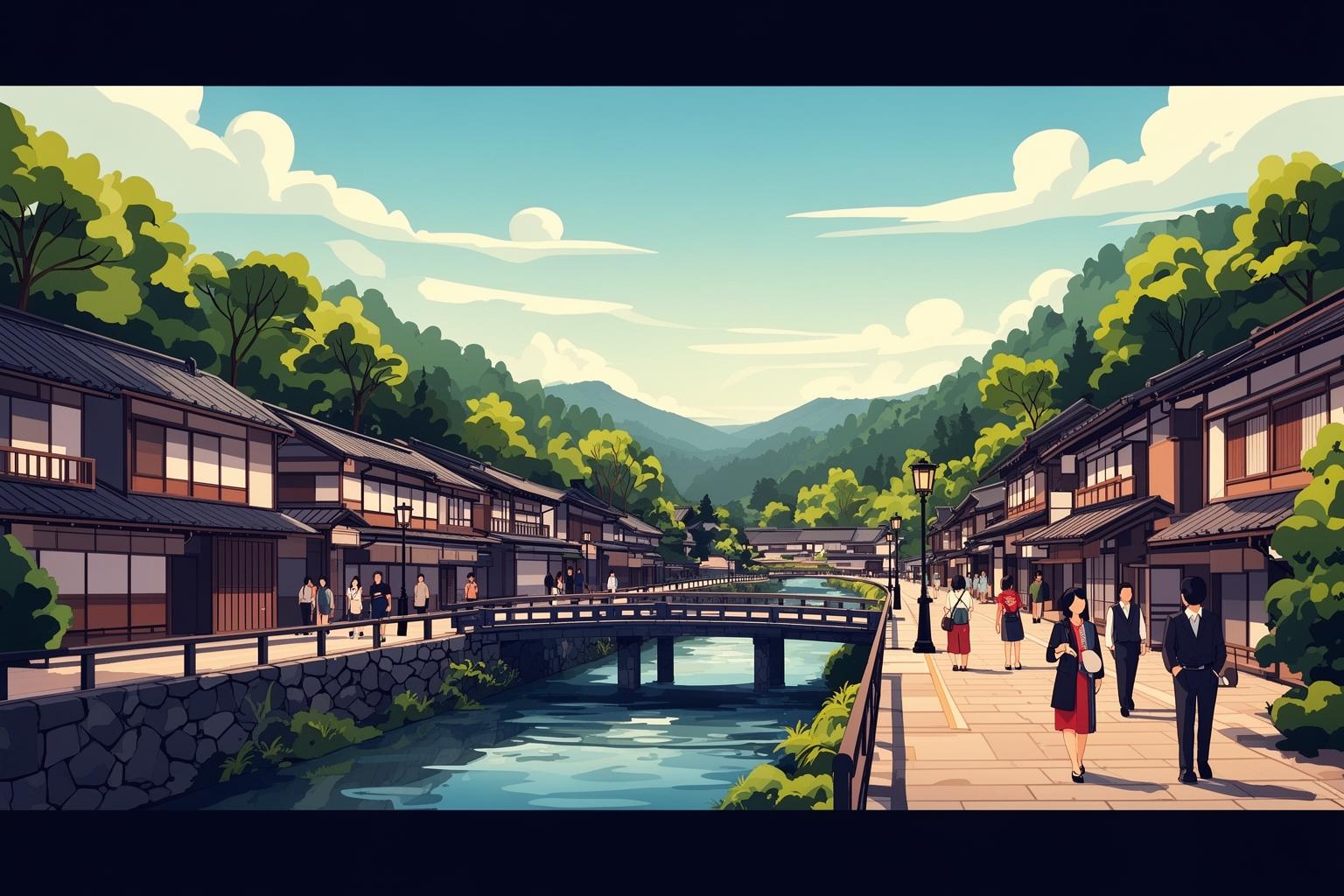
The magic of Hida-Furukawa unfolds the moment you arrive. The connection to the film is neither subtle nor interpretive; it is immediate and visceral. You step into meticulously recreated scenes, where the sense of familiarity is wonderfully disorienting. The town itself seems to recognize and embrace its role in this modern-day folklore, quietly welcoming pilgrims seeking the heart of Itomori.
The Crossroads of Fate: Hida-Furukawa Station
Your pilgrimage almost certainly begins at Hida-Furukawa Station. As you disembark from the JR Takayama Main Line train, a wave of recognition sweeps over you. This is it. This is the very platform where Taki and his friends arrived on their quest to find Mitsuha. The details are remarkably precise: the wooden benches, the overhead signs displaying the station name in Japanese characters, and the distinctive open-air footbridge connecting the platforms—it’s all here, waiting for you. Pause for a moment and listen to the sounds: the gentle hiss of the train doors, birds chirping from the nearby mountains, and the distant announcement softly echoing. This soundscape transports you directly into the film’s poignant search sequence. From the platform, you can spot the iconic taxi stand, just as it appears in the anime. And, of course, no visit is complete without noticing the small, charming mascot of the region’s famous Hida beef—a cheerful cartoon cow standing as a silent, welcoming sentinel. It’s a tiny detail, but one Shinkai’s team painstakingly included, a testament to their dedication to capturing the town’s true essence. The station is more than just a transit point; it’s a portal between the world you know and the story’s world, the very place where Taki’s hope and determination began to grow.
A Repository of Memories: Hida City Library
A short, pleasant walk from the station brings you to another key location, marking a turning point in the film’s narrative. The Hida City Library is where Taki desperately searches records, trying to uncover the truth about Itomori and the comet’s impact. Unlike the charmingly rustic station, the library is a marvel of modern Japanese architecture that blends seamlessly with its historic surroundings. Its soaring ceilings are supported by an intricate lattice of local wood, a beautiful nod to the region’s renowned carpentry traditions. Warm, gentle light filters through large windows, illuminating rows upon rows of books. Inside, the atmosphere is one of hushed reverence for both the knowledge housed within and the quiet pursuit of study by local residents. Visitors immediately recognize the desks where Taki sat and the exact angle of the aisle he searched. The library staff are well accustomed to anime fans and have a gracious system in place: to take photographs, you must first approach the main counter and request permission. They provide a pass and ask that you remain silent and respectful, never capturing local patrons in your shots. This simple courtesy beautifully reminds you that while on a personal pilgrimage, you are also a guest in a living, functioning community. Standing in this space, you can almost feel Taki’s growing anxiety and his dawning, horrifying realization. It’s a powerful, somber moment in the film, and the library’s serene environment makes that scene all the more profound.
Whispers on the Steps: Keta Wakamiya Shrine
While Miyamizu Shrine—the spiritual heart of Itomori and center of Mitsuha’s family traditions—is a composite of several locations, many pilgrims find its strongest echo at Keta Wakamiya Shrine in Hida-Furukawa. Tucked away on a small hill, the shrine is reached by a long, iconic flight of stone steps, flanked by towering cedar trees and moss-draped stone lanterns. As you ascend, the sounds of the town fade, replaced by rustling leaves and the cawing of crows. Each step feels purposeful, a journey upward toward something sacred. This is the path Mitsuha and her sister Yotsuha would have walked, the backdrop for conversations about tradition and destiny. The shrine at the top is a humble, dignified wooden structure radiating ancient tranquility. It is not grand or imposing but feels deeply connected to the surrounding nature. This is a genuine place of worship, and it’s important to approach it respectfully. You might see locals clapping their hands in prayer or leaving small offerings. Take a moment to simply stand and absorb the atmosphere. The air feels different here—cooler, cleaner, and filled with a quiet energy. It is here, more than anywhere else, that you sense the deep Shinto roots underpinning the film’s narrative: the connection to nature, reverence for local gods, and belief in unseen threads that bind us all. The shrine invites reflection not only on the movie but also on the enduring spiritual culture that inspired it.
Beyond the Silver Screen: The Authentic Heart of Furukawa
While the appeal of “Your Name” draws many visitors to Hida-Furukawa, limiting oneself to viewing only the anime locations overlooks the town’s richer, more profound narrative. Furukawa boasts a proud history and a vibrant culture that long predates its status as an animation landmark. Taking time to explore its genuine charms offers a deeper context for the film and creates memories that are uniquely personal.
The White-Walled Storehouses and the Koi’s Gentle Glide
The most iconic and picturesque feature of Hida-Furukawa is the Setogawa Canal. This peaceful waterway stretches about 400 meters through the heart of the old town and serves as the city’s lifeline and most beautiful treasure. On one side of the canal stand the backs of old houses and temples, while the other side is lined with stunning shirakabe dozogai—traditional white-walled storehouses with distinctive dark-tiled roofs and black wooden siding. These storehouses, once symbols of prosperous merchants, create a striking visual contrast against the clear, flowing water. Stone-lined banks and small arched bridges crossing the canal complete a scene that seems lifted from a woodblock print. Yet the true enchantment of the canal lies in its inhabitants. From April to November, the Setogawa hosts over a thousand large, brilliantly colored koi carp. They swim with slow, regal grace, their orange, gold, white, and black scales gleaming in the sunlight. The story of the koi reflects the town’s community spirit: they were introduced in the 1960s to encourage residents to maintain the canal’s cleanliness, an effort that proved highly successful. Today, feeding the koi is a beloved pastime among visitors and locals alike, with small bags of fish food available for purchase from unattended stalls along the canal, operating on an honor system. Walking along the Setogawa, watching the fish glide effortlessly in the water, is a meditative experience that slows your pace and invites you to appreciate the town’s simple, enduring beauty. It serves as a poignant reminder that the idyllic charm of Itomori was not mere fiction but inspired by the real and well-preserved elegance of places like this. Note that during winter—from late November to early April—the koi are moved to a special overwintering pond to protect them from the cold, leaving the canal clear but empty. This makes the spring Koi no Hanamikoshi ceremony, when the fish are ceremoniously returned, a joyful local celebration.
The Soul of the Carpenter: Hida’s Woodworking Legacy
As you stroll through Hida-Furukawa, you’ll notice the exquisite wooden details decorating many older buildings. Intricate latticework graces windows and transoms, and the joinery in temples and merchant houses is seamless and refined. This is the living heritage of the Hida no Takumi, the Master Craftsmen of Hida. Their tradition dates back over 1,300 years to the Nara period, when skilled carpenters from the Hida region were sent to the capital to help build its grand temples and palaces as a form of taxation. Their craftsmanship became legendary throughout Japan. That spirit remains deeply embedded in the town’s identity. Look for small wooden kumiki (interlocking wood puzzle) designs hanging from the eaves of many houses—each a unique symbol of the carpenter who built it. To explore this fascinating history further, a visit to the Hida Takumi Bunkakan (Hida Crafts Museum) is essential. There, you can see the complex tools used by generations of woodworkers and marvel at the seemingly impossible complexity of their nail-free creations. This heritage of crafting beautiful, lasting objects by hand imbues the town with a sense of integrity and artistry, a quiet pride that complements the more recent fame brought by the anime.
A Taste of Tradition: Sake and Local Flavors
The pure mountain water and high-quality local rice of the Hida region also make it ideal for brewing sake. Hida-Furukawa is home to two celebrated breweries, both operating for centuries and welcoming visitors. The Watanabe Sake Brewery is known for its Hourai brand, and its historic dark-timbered storefront is a landmark on the main street. Nearby, the Kaba Sake Brewery produces the crisp Shirakabe brand, named in tribute to the white-walled storehouses that define the town’s landscape. Stepping inside either brewery feels like entering another era. The air is thick with the sweet, fruity aroma of fermenting rice. Visitors can often observe parts of the brewing process, and tastings provide a chance to sample the unique character of their products. Beyond sake, the town offers a delightful variety of local culinary specialties. Hida is famous for its premium Hida Beef, prized for its exquisite marbling and melt-in-your-mouth texture, available at local restaurants as steak, skewers, or even in steamed buns. For a simpler snack, try the local mitarashi dango. Unlike the sweet, syrupy varieties found elsewhere in Japan, Furukawa’s version is toasted over charcoal and brushed with a savory soy sauce glaze. Another specialty is Gohei mochi, a flattened oval of pounded rice skewered and coated in a sweet and savory miso-walnut sauce before being grilled to perfection. Sampling the town’s flavors offers another way to connect with its culture—a delicious pilgrimage all its own.
Weaving Your Own Story: Experiencing Furukawa
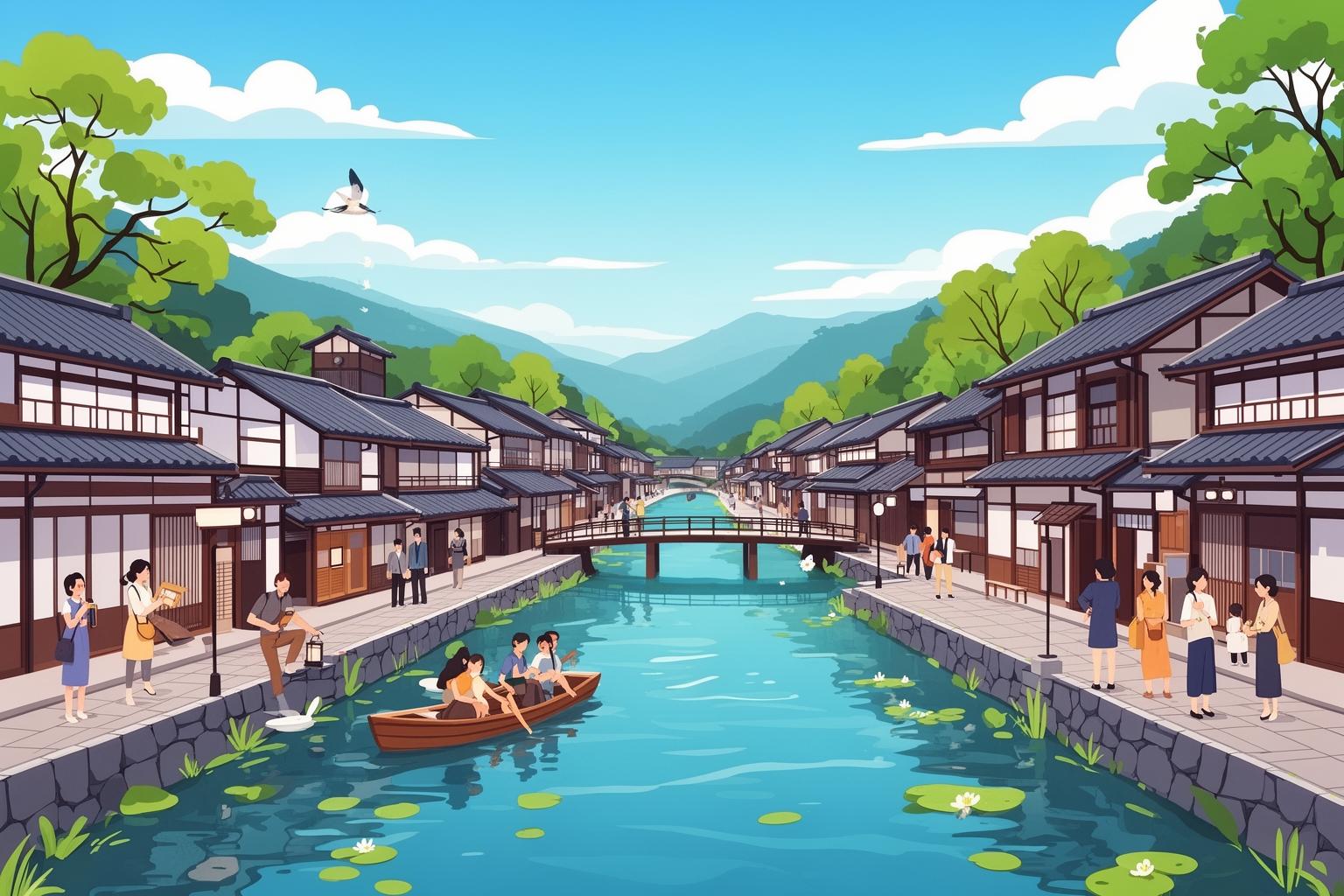
After tracing the footsteps of Taki and Mitsuha and immersing yourself in the town’s traditional ambiance, the next step is to make the experience uniquely your own. Hida-Furukawa is not merely a passive museum; it is a place that encourages participation, exploration, and the creation of new memories.
A Journey on Two Wheels
Although the town center is compact and easily walkable, one of the best ways to appreciate the wider beauty of the Hida region is by renting a bicycle. Several shops near the station offer rentals, allowing you to explore the stunning satoyama landscape—where mountains meet arable flat land. A short ride out of town will lead you past expansive rice paddies that shimmer like mirrors in spring and turn a rich gold in autumn. You’ll cycle past traditional farmhouses with heavy thatched or tiled roofs, observe locals tending vegetable gardens, and follow the gentle curves of the Miya River. The majestic peaks of the Japan Alps provide a constant, breathtaking backdrop. This is the scenery that would have been Mitsuha’s everyday view—the landscape that inspired her longing for the city and, ultimately, her deep love for home. Cycling lets you move at a human pace, pause whenever a view captures your attention, and feel the fresh mountain air on your face. It’s an immersive experience connecting you to the land in a way that walking through the town center alone cannot.
The Rhythm of the Festivals
If you are lucky enough to visit in mid-April, you will witness one of Japan’s most spectacular and dynamic festivals: the Furukawa Matsuri. This annual spring festival, recognized as a UNESCO Intangible Cultural Heritage, unfolds over two days in an explosion of sound, color, and raw energy. The celebration has two main parts. By day, ornate floats called yatai, some featuring intricate mechanical puppets, parade through the streets. But the truly unforgettable event is the nighttime Okoshi-Daiko (Awakening Drum). Hundreds of semi-naked men, fueled by sake and tradition, carry a massive turret-mounted drum through the town, while groups holding long poles with paper lanterns attempt to attach their smaller tsuke-daiko drums to the back of the main structure in a chaotic, powerful ritual marking the festival’s start. The energy is electric—a primal and joyous celebration of community and heritage. The town is very crowded during the festival, so accommodation must be booked well in advance, but experiencing it means witnessing the town’s spirit at its most vibrant and untamed.
Finding Your Quiet Corner
One of Hida-Furukawa’s greatest pleasures is the simple act of wandering. Step off the main tourist route and explore the quiet residential backstreets. Here you’ll find small, beautifully maintained temples such as Enko-ji, Honko-ji, and Shinshu-ji, each with its own peaceful garden and distinct history. You’ll pass houses with carefully tended bonsai trees and family-run shops that have lasted for generations. The locals are known for their warmth and hospitality; a friendly nod or a simple “Konnichiwa” is often met with a genuine smile. It is in these unscripted moments—watching a cat nap on a temple wall, discovering a tiny stone Jizo statue adorned with a knitted cap, or simply listening to the gentle sound of canals flowing through the neighborhood—that you truly connect with the rhythm of daily life in this special place. Here, Hida-Furukawa stops feeling like a film set and becomes a living, breathing community that you are briefly, and happily, a part of.
Practical Threads for Your Pilgrimage
A bit of planning can greatly enhance the smoothness and magic of your trip to this mountain town. While Hida-Furukawa is accessible, its rural location means understanding the logistics is essential.
Getting There and Around
The easiest way to reach Hida-Furukawa is by train on the JR Takayama Main Line. The historic city of Takayama, a major tourist destination itself, is just a scenic 15-minute train ride away, making it a popular base for exploring the area. The journey from major cities is straightforward. From Nagoya, the JR Wide View Hida limited express train provides a direct and stunning route through river gorges and mountain valleys, taking about 2.5 hours. From Tokyo, you usually take the Shinkansen (bullet train) to Nagoya or Toyama, then transfer to the Wide View Hida. Once there, Hida-Furukawa’s main attractions are concentrated in a small, flat area easily explored on foot. For further countryside excursions, renting a bicycle is highly recommended and an excellent choice.
When to Visit
Hida-Furukawa offers charm in every season. Spring (late March to May) is perhaps the most popular, with cherry blossoms softly coloring the landscape, pleasant weather, and April’s Furukawa Matsuri alongside the return of the koi to the canals. Summer (June to August) is lush and green, with vibrant rice paddies; it can be hot and humid, but the mountain air provides some relief. Autumn (October to November) is breathtaking as the surrounding mountains display fiery red, orange, and yellow foliage. The crisp, cool air is perfect for walking and cycling. Winter (December to February) turns the town into a quiet, magical wonderland, where a snowy blanket mutes all sounds and the dark wood of traditional buildings contrasts sharply with the white landscape. It’s a peaceful, reflective time to visit, though be prepared for cold temperatures and know that the koi will be absent from the canals.
A Place to Rest Your Head
For the most authentic experience, stay directly in Hida-Furukawa. The town offers charming ryokan (traditional inns) and minshuku (family-run guesthouses) where you can enjoy Japanese hospitality, sleep on tatami mats, and savor exquisite local cuisine. Staying overnight lets you experience the town in the early morning and late evening when day-trippers have left and a peaceful quiet settles in. Alternatively, nearby Takayama provides a wider range of accommodations, from budget hostels to luxury hotels, with frequent short train connections making it a convenient base for day trips to Furukawa.
The Lingering Melody
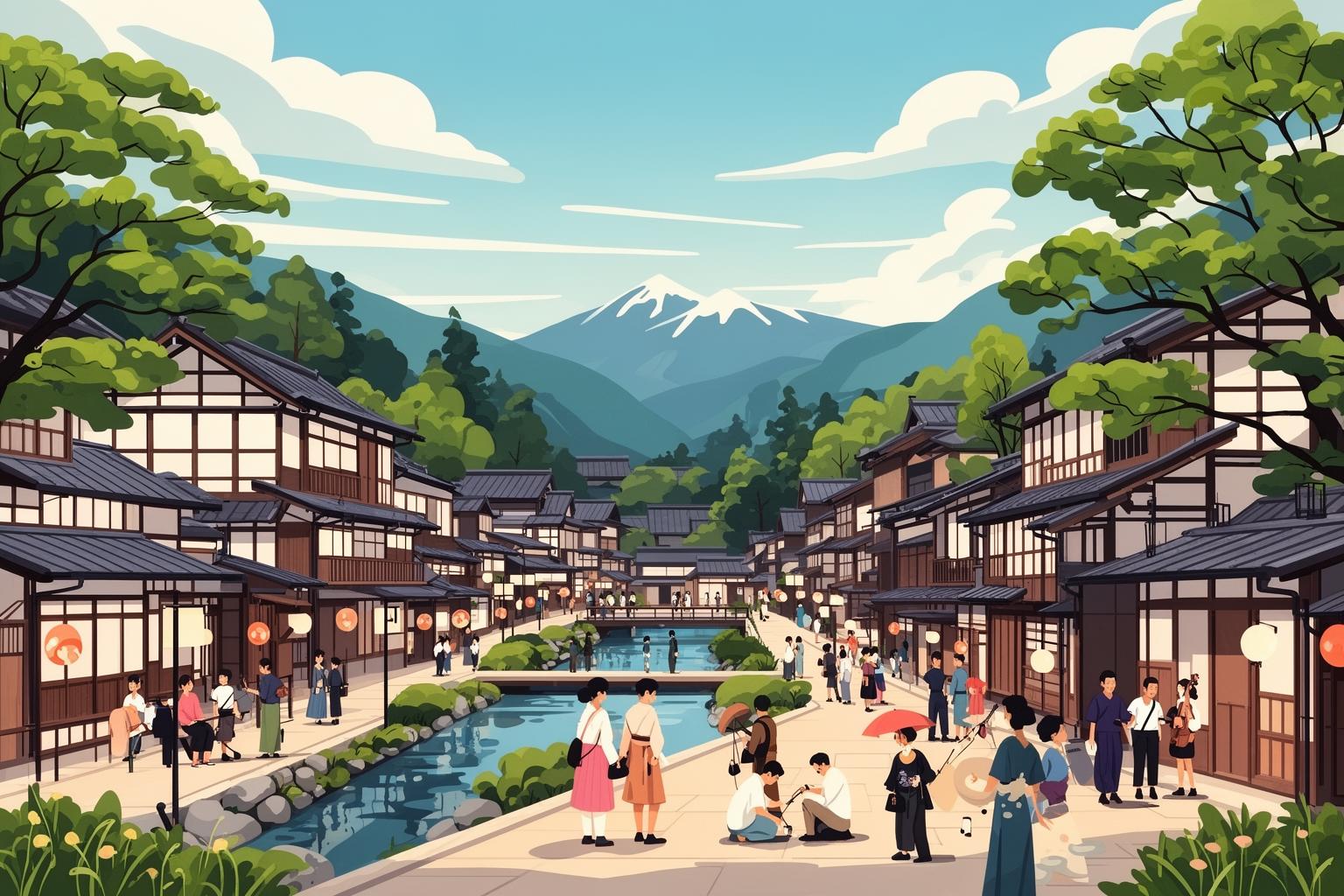
Leaving Hida-Furukawa feels like awakening from a beautiful dream. You cross back over the footbridge at the station, find your platform, and watch as the town slowly fades away, the mountains that embrace it seeming to draw it back into their arms. Yet something has shifted. The imagined world of Itomori and the real town of Hida-Furukawa have blended in your mind, each enriching the other. You arrived seeking the setting of a story about connection, and you found it—not only in the familiar scenes from the screen but also in the town’s own lasting story. You discovered it in the centuries-old dedication of its master craftsmen, in the community spirit that keeps the canals clean and the koi safe, and in the powerful, resonant heartbeat of its festival drum. Hida-Furukawa is more than just a pilgrimage destination; it is a profound reminder that even in our hyper-modern age, there are places where tradition is cherished, where beauty is nurtured in the smallest details, and where the bonds of community are tightly woven. The story of Taki and Mitsuha is a melody that lingers long after the film ends, and a visit to Hida-Furukawa gives that melody a home—a tangible memory you can revisit time and time again.