
Have you ever watched a film that felt less like a story and more like a memory you haven’t made yet? A tale so deeply woven with a sense of place that the locations themselves become characters, breathing and sighing with the narrative? For millions around the world, Makoto Shinkai’s masterpiece, Your Name (Kimi no Na wa), was exactly that. It was an emotional whirlwind of body-swapping, star-crossed lovers, and a celestial catastrophe, all painted with Shinkai’s signature hyper-realistic, heart-achingly beautiful animation. But the magic didn’t stop when the credits rolled. The film left behind an invisible thread, a pull towards the very real streets, mountains, and lakes of Japan that served as its canvas. This journey is what the Japanese call seichi junrei—a sacred pilgrimage to the real-world locations that inspire our favorite stories. It’s a chance to step through the screen and walk in the footsteps of characters who feel like old friends. Today, we’re chasing the echoes of Taki Tachibana and Mitsuha Miyamizu, embarking on a quest that bridges the electric pulse of Tokyo with the serene, timeless soul of rural Japan. This isn’t just about finding pretty photo spots; it’s about understanding how a story can transform a simple staircase or a quiet library into a landmark of the heart. It’s a journey to find the tangible pieces of a beloved fantasy, and perhaps, to discover a little bit of its magic waiting for us in the real world. So, pack your bags, charge your camera, and open your heart. We’re about to follow the red thread of fate all the way across Japan.
This kind of pilgrimage to real-world anime settings is a powerful form of travel, much like the journey fans take to explore the real-life locations of Ponyo in Tomonoura.
The Heart of Tokyo: Where Taki’s Story Unfolds
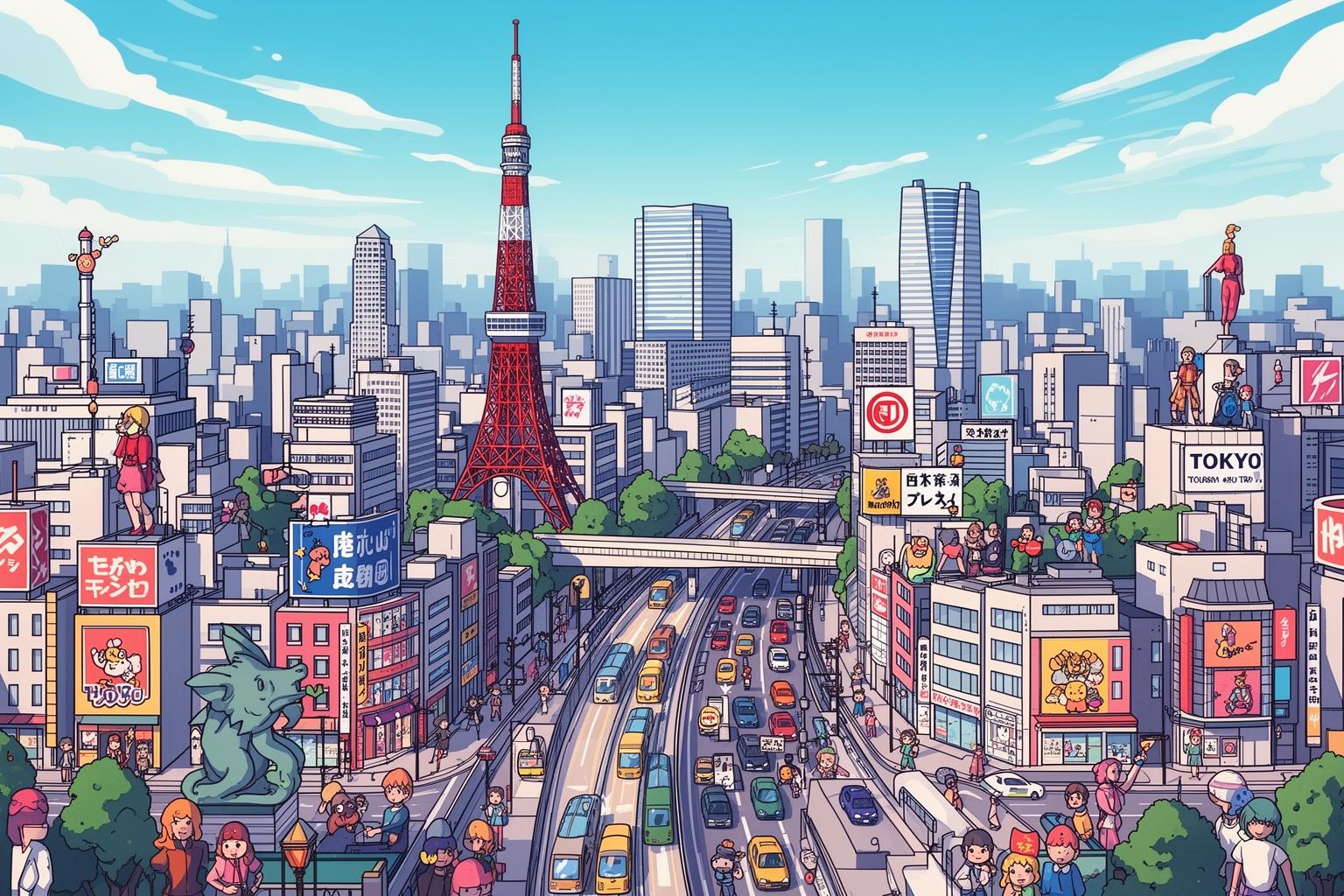
Our pilgrimage begins where Taki’s story starts: in the vast, sprawling, and endlessly captivating metropolis of Tokyo. This city is a universe unto itself, a place where ancient traditions coexist in perfect, sometimes surprising, harmony with relentless modernity. Taki’s Tokyo is a realm of crowded trains, part-time jobs in trendy Italian restaurants, and architectural marvels that pierce the sky. To walk here is to feel the city’s powerful rhythm—the constant pulse of millions of lives intersecting, overlapping, and sometimes, as with Taki and Mitsuha, magically intertwining. The very air seems charged with ambition and possibility. You can almost picture Taki sketching the city’s skyline in his notebook, striving to capture its magnificent chaos. The key locations from the film are spread across Tokyo’s central wards, mainly in Shinjuku, Yotsuya, and Roppongi, making it an exciting and accessible treasure hunt for any fan. Stepping out of a subway station onto a street you’ve only seen in animation is both surreal and deeply satisfying. It’s the first, powerful confirmation that the world of Your Name is not entirely fantasy; its roots are grounded in the very concrete and asphalt of this incredible city.
The Iconic Red Staircase: Suga Shrine in Yotsuya
Few images are as emblematic of Your Name as Taki and Mitsuha, years after their memories have faded, finally finding one another on a striking red-railed staircase. This is the emotional climax of the film—the culmination of their desperate, timeline-spanning search—and you can stand right there. The staircase belongs to Suga Shrine, nestled in a surprisingly peaceful residential neighborhood in Yotsuya. Finding it feels like uncovering a secret. You leave the bustling main streets behind and wind your way through quiet lanes, past small apartment buildings and local shops. Anticipation builds with each step. Then, you see it: the gentle curve of the road, the steep incline of the stairs, and the unmistakable crimson handrails. The moment feels magical. Whether standing at the bottom looking up, or at the top gazing down, you are instantly transported into that heart-stopping final scene. You can almost hear Radwimps’ soaring soundtrack echoing in your mind. The area surrounding the shrine is calm, providing a welcome break from the city’s hustle. It invites lingering and soaking in the atmosphere. The ideal time to visit is late afternoon, during the golden hour, when sunlight filters through the trees casting long shadows, mimicking the film’s beautiful lighting. Photographers will find it a dream. Yet even without a camera, the sense of the place is profound. It’s a testament to storytelling’s power that a simple staircase can become a destination filled with hope and longing. A practical tip for visitors: Yotsuya-sanchome Station on the Tokyo Metro Marunouchi Line is your nearest access point, from which it’s a pleasant ten-minute walk. Since this is a residential neighborhood, please be considerate of the locals and enjoy the spot’s peaceful sanctity.
A Skyline of Longing: The Shinjuku Pedestrian Bridge
If the Suga Shrine staircase symbolizes connection found, the pedestrian bridge in Shinjuku embodies the ache of searching. This location appears in many of the film’s promotional images and transitional scenes—a wide, lattice-covered bridge set against the iconic Shinjuku skyline, dominated by the distinctive NTT Docomo Yoyogi Building. Finding this spot places you squarely within Taki’s urban reality. Situated just a stone’s throw from Shinjuku Station, near the Shinjuku Police Station, this bridge is a hub of ceaseless motion. Below, a steady stream of traffic flows endlessly, while above, commuters stride with purpose. In the film, however, it’s a place of pause and reflection for Taki. To experience it fully, visit after dusk. As night falls and the sky deepens to indigo, the city lights blaze to life. The view from the bridge transforms into a glittering panorama that perfectly captures the urban melancholy and futuristic beauty of Shinkai’s Tokyo. You can watch streams of red and white taillights blur into streaks, just as seen in the movie’s stunning time-lapses. It’s a moment to feel both the vast scale of the city and the intimate solitude one can find within it. Here, you can truly appreciate the incredible detail of the animation by matching the real buildings and streetlights to their on-screen counterparts. It’s a powerful reminder of Taki’s deep connection to his city. Unlike the quietude of Suga Shrine, this spot is loud, bustling, and quintessentially Tokyo. It’s the perfect place to absorb the city’s electric energy and capture that cinematic shot of the skyline that defined so much of Taki’s world.
An Unexpected Date Spot: The National Art Center, Roppongi
Our journey through Taki’s Tokyo takes a sophisticated turn as we visit the site of his slightly awkward yet beautifully portrayed date with his coworker, Okudera-senpai. The setting is none other than The National Art Center, Tokyo, located in the upscale Roppongi district. This is more than a film location; it’s an architectural marvel designed by the legendary Kisho Kurokawa. Its most striking feature is the massive, undulating glass facade, evoking the feeling of being inside a light-filled forest. Upon entering, you’re immediately struck by the scale and elegance of the space. Even if you’re not an art enthusiast, the building alone is worth the visit. Fans of the film will want to find Salon de Thé ROND, the stylish cafe where Taki and Okudera share their conversation. Perched atop a massive concrete cone inside the atrium, the cafe creates a sensation of floating. It’s an incredibly chic and memorable setting. Visiting here lets you sit where Taki sat, gaze out at the same stunning architectural views, and perhaps reflect on the complexities of relationships, just as he did. The cafe offers exquisite cakes and tea, making it a perfect indulgence during your pilgrimage. This location adds cultural depth to your journey. You can spend hours exploring world-class exhibitions before or after your cafe visit. It highlights how Your Name’s world is seamlessly woven into the vibrant, real culture of Tokyo, showing that Taki’s life wasn’t simply about dramatic searches but also filled with moments of everyday beauty and style. Access is easy via Nogizaka Station on the Tokyo Metro Chiyoda Line, which has a dedicated exit leading directly into the art center. This stop feels both glamorous and deeply connected to the film’s narrative.
Journey to Itomori: Finding Mitsuha in Rural Gifu
Leaving behind the dazzling vertical landscape of Tokyo, our pilgrimage now heads westward into the heart of the mountainous Chubu region of Japan. We seek Itomori, the fictional hometown of Mitsuha Miyamizu. Though Itomori is a creation of Makoto Shinkai’s imagination, its spirit, atmosphere, and key landmarks are deeply inspired by the real city of Hida-Furukawa in Gifu Prefecture. This transition is an essential part of the experience. Boarding the Shinkansen (bullet train) and watching the dense urban environment dissolve into sprawling suburbs, then lush green fields, and finally, dramatic, forest-covered mountains, you begin to sense the change in pace and energy, reflecting the stark contrast between Taki and Mitsuha’s lives. Arriving in Hida-Furukawa feels like stepping into another era. The air is cleaner, the sounds softer, and the rhythm of life gentle and unhurried. This is a town that treasures tradition and community—a place where wooden merchant houses line streets with pristine canals, and time seems to flow as clearly as the water within them. This is the world that shaped Mitsuha, steeped in ancient rituals, close-knit relationships, and a profound connection with nature. Exploring Hida-Furukawa is less about ticking off locations and more about immersing yourself in the tranquil ambiance that beautifully represents Mitsuha’s half of the story.
The Echo of a Town Square: Hida-Furukawa Station
Your gateway into Mitsuha’s world is Hida-Furukawa Station, a small, understated stop on the scenic JR Takayama Main Line. Yet, for any fan of Your Name, this place is instantly recognizable and deeply exciting. The moment you step off the train, seek out the pedestrian overpass crossing the tracks. From this vantage point, you can see the iconic scene from the film where Taki and his friends arrive in search of Mitsuha. The view of the tracks stretching into the distance, the platform, and the taxi stand below are all recreated with stunning accuracy. You can even spot the local mascot—a cute cartoon version of the region’s famous Hida beef—that makes a brief appearance in the film. The station itself is charmingly rustic, a far cry from the sprawling underground labyrinths of Shinjuku, instantly setting the tone for the rest of your visit. The town has warmly embraced its connection to the film, and you’ll often find posters or small displays welcoming pilgrims. Take a moment here to absorb the scene. Listen to the sounds of the local train arriving and departing, a daily backdrop to Mitsuha’s life and her dreams of leaving for the big city. This station was her gateway and point of departure, and for Taki, the crucial point of arrival. For you, the pilgrim, it is the perfect starting place for your journey into the heart of Itomori.
Weaving Threads of Tradition: The Hida City Library
One of the film’s most pivotal scenes takes place in a beautiful, warm, and inviting library where Taki urgently searches for information about Itomori and the comet. This key location is based on the real Hida City Library and is an absolute must-visit. Just a short walk from the station, the library is a stunning modern building infused with traditional Japanese design, particularly through its use of local wood. Upon entering, the first thing you’ll notice is the comforting scent of timber and old paper, evoking a studious atmosphere. The interior is bathed in soft natural light streaming through large windows, and the elegantly designed shelves and seating areas are immediately recognizable. The staff are well aware of the library’s fame and welcome fans warmly, though they rightly insist on preserving a quiet atmosphere for local patrons. They have even created a small corner dedicated to Your Name and often allow visitors to take photos from a specific spot to replicate the film’s camera angle, a wonderfully thoughtful touch. Sitting at one of the tables, you can imagine the weight of Taki’s desperation as he flipped through records, the puzzle pieces slowly falling into place. This is more than just a beautiful building; it is a living part of the community. Watching local students study and residents read newspapers adds a layer of authenticity to the experience. It reminds you that while this place is sacred to fans, it remains a vital resource for the people of Hida. Visiting here offers a peaceful interlude in your journey and a powerful connection to one of the story’s most important moments.
A Taste of Itomori: Exploring Hida’s Streets
Having visited the station and library, it’s time to wander the streets of Hida-Furukawa and truly capture the essence of Itomori. The town’s historic center is a beautifully preserved district filled with white-walled storehouses (shirakabe dozō) and traditional wooden buildings. The most picturesque spot is along the Seto River, a narrow canal where thousands of colorful koi fish swim leisurely in crystal-clear water. It’s an idyllic scene, and it’s easy to imagine Mitsuha and her friends strolling these streets after school. As you explore, you’ll notice many details that echo the film’s aesthetic. Look out for the small unmanned vegetable stands, a common sight in rural Japan that reflects a strong sense of community trust. A key theme in Your Name is musubi, the invisible threads of fate and time connecting everything, symbolized by Mitsuha’s braided cord, or kumihimo. Hida is known for this craft, with shops selling beautiful handmade cords. For a truly immersive experience, consider attending a kumihimo workshop, where you can braid your own cord—a meaningful and perfect souvenir. To complete your sensory journey, be sure to sample some local cuisine. Seek out a shop selling goheimochi, a grilled rice cake coated in a sweet and savory miso-sesame sauce. It’s the same snack Mitsuha enjoys with her grandmother and sister, and tasting it here, in the town that inspired her home, is a small but powerful act of connection that brings the film vividly to life.
The Mystical Lake: In Search of Itomori’s Centerpiece

While Hida-Furukawa inspired the townscape and traditions of Itomori, the single most breathtaking aspect of Mitsuha’s home was its stunning, crater-like lake, around which the entire town was built. This shimmering lake was the heart of Itomori—a place of beauty, ritual, and ultimately, near-destruction. To find its real-world counterpart, one must take a short journey to the neighboring prefecture of Nagano. It is widely believed that Lake Suwa, a large and picturesque lake surrounded by mountains, served as the main inspiration for Itomori’s lake. The visual similarities are striking, especially when seen from a specific vantage point. This part of the pilgrimage feels the most adventurous, a quest to witness the grand, expansive landscape that lent the film its epic scale. The journey itself, whether by train or car, leads you deeper into Japan’s mountainous spine, heightening anticipation for the stunning view ahead. Upon seeing Lake Suwa for the first time, the connection is immediately apparent—the way the mountains cradle the water, the towns nestled along the shores—it is the geography of a dream brought to life. Here, the natural and supernatural elements of the story are most tangible.
A View from Above: Tateishi Park
The most magical and emotionally powerful view of Lake Suwa, which most closely resembles the panoramic shots of Lake Itomori, is from Tateishi Park. Situated high on a hillside overlooking the lake, this park provides a breathtaking panorama that can stop you in your tracks. The sweeping vista captures the entire lake, the cities of Suwa and Okaya along its shores, and the majestic peaks of the Japanese Alps in the distance. The similarity to the film is both uncanny and undeniable. This is the view that defines Itomori. The best and most magical time to visit is during kataware-doki, the twilight hour featured in the film. This mystical time, when day and night meet and the world’s edges blur, is believed to be when supernatural events can occur. As the sun sets, the sky and lake surface are painted in fiery shades of orange, pink, and purple. The lights from the towns below begin to twinkle one by one, creating a carpet of stars on the earth. It’s a deeply moving and beautiful sight, easy to imagine as the moment when Taki and Mitsuha finally meet on the edge of the caldera. Reaching Tateishi Park can be a bit challenging without a car, but it’s well worth the effort. Taking a taxi from Kami-Suwa Station is the simplest option and takes about 15 minutes. Be sure to arrange a return pickup with your driver. Standing here, feeling the cool mountain breeze and watching the world transform at dusk, is the emotional high point of the Your Name pilgrimage—a moment of pure cinematic magic, blending nature’s beauty with the power of a beloved story.
Planning Your Pilgrimage: A Practical Guide for Dreamers
Embarking on a seichi junrei for Your Name is an immensely rewarding adventure, but a bit of planning can go a long way in making the journey smooth and magical. The trip naturally divides into two parts: the urban exploration of Tokyo and the rural immersion in the Hida and Suwa regions. Combining these two distinct experiences is essential for fully appreciating the film’s narrative arc as well as the beautiful diversity of Japan itself. Imagine yourself as a traveler following a story, letting the narrative guide your itinerary from the bustling city to the tranquil mountains. This approach transforms a simple sightseeing trip into a meaningful quest, where every train ride and new location draws you deeper into the world you cherish. With proper preparation, you can seamlessly move between the vibrant energy of Taki’s life and the serene landscapes of Mitsuha’s, creating travel memories as unforgettable as the film itself.
Crafting Your Itinerary: Tokyo and Beyond
For the Tokyo leg of your trip, plan to dedicate at least one full day, though two days would allow a more relaxed pace. The key spots in Yotsuya, Shinjuku, and Roppongi are easily accessible via Tokyo Metro and JR lines. A Suica or Pasmo IC card will be your best companion, enabling easy tap-and-go access on virtually all public transport. Organizing your visits by area is most efficient: spend a morning in Yotsuya visiting Suga Shrine, an afternoon exploring various sites in Shinjuku, and perhaps an evening enjoying the illuminated views from the pedestrian bridge or the stylish atmosphere of Roppongi. For the journey to Hida-Furukawa and Lake Suwa, allocate at least two days and one night, although three days allow for a leisurely pace. Traveling between these regions is most convenient by train. For international visitors, the Japan Rail Pass offers great value, covering the long-distance Shinkansen from Tokyo to Nagoya and then the scenic JR Hida Wide View Express train from Nagoya to Takayama—the main hub near Hida-Furukawa. Hida-Furukawa itself is small and very walkable. To reach Lake Suwa, take a train from Takayama to Matsumoto, then a local train to Kami-Suwa. Consider staying overnight in Takayama, a charming historic town, or in Suwa to enjoy the lakeside hot springs (onsen).
What to Pack and When to Go
Your packing list should reflect the two contrasting environments you’ll encounter. For Tokyo, focus on stylish comfort. Expect lots of walking, so excellent shoes are essential. Dressing in smart layers is advisable to stay comfortable in air-conditioned subways as well as under sunny skies. For Gifu and Nagano, practicality is key. Mountain weather can be unpredictable, so pack layers including a lightweight waterproof jacket, even in summer. Comfortable walking shoes are even more crucial here as you explore Hida’s streets and potentially hike in nearby parks. Regarding the best season to visit, autumn is arguably ideal. The crisp air and vibrant fall foliage perfectly complement the film’s rich, warm color palette. The weather is generally clear and pleasant, perfect for city strolls and mountain views alike. Spring is another lovely option, featuring cherry blossoms that add an extra layer of magic to Tokyo’s parks and Hida’s riverbanks. Summer is lush and green but can be hot, humid, and rainy. Winter covers the Gifu region in snow, creating a beautifully stark and peaceful atmosphere, though it requires warm clothing and careful checking of transport schedules.
A Note on Etiquette: The Pilgrim’s Code
When undertaking a seichi junrei, it’s important to remember that you are visiting living communities, not film sets. Traveling with respect and sincerity enriches your experience and shows appreciation to locals who graciously open their hometowns to visitors. At Suga Shrine, remember it is a place of worship—be quiet and respectful, and consider making a small offering as a gesture of gratitude. In the Hida City Library, silence is essential; follow photography guidelines and thank the staff for their kindness. In the residential areas of Yotsuya and the quiet streets of Hida-Furukawa, keep your voice low and be careful not to block paths or enter private property. One of the best ways to show your appreciation is by supporting the local economy: buy a drink from a vending machine, purchase a kumihimo braid from a local artisan, enjoy a meal at a family-run restaurant, or try local snacks like goheimochi. These small acts of engagement foster positive exchange and help ensure these communities continue welcoming fans from around the world. A pilgrimage is a journey of appreciation—not only for the story but for the real places and people that gave it soul.
More Than a Movie: The Enduring Magic of a Place

As your journey draws to a close—whether descending from the viewpoint over Lake Suwa or boarding the Shinkansen back to Tokyo’s endless lights—you carry more than just photographs and souvenirs. You carry the sensation of having wandered through a dream. A pilgrimage to the sites of Your Name is a profound experience, as it blurs the line between fiction and reality. A simple staircase transforms into a symbol of hope. A library becomes a sanctuary of discovery. A twilight view of a lake opens a window to the mystical. This journey stands as a beautiful testament to art’s power to imbue the ordinary world with extraordinary meaning. You begin to see through what fans call the “Shinkai filter,” noticing the remarkable beauty in the everyday: the way light touches a building, the intricate web of overhead train lines, the exact shade of blue in the dusk sky. It is a journey about connection—not just between two characters in a film, but between artist and audience, between story and reality, and ultimately, between you and the stunning, intricate, deeply soulful landscapes of Japan. You arrived chasing a memory from a film and leave with your own collection of powerful, tangible memories, woven into the unforgettable tapestry of this remarkable country.