
There are stories that feel like they live inside you. They aren’t just watched; they’re experienced. Makoto Shinkai’s masterpiece, Kimi no Na wa, or Your Name., is one of those tales. It’s a breathtaking story of connection, of two souls tethered by the red string of fate across distance and time, a celestial romance painted with hyper-realistic cityscapes and idyllic rural beauty. For millions around the globe, the film was more than an animation; it was a feeling. A deep, resonant ache of longing and a soaring hope for reunion. And for many, that feeling sparks a desire to walk the same streets as the characters, to stand in the very spots where their story unfolded. This is the heart of seichi junrei, the sacred pilgrimage to locations featured in anime, a journey to bridge the gap between fiction and reality. Taki Tachibana’s world, the vibrant, sprawling, electric metropolis of Tokyo, is not just a backdrop; it’s a character in itself. It’s a city of endless crossings, towering giants of glass and steel, and quiet, hidden corners where fate can change in an instant. This guide is your invitation to step through the screen, to follow in Taki’s footsteps and discover the magic of Your Name. woven into the very fabric of Tokyo. It’s a chance to see the city not just as a tourist, but as a pilgrim, searching for your own connection, your own musubi. Here is a map to begin your search, a constellation of key moments waiting to be rediscovered.
Embark on your next step by exploring the detailed real-life ‘Your Name.’ locations that vividly capture Tokyo’s cinematic charm.
The Heart of the Search: Yotsuya and the Iconic Steps
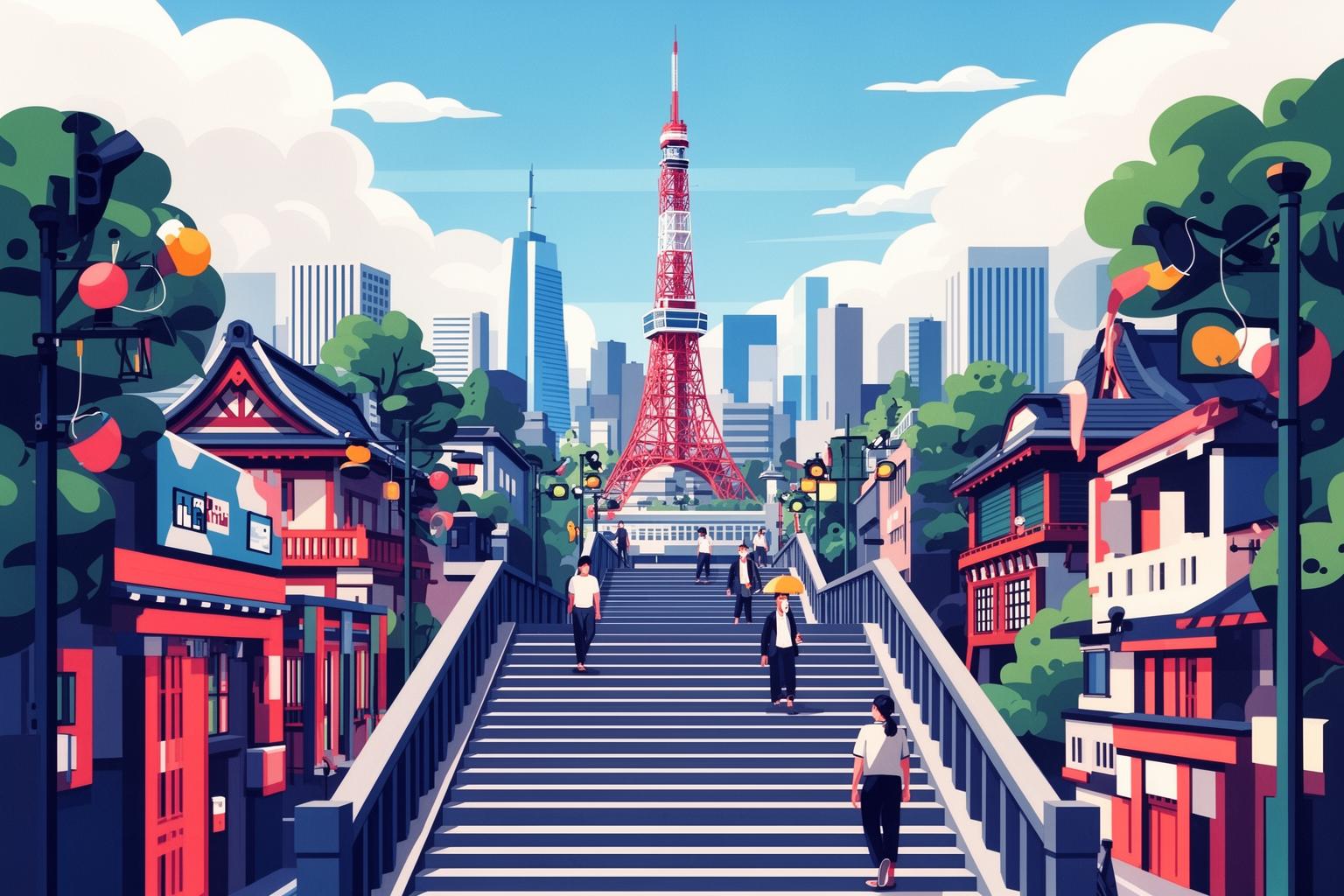
Our pilgrimage does not start in the neon-lit core of the city, but rather in a place that feels almost sacred in its stillness. The emotional peak of Your Name., the scene cherished by every fan, takes place on a simple staircase in a quiet residential neighborhood. This is the Suga Shrine in Yotsuya. To reach it, you will likely arrive at Yotsuya Station, a hub for the JR Chuo-Sobu Line and the Tokyo Metro Marunouchi and Namboku lines. As you leave the station, the city’s noise begins to fade away. The walk to the shrine is an experience itself, a thoughtful transition from the urban expanse into something more personal. You’ll wander along narrow streets lined with modest houses, small local shops, and occasional vending machines humming quietly. There is a tangible sense of peace here, as if you’ve uncovered a secret corner of Tokyo gently untouched by time. You might find yourself double-checking your map, wondering if you’re really in the right spot, as the surroundings feel so distant from the cinematic grandeur you anticipated. Then, you turn a corner, and there it is. The scene aligns so perfectly with the anime that it truly takes your breath away. The twin staircases, the bright red railing on the right, the green trees framing the city skyline beyond—it’s an exact replication, or rather, the animation was a perfect recreation of this real place. The atmosphere is electric. Standing at the top looking down, or at the bottom looking up, you are immediately transported. You can almost hear the film’s score rising, feel the desperate hope of Taki and Mitsuha as they finally, at last, find each other. This is the magic of seichi junrei. It’s not merely about seeing a place; it’s about feeling the story deep within you. For the best visit, consider the timing. Early morning brings soft, golden light and a peaceful ambiance, accompanied only by the sounds of the neighborhood waking up. Late afternoon, during the ‘magic hour’ before sunset, bathes the sky in shades of orange and purple, mirroring the twilight of their reunion. This is the most popular time for photographers and fellow pilgrims, so expect a calm, shared reverence among those present. While the stairs are the main draw, remember they lead to Suga Shrine itself. Take a moment to walk up and pay your respects. The shrine is a local place of worship, small and understated but deeply serene. Here, you can experience a genuine moment of Japanese culture. Offer a quiet prayer, admire the intricate wooden architecture, and savor the tranquility. It’s a gentle reminder that while this site gained fame through fiction, its foundations lie in the daily life and faith of the community. A small tip for first-time visitors: be a respectful pilgrim. This is a residential neighborhood. Keep your voice low, be considerate of residents going about their day, and avoid lingering on the staircase for long periods. The charm of this spot rests in its quiet authenticity, so help preserve that for everyone.
Taki’s World: Exploring the Shinjuku Skyscape
From the quiet reverence of Yotsuya, we dive straight into the lively, chaotic, and endlessly captivating world of Shinjuku. This is Taki’s Tokyo, a city that beats with an unyielding rhythm—a symphony of train announcements, crossing signals, and the hum of countless conversations. Shinjuku is more than just a place; it’s an experience, a sensory overload that perfectly embodies the energy of Taki’s urban life, sharply contrasting with the peaceful existence of Mitsuha in Itomori. The station itself is a behemoth, a sprawling maze renowned as the busiest in the world. Navigating it serves as a rite of passage for any visitor to Tokyo. Yet, amid this controlled chaos lies the backdrop that shaped Taki’s everyday life and journey. Shinjuku is where he socialized with friends, worked, and where the iconic skyline—a recurring visual theme in the film—dominates the horizon. This segment of the pilgrimage feels like a treasure hunt through a concrete jungle, where each turn reveals another familiar scene, another piece of the cinematic puzzle.
The View from the Bridge
One of the most iconic, yet non-landmark, locations from the film is the pedestrian bridge where Taki often strolls, with the sprawling cityscape unfolding behind him. This is the Shinjuku Southern Terrace, an inviting elevated walkway linking Shinjuku Station’s South Exit to the surrounding area. Here, you’ll find the very spot featured in several pivotal scenes. Look for the Shinjuku Police Station intersection bridge. It’s a broad, somewhat plain pedestrian overpass, but when you face the right direction, the view is unmistakable. You’ll see clusters of skyscrapers, winding roads heavy with traffic, and most notably, the distinctive outline of the NTT Docomo Yoyogi Building. Its pointed clock tower remains a constant presence in the film’s skyline shots, acting as a visual anchor. Standing on this bridge, you truly sense Tokyo’s immense scale. The city isn’t just tall; it’s multi-layered, with intertwined infrastructure and endless activity pulsating in harmony. It’s a fantastic spot for photography, especially at night when the city glows and cars create streams of red and white light below. You can almost picture Taki here, deep in thought, the weight of a forgotten name lingering on the edge of his mind, the city’s vastness mirroring his own feelings of searching and uncertainty. It’s a poignant moment of connection—finding this simple, practical piece of city architecture and seeing it through Shinkai’s artistic vision.
A Moment of Culture: Taki and Okudera-senpai’s Date
Our journey takes a refined turn as we accompany Taki on his memorable, if somewhat awkward, date with his coworker, Okudera-senpai. Their destination was The National Art Center in Roppongi, just a short subway ride from Shinjuku. Even if you’re not particularly interested in art, this building is well worth visiting. Its flowing glass façade is a masterpiece of contemporary architecture—a wave of light and steel as much an artwork as the exhibits inside. Upon entering, the vast, sunlit atrium with its conical concrete pillars immediately catches your eye. Fans of the film will want to head to the second floor to find Salon de Thé ROND, the café where Taki and Okudera sat. Perched atop one of the massive concrete cones, the circular café offers breathtaking views of the atrium, giving the sensation of floating within an architectural marvel. You can sit down and order a coffee or a slice of cake, just as they did, and absorb the atmosphere. It’s a surreal experience to be in the exact café, gazing out at the exact view—a perfect blend of anime and reality. Beyond this specific spot, the museum itself is a wonderful place to spend a few hours. It hosts a rotating schedule of world-class exhibitions, so there’s always something new and intriguing to see. This location adds depth to Taki’s character, hinting at his artistic interests and dream of becoming an architect. It reveals a side of Tokyo that’s not only about busy crowds but also about refined culture and stunning design. To reach the museum, you can take the Oedo line from Shinjuku to Roppongi, or the Hibiya line. The museum is also directly connected to Nogizaka Station on the Chiyoda line, making access very convenient.
Finding Tranquility Amidst the Chaos
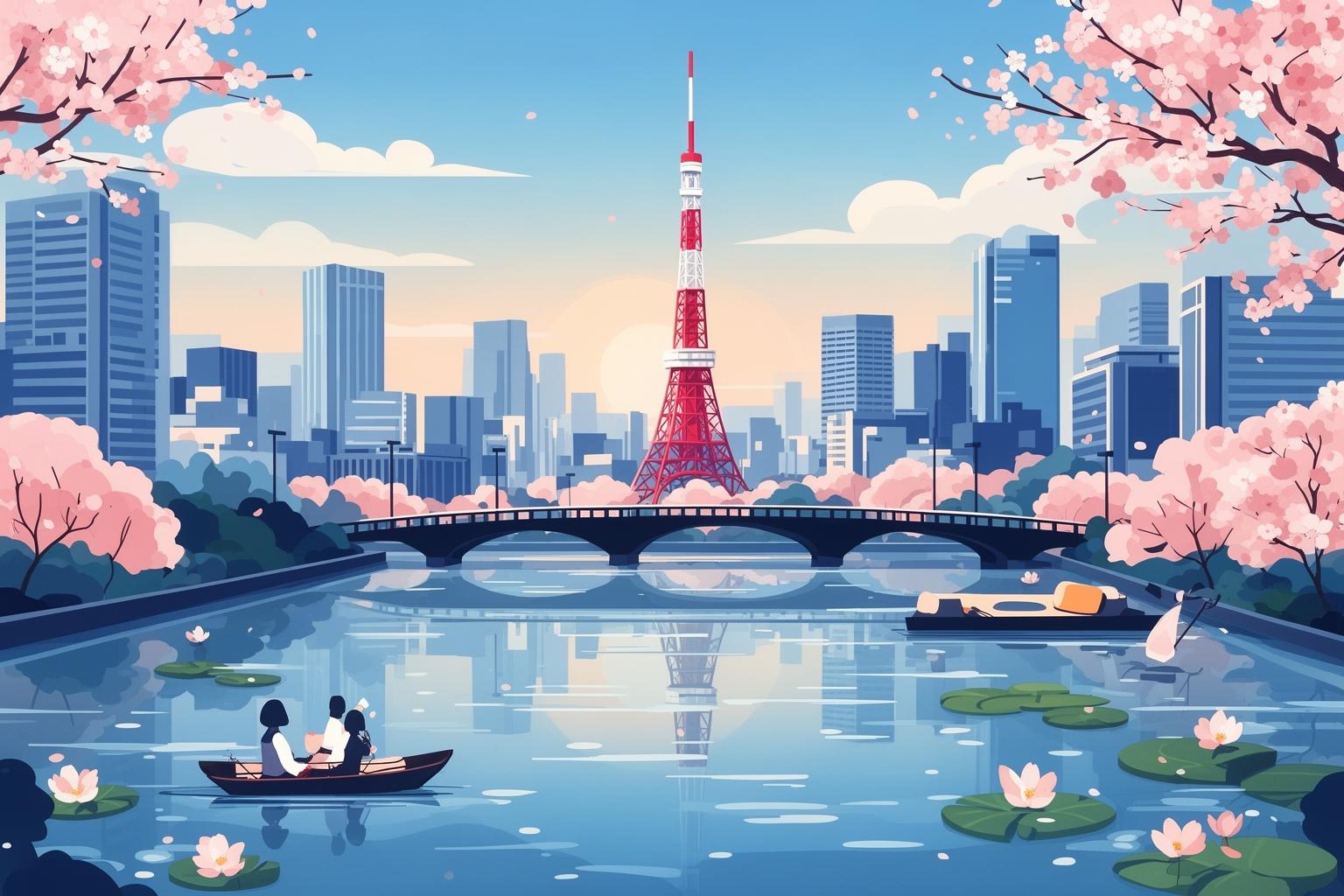
While Shinjuku’s energy is electrifying, Tokyo’s true charm often lies in its ability to provide moments of perfect calm amid the urban chaos. The Your Name. pilgrimage captures this duality, guiding us to places where the city’s frantic rhythm slows down, inviting reflection and a stronger connection to the story’s more intimate scenes. These spots reveal the gentler side of Taki’s world—places of comfort, beauty, and quiet thought. They are essential for any pilgrim wanting to experience the full emotional range of the film, offering a welcome respite and a chance to recharge before immersing once again in the city’s vibrant pulse. These locations stand as proof that even in the world’s largest metropolis, you can always discover an oasis of tranquility, a small haven of serenity where you can simply be present and absorb the atmosphere.
The Cafe Where Taki Worked
Every fan recalls the chic Italian restaurant where Taki worked part-time, the backdrop of his developing friendship with Okudera-senpai. This elegant venue was inspired by a real place: Cafe La Bohème Shinjuku Gyoen. Situated close to the stunning Shinjuku Gyoen National Garden, finding this café feels like uncovering a hidden treasure. The moment you step inside, the resemblance is remarkable. The high ceilings, grand chandeliers, classic European decor, and large windows that flood the space with natural light perfectly emulate the anime’s portrayal. It exudes an old-world charm and sophistication, a stark contrast to the neon blaze of Shinjuku’s main streets. This offers pilgrims more than just a photo opportunity; they can fully immerse themselves in the experience. Instead of only photographing the exterior, you can enjoy a full meal here. Settle in for a leisurely lunch of pasta or pizza, or perhaps an afternoon coffee and dessert. As you sit, it’s easy to imagine the film’s scenes unfolding around you. It’s a truly immersive experience. The staff are well aware of the restaurant’s popularity among anime fans and warmly welcome pilgrims. Visiting Cafe La Bohème provides a delightful pause on your journey—a chance to rest your feet, reflect on the story, and savor a delicious meal in a beautiful space. It anchors the fantasy in a tangible, enjoyable reality. It’s advisable to check their hours and consider making a reservation, especially during busy lunch or dinner periods, as its appeal extends beyond anime fandom.
Echoes of Itomori’s Lake
Though Shinjuku Gyoen National Garden isn’t a direct replica of any location from the film, its presence resonates throughout. Many believe its lush scenery inspired Mitsuha’s high school environment, and its peaceful beauty evokes the natural splendor of Itomori. Visiting this garden is a crucial part of the pilgrimage, serving as a thematic link between Taki’s urban world and Mitsuha’s rural one. Just a short walk from the bustling Shinjuku Station, entering the garden feels like stepping into another realm. The city’s noise fades away, replaced by the rustle of leaves, birdsong, and the gentle lap of water along its ponds’ shores. The garden is expansive, with various distinctive areas. There’s the traditional Japanese Landscape Garden, featuring carefully designed ponds, bridges, and teahouses; the formal French Garden, with symmetrical flowerbeds; and the sprawling English Landscape Garden, with vast open lawns. For Your Name. fans, the Taiwanese Pavilion or the peaceful ponds of the Japanese garden may feel especially meaningful, their reflective surfaces echoing the sky as Lake Itomori did before the comet struck. This is the ideal place to slow down and ponder the film’s deeper themes of nature, memory, and the lasting power of place. Visiting in different seasons adds more magic: in spring, the garden blossoms with hundreds of cherry trees in pink and white—a quintessential image of Japan—while in autumn, maples burst into fiery reds and golds. Whatever the season, Shinjuku Gyoen offers a profound sense of peace and a stunning, reflective setting to conclude your journey through Taki’s Tokyo.
A Pilgrim’s Practical Guide
Embarking on an anime pilgrimage in a city as vast and intricate as Tokyo can feel overwhelming, but with some planning, it becomes an exciting adventure. Taki’s world spans several neighborhoods, all linked by one of the most efficient public transportation systems worldwide. Learning the basics of navigating the city will ensure your journey is smooth and enjoyable, allowing you to focus on the magic of discovery rather than the hassle of logistics. Consider this your toolkit for a successful pilgrimage, packed with tips and tricks to help you explore Tokyo with the confidence of a local. From train lines to cultural etiquette, these suggestions will make your quest to find the world of Your Name. as memorable and seamless as possible.
Navigating Tokyo’s Maze
Your most essential tool will be a prepaid IC card such as Suica or Pasmo. These cards can be purchased at any major train station and loaded with yen, enabling you to tap in and out of train gates and buses without fumbling for tickets each time. For this pilgrimage, you’ll primarily be using two main rail networks: Japan Railways (JR) and the Tokyo Metro. The JR Yamanote Line, the city’s green-colored loop line, and the JR Chuo-Sobu Line, which intersects it, will be your primary means of getting around Shinjuku. The Suga Shrine in Yotsuya is easily reachable via the Chuo-Sobu Line as well as the Metro’s Marunouchi Line. For The National Art Center, the Metro’s Chiyoda or Oedo lines will take you to Roppongi. It’s highly advisable to use a navigation app like Google Maps or Japan Transit Planner. These offer real-time train schedules, platform numbers, and the most efficient routes, transforming the seemingly complex network into a straightforward, step-by-step experience. Don’t be intimidated by train maps; after a day or two, you’ll start recognizing patterns and major stations. The signage in stations is almost always in both Japanese and English, making navigation surprisingly easy.
Etiquette for the Modern Pilgrim
One vital thing to keep in mind during your seichi junrei is that these are not film sets; they are real places where people live, work, and worship. Treating your journey with respect is essential. When visiting Suga Shrine, remember it is an active religious site—keep quiet and be courteous. If you approach the main shrine building, follow local customs: bow once before entering the gate, perform the purification ritual at the water basin if you wish, and offer your prayer quietly. On the famous staircase and in the surrounding residential streets of Yotsuya, keep voices low and avoid blocking pathways or lingering in front of private homes. People live here, and your pilgrimage should not disrupt their daily lives. Likewise, when visiting Cafe La Bohème or Salon de Thé ROND, be a considerate customer: order something and enjoy the ambiance. These places are businesses that welcome fans, but it’s polite to support them. Being respectful ensures these wonderful spots remain inviting to future pilgrims for years to come.
Capturing the Perfect Shot
Photography plays a big role in the pilgrimage experience, as fans aim to replicate the iconic camera angles from the anime. Some preparation can turn your photos from simple snapshots into beautiful keepsakes. Before you go, it helps to have screenshots from the film saved on your phone, allowing you to compare and align your shots accurately. For the Suga Shrine steps, the classic angle is from the bottom of the right-side staircase, looking up toward the sky framed by the buildings. Another popular perspective is from the top, looking down at the street below. For Shinjuku’s views, a wide-angle lens can capture the grand scale of the cityscape. Don’t underestimate the importance of lighting: the ‘magic hour’ around sunrise and sunset offers soft, dramatic light that mirrors the film’s stunning aesthetic. Night photography in Shinjuku is also a must, as neon signs and traffic trails bring the city alive in a completely different way. Most importantly, don’t get so caught up in replicating shots that you forget to soak it all in. Capture the feeling of the place, not just the images. Take photos of the small details, the atmosphere, and, of course, yourself within these iconic settings.
Beyond the Frame: The Feeling of ‘Musubi’
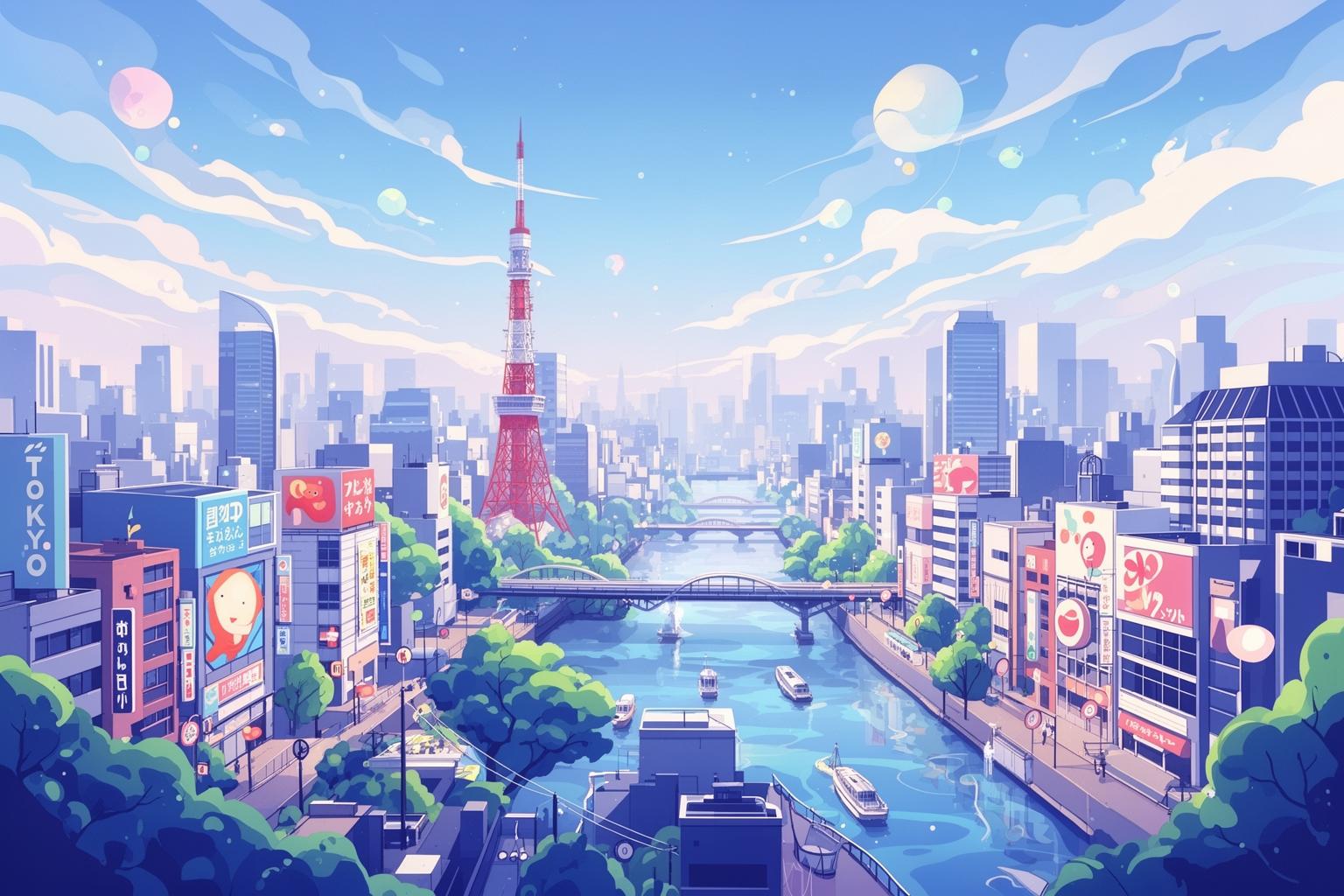
As your pilgrimage through the world of Your Name. draws to a close, standing on that final street corner or gazing from that last viewpoint, you may realize your journey has become more than just ticking locations off a list. It evolves into something deeper. The film’s core, beautiful concept is musubi—an ancient word for the local guardian deity. It symbolizes the intricate, unseen threads linking people, time, and space. It’s the tying of a thread, the passage of time, the way everything is woven together in a cosmic dance. To walk these streets, to step into Taki’s shoes, is to experience musubi firsthand. You are actively weaving your own thread into the story, connecting with its creators and the millions of fans around the world drawn to these very spots. You are bridging the fictional world that touched you so deeply with the concrete reality of Tokyo. The city itself begins to feel transformed. The view of the Docomo tower from a bridge is no longer just a view; it carries the echo of a story. A quiet staircase in a residential neighborhood is no longer ordinary; it becomes a sacred place of reunion and hope. This journey powerfully reminds us that the stories we cherish need not stay confined to a screen. They can lead us to new places, inspire exploration, and help us see the world through a more magical lens. You came to Tokyo seeking the world of Your Name., and in doing so, you created your own unique story, your own personal bond. And that feeling, that thread now woven between you, the city, and the tale of a boy and a girl bound by fate, is the most beautiful memento you can bring home.