There’s a certain feeling you get when you sink into a Haruki Murakami novel. It’s a quiet hum of urban solitude, the smooth melancholy of a jazz record spinning in a dimly lit bar, the surreal twitch of reality’s curtain pulling back to reveal a world just slightly, yet profoundly, different from our own. It’s a world of talking cats, enigmatic women, parallel universes accessed through subway staircases, and protagonists cooking spaghetti in silent, lonely kitchens. For millions of readers around the globe, this isn’t just fiction; it’s a mood, an atmosphere, a place we feel we’ve been before. The great secret, of course, is that this place is real. Its heart beats in the sprawling, ever-shifting metropolis of Tokyo.
Embarking on a journey through Murakami’s Tokyo is less a sightseeing tour and more a pilgrimage of the senses. It’s not about ticking off locations from a checklist. It’s about learning to see the city through his unique lens, finding the magic in the mundane, and hearing the whisper of another world in the rumble of a passing Yamanote Line train. From the hallowed halls of his alma mater to the subterranean jazz dens of Shinjuku, the city itself rises from the pages as a living, breathing character, a labyrinth of concrete and neon that holds a thousand untold stories. This guide is your map into that labyrinth. We won’t just visit the places mentioned in his books; we’ll chase the feelings they evoke, walk the same contemplative paths, and maybe, just maybe, find a doorway into our own surreal adventure. It’s a quest to understand how a very real city gave birth to such beautifully unreal worlds. Prepare to walk, to listen, and to get wonderfully, irrevocably lost in the narrative of Tokyo.
If you’re eager to uncover more of Tokyo’s literary soul, consider exploring a Soseki-inspired stroll in Shinjuku to experience another layer of the city’s narrative.
The Shinjuku Syncopation: Jazz, Whiskey, and Whispering Cats
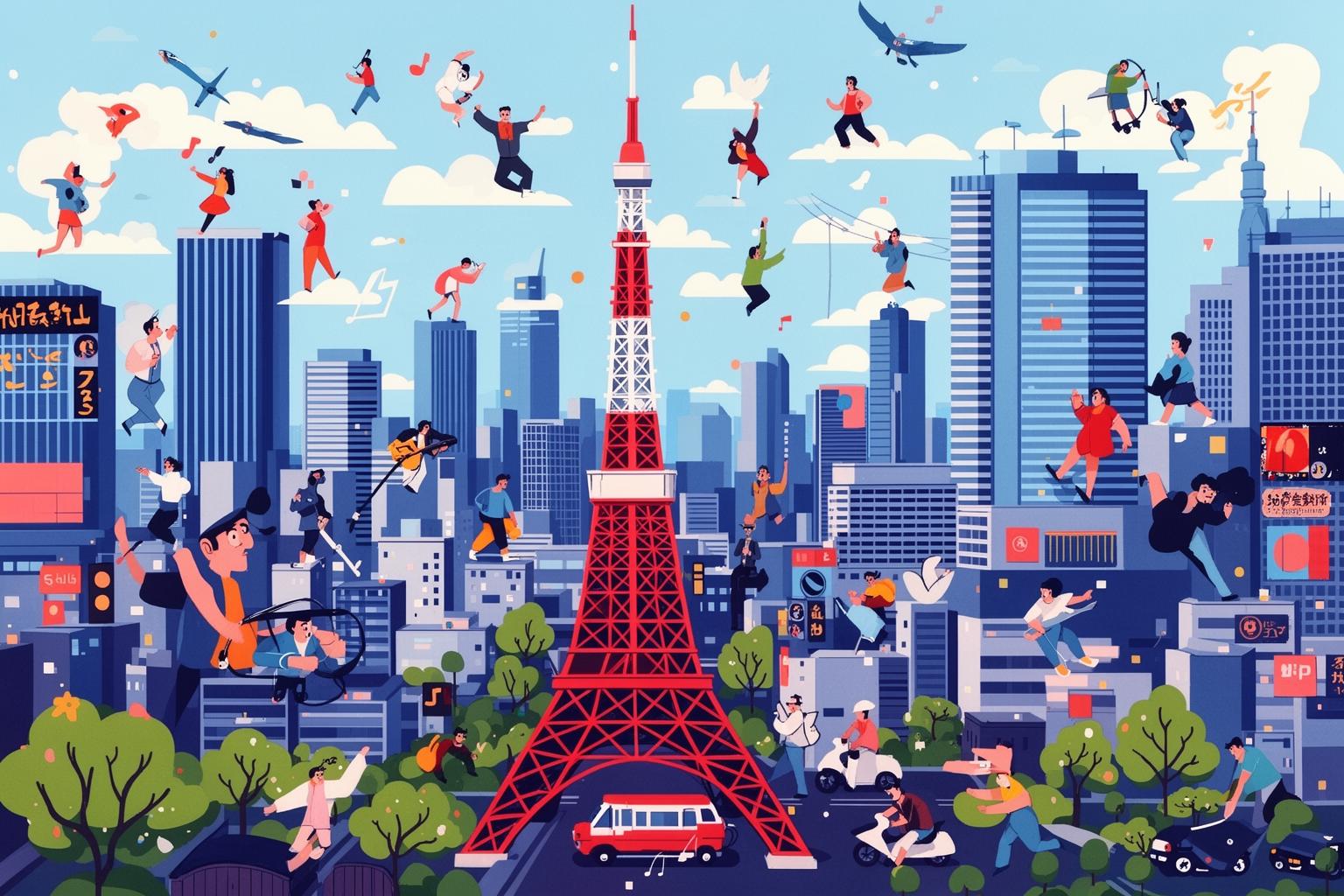
Shinjuku is the chaotic, vibrant core of Murakami’s literary universe. It’s a place of dizzying contrasts, where gleaming skyscrapers cast long shadows over tiny, ramshackle bars, and where countless individual stories of love, loss, and loneliness unfold every night. It serves as the ideal backdrop for characters wrestling with the complexities of modern life, a place where one can feel utterly isolated amidst a sea of people. To truly grasp Murakami’s Tokyo, you must first tune into the rhythm of Shinjuku.
Dug Jazz Cafe: A Subterranean Soundscape
Your journey appropriately begins by descending a narrow flight of stairs, leaving behind the relentless energy of Shinjuku’s streets and stepping into a pocket of preserved time. This is Dug Jazz Cafe & Bar. The air inside is thick with history, scented with dark-roast coffee, aged wood, and the faint, sweet undertone of Japanese whiskey. It’s dimly lit, with the amber glow of the bar and a few carefully placed spotlights illuminating portraits of jazz legends on the brick walls. These walls have absorbed decades of bebop, cool jazz, and hushed conversations. This was once a real-life haunt of a young Haruki Murakami, and it feels exactly like a scene he would craft. It’s the spiritual cousin to the bars in Norwegian Wood or the places where the protagonist of South of the Border, West of the Sun would sit and reflect on his past.
Visiting Dug is like taking part in a ritual. You find a small wooden table, order a whiskey or a jet-black coffee, and simply listen. You listen to the impeccably curated vinyl spinning on the turntable, the clink of ice in a glass, and the respectful silence of the other patrons. It’s not a venue for loud conversation; it’s a sanctuary for sound. A late afternoon visit offers a particularly contemplative experience, a quiet refuge from the city’s bustle. The evening draws a slightly livelier, yet still reverent, crowd. For first-timers, the etiquette is straightforward: be quiet, savor your drink, and let the music wash over you. It is here, in the carefully cultivated dimness, that you sense the profound, stylish melancholy that permeates so much of Murakami’s work.
The Ghost of Peter Cat: Tracing Murakami’s Origins
Though you can’t visit the original Peter Cat jazz bar that Murakami once owned and operated, its spirit remains a key part of the city’s literary landscape. He first ran the bar in the quiet suburb of Kokubunji, and later in Sendagaya, a more central location. It was during these years, steeped in jazz and the daily routine of running a small business, that the seeds of his literary career were planted. The legendary epiphany occurred not far from the Sendagaya spot, at Jingu Stadium. On a beautiful April afternoon in 1978, Murakami was watching a baseball game between the Yakult Swallows and the Hiroshima Carp. When an American player named Dave Hilton hit a clean double, a thought seemingly descended from the clear blue sky: “I think I can write a novel.” That very night, he went home and began writing his first book, Hear the Wind Sing.
Today, you can walk the grounds around Jingu Stadium, imagine the crack of the bat, and picture that fateful moment. Though the bar itself is gone, the Sendagaya neighborhood retains a quiet, refined charm. It’s nestled between the hyperactivity of Shinjuku and the high fashion of Aoyama. Walking its streets, you can feel the presence of the younger Murakami, a man on the brink of a life-changing decision. This part of the pilgrimage is about connecting with his origin story, the theme of sudden, inexplicable inspiration that often surfaces in his narratives. It’s a reminder that extraordinary things can begin on the most ordinary days, in the most unassuming places.
Golden Gai’s Labyrinthine Alleys
Just a stone’s throw from the sprawling Shinjuku station area lies Golden Gai, a preserved fragment of post-war Tokyo. This network of six impossibly narrow alleys is packed with over 200 tiny bars, some so small they can seat only five or six people at a time. To step into Golden Gai at night is to enter a Murakami-esque dreamscape. Lanterns cast a warm, hazy glow on weathered wooden facades, snippets of conversation and music spill from behind sliding doors, and the air is charged with intimacy and intrigue. Although Murakami may not have placed a specific scene in a named Golden Gai bar, its atmosphere perfectly captures the essence of his world. It’s a place for chance meetings, hushed confessions to a stranger over a drink, where the boundary between people’s realities feels thin.
Navigating Golden Gai for the first time can be daunting, but the key is to be respectful and curious. Many bars have a cover charge (a small seat fee), which is usually posted outside. The best approach is to wander the alleys until a particular doorway draws your attention—perhaps the music you hear or quirky decor visible through a window. Slide the door open, offer a polite nod, and you’ll be invited into a miniature world. In these cramped, character-filled spaces, it’s easy to imagine Murakami’s lonely protagonists finding a brief, fleeting moment of connection amid the vastness of the city.
Waseda and the Weight of Words: University Days and Literary Echoes
To explore Murakami’s intellectual and creative origins, one must visit the Waseda neighborhood, home to the prestigious university where he studied drama. The area exudes a distinctly academic, slightly bohemian vibe, worlds apart from the commercial sheen of central Tokyo. It’s a landscape filled with bookstores, cozy cafes, and tree-lined streets bustling with students—a place devoted to the power of stories and ideas.
The Waseda International House of Literature (The Haruki Murakami Library)
A visit to Waseda now centers around a remarkable modern attraction for fans: The Waseda International House of Literature, affectionately known as the Haruki Murakami Library. Designed by the acclaimed architect Kengo Kuma, the building itself is a masterpiece: a flowing, tunnel-like structure that feels both futuristic and natural. Rather than a dusty, silent archive, it is a vibrant, interactive space meant for immersion. Upon entering, visitors are welcomed by the stunning “Staircase Bookshelf,” where books from Murakami’s personal collection and titles that influenced him climb toward the ceiling. The library boasts an impressively comprehensive collection of his works translated into more than 50 languages, highlighting his global influence.
One of the most enchanting features of the library is the audio room, where visitors can listen to vinyl records from Murakami’s extensive personal collection—the very jazz and classical music that serve as the soundtrack to his novels. You can also glimpse a meticulously recreated version of his study, offering an intimate look at his creative process. Downstairs, the student-run Orange Cat cafe provides a bright, inviting spot to enjoy a coffee and a book, perhaps one discovered upstairs. Visiting this library feels less like touring a museum and more like stepping inside the author’s mind. It’s a space that honors not just the finished work but the entire creative ecosystem—the reading, listening, and thinking—that goes into building literary worlds. Be sure to check their website beforehand, as reservations are often necessary to help maintain the peaceful atmosphere and manage visitors.
The Tsubouchi Memorial Theatre Museum
Also located on the Waseda campus is the Tsubouchi Memorial Theatre Museum, an institution closely linked to Murakami’s formal education. Its striking Elizabethan-style architecture stands out in Tokyo, deliberately paying tribute to the history of drama. Murakami majored in theatre studies here, and although he is not known as a playwright, the influence of dramatic structure, dialogue, and character development is deeply woven into his narrative style. His novels frequently unfold like plays, with carefully staged scenes, recurring motifs, and dialogue that conveys more than what is said. Walking the museum grounds and surrounding campus, one senses the academic energy that shaped his formative years. This is a place to reflect on how his study of classical storytelling forms laid the groundwork for the wildly inventive literary terrain he would later create.
The Old-World Charm of Jinbocho Book Town
Just a short train ride from Waseda lies Jinbocho, Tokyo’s legendary book town. For literature lovers, this district is a paradise. Its main streets and hidden alleys are lined with over a hundred bookstores, ranging from large, multi-story shops to tiny, specialized stores dealing in rare prints, vintage magazines, and antique texts. The air here is filled with the scent of paper and ink. This is the natural setting for a Murakami protagonist. His characters are invariably devoted readers, seeking solace, clues, or escape within the pages of books. It’s easy to imagine Toru Watanabe from Norwegian Wood or the narrator from The Wind-Up Bird Chronicle spending a quiet afternoon here, browsing endless shelves in search of something unknown to them.
To truly savor Jinbocho, give yourself permission to wander without a fixed purpose. Step into any shop that catches your eye. Run your fingers over the spines of well-loved paperbacks. Revel in the thrill of uncovering a forgotten classic. The authentic Jinbocho experience concludes with finding a cozy, old-fashioned coffee shop, or kissaten, where you can settle in with your new book. Spots like Sabouru or Ladorio, with their dark wood decor and nostalgic atmosphere, seem lifted straight from one of Murakami’s novels. In Jinbocho, the simple act of reading becomes a profound pilgrimage, a direct connection to the literary soul of the city.
Along the Chuo Line: Suburban Dreams and Everyday Mysteries
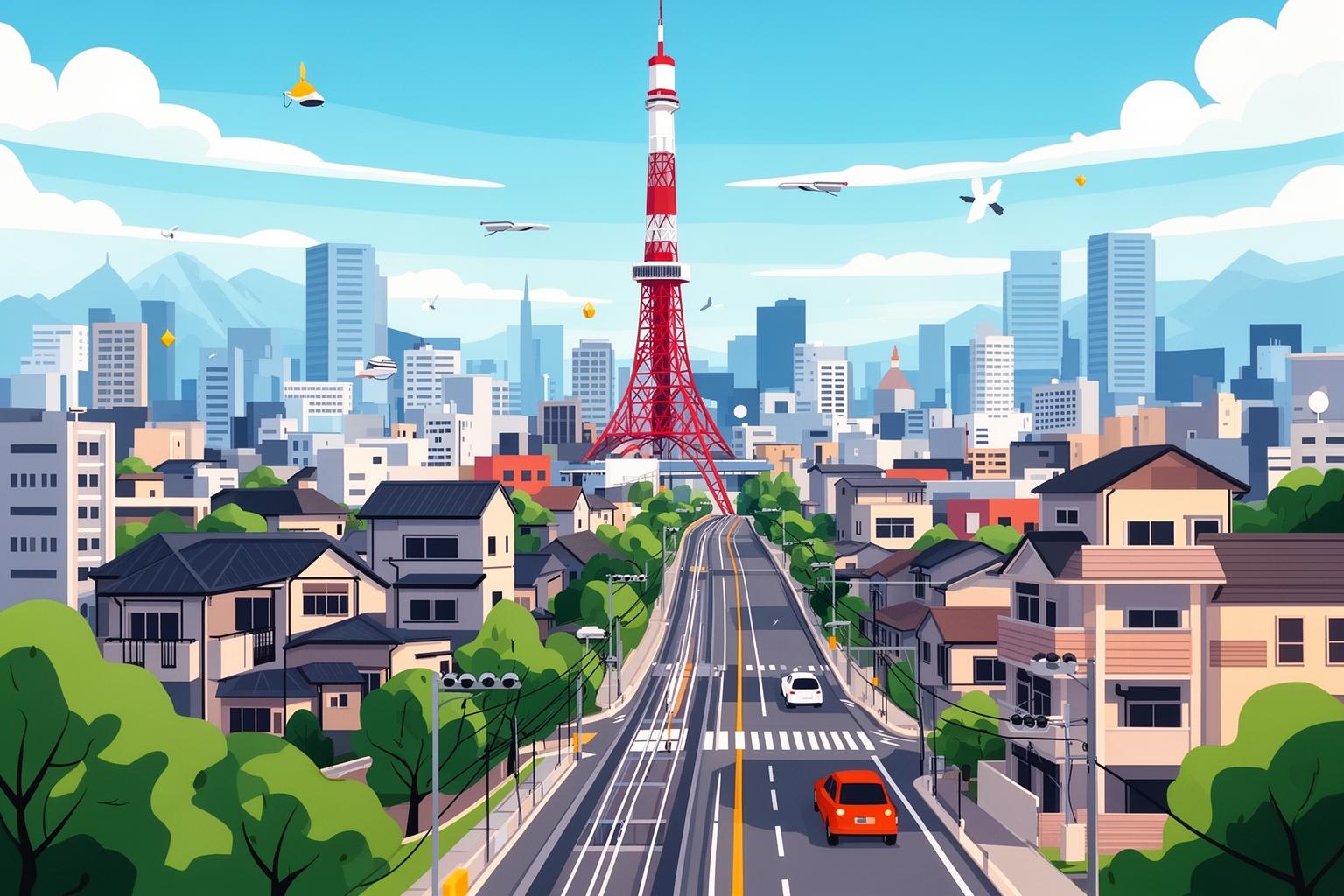
While Shinjuku serves as the dramatic backdrop for many pivotal scenes, much of Murakami’s fiction takes place in the quiet, modest residential neighborhoods of western Tokyo. These are the settings where his characters live their everyday lives, prepare simple meals, and await the strange phone calls or mysterious visitors that inevitably turn their worlds upside down. The JR Chuo Line, a railway artery running east to west, provides the ideal route for exploring this more suburban, everyday aspect of Murakami’s world, where the magical always lingers just beneath the surface of the ordinary.
Asagaya and the Search for the Missing Cat
One of the most memorable and endearing subplots in Kafka on the Shore features the elderly Nakata, who possesses the extraordinary ability to communicate with cats. His mission to find a missing cat named Goma takes him through the neighborhoods of western Tokyo, including Asagaya. This area perfectly captures the type of setting Murakami prefers: a calm, slightly old-fashioned residential town that feels both familiar and subtly enigmatic. Upon exiting Asagaya Station, you are welcomed by the Pearl Center, a long, covered shopping arcade filled with local shops, grocers, and eateries. It’s a hub of everyday life, lively but not overwhelming. The real magic, however, begins when you leave this main thoroughfare and explore the maze of quiet residential streets nearby.
Strolling through these alleys, past small, well-tended gardens and traditional wooden houses, it’s easy to imagine yourself on a personal quest. This is where you can truly appreciate Murakami’s talent for infusing the mundane with a sense of wonder. Any corner might conceal a clue, any stray cat could hold a secret. The journey here is a lesson in careful observation. Notice the small details: a unique fence, a hidden shrine, the way light falls on a narrow path. It’s in Asagaya that you come to understand that in Murakami’s world, adventure doesn’t require a grand setting; it can begin right outside your doorstep.
Koenji’s Counter-Culture Vibe
Just one stop further along the Chuo Line from Asagaya is Koenji, a neighborhood with a very different but equally Murakami-esque atmosphere. Koenji has long been at the heart of Tokyo’s punk rock scene and is well known for its many vintage clothing shops, independent record stores, and a strong anti-establishment ethos. This is the kind of place that a younger, more rebellious Murakami character would be drawn to. It carries the artistic, slightly rough-edged authenticity that someone like Toru from Norwegian Wood or the protagonists of Murakami’s earlier novels would seek. It’s a neighborhood for those searching for an identity beyond the mainstream, a theme that runs deeply through his works.
Spending an afternoon in Koenji means immersing yourself in this counter-culture. Explore the thrift stores, sifting through racks of clothing from past decades. Browse through bins of vinyl records at a small shop, hunting for a rare jazz or rock album. The vibe is creative, somewhat chaotic, and intensely individualistic. It embodies the freedom and anxieties of youth, the search for meaning in a world that often feels confining. Enjoying a bowl of ramen at one of the many small local eateries while watching the eclectic residents of Koenji go about their day offers a perfect way to connect with the restless, searching spirit of Murakami’s early characters.
The Aoyama Aesthetic: Style, Solitude, and Italian Cuisine
Moving back toward the city center, the Aoyama neighborhood reveals another dimension of Murakami’s Tokyo. It’s a district renowned for its high-fashion boutiques, sleek art galleries, and sophisticated dining establishments. This is a world defined by clean lines, refined taste, and a carefully curated sense of stylish solitude. It’s where his more affluent or design-conscious characters might live or work, and it’s the setting for one of his most iconic ventures into a parallel world.
Aoyama Itchome and the Underground World
For enthusiasts of the epic novel 1Q84, a certain emergency staircase near the Shibuya Expressway in Aoyama is a must-see. This is where the protagonist, Aomame, descends from the elevated highway to escape a traffic jam and finds herself in a subtly altered reality—a world with two moons shining in the sky. The location itself is surprisingly ordinary. It’s a utilitarian, concrete staircase—a piece of urban infrastructure that thousands of people pass daily without a second thought. And that is exactly the point. Murakami masterfully uses these mundane, in-between spaces as gateways between worlds. The extraordinary does not erupt from a grand monument; it emerges from a fracture in the fabric of the everyday.
Being at this spot is a unique pilgrimage. There is nothing to see except what your imagination creates. You look up at the sky, listen to the roar of traffic on the expressway above, and try to sense that subtle shift, that moment of transition. It’s a powerful exercise in grasping one of Murakami’s central themes: that reality is more fragile and porous than we assume. It invites a new perspective on the city, where any door, tunnel, or emergency exit could serve as a portal to another place.
A Jogger’s Reflection at Jingu Gaien
Haruki Murakami is almost as well-known for being a dedicated long-distance runner as he is for his writing. His memoir, What I Talk About When I Talk About Running, delves into the deep connection between the discipline of running and the discipline of writing. One of his favored running routes in Tokyo is the loop around Jingu Gaien Park, situated between Aoyama and Sendagaya. The park is famous for its stunning avenue of ginkgo trees, which blaze a brilliant gold in autumn. For Murakami, running is a meditative act—a time for solitude, focus, and quiet reflection. It’s a physical expression of the endurance and introspection essential to crafting a novel.
To experience this aspect of his life, take a walk or jog around the Jingu Gaien loop, ideally early in the morning while the city is still peaceful. Feel the rhythm of your footsteps on the pavement. Notice the changing light and the fellow joggers sharing the path in companionable silence. This isn’t about visiting a specific location from a book; it’s about embodying a practice central to the author’s life. Especially in the crisp autumn air, with golden leaves blanketing the ground, the experience is deeply beautiful and contemplative. It’s a moment to savor the solitude and mental clarity that fuel so much of the creative work you admire.
Practical Pilgrim’s Almanac: Navigating Murakami’s World
While this journey is steeped in mood and imagination, a few practical tips will help smooth your pilgrimage, allowing you to focus on soaking in the atmosphere rather than struggling with logistics.
Getting Around: The Rhythm of the Rails
Tokyo’s public transportation system is a marvel of efficiency and the city’s lifeblood. It also plays a crucial role in the Murakami experience. His characters frequently ride trains and subways, observing fellow passengers and drifting into thought as the urban landscape rushes past. To travel between locations, you’ll mainly rely on the JR Yamanote Line (the city’s main loop), the JR Chuo Line (serving the western suburbs), and the extensive Tokyo Metro subway network. Invest in a rechargeable IC card like Suica or Pasmo. Load it with money and simply tap it at ticket gates for seamless travel. Embrace the train rides—not just as transit but as part of the pilgrimage. Find a window seat, put on some music, and watch the city unfold.
What to Pack: A Reader’s Toolkit
Your most essential item is a comfortable, well-broken-in pair of walking shoes. You’ll cover a lot of ground, and the best way to uncover the city’s secrets is on foot. Bring a copy of your favorite Murakami novel, too. Rereading a key passage while seated in its setting is a deeply immersive and powerful experience. A small notebook and pen are also handy—you’ll likely want to jot down thoughts, observations, and sudden inspirations. Finally, a good pair of headphones is indispensable. Create a playlist featuring jazz and classical artists Murakami often mentions—Duke Ellington, Billie Holiday, Franz Schubert—and let it soundtrack your wanderings. This simple gesture can turn an ordinary walk into a cinematic, deeply personal journey.
When to Visit: The Seasons of Solitude
Tokyo is captivating year-round, but some seasons align more closely with the Murakami-esque mood. Autumn (October to early December) is arguably the best time. The weather is cool and crisp, ideal for long walks. The summer’s oppressive humidity has lifted, and the city is bathed in soft, golden light, culminating in spectacular foliage at spots like Jingu Gaien. Winter (late December to February) offers a different, more austere beauty. Days are short, the air is cold, and bare trees create a landscape of quiet solitude that echoes the introspective, melancholic tone of his work. It’s the perfect season to cozy up in a warm jazz bar or a quiet bookstore café. While spring’s cherry blossoms are undeniably stunning, the crowds can undermine the sense of personal discovery and urban loneliness central to this pilgrimage.
The Unwritten Final Chapter
A pilgrimage through Haruki Murakami’s Tokyo is a journey with no definite end. You can visit all the locations, savor the whiskey, and listen to the jazz, yet the experience doesn’t finish when you board your flight home. The true aim is to internalize a new perspective. It’s about learning to see the surreal in the ordinary, appreciating the quiet beauty of solitude, and staying open to the strange, mysterious possibilities that linger just beneath the surface of our orderly lives. You leave Tokyo having not only witnessed the city from his novels but also with the ability to discover a piece of his world anywhere—in a quiet late-night diner, on a lonely stretch of highway, or in the gaze of a passing cat. The city is the text, and you have walked its pages. Now, the rest of the story is yours to write.