
There are cities that exist on maps, and then there are cities that live in the pages of a book. Tokyo, for countless readers around the globe, is a city painted in the melancholic, nostalgic, and deeply personal hues of Haruki Murakami. To walk its streets is to trace the footsteps of characters who feel more like old friends or fragmented parts of our own past. And no work casts a longer, more evocative shadow over the city’s landscape than ‘Norwegian Wood’. This is not just a story of love, loss, and the turbulent currents of youth set against the backdrop of the late 1960s; it is a psycho-geographical map of a Tokyo that breathes with memory. Embarking on a pilgrimage through the world of Toru Watanabe, Naoko, and Midori is more than just sightseeing. It is an act of immersion, a journey into the quiet dissonance between the bustling metropolis of today and the ghost-haunted city of yesterday, a chance to feel the very pulse of the novel in the asphalt, the parks, and the quiet university courtyards where its heart still beats. This journey invites you to listen to the whispers of a story that lingers in the air, a melody of what was and what could have been, played out on the grand, sprawling stage of Tokyo itself. It’s an exploration of the spaces in between—between joy and sorrow, connection and isolation, and the past and the present—that Murakami so masterfully navigates.
Experience the city’s lingering literary charm by venturing into Murakami’s Norwegian Wood pilgrimage that reveals even more of Tokyo’s melancholic tapestry.
The Heart of the Story: Waseda University’s Melancholic Campus
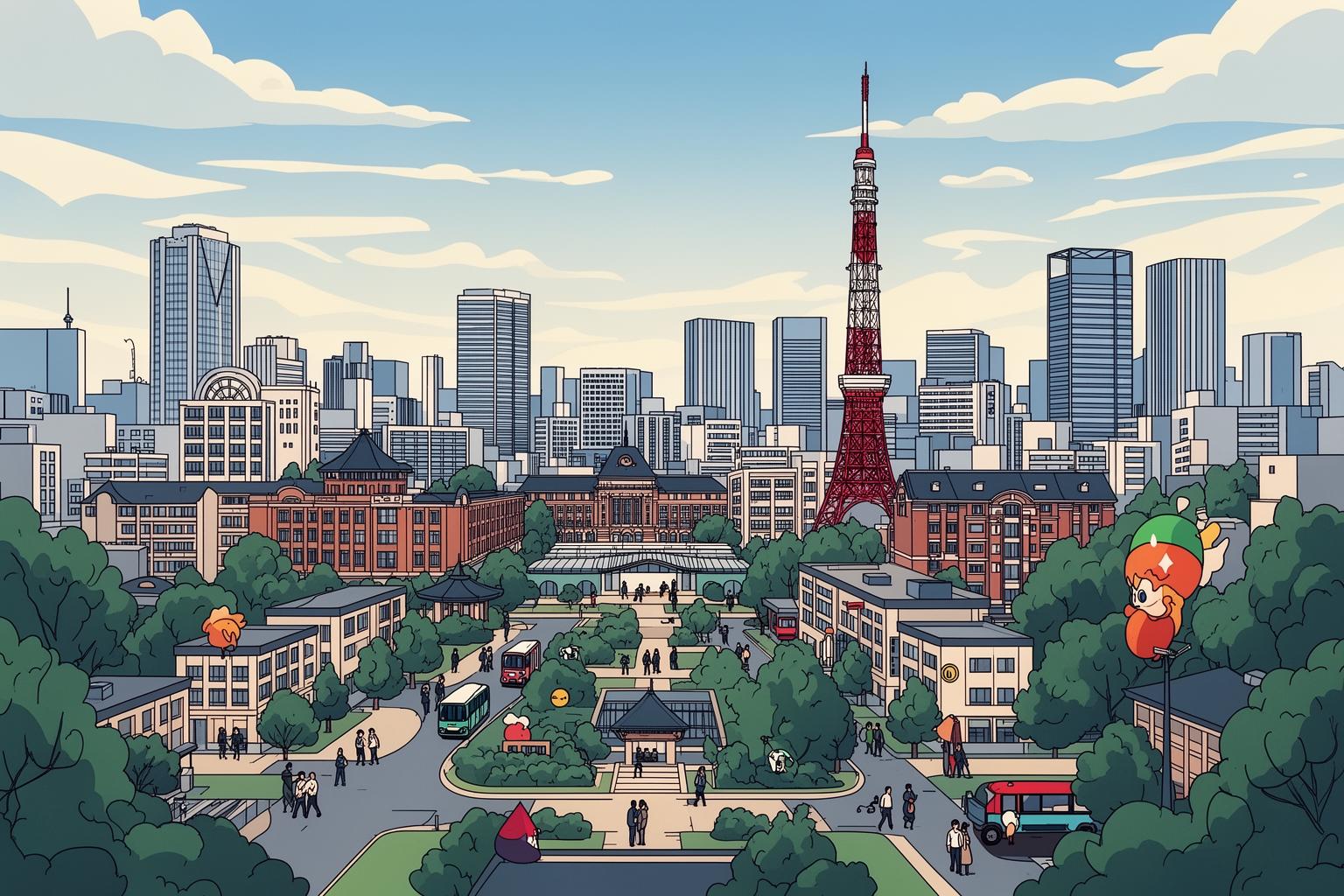
The essence of ‘Norwegian Wood’ is found within the historic grounds of Waseda University. This is the setting where Toru Watanabe’s story takes place, a site of intellectual endeavors overshadowed by personal struggles and the subtle, persistent murmur of student protests. Stepping onto the campus brings an immediate change in atmosphere. The frantic energy of greater Tokyo fades away, replaced by a scholarly serenity and a sense of history that clings to the ivy-covered brick and the grand Taisho-era architecture. The iconic Okuma Auditorium, with its tall clock tower, stands as a silent witness and a landmark that would have been a constant presence in Toru’s daily life. One can almost imagine him walking by, lost in thought, his mind drifting toward letters to Naoko or the quiet sorrow of his friend Kizuki. The campus itself is a maze of courtyards, lecture halls, and quiet spots perfect for reflection. In autumn, the ginkgo trees lining the main paths turn into a brilliant golden canopy, blanketing the ground with a rustling sea of leaves. The air turns crisp, carrying the scent of old books and damp earth—a sensory mix that feels deeply Murakami-esque. It is the ideal season to wander here, to find a secluded bench and simply watch the flow of student life, a timeless current connecting Toru’s generation to today. As you stroll, you might pass the Tsubouchi Memorial Theatre Museum, an Elizabethan-style building that feels wonderfully out of place, a surreal touch that the author would surely admire. This campus is not merely a backdrop; it is a character itself. It symbolizes the world of order, routine, and intellect that Toru attempts to hold onto, even as his emotional life descends into chaos. For a first-time visitor, the best way to experience Waseda is with no set plan. Let yourself get lost in its winding paths. Follow the faint sound of piano practice, find the student union cafeteria for an affordable, authentic meal, and sense the weight of a century of learning filling the air. It is here, in the quiet moments between the clock tower’s chimes, that the true, melancholic spirit of the novel truly comes alive.
A Ride into Nostalgia: The Toden Arakawa Line
From the intellectual haven of Waseda, a unique journey unfolds—one that travels not only through space but through time. The Toden Arakawa Line, Tokyo’s last remaining streetcar line, is a charming anachronism clattering along the city’s quieter, more residential northern neighborhoods. This is the streetcar Toru rides, a vessel of nostalgia that carries him away from the intensity of his life into moments of calm reflection. Riding the Toden offers an experience vastly different from navigating the hyper-efficient, underground maze of the Tokyo Metro. Here, the pace is slower, and the journey feels more personal. The single-car trams sway gently as they roll along tracks running parallel to neighborhood streets, often just inches from the doorways of homes and the windows of small shops. Each stop, signaled by a soft chime, provides a glimpse into everyday Tokyo life: elderly residents heading to the market, schoolchildren in crisp uniforms, and the steady rhythm of a city often overlooked by tourists. Boarding at Waseda Station and heading northbound is to embark on a contemplative path. Take a seat by the window and watch the city unfold. You’ll pass through neighborhoods like Zoshigaya, home to the expansive and atmospheric Zoshigaya Cemetery, a place of profound tranquility that feels like a tangible expression of the novel’s themes of memory and loss. The scenery is a gentle mosaic of small houses with well-tended gardens, local shotengai (shopping arcades), and the occasional flash of a vibrant temple gate. The steady, rhythmic clatter of wheels against the tracks becomes a meditative soundtrack. This journey is not about grand sights, but subtle emotions. It captures the sensation of being suspended between destinations—the precise limbo that defines much of Toru’s existence. It embodies the sense of aimless wandering, of moving forward without a clear destination, so central to the ‘Norwegian Wood’ experience. For a practical tip, consider buying a day pass, allowing you to hop on and off at your leisure and explore the charming neighborhoods along the route. Stop at Koganji Temple near the Sugamo Jizo-dori stop, known as the “Harajuku for Grandmas,” to see a completely different facet of Tokyo’s vibrant culture, or get off at Arakawa Yuenchi to visit a classic Showa-era amusement park. The Toden Arakawa Line is a rolling museum of a quieter Tokyo, a perfect contrast to the city’s modern pulse and a direct link to the contemplative heart of the book.
Shinjuku’s Labyrinth of Longing and Liberation
If Waseda represents the novel’s reflective soul, Shinjuku embodies its chaotic, pulsating heart. It is the expansive, sprawling stage where Toru’s life converges with the vibrant, messy, and often overwhelming realities of love, work, and social connection. Shinjuku is a city within a city, characterized by stark contrasts—from the world’s busiest train station to the intimate, lantern-lit alleys of Golden Gai. Here, Toru works, meets Nagasawa, and experiences life-altering encounters with Midori. To navigate Shinjuku is to share in the exhilarating disorientation Toru frequently feels. The station itself is a beast, a complex labyrinth of platforms, tunnels, and underground malls, through which a sea of humanity flows in a constant, determined tide. Emerging from its exits, you are immediately immersed in the sensory overload that defines the district.
The Echoes of Jazz and Whiskey
Murakami’s love for jazz and whiskey permeates his writing, and Shinjuku serves as the spiritual home for this aesthetic in Norwegian Wood. It is in the small, smoky, subterranean bars where characters connect, confess, and confront their inner demons. Although the bars in the novel are fictional, their spirit lives on in real Shinjuku. Places like Dug, a legendary jazz kissaten (coffee shop) Murakami himself frequented, lie just a short walk from the station. Descending into such a place feels like stepping into another world. The city’s noise disappears, replaced by the warm, complex sounds of a vinyl record playing, the clinking of ice in a glass, and low murmurs of conversation. The air is thick with the scent of dark wood, aged paper, and whiskey. This is the atmosphere Nagasawa and Toru would have sought—a sophisticated refuge from the outside world. It’s easy to imagine them in a corner booth, debating literature and life. Exploring Golden Gai’s narrow alleys offers a different but equally evocative experience. This tiny network of ramshackle, two-story bars, each seating only a handful of patrons, feels like a preserved relic from a bygone era. Taking a seat in one of these establishments, you feel drawn into the city’s hidden narrative, tapping into the same artistic and bohemian energy that has coursed through these streets for decades.
A Sea of Faces, A Solitary Heart
One of the most powerful sensations in Norwegian Wood is Toru’s deep feeling of isolation amidst crowds, most vividly felt in Shinjuku. Pausing at the crossing outside the East Exit of the station, watch the torrent of people flow past. The sheer magnitude is humbling. It’s easy to feel anonymous here—a single, insignificant point in a vast constellation. This is the landscape of Toru’s loneliness, the backdrop against which he wrestles with grief for Kizuki and complicated feelings for Naoko. Yet, this anonymity also brings liberation, allowing for the quiet observation so characteristic of Murakami’s protagonists. Walking for hours through neon-lit Kabukicho, the city’s infamous red-light district, you feel like a ghost—an unseen observer chronicling the endless drama of human life. The tension between the city’s dazzling, vibrant exterior and the quiet, inner world of the individual is central to the novel, playing out on every street corner in Shinjuku.
The Rooftop Where Worlds Changed
Amidst Shinjuku’s chaos lie places of surprising calm and clarity. One of the novel’s most poignant scenes unfolds on a department store rooftop, where Toru and Midori share a raw, candid conversation while watching a distant fire. These rooftop spaces, or ‘okujo’, are a quintessential feature of Japanese urban life. Although many have been modernized, they still offer vital escapes from the relentless energy of the streets below. Visiting the rooftop of a department store like Isetan or Takashimaya reveals a stunning panoramic view of the city: the endless spread of buildings stretching to the horizon, train lines winding through urban canyons, and the faint outline of mountains on a clear day. It is a place to breathe and gain perspective. Sitting on a bench here, with the city’s roar softened to a distant hum, you can feel the emotional weight of that scene—a moment of connection found high above the alienation of the crowds, perfectly symbolizing how Midori’s presence offers Toru a lifeline and a fresh view of his life. Discovering one of these urban oases is a powerful way to connect with the novel’s emotional core, a reminder that even in the most overwhelming places, moments of quiet intimacy remain possible.
In Search of Serenity: The Green Escape to Kichijoji
Although Naoko’s sanatorium, the Ami Hostel, is a fictional creation nestled in the mountains near Kyoto, its spiritual equivalent in Tokyo can be found in the neighborhood of Kichijoji. Consistently ranked as one of the most desirable residential areas in the city, this neighborhood perfectly embodies the novel’s theme of seeking a serene, natural refuge from the stresses of urban life. Kichijoji offers a more relaxed, bohemian vibe, standing in stark contrast to the relentless pace of Shinjuku. The heart of this neighborhood is the stunning Inokashira Park. A vast green space centered around a large pond, it invites visitors to rent swan boats and rowboats, gliding gently across the water beneath the shade of lush, overhanging trees. The park feels like a world unto itself, where the changing seasons are vividly experienced. In spring, cherry blossoms form a breathtaking pale pink canopy, their petals drifting down to cover the pond. In autumn, fiery red and orange leaves reflect beautifully on the water’s surface. Strolling along the paths that wind around the pond and through the wooded areas is like stepping into the therapeutic landscape Naoko longed for. The air is filled with natural sounds—the chirping of birds, the rustling of leaves, the soft lapping of water. One can almost hear the quiet, whispered conversations from the novel, with discussions of memory, healing, and the fragility of the human mind. The atmosphere in the park invites introspection. A bench overlooking the water or near the small Benzaiten Shrine, situated on an island in the pond, offers an ideal spot for reflection. Yet Kichijoji is more than just the park. The surrounding streets form a charming maze of independent boutiques, vintage clothing stores, cozy cafes, and small, specialized restaurants. The area pulses with a youthful, artistic energy that feels both creative and comforting. It is a perfect place for aimless wandering, discovering hidden gems like a bookstore or a quiet coffee shop to spend a leisurely afternoon. It captures the balance Toru seeks: a connection to nature and a strong sense of community, a place where life unfolds at a more human pace. Visiting Kichijoji and Inokashira Park offers an emotional counterpoint to the novel’s intense urban settings, providing a tangible sense of the peace and sanctuary its characters so deeply yearn for.
The Quiet Corners of Daily Life
Beyond the major landmarks, the true essence of ‘Norwegian Wood’ lies in the ordinary, everyday neighborhoods where the characters simply live. These areas may lack the grand drama of Shinjuku or the iconic reputation of Waseda, but they are crucial to understanding the rhythm of Toru’s life—the simple, mundane reality that anchors his extraordinary emotional journey. Exploring these quieter corners offers a more subtle, yet equally rewarding, kind of pilgrimage.
Toru’s World in Komagome
Toru’s dormitory is situated in the residential neighborhood of Komagome. This is his refuge, the place he returns to after his wanderings, where he reads, listens to music, and writes letters. Today, Komagome remains largely residential, providing a glimpse into the everyday life of Tokyoites. Walking its streets, you can sense the quiet solitude that defined Toru’s existence. The houses are modest, the streets clean and peaceful, and the atmosphere imbued with a calm domesticity. It feels worlds away from the political unrest of the university and the emotional upheaval in his relationships. The true treasure of this area, and a spot Toru would have surely cherished, is Rikugien Garden. One of Tokyo’s most beautiful traditional Japanese landscape gardens, Rikugien is a design masterpiece featuring a central pond, rolling man-made hills, and a network of winding paths that meander through carefully curated forests and teahouses. Visiting Rikugien is stepping into a realm of perfect, cultivated beauty and tranquility—a place where one can stroll for an hour and feel completely detached from the city. The garden is arranged as a series of unfolding scenes, each path revealing a new picturesque view. It embodies the Japanese appreciation for nature and quiet contemplation, themes that resonate deeply with Toru’s introspective nature. Spending an afternoon here, you can easily picture him finding solace among its ancient trees, seeking clarity away from the complexities of his life.
Midori’s Fire: Ochanomizu and Kanda
Midori Kobayashi, with her vibrant, unconventional, and life-affirming energy, comes from a very different world. Her family’s small bookstore is located in the Kanda-Ochanomizu area, a district known for its universities, hospitals, and, most famously, its musical instrument shops and concentration of secondhand bookstores. This neighborhood carries a distinct, intellectual buzz that contrasts with Waseda’s more secluded atmosphere. Ochanomizu is built along the Kanda River, and the view from the Hijiribashi bridge, with train lines running along both sides of the river below, is an iconic Tokyo scene. It’s a place of movement and energy, perfectly reflecting Midori’s dynamic personality. The true heart of this area for a literary pilgrim is Jinbocho, just a short walk away. This is Tokyo’s book town, a paradise for bibliophiles, with street after street lined with shops selling everything from rare antiquarian volumes to modern manga. You could spend an entire day browsing these shelves, breathing in the intoxicating scent of old paper. Here, you can feel the spirit of Midori’s family business—a life lived among stories. Wandering through Jinbocho, you can imagine her navigating these streets, her presence a bright spark against the dusty, scholarly backdrop. This area represents the world of words, of stories, and a tough, working-class intellectualism that shaped Midori into the resilient, fiercely independent person she is. It perfectly embodies her character: grounded, intelligent, and bursting with a life force that starkly contrasts with the ethereal, sorrowful world of Naoko.
A Traveler’s Guide to the Murakami Universe
Embarking on this pilgrimage is as much about mindset as it is about the place itself. It involves learning to perceive Tokyo through a Murakami-colored lens, noticing the details, moods, and quiet moments his characters encounter. Here is some practical advice for crafting your own narrative throughout the city.
Crafting Your Own Narrative
The most important tip is to embrace the art of wandering without a fixed plan. Murakami’s characters seldom adhere to a strict schedule. Their most meaningful discoveries arise by chance—on long walks without destinations or following sudden impulses. Avoid overplanning your days. Allow yourself time to simply exist in these neighborhoods. Sit in a café for an hour and observe people. Take a different train line just to see where it leads. Explore an intriguing side street. The magic of a Murakami pilgrimage isn’t about ticking off locations; it’s about letting the city reveal itself to you in its own time, shaping a personal story that intersects with Toru’s. Allow yourself to feel the loneliness of a crowded station, the tranquility of a quiet park, and the warmth of a small, hidden bar. These emotions are the true destinations.
The Flavor of the Story
Food and drink are subtle yet constant presences in the novel, anchoring the characters in the sensory world. To deepen your immersion, seek out the simple, everyday meals they share. Find a small, local ‘shokudo’ (diner) and enjoy a simple set meal of grilled fish, rice, and miso soup. Visit a ‘kissaten’ for a cup of dark, rich coffee and a slice of toast, a classic Japanese café experience. In the evening, seek a quiet, unpretentious bar and order a whiskey, just as Toru would. These are not extravagant culinary experiences, but they are genuine. They revolve around participating in the daily rituals of the city, finding comfort and a moment of pause in the simple acts of eating and drinking. It’s another way to connect with the texture of the characters’ lives, tasting the world as they did.
Navigating Tokyo’s Rhythms
Tokyo’s public transport system is a marvel of efficiency and may seem daunting at first, but it’s surprisingly easy to master. Obtain a rechargeable IC card like a Suica or Pasmo; this allows you to tap in and out of any train or bus line smoothly. A reliable navigation app on your phone is your best ally for route planning. For this pilgrimage, you’ll mainly use the JR Yamanote Line (which circles central Tokyo and stops at Shinjuku and Komagome) and the Tokyo Metro Tozai Line (for Waseda and Kanda). Regarding timing, each season offers a unique lens to view Murakami’s Tokyo. Spring, with its fleeting cherry blossoms, perfectly echoes the novel’s themes of beauty and impermanence. Autumn adds a crisp, melancholic charm to the city’s parks and campuses. Winter brings stark, serene clarity, while summer, though hot and humid, carries a languid, buzzing energy. There’s no wrong time to visit; the city’s mood simply shifts, presenting a new facet of the story to explore.
A Final Turn of the Page
To walk through the Tokyo of ‘Norwegian Wood’ is to recognize that the city itself serves as the book’s most enduring character. It remains a constant presence, shaping the lives of those who inhabit it, its vastness offering both crushing loneliness and the promise of endless possibility. The train stations, the university campus, the quiet parks, and the lively nightlife districts are more than mere settings; they are reservoirs of emotion, places infused with the memories and longings of Toru, Naoko, and Midori. Visiting them today, decades after the story was written, is a strange and beautiful experience. Although the world has changed, the essence of these places and the feelings they stir remain remarkably intact. You can still sense the weight of history at the Waseda campus, the dizzying energy of Shinjuku, and the restorative calm of Inokashira Park. The pilgrimage does not end when you’ve visited the last location, but when you find yourself standing on a street corner, a line from the novel echoing in your mind, realizing you are no longer just a visitor. You have become part of the city’s ongoing story, a new reader walking through its pages, creating your own memories in spaces where a fictional past feels hauntingly and beautifully real. The whispers of the story linger here, waiting for you to listen.