To read a Haruki Murakami novel is to willingly fall into a dream. It’s a world just adjacent to our own, where cats speak in riddles, women vanish into the television screen, and the lonely notes of a jazz record can open a portal to the past. His prose hums with a quiet, melancholic rhythm, a frequency that resonates with the solitary corners of the soul. For years, readers across the globe have found themselves lost in these labyrinths of memory, music, and magical realism. But what if you could walk those same streets? What if you could sit in the same dimly lit bars, feel the same cool breeze in a sprawling park, and listen for the whispers of a parallel world? This is not just a tour; it’s a pilgrimage. It’s an attempt to sync your own heartbeat with the rhythm of Murakami’s Japan, a journey through the very real landscapes of Tokyo and Kobe that served as the stage for his most unforgettable tales. From the neon-drenched chaos of Shinjuku to the quiet, memory-laden hills of Ashiya, we will trace the footsteps of his enigmatic characters, searching not for answers, but for the feeling—that specific, beautiful, and slightly unsettling atmosphere that makes his world so utterly captivating. Prepare to wander, to get lost, and to see a side of Japan that exists somewhere between the lines of a paperback novel and the hum of a midnight train.
For readers intrigued by the atmospheric allure of literary journeys, Dazai’s literary pilgrimage offers an evocative exploration of another facet of Japan’s narrative heritage.
The Tokyo Soundscape: Jazz, Whiskey, and Whispering Cats
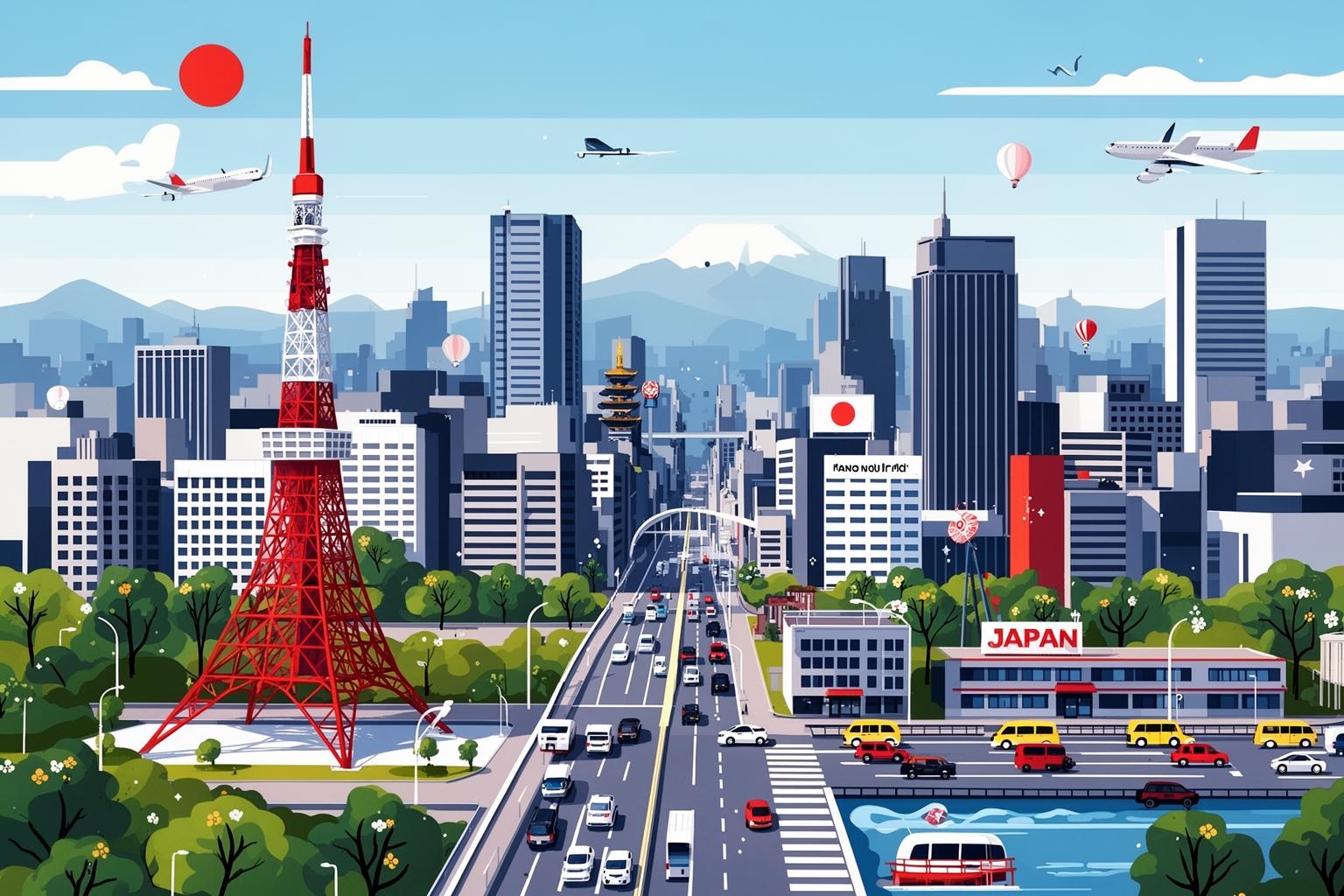
Tokyo is more than just a city in Murakami’s world; it’s a vibrant, living character. It embodies a vast consciousness filled with tangled train lines, sleepless nights, and moments of deep silence. Its rhythm forms the foundation for many of his stories, a steady presence influencing the lives of lonely souls wandering its streets. Our journey starts here, in the city’s pulsating core, where the ordinary and the magical merge beneath the glow of a million lights. This is where you find jazz clubs that feel like sanctuaries and an endless urban expanse that serves as a metaphor for an inward search.
Shinjuku: The Concrete Jungle of Dreams and Despair
Shinjuku is the heart of Murakami’s Tokyo. It is a place of sharp contrasts, where towering skyscrapers reach the clouds, while below, in a labyrinth of lantern-lit alleys, time seems frozen decades ago. It is a landscape of intense loneliness and boundless possibility, the ideal setting for characters like Toru Watanabe from Norwegian Wood or Aomame from 1Q84, both fleeing from and seeking their true selves.
Dug Jazz Cafe & Bar: A Subterranean Sanctuary
Step off the busy street and descend a narrow staircase, and you’ll find yourself in a different world. Dug Jazz Cafe & Bar is a real location, a legendary jazz kissaten that directly inspired the bar frequented by Toru Watanabe in Norwegian Wood. The air inside is heavy with history, rich with the aroma of dark roast coffee, aged wood, and the echoes of countless vinyl records. The lighting is dim, casting long shadows that sway to the intricate improvisations of John Coltrane or Miles Davis. This isn’t a place for loud chatter. It is a sanctuary for listening. Visitors sit alone or in quiet pairs, heads bowed in reverence to the music filling the room. Sitting here with a glass of whiskey, feeling the deep bass vibrate through the floor, connects you to the novel’s melancholic spirit. You can almost picture Toru in the corner, lost in thought, wrestling with love and loss. For first-time visitors, the best approach is simply to find a seat, order a coffee or a straightforward highball, and let the atmosphere envelop you. It is a meditative moment, a rare pause in one of the world’s busiest city districts.
The Golden Gai Labyrinth: Echoes of the Past
Just a short distance from the modern shine of Shinjuku Station lies Golden Gai, a tightly packed network of six narrow alleys filled with over two hundred tiny bars. This architectural relic of post-war Tokyo resembles a film set, a place where the past resists being erased. Each bar is a world of its own, some barely large enough to fit five or six people. This maze evokes the surreal, secretive meeting places found in novels like 1Q84. Wandering through Golden Gai at night feels like slipping through a crack in reality. The glow from paper lanterns lights up worn wooden facades, and from behind sliding doors, you catch fragments of laughter and whispered conversations. It is a place of fleeting, intimate moments, similar to those Murakami’s characters often encounter. A useful tip for newcomers is to seek bars with English signs or posted prices, as they are generally more welcoming to travelers. Many venues have a small cover charge, but it’s a modest price for an unforgettable experience. The key is to be respectful, move quietly, and remain open to the spontaneous, wonderful encounters the night may bring.
Aoyama & Harajuku: Where Style Meets Solitude
If Shinjuku represents Tokyo’s chaotic core, the area stretching from Aoyama to Harajuku is its stylish, reflective soul. This district features high-fashion boutiques, art galleries, and carefully curated cafes, yet it also boasts quiet backstreets and peaceful green spaces. It is the setting for Murakami’s more affluent or artistically minded characters, where surface beauty often conceals a profound sense of existential unease.
Jingu Gaien Ginkgo Avenue: A Golden Walk into Memory
There is a scene in Norwegian Wood where Toru and Naoko take a long, fateful walk. Although the book does not specify the exact location, many readers associate their stroll with the iconic Ginkgo Avenue in Jingu Gaien. In late autumn, usually around the last weeks of November, the towering ginkgo trees lining this wide avenue blaze into a brilliant, almost surreal golden hue. The leaves create a golden canopy overhead and a soft, rustling carpet beneath. Walking here at peak season is to be enveloped in a single overwhelming color. The air is cool and crisp, and the light filters through the leaves with an ethereal glow. It is an exquisitely beautiful and poignantly melancholic experience, a perfect tangible expression of the novel’s themes of memory, beauty, and the fleeting nature of time. It is a place that feels both romantic and heartbreakingly solitary, a space to walk and reflect, just as Murakami’s characters often do.
The Suburban Labyrinth: Seeking the Mundane and the Magical
Much of Murakami’s enchantment takes place not in the bustling city center but in the quiet, modest suburbs that spread outward from it. These are the settings of everyday existence—commuter trains, neighborhood parks, and tranquil residential streets. It is within this very ordinariness that the extraordinary often emerges. A search for a lost cat turns into a journey into a parallel realm, and a dried-up well in a backyard becomes a gateway for meditation and memory. This suburban environment is essential for grasping his work, as it underscores the idea that the deepest mysteries frequently lie hidden in plain view.
Kichijoji: A Bohemian Rhapsody
Regularly voted one of Tokyo’s most desirable neighborhoods, Kichijoji exudes a relaxed, bohemian atmosphere that contrasts with the intensity of central Tokyo. It’s a district filled with independent shops, cozy cafes, and a vast, beautiful park—an ideal spot for a writer, an artist, or a character from a Murakami novel to feel at home. The area pulses with a creative, youthful energy, yet it never feels overwhelming.
Inokashira Park: The Edge of Another World
Inokashira Park plays a central role in 1Q84, a place where the boundary between realities seems fragile. This large, picturesque park centers on a tranquil lake where visitors can rent swan boats and glide beneath weeping willows. It’s a spot where families picnic, students draw, and musicians rehearse in the shade. But for the Murakami devotee, the park carries a unique kind of energy. It is a site of observation and transition. Walking around the lake’s edge, under the dappled sunlight filtering through dense tree canopies, one can almost sense the presence of two moons. It feels like a place where slipping between realities is possible, where even something as simple as a playground slide might acquire a sinister or otherworldly meaning. The best way to experience it is to roam aimlessly, rest on a bench watching life pass by, and let your imagination wander. The park’s gentle beauty makes its surreal possibilities all the more vivid.
The Western Suburbs: The Cat’s Trail
The extensive western suburbs of Tokyo, especially along the Chuo Line and in Setagaya ward, provide the quintessential backdrop for novels like The Wind-Up Bird Chronicle and Kafka on the Shore. These areas are far from tourist hotspots. They consist of sprawling residential neighborhoods, a labyrinth of narrow streets, two-story homes, and small, carefully tended gardens. The sounds here include summer cicadas, the rhythmic clang of railway crossings, and the distant hum of the city.
The Search in Setagaya
To truly experience this world, one should take a local train line, such as the quiet Setagaya Tram, and disembark at a random stop. Wander through the neighborhoods and take note of the details Murakami so vividly illustrates: the tangled overhead power lines, vending machines glowing on dark street corners, the alley cats watching with knowing eyes. This is the realm of Toru Okada from The Wind-Up Bird Chronicle, a man whose life unravels and is reshaped through a series of strange events all beginning in his ordinary backyard. This pilgrimage isn’t about locating a specific house or well. It’s about immersing yourself in the ambiance of Japanese everyday life. Within this quiet normalcy, Murakami’s peculiar world emerges. It’s a poignant reminder that you don’t need a grand stage for profound, transformative experiences to unfold.
Jinbōchō: The Kingdom of Books
For literature lovers, Jinbōchō is a haven. This central Tokyo neighborhood is renowned for its hundreds of secondhand bookstores, a paradise for bibliophiles and an important setting in Hard-Boiled Wonderland and the End of the World. The protagonist operates as a Calcutec in a heavily fortified office building here, part of a mysterious intelligence network. The real Jinbōchō is less futuristic but equally captivating. Its streets are lined with shops whose shelves spill onto the sidewalks, filling the air with the scent of old paper and ink. One could spend the entire day drifting from store to store, uncovering rare first editions, woodblock prints, and vintage magazines. It is a place devoted to preserving memory and knowledge, a tangible representation of the libraries that serve as refuges and sources of discovery for many of Murakami’s characters, from the young protagonist in Kafka on the Shore to the solitary dreamer in The Strange Library. The best way to explore Jinbōchō is without any fixed plans—just wander and allow the books to find you.
Kobe and Ashiya: Echoes of Youth and Loss
While Tokyo serves as the main backdrop for many of Murakami’s stories, the Kansai region—particularly the area between Kobe and Osaka—represents the landscape of his youth. Haruki Murakami was raised in Ashiya, a tranquil, affluent city nestled between the mountains and the sea. This region, known as the Hanshin area, holds a distinct emotional significance in his work. It is a place of memories, formative experiences, and profound personal loss. It is the ground from which the recurring themes in his literature first emerged.
The Hanshin Modanism Corridor
This coastal stretch is marked by a unique cultural fusion of Japanese and Western influences, reflecting Kobe’s history as one of Japan’s earliest ports open to foreign trade. The atmosphere is more relaxed than in Tokyo, carrying a sense of refined elegance and a strong connection to both the mountains at its back and the sea ahead.
Ashiya: The Well of Memory
To visit Ashiya is to walk through the author’s own history. While it is important to respect private homes, wandering the city’s quiet, sloping streets offers deep insight into his work. You can sense the comfort of a middle-class upbringing, often reflected in his characters. You see the green hillsides that frequently appear as motifs, places of refuge and reflection. This is the terrain that shaped his imagination. The famous well from The Wind-Up Bird Chronicle, a profound symbol of introspection and a portal to another consciousness, feels as if it could be concealed within any of the peaceful, walled gardens encountered there. The pilgrimage is less about distinct landmarks and more about absorbing the calm, contemplative spirit of the place that shaped the author.
Kobe: Resilience and Reflection
Kobe is a city of grace and strength. A scenic port city nestled dramatically between Mount Rokko and Osaka Bay, it exudes a cosmopolitan vibe alongside a tragic history. The Great Hanshin Earthquake of 1995 was a devastating disaster that claimed thousands of lives and demolished large parts of the city. This catastrophe deeply influenced Murakami, inspiring his story collection after the quake. The book delves into the lives of characters who, although physically distant from the disaster, are profoundly affected by its psychological repercussions.
A City Reborn from a Scar
Visiting Kobe today offers a powerful example of resilience. The city has been beautifully restored, yet memorials such as the Kobe Earthquake Memorial Park stand as poignant reminders of life’s fragility. Walking through the city while recalling after the quake adds profound depth to the experience. One sees not just a modern port but a place marked by invisible wounds, a community that has faced immense trauma and found ways to heal. The sea, a recurring symbol in Murakami’s work representing the vast and unknowable unconscious, takes on renewed significance here. It is both a source of Kobe’s wealth and a reminder of the formidable, uncontrollable forces of nature. Gazing out over the water from Meriken Park invites reflection on themes of loss, survival, and the quiet, strange ways we carry on—central to Murakami’s post-earthquake narratives.
The Pilgrim’s Practical Guide: Navigating Murakami’s World
A pilgrimage through Haruki Murakami’s Japan is an immersion in atmosphere. It demands a particular mindset, a willingness to slow down and observe, and an appreciation for the subtle nuances of everyday life. This journey is not about rushing from one photo opportunity to another. It’s about sensing the rhythm of a place and tuning in to its stories.
Mindset and Approach
The Art of Walking
Murakami’s characters are constant wanderers. They walk for hours, reflecting on their thoughts, observing the city, and awaiting an event. The best way to embody this spirit is to adopt walking as your main means of exploration. Use Japan’s highly efficient public transportation to reach a neighborhood—be it Shimo-kitazawa, Kichijoji, or Jiyugaoka—then put your phone away and simply walk. Allow yourself to get lost in the backstreets. Follow a cat down a narrow alley. Stop at a small, family-run shop. It’s in these unscripted moments, between the well-known landmarks, that you will discover the true Murakami-esque atmosphere.
Embrace Ambiguity
It’s important to remember that these locations are not exact replicas of film sets. They are points of inspiration—real places viewed through an author’s unique imagination. Don’t be concerned if the jazz bar doesn’t look exactly as you imagined or if the park feels different from its description. The goal isn’t to find a perfect copy of the novel’s settings. The goal is to stand in a space that ignited a story and to feel that energy for yourself. The magic lies in the overlap between reality and imagination, a space Murakami inhabits masterfully.
Culinary Clues: Eating and Drinking like a Character
Food and drink in Murakami’s novels are often simple, ritualistic, and comforting. His characters find solace in carefully preparing spaghetti, enjoying the crispness of a cold beer, or savoring the warmth of a fresh cup of coffee. Participating in these straightforward culinary rituals can be a powerful way to connect with his world.
The Simple Meal and the Kissaten
Seek out simple pleasures. Visit a local supermarket and buy ingredients to prepare a basic pasta dish, just as his characters frequently do. More importantly, spend time in a kissaten, a traditional Japanese coffee house. These Showa-era venues, with their dark wood interiors, velvet chairs, and siphon coffee makers, are ideal places to sit with a book. Order the “morning set”—a thick slice of toast, a hard-boiled egg, and a small salad—along with a cup of strong coffee, and watch the world pass by. This captures the essence of Murakami’s daily rhythm.
The Whiskey Bar Experience
A quiet, well-crafted drink in a proper bar is another recurrent motif. Japanese bartending is an art, and locating a small, intimate whiskey bar is a quintessential Murakami experience. These places aren’t for loud gatherings. They are spots for quiet reflection. The bartender, often the owner, works with focused, meditative grace. Order a Japanese whiskey, neat or served on a hand-carved ice sphere, and savor it slowly. It’s a moment of refined solitude that seems lifted straight from the pages of his books.
Beyond the Pages: A Conclusion
Our journey has led us from the electric buzz of Tokyo’s busiest intersections to the peaceful, memory-laden hillsides of the Kansai region. We have sat in the quiet reverence of a jazz bar, strolled under a canopy of golden leaves, and sensed the resilient spirit of a city rebuilt from ashes. To explore the geography of Haruki Murakami’s novels is to understand that the strange and beautiful world he crafts is not far removed from our own. It is woven from the very fabric of modern Japan—its efficiency and its ghosts, its futuristic sheen and its deep reverence for tradition, its moments of intense connection and its profound, underlying solitude.
A Murakami pilgrimage is ultimately an inward journey. These physical sites are not endpoints themselves; they are gateways. They invite us into our own memories, our own dreams, our own reflections on the missing pieces in our lives. You may not encounter a talking cat or a woman with two moons in the sky, but you will discover the atmosphere that makes such possibilities feel real. You will find the beauty in the ordinary, the magic in the quiet instant, and the sense that just around the corner, in an unexpected place, another world awaits. The labyrinth is real, and it is a marvelous place to become lost.