
There are stories that feel like they were dreamed into existence, woven from the ephemeral threads of longing, memory, and the breathtaking beauty of a twilight sky. Makoto Shinkai’s masterpiece, “Your Name.” (Kimi no Na wa.), is one such story. It captured the global imagination not just with its heart-wrenching tale of two souls intertwined across time and space, but with its stunningly realistic portrayal of Japan. The film’s backdrops are more than just animation; they are loving, meticulous recreations of real places, rendered with such detail that the boundary between fiction and reality beautifully blurs. This fidelity has sparked a modern-day pilgrimage, a phenomenon the Japanese call “seichi junrei,” where fans journey to the locations that brought their favorite stories to life. For followers of Taki and Mitsuha, this journey is a tale of two Japans: the electric, towering metropolis of Tokyo and the serene, timeless countryside of Gifu Prefecture. It’s a quest to stand where they stood, to feel the air they breathed, and to see if that cinematic magic truly lingers in the quiet corners of the real world. This is not just a tour; it’s an invitation to step inside the frame and experience the profound sense of connection, or “musubi,” that beats at the heart of this unforgettable film. Prepare to chase the ghost of a comet across landscapes that feel both intimately familiar and wonderfully new.
Embark on a further exploration of Japan’s urban allure by discovering Tokyo landmarks that mirror the cinematic magic of Shinkai’s masterpiece.
Tokyo’s Urban Dreamscape: In Taki’s Footsteps
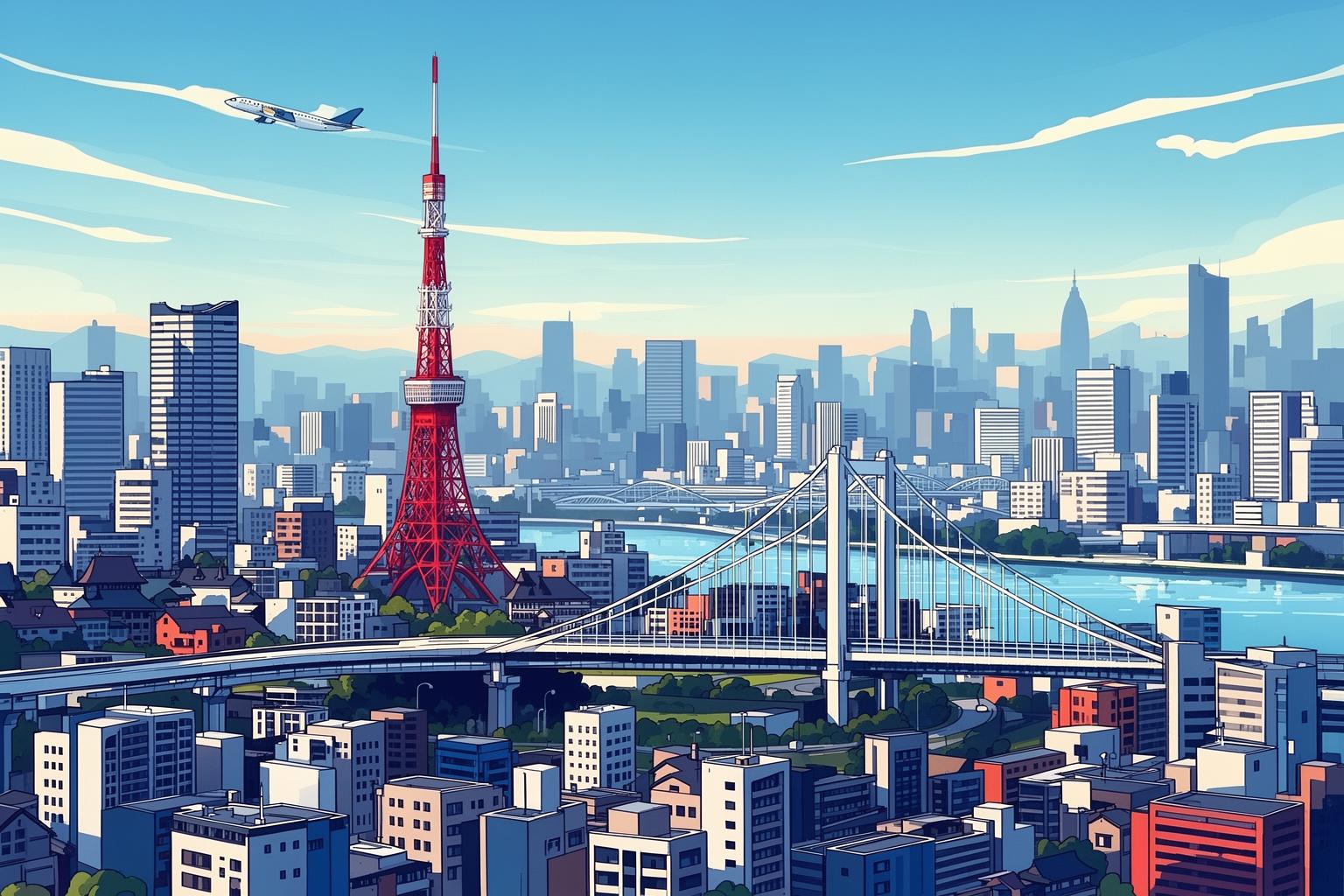
Tokyo embodies the first half of the film’s soul—a vast, vibrant organism of steel, glass, and light. It’s Taki Tachibana’s realm, a place of overwhelming scale and unexpected intimacy. Walking through Shinjuku and Yotsuya lets you sense the rhythm that Shinkai so perfectly captured: the rush of the morning commute, the gentle hum of a residential neighborhood, and the lonely beauty of a skyscraper piercing the clouds. The atmosphere here vibrates with countless stories unfolding simultaneously, and for a pilgrim, the excitement lies in knowing that Taki’s story is among them, etched into the city’s very pavement and architecture. The journey begins here, amid the dazzling, controlled chaos that forms the backdrop for Taki’s search—a concrete jungle where even the most unlikely connections feel tantalizingly close.
The Suga Shrine Steps
This is it—the emotional climax of the film, the place that sends a shiver down every fan’s spine. Nestled in a quiet residential corner of Yotsuya, the staircase leading up to Suga Shrine appears unremarkable to the untrained eye, but for pilgrims, it is sacred ground. The journey to find it is part of the ritual. After navigating the maze-like streets from Yotsuya Station, you turn a corner, and there it stands. The view down the red-railed steps, with Shinjuku’s skyline peeking through the buildings, aligns so precisely with the film’s final scene that it feels dreamlike. You can almost hear the soundtrack swell. The mood here is often one of quiet reverence. Fellow fans wait patiently for their turn to capture the iconic shot, sharing a silent understanding. The true magic unfolds during “magic hour,” the late afternoon when the setting sun casts long shadows and bathes the scene in a warm, golden light reminiscent of the film’s twilight palette. Whether standing at the top looking down or at the bottom looking up, you can’t help but feel the weight of Taki and Mitsuha’s reunion. It’s a deeply moving moment that connects you fully to the story. A small tip: remember this is a residential neighborhood. The serenity adds to its charm, so speak softly and be respectful of the locals who call this place home.
The National Art Center, Tokyo
From youthful yearning to mature longing, the pilgrimage continues in Roppongi at The National Art Center. This is where Taki has his date with his coworker, Okudera-senpai—a scene that highlights his growing maturity alongside the subtle emotional distance caused by his connection with Mitsuha. The building itself is a masterpiece of modern design, a flowing wave of glass and steel created by Kisho Kurokawa. Upon entering, you’re immediately struck by the vast scale and the remarkable play of light filtering through the curved facade. The cafe where Taki and Okudera sat, Salon de Thé ROND, is housed within a striking concrete cone on the second floor. Securing a table there lets you perfectly recreate the scene. As you sip your coffee, you can gaze across the vast atrium and experience the same contemplative calm as the characters. It’s a moment of tranquility within the bustling city—a convergence of art, architecture, and anime. Visiting this spot adds a unique dimension to the pilgrimage. It’s about more than just reenacting a scene; it’s an appreciation of Shinkai’s artistic choices, linking his characters’ emotional journey to a real-world environment known for its beauty and cultural significance. This elevates the experience, showing how “Your Name.” is woven into the fabric of Japan’s most esteemed cultural landmarks.
Shinjuku’s Neon Heartbeat
Shinjuku pulses as the vibrant heart of Taki’s Tokyo. It’s where he works part-time, attends school, and the backdrop for many of the film’s most visually stunning urban montages. To fully experience this part of the film, you must dive into the district’s sensory overload. Begin at Shinjuku Station, the world’s busiest train station, and let the overwhelming flow of people carry you. Seek out the Yunika Vision screens—the massive displays on the building opposite the station—which feature prominently in the movie. Next, head to the Shinjuku Police Station intersection, where the distinctive circular structure at the base of the traffic lights is among the most recognizable yet subtle film locations. Standing there, watching the unending streams of cars and pedestrians pass by, you sense the beautiful anonymity that defines city life—a theme Shinkai explores with delicate precision. Another essential perspective is from the observation deck of the Tokyo Metropolitan Government Building, which is free to access. From this vantage point, you can watch the sprawling city stretch out just as Taki would have, an apparently endless grid of lights and possibilities extending to the horizon. This is Shinkai’s Tokyo at its purest: vast, impersonal, yet breathtakingly beautiful—a place where one person can feel simultaneously lost and deeply connected to everything around them.
Hida’s Timeless Soul: Searching for Itomori
The shift from Tokyo’s intense energy to the peaceful core of Gifu Prefecture is as striking as the change between Taki and Mitsuha’s lives. The journey itself, a lengthy trip by Shinkansen followed by the scenic Takayama Main Line, is an essential part of the pilgrimage. As towering skyscrapers fade into rolling hills and eventually the majestic Japan Alps, you sense the world’s pace gradually slowing. You are headed to Hida-Furukawa, a town widely believed to be the main inspiration for Mitsuha’s fictional hometown, Itomori. While Itomori, with its mystical crater lake, is a creation of Shinkai’s imagination, its spirit, architecture, and deeply rooted traditions can be found here. Arriving in Hida-Furukawa feels like stepping back in time. The air is fresh and crisp, the streets are quiet, and the town is nestled among lush, green mountains. This is Mitsuha’s world—a place defined by tradition, community, and a profound bond with nature.
Hida-Furukawa Station
Your entry point into Mitsuha’s world is the very first landmark you’ll recognize. Hida-Furukawa Station is portrayed with near-perfect accuracy in the film. It’s here that Taki and his friends disembark on their quest to find Mitsuha. As you step off the train, you’ll instantly spot the familiar pedestrian footbridge spanning the tracks. Climb onto it, and you can capture the exact scene from the movie, looking down at the waiting train framed by the mountains. On the platform, you’ll even find the charming mascot of a Hida beef cow, another small detail faithfully recreated in the animation. The station itself is modest and unpretentious, immediately setting the tone for the town. The staff are well aware of the town’s cinematic fame and warmly welcome pilgrims. The atmosphere here is one of quiet discovery. You’ve followed Taki’s path and arrived at the gateway to the mystery. It’s the perfect, gentle introduction to the serene ambiance that pervades the entire area.
The Hida City Library
Just a short walk from the station sits one of the most cherished spots on the entire pilgrimage: the Hida City Library. This is the place where Taki and his friends fervently searched for records of Itomori and the comet strike. From the outside, it’s a modern and inviting building, but the magic lies within. The interior is a beautiful, warm space filled with light wood and stunning design features, most notably the gentle curves of the shelving and distinct seating areas. It appears exactly as depicted in the film. The library has gracefully embraced its role in the “Your Name.” story. They maintain a small, dedicated section for visitors, often including a guestbook for fans to sign and share their experiences. It is a working library, and the staff’s primary focus remains on their local patrons. Accordingly, a crucial piece of advice for visitors is to approach the main desk and ask permission before taking any photographs. They will almost always grant it, providing you with a special pass to wear. This simple act of respect makes the experience even more meaningful. You are not just a tourist; you are a guest. Sitting in one of the chairs, surrounded by the quiet hum of the library, you can sense the desperation and hope behind Taki’s search, making it one of the most immersive stops on the journey.
The Spirit of Miyamizu Shrine
Mitsuha’s life is deeply interwoven with her family’s duties at the Miyamizu Shrine. Though the shrine in the film is fictional, its essence is inspired by several real-world locations. In Hida-Furukawa itself, the Ketawakamiya Shrine is a strong candidate for this inspiration. It’s a small, local shrine with a wonderfully authentic atmosphere. Strolling through its grounds, you can envision it as the spiritual heart of a small community, much like the Miyamizu Shrine was for Itomori. However, for the iconic long stone steps that Taki draws from his memories, many pilgrims also visit the Hie Shrine in the nearby city of Takayama. Ascending those moss-covered steps, flanked by towering cedar trees and stone lanterns, feels deeply evocative of the film. The air is cool and still, carrying the scent of wood and earth. At either shrine, you can sense the profound connection to the Shinto beliefs central to the movie’s plot—the idea of sacred places, ancient traditions, and gods who watch over the land. These shrines are more than just photo opportunities; they are places to slow down, listen to the whisper of the wind in the trees, and reflect on the spiritual threads Shinkai wove into his story.
The Deeper Weave: Culture, Connection, and Courtesy

A pilgrimage to the world of “Your Name.” goes beyond a mere scavenger hunt for filming locations. It offers a chance to engage with the deeper cultural and artistic themes that give the story its emotional impact. It involves grasping the ideas that drive the narrative and valuing the craftsmanship that brought it to life. This journey allows you to see Japan through Makoto Shinkai’s perspective, where every landscape is filled with emotion and every detail conveys meaning. It also teaches how to be a considerate traveler, one who interacts respectfully with local communities to help preserve the special connection between fiction and reality for future fans.
Musubi and the Red Thread of Fate
The core concept in “Your Name.” is “musubi.” As Mitsuha’s grandmother explains, it symbolizes the complex knot of time, human connections, and the act of creation itself. It is the invisible thread that binds everything together. Traveling between Taki’s Tokyo and Mitsuha’s Hida shows a physical embodiment of musubi—you are connecting their two worlds. This idea appears throughout the film. You see it in the braided cords, or “kumihimo,” sold in Hida, a craft central to the story. You feel it standing on the Suga Shrine steps, where two timelines ultimately merge. You grasp it when observing the contrast between the sleek, modern cityscapes and the timeworn wood of rural shrines. The pilgrimage transforms this abstract philosophy into something tangible. You begin to notice connections not only in the film but in the world around you. The journey invites you to discover your own red thread, linking you to a story, a place, and a culture.
The Magic of Shinkai’s Realism
One of the greatest pleasures of this pilgrimage is experiencing Makoto Shinkai’s artistic brilliance up close. Often hailed as the “master of light and shadow,” visiting these sites reveals why. He doesn’t merely recreate a scene; he captures its essence. You’ll start to observe how afternoon light filters through the windows of the Hida City Library or how Shinjuku’s city lights shimmer on wet streets after rain, exactly as he portrayed. His style embodies a hyper-realism that paradoxically feels more emotional than reality itself. He uncovers magic in the everyday: a railway crossing, a vending machine, the glow of a setting sun’s lens flare. Visiting these locations feels like receiving a key to see the world through his eyes and discover extraordinary beauty in ordinary moments. This experience deepens your admiration both for his craft and the remarkable artistry involved in creating a world that feels so genuinely alive.
The Pilgrim’s Etiquette
Lastly, it’s important to remember that these cherished places are not film sets—they are living spaces where people reside, work, and worship. The future of anime pilgrimages relies on fans’ respect and consideration. In neighborhoods like Yotsuya, keep noise to a minimum and avoid disturbing residents’ daily routines. At the Hida City Library, always seek permission before taking photos and maintain a quiet environment. When visiting shrines, observe proper customs such as bowing before the torii gate and performing hand cleansing at the purification basin. The best way to show appreciation is by supporting local businesses—buy a drink from a nearby café, pick up a souvenir from a small shop in Hida, or savor a meal featuring Hida beef. By being a respectful and thoughtful visitor, you contribute to a positive cycle of gratitude toward the communities that inspired this extraordinary story, helping preserve the bond between animation and reality for all who come after.
More Than a Memory
To follow in the footsteps of Taki and Mitsuha is more than just sightseeing. It is an act of engaging with their story. The journey across Japan, from the electric energy of the city to the quiet murmurs of the mountains, transforms into your own narrative, echoing the film’s central theme of connecting distances. You depart with more than just photographs resembling scenes from the movie; you carry sensory memories: the taste of Gohei Mochi in Hida, the sound of trains rumbling through Shinjuku station, the sensation of cool mountain air on your skin. You come to realize that the magic of “Your Name.” extends beyond the screen. It dwells in the golden hour light on a Tokyo staircase, in the peaceful stillness of a countryside library, and in the deep, unspoken bonds we form with people and places. You arrive searching for a story, and you leave having become part of it, forever linked by the invisible, unbreakable thread of experience.