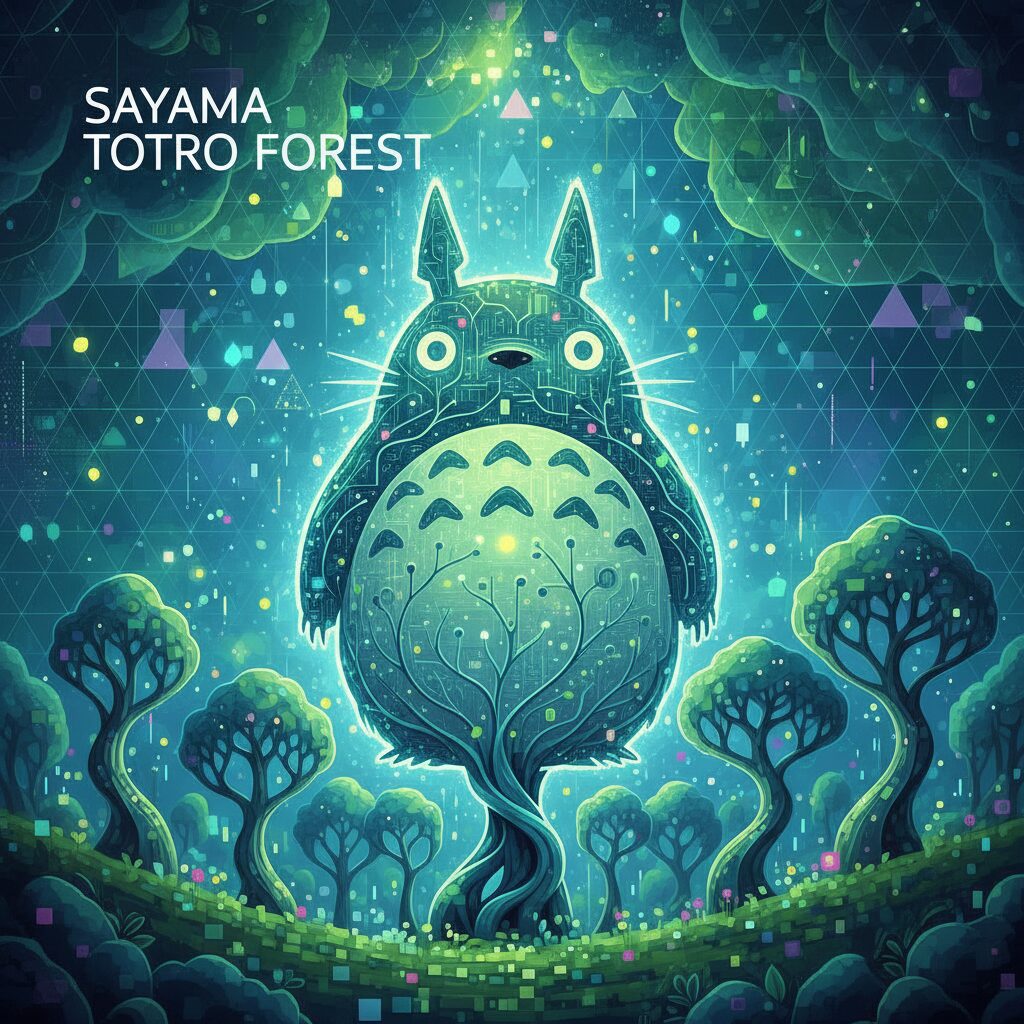
There’s a certain kind of magic that lives in the memories of childhood, a gentle, sun-dappled feeling woven from imagination and wonder. For millions around the world, that magic has a name: Totoro. Hayao Miyazaki’s 1988 masterpiece, My Neighbor Totoro, is more than just an animated film; it’s a portal to a simpler time, a heartfelt ode to the quiet power of nature and the unseen spirits that inhabit it. It’s a story that feels so real, so deeply rooted in the Japanese landscape, that you can almost feel the summer breeze rustling through the camphor trees and hear the distant roar of the Catbus. What if I told you that you could? What if the world of Satsuki and Mei wasn’t just a fantasy, but a real place you could walk into? Just a short train ride from the dizzying pace of central Tokyo lies the Sayama Hills, a sprawling greenbelt stretching across Saitama and Tokyo prefectures. This isn’t merely a filming location; it is the very earth, the very soul, from which Miyazaki drew his inspiration. Known affectionately by locals and fans as “Totoro’s Forest,” this patchwork of woodlands, wetlands, and traditional farmlands is the living, breathing heart of the beloved film. It’s a place where the line between animation and reality blurs, inviting you to chase after your own soot sprites and listen for the whispers of the forest king. This is not just a trip for anime fans; it’s a pilgrimage for anyone seeking to reconnect with a piece of their own forgotten wonder.
For those who find themselves enchanted by Totoro’s timeless magic, our Your Name film locations guide offers another captivating pilgrimage into the world of cinematic wonder.
The Whispers of the Camphor Tree: Finding the Spirit of Ghibli

Entering the Sayama Hills feels like crossing an unseen boundary. The city’s buzz fades away, replaced by the chorus of cicadas in summer and the crisp crunch of fallen leaves in autumn. The air becomes cooler and fresher, infused with the earthy aroma of damp soil and decaying wood. This is the ambiance woven into every scene of My Neighbor Totoro. Sunlight streams through the thick canopy, casting shifting patterns on the forest floor, just as it did when Mei chased the small white Totoro to the base of the giant camphor tree. You don’t merely notice the similarity to the film; you sense it deep within. The magic of this place lies in its quiet genuineness. It’s not a theme park. There are no costumed characters or branded souvenir shops—only winding paths, tranquil lakes, and the profound peace born from being surrounded by nature.
Hayao Miyazaki himself once lived in Tokorozawa, the city covering much of these hills, and his daily walks through these woods laid the creative foundation for the film. He observed the rolling hills, traditional farmhouses, and sacred groves near local shrines, imagining a world where ancient spirits coexist harmoniously with those who honor them. Yet, this idyllic setting once faced danger. Post-war rapid urbanization began encroaching on the forest, risking the loss of the very landscape that inspired a generation. This threat sparked a powerful community movement. In 1990, Miyazaki and supporters founded the Totoro no Furusato Foundation, or the Totoro Hometown Fund. With donations from fans across Japan and beyond, the foundation started buying small parcels of forest land, piece by piece, to safeguard them from development permanently. Each protected site is marked by a wooden sign adorned with a charming Totoro illustration. As you walk these trails, you’re not simply strolling through public parkland; you’re journeying through a living tribute to the power of art and community, a forest preserved by the story it inspired. This background brings a profound richness to the experience. Every rustling leaf and chirping bird becomes a small triumph, a tribute to the enduring affection for a gentle, furry forest guardian.
Your Pilgrimage Path: Key Spots and Hidden Charms
The Sayama Hills are extensive, comprising a network of over thirty preserved forest tracts linked by winding paths. For first-time visitors, it can be daunting to decide where to start. Yet, the charm of a pilgrimage here lies in the fact that there is no wrong route. Every trail presents an opportunity for discovery. Still, for those wishing to forge the most tangible connections to the world of Satsuki and Mei, several key destinations stand out as must-visit points on your journey. These spots act as anchors, rooting your imaginative adventure in genuine, touchable history and charm. They form the heart of the Totoro experience, where the film’s spirit feels most concentrated and accessible.
Kurosuke’s House: Where Soot Sprites Live
Your first and most important stop should be Kurosuke no Ie, or Kurosuke’s House. The name means “House of the Soot Sprites,” those fluffy, wide-eyed dust creatures that scurried through the attic in the film. Nestled in a quiet residential neighborhood on the edge of the woods, this beautifully preserved Showa-era house serves as the operational base for the Totoro no Furusato Foundation and a living museum celebrating the film’s spirit. It is, quite simply, enchanting. From the moment you see its traditional tiled roof and weathered wooden walls, you’ll feel as if you’ve stepped onto a Ghibli set. Over 100 years old, the house was originally used for tea cultivation. Its timeless design, featuring sliding paper doors, tatami mat rooms, and a warm, inviting porch, perfectly evokes the countryside home that Satsuki and Mei’s family moved into.
Inside, the ambiance is one of cozy nostalgia. The foundation’s staff are friendly and eager to share the house’s history and the forest’s story. The centerpiece resides in the main room: a massive, life-sized Totoro statue, so large and plush it seems to have just awoken from a nap inside a camphor tree. He patiently awaits visitors to sit beside him, offering a perfect photo opportunity that feels less like a tourist trap and more like a warm hug from an old friend. Exploring the rooms, you’ll find sensory delights everywhere. Look up toward the dark wooden ceiling beams, and you can almost imagine the kurosuke scattering away from the light. The house is filled with Ghibli-related books, artwork, and information about the foundation’s conservation efforts. It’s a place to learn, imagine, and forge a tangible connection to Miyazaki’s creative world. A vital tip for visitors: Kurosuke’s House is open only on Tuesdays, Wednesdays, and Saturdays, usually from 10:00 AM to 3:00 PM. Be sure to check the official foundation website before your visit, as hours can change. This is not a place you stumble upon by chance; a bit of planning makes the visit all the more special.
The Trails of Sayama Hills: More Than a Simple Walk
After soaking up the charm of Kurosuke’s House, it’s time to explore the forest itself. The true pilgrimage is the walk. The area is crisscrossed with well-marked trails, many numbered and corresponding to maps available at Kurosuke’s House or online. As you follow these paths, you’ll wander through varied landscapes. One moment you’ll be enveloped by a dark, dense cedar grove that feels ancient and mysterious; the next, you’ll emerge into a bright, open field bordered by bamboo. This diversity is what makes Sayama Hills so captivating. The most popular routes circle the two large reservoirs that dominate the area: Sayama Lake and Tama Lake. These man-made lakes were created to supply water to Tokyo but now serve as serene oases, their calm surfaces reflecting the sky and surrounding forest. The paths around them are mostly flat and easy to walk, making them accessible to all fitness levels. On clear days, the views across the water are stunning, with quiet benches where you can sit, rest, and simply soak in the tranquility.
The seasons dramatically shape the walking experience here. In spring, the forest bursts with soft pink and white cherry and plum blossoms, a classic Japanese sight that feels even more poignant in this natural setting. Summer brings a riot of lush green hues, the air alive with nature’s sounds at its peak. This is the season that most closely resembles the film’s setting, full of buzzing energy and sudden afternoon rain showers. Autumn is perhaps the most spectacular, with maple and ginkgo leaves turning fiery reds, oranges, and golds, carpeting the forest floor in vibrant color. Winter offers a different kind of beauty: a stark, quiet solitude. Bare branches form intricate silhouettes against the crisp blue sky, and silence is broken only by the chirping of winter birds. No matter when you visit, the forest shares a unique mood.
Searching for the Bus Stop
One of the most iconic images from My Neighbor Totoro is the scene where Satsuki and Mei wait for their father’s bus in the rain, joined by Totoro beneath the lone bus stop sign. Many pilgrims come to Sayama Hills hoping to find this exact spot. It’s important to realize there isn’t an official “Totoro Bus Stop” within the park. The one in the film was a creation of Miyazaki’s imagination, inspired by many rural bus stops scattered across the Japanese countryside. However, the quest to find a spot that feels right is part of the adventure. Exploring the roads on the forest’s outskirts, especially near agricultural areas, you’ll find small, simple bus stops by rice paddies or quiet country lanes. Discovering one of these, especially as dusk falls and light softens, can be profoundly moving. It captures the essence of the scene: the quiet patience of waiting, the sensation of standing on the border between the human world and the realm of spirits. Don’t search for a perfect replica; instead, seek the feeling, and you will surely find it.
Practical Magic: Planning Your Totoro Adventure
While a visit to Totoro’s Forest feels like entering a dream, it does require some practical planning to ensure a smooth and enjoyable experience. The Sayama Hills are conveniently reachable as a day trip from Tokyo, but their rural nature means you won’t find the same conveniences as in the city. With a bit of preparation, you can fully immerse yourself in the magic without worrying about logistics.
Getting to the Forest from Tokyo
The most common starting point for a pilgrimage is Seibukyujo-mae Station, situated right next to the MetLife Dome, a large baseball stadium that serves as a handy landmark. The simplest way to get there from central Tokyo is via the Seibu Railway network. From Ikebukuro Station, take the Seibu Ikebukuro Line to Nishi-Tokorozawa Station, then transfer to the narrow-gauge Seibu Sayama Line for the short ride to Seibukyujo-mae. The entire trip takes around 40 to 50 minutes. From Shinjuku, you can take the Seibu Shinjuku Line and make a similar transfer. Upon arrival, you’ll be at the southern edge of the hills. From the station, it’s a pleasant walk to the main forest trails and lakes. Kurosuke’s House is a bit further—about a 20 to 30-minute walk through quiet suburban streets that gradually give way to more rural scenery. Using a map app on your phone is highly recommended for your first visit. The walk itself is part of the experience, a gentle transition from the modern world of train stations and stadiums to the timeless realm of Totoro.
What to Bring and When to Go
This is primarily a walking experience, so comfort is essential. Sturdy, comfortable walking shoes are a must. The trails are generally well-kept, but some may be unpaved or muddy after rain. Dress in layers, as the forest can be cooler than the city. Sunscreen and a hat are essential in summer, while a warm jacket and gloves are necessary in winter. One of the most important items to bring is water and snacks. While vending machines are available near the train station and some park entrances, facilities inside the forest are minimal. Bringing a small picnic or some onigiri (rice balls) to enjoy by the lake is a delightful way to enhance your experience and feel a bit like Satsuki and Mei. A small bag for carrying out your trash is also essential since public bins are scarce. The guiding principle here is to leave the forest just as you found it.
Regarding timing, weekdays are preferable to weekends if you want to avoid crowds, especially near the popular lake areas. Visiting Kurosuke’s House is limited to its Tuesday, Wednesday, and Saturday opening hours, so plan your week accordingly. Arriving in the morning gives you ample time to see the house when it opens and then spend the rest of the day leisurely exploring the forest trails before returning to Tokyo at sunset. A full day is recommended to truly appreciate the area without rushing.
A Note on Etiquette and Preservation
When visiting Sayama Hills, you are a guest in two homes: the rich natural ecosystem and the local community living nearby. It’s crucial to be a respectful visitor. Stay on marked trails to avoid disturbing the flora and fauna. Conservation efforts here are delicate, and straying from paths can cause damage. Keep your voice low and avoid loud music; the forest’s beauty lies in its natural sounds. Be aware that you will pass through residential areas. Do not trespass on private property, and be considerate of neighbors. The spirit of My Neighbor Totoro embodies deep respect for both nature and community. By following this spirit, you honor the film’s legacy and help preserve this special place for future generations of dreamers.
Beyond the Screen: The Enduring Legacy of Totoro’s Forest
What makes a pilgrimage to Sayama Hills so profoundly moving is the understanding that this place is not a contrived attraction. It is an authentic landscape with its own history, ecology, and community, all of which existed long before the film and will continue long afterward. The forest’s link to My Neighbor Totoro has become part of its identity—a beautiful layer of storytelling laid over the land—yet it has not diminished its inherent value. In fact, the film has become its strongest advocate. The Totoro no Furusato Foundation stands as proof that fiction can have a powerful, positive influence on reality. By visiting, and perhaps leaving a small donation at Kurosuke’s House, you join that legacy. You actively help protect the trees, wetlands, and wildlife that call this place home, ensuring the landscape that inspired Miyazaki’s genius remains preserved.
This place reminds us of the vital importance of green spaces, especially on the edges of megacities like Tokyo. It serves as a lung for the region, a classroom for local schoolchildren, and a sanctuary for anyone seeking refuge from the concrete jungle. Walking here, you may see elderly locals on their daily walk, families enjoying a weekend outing, or dedicated birdwatchers with binoculars focused on the canopy. It is a living, breathing community space, whose connection to Ghibli has only enhanced its character. The forest’s lasting legacy is this beautiful symbiosis: the land inspired the art, and the art, in turn, saved the land. It’s a powerful story of conservation, creativity, and the simple, profound joy of discovering magic in your own backyard.
A Gentle Farewell from the Forest’s Edge
As the afternoon light softens and the trees cast long shadows, your day in Totoro’s Forest will gradually draw to a close. Walking back toward the station, with the scent of the woods lingering on your clothes and the images of sunlit paths vivid in your mind, you may experience a gentle melancholy—the same bittersweet feeling that accompanies the film’s closing credits. Yet it’s a sweet sorrow, born from having touched something truly special. You came seeking the world of a beloved film, and you found it. But you also discovered something more: a living forest, a devoted community, and a quiet corner of the world where wonder still thrives.
The magic of Sayama Hills cannot be captured in a photograph or souvenir. It’s a feeling you carry within you. It’s the memory of the wind whispering through bamboo, the sight of a perfectly shaped acorn on the trail, the imagined rumble of a Catbus just around the corner. It’s a reminder that the worlds we cherish in stories often have roots in our own, and that the spirits of the forest—whether called Totoro or simply nature—are always there, waiting patiently for us to come and say hello.