There’s a unique and almost electric thrill that pulses through you when you step out of a bustling train station and into a scene you’ve only ever witnessed through a screen. The mundane sidewalk, the familiar glint of a vending machine, the specific angle of a staircase—it all transforms. It becomes a portal, a tangible link to a story that has moved millions. This is the magic of the anime pilgrimage, or seichi junrei, a journey where fiction and reality beautifully intertwine. And in the heart of Tokyo, few pilgrimages resonate as deeply as the one for Makoto Shinkai’s breathtaking masterpiece, Your Name., or Kimi no Na wa. The film didn’t just capture hearts with its stunning visuals and emotional narrative; it captured the very soul of specific corners of Japan, embedding its story into the real-world map. For fans, walking these streets isn’t just sightseeing; it’s an act of participation, a way to feel the echoes of Taki and Mitsuha’s desperate, star-crossed search for one another. Our journey today focuses on the film’s most poignant and recognizable location: a simple, unassuming staircase in a quiet residential neighborhood of Yotsuya, Shinjuku. This is where the story culminates, where memory and reality finally collide. This is where we begin our walk, stepping into the world of Your Name. and discovering the quiet magic hidden within the Tokyo metropolis.
Embodying the spirit of a cinematic pilgrimage, fans captivated by the intertwining of fantasy and reality may also find inspiration in a Ghibli museum visit, where art and culture seamlessly converge.
The Heart of the Connection: The Iconic Red Staircase
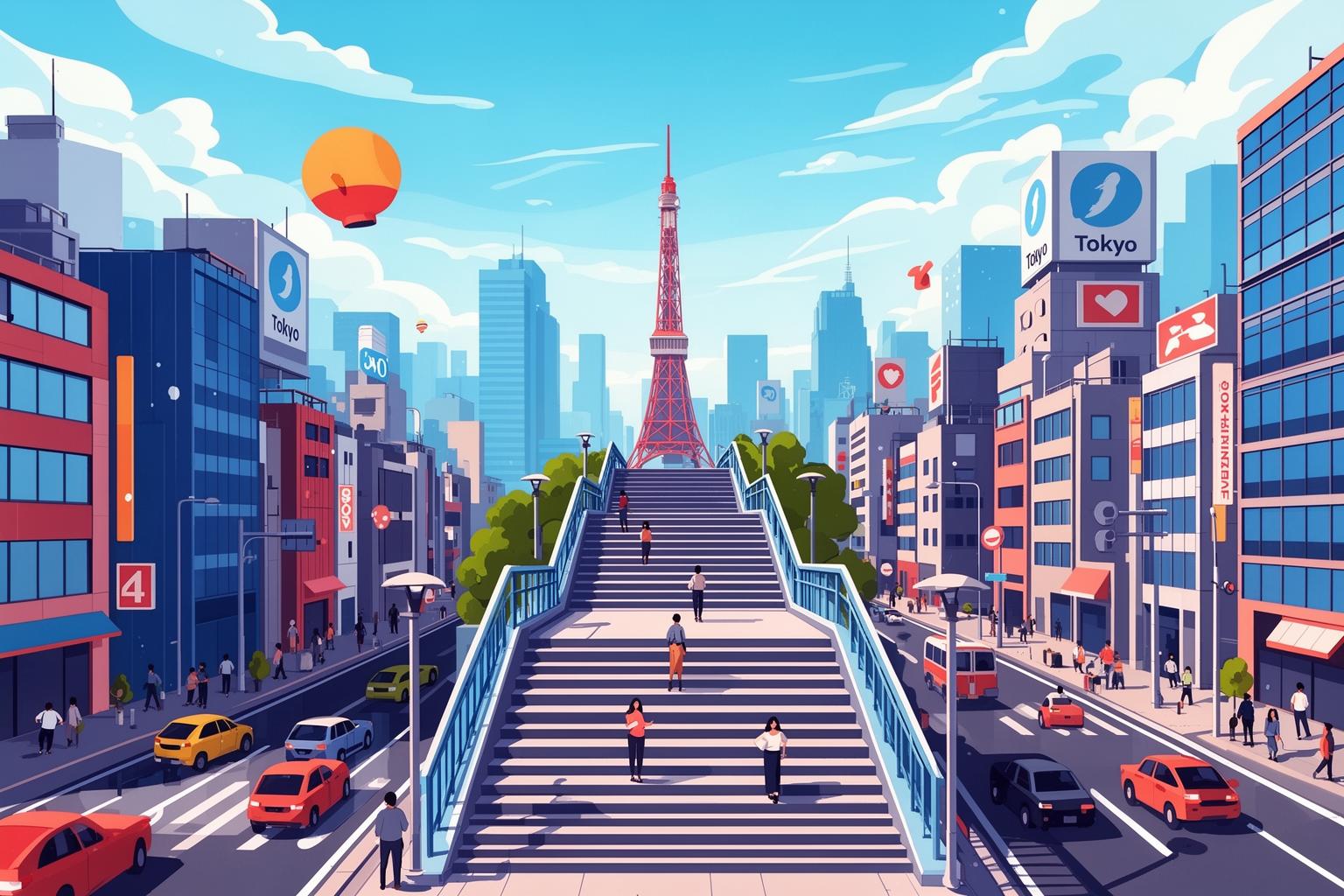
The final, tear-jerking scene of Your Name. is etched into the memory of every viewer. Taki and Mitsuha, years after their memories have faded into a dream-like haze, pass each other on a striking staircase. A flicker of recognition, a hesitant turn, and the timid, hopeful question: “Kimi no na wa?” or “What’s your name?” That staircase exists. It is real. And discovering it feels like unveiling a profound secret. The location is the set of stairs leading up to the Suga Shrine in the Yotsuya district of Shinjuku. To reach it, you’ll likely find yourself wandering through serene, narrow streets that feel miles away from the neon glow of central Shinjuku. This contrast is the first surprise. The film captures the location with cinematic grandeur, but in reality, its power lies in its quiet normalcy. The area is quintessentially residential Tokyo—clean, orderly, and peaceful. You’ll hear the distant chime of a train, the soft hum of an air conditioning unit, maybe the laughter of children from a nearby park. There are no souvenir shops, no flashing signs, no tourist traps. There is only the place itself, waiting patiently.
As you round the final corner and the stairs come into view, the feeling is unmistakable. The gentle curve of the road, the distinctive red railing on one side and the concrete wall on the other, the trees framing the top—it’s a perfect recreation. Many visitors find themselves simply standing at the bottom, absorbing it all. You see others doing the same, a quiet camaraderie shared among fellow pilgrims. They take turns posing for photos, recreating the iconic shot of Taki at the bottom looking up, and Mitsuha at the top looking down. It’s a ritual. Yet, despite its popularity, the site rarely feels overcrowded. The atmosphere remains respectful. People recognize they are guests in someone’s neighborhood and at the entrance to a sacred space. The true magic unfolds when you stand on those steps. Looking up or down, you can almost feel the weight of the film’s climax, the years of searching, the pull of a bond that transcends time and space. It’s a powerful moment of emotional resonance, where a simple urban structure becomes imbued with a universe of feeling.
A Walk Through Taki’s Tokyo: Shinjuku and Beyond
While the steps of Suga Shrine serve as the emotional heart of the pilgrimage, the world of Your Name. unfolds across a broader canvas of Tokyo. The film acts as a love letter to the city’s vibrant landscapes, and exploring Taki’s favorite spots enriches the experience, creating a narrative journey through the metropolis. This walk lets you see the city through his perspective, from the towering skyscrapers shaping his world to the cozy café where he worked.
The View from Above: A City of Stars
Makoto Shinkai excels at capturing light and atmosphere, and his portrayals of Tokyo’s cityscape are iconic. In Your Name., the expansive urban environment acts as a character itself—a sea of shimmering lights reflecting Taki’s reality. Though the film’s exact viewpoints are often composites, you can experience a nearly identical sense of awe from the observation decks of the Tokyo Metropolitan Government Building in Shinjuku. The best part? It’s completely free. Take the elevator up to the 45th floor and step outside to a panoramic view stretching to the horizon. On clear days, you might even spot Mount Fuji. As dusk falls and the city lights flicker to life, you’ll feel the wonder the film conveys—the endless grid of streets, glowing towers, and tiny car headlights flowing like rivers of light. This vibrant, overwhelming, and beautiful world is the one Taki called home. It gives crucial context to his character and offers a moment of quiet reflection high above the city’s relentless energy. Standing there, you can almost sense the phantom presence of a comet slicing through the sky—a beautiful and ominous sign that links this urban world to a distant mountain town.
A Moment of Respite: The National Art Center, Tokyo
One of the film’s gentler, more grounded scenes occurs during Taki’s date with his coworker, Miki Okudera. They visit a strikingly modern restaurant inside a museum featuring a massive, undulating glass façade. This location is real: it’s the Salon de Thé Rond within The National Art Center, Tokyo, situated in the chic Roppongi district. Designed by the renowned architect Kisho Kurokawa, the building itself is a masterpiece. Its wave-like glass curtain wall creates a forest of light and shadow inside, while the café, perched atop a massive concrete cone, feels like dining in a futuristic treehouse. Even if you’re not an art lover, a visit here is well worth it. The architectural space is breathtaking and offers a striking contrast to the traditional ambiance of Suga Shrine. You can relax in the café, order coffee and cake just like in the film, and watch the world pass by through the stunning glass walls. It’s an ideal resting point on your pilgrimage—a place embodying the sophisticated, contemporary side of Tokyo that Taki navigates. It reminds you that the story is not solely about cosmic drama but also woven from quiet, everyday moments within the city.
Crossroads of Fate: Shinjuku’s Urban Heart
Shinjuku Station, the world’s busiest railway station, is the chaotic, lively center of Taki’s daily routine. The film perfectly captures its overwhelming scale and the constant flow of people. Navigating this station is a quintessential Tokyo experience. The density of commuters, the cacophony of announcements and footsteps, the maze-like corridors—it’s exactly as portrayed. Nearby, you’ll find other familiar landmarks. The large circular structure seen in several scenes is the Shinjuku Police Station intersection. The iconic NTT Docomo Yoyogi Building, with its clock tower reminiscent of the Empire State Building, frequently appears in the background as a silent landmark in Taki’s world. For devoted fans, Cafe La Bohème Shinjuku Gyoen is widely believed to be the inspiration for the Italian restaurant where Taki worked part-time. Situated near the beautiful Shinjuku Gyoen National Garden, visiting this restaurant gives you the chance to step into a scene. Its interior, with elegant old-world European charm, feels very familiar. Enjoying a pasta dish here is like adding another piece to the puzzle—a tangible connection to the story’s fabric. Exploring this area lets you experience the rhythm of Taki’s life—the commute, the job, and the vibrant energy of living in one of the world’s most dynamic urban centers.
Beyond Tokyo: Echoes of Itomori in Hida
While our emphasis is on the accessible Tokyo locations, any discussion of the Your Name. pilgrimage is incomplete without recognizing the other half of the story: Mitsuha’s hometown, Itomori. Although Itomori is a fictional town, its landscapes and landmarks were heavily inspired by the real city of Hida in Gifu Prefecture, a much more rural and traditional area of Japan. For those with extra time and a wish for a deeper exploration, a trip to Hida offers a striking contrast and a fuller pilgrimage experience. The journey itself reflects the film’s narrative shift, moving you from Tokyo’s hyper-modernity to the serene heart of rural Japan. Hida-Furukawa Station is instantly recognizable, a key spot where Taki and his friends commence their search for Mitsuha. The local mascot on the platform and the station building’s design—it’s all faithfully represented. A short stroll from the station is the Hida City Library, another accurately recreated location. Visitors are welcome, and the library even features a dedicated corner for Your Name. fans, recognizing its role in bringing this quiet town to global attention. You can sit where Taki sat, poring over records, and sense the desperation and resolve behind his search. Walking through Hida, with its traditional wooden buildings, gently flowing canals filled with koi fish, and surrounding green mountains, you can feel the spirit of Itomori. While the lake in the film is modeled after Lake Suwa in nearby Nagano Prefecture, Hida embodies the town’s soul. A visit here isn’t just about locating spots; it’s about grasping the deep-rooted culture, the sense of community, and the connection to nature that shaped Mitsuha’s life and her yearning for something more.
Practical Pilgrim’s Guide: Making Your Journey Seamless
Embarking on your own Kimi no Na wa. pilgrimage is a fulfilling experience, and with a bit of planning, it can become a smooth and memorable part of your Tokyo journey. The main sites are centrally located and easily reachable, allowing you to visit several key spots in a single, well-organized day.
Getting to the Suga Shrine Steps
The emotional heart of the tour is surprisingly easy to access. The nearest train station is Yotsuya Station, served by the JR Chuo-Sobu Line and the Tokyo Metro Marunouchi and Namboku Lines. From Shinjuku Station, it’s a quick, direct five-minute trip on the JR Chuo Line. Upon arriving at Yotsuya Station, take the main exit and prepare for a pleasant 10 to 15-minute walk. The route passes through the campus of Sophia University and leads into the quiet, upscale neighborhood of Yotsuya. It’s highly recommended to use a map application on your phone, as the final turns onto the narrower residential streets can be somewhat tricky. The walk itself is part of the experience, as the city’s noise and hectic pace gradually diminish, replaced by a calm that sets the tone for the reflective atmosphere of the shrine. This shift from the bustling city to the peaceful residential area makes reaching the staircase feel especially meaningful and well-deserved.
Best Time to Visit and Photo Tips
Although the Suga Shrine steps can be visited at any time of day, many pilgrims prefer late afternoon. This “magic hour,” when the sun is low and the light soft and golden, beautifully evokes the lighting of the film’s climactic reunion scene. The warm glow filtering through the trees adds a cinematic touch to your experience. However, visiting on a weekday morning may offer a more private and intimate experience, giving you time to enjoy the spot without the crowd. Seasonally, spring with its cherry blossoms and autumn with vibrant foliage can enhance the beauty, but the location’s emotional impact remains strong throughout the year. When photographing, patience is essential. Wait for moments when the stairs are clear to capture your perfect shot. Experiment with angles—try shooting from the bottom looking up, or from the top looking down, to mimic the perspectives of Taki and Mitsuha. Above all, be considerate of others who are also there for their own special moments.
Pilgrim’s Etiquette and Respectful Visiting
It is important to remember that the Suga Shrine staircase is not a film set; it is a public pathway in a residential neighborhood and the entrance to a working Shinto shrine. The key rule is to remain quiet and respectful. Local residents use these stairs daily, so avoid blocking them for long periods. Keep your voices low and be careful not to disturb the peace. After taking your photos on the stairs, continue to the top to visit the Suga Shrine itself. This charming, small local shrine has a tranquil atmosphere. As with any shrine in Japan, it’s customary to bow once before passing through the torii gate at the entrance. If you wish, you can offer a prayer at the main hall and check if they have any omamori (good luck charms) for sale. Showing respect for the sacred and residential nature of the site helps ensure it remains a welcoming place for fans and locals alike for years to come. This mindfulness embodies the true spirit of a pilgrimage—it’s not just about taking a photo, but about respectfully entering a space filled with meaning.
The Lingering Magic: Why We Seek These Places
What motivates us to walk these streets and climb these stairs? A seichi junrei for a film like Your Name. is more than a simple scavenger hunt for photos. It is a quest for connection. It’s about bridging the gap between the world on the screen and the one beneath our feet. When we stand where Taki and Mitsuha once stood, the story becomes part of our personal geography, our own lived experience. The emotions of the film—the longing, the near-misses, and the eventual hopeful connection—feel deeper, more tangible. These places serve as anchors for memory, both for the characters and for us as viewers. They show that the settings of our favorite stories are not merely backgrounds; they are vessels of meaning. Makoto Shinkai selected these specific, real locations intentionally. He skillfully merged the fantastical elements of his story with the hyper-realistic, tangible details of everyday Japan. This grounding in reality is what makes the film’s impossible events feel emotionally believable. By visiting, we engage in that blend. We perceive the extraordinary within the ordinary. So as you leave the Suga Shrine and head back toward the city’s pulse, you carry a piece of that magic with you. You may find yourself seeing every staircase, cityscape, and passing train with fresh eyes, contemplating the invisible threads that connect us all—stretching across time, space, and the boundary between fiction and the world we call our own.