
There’s a feeling the Japanese call natsukashii—a gentle, nostalgic ache for a past that feels both distant and intimately familiar. It’s the scent of summer rain on asphalt, the melody of a song from a forgotten dream, or the image of a town you’ve never visited, yet somehow, you miss. For millions around the world, Makoto Shinkai’s animated masterpiece, “Your Name.” (Kimi no Na wa), evoked this exact sensation. It wove a tale of two souls, Taki in bustling Tokyo and Mitsuha in the serene countryside, bound by a celestial event and the invisible threads of fate. The film didn’t just tell a story; it painted a world so vivid, so real, that it beckoned us to step inside. And we can. This journey, this pilgrimage to the real-life settings that inspired the film, is known in Japan as seichi junrei. It’s more than a tour; it’s a quest to bridge the gap between animation and reality, to stand in the very spots where cinematic magic was born, and to feel the heartbeat of the story in the rhythm of daily life. From the electric pulse of Tokyo’s urban sprawl to the quiet whispers of tradition in the mountains of Gifu, we’ll trace the footsteps of Taki and Mitsuha, seeking not just locations, but the feeling of connection—the musubi—that ties them, and us, together.
Experience the magic of Japan firsthand on a Your Name. pilgrimage as you traverse the real-world settings that inspired the film.
Tokyo’s Urban Heartbeat: Tracing Taki’s Footsteps
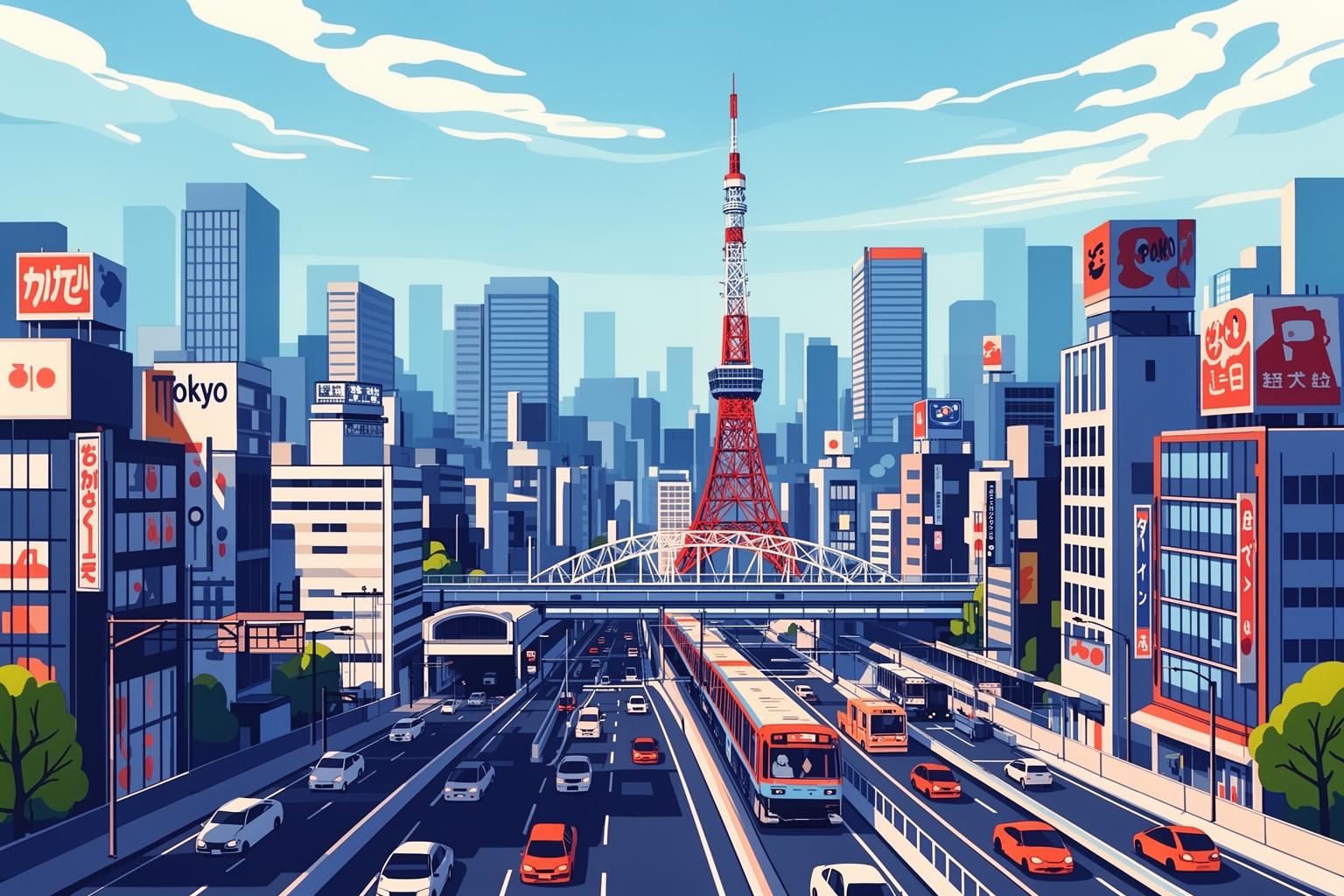
Our pilgrimage begins where Taki’s story takes place—in the vast, vibrant metropolis of Tokyo. This city is an entire universe on its own, a dazzling maze of steel, glass, and neon, where millions of lives intersect daily. It is a place of constant motion, with trains slicing through urban canyons and crowds flowing like rivers through concrete valleys. This is Taki’s world—fast-paced, modern, and brimming with a youthful energy that feels both thrilling and overwhelming. Walking these streets is like stepping onto a living, breathing film set, where every corner holds the potential for a scene, a memory, or a connection. Here, the animated frames of “Your Name.” blend seamlessly with the city’s hum, and the search for Mitsuha’s counterpart begins not in the mountains, but among the iconic landmarks of Japan’s capital.
The Fateful Staircase: Suga Shrine in Yotsuya
Few locations in modern cinema carry as much emotional weight as the red-railed staircase from the film’s climax. This is where memory and reality finally collide, where two searching souls find each other against the sprawling cityscape. In reality, these steps belong to the Suga Shrine, hidden within a quiet residential neighborhood of Yotsuya. The walk from the nearest station is a calm prelude. You wander through narrow streets, past small homes and local shops, as the roar of central Tokyo fades into a gentle hum. Then you see it: the incline, the curve of the street, and the unmistakable crimson handrails. Standing at the bottom looking up, or at the top looking down, an overwhelming sense of recognition washes over you. It feels sacred. The air is thick with the unspoken emotions of the film’s final scene. You can almost hear their voices, hesitant and hopeful, asking the question that lingers in the air: “Your name is?”
Timing is key to truly capture this magic. Visit on a weekday morning, and you might find the place to yourself, the quiet interrupted only by rustling leaves and distant city sounds. The late afternoon sun—what the film calls kataware-doki or twilight—bathes the scene in a golden, nostalgic light, perfectly reflecting the movie’s aesthetic. It’s a powerful moment, but remember, this is a residential area. People live here. The pilgrimage’s beauty lies in quiet reverence, in taking photos without disturbing the peace of those who call this place home. The shrine itself, at the top of the stairs, is a serene and humble space—an ideal spot for a quiet moment of reflection at the journey’s start.
Crossroads of Destiny: Shinjuku and Yotsuya Stations
Tokyo is a city defined by its vast train network, an intricate web connecting millions of individual stories. The film captures this perfectly, using sprawling stations as the backdrop for Taki’s daily life. Shinjuku Station, one of the busiest transport hubs worldwide, is a sensory spectacle in the best sense. It’s a symphony of announcements, footsteps, and intersecting lives. The film showcases several angles of this organized chaos, including the iconic circular structure of the Shinjuku police box and the expansive pedestrian bridges offering panoramic views of the city’s relentless flow. Standing here, you grasp the scale of Taki’s world and understand what it feels like to be a single person among millions, each with their own destination and story.
Yotsuya Station, while less intense than Shinjuku, plays a vital role in this pilgrimage. It’s the station Taki uses and likely the starting point for your walk to Suga Shrine. The film accurately portrays its distinctive red-brick design and the intersection outside, where Taki and his friend anxiously await Okudera-senpai. It’s a transitional space, linking Tokyo’s commercial heart with Yotsuya’s quieter residential streets. Moving through these stations, you’re not merely traveling from point A to point B—you’re reenacting the characters’ daily rhythms, seeing the city through their eyes, and feeling the pulse of their world beneath your feet.
A Taste of Sophistication: The National Art Center, Tokyo
Taki’s part-time job and his much-anticipated date with Okudera-senpai occur in a stunningly modern restaurant set within a wave of glass and steel. This architectural marvel is real: The National Art Center, Tokyo, located in the stylish Roppongi district. The building itself is a masterpiece by the legendary Kisho Kurokawa. Its undulating glass facade floods the interior with natural light, crafting an atmosphere of airy elegance.
The restaurant featured in the film, Salon de Thé ROND, sits atop one of the center’s massive concrete cones, offering a dining experience that feels suspended mid-air. You can sit at a table, order coffee and cake, and gaze out at the very view Taki and Okudera shared. It’s a moment of quiet sophistication amid the city’s bustle. Visiting the art center offers a dual reward: reliving a memorable scene from the pilgrimage while immersing yourself in world-class art exhibitions. This adds cultural depth to the journey, reminding us that the film’s locations were chosen not at random, but for their beauty, atmosphere, and ability to tell a story even without the characters present.
Whispers of Tradition: Finding Mitsuha in Hida
Leaving behind the dazzling energy of Tokyo, our journey takes a dramatic turn as we follow the path Taki took in his desperate search for Mitsuha. Traveling by train, we watch as the dense cityscape fades away, replaced by rolling hills, deep valleys, and finally, the majestic mountains of Gifu Prefecture. This region is the heartland of Japan, where time seems to flow a little differently. Here, we seek the soul of Itomori, Mitsuha’s fictional hometown. Although Itomori itself is an imaginative creation, its spirit is drawn directly from the very real, stunning city of Hida.
The moment you step off the train, the air changes. It’s cooler, cleaner, and filled with the scent of cedar and damp earth. The frantic pace of Tokyo gives way to a gentle, unhurried rhythm. This is Mitsuha’s world—a place of ancient traditions, deep-rooted community, and a profound connection to nature. Exploring Hida is like assembling a beautiful puzzle, discovering fragments of Itomori in the charming streets, sacred shrines, and the warm smiles of the local people.
The Gateway to Itomori: Hida-Furukawa Station
The small, modest Hida-Furukawa Station is the first tangible glimpse of Itomori you’ll encounter. The anime almost perfectly replicates it, from the design of the platform signs to the pedestrian footbridge spanning the tracks. This is where Taki, Tsukasa, and Okudera-senpai arrive, their faces marked by uncertainty and a glimmer of hope. Standing on that same platform, watching the local train pull away, you can’t help but feel a similar sense of arrival—having reached a place that exists somewhere between dream and reality.
Fans of the film flock here to capture a specific shot: the view from the platform of the waiting room and the distant mountains. Inside the station, the town proudly embraces its connection to the film. You’ll find posters, guestbooks filled with messages from visitors around the world, and even a friendly life-sized cutout of the local Hida beef mascot, Hidakuro, who also makes a cameo in the movie. The station staff are wonderfully welcoming, accustomed to fans seeking their perfect photo. This warm reception offers your first taste of Hida’s hospitality—a gentle introduction to Mitsuha’s world.
Echoes of the Miyamizu Shrine: Keta Wakamiya Shrine and Hie Shrine
Mitsuha’s life centers around her family’s duties at the Miyamizu Shrine, a sacred place nestled on a forested mountainside overlooking Lake Itomori. This shrine, like the town itself, is a composite, its soul pieced together from several real-world locations. The primary inspiration is widely believed to be the Keta Wakamiya Shrine, located just a short walk from the center of Hida-Furukawa. Approaching the shrine, you pass through a towering torii gate and begin your ascent up a long, moss-covered stone staircase. The path is lined with ancient cedar trees whose branches filter sunlight, creating a dappled, ethereal glow. The air grows quiet, filled only with your own breath and the chirping of unseen birds. It feels ancient and sacred—a place where the boundary between the physical and spiritual worlds is thin. While it lacks the dramatic lake view of the film, the atmosphere—the sense of timeless tradition and deep reverence for nature—is unmistakably that of the Miyamizu Shrine.
Another important influence is the Hie Shrine in nearby Takayama. Its impressive stone steps and the layout of its grounds also closely resemble scenes from the film. Visiting one or both of these shrines offers profound insight into the Shinto beliefs woven into the story—the reverence for nature, the significance of tradition, and the sanctity of place.
Where Knowledge and Memory Meet: Hida City Library
One of the most beautifully rendered and emotionally significant locations in Hida is the city library. This is where Taki and his friends uncover the devastating truth about Itomori and the comet. The Hida City Library is a stunning piece of modern architecture, with warm wooden interiors and large windows overlooking the town. The filmmakers recreated it with such astonishing detail that stepping inside feels like entering the anime itself. The seating arrangements, shelf designs, and even the camera angles used in the film are instantly recognizable.
The library has become a cherished destination for fans, and the staff have embraced this role graciously. While it functions as a public library, they have set up a small section dedicated to the film and are happy to allow visitors to take photographs, provided they do so quietly and respect other patrons. Sitting in one of the chairs where Taki once sat, surrounded by books and the quiet hum of study, you can feel the weight of his discovery. This is a place where research and revelation merge—a modern space holding the key to an ancient story, perfectly capturing the film’s blend of contemporary life and deep-rooted folklore.
Living the Story: Immersive Experiences and Local Flavors

A pilgrimage is more than just visiting places; it involves engaging with the culture that shaped them. To genuinely understand the world of “Your Name.,” you need to immerse yourself in the traditions, flavors, and crafts embedded in the story’s fabric. This part of the journey transcends simple sightseeing and encourages you to participate—to touch, taste, and experience the essence of Hida. It is through these hands-on encounters that the concept of musubi—the interconnectedness of all things—shifts from a cinematic theme into a palpable reality.
The Art of Braiding: Kumihimo and Musubi
The braided cord, or kumihimo, stands as the most powerful symbol in “Your Name.” It embodies the flow of time, the twists and tangles of fate, and the unbreakable bond between Taki and Mitsuha. This traditional Japanese craft has been practiced for centuries, and in the film, it is Mitsuha’s grandmother who eloquently explains its profound significance: “They are the flow of time itself. They converge and take shape. They twist, tangle, sometimes unravel, break, then connect again. That is musubi. That is time.” In Hida-Furukawa, you’re offered the wonderful chance to create your own kumihimo cord. Several local shops host workshops where you can sit at a traditional wooden stand, or marudai, and learn the delicate process of weaving colorful threads together. As you rhythmically cross the bobbins, you begin to appreciate the patience and concentration required. It becomes a meditative practice. The finished braid is more than just a souvenir; it represents your journey and forms a personal link to the film’s core theme. It’s a beautiful, tactile way to carry the story with you.
A Taste of Hida’s Countryside
To connect with a place means tasting its flavors, and the Hida region offers a feast for the senses. You can literally savor scenes and emotions from the film. Begin with gohei mochi, a local specialty featured as Taki and his friends enjoy it. This skewer of pounded rice is flattened, grilled over an open flame, and coated with a savory-sweet sauce made from miso, soy sauce, and walnuts. It’s rustic, comforting, and delicious. For a heartier meal, Hida is renowned for its world-class Hida beef. This exquisitely marbled meat is famous for its tenderness and rich taste, available in a variety of preparations—from steaks and sukiyaki to simple, affordable skewers sold by street vendors. Be sure to visit the town’s historic sake breweries, too. Hida-Furukawa is famed for its pristine mountain water, which produces exceptional sake. Many breweries, identified by their white-walled storehouses and the large cedar balls (sugidama) hanging over entrances, offer tastings. Sipping local sake, while perhaps imagining the kuchikamizake ritual from the film, deepens your connection to the region’s sacred traditions.
Beyond the Frame: Exploring Hida-Furukawa
Though the anime locations draw most visitors, the true charm of Hida-Furukawa lies in the spaces between the frames. Take the time to wander off the pilgrim’s path and simply explore. The town’s most picturesque feature is the Setogawa Canal, a narrow waterway behind the main street. Its stone-lined banks are charming, but what makes it truly remarkable are the thousands of large, brightly colored koi fish that swim leisurely in its clear waters. It is a scene of extraordinary tranquility. Stroll through the old town, with its beautifully preserved wooden merchant houses showcasing intricate lattice work. This atmosphere is the one Mitsuha longed to escape—the quiet, predictable life of the countryside. Yet for visitors, this slowness is a gift. It allows you to appreciate small details: the craftsmanship of the architecture, the warmth of the shopkeepers, and the sense of a community deeply rooted in its history. In these quiet moments of discovery, you come to feel the true spirit of Itomori.
A Pilgrim’s Guide: Practical Tips for Your Journey
Embarking on a pilgrimage through two distinct regions of Japan requires some planning, but the reward is an incredibly rich and varied travel experience. Traveling between the hyper-modernity of Tokyo and the rustic charm of Hida is a journey in itself, reflecting the shifts in the film’s narrative. With a few practical tips in mind, you can make sure your adventure is as smooth and enchanting as the story that inspired it.
Planning Your Two-Part Adventure
To fully appreciate this journey, allocate at least two days for Tokyo and two days for the Hida region. In Tokyo, the locations are spread out, so a subway pass is essential. For Hida, it’s best to stay either in Hida-Furukawa for a quiet, immersive experience or in the nearby larger city of Takayama, which offers more accommodation and dining options and is just a 15-minute train ride away. The trip between the two regions is part of the experience. The most efficient route involves taking the Tokaido Shinkansen (bullet train) from Tokyo to Nagoya, then transferring to the JR Hida Wide View Express. This scenic train journey is stunning, winding through mountains and along river gorges, providing breathtaking views that perfectly transition from Taki’s world to Mitsuha’s. If you plan on extensive train travel in Japan, consider purchasing a Japan Rail Pass before your trip for both convenience and savings.
When to Visit: A Tale of Four Seasons
Like the film, the real-world locations are beautiful year-round, with each season offering its own unique atmosphere. Spring (late March to April) is enchanting, as cherry blossoms frame Tokyo’s cityscape and add delicate beauty to the Hida countryside. The weather is mild and ideal for walking. Summer (June to August) brings lush, vibrant greenery to the mountains, making Hida appear incredibly alive. However, it can be hot and humid, especially in Tokyo, so plan accordingly. Autumn (October to November) is arguably the most poetic season to visit. The crisp air and stunning fall foliage create a world of reds and golds, perfectly echoing the nostalgic, bittersweet tone of the film’s kataware-doki scenes. Winter (December to February) turns the Hida region into a tranquil wonderland. A thick blanket of snow quiets the landscape, offering a peaceful and starkly beautiful experience, though you’ll need warm clothes and should be prepared for potentially icy paths, particularly around the shrines.
Etiquette and Respectful Pilgrimage
As a seichi junrei pilgrim, you represent fans everywhere. It’s vital to be respectful of the places you visit, as they are not just tourist attractions but active parts of the community. At Suga Shrine and the surrounding Yotsuya neighborhood, remember you are in a residential area. Keep your voice low, especially early in the morning or late at night, and avoid blocking pathways. When visiting shrines like Keta Wakamiya, observe proper etiquette: perform the temizu purification ritual at the water basin before entering, bow before passing through the torii gate, and maintain quiet reverence within the sacred grounds. At the Hida City Library, ask for permission before taking photos. Finally, support the local communities that warmly welcome fans. Purchase a local craft, enjoy a meal at a family-run restaurant, or buy an omamori (good luck charm) from a shrine. This simple gesture of appreciation helps ensure that these magical places will continue to be cherished and shared for years to come.
The Unseen Connection: Musubi in Our Own Lives

As your journey draws to a close and you begin the train ride back from the tranquil mountains to the bustling city, you carry more than just photographs and souvenirs—you carry a feeling. It’s the feeling of having walked through a dream, of having touched a story that once existed only on a screen. The pilgrimage to the world of Your Name. serves as a profound reminder that the line between fiction and reality is beautifully blurred. The emotions experienced while watching the film—the longing, the hope, the ache of a forgotten memory—are not confined to the cinema. They echo in the quiet streets of Yotsuya, whisper through the cedar trees of Hida, and resonate in the shared smiles of fellow pilgrims you meet along the way.
This journey is the ultimate expression of musubi: the tying together of disparate places, the modern and the ancient, the animated world and our own. Most importantly, it connects you, the traveler, to the heart of the story. You are no longer a passive observer but an active participant in the narrative. Standing on that staircase or by that quiet canal, you add your own thread to the intricate braid. The search for Taki and Mitsuha becomes a search for the hidden connections in our own lives—the people, places, and moments that shape our destiny. You leave not only with a deeper appreciation for a beautiful film but also with a renewed sense of wonder for the magic hidden within the fabric of our own world, waiting to be discovered.