
There’s a peculiar, almost electric feeling that hums in the air when you step into a place you’ve only ever seen on screen. It’s a flicker of déjà vu, a strange sense of familiarity with a place you’ve never been. For millions around the globe, this sensation is deeply intertwined with the breathtaking world of Makoto Shinkai’s masterpiece, ‘Your Name’ (Kimi no Na wa). The film didn’t just tell a story; it painted a living, breathing portrait of Tokyo, rendering its urban landscapes with such meticulous, emotional detail that the city itself became a central character. It’s a world where the mundane and the magical are separated by the thinnest of veils, where a simple staircase or a bustling train station can hold the weight of a cosmic connection. This is the magic of an anime pilgrimage, or ‘seichi junrei’ as it’s known in Japan. It’s a chance to walk the same streets as the characters, to feel the same city pulse, and to see if that cinematic magic lingers in the real world. This journey isn’t just about recreating photos; it’s about stepping through the screen and finding the heart of the story beating in the quiet neighborhoods and vibrant hubs of Tokyo. Follow along as we trace the intertwined paths of Taki and Mitsuha, discovering the real-life locations that grounded their extraordinary tale and continue to draw fans from every corner of the world, searching for a connection that feels just as real as theirs. Below is a map to guide your first steps on this unforgettable journey.
Enhance your journey through Tokyo’s cinematic tapestry by exploring our Your Name location guide.
The Heart of the Connection: Suga Shrine’s Red Steps
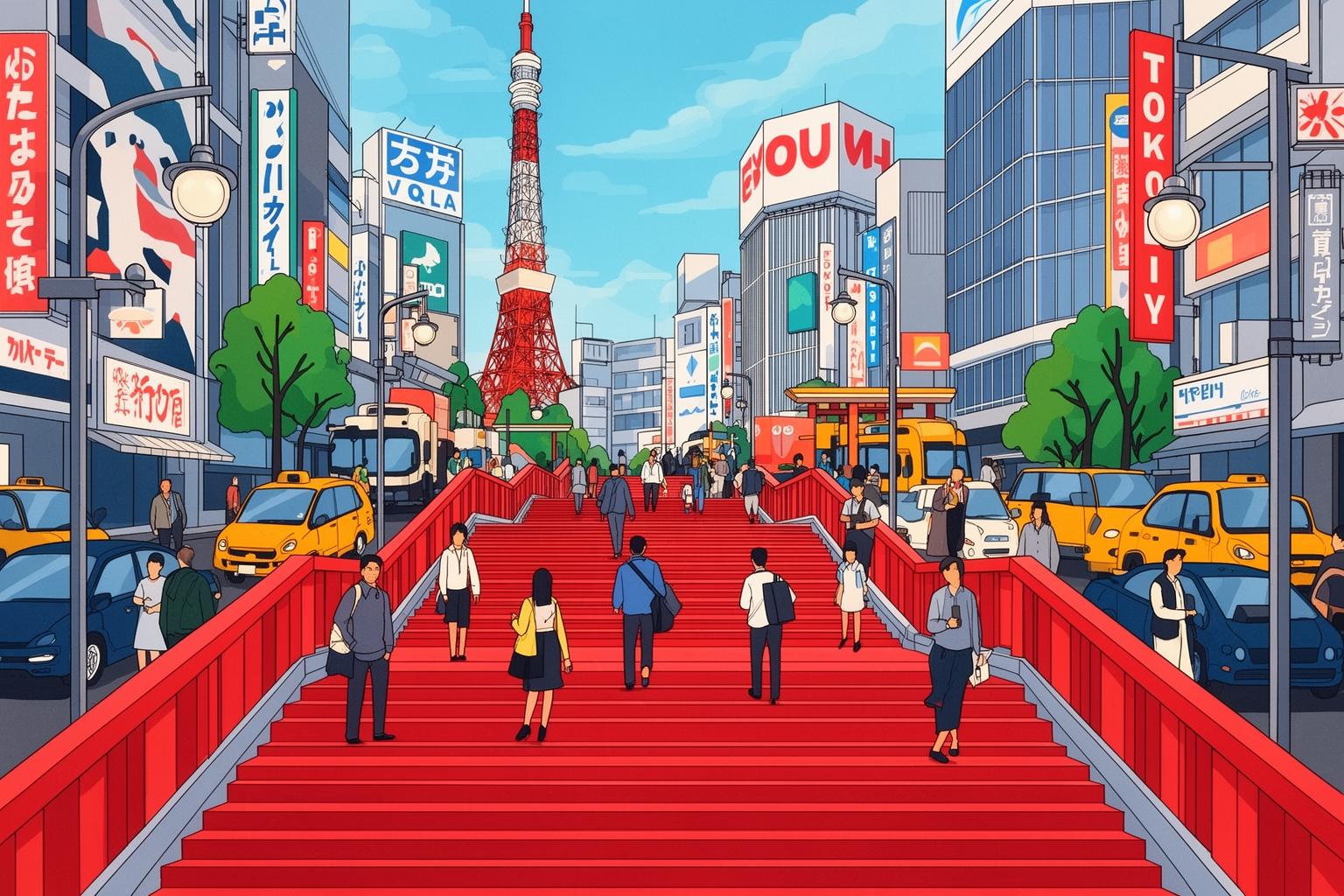
Every pilgrimage has its sacred heart, and for fans of ‘Your Name’, that place is undeniably the iconic red-railed staircase leading to Suga Shrine. This is the site of the film’s poignant climax, the backdrop for that breathtaking moment when Taki and Mitsuha finally, miraculously, come together. To reach it, you’ll head to Yotsuya, a district that feels worlds apart from the neon-lit hustle of Shinjuku or Shibuya. The trip from Yotsuya Station offers a gentle introduction to a quieter side of Tokyo, a maze of narrow residential streets, small family-run shops, and an overwhelming sense of calm. With every turn, every quiet intersection that could have stepped right out of the film’s beautifully crafted background art, the anticipation grows.
A Cinematic Climax in a Quiet Neighborhood
Then, suddenly, there it is. The stairs emerge almost unexpectedly, a splash of vivid red against the soft, subdued palette of the neighboring houses. The first glimpse is truly breathtaking. You’ve seen this image countless times on screen, filled with intense emotion, soaring orchestral music, and the desperate yearning of two souls bridging time. Yet here, in reality, the feeling is one of deep peace. The only sounds are the rustling leaves on the trees flanking the steps and the distant, steady hum of the city. From the bottom, looking up, you can perfectly frame the view from Taki’s perspective. Climbing the stairs, you sense Mitsuha’s hesitant ascent. It’s a surreal moment, standing on the very ground where their two worlds converged. The film’s drama feels both far away and intimately present. You can almost hear their voices asking that unforgettable question: ‘Your name is?’. This is a place that invites quiet reflection—a spot to simply stand and absorb the weight of the story and the surprising tranquility of its real-life counterpart.
Finding Your Perfect Shot
Naturally, every visitor wants to capture the enchantment of this spot. For the perfect, crowd-free photo echoing the movie’s final scenes, timing is essential. Early weekday mornings work best. The light is soft and golden, filtering through the trees, and you’ll likely have the staircase to yourself. This gives you the chance to take your time, experimenting with angles from both the top and bottom without feeling hurried. It’s important to remember, though, that this isn’t a film set—it’s a public space within a residential neighborhood. Local residents use these stairs for their daily routines. Be considerate and respectful. Avoid blocking the pathway, keep voices low, and honor the privacy of the nearby homes. The magic of the place is tied to its peaceful, everyday character. Maintaining that respect is part of the pilgrim’s responsibility.
More Than Just Stairs: Exploring Suga Shrine
After your moment on the steps, be sure to carry on to the top and explore Suga Shrine itself. While the staircase is the main draw for anime fans, the shrine is a lovely, tranquil spiritual site with a history spanning centuries. It’s a peaceful refuge, offering a chance for genuine cultural immersion. Take a moment to view the main hall, admire the traditional architecture, and soak in the serene atmosphere. It’s a wonderful reminder that these cinematic locations belong to a rich, living culture. Saying a small prayer or simply enjoying the peaceful grounds adds a deeper dimension to your visit, connecting you not only to the film but to the history of the place itself.
Tracing Taki’s Footsteps: A Journey Through Shinjuku and Yotsuya
The pilgrimage goes beyond that iconic staircase. Taki’s life in Tokyo was a whirlwind of school, work, and navigating the immense, interconnected cityscape. Tracing his route reveals how Shinkai expertly weaved real, recognizable locations into the story, making Taki’s world feel authentic and tangible. This segment of the journey leads you from everyday commuter spots to striking architectural landmarks, each preserving a part of the film’s essence.
The Yotsuya Station Overpass
A short walk from the Suga Shrine area brings you to Yotsuya Station, specifically to the pedestrian overpass near the main entrance. Though it may look like an ordinary piece of urban infrastructure, fans will instantly identify it as the place where Taki and his coworker Okudera-senpai part ways after their date. The film portrays the scene with a gentle melancholy—the green JR Chuo-Sobu line trains gliding by below while city lights start to blur in the evening. Standing here immerses you in the moment. You can watch the same trains pass, observe the steady stream of commuters, and admire Shinkai’s remarkable talent for discovering cinematic poetry in everyday life. It’s a powerful realization that the beautifully animated backgrounds aren’t inventions but faithful depictions of reality, encouraging you to view your own urban environment with fresh eyes.
A Moment of Respite: The National Art Center, Tokyo
One of the most visually striking locations in the film is the ultra-modern building where Taki and Okudera-senpai have lunch. This is The National Art Center, Tokyo, located in the fashionable Roppongi district. Designed by the famed architect Kisho Kurokawa, the building’s undulating glass façade is an artwork in itself. Entering feels like stepping into the future. Inside is a vast, light-filled atrium featuring two enormous, inverted concrete cones. Atop one cone sits the Salon de Thé ROND, the exact café from the film. You can settle at a table, order coffee and cake, and enjoy the same spectacular view Taki experienced. It’s an ideal spot to rest after a long walk and soak in the refined atmosphere. The center is easily reached via Nogizaka Station on the Chiyoda Line or a brief walk from Roppongi Station. Keep in mind the center is closed on Tuesdays, so plan your visit accordingly.
Experiencing the Art and Architecture
While the café is a must-visit for any pilgrim, the whole building deserves exploration. The National Art Center is an ’empty museum,’ meaning it hosts no permanent collection, instead featuring a rotating selection of world-class special exhibitions. Even without entering an exhibit, the public areas, gift shop, and library are freely accessible. The architecture alone is a major draw. Find a bench in the atrium, gaze up at the soaring ceiling, and observe how the light shifts across glass and concrete throughout the day. It’s a place that perfectly captures the sleek, sophisticated Tokyo that Taki inhabits and offers a calm, elegant pause in your day of discovery.
The Urban Pulse: Shinjuku’s Dazzling Cameos

No portrayal of Tokyo in ‘Your Name’ would be complete without featuring the sprawling, energetic, and iconic district of Shinjuku. This area represents the core of Taki’s urban life, and the film employs sweeping shots of its landscape to express both the excitement and the isolation of residing in a vast metropolis. While Mitsuha dreams of this vibrant world, Taki experiences it every day, and visiting these locations offers a direct surge of that incredible urban energy.
The Crossroads of Fate: Shinjuku Station South Exit
Shinjuku Station is the busiest train station on the planet, essentially a city within a city. The film often showcases panoramic views around the South Exit to depict Taki’s environment. Standing on the pedestrian bridges here, you are immersed in a symphony of urban life: the stream of thousands of commuters, the towering department stores like Takashimaya and the NEWoMan complex, the flow of traffic, and the intersecting train lines below. It’s a sensory overload in the best sense. This is the scene that captivated Mitsuha when she first inhabited Taki’s body. It symbolizes all the possibilities and anonymity of Tokyo. Spend some moments here simply watching the city in motion. It’s a powerful experience that connects you directly to the scale and rhythm of the world Taki navigates so well.
A Bird’s-Eye View: The Tokyo Metropolitan Government Building
To truly appreciate the immense scale of the city Taki calls home, you need to view it from above. The film is renowned for its breathtaking, sky-high shots of the urban expanse. Among Tokyo’s many observation decks, one of the best—and surprisingly free—is the Tokyo Metropolitan Government Building in West Shinjuku. A quick elevator ride takes you to the 45th-floor observation decks, offering astonishing panoramic views. On a clear day, the cityscape stretches all the way to the horizon, featuring landmarks like Tokyo Skytree, Tokyo Tower, and even Mount Fuji in the distance. This vantage point beautifully mirrors the sweeping animated shots in ‘Your Name’, giving you a god’s-eye perspective of the vast, sparkling cityscape. It helps convey the feeling of being a small part of a huge, interconnected whole, a central theme in the film.
The Iconic ‘LOVE’ Sculpture
A brief but essential stop for any Shinjuku pilgrimage is the renowned ‘LOVE’ sculpture by American artist Robert Indiana. This vivid red, pop-art piece makes a fleeting yet memorable appearance in the film. Situated in front of the Shinjuku i-Land Tower, it has become both a landmark and a popular meetup spot. It offers an easy, fun photo opportunity, adding another highlight to your list of ‘Your Name’ locations. Its simple, bold message of love feels perfectly fitting for a journey dedicated to a story about forging connections against all odds.
A Pilgrim’s Practical Guide
Embarking on a journey to discover these locations is an adventure in itself, but a bit of planning can make the experience smoother and more enjoyable, especially for first-time visitors to Tokyo. The city’s public transportation is highly efficient, and all the ‘Your Name’ spots are conveniently situated near train or subway stations.
Crafting Your Itinerary
A sensible and efficient approach is to group the locations by area. You might start your day in the Yotsuya neighborhood. Visit Suga Shrine and its staircase in the morning to beat the crowds, then stroll over to the Yotsuya Station overpass. From there, you can take the train to Shinjuku. Explore the area around the station, check out the ‘LOVE’ sculpture, and perhaps ascend the Tokyo Metropolitan Government Building for stunning city views. To finish your day, take the subway to Roppongi or Nogizaka for a relaxing visit to The National Art Center. This route follows a natural geographic progression and lets you experience the transition from quiet residential streets to the vibrant city center. A prepaid IC card like Suica or Pasmo is indispensable for effortlessly hopping on and off trains and subways.
Best Times to Visit
As with any popular destination, weekdays are always less crowded than weekends or public holidays. This is especially true for the Suga Shrine staircase. Seasonally, spring and autumn are especially enchanting times for this pilgrimage. The cherry blossoms in late March and early April, or the brilliant reds and golds of autumn leaves in November, add an extra layer of beauty that perfectly complements Makoto Shinkai’s famously stunning visual style. The film itself transitions through the seasons, and seeing these places surrounded by the vivid colors of spring or fall can make the experience even more immersive.
Essential Etiquette for Sacred Sites
It must be emphasized: be a respectful visitor. This pilgrimage takes you to real places where people live, work, and worship. At Suga Shrine, remember that you are on the grounds of a religious site in a quiet neighborhood. Keep your voice low, do not leave any trash, and be considerate of residents. When taking photos on the stairs, be patient and allow others to pass. The beauty of this pilgrimage is in its blending with everyday Japanese life. By being a courteous and thoughtful traveler, you help ensure that fans can continue to enjoy these wonderful locations for years to come.
Beyond the Frame: The Enduring Magic of ‘Your Name’

Embarking on a pilgrimage through the world of ‘Your Name’ is far more than a simple sightseeing tour. It is a profound and moving experience that strengthens your bond with a story that has touched hearts worldwide. As you walk these streets, you begin to appreciate the immense love and meticulous attention to detail Makoto Shinkai invested in his work. He didn’t merely create a fantasy; he intertwined his fantasy with the very real, tangible essence of Tokyo. He discovered the magic already present—in the peaceful stillness of a local shrine, the rhythmic dance of a bustling train station, the stunning view from a skyscraper—and magnified it for all of us to witness. This journey serves as a reminder that extraordinary stories can emerge from ordinary places. It leaves you with a renewed sense of wonder and a desire to observe your own surroundings more closely, uncovering hidden beauty and unexpected connections waiting, like a half-remembered dream, right before your eyes.