Step off the train from Ikebukuro, and the first thing you notice is the air. The dense, electric hum of Tokyo, a feeling you carry in your bones without even realizing it, finally dissipates. It’s replaced by something cleaner, cooler, laced with the scent of cedar and the faint, earthy smell of a river. The sky seems to open up, a wider blue framed by the deep greens and grays of ancient mountains that cradle the valley. This is Chichibu, a town nestled in the heart of Saitama Prefecture, a place that feels both a world away and just a train ride from the planet’s biggest metropolis. It’s a town of dualities, a place where the quiet, heart-wrenching echoes of a beloved anime story coexist with the thundering, fiery spectacle of one of Japan’s most magnificent festivals. For the modern pilgrim, Chichibu offers two distinct paths into its soul. One is a quiet, contemplative walk through the world of Anohana: The Flower We Saw That Day, tracing the steps of a group of friends haunted by a shared tragedy. The other is a plunge into the sensory overload of the Chichibu Yomatsuri, or Night Festival, a 300-year-old tradition so spectacular it has been recognized by UNESCO as an Intangible Cultural Heritage. It’s a journey that moves from the whisper of memory to the roar of celebration, and it all begins here, in this valley where stories, both new and old, are etched into the very landscape.
If you’re inspired by this blend of anime and reality, you might also enjoy exploring the real-world locations of Your Name.
The Heart of the Super Peace Busters: Tracing Anohana’s Footsteps
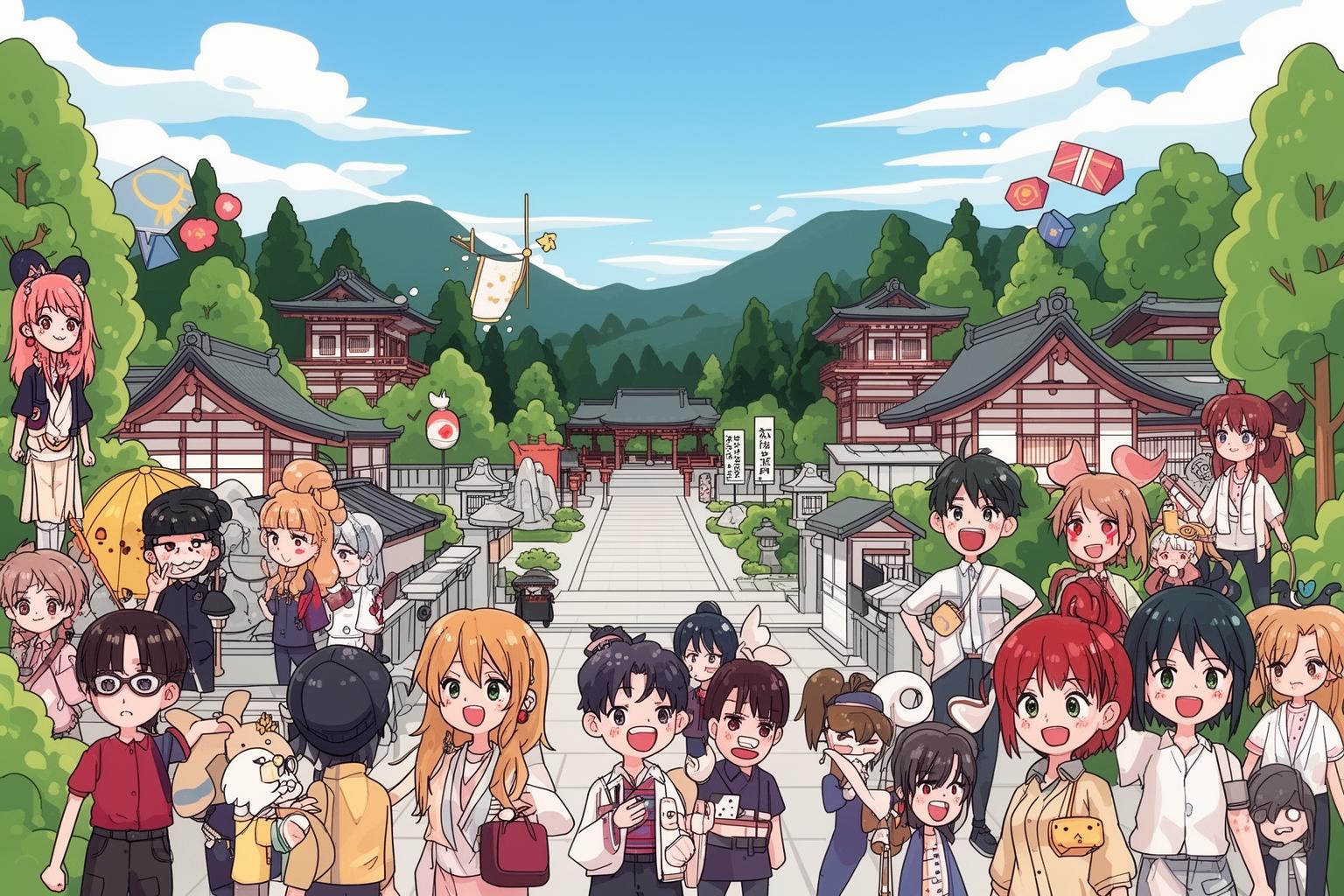
In Japan, there is a beautiful tradition called seichi junrei, or pilgrimage to a sacred place. Traditionally, this involved visiting a series of temples or shrines. However, in the 21st century, the term has expanded to include a new kind of sacred site: the real-world locations featured in anime, manga, and films. For countless fans, Chichibu is more than just a town; it serves as the vibrant, living stage of Anohana: The Flower We Saw That Day. This deeply emotional tale follows six childhood friends—the Super Peace Busters—who grow apart after the tragic death of one of their own, Meiko “Menma” Honma, and is intimately tied to this valley. The anime does more than use Chichibu as a backdrop; it intricately incorporates the town’s bridges, temples, and quiet streets into its narrative of grief, friendship, and the difficult path to healing. Walking through Chichibu is like walking beside the characters Jintan, Anaru, Yukiatsu, Tsuruko, and Poppo, feeling the weight of their unspoken emotions and the faint, hopeful glow of their eventual reunion. The town itself becomes a character, its gentle beauty silently witnessing their journey. The local community warmly embraces this connection. Rather than a commercialized, soulless tourist trap, visitors find a subtle and heartfelt tribute, with maps available at the tourist center and small signs gently marking significant spots, all done with a respect that honors both the story and the town’s everyday life.
Jorinji Temple: The Secret Base
Your pilgrimage naturally begins where the Super Peace Busters often gathered—their secret base: the peaceful grounds of Jorinji Temple. Passing through the main gate, the city’s noise fades away, replaced by the soft crunch of gravel underfoot and the whisper of wind through ancient trees. The air carries the scent of aged wood and the faint, sweet aroma of incense. In the anime, this is a place of childhood innocence and, later, of painful memories and heartfelt confessions. Standing here, you can almost see the group of children laughing and playing, their world still whole. The temple is a beautiful example of Buddhist architecture, but for pilgrims, the most captivating spot is the rack of ema, small wooden plaques on which visitors write their wishes and prayers. Among the prayers for health, success, and happiness, there is an inspiring collection of fan art. Hundreds of ema are decorated with exquisitely drawn images of Menma, Jintan, and the entire group. Fans from all over the world have left these tokens of love, their messages of gratitude to the creators, and their heartfelt connections to the characters. It is a deeply moving sight, a testament to the story’s impact. This transforms a simple temple into a living monument, where fiction and reality, sacred and secular, blend into a beautiful, shared experience.
The Old Chichibu Bridge: A Bridge of Memories
Few locations in the anime world are as instantly recognizable as the Old Chichibu Bridge, or Chichibu-bashi. This elegant, pale green truss bridge stretches gracefully across the Arakawa River and is more than mere infrastructure—it is a powerful symbol in the story. Featured in the opening and closing credits, it serves as the backdrop for some of the series’ most pivotal and emotionally charged scenes. The bridge is a place of transition, a liminal space linking different parts of town and, metaphorically, the past with the present. Crossing its pedestrian path, you can hear the rhythmic hum of traffic, but what truly lingers is the imagined echo of the characters’ voices. You can almost see Jintan’s hunched shoulders as he walks home lost in thought, or recall the shouted arguments and quiet admissions that took place here. The view from the bridge is breathtaking: below, the Arakawa River winds through the valley, its waters clear and sparkling; in the distance, the majestic peak of Mount Bukō stands as a silent sentinel, having watched over Chichibu for ages. It’s a place to pause, lean against the railing, and simply breathe, letting the scenery and the story’s emotional weight wash over you. It feels less like visiting a film set and more like stepping into a memory—a feeling both melancholic and deeply beautiful.
Hitsujiyama Park and the View of the City
For a stunning panorama of the world inhabited by the Super Peace Busters, a gentle climb to Hitsujiyama Park is essential. The park is a lovely expanse of greenery, but it is best known for one particular slope: Shibazakura Hill. From late April to early May, this hillside bursts into a vibrant carpet of pink, purple, and white phlox moss—a sight so vivid it seems almost unreal. While this floral display isn’t a central plot element in Anohana, the park’s vantage point certainly is. From the observation deck, the entire city of Chichibu unfolds beneath you, framed by the surrounding mountains. This is the very view seen in the anime—an expansive landscape of tiled roofs, winding streets, and the silver thread of the river. Seeing it in person gives a profound sense of scale and connection. You can identify the places you have visited—the bridge, the nearby temple—and see how they interconnect. It reinforces that this is a real, tangible place. The view, especially at sunset when city lights begin to twinkle and the mountains cast long shadows, reflects the anime’s overarching themes: a shared experience, a community where everyone lives under the same sky, each grappling with their own private joys and sorrows. It’s a reminder that even in moments of profound isolation, as Jintan often felt, you remain part of something larger.
When Night Falls, The City Awakens: The Chichibu Yomatsuri
If the Anohana pilgrimage offers a journey into the tranquil heart of Chichibu, the Chichibu Yomatsuri plunges you into its roaring soul. As an event planner, I’ve experienced many festivals, but none prepare you for this one. For two nights each year, on December 2nd and 3rd, this serene mountain town transforms into a blazing spectacle of sound, light, and raw human energy. This is no modern creation; it is a tradition spanning over three centuries, a harvest festival to thank the deity of the nearby Chichibu Shrine for the year. The entire community rallies, dedicating months of preparation to these intense 48 hours. In the days leading up, the atmosphere crackles with electric anticipation. The sharp, cold air of early winter, which would normally send people indoors, instead hums with excitement. Streets are lined with stalls offering everything from sizzling yakisoba and sweet candied apples to steaming amazake, a warm, non-alcoholic rice drink that becomes a welcome companion on the chilly nights. But the food and crowds are merely the prelude. The main event is a sensory symphony of tradition.
The Dance of the Giants: Yatai and Kasaboko Floats
The highlights of the Chichibu Yomatsuri are its floats. These are no flimsy, papier-mâché parade pieces. They are architectural marvels—mobile shrines of enormous scale and breathtaking artistry. Two types shine: four magnificent Yatai and two towering Kasaboko. Each weighs between 10 and 20 tons and is crafted from dark, lacquered zelkova wood, adorned with intricate gilded carvings depicting dragons, phoenixes, and folklore scenes. By day, visitors admire their exquisite craftsmanship, delicate tapestries, and layers of history embedded in their frames. But at night, they truly come alive. As dusk settles, hundreds of paper lanterns hanging from the floats’ eaves are lit, bathing them in a warm, ethereal glow. These once-static displays transform into living, breathing entities. What’s more, the Yatai floats feature small stages where musicians perform the festival’s distinctive Chichibu Yatai-bayashi soundtrack. The music is a complex, driving rhythm of mighty Taiko drums, sharp-toned smaller drums, bamboo flutes, and hand-bells. This isn’t mere background noise—it’s the festival’s heartbeat, a pulsating score that sets the pullers’ pace and energy. Teams of dozens, men and women clad in traditional garments, strain against thick ropes to heave these giants through narrow streets, their unified chants of “Horyai, Horyai!” echoing off buildings. Standing just feet away as one of these giants rounds a tight corner, its lanterns swaying precariously, is an experience of pure, unfiltered awe.
The Climax at Dango-zaka Hill
The entire festival builds toward a single, epic moment on the night of December 3rd: the ascent of Dango-zaka Hill. This short but brutally steep incline leads to the plaza before the city hall, the symbolic finish line of the festival. It is the ultimate test of strength, coordination, and community spirit. The air, already thick with the steam of thousands of breathers, crackles with tension. The crowd surges forward, a sea of faces lit by the glow of the floats. One by one, the six giants approach the hill’s base. Music from the internal stages swells, becoming a frantic, powerful rhythm that seems to infuse the pullers with courage. A hush falls over the crowd, then bursts into a roar of encouragement as the teams dig in. With a great, unified shout, they begin the climb. The massive wooden wheels shriek against the pavement. The entire structure groans under the strain, tilting dangerously. For a few breathless moments, it seems impossible. Yet inch by agonizing inch, the collective will of the people conquers gravity. They pull not just with muscle, but with spirit, carrying 300 years of tradition with them. When the float finally crests the hill and rolls into the plaza, the eruption of cheers is deafening. It is a moment of pure, unscripted drama—a raw and powerful display of what a community can achieve when it pulls together.
A Sky Ablaze: Winter Fireworks
As if the spectacle on the ground weren’t enough, the Chichibu Yomatsuri offers its audience another rare and magnificent display: a grand fireworks show in the heart of winter. For two hours on the final night, the cold, clear winter sky becomes a canvas for breathtaking pyrotechnics. The timing is impeccable. Just as you catch your breath from the drama of Dango-zaka, the first shell whistles upward. The crackling and booming reverberate through the valley—a celestial percussion to accompany the festival music below. Winter fireworks have a unique quality. The low humidity makes colors impossibly crisp and vibrant against the deep black sky. Each burst of gold, crimson, and sapphire is perfectly mirrored in the eyes of thousands of upturned faces. It is a shared moment of wonder that transcends language and culture. The contrast is sublime: the ancient, earthy power of the floats below and the modern, fleeting beauty of fireworks above. It provides the perfect, explosive finale to a festival that at its heart celebrates life, community, and the enduring light of tradition during the darkest, coldest time of the year.
A Deeper Dive into Chichibu’s Soul
While the Anohana pilgrimage and the Night Festival are undoubtedly Chichibu’s two main attractions, they represent just two aspects of this remarkably rich region. To truly grasp the town’s spirit, one must look beyond these major events and delve into the deeper layers of its culture and landscape. Chichibu has been a pilgrimage destination for centuries, holding spiritual significance long before anime fans arrived. Its identity is also closely linked to the land itself—the mountains that supply its resources and the river that sustains its life. Spending an extra day or two here lets you slow down, discover the quieter rhythms of the valley, and fully appreciate everything it has to offer.
The Sacred Path: A Pilgrimage of 34 Temples
The contemporary seichi junrei undertaken by Anohana fans is, in many respects, a new chapter in a very old tradition. Chichibu hosts one of the Kanto region’s most renowned historical pilgrimages: the Chichibu 34 Kannon Sanctuary. This route of 34 Buddhist temples dedicated to Kannon, the goddess of mercy, has drawn pilgrims since the 13th century. Completing the entire circuit, which meanders through the city, surrounding mountains, and quaint rural villages, takes several days on foot. You don’t need to be a devout Buddhist or finish the whole pilgrimage to appreciate its meaning. Even visiting a handful of these temples provides a profound sense of calm and a connection to a deeper history. You’ll encounter pilgrims, recognizable by their white robes and sedge hats, moving with quiet resolve. Visiting a temple like Hashidatedō, Temple 28, perched dramatically within a cliffside, puts the entire region into perspective. It reveals that Chichibu has always been a place where people come seeking something—whether solace, healing, or a moment of reflection. The anime pilgrimage, in its own way, continues this timeless human pursuit.
Flavors of the Valley: What to Eat and Drink
A trip to Chichibu is also a journey for the taste buds. The local cuisine is rustic, hearty, and deeply satisfying, shaped by the valley’s agricultural heritage. You simply cannot leave without trying Waraji Katsudon. Unlike the typical katsudon served over rice with egg, this version features two large, thin pork cutlets fried to a perfect crisp, dipped in a sweet and savory soy-based sauce, and served in a lacquered box. The name waraji refers to their resemblance to traditional straw sandals. Another must-try local snack is Miso Potato—bite-sized pieces of steamed or fried potato, skewered and coated in a sweet, rich miso paste. It’s simple, affordable, and utterly addictive—the perfect energy boost for a day of walking. The region is also celebrated for its soba noodles, made from locally grown buckwheat and served with an array of toppings. For the discerning adult traveler, Chichibu offers a world-class secret: Ichiro’s Malt. This small-batch Japanese whisky, crafted at the Chichibu Distillery, has earned international acclaim and is notoriously hard to find elsewhere. Visiting a local bar or liquor store is a rare chance to savor a dram of what many consider one of the finest whiskies in the world.
Your Chichibu Journey: Practical Tips for the Modern Pilgrim
Chichibu’s charm lies in its accessibility. It offers the ideal getaway, providing an authentic cultural experience without the complications of a more remote location. With a bit of preparation, you can effortlessly travel from the hectic center of Tokyo to the serene mountain atmosphere. Here are some practical tips to help you plan your journey and fully enjoy your pilgrimage.
Getting There from Tokyo
The trip to Chichibu is part of the experience, a scenic shift from urban congestion to natural beauty. The most direct and comfortable way is to take the Seibu Railway from Ikebukuro Station in Tokyo. The top choice is the Limited Express “Laview” Red Arrow train. This sleek, modern train reaches Seibu-Chichibu Station in about 80 minutes. Thanks to its large, panoramic windows, you can enjoy stunning views as you leave the city and enter the mountains. It’s worth paying a little extra for a reserved seat and added comfort. For those on a tighter budget, regular express trains on the same Seibu Ikebukuro Line will also get you there, though the journey may take longer and might involve a transfer at Hannō Station. Once you arrive at Seibu-Chichibu Station, your first stop should be the nearby Tourist Information Center, where you can pick up town maps, bus timetables, and most importantly, the essential Anohana pilgrimage map highlighting all key locations from the anime.
When to Visit: A Tale of Two Seasons
Chichibu boasts unique charms in every season, but two stand out the most. If you’re attracted by the floral beauty and emotional atmosphere of Anohana, schedule your trip for late April to early May. During this time, the shibazakura at Hitsujiyama Park bloom spectacularly, painting the valley in iconic pink hues. The weather is mild, and the valley bursts with fresh spring greenery — ideal for a relaxed walking pilgrimage. However, if you seek the vibrant energy and cultural immersion of the Yomatsuri festival, plan to visit on December 2nd and 3rd. Be warned: this is the busiest time of year. You’ll need to book lodging months, if not a year, in advance, as accommodations in Chichibu and nearby areas fill up quickly. Dress in plenty of warm layers since the nights can be sharply cold. While these are peak times, don’t overlook the other seasons. Summer brings lush greenery and river activities like boating in nearby Nagatoro, while autumn transforms the mountains into a breathtaking tapestry of reds and golds, perfect for temple visits.
A Pilgrim’s Etiquette
Whether you identify as an anime pilgrim or a cultural traveler, showing respect in Chichibu is essential for a meaningful visit. The Anohana sites are not movie sets; they consist of public areas, private homes, and active places of worship integral to daily community life. When visiting temples such as Jorinji, be considerate of those there to pray. Keep quiet, follow posted guidelines, and avoid disrupting ceremonies. Many streets and houses featured in the anime are private property—always take photos from a respectful distance and never trespass. The people of Chichibu warmly welcome fans, and the best way to express gratitude is by being a courteous guest. A simple nod or a soft “konnichiwa” to locals goes a long way. During the festival, crowds can be overwhelming. Stay patient, avoid pushing, and remain alert, especially when large floats are moving. By showing this basic respect, you help keep Chichibu inviting for all future pilgrims.
Chichibu is more than just a place; it’s an emotion. It’s the subtle ache of nostalgia for a childhood you never had, experienced while standing on an anime bridge. It’s the primal thrill of witnessing a community pour its soul into hauling a 20-ton float uphill. It’s the taste of sweet miso on a simple potato and the scent of incense drifting through mountain air. This is where a fictional tale about finding a lost flower has taken root, blossoming alongside a centuries-old festival tradition. It teaches that what moves us—whether a beautifully told story or a powerful shared ritual—is what truly gives a place its soul. Whether you come searching for Menma’s ghost or the roar of the Yomatsuri, you’ll leave carrying a piece of Chichibu’s unique magic in your memory, an unexpected treasure you didn’t realize you were seeking.